When you’re planning a Barcelona trip, the usual suspects dominate your itinerary—Gaudí’s Sagrada Familia, Park Güell, Casa Batlló. But there’s a building that consistently surprises visitors and deserves far more attention than it gets: the Palau de la Música Catalana, a UNESCO World Heritage concert hall that one reviewer aptly described as “like being inside a Fabergé egg.” We’ve reviewed this guided tour extensively, and what strikes us most is how it delivers an exceptional cultural experience at a price point that makes you wonder why anyone would skip it.
We love two things about this tour in particular. First, the skip-the-line access means you avoid the queues that can eat up precious vacation time—a practical benefit that shouldn’t be underestimated when you’re juggling a packed Barcelona schedule. Second, the small-group format (capped at 15 people) creates an intimate experience where you actually hear your guide rather than being herded through like cattle on a stadium tour. That said, the tour’s brevity—right around an hour—means you’ll want to plan accordingly if you’re hoping to linger with your camera or grab a coffee in the venue’s café afterward.
This experience works beautifully for architecture enthusiasts, art lovers, and anyone who appreciates authentic cultural spaces that still function as working concert halls. It’s also surprisingly perfect for travelers who didn’t initially plan to visit but have a gap in their itinerary, as several reviewers discovered.
- What You’re Actually Getting: More Than Just a Pretty Building
- Meeting Your Guide and Getting Oriented
- The Rehearsal Hall: Starting With Context
- The Staircases: Where Details Become the Destination
- The Lluís Millet Hall: Light as Architecture
- The Concert Hall: The Building’s Masterpiece
- Practical Considerations That Matter
- The Value Proposition: Why This Tour Makes Sense
- What Reviewers Consistently Praise
- When This Tour Works Best in Your Itinerary
- Booking Logistics and Cancellation
- FAQ: Questions Travelers Actually Ask
- Final Thoughts: Why This Tour Deserves Your Attention
- The Best Of Barcelona!
- More Guided Tours in Barcelona
- More Tours in Barcelona
- More Tour Reviews in Barcelona
What You’re Actually Getting: More Than Just a Pretty Building
 1 / 9
1 / 9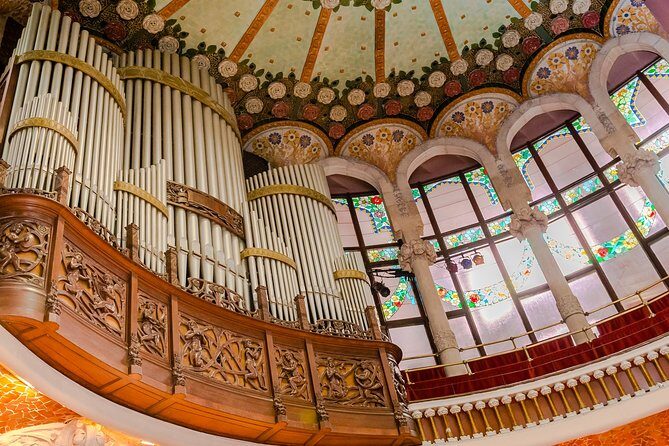 2 / 9
2 / 9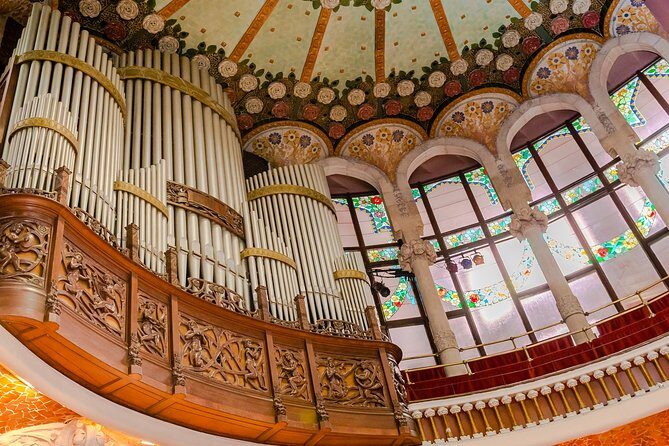 3 / 9
3 / 9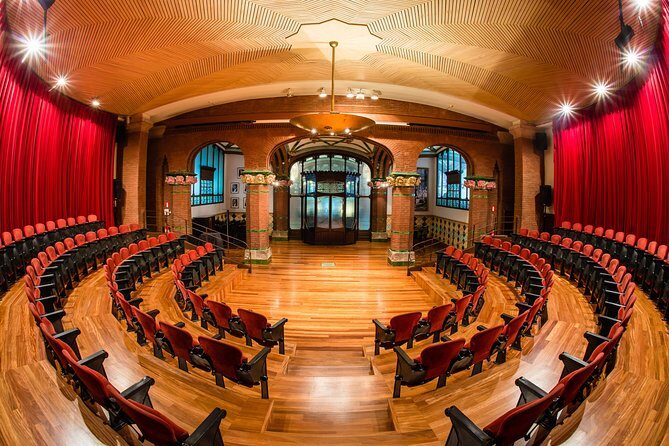 4 / 9
4 / 9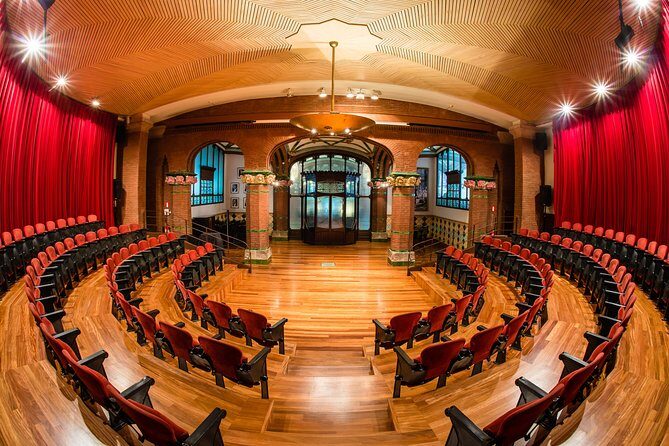 5 / 9
5 / 9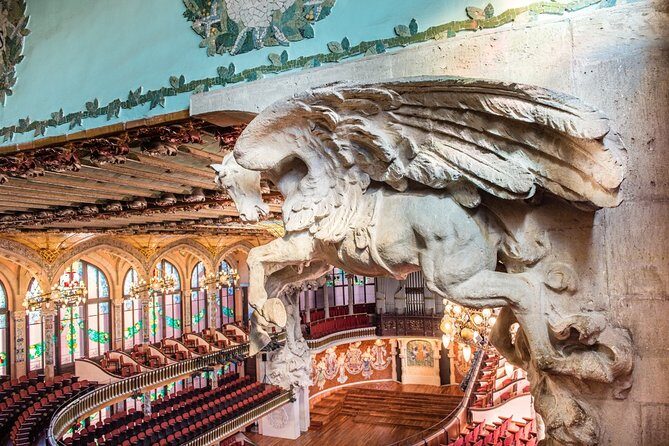 6 / 9
6 / 9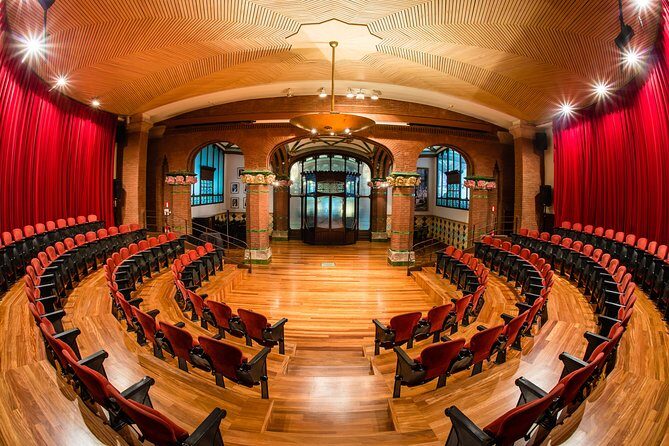 7 / 9
7 / 9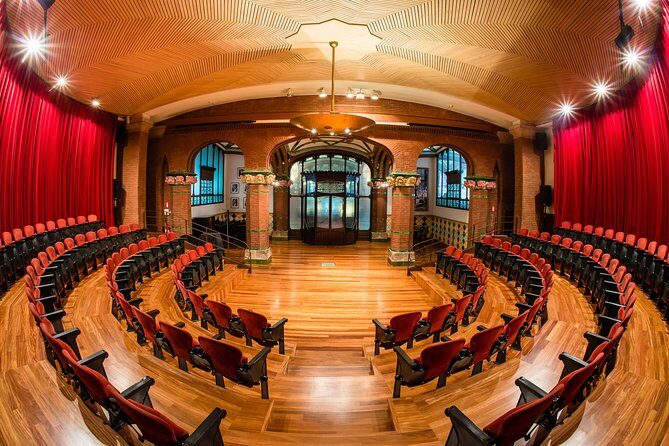 8 / 9
8 / 9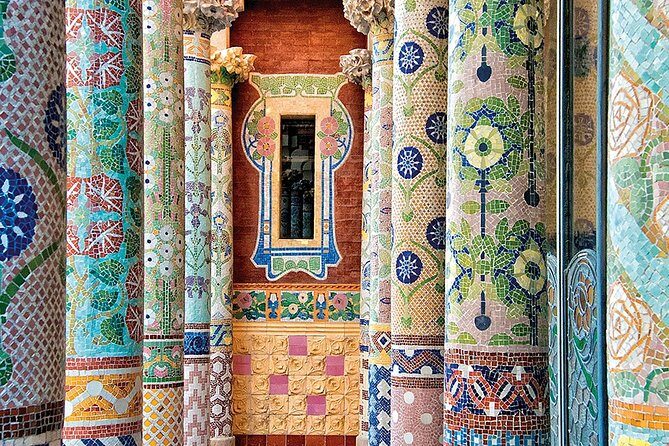 9 / 9
9 / 9At $26.60 per person, this tour includes three valuable components: your admission ticket to the Palau, a guided tour led by someone with genuine knowledge of the building, and a 15-minute audiovisual presentation that provides historical context. That’s genuinely good value when you consider that architectural tours in Barcelona typically run $35–50 and often feel rushed or impersonal.
The pricing structure reflects what makes this experience accessible to budget-conscious travelers without sacrificing quality. You’re not paying for fancy amenities or lengthy explanations—you’re paying for direct access to a UNESCO site and someone who can explain why every detail matters. As one reviewer noted, “This tour was not expensive and worth the time,” and that sentiment appears repeatedly throughout the feedback.

👉 See our pick of the The Top 5 Tours In Barcelona
Meeting Your Guide and Getting Oriented
You’ll meet your guide outside the Palau de la Música Catalana in the Ciutat Vella neighborhood, near the Jaume I metro stop. The location is genuinely convenient—if you’re exploring Barcelona’s Gothic Quarter or the waterfront, you’re already close by. The venue sits at C/ Palau de la Música, 4-6, and Google Maps will get you there without confusion.
Your guide will be equipped with wireless earpieces for the group, which means you can adjust the volume to your own comfort level (a detail worth mentioning because one reviewer experienced a less-than-ideal interaction with a guide who didn’t show them how to control the audio). Most guides we read about were knowledgeable and friendly, though like any tour service, the experience can vary slightly depending on who’s leading that particular slot.
You can also read our reviews of more guided tours in Barcelona


The Rehearsal Hall: Starting With Context
Your tour begins in the Rehearsal Hall of the Orfeó Catala, the choir whose patronage made this building possible. This is where you’ll watch that 15-minute audiovisual clip—and based on reviewer feedback, this is time well spent. The video provides historical context about the building’s construction beginning in 1905 and situates the Palau within early 20th-century Catalan society and culture.
This opening segment does something important: it primes you to actually see the architecture rather than just look at it. Without understanding that this building was created during a period of Catalan cultural revival, or knowing the names and philosophies of the architects involved, you might miss why certain design choices were made. One traveler mentioned learning “how the concert hall was designed and why each element contributes to a fabulous hall for singing and for orchestra performances,” and that educational framework makes the rest of the tour significantly richer.
The Staircases: Where Details Become the Destination
Next, you’ll ascend the elaborate staircases that connect the ground floor to the second level. These aren’t utilitarian passages—they’re works of art that deserve your attention. The underside of each staircase features intricate tilework, and the railings showcase unusual glass balusters supporting marble banisters. You can actually look through the glass to see the craftsmanship beneath, a design choice that reveals how seriously the architects took every single element.
This is where your guide’s knowledge becomes invaluable. Without explanation, you might admire the tiles as pretty decoration and move on. With context, you understand that these tiles represent a deliberate choice to bring nature-inspired art into every corner of the building—not just the grand spaces, but the transition areas where people pass through. It’s the difference between seeing a beautiful building and understanding the philosophy behind it.
The Lluís Millet Hall: Light as Architecture
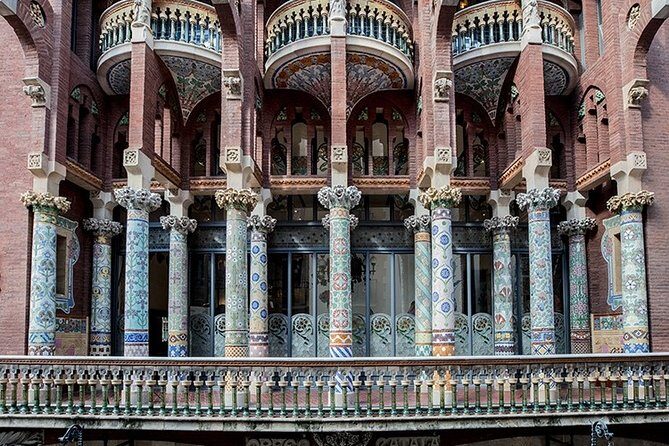
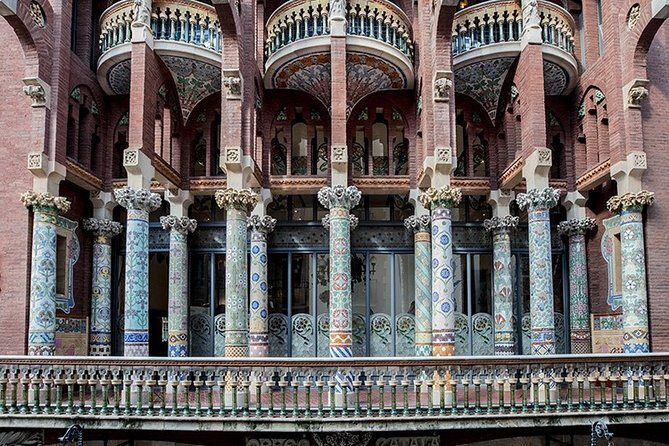
You’ll emerge into the Lluís Millet Hall, a space flooded with natural light from floor-to-ceiling windows. The hall features an open colonnade on its main façade, and the pillars are decorated with intricate mosaics depicting flowers—a recurring motif throughout the building that honors the natural world.
Standing in this hall, you’ll understand why Barcelona’s Art Nouveau movement was so distinctive. Unlike the heavier, more ornamental Art Nouveau you might see in other cities, the Catalan version emphasizes light, nature, and a kind of optimistic modernity. The generous windows aren’t just practical; they’re philosophical. The architects believed that beauty and functionality should enhance each other, not compete.
The Concert Hall: The Building’s Masterpiece
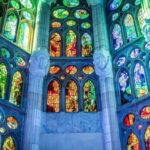
Your final destination is the Concert Hall itself, and here’s where most visitors have what can only be described as a moment. The hall is genuinely breathtaking. A massive inverted-dome skylight dominates the ceiling, flooding the space with natural light. Stained glass panels set in arches line the walls, creating a kaleidoscope effect when the light hits them properly. Sculptures by Catalan artists like Eusebi Arnau and Pau Gargallo adorn the stage and walls.
Multiple reviewers used superlatives here: “beyond breathtaking,” “incredible,” “spectacular.” One person compared it to “being inside a Fabergé egg,” which actually captures something real about the experience—there’s a sense of being enclosed in something precious and carefully crafted. Another reviewer mentioned being “overcome with awe,” and while that might sound like hyperbole, the space genuinely does produce that reaction in many visitors.
Your guide will explain the work of the architects and artisans involved, pointing out specific sculptures and explaining their significance. If you’re lucky, you might hear the organ being played during rehearsals—several reviewers mentioned this unexpected bonus, which apparently features a nearly 3,000-pipe instrument capable of producing remarkably nuanced sound.

Practical Considerations That Matter
The tour runs approximately one hour, which is enough time to see everything without feeling rushed but not so much that you’re standing around waiting for the next stop. Most travelers book about 29 days in advance, but the tour operators note that spaces can fill quickly. If you’re flexible with timing, booking a few weeks ahead gives you good options. If you’re already in Barcelona and want to squeeze this in, you might find availability in early morning or late afternoon slots.
The tour accommodates most fitness levels, though the staircases do require climbing. Service animals are welcome, and the meeting point is near public transportation. The maximum group size of 15 people is genuinely intimate—you’re not competing with dozens of other travelers for the guide’s attention or struggling to see around a crowd.
One practical detail worth noting: a couple of reviewers mentioned that the meeting point location in the app didn’t match the actual meeting spot, so confirm your specific meeting instructions when you book. This isn’t a major issue, but it’s the kind of small detail that can add unnecessary stress if you’re not expecting it.
The Value Proposition: Why This Tour Makes Sense
At roughly $27 per person for an hour-long tour of a UNESCO World Heritage site with a guide and admission included, this represents genuinely good value. You could visit on your own—admission without a guide would likely cost a similar amount—but you’d miss the context that transforms a beautiful building into a meaningful cultural experience.
Consider that major Barcelona attractions like the Sagrada Familia or Park Güell typically cost $25–35 just for admission, and a guided tour adds another $20–30. This tour bundles both admission and guidance at a price point that feels fair. The fact that 92% of travelers recommend it suggests the value resonates with actual visitors, not just marketing copy.
The skip-the-line access deserves emphasis too. Barcelona’s top attractions can involve 30-minute to 2-hour waits during peak seasons. Having guaranteed entry at a specific time means you can plan your day efficiently rather than arriving somewhere and discovering you’ve got a long queue ahead.
What Reviewers Consistently Praise
The feedback pattern is striking. Guides receive consistent praise for being “knowledgeable,” “friendly,” and “informative.” The building itself inspires genuine emotional responses—people don’t use measured language about the Palau; they use words like “amazing,” “extraordinary,” and “must see.” The history lesson embedded in the 15-minute video is repeatedly mentioned as valuable context that enhances appreciation of the architecture.
Several reviewers specifically mentioned that the tour exceeded expectations, particularly those who weren’t originally planning to visit. One person noted, “The theater was not on our to do list initially… but this was for sure by far the most extraordinary thing we ended up visiting.” That’s the kind of feedback that suggests this tour has the power to create genuine travel memories, not just check off a box.
The acoustics and sound quality of the space get mentioned repeatedly too. Even though you’re not attending a concert, standing in a room designed specifically for acoustic excellence creates a different kind of sensory experience than typical tourist attractions. Several travelers mentioned being struck by how the space was designed to serve its function—that marriage of beauty and purpose that defines great architecture.
When This Tour Works Best in Your Itinerary
This tour shines as a 1-hour cultural break in a packed day. You could visit in the morning, spend your afternoon in the Gothic Quarter or at the waterfront, and still have time for a proper dinner in the evening. It works particularly well if you have a gap between other bookings—several travelers mentioned exactly this scenario, discovering the Palau almost by accident and finding it more rewarding than their planned activities.
If you’re an architecture enthusiast, this is essential. You’ll get far more from the experience than someone purely interested in checking off famous Barcelona sites. Art lovers will find themselves genuinely engaged with the sculptural work and mosaic details. Even if you’re not typically drawn to concert halls, the building’s design philosophy—that beauty should be integrated throughout, not reserved for grand spaces—will likely resonate.
It’s less essential if you’re on a extremely tight budget and trying to minimize paid attractions, or if you have mobility limitations and prefer to avoid stairs. The tour does involve climbing, and while most people can manage it, it’s worth considering if stairs are challenging for you.
Booking Logistics and Cancellation
You’ll receive a mobile ticket, which means no need to print anything or arrive early to collect documents. The free cancellation policy is genuinely generous—you can cancel up to 24 hours before your tour time for a full refund. This flexibility matters when you’re traveling and plans inevitably shift.
The tour is offered in English, which is important to confirm since Barcelona has multiple language options for attractions. Booking about 29 days in advance is typical, but you can try for later availability if you’re already in the city. Just be aware that popular time slots during peak season (May–September) might fill up.
FAQ: Questions Travelers Actually Ask
Q: Is this tour actually worth doing, or should I skip it and focus on Gaudí’s buildings?
A: While Gaudí gets all the attention, the Palau represents a different but equally impressive architectural philosophy. Many travelers found it more memorable than expected. If you have the time and interest in architecture or art, it’s worth the $26.60. If you’re extremely time-limited, prioritize based on your specific interests—but don’t assume it’s a lesser attraction.
Q: How long is the actual tour, and will I feel rushed?
A: The tour is approximately one hour, which is enough time to see all the main spaces without feeling hurried. You won’t have extensive time to linger with a camera, but you’ll see everything and hear your guide’s explanations. If you want extra photography time, you might consider visiting separately or arriving early.
Q: Are the stairs difficult to climb?
A: The tour does involve climbing staircases to reach the second floor and the main concert hall. Most travelers can participate, according to the tour description, but if stairs are challenging for you, this might not be the best choice. There’s no elevator option mentioned for the tour route.
Q: What if I’m not interested in classical music or concert halls?
A: The tour isn’t really about concert music—it’s about architecture, art history, and Catalan cultural heritage. Even if you’ve never attended a concert, the building’s design and artistic details are the main attractions. Several reviewers who weren’t expecting to be impressed ended up loving it.
Q: Will I understand the guide if English isn’t my first language?
A: Most guides receive praise for being clear and knowledgeable. You’ll have wireless earpieces where you can control volume, which helps with audio clarity. One reviewer did mention a guide who spoke English less clearly, so there’s some variation. If language is a concern, try to book a tour during times when more experienced guides might be scheduled.
Q: Is the 15-minute video in English?
A: The tour is offered in English, so the video should be as well, though this isn’t explicitly stated. Confirm when booking if language options are important to you.
Q: Can I visit the café or restaurant in the building before or after my tour?
A: Yes, the building has a café where you can eat or have a drink. Some reviewers mentioned visiting it after their tour. This isn’t included in your tour ticket, but it’s available if you want to extend your visit.
Q: What’s included in the $26.60 price?
A: Your ticket includes admission to the Palau, the guided tour with a guide, wireless earpieces, and the 15-minute audiovisual presentation. Food, drinks, and any additional activities aren’t included.
Q: How many people are typically on these tours?
A: Tours have a maximum of 15 people, which keeps the experience intimate. The actual group size might be smaller, depending on bookings for that time slot.
Q: Is there really skip-the-line access, or will I still wait?
A: The tour includes skip-the-line access, meaning you go directly in with your guide at your scheduled time rather than waiting in a general admission queue. This is one of the practical benefits that justifies booking in advance.
Palau de la Musica Catalana Guided Tour
Final Thoughts: Why This Tour Deserves Your Attention
This tour delivers genuine cultural value at an honest price point. The Palau de la Música Catalana isn’t a manufactured tourist attraction—it’s a working concert hall that’s been hosting performances for over a century. When you visit with a guide, you’re not just seeing a building; you’re understanding a specific moment in Catalan history when architects and artisans created something they believed would endure. The fact that it has, and that it remains functional and beautiful, makes the experience meaningful rather than nostalgic. If you appreciate architecture, history, or art, or if you simply want to experience something genuinely beautiful that won’t feel like every other tourist attraction in Barcelona, this tour is worth your time and money. Even if it wasn’t on your original itinerary, the consistent feedback from travelers who stumbled upon it suggests it has the power to become one of your trip’s highlights.