Paris Hop-On Hop-Off Plus Seine Cruise Review
If you’re trying to see Paris fast without stressing over metros and transfers, this hop-on hop-off bus is a solid first move. You get a double-decker ride with multilingual digital audio, drop off near big-name sights, then hop back on when you’re ready. Add the optional 1-hour Seine cruise and you’ve got both street-level views and classic riverside landmarks.
What I like most is the flexibility. You can start at major stops along the route, stay flexible, and use the same ticket over the next day or two instead of cramming everything into one frantic afternoon. The other win is the practical setup: frequent buses, a helpful app with real-time tracking, and onboard Wi-Fi, plus souvenir headphones so the audio is easy to access.
The main thing to keep in mind is timing. Service has an end-of-day cutoff (the last bus leaves Stop 1 at 17:30), and if you’re hoping for late-day riding, traffic and schedules can shrink your window.
- Quick Key Points Before You Go
- Why This Hop-On Hop-Off Bus Works in Paris
- Tickets, Time Limits, and Why It’s Good Value
- Where You Board: Opéra and the Top Stops on the Route
- Louvre-Pyramide and Pont des Arts: Best for First-Time Paris Views
- Notre-Dame Stop: Quick Photos, Then Choose Your Pace
- Musée d’Orsay Area: A Helpful Bridge Between Art and the River
- Champs-Élysées and Grand Palais: Big Avenue Energy
- Arc de Triomphe and the Big-Avenue Loop Feel
- Eiffel Tower and Champ de Mars: The Easy Hop-Off for the Classics
- Opéra Garnier and Invalides: Great When You Want More Than One Theme
- The Seine River Cruise: What One Hour Adds to Your Day
- Audio Commentary, Headphones, and the App That Saves Time
- Comfort, Frequency, and What Traffic Can Do to Your Day
- Accessibility Notes: Wheelchairs, Ramps, and Getting Around
- Practical Tips to Make This Feel Like Your Trip
- Should You Book This Paris Big Bus Tour?
- FAQ
- How long does the bus tour take?
- Where do the Seine River Cruises depart from?
- How often do the Seine cruises run, and what hours are available?
- Can I start the hop-on hop-off tour at any stop?
- Is the tour wheelchair accessible?
- Which languages are available for the audio guide?
- More Boat Tours & Cruises in Paris
- More Tours in Paris
- More Tour Reviews in Paris
Quick Key Points Before You Go
 1 / 10
 2 / 10
 3 / 10
 4 / 10
 5 / 10
 6 / 10
 7 / 10
 8 / 10
 9 / 10
 10 / 10
- Hop-on, hop-off at major landmarks so you can match the route to your plans instead of the other way around
- Multilingual audio guidance with souvenir headphones, plus an app with route info and real-time bus tracking
- Frequent departures (every 10–20 minutes) for short waits in between stops
- Optional 1-hour Seine cruise departing by the Eiffel Tower area, timed from 10:30 to 21:00
- Comfort and accessibility details including wheelchair ramps and onboard Wi-Fi
- Good-value ticketing with 24- or 48-hour options to avoid rushing
Why This Hop-On Hop-Off Bus Works in Paris
Paris is pretty, but it’s also busy. This tour helps you keep your day moving while still giving you control. You ride above street traffic, use the audio to understand what you’re seeing, and hop off when a stop matters to your interests.
It’s also a great “orientation day.” Even if you plan to walk most afternoons, a bus loop helps you figure out where everything sits. After that, you’re not guessing as much when you switch to trains, taxis, or on-foot wandering.
You can also read our reviews of more boat tours in Paris



Tickets, Time Limits, and Why It’s Good Value
The price is listed as $43 per person, and the tour supports 1 to 2 days depending on the ticket option. In practice, the value comes from two things: you can keep using the same route across a day (or two), and the optional Seine cruise turns into an easy add-on instead of another full separate outing.
Your bus ticket is sold as a 24- or 48-hour pass depending on what you choose. The tour duration for a loop is roughly 2 hours 15 minutes, so a one-day ticket can work if you’re organized about your hop-off choices. A two-day ticket tends to feel less stressful, especially if you want photos, museums, or a slower pace at one or two stops.
Where You Board: Opéra and the Top Stops on the Route
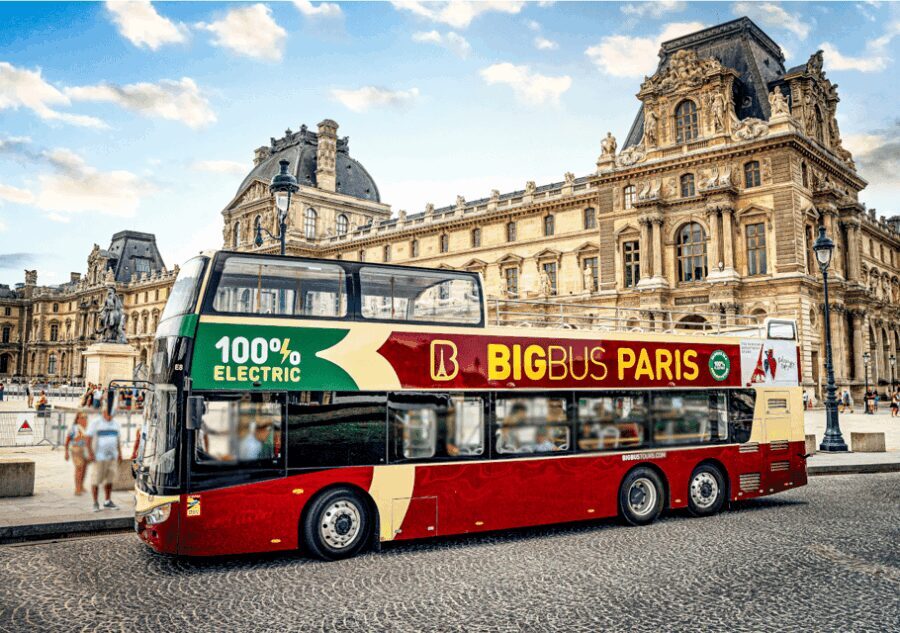
You can start the bus tour from any of the Big Bus stops along the route. The main starting point listed is the Louvre-Pyramide / Big Bus Information Centre at 11 Avenue de l’Opéra, with additional listed stops near other landmarks.
From there, the route focuses on the sights most visitors ask about. The key hop-on hop-off stops include:
- Louvre-Pyramide / Big Bus Information Centre
- Louvre / Pont des Arts
- Notre Dame
- Musée d’Orsay
- Champs-Élysées
- Grand Palais
- Iéna (near the Eiffel/Trocadéro area)
- Eiffel Tower (Quai Branly, Entrée 2 Tour Eiffel)
- Champ de Mars
- Opéra Garnier
- Invalides
Some parts of the route are described as passing by other famous places too (like Palais-Royal, Tuileries Garden, Place de la Concorde, and Place Vendôme). Even if you don’t hop off, it helps you connect the map in your head.
Louvre-Pyramide and Pont des Arts: Best for First-Time Paris Views
This is a smart early stop. You’re in the center of the “big highlights” zone, close to where a lot of visitors end up anyway. From the bus, you get a broad view with audio commentary to help place the landmarks you’ll likely see again later on foot.
Pont des Arts is also a practical hop-off because it sits near the Seine. That means you can switch gears quickly: hop off for river photos, then rejoin the bus later without losing your place. If you’re also thinking about the Louvre area but want a light, low-effort first pass, this stop is a good match.
Tip: If you want to do serious museum time later, use the bus to learn which direction the surrounding streets flow, then pick your walking route based on where you’ll actually exit.
Notre-Dame Stop: Quick Photos, Then Choose Your Pace
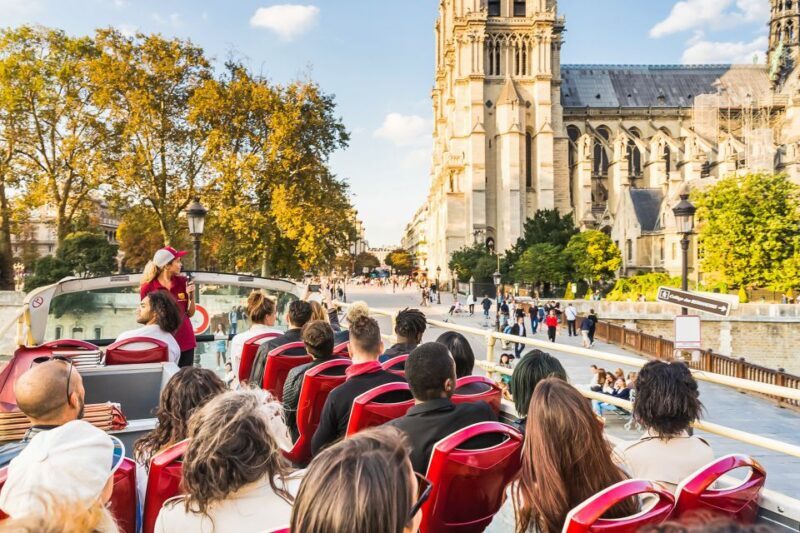
Notre-Dame is the kind of sight you want to see, but you also don’t want to over-plan. This stop puts you near Notre Dame at 3 Rue Lagrange, so you can step out, orient yourself, and decide whether you’ll do more exploring right away or save it for another trip.
The bus approach helps because Notre-Dame sits in a dense area. Walking there without a plan can be slow. The hop-off setup lets you keep your day flexible and avoid getting stuck in one neighborhood for too long.
Potential downside: Some travelers mention bus stops can be a short walk from the exact attraction. That’s not unusual in Paris, but it does mean comfortable shoes matter more than usual.


Musée d’Orsay Area: A Helpful Bridge Between Art and the River
The Musée d’Orsay stop is listed at 58 Place Henry de Montherlant. Even if you don’t go inside immediately, it’s a useful station because it anchors you along the Seine corridor.
The big value here is timing. In winter or busy seasons, you may not want to stand around waiting for the perfect moment. A bus ride gives you “moving viewpoints,” and the stop lets you control how long you stay.
Champs-Élysées and Grand Palais: Big Avenue Energy
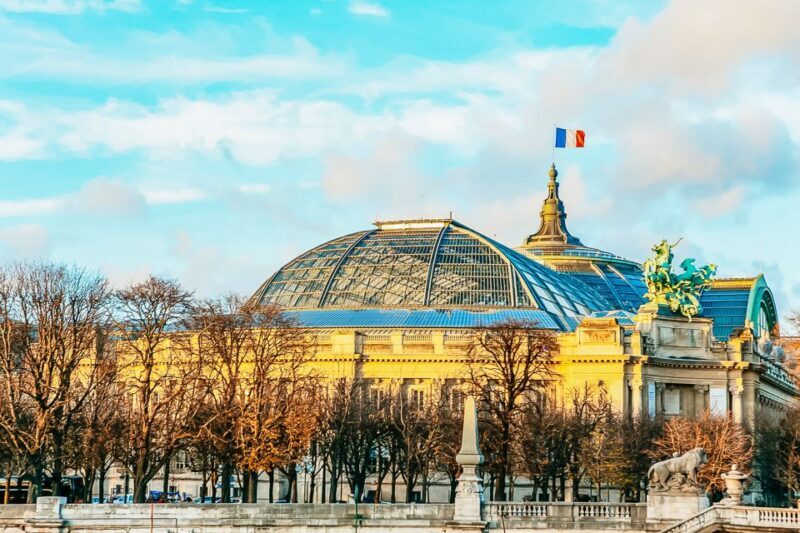
If you want the classic “Paris boulevard” feeling, the bus hits it hard. You’ll pass or stop near Champs-Élysées (156 Avenue des Champs-Élysées) and Grand Palais (Avenue Winston Churchill).
This is also a good place to hop off if you like browsing storefronts or simply want a wide street view from ground level for a while. The bus helps here because it saves you from trying to cross the city the long way on foot just to reach one showpiece avenue.
Photo note: The bus upper deck is often where people aim for landmark shots. If you go at a peak time, seats can fill up. Try earlier in the day if you care about the best spot.
Arc de Triomphe and the Big-Avenue Loop Feel
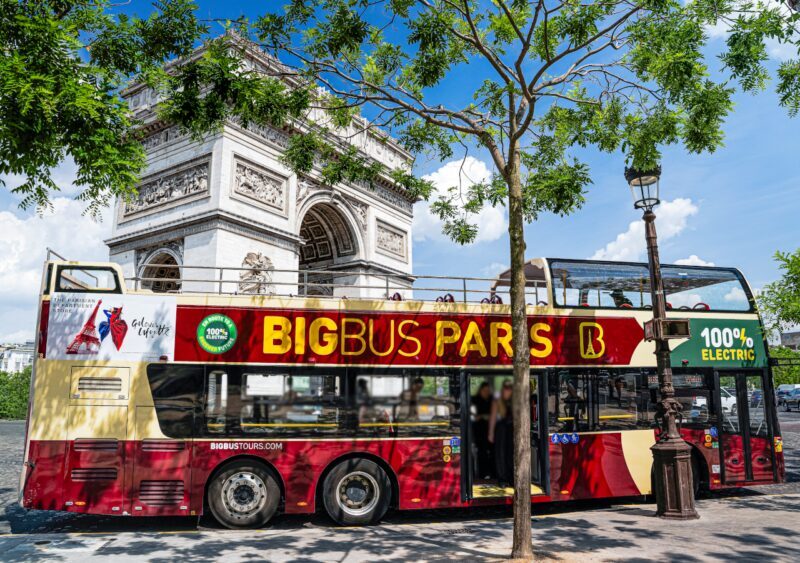
You’ll ride past and around the monumental avenues that funnel traffic toward the Arc de Triomphe zone. The itinerary lists Arc de Triomphe as a stop passed, plus other nearby passing sections like Palais de Chaillot and Petit Palais.
Even if you don’t hop off, this part of the route can make Paris feel legible. You start to see the city’s layout: wide avenues, grand buildings, and how the river and avenues connect.
Eiffel Tower and Champ de Mars: The Easy Hop-Off for the Classics
This is probably the stop most people plan around. The Eiffel Tower stop is listed at Quai Branly, Entrée 2 Tour Eiffel, and the Champ de Mars stop is on Avenue Joseph Bouvard.
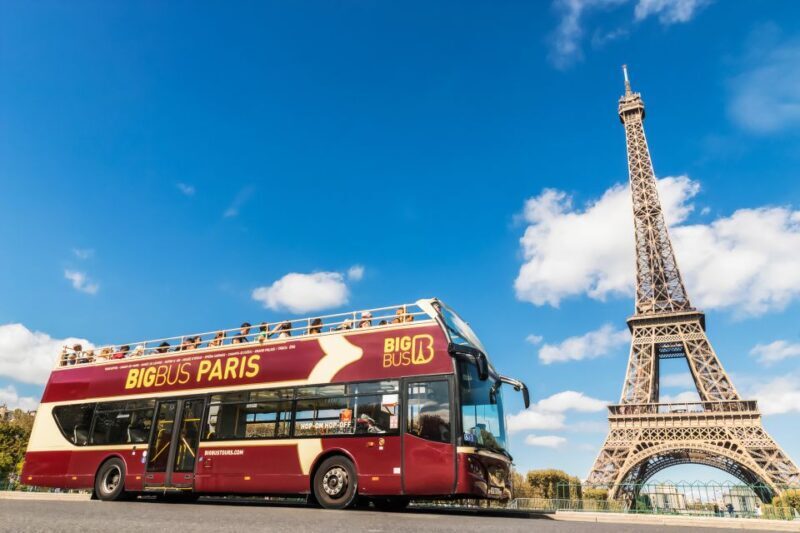
What makes this section especially valuable is the optional cruise connection. The Seine cruise departs from Pontoon No. 3, Port de la Bourdonnais, near the Eiffel Tower area (near the stop at #8). So you can plan your day around a simple flow: hop off for views, then cruise later without needing a complicated transfer.
If you’re doing this in colder months, expect the upper deck to feel chilly. Some travelers mention it’s cold on top, so you might want to mix upper-deck views with time on the lower level.
Opéra Garnier and Invalides: Great When You Want More Than One Theme
The bus route doesn’t only chase the “top 3.” It also includes stops near:
- Opéra Garnier (facing 15 Rue Scribe)
- Invalides (2 Avenue de Tourville)
Opéra Garnier is the kind of stop where the outside alone can feel like a mini-event, even if you don’t want to commit to tickets. Invalides gives you a different mood—more formal, historic, and grounded.
If you’re trying to build a Paris day that mixes architecture and landmark sightseeing, these stops add variety without extra hassle.
The Seine River Cruise: What One Hour Adds to Your Day
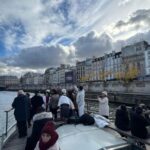
The optional cruise is 1 hour and is described as a scenic route along iconic riverside landmarks, monuments, and bridges. Cruises depart from Pontoon No. 3, Port de la Bourdonnais, near the Eiffel Tower area.
Timing is clearly defined:
- Cruises run from 10:30am to 9:00pm
- Departures are every 45 minutes
- On weekends, departures are every 30 minutes
- The cruise partner is Les Bateaux Parisiens
- Live commentary is included
This cruise makes sense even if you don’t consider yourself a “boat person.” The river gives you a different geometry for Paris. You also get a break from the stop-and-go walking rhythm.
Reality check: Some travelers avoided the cruise because waiting time can be long. If you hate the idea of waiting, choose your cruise slot carefully rather than treating it as a last-minute add-on.
Audio Commentary, Headphones, and the App That Saves Time
This tour includes multilingual digital audio commentary and provides souvenir headphones. You get languages listed for the audio guide including Chinese, English, French, German, Italian, Korean, Portuguese, Russian, and Spanish.
Driver languages are listed as English, French, German, Italian, Portuguese, and Spanish. Even though you’re mostly following the audio, many travelers appreciate the practical help drivers and staff can give on where to get off and what to expect next.
The free app adds real usefulness. It includes route information and real-time bus tracking. Several travelers mention it makes it easier to find the right stop and know how far away the next bus is.
Comfort, Frequency, and What Traffic Can Do to Your Day
Buses depart frequently, around every 10–20 minutes. That frequency is a big deal because it reduces the “waiting tax” that can ruin a self-guided day.
Still, traffic can slow things down. One traveler noted it can take longer between stops if roads are packed. So treat the schedule as a helpful guideline, not a promise that you’ll glide from sight to sight like a video montage.
Also, seat availability varies. Some people reported limited seating on top at certain stops, so plan to be flexible. Lower deck seating can also be the move in bad weather.
Accessibility Notes: Wheelchairs, Ramps, and Getting Around
This tour is listed as wheelchair accessible, and all buses have a ramp for access. The bus format (double-decker) can mean more stairs on the top level, but at least the system supports wheelchair boarding.
If you’re traveling with mobility needs, it’s worth planning your hop-offs around stops that reduce long walks afterward. Since bus stops can be a bit away from the exact entrance, short walking distances matter.
Practical Tips to Make This Feel Like Your Trip
Here’s how you get the most out of a hop-on hop-off day without turning it into a long bus-only blur:
- Start early and do one main hop-off cluster first (Louvre/Pont des Arts or Notre-Dame zones).
- Pick two to three hop-off targets you care about, then use the rest as “if we feel like it” stops.
- Use the app for real-time timing so you don’t drift too long at a stop.
- If the cruise is part of your plan, schedule it when you’re ready for waiting time, not at the end of a rushed day.
- If you’re sensitive to cold, spend more time on the lower deck and treat the upper deck as your photo window.
Should You Book This Paris Big Bus Tour?
Book it if you want an easy, flexible way to cover Paris highlights without obsessing over transit. It’s especially worth it for short stays, travelers who like panoramic views, and anyone who benefits from audio commentary while moving between neighborhoods. The overall vibe from traveler feedback is that it’s convenient, with frequent buses and a helpful setup that makes the city feel manageable.
Skip or rethink it if you’re hoping for deep, guided history or late-night sightseeing. The tour has a set end time (last bus at 17:30 from Stop 1), and some travelers found that waiting time for the cruise or crowded seating on top wasn’t their favorite part.
If you’re on your first Paris trip and you’re aiming for maximum coverage with minimum stress, this is one of the easiest ways to start.
Paris: Big Bus Hop-On Hop-Off Tour with Optional Cruise
FAQ
How long does the bus tour take?
The tour loop is listed as approximately 2 hours 15 minutes. Buses depart frequently (every 10–20 minutes).
Where do the Seine River Cruises depart from?
Cruises depart from Pontoon No. 3, Port de la Bourdonnais, which is near the Eiffel Tower area.
How often do the Seine cruises run, and what hours are available?
Cruises run from 10:30am to 9:00pm, departing every 45 minutes. On weekends, departures are every 30 minutes.
Can I start the hop-on hop-off tour at any stop?
Yes. You can begin your hop-on, hop-off tour from any of the Big Bus stops along the route.
Is the tour wheelchair accessible?
Yes. The buses are listed as wheelchair accessible, and there is a ramp on every bus.
Which languages are available for the audio guide?
The audio guide is listed in Chinese, English, French, German, Italian, Korean, Portuguese, Russian, and Spanish.
You can check availability for your dates here: