
I’m a big fan of Louvre tours that make the museum feel navigable, not like a maze. This Louvre masterpieces tour is built around a tight, elegant route, starting at Café Le Nemours with pre-reserved priority entry.
What I like most is the small six-guest group size, which keeps the experience personal, and the presence of a Louvre Museum–certified licensed guide who helps you understand what you’re seeing. You’ll cover the top icons without rushing, then you can keep wandering after the tour ends.
One consideration: the museum experience runs on tight timing. Your timed entry tickets expire quickly (5–10 minutes), and you’ll need to factor in security queues even with priority access.
- Key things to know before you go
- Why this Louvre tour works (and who it suits)
- Meeting at Café Le Nemours: your arrival game plan
- Louvre Pyramid: the quick orientation moment
- The real value: reserved priority entry (with security still in the picture)
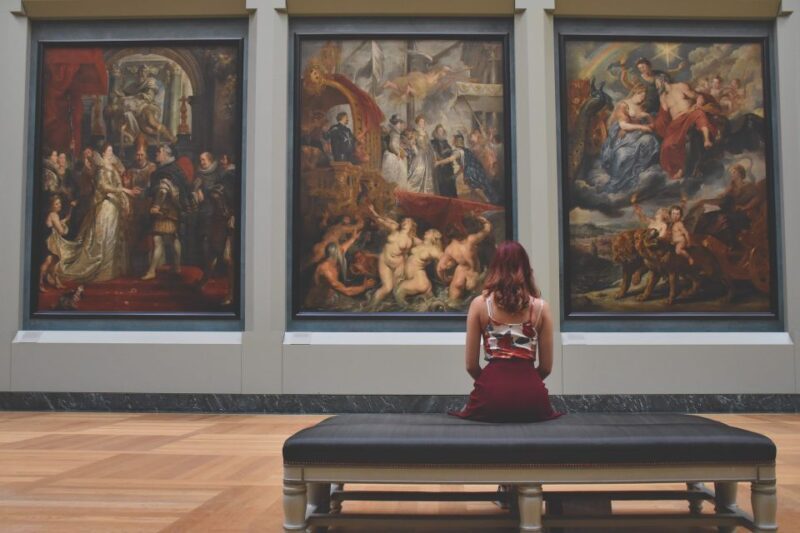
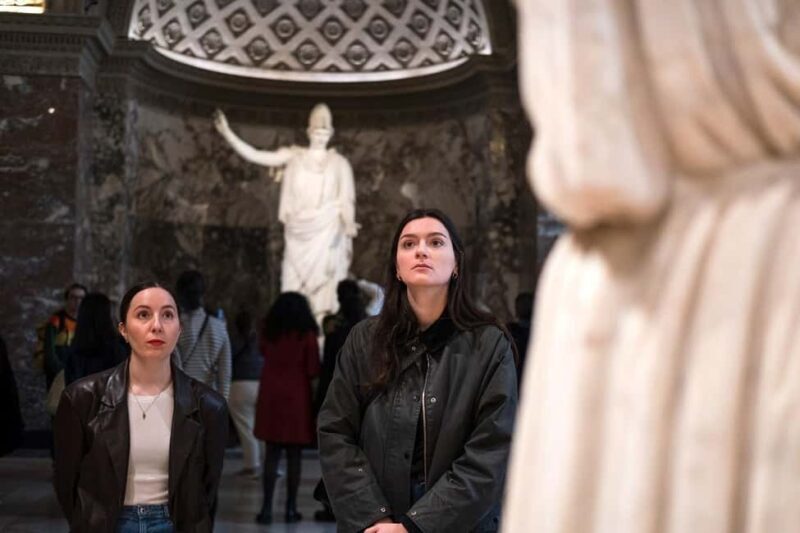
- What you’ll see inside: an elegant route through major masterpieces
- Mona Lisa, Venus de Milo, Winged Victory
- Italian Renaissance highlights: paintings with big drama
- French Romanticism: emotion, politics, and spectacle
- Neoclassical beauty and the Salon Carré atmosphere
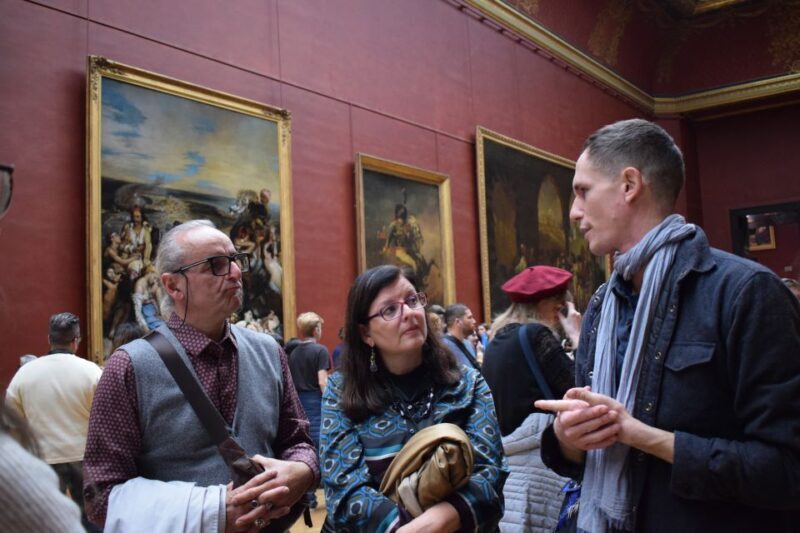
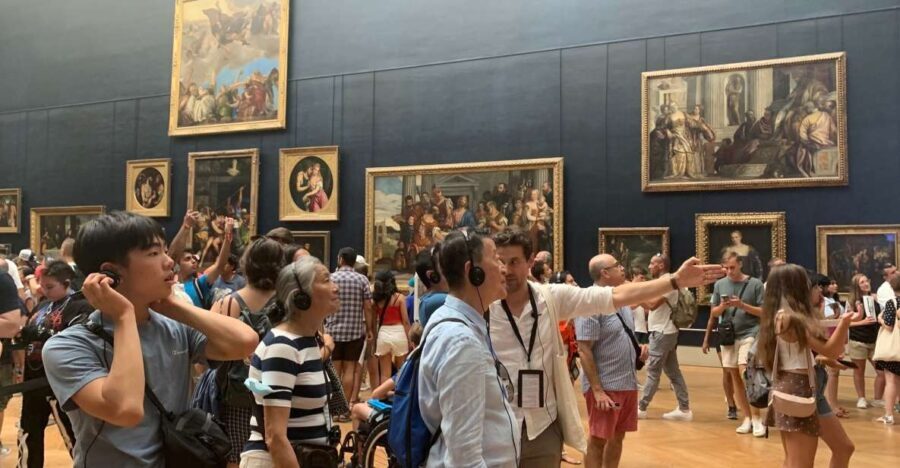
- How the guide changes the Louvre: licensed expertise + small-group control
- The schedule: what two hours feels like in practice
- After the tour: staying inside without turning it into chaos
- Practical logistics that can make or break the day
- Wear comfortable shoes and plan for walking
- Leave the big bags at the hotel
- Strikes can shut the museum with no notice
- Price and value: what 2 buys you
- Languages and flexibility
- Small-group expectations (and how splitting works)
- Who should book this Louvre tour?
- Should you book this Louvre Masterpieces Tour?
- FAQ
- Where do I meet for the Louvre tour?
- What’s the nearest metro station to the meeting point?
- How long is the tour?
- Is this tour a skip-the-line experience?
- What size is the group?
- Which languages are available for the live guide?
- Do I need to bring ID?
- Are bags, umbrellas, or mobility scooters allowed?
- Can I stay in the Louvre after the 2-hour guided tour ends?
- What if the Louvre closes due to strikes?
- More Tickets in Paris
- More Tours in Paris
- More Tour Reviews in Paris
Key things to know before you go
 1 / 10
 2 / 10
 3 / 10
 4 / 10
 5 / 10
 6 / 10
 7 / 10
 8 / 10
 9 / 10
 10 / 10
- Priority access with smart timing: you skip the long entrance queues, but you still go through security like everyone else.
- Small group equals better pacing: up to 6 guests, so your guide can move at a human speed and answer questions.
- A curated route across major eras: from Italian Renaissance to French Romanticism and neoclassical highlights.
- You can stay after the tour: your pre-reserved tickets let you continue exploring at your own pace once the guided portion ends.
- Tickets are time-limited and single-use: timed entry and you can’t re-enter if you leave certain wings.
Why this Louvre tour works (and who it suits)
The Louvre is huge. Even with a “must-see” list, it’s easy to burn your whole day drifting from one crowd to another. This tour is built for the opposite goal: getting you to the right places fast, with context so the masterpieces actually land.
You’ll get the museum’s big hits in about two hours, while still having time to think, look, and ask questions. That’s the sweet spot for first-timers, art lovers with limited time, and travelers who don’t want to spend their Paris morning wrestling with signage and crowds.
This is especially good if you want iconic works like the Mona Lisa without treating the museum like a sprint. If you prefer a calm experience and you like having a plan, you’ll likely feel like the Louvre finally makes sense.
You can also read our reviews of more tours and experiences in Paris



Meeting at Café Le Nemours: your arrival game plan
The tour starts in front of Café Le Nemours. Your guide meets you holding a sign that says Walks In Europe, so you’re not left guessing.
If you’re using the metro, the nearest station is Palais Royal. Take exit 5, Place Colette. When you come out, turn around and you’ll see the café.
Two practical tips that matter here:
- Leave margin for Paris traffic and walking time. You can’t join after the tour starts.
- Bring your identification. A passport or ID card is required for entry.
Louvre Pyramid: the quick orientation moment
Before you’re inside the museum, you’ll pass by the Louvre Pyramid. It’s brief, but it helps you orient your bearings—so once you step into the galleries, you’re not totally disoriented.
This is also the moment where you’ll likely get your first sense of the route style: not random wandering, but an efficient path that moves through major departments.
The real value: reserved priority entry (with security still in the picture)
This tour includes pre-reserved priority tickets and a separate entrance for skipping the main line. That’s huge during high season, when even seasoned visitors can lose a surprising amount of time just trying to get inside.
But here’s the honest part: all visitors still must go through security. That security line can be long, so priority entry mainly helps you avoid the worst entrance congestion—not eliminate waiting entirely.
Also keep these ticket rules in mind:
- Tickets are timed and expire within 5 to 10 minutes.
- Tickets can be used only once. If you leave one of the museum wings, you won’t be able to re-enter.
So your best strategy is simple: plan to stay inside during the guided time, and don’t treat it like a drop-in-and-out museum day.
More Great Tours NearbyWhat you’ll see inside: an elegant route through major masterpieces
Your guided tour takes you through eight departments and covers the museum’s essential highlights without the overwhelm. The focus is on works visitors actually remember—and understanding why they matter.
The route includes iconic sculptures and paintings, plus a tour thread that ties eras together instead of presenting the collection as disconnected art facts.

Mona Lisa, Venus de Milo, Winged Victory
You’ll encounter the headline icons many people come for:
- Mona Lisa
- Venus de Milo
- Winged Victory of Samothrace
Even if you’ve seen photos, it helps to have a guide explain what makes these works so influential—composition, style, and the cultural reasons they became symbols. You’ll also be guided along an efficient path designed to reduce your time stuck facing the toughest crowds.
Italian Renaissance highlights: paintings with big drama
Expect to see major works tied to the Italian Renaissance, including:
- The Wedding Feast at Cana
- Michelangelo’s Slaves
This is where the tour’s pacing helps. In a self-guided visit, it’s easy to glance, move on, and forget what you were looking at. With a guide, you’re more likely to catch details—expression, storytelling choices, and what artists were trying to communicate in that period.
French Romanticism: emotion, politics, and spectacle
The itinerary also includes French Romanticism crowd magnets like:
- The Raft of the Medusa
- Liberty Leading the People
- The Coronation of Napoleon
This portion is valuable because Romanticism is more than “pretty paintings.” You’ll learn how artists used bold scenes to comment on politics, upheaval, and national identity. It’s the kind of context that turns a famous canvas into something you can actually interpret.
Neoclassical beauty and the Salon Carré atmosphere
Later, you’ll move into neoclassical and architectural highlights such as:
- Psyche Revived by Cupid’s Kiss
- The Caryatids
- The Salon Carré
The Salon Carré stop is a good reminder that the Louvre isn’t just paintings and sculptures—it’s also design, display, and the grand way the museum frames masterpieces. The Caryatids are especially worth pausing for, because they connect sculpture and space in a way that feels almost architectural.
How the guide changes the Louvre: licensed expertise + small-group control
This tour is guided by a professional licensed guide for the Louvre Museum, and the group size is kept to only six guests.
That combination is why this feels different from a big bus-style “see everything” tour. When you’re in a small group, your guide can slow down where you need it and speed up when you don’t. You also get a better chance to ask questions without hearing a constant group-management voice.
If you’re wondering about guide style, past guests often highlight engaging personalities like Jerome, Laura, Patrick, Mattéo, Yseult, Valerie, Anthony, Iason, Ashkan, and Alban. While guides can vary day to day, the consistent theme is expertise paired with an easy, conversational approach that makes the museum less intimidating.
The schedule: what two hours feels like in practice
Two hours inside the Louvre can sound short—until you realize the museum is so vast that “more time” doesn’t automatically mean “more understanding.”
Here’s what tends to work well about this format:
- You get an organized walkthrough of the most in-demand works.
- You get enough explanation to recognize the differences between eras and styles.
- You avoid getting trapped in a never-ending cycle of searching for the next stop.
And then comes the smart part: you’re not locked into the tour after those two hours. With your pre-reserved tickets, you can stay and explore at your own pace.
After the tour: staying inside without turning it into chaos
When the guided part ends, you can remain in the museum and keep exploring. This is where you take advantage of having the guide’s “mental map” in your head.
But remember the ticket rules: your timed entry is single-use, and tickets are valid for entry at the start window. Also, if you leave one wing, you can’t come back in. So once you’re done with the guided highlights, choose your next plan carefully and don’t wander too far thinking you can casually re-enter a different area later.
Practical logistics that can make or break the day
A Louvre visit has a few landmines. This tour tries to reduce them, but you still need to play it smart.
Wear comfortable shoes and plan for walking
This is not listed as suitable for people with mobility impairments, and wheelchair users aren’t supported. Even for able-bodied visitors, the Louvre involves lots of walking and standing.
Leave the big bags at the hotel
Large bags, luggage, and umbrellas are not allowed. Security rules are real, so travel light. If you’re the type who packs an entire carry-on’s worth of stuff for the day, this is the time to downsize.
Strikes can shut the museum with no notice
Strikes at the Louvre may happen, and the museum may decide to close with no prior notice. If that happens, there will be no refund. It’s not something you can control, but it’s important to know if you’re visiting during periods when labor actions are common.
Price and value: what $152 buys you
At $152 per person for a 2-hour experience, the price isn’t “cheap.” But it’s also not random. You’re paying for three things that are hard to replicate on your own:
- Reserved priority entry that helps you bypass the worst queues.
- A licensed, expert guide who can explain what you’re seeing and steer you through the museum efficiently.
- A small-group format that turns the Louvre into a human-scale experience.
If you try to do this alone, you’ll likely spend time figuring out where to go and waiting for entry and security. That time adds up fast in a museum that can swallow a whole day.
Where it might not be ideal is if you’re the kind of traveler who loves drifting for hours and you already know which rooms you want. In that case, you might prefer a different format that gives you more unstructured time from the start.
Languages and flexibility
The live tour guide runs in English and German.
You’ll also get practical booking flexibility:
- Free cancellation up to 24 hours in advance for a full refund.
- Reserve now & pay later is available, so you can lock in a spot without paying right away (depending on availability).
Small-group expectations (and how splitting works)
This is designed for groups of up to six guests. If a larger group exists at the meeting point, the group may be split into different groups so each guide gets six people.
That’s usually a positive thing—it protects the small-group feel and keeps the tour experience from turning into a crowd-control exercise.
Who should book this Louvre tour?
You should strongly consider booking if:
- You want the Mona Lisa and other top works without losing most of your day to queues.
- You prefer a clear plan with a guide’s context, not just a scavenger hunt.
- You’re visiting with limited time and want a high-impact Louvre experience.
- You value good value for money when it saves time and reduces stress.
You might hesitate if:
- You need wheelchair access or have mobility limitations that make a lot of walking hard (the tour isn’t listed as suitable for wheelchair users).
- You want a very slow, open-ended museum day with no structure.
- You’re visiting during a period where strikes are a real concern and your schedule can’t flex if the Louvre closes.
Should you book this Louvre Masterpieces Tour?
Yes, if your goal is a smart, efficient Louvre visit with a top tier guide. The combination of priority entry, a small six-guest group, and a guided route through the museum’s major eras is exactly what makes this feel worth the money.
If you’re comfortable with timed ticket logistics and you’re willing to travel light and move on foot, this tour will likely give you the best “first taste” of the Louvre—then you can stay inside and enjoy the museum at your own pace afterward.
Paris: Louvre Masterpieces Tour with Pre-Reserved Tickets
FAQ
Where do I meet for the Louvre tour?
Meet in front of Café Le Nemours. The guide will be holding a sign with Walks In Europe.
What’s the nearest metro station to the meeting point?
The nearest station is Palais Royal. Take exit 5, Place Colette, then turn around to see Café Le Nemours.
How long is the tour?
The guided portion is 2 hours.
Is this tour a skip-the-line experience?
Yes. You get pre-reserved priority entry and use a separate entrance to skip the main line.
What size is the group?
The tour is limited to a small group of only up to 6 people.
Which languages are available for the live guide?
The live tour guide is available in English and German.
Do I need to bring ID?
Yes. Bring a passport or ID card.
Are bags, umbrellas, or mobility scooters allowed?
No. Luggage or large bags, umbrellas, and mobility scooters are not allowed.
Can I stay in the Louvre after the 2-hour guided tour ends?
Yes. Your pre-reserved tickets let you continue exploring on your own after the tour ends.
What if the Louvre closes due to strikes?
Strikes may happen and the museum may close with no prior notice. If this happens, there will not be a refund.
You can check availability for your dates here: