This Louvre skip-the-line guided tour is designed to cut through the worst friction of visiting the museum: long ticket queues and getting lost in a place so huge it can feel like a maze. You meet at the Louvre Pyramid, walk a curated highlights route, and get clear explanations for the works that most people come to see—especially the Mona Lisa.
What I like most is the people part and the route part. First, the guides are repeatedly praised for being both knowledgeable and genuinely engaging (I’ve seen names like Sid, Martin, Joe, Will, and Miriam pop up in recent feedback). Second, the tour hits big-name masterpieces like Venus de Milo and the Winged Victory of Samothrace without wasting your energy wandering the wrong corridors.
One consideration: even with fast entry, you should still expect a security check—some groups report a wait there can be up to 20 minutes in busy periods. Also, this tour isn’t a fit if you have mobility limitations due to the walking and layout.
- Key Points at a Glance
- Louvre Pyramid Entry: The Fast Start You’ll Thank Yourself For
- Security and Timing: Skipping Tickets Is Not the Same as Skipping Everything
- Small Group = Less Chaos, More Questions
- The Highlights Route: A Guided Walk That Feels Purposeful
- Venus de Milo: When a Missing Piece Still Dominates
- Winged Victory of Samothrace: The Moment the Room Changes
- Mona Lisa: The Famous Painting, the Famous Debate, the Human Stories
- Italian Renaissance Stops: Botticelli, Veronese, Raphael
- How Long Is Enough? 2 Hours vs. Longer Days
- After the Tour: Recommendations and a Smart Plan for the Rest of the Day
- Price and Value: Is Reasonable for the Louvre?
- Practical Stuff You Need to Know (Bags, Photos, Comfort)
- The Guide Factor: Names You Might Run Into
- Who Should Book This Louvre Tour
- Should You Book? My Decision Checklist
- FAQ
- What’s included in the Louvre skip-the-line tour?
- Where do we meet the tour guide?
- How long is the tour?
- What will we see during the tour?
- Are there food and drinks included?
- Will we have to wait even with skip-the-line entry?
- Can I take photos in the museum?
- Is the tour suitable for visitors with mobility issues?
- More Guided Tours in Paris
- More Tours in Paris
- More Tour Reviews in Paris
Key Points at a Glance
 1 / 9
1 / 9 2 / 9
2 / 9 3 / 9
3 / 9 4 / 9
4 / 9 5 / 9
5 / 9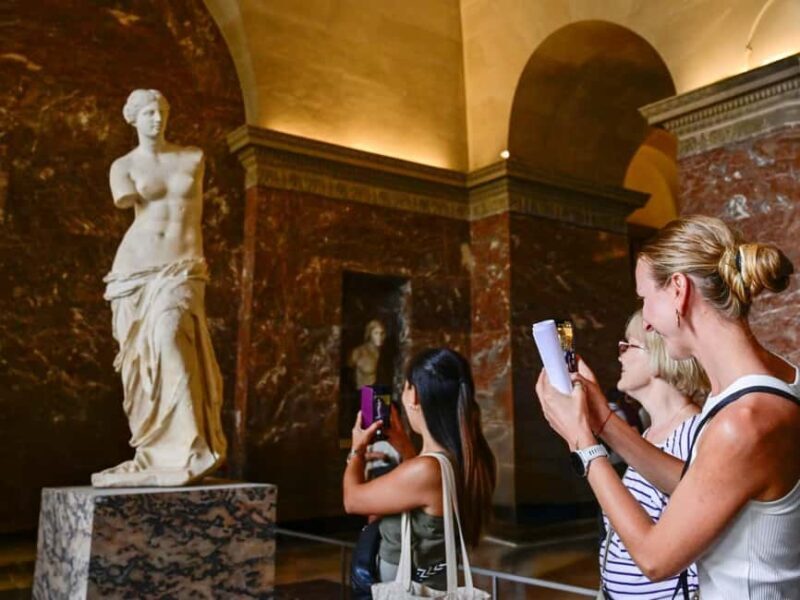 6 / 9
6 / 9 7 / 9
7 / 9 8 / 9
8 / 9 9 / 9
9 / 9- Meet at the Louvre Pyramid near the Louis XIV equestrian statue, with a The Tour Guy sign
- Skip-the-ticket-line access is included when that option is selected, but security lines can still exist
- Small groups help you move faster and ask questions without feeling rushed
- The tour focuses on high-demand icons like the Mona Lisa plus major sculptures and Italian Renaissance works
- Guides often tailor pacing on the spot (for example, deciding whether to pause for the Mona Lisa based on crowd flow)
Louvre Pyramid Entry: The Fast Start You’ll Thank Yourself For
Your day begins in the right spot: outside the Louvre Pyramid area, where your guide meets you by the equestrian statue of Louis XIV in front of the pyramid. Your guide will be holding a sign that says The Tour Guy.
A note on meeting logistics: your start point can vary. The details mention two options—Place des Abbesses and the Louis XIV statue by the Louvre Pyramid area. So before you head out, double-check your confirmation message so you’re standing at the right corner when your guide arrives.
This matters because the Louvre is not one of those sights where you can casually drift in late. Even if you skip one line, you still lose time if you’re not in sync with the group.
You can also read our reviews of more guided tours in Paris



Security and Timing: Skipping Tickets Is Not the Same as Skipping Everything
Even with skip-the-ticket-line access, you may still face a wait for security. The information provided says that during high season this can be up to 20 minutes.
Here’s the practical take: it’s still usually faster than standard admission lines, but you shouldn’t plan a tight schedule right after entry. Build in a little buffer, especially if you’re visiting during peak months or on a weekend.
Once you’re through, the real benefit kicks in. The guide handles the pacing and the turns so you’re not spending your best museum time trying to locate the next artwork on a crowded map.
Small Group = Less Chaos, More Questions
The Louvre is enormous. Without a plan, many visitors bounce between wings like they’re trying to outrun their own confusion.
That’s where the small group approach helps. Recent feedback highlights groups that were around six people, which tends to create a calmer experience: fewer bottlenecks, less earbud-to-guide-distance, and more room for questions.
Also, if you’re the kind of traveler who likes to understand what you’re looking at, a live guide changes the game. People in recent comments repeatedly mention guides being funny, patient, and clear—like Sid, Martin, and Joe, who were singled out for mixing stories with art-history context.
The Highlights Route: A Guided Walk That Feels Purposeful
This tour is built around seeing the museum’s biggest crowd magnets and several major supporting stars in a logical flow. You start with a photo stop near the pyramid, then move into the museum for the guided portion.
Instead of a “see everything” promise—which is unrealistic in the Louvre—this focuses on the works that people can’t stop talking about. The result is a visit that feels efficient and satisfying, especially if this is your first time in the museum.
Expect the guide to frame artworks in plain language: what you’re seeing, why it matters, and how it fits into the artist’s world. Many visitors also say they learned how the Louvre evolved into the collection you see today, not just details about one painting at a time.
More Great Tours NearbyVenus de Milo: When a Missing Piece Still Dominates
One of the first big sculpture moments on the route is Venus de Milo. Even if you’ve seen her in books, this is different in person: scale, material, and the way the form holds attention without needing movement.
The guide’s role here is crucial. A sculpture this famous can feel like a “box check” if you only know the nickname. But with an informed guide, you get a better sense of style and symbolism—plus why this statue has influenced artists for generations.
Practical perk: sculpture rooms can be easier to enjoy than painting galleries when you’re dealing with crowds. You’re still surrounded by people, but the viewing experience can feel more open than the tight places near the most famous paintings.
You can also read our reviews of more museum experiences in Paris


Winged Victory of Samothrace: The Moment the Room Changes
Next is The Winged Victory of Samothrace, one of the most dramatic works in the Louvre. It’s the kind of sculpture where you stop without meaning to—because it’s all about motion implied through fabric and posture.
If you’re someone who likes “why it looks the way it does,” this is a strong stop. The tour description emphasizes that the guide explains the history behind the piece, and visitors consistently praise guides for making these iconic works feel tangible rather than just distant museum labels.
Downside to be aware of: any ultra-famous artwork can get crowded. The guide helps manage that with pacing and decision-making—some groups report the guide asking whether to wait for the Mona Lisa or keep moving based on crowd conditions.
Mona Lisa: The Famous Painting, the Famous Debate, the Human Stories
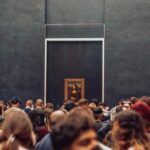
Yes, you’ll see Leonardo da Vinci’s Mona Lisa—Lisa Gherardini—on this tour. And no, it’s not just a quick stare. The Mona Lisa stop comes with context: the famous discussion about her expression, and the story history behind the painting.
Here’s why a guided stop is worth it: the Mona Lisa is famous enough that your brain may expect magic on contact. But what tends to wow people more is the explanation—how her expression has fueled debate over whether she looks happy or sad, and how that uncertainty becomes part of the painting’s power.
A practical note from the info you have: even with skip-the-line entry, you might not get close to the superstar if crowding is intense. One recent comment mentions not being able to get closer due to the queue. The guide can’t control the crowd, but they can help you see the painting thoughtfully rather than treating it like a rush-through checkpoint.
Italian Renaissance Stops: Botticelli, Veronese, Raphael
After the major showpieces, you move through part of the Italian Renaissance collection. The tour description specifically points to artists like Botticelli, Veronese, and Raphael.
This section matters for two reasons:
1) You’ll see more than just one “genius brand-name” artist.
2) You get a sense of how Renaissance work connects across styles and themes.
One challenge at the Louvre is that the collection is so vast—over 38,000 works is mentioned—that a self-guided visit can become a blur. On a tour like this, you’re not trying to absorb everything; you’re building understanding through selected masterpieces.
How Long Is Enough? 2 Hours vs. Longer Days
The duration you’ll see listed can range from 2 to 8 hours, depending on the option you choose. Your guided museum tour portion is described as 2 hours within that broader time frame.
So what’s the practical sweet spot?
- If you have limited time (or you’re planning other Paris stops), a shorter highlights tour is often the best value. You’ll hit the big works without committing half your day to museum navigation.
- If you want more breathing room, selecting a longer option can help you absorb more context and finish with less of that end-of-tour fatigue.
Some visitors say the tour length felt “just right,” and a few mention wanting it to go longer—so your ideal choice likely depends on how museum-brained you are.
After the Tour: Recommendations and a Smart Plan for the Rest of the Day
When the guided portion ends, you’re not immediately kicked out. The info says that after your guide says goodbye, you can stay inside until closing time. But there’s a catch: once you exit the area where the artwork you were viewing is, you won’t be allowed to re-enter.
That’s important for planning. If you want more time for wandering, decide before the end of the tour where you’ll go next. Otherwise you might find yourself stuck in a “close but not inside” situation.
Your guide can also help with what to do for the remainder of your time in Paris. Many tour experiences like this end with restaurant suggestions, and while food and drinks are not included here, you can use that recommendation moment to plan a meal—or even a tapas-style stop—after your museum energy dips.
Price and Value: Is $80 Reasonable for the Louvre?
At about $80 per person, this isn’t a budget miracle—but it’s also not “pay more to waste money” pricing. For that cost, you get:
- Admission
- An English-speaking professional guide
- Skip-the-ticket-line access when that option is selected
So where’s the value really coming from? Time and mental load.
If you go to the Louvre without a plan, you pay in stress: locating highlights, waiting in multiple lines, and losing the thread of what matters. Paying for a guide often turns your visit into a curated experience—especially if you’re interested in context around the Mona Lisa, Venus de Milo, and major Renaissance works.
Also, the feedback rate is strong (a 4.6 rating from 1,442 reviews), with lots of visitors praising guides as entertaining, efficient, and knowledgeable. That’s a good sign that you’re paying for more than just entry.
Practical Stuff You Need to Know (Bags, Photos, Comfort)
A good day at the Louvre starts before you even enter.
What to bring
- A passport or ID card
- Comfortable shoes (you’ll walk)
What’s not allowed
- Weapons or sharp objects
- Baby strollers
- Smoking
- Luggage or large bags
Bag limits and no coat check
The information is very specific: large bags, backpacks, luggage, umbrellas, tripods, and items exceeding 55 cm x 35 cm x 20 cm can’t be brought in. There’s no coat check, and lockers aren’t accessible on the small group tour (so leave big stuff at your accommodation).
Photography
Photography and filming are strictly prohibited in the temporary exhibition rooms. The rules about other areas aren’t spelled out here, so if you’re unsure, watch for posted signs and follow your guide’s cues.
Accessibility
This tour is not suitable for people with mobility impairments, likely due to walking distance and museum layout.
The Guide Factor: Names You Might Run Into
One of the best parts of this type of tour is that the guide is the product. And recent traveler comments highlight that the best guides don’t just recite facts—they manage attention and pacing.
You may see guides like:
- Sid (praised for explaining clearly and being funny)
- Martin (knowledgeable and entertaining)
- Miriam (described as checking in and pacing the Mona Lisa decision)
- Joe and Will (praised for enthusiasm, clarity, and strong art history explanations)
- Delly and Marianne (mentioned for being explicit, efficient, and friendly)
- Astrid (noted for engaging kids with treasure-hunt style energy)
Even when the guide names differ, the pattern is consistent: visitors like that the explanations feel timed to what you’re actually seeing.
Who Should Book This Louvre Tour
This is a strong choice if you:
- Want to see Mona Lisa and major highlights without wandering
- Like learning with a real guide instead of reading wall labels alone
- Prefer a small group experience where questions are welcome
- Are visiting at the end of a busy day and want a well-paced plan
It may not be the best choice if you:
- Need mobility-friendly routes (the tour is listed as not suitable)
- Can’t walk comfortably in a large, crowded museum
- Plan to rely on big bag storage or lockers (there’s no coat check and locker access is limited)
Should You Book? My Decision Checklist
Book this Louvre tour if you want a guided, highlight-focused visit that’s structured enough to save time and crowded headache. For first-timers, it’s especially useful because it gives you an anchor set of works—Mona Lisa, Venus de Milo, Winged Victory—then builds outward with Renaissance context.
Hold off or pick a different option if:
- You’re traveling with large items you can’t carry within the size limit
- You need accessibility accommodations
- Your schedule is so tight that a potential security wait up to 20 minutes would wreck your day
If your goal is to leave the Louvre feeling like you understood what you saw—rather than just photographed it—this tour looks like a very solid bet.
Paris: Skip-the-Line Louvre Museum & Mona Lisa Guided Tour
FAQ
What’s included in the Louvre skip-the-line tour?
You’ll get admission, an English-speaking professional guide, and skip-the-ticket-line access when that option is included in your booking.
Where do we meet the tour guide?
The guide meets you at the equestrian statue of Louis XIV in front of the Louvre Pyramid, holding a sign that says The Tour Guy. Your start point may vary, with Place des Abbesses listed as another option.
How long is the tour?
The tour duration can be 2 to 8 hours, depending on the starting time/option you choose.
What will we see during the tour?
Expect to visit major highlights including Venus de Milo, Winged Victory of Samothrace, and Leonardo da Vinci’s Mona Lisa, plus other stops in the Italian Renaissance collection.
Are there food and drinks included?
No. Food and drinks are not included.
Will we have to wait even with skip-the-line entry?
Yes, you might still wait at security, even with skip-the-ticket-line access. In high season, that wait can be up to 20 minutes.
Can I take photos in the museum?
Photography and filming are strictly prohibited in the temporary exhibition rooms. Follow posted rules and your guide’s instructions for other areas.
Is the tour suitable for visitors with mobility issues?
No. The tour is listed as not suitable for people with mobility impairments.
You can check availability for your dates here: