
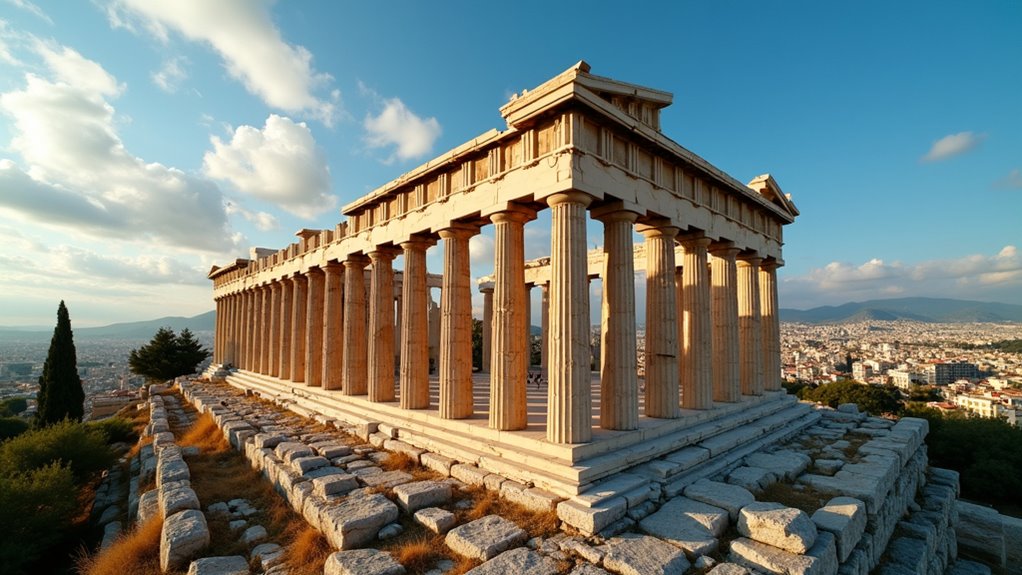
You’ll want to visit these epic Greek mythology sites with your Percy Jackson fans: the Acropolis where Athena’s temple stands, Delphi’s Oracle center, Cape Sounion’s Temple of Poseidon, Ancient Corinth with its war god temples, Nemea where Heracles battled the lion, Olympia’s Zeus temple, Knossos Palace’s legendary labyrinth, Diktaion Cave where Zeus was born, and Naxos’s Portara gateway. These budget-friendly destinations transform Rick Riordan’s stories into real adventures your kids can explore firsthand, discovering ancient secrets around every corner.
- The Acropolis and Parthenon: Where Heroes Made Their Final Stand
- Delphi Oracle: Center of the World and Home of Great Prophecies
- Temple of Poseidon at Cape Sounion: Discovering Percy’s Divine Heritage
- Ancient Corinth: Birthplace of Medea and Home to War Gods
- Nemea: Site of Heracles’ First Labor Against the Nemean Lion
- Epidaurus: Sacred Healing Sanctuary of the Demigods
- Ancient Olympia: Birthplace of the Olympic Games and Temple of Zeus
- Knossos Palace: Enter the Labyrinth of the Minotaur
- Diktaion Cave: Hidden Birthplace of Zeus on Mount Ida
- Naxos and the Portara: Gateway to Apollo’s Temple and Dionysus Legends
- The Sum Up
The Acropolis and Parthenon: Where Heroes Made Their Final Stand
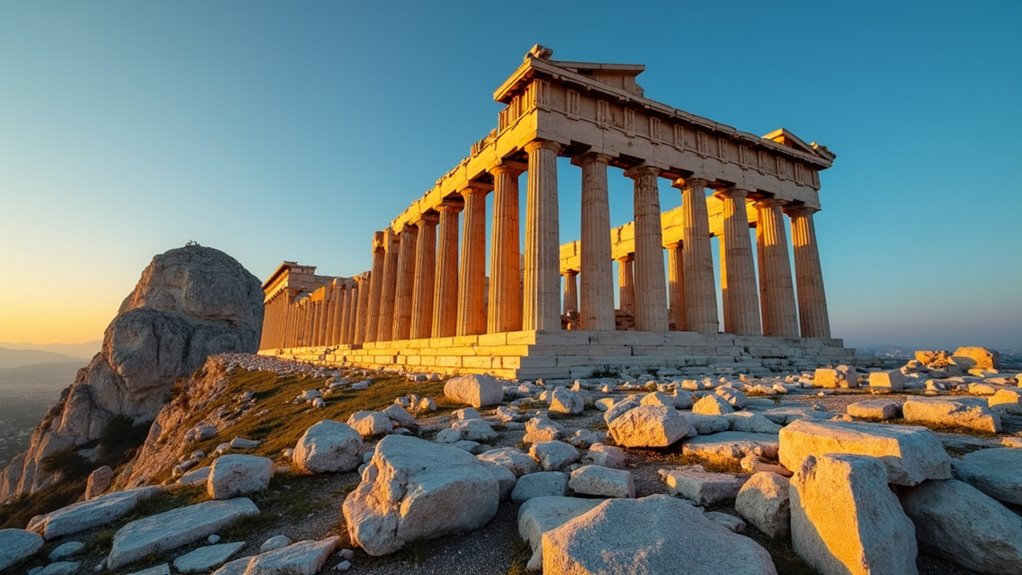
When you stand atop the Acropolis in Athens, you’re walking where ancient heroes once made their most important decisions. This fortified hill served as the religious and political heart of ancient Athens, where King Aegeus watched for his son Theseus’s return from Crete.
You’ll see the Parthenon, Athena’s marble temple that celebrates her victory over Poseidon in their contest to protect the city. The Erechtheion houses Athena’s sacred olive tree, while the Temple of Athena Nike honors battlefield victories.
Percy Jackson fans will recognize the rivalry between Athena and Poseidon that runs throughout the series. The site’s sculptures depict epic battles between civilization and chaos, making it great for understanding the godly conflicts that drive demigod adventures. On the slopes below, the Theatre of Dionysus served as the birthplace of Western theatre, where ancient Greeks learned stories of gods and heroes through tragedy and comedy.
Delphi Oracle: Center of the World and Home of Great Prophecies
While Athens showcased the rivalry between gods, Delphi reveals where mortals actually spoke with them. You’ll find this ancient site perched on Mount Parnassus slopes, where Apollo’s Oracle delivered prophecies that shaped Greek history.
According to myth, Apollo slew the dragon Python here, claiming this sacred spot from the earth goddess Gaia.
The famous Omphalos stone marked Delphi as the world’s center – imagine Percy Jackson characters consulting the Oracle just like ancient Greeks did! Kings and commoners traveled here seeking guidance on everything from wars to personal decisions.
The Oracle’s “wooden walls” prophecy even helped Athens defeat the Persians at Salamis. The site also hosted the Pythian Games every four years to honor Apollo’s victory over Python, similar to the Olympics. Today, you can explore temple ruins and imagine hearing cryptic prophecies that changed civilization’s course.
Temple of Poseidon at Cape Sounion: Discovering Percy’s Divine Heritage
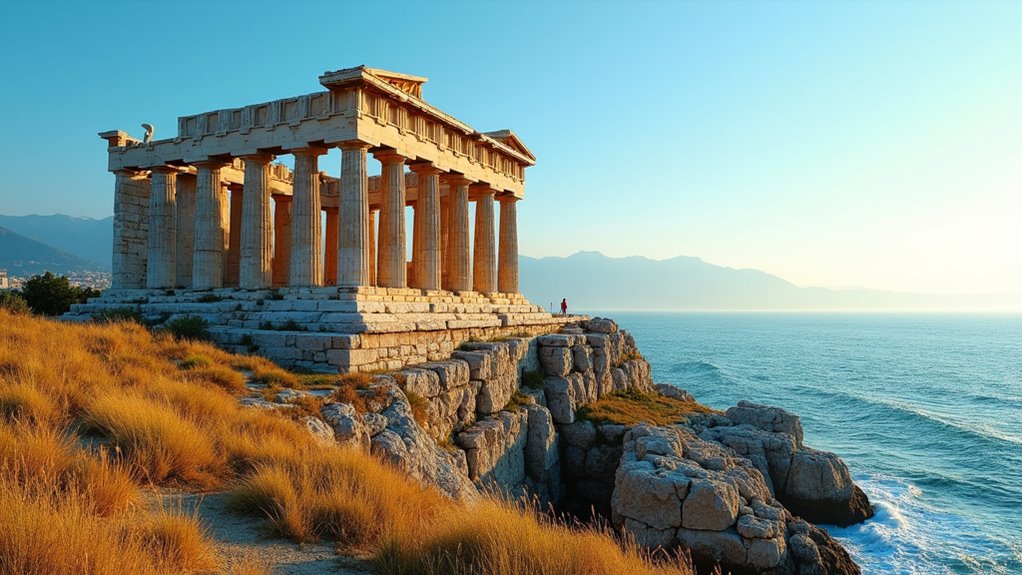
After consulting Apollo’s Oracle at Delphi, you’ll want to head southeast to where Percy Jackson’s story comes alive – the Temple of Poseidon at Cape Sounion. This clifftop temple overlooking the Aegean Sea was built for Percy’s divine father between 444-440 BC.
You’ll find 15 of the original 34 white marble columns still standing dramatically against the sky.
The temple’s location makes perfect sense for Poseidon’s domain – sailors used it as a landmark for centuries. Kids will love connecting the mythological friezes depicting Theseus’s adventures to Percy’s own heroic quests. The site gains even more legendary significance as the place where King Aegeus tragically leaped to his death, giving the Aegean Sea its name.
The 80-kilometer drive from Athens is budget-friendly, and sunset visits offer spectacular photos.
Standing here, you’ll understand Percy’s connection to the sea god’s power.
Ancient Corinth: Birthplace of Medea and Home to War Gods
As you journey southwest from Cape Sounion, Ancient Corinth awaits with its darker mythological connections that’ll fascinate Percy Jackson fans. This strategic city was Medea’s legendary birthplace, where she practiced sorcery before her tragic exile.
You’ll explore the impressive Temple of Apollo, where seven Doric columns still stand majestically in the central agora.
Don’t miss Peirene Fountain, where myth claims Pegasus struck the ground with his hoof, creating this natural spring. The site houses multiple temples dedicated to war gods including Aphrodite, Heracles, and Poseidon – great for discussing divine conflicts with young demigod enthusiasts.
The dramatic Acrocorinth fortress backdrop enhances the mythological atmosphere. The site also features an ancient theatre that once seated approximately 18,000 spectators, showcasing the grandeur of Greek entertainment culture.
With affordable entry fees and educational exhibits, Ancient Corinth offers budget-friendly exploration of Greece’s darker legendary tales.
Nemea: Site of Heracles’ First Labor Against the Nemean Lion
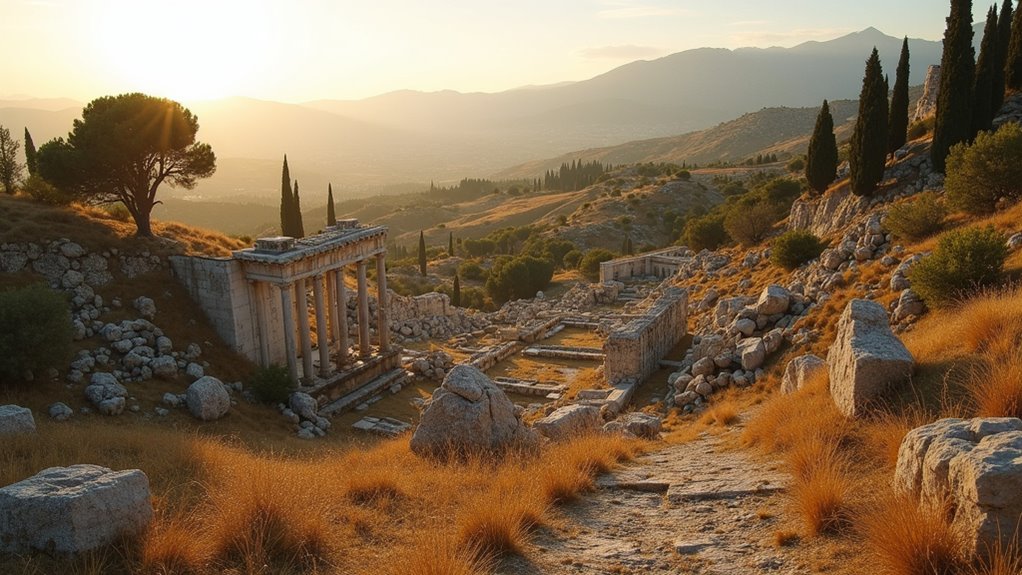
Journey deeper into Greece’s heroic legends at Nemea, where you’ll walk the exact valley where Heracles faced his most famous challenge – strangling the invincible Nemean Lion with his bare hands.
You’ll explore the 4th-century Temple of Zeus, built where ancient Panhellenic games honored this incredible victory. The impressive structure sits on 333 meters above sea level on the foothills of the Arcadia mountains, offering stunning elevated views of the surrounding landscape. Kids will love running through the restored stadium tunnel where athletes once competed naked, wearing wild celery crowns instead of gold medals.
Don’t miss the alleged Lion’s Cave, just 2km from the main site – it’s free to explore! The museum displays amazing pottery showing Heracles battling the beast whose hide became his signature armor.
Located 35km southwest of Corinth, Nemea offers budget-friendly parking and breathtaking valley views of the lion’s former hunting grounds.
Epidaurus: Sacred Healing Sanctuary of the Demigods
While most ancient sites focus on war and conquest, Epidaurus offers something completely different – you’ll explore the world’s first hospital where people traveled from across the Mediterranean seeking miraculous cures from Asclepius, the god of medicine.
You’ll walk through the abaton where patients slept on the ground, waiting for healing dreams from the god himself. The sanctuary combined faith healing with early medical practices, making it the birthplace of modern medicine.
Don’t miss the famous ancient theater, originally built for healing through performances and meditation. With perfect acoustics that allow whispers from the stage to be heard in the highest seats, this 4th-3rd century BC marvel demonstrates the Greeks’ architectural mastery. The stadium hosted athletic games during the annual Asklepios festival.
With natural springs, peaceful surroundings, and fascinating temple ruins, Epidaurus shows how Greeks pioneered holistic healthcare combining spiritual, physical, and mental wellness.
Ancient Olympia: Birthplace of the Olympic Games and Temple of Zeus
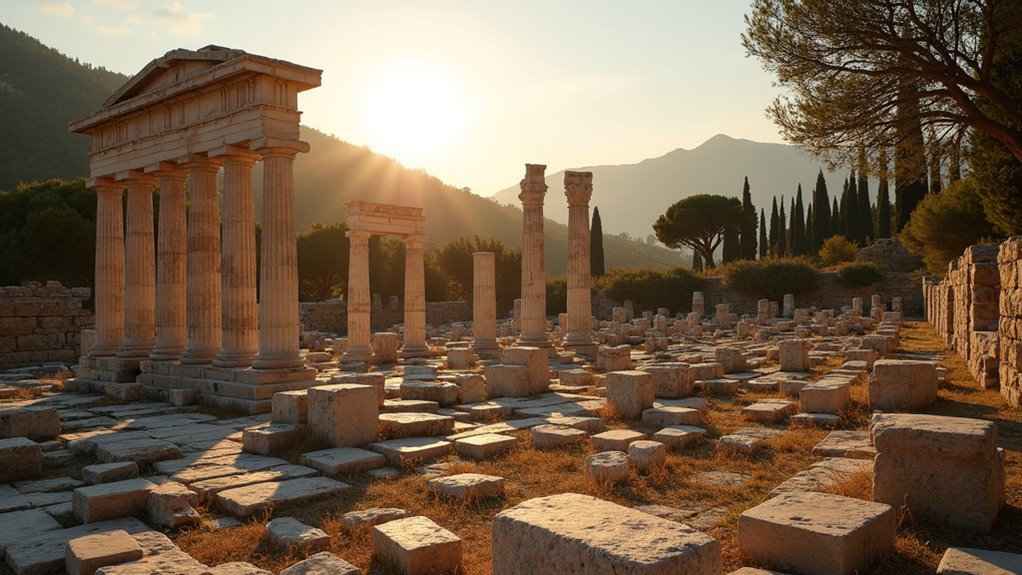
Standing where the world’s greatest athletes once competed for Zeus’s glory, you’ll discover Ancient Olympia – the legendary birthplace of the Olympic Games and home to one of the Seven Wonders of the Ancient World.
This sacred valley hosted Olympic Games every four years starting in 776 B.C., drawing competitors from across Greece to honor Zeus.
You’ll explore the Temple of Zeus ruins, where Phidias’s colossal gold-and-ivory statue once stood over 12 meters tall. Though earthquakes toppled the temple in the 5th century, you can still see fallen columns and the statue’s base. Multiple temples dedicated to Olympian Zeus existed throughout the ancient Greek world, making this site part of a broader network of sacred spaces honoring the king of the gods.
The nearby museum displays incredible artifacts like the Nike of Paionios.
As a UNESCO World Heritage Site, Olympia perfectly connects Percy Jackson’s world with real Greek mythology history.
Knossos Palace: Enter the Labyrinth of the Minotaur
As you step through the ancient entrance of Knossos Palace on the island of Crete, you’ll enter the legendary home of the fearsome Minotaur and walk through what many believe inspired the mythical labyrinth itself. The palace’s twisting hallways and confusing layout make it easy to get lost, just like Theseus did when he faced the half-bull, half-man creature.
Built around 1900 BCE, this massive Bronze Age palace covers 15,000 square meters and features incredible bull artwork throughout. You’ll see the famous Bull-Leaping Fresco and discover why the word “labyrinth” comes from “labrys,” the double-headed ax symbol found here. The palace also showcased the sophisticated maritime society that dominated trade across the eastern Mediterranean from Egypt to the Levant.
The maze-like corridors will transport you straight into Percy Jackson’s world of Greek mythology adventures.
Diktaion Cave: Hidden Birthplace of Zeus on Mount Ida
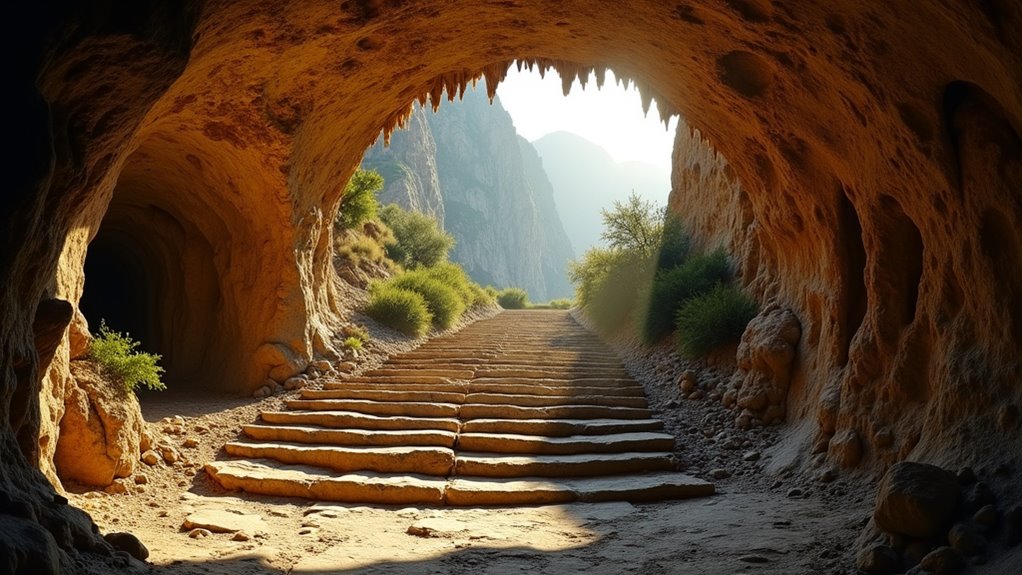
Deep inside Mount Dikti on Crete’s Lasithi plateau, you’ll discover the sacred cave where Zeus himself was born according to ancient Greek legends. Located 48km from Agios Nikolaos near Psychro village, this mythological site sits at 1,025m altitude and requires a steep 15-minute uphill walk (or €10 donkey ride).
Inside, you’ll navigate 200 steps down through impressive limestone formations to reach the central hall. Look for the prominent stalactite called “Zeus’s cloak” hanging over the lake. The cave stays cool year-round and houses wild bats and rock doves. According to myth, Rhea hid the infant Zeus here to protect him from his father Kronos, who devoured his other children.
Entry costs €4 for adults, €2 for seniors, and it’s free for kids under 18. Open daily 8:00-19:30 April-October (except Mondays). Your visit takes under an hour.
Naxos and the Portara: Gateway to Apollo’s Temple and Dionysus Legends
From Crete’s hidden cave where Zeus was born, your mythological adventure continues on the sunny island of Naxos, where you’ll find one of Greece’s most recognizable ancient landmarks. The massive marble Portara gate stands 6 meters tall on tiny Palatia islet, connected by a simple walkway from town.
This incomplete temple doorway was meant for either Apollo or Dionysus—scholars still debate which god it honored.
Tyrant Lygdamis started building this temple around 530 BC, planning Greece’s most glorious sanctuary. When he was overthrown, construction stopped forever. The planned temple would have measured 59 meters in length and 28 meters in width, making it one of the largest temples of its era with an unusual western entrance.
Each marble block weighs 20 tons, too heavy to move even today. You’ll walk through foundation ruins while imagining Dionysus rescuing princess Ariadne here.
Don’t miss the spectacular sunset views—they’re completely free and absolutely magical.
The Sum Up
You’ve got an amazing adventure ahead exploring these incredible Greek mythology sites! Pack your camera, wear comfortable walking shoes, and bring plenty of water since you’ll be doing lots of exploring. Many sites offer student discounts, so don’t forget your ID. You’ll walk in the footsteps of gods and heroes while creating unforgettable memories. These ancient places will make Percy Jackson’s world come alive right before your eyes!