
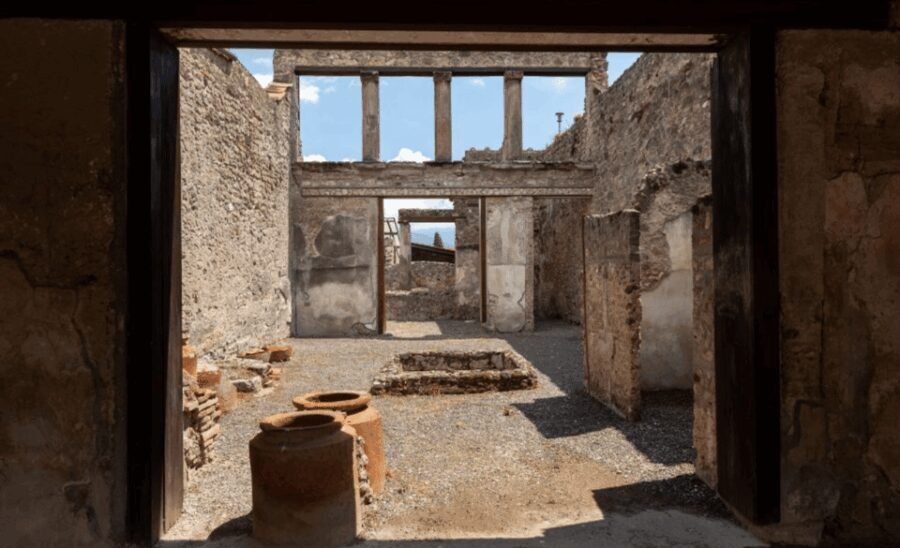
I’m reviewing a Pompeii skip-the-line ticket package that gets you into the ruins faster, with a digital audio guide and map (plus an optional guided tour with an art historian). You’re looking at the kind of place where the stones feel like they’re still breathing—streets buried under volcanic ash, famous houses, and temples framed with Mount Vesuvius in the background.
What I like most is (1) the time saver: you’re not stuck in the slow ticket queue, and (2) the way the audio experience helps you move at your own pace while hitting major highlights like the Forum area, theaters, baths, and standout homes such as the House of the Faun.
One thing to consider: multiple travelers said the audio app can be hit-or-miss (download issues, and sometimes the location-based autoplay or GPS positioning doesn’t behave perfectly). If your phone battery or mobile connection is shaky, plan ahead.
- Key things to know before you go
- Pompeii logistics that actually matter: tickets, timing, and where to go
- Duration reality check: 2 hours can be perfect—or too short
- Getting into Pompeii fast: what skip-the-line really buys you
- A small price vs. value note
- Your audio guide plan: digital map, languages, and how it’s supposed to work
- What travelers loved (and what was frustrating)
- Optional guided tour with an art historian: when live beats audio
- Is it worth the extra?
- Inside Pompeii: a “best of” route you can follow for the highlights
- The Forum with Vesuvius in the background
- Temples of Venus, Apollo, and Jupiter
- Homes and everyday life: House of the Faun and more
- Baths and mosaics: public life, not just rich-house life
- Theater vibes and aqueduct leftovers
- The eruption story made physical: victims’ plaster casts
- The fun details you’ll actually remember: inscriptions and Vesuvinum
- Sirico’s house: Salve lucru
- Wine jars: Vesuvinum
- The suburban villas: what’s included—and what isn’t
- Practical tips for a smoother visit (based on real issues)
- Download and test before you arrive
- Plan your battery like it’s a museum day
- Weather and footwear matter more than you think
- What kind of traveler should choose this?
- Should you book this Pompeii skip-the-line ticket?
- FAQ
- FAQ
- Where do I pick up my tickets?
- Do I need to choose a time slot?
- What languages are available?
- Do I get an audio guide on the day of the visit?
- Is anything provided for listening?
- Is the suburban villas access included?
- How long is the experience?
- Is there free cancellation?
- More Tickets in Naples
- More Tours in Naples
- More Tour Reviews in Naples
Key things to know before you go






- Fast track entry helps you bypass the long ticket line at the busiest moments.
- Audio guide + digital map are meant to guide you building-by-building, not just give a general talk.
- Optional live tour with an art historian is available in English, Spanish, or Italian.
- Pompeii is huge (about 44–50 hectares), so two hours is a sprint, not a slow stroll.
- Suburban villas are excluded, including Villa of the Mysteries, Villa of Diomedes, and Villa Regina.
- Audio guide download is your job: you need headphones and a charged smartphone.
Pompeii logistics that actually matter: tickets, timing, and where to go
This experience is built around one goal: get you into Pompeii quickly and then let you explore without being trapped in a rigid schedule. Your booking covers a skip-the-line entry ticket, an audio guide, and a digital map. There’s also an optional guided tour led by a professional art historian.
The pickup is straightforward, and that’s a big deal on travel days. You exchange your voucher at the Vox City info point in Piazza Esedra, in front of the Hotel Vittoria. If you choose the guided option, you meet the guide at the same Vox City location, and tours depart at your booked time slot (arrive about 5 minutes early if you can).
You can also read our reviews of more tours and experiences in Naples



Duration reality check: 2 hours can be perfect—or too short
The package duration is 2 hours, but Pompeii visitors often spend 2–4 hours inside, because the site covers an enormous area. Two hours works best if you want the key sights and good photos and you don’t need to linger. If you’re the kind of traveler who likes to read inscriptions slowly and pop into side areas, you’ll feel the clock.
A smart approach: treat the 2-hour plan as a starter route. If you still have energy after, you can usually keep wandering.
Getting into Pompeii fast: what skip-the-line really buys you
Let’s talk value in plain terms. Pompeii is popular. Even with good planning, the entrance can be crowded, and lines waste your best travel time. That’s what you’re paying for.
This ticket includes skip-the-line entry, so once you swap your voucher for the official entry ticket, you should be able to get in much faster than stand-in-line entry. Travelers consistently liked how easy the exchange felt at the Piazza Esedra booth and how quickly they moved after arriving.
A small price vs. value note
The package is listed around $37 per person. One traveler mentioned the official entry ticket is about 19€, and that adding the audio guide through the VoxCity package can raise the total. Translation: you’re not only buying entry—you’re also buying convenience, plus the audio experience.
If you want maximum savings, you could consider buying only entry at the site. But if you hate queues and you know you’ll use the guide, the bundle can feel reasonable fast.
More Great Tours NearbyYour audio guide plan: digital map, languages, and how it’s supposed to work
The audio guide is a key part of this package. It comes with a multilingual audio commentary and a digital map. Languages listed include English, French, Spanish, German, and Italian. Guided tours (when selected) are available in English, Spanish, or Italian.
Also important: the download is not automatic. The instructions say to scan the QR code on your voucher to download the audio guide prior to arrival. Headphones and a charged smartphone are required.
You can also read our reviews of more guided tours in Naples


What travelers loved (and what was frustrating)
Many travelers said the audio guide helped them find their way, and some specifically praised that the audio started based on your location when the system works as intended. Others described the clips as short and clear, which is ideal when you’re looking at ruins in bright daylight.
But there are also real complaints worth taking seriously:
- A few people said the audio didn’t autoplay reliably, so they had to manually choose stops.
- Some found the app confusing for navigation, especially when they couldn’t easily match what they saw with the site names in the app.
- Downloading or GPS locating could fail if mobile signal or roaming was weak, or if the audio app wouldn’t open smoothly.
My practical takeaway: treat the audio guide as a helpful tool, not a guaranteed perfect robot guide. Plan to spend a few minutes figuring it out once you’re inside, and keep your phone battery safe.
Optional guided tour with an art historian: when live beats audio
If you add the guided option, you get a live English/Spanish/Italian tour with a professional art historian. For many travelers, that’s the best way to avoid “just looking at stones.”
Several reviewers highlighted standout guides by name, including Grace, Maria, and Mario. They often mentioned strong communication, good English, and the way the guide could connect details across the city instead of talking in disconnected fragments. One review even noted the guide used a radio headset setup, which tends to make listening easier in a crowded outdoor space.
Is it worth the extra?
If you’re the type who likes context—why certain buildings were built, how Romans lived, and what particular scenes or objects meant—live guidance can be the difference between seeing Pompeii and understanding it.
If you prefer wandering and you’re happy with short, building-by-building audio notes, the audio-only option can be enough. Just know you may need to work a bit harder to stay oriented.
Inside Pompeii: a “best of” route you can follow for the highlights
Pompeii is laid out like a full city you can walk through. With two hours, you’re not seeing everything. But you can still cover major landmarks that tell the story.
Here’s the kind of path this ticket is built for, in practical walking terms.
The Forum with Vesuvius in the background
You’ll spend time around the civic center, often described as the Forum area. This is where city life would have felt concentrated—public spaces, important buildings, and the dramatic backdrop of Mount Vesuvius.
A simple tip: start with the Forum view early in your visit. Morning light often makes it easier to spot details, and you’re also more likely to be moving before the crowd thickens.
Temples of Venus, Apollo, and Jupiter
As you stroll, expect to pass major temples dedicated to Venus, Apollo, and Jupiter. These stops matter because they anchor Pompeii’s religious life in real architecture—not just museum pictures.
If your audio guide is working smoothly, this is exactly where location-based clips help. You’ll be standing in the right neighborhood and getting the short context that keeps the site from feeling random.
Homes and everyday life: House of the Faun and more
One of the signature experiences in Pompeii is walking through elite homes that were preserved under volcanic ash. The House of the Faun is specifically mentioned as a highlight.
The feeling here is part history, part time capsule. You’re looking at the basic layout of how people lived—courtyards, rooms, and the way wealth showed up in decorations.
Baths and mosaics: public life, not just rich-house life
The route includes stops tied to public spaces like marketplaces and public baths, including intricate mosaics. That’s a good balance. Pompeii isn’t only grand temples and fancy villas. It’s also where ordinary routines happened.
If you’re short on time, baths and mosaics are an efficient choice: you get artistry plus the daily-life angle in one place.
Theater vibes and aqueduct leftovers
You’ll also see the grand theater area and remnants of aqueducts and fountains. These aren’t “pretty ruins” only. They show how the Romans moved water and organized public entertainment.
Look closely. Pompeii rewards slow looking. Even in two hours, you can spot small pieces that make the whole city feel engineered.
The eruption story made physical: victims’ plaster casts
One of the most haunting parts of Pompeii is the plaster casts of victims—people caught in the disaster. The preserved remains are described as part of the story you’ll encounter as you move through the site.
This stop can hit hard, so don’t rush it. Even if you’re on a tight schedule, give yourself one quiet minute before moving on.
The fun details you’ll actually remember: inscriptions and Vesuvinum
Two named highlights bring Pompeii to life in a way that’s hard to forget.
Sirico’s house: Salve lucru
You’ll hear about the notorious inscription in Sirico’s house reading Salve lucru, meaning Welcome, profit. It’s one of those Pompeii details that makes you laugh and then immediately think about what people really cared about—money, business, and hustle—right there in the everyday streets.
Wine jars: Vesuvinum
You’ll also encounter mention of wine jars labeled Vesuvinum—a witty reference tying the volcano and wine together. It’s not a tasting (this is a ruins visit), but it’s a clever clue that Roman humor and branding weren’t invented yesterday.
If you enjoy food-and-drink culture as a lens for history, these are the moments you’ll appreciate most.
The suburban villas: what’s included—and what isn’t
Important boundary: this ticket does not include access to the suburban villas, specifically Villa of the Mysteries, Villa of Diomedes, and Villa Regina.
If those villas are on your must-see list, you’ll need a separate plan. For travelers who mainly want the core city experience and the famous public structures, the standard Pompeii site is still packed and complete.
Practical tips for a smoother visit (based on real issues)
Here’s how to reduce the most common headaches, using what travelers have actually reported.
Download and test before you arrive
The guide requires a download using the voucher QR code. Some travelers reported audio and app issues, including download problems and autoplay not starting when expected.
So do this:
- Bring headphones.
- Bring a charged smartphone.
- Download before you go in, and if possible test audio on a quiet spot first.
Plan your battery like it’s a museum day
Pompeii has lots of GPS navigation and map use in a lot of audio experiences. Several travelers warned about battery draining, especially when you’re hopping between points of interest.
If you can, keep your phone on a power-saving mode and carry a backup battery if you have one.
Weather and footwear matter more than you think
Pompeii is outdoors, and conditions can change fast. Some visitors enjoyed a sunny winter day, while others dealt with serious rain and cut their visit short after about two hours.
Wear shoes you don’t mind getting dusty. Bring a light layer. And if rain gets ugly, it’s reasonable to shorten your route rather than force it.
What kind of traveler should choose this?
This experience fits best if you want a strong mix of structure and freedom.
It’s a great match for:
- People who hate lines and want fast entry.
- Travelers who enjoy a self-guided route with helpful context.
- Families or mixed-age groups where some people want more pacing and others need clarity.
If you should think twice:
- If you rely on flawless GPS and you hate troubleshooting apps.
- If you’re specifically focused on suburban villas (because they’re not included).
Should you book this Pompeii skip-the-line ticket?
I’d book it if you want to spend your energy walking Pompeii instead of standing around waiting. The skip-the-line convenience is real, and the site itself is so memorable that any guide format helps.
Choose the guided option if you want deeper explanations and you like the idea of named, knowledgeable people leading the route—guides like Grace, Maria, and Mario were specifically praised for making the ruins feel understandable, not just old.
Choose audio-only if you’re comfortable navigating a big site and you’ll do the tech setup carefully ahead of time. Just be honest: a few travelers ran into download or autoplay problems, so don’t assume the app will behave like magic in every phone and every network situation.
Pompeii: Skip-the-Line Entry Ticket with Audio Guide or Tour
FAQ
FAQ
Where do I pick up my tickets?
You exchange your voucher at the Vox City info point in Piazza Esedra, in front of the Hotel Vittoria.
Do I need to choose a time slot?
Yes. If you select the optional guided tour, tours depart at your booked time slot, so you should arrive about 5 minutes early if possible.
What languages are available?
Guided tours are available in English, Spanish, or Italian. The audio guide commentary includes multiple languages including English, French, Spanish, German, and Italian.
Do I get an audio guide on the day of the visit?
You download the audio guide using the QR code on your voucher before you arrive, then you use your phone during the visit.
Is anything provided for listening?
Headphones are not included, so you’ll need your own. You also need a charged smartphone.
Is the suburban villas access included?
No. This ticket does not include access to the suburban villas, including Villa of the Mysteries, Villa of Diomedes, and Villa Regina.
How long is the experience?
The duration is set at 2 hours. Note that many visitors spend 2–4 hours inside Pompeii.
Is there free cancellation?
Yes. You can cancel up to 24 hours in advance for a full refund.
You can check availability for your dates here: