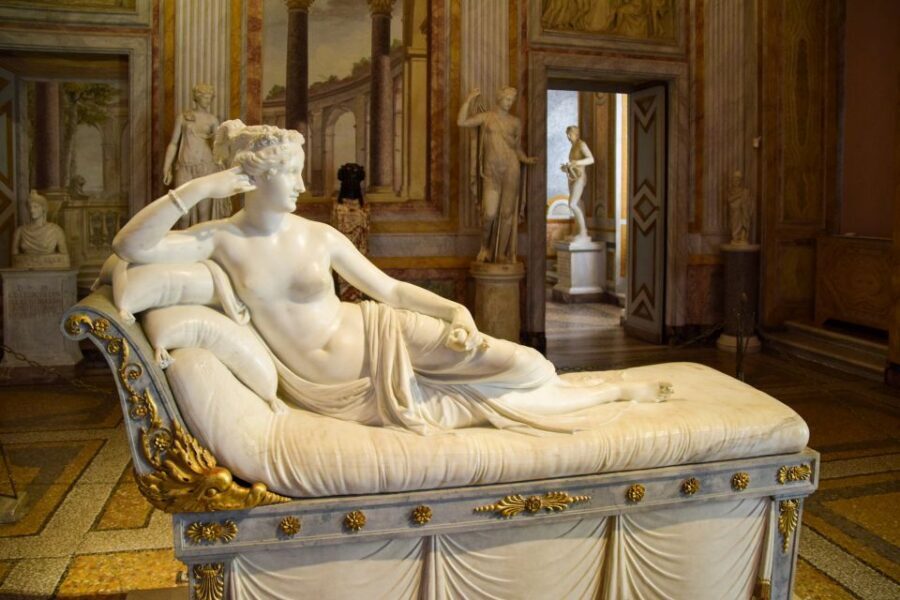
If you want one museum ticket in Rome that feels both high-level and manageable, this Borghese Gallery skip-the-line entry is a smart pick. You get timed access for a focused visit inside Villa Borghese Park, where the art ranges from Renaissance painting to Baroque sculpture.
Two things I really like about this experience are the chance to escape the big crush thanks to limited entry slots, and the flexibility to move at your pace once you’re in. The digital audio guide adds context room by room, which matters when the works are so close and the details are so good.
One consideration: the skip-the-line benefit is most noticeable during peak times, and some visitors report that parts of the museum may be closed depending on the day. So pick your time slot wisely and stay ready for a slightly different layout than you expected.
- Key things to know before you go
- Why the Borghese Gallery feels different from the usual Rome museums
- Skip-the-line and timed entry: what you really save
- Price and logistics: is a good value
- Finding the meeting point by the gallery: Fontana dei Mascheroni
- Before you enter: what to bring, what to leave behind
- Inside the villa: how to plan your 2 to 4 hours
- Bernini at close range: Apollo and Daphne’s marble energy
- Caravaggio’s drama: David with the Head of Goliath
- The painting rooms: Raphael, Titian, and Rubens in the same visit
- Canova and the mix of styles that keeps it from feeling old
- Audio guide and QR codes: how to get the most out of your pass
- Host help: what Crown Tours staff actually do
- Crowds, closed rooms, and realistic expectations
- Borghese Park time: what to do nearby (and what’s not included)
- Who this works best for (and who might want a different plan)
- Should you book this Borghese Gallery skip-the-line ticket?
- FAQ
- Where is the meeting point for this Borghese Gallery ticket?
- How do I get there using bus directions?
- What’s included with the ticket?
- How long is the visit?
- Is there free cancellation?
- Are Borghese Gardens included?
- Is this suitable for wheelchair users or people with mobility impairments?
- What items are not allowed inside?
- The Best Of Rome!
- More Museum Experiences in Rome
- More Tickets in Rome
- More Tour Reviews in Rome
Key things to know before you go
 1 / 10
 2 / 10
 3 / 10
 4 / 10
 5 / 10
 6 / 10
 7 / 10
 8 / 10
 9 / 10
 10 / 10
- Timed entry beats sold-out tickets: Borghese access can vanish fast, so having a reserved slot helps.
- Meet at Fontana dei Mascheroni (purple Crown Tours shirt): it’s right in front of the gallery, by the small drinking-water fountain.
- Small bags only inside: if you arrive with a bigger item, plan to use the free cloakroom at the entrance.
- Self-paced viewing is the core: you’re not stuck walking with a group every minute.
- Audio guide versus QR codes: some people love the app, others prefer the QR codes next to works—both can work.
- Not ideal for wheelchair users or major mobility limits: plan accessibility carefully.

👉 See our pick of the Discover 2 Great Tours In Rome
Why the Borghese Gallery feels different from the usual Rome museums
The Borghese Gallery isn’t huge compared to Rome’s mega-museums. That’s a good thing. You can actually slow down and look closely, instead of racing from one landmark room to the next.
What makes it special is the mix. You’ll see a Cardinal’s personal collection spanning Renaissance, Roman, and Baroque art, not a random grab-bag. That variety also means the visit won’t feel repetitive. One room can hit you with marble drama; the next lands with painting realism.
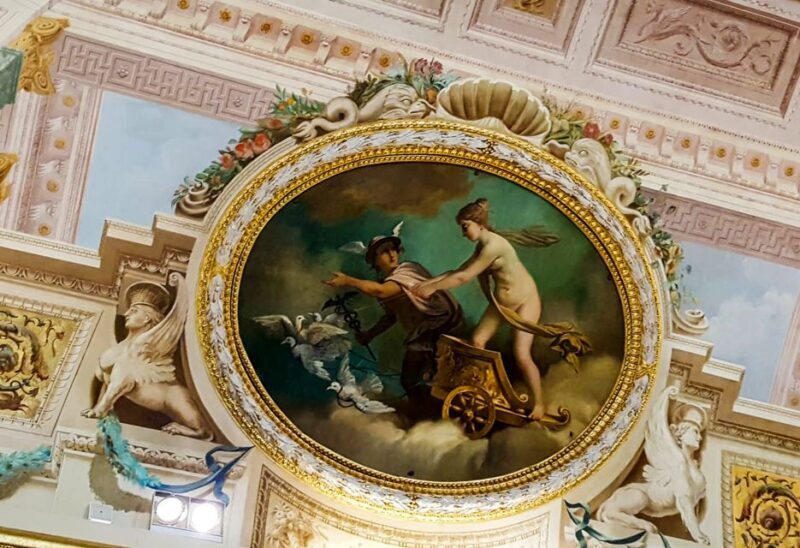
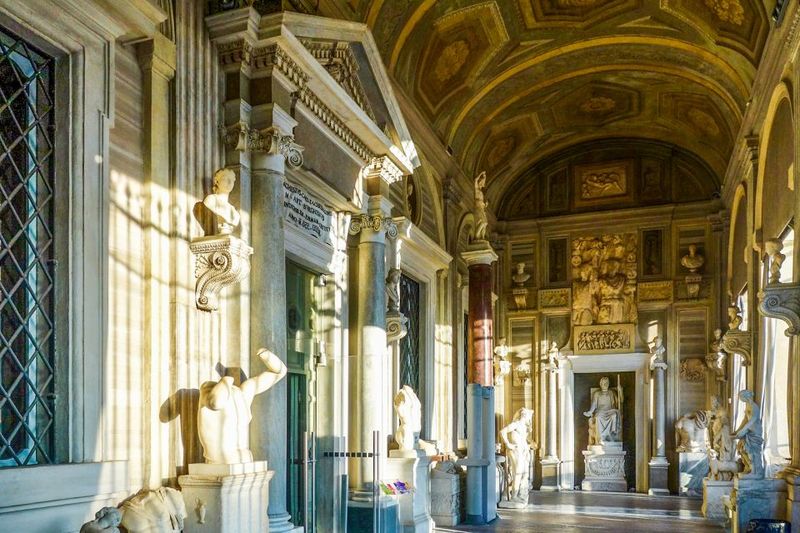
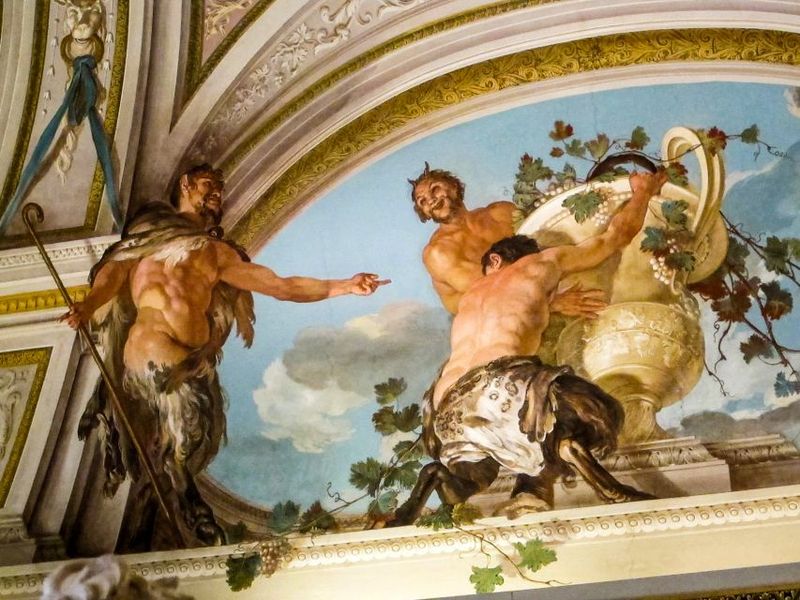
Another plus: the venue itself matters. The gallery sits in a 17th-century villa, so the art isn’t living inside a modern box. Even before you get to the masterpieces, the setting helps you understand what kind of experience this was meant to be.
You can also read our reviews of more tours and experiences in Rome



Skip-the-line and timed entry: what you really save
On paper, skip-the-line sounds like it means you never wait. In reality, the time you save depends on the day and your arrival hour.
Here’s the practical truth: Borghese access is popular and tickets can sell out well in advance. When the museum is busy, a timed entry slot can turn a frustrating start into a smooth one—exactly what you want on a Rome itinerary.
Also note this: the “skip-the-line” advantage tends to be best in peak season. Off-peak, you might not save much compared with buying official tickets yourself on the spot. But the biggest win is still the reserved entry, especially when the gallery is sold out.
Price and logistics: is $53 a good value
At $53 per person, you’re paying for three things: reserved entry, help at the meeting point, and an included digital audio guide. Compared to the cost of a wasted morning—standing in line, missing your time window, or losing the chance entirely—this often feels like a fair deal.
There’s also a value balance to consider. One traveler mentioned that official tickets can cost less if purchased directly, but another pointed out that same-day access can be impossible. If you’re traveling in busy months, availability risk is real, and that risk has a price.
If you’re the type who only needs an entry ticket, you might feel the “extra” cost. But if you want an easier start—especially when sold out—this can be money well spent.
Finding the meeting point by the gallery: Fontana dei Mascheroni
The meeting point is right where you want to be: Fontana dei Mascheroni, Viale del Museo Borghese, in front of Galleria Borghese. The host is waiting near the small drinking water fountain, wearing a purple Crown Tours t-shirt and holding a flag.
If you’re arriving from nearby by bus or walking, two common approaches are:
- From Pinciana / Museo Borghese: walk along Viale dell’Uccelliera for about 2 minutes.
- From S. Paolo del Brasile: walk straight along Viale del Museo Borghese for about 8 minutes.
A small tip from visitor experiences: don’t just look for the building—look for the fountain and the purple shirt. If you’re early, you’ll likely have time to double-check you’re in the right place without feeling rushed.
More Great Tours NearbyBefore you enter: what to bring, what to leave behind
Bring a passport or ID card. This is one of those boring rules that can ruin your morning if you forget.
Wear comfortable shoes. The visit is not about sprinting, but you will be walking and stopping often, and Villa Borghese Park surroundings add more steps than you expect.
Small-bag rules matter. The info says baby strollers aren’t allowed, and large bags and luggage aren’t allowed inside. There’s also a free cloakroom at the entrance for items that don’t fit the size limits, which is great if you have a day bag or extra layers.
One more note: electric wheelchairs are not allowed, and the experience is listed as not suitable for people with mobility impairments or wheelchair users. If that affects you, plan an alternate museum day or contact the venue directly for accessibility options.
You can also read our reviews of more museum experiences in Rome

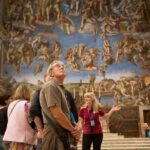

Inside the villa: how to plan your 2 to 4 hours
Your ticket is timed, and your visit length is typically 2 to 4 hours depending on the timeslot and your pace. In practice, many travelers aim to spend enough time to actually “live with” the artwork instead of skimming.
A helpful way to plan is to give yourself a loose structure:
- Spend your first chunk orienting yourself and spotting the big names.
- Then slow down on the works that grab you.
- Leave a little time at the end in case you want to re-see a favorite.
Some visitors mention a rule where tickets are valid for a limited window (reported as 2 hours) and a color stamp marks your time slot once you enter. Translation: don’t use the ticket like a casual all-day pass. Be ready to focus.
Also, don’t panic if rooms are not all open. At least one visitor reported closure of part of the museum (including a second floor area) during their visit. If that happens, adjust your route rather than feeling like you got a worse deal—you’re still there for the core masterpieces.
Bernini at close range: Apollo and Daphne’s marble energy
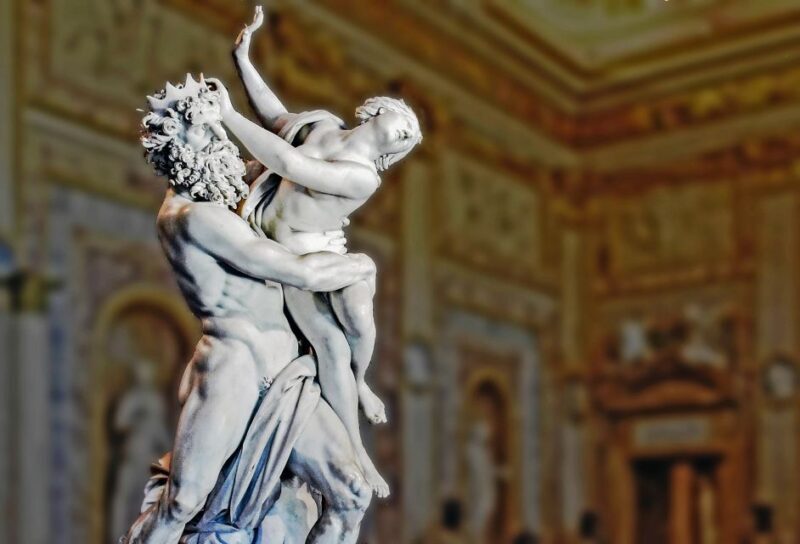
Bernini is the headliner vibe in this gallery. If you love sculpture, you’ll feel it fast. The collection includes dramatic works like Apollo and Daphne, where the sense of movement and emotion is the whole point.
What makes these pieces hit harder in person is scale and proximity. You’re not viewing a small reproduction across a room. You’re close enough to notice how the marble finish can suggest texture and motion.
Give yourself time here. A few minutes is not enough when the work is all about gesture and expression. If you’re squeezing the visit, Bernini is where you spend your “stretch time.”
Caravaggio’s drama: David with the Head of Goliath
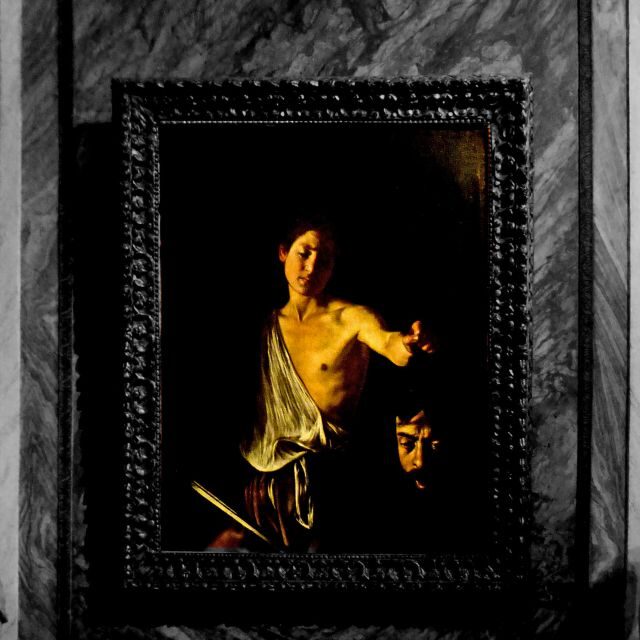
Caravaggio’s works are known for intense realism and emotional storytelling, and this gallery includes important examples such as David with the Head of Goliath. You’ll likely find yourself standing longer than you planned.
If you’re coming from other museums, here’s the comparison that helps: Caravaggio’s power is in the tension—light, expression, and narrative in a single frame. The Borghese setting lets you slow down enough to catch what your brain might miss at speed.
Use the audio guide for this part if it helps you track the story beats. Some people focus on the visual and ignore audio; others find the extra context makes the emotional choices clearer.
The painting rooms: Raphael, Titian, and Rubens in the same visit
The gallery isn’t only about sculpture. You’ll also see major painting names, including Raphael and Titian, plus works by Rubens. The benefit of seeing these in one place is that you can compare styles without switching museums and travel time.
Raphael’s presence is interesting because he’s tied to grace and balanced form, and the audio guide is designed to connect those qualities to human emotion in the works. In a self-paced setting, you can stop and think instead of moving on because your guide is herding you.
Titian and Rubens add their own flavors, so the visit can shift tone room to room. That variety is one reason this museum can feel special even to people who don’t usually spend hours in galleries.
Canova and the mix of styles that keeps it from feeling old
You’ll also encounter Canova. Having Neoclassical elegance placed alongside earlier Renaissance and Baroque work creates a nice sense of timeline. It’s not a strict lecture format, but your eye starts to understand how taste and technique changed.
The practical payoff for you: your visit becomes less about memorizing and more about noticing differences in approach. That’s how you get something memorable without needing to be an art expert.
Audio guide and QR codes: how to get the most out of your pass
The ticket includes a digital audio guide, offered through an app. Many travelers found it easy to use and useful for context, especially in explaining cultural significance and techniques.
But there’s also a dissenting opinion worth noting: at least one visitor felt the audioguide wasn’t very helpful and preferred reading QR codes near paintings and sculptures. That makes sense because QR text is often short and tied directly to what you’re staring at.
My practical suggestion: download and try the audio guide quickly, then switch tactics if you prefer QR details on the spots that interest you most. You can treat the audio guide like a menu, not a rule.
Some travelers also mention staff helping them set up the guide. If you’re tech-sketchy, don’t worry—arrive at the meeting point a little early and ask before you enter.
Host help: what Crown Tours staff actually do
You won’t necessarily get a long, narrated guided tour. What you get is meeting-point assistance and a host who helps you collect tickets and enter correctly.
In some cases, a guided tour is available as an option, and travelers report friendly, knowledgeable hosts. Names that show up in visitor experiences include Victoria, Frederica, Migo, and Amjad. Even when the experience is mostly self-guided, hosts can still make the difference by pointing you to the right entrance flow and reminding you about practical rules like cloakroom storage.
A couple of visitors also describe hosts as more like check-in support than full educators. That’s not necessarily bad—it can match your style if you want to wander while still having the entry logistics handled.
Crowds, closed rooms, and realistic expectations
This museum is popular, and the timed-entry system exists because crowd control matters. The good news: most visitors describe the entry process as easy, with the host easy to find and help ready.
The caution: availability of rooms can change. If your heart is set on seeing every last corner, you might still find some areas closed on the day you go. The ticket still gives you a top-tier selection, just not necessarily the exact same layout you’d see on another date.
If you’re a detail person, plan for flexibility. Keep your mental list short: a few must-sees, plus a willingness to be surprised.
Borghese Park time: what to do nearby (and what’s not included)
Villa Borghese Park is part of the bigger experience, and many visitors like the idea of combining the gallery with a walk afterward. Even when the gallery ends, the park keeps Rome from feeling like only museums and traffic.
One important item: access to Borghese Gardens isn’t included with this ticket. However, travelers still mention tips about nearby areas and park time, which can help you structure the afternoon.
If you want a smooth day, pair this with another central sightseeing block afterward. The gallery itself is the anchor; the park is your breathing space.
Who this works best for (and who might want a different plan)
This is a great fit if you:
- Want high-quality art without spending your day in endless lines.
- Like self-paced museum time with audio support.
- Care about seeing major artists in a compact, visitor-friendly venue.
It’s less ideal if you:
- Need wheelchair-friendly access (it’s listed as not suitable for wheelchair users).
- Have very large luggage or stroller needs.
- Want a long, fully guided lecture tour only (since host support can be more of an entry assist depending on the option you choose).
If you’re traveling with teens or a mixed group, the ability to wander and the audio/QR options can help everyone find something to latch onto.
Should you book this Borghese Gallery skip-the-line ticket?
If you’re visiting Rome during busy months, or you’re worried about sold-out tickets, I’d book it. The combination of timed entry, help at the meeting point, and an included audio guide is strong value for a museum that can otherwise be hard to access.
Book it especially if you want to keep your day calm. Starting right at the correct entrance with a host waiting by Fontana dei Mascheroni means less stress and fewer “where are they?” moments.
Skip it only if you’re going during a slow time, you’re comfortable handling ticket logistics yourself, and you’re okay with less certainty. For most travelers, the convenience is the real win.
Rome: Borghese Gallery Skip-the-Line Tickets with Audioguide
FAQ
Where is the meeting point for this Borghese Gallery ticket?
The meeting point is Fontana dei Mascheroni, Viale del Museo Borghese, right in front of Galleria Borghese. The host stands in front of the small drinking water fountain La Fontana dei Mascheroni, wearing a purple Crown Tours t-shirt and flag.
How do I get there using bus directions?
From Pinciana/Museo Borghese, walk along Viale dell’Uccelliera for about 2 minutes to Fontana dei Mascheroni. From S. Paolo del Brasile, walk straight along Viale del Museo Borghese for about 8 minutes to reach the same fountain.
What’s included with the ticket?
Included is a skip-the-line entrance ticket to The Borghese Gallery, assistance at the meeting point, and a digital audio guide. A guided tour is also included only if you select that option.
How long is the visit?
The duration is listed as 2 to 4 hours. Starting times depend on availability.
Is there free cancellation?
Yes. You can cancel up to 24 hours in advance for a full refund.
Are Borghese Gardens included?
No. Access to Borghese Gardens is not included with this ticket.
Is this suitable for wheelchair users or people with mobility impairments?
No. The activity is listed as not suitable for people with mobility impairments and for wheelchair users. Electric wheelchairs are also not allowed.
What items are not allowed inside?
Baby strollers are not allowed, and luggage or large bags aren’t allowed inside. For larger items, there is a free cloakroom at the entrance.
You can check availability for your dates here: