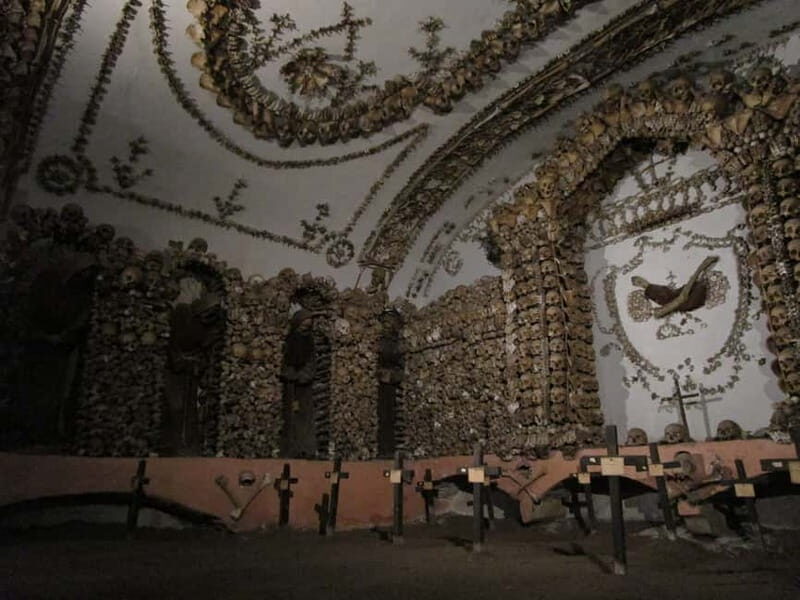
Rome’s Capuchin Crypts are one of those sites you either rush past or make time for, because they’re both strange and oddly thoughtful. This skip-the-line tour takes you under the Church of Santa Maria della Concezione dei Cappuccini for a guided (or audio) walk through bone-decorated chapels and a museum setting the story.
I especially like the way the visit stays respectful and educational. You’ll get the history of the Capuchin Order and the symbolism behind the bone arrangements, and the tour is paced for a wide range of visitors, including families with kids.
One thing to keep in mind: the crypt has a strict dress code. Shoulders and knees must be covered, and the site is not wheelchair accessible, so it’s worth planning your outfit and accessibility needs before you go.
- Key highlights worth your attention
- Capuchin Crypts: why this Roman stop feels different
- Meeting point at Via Vittorio Veneto 27: keep it simple
- Dress code and accessibility: the rules you can’t ignore
- Skip-the-line entry: what you actually save
- Guided tour or audio guide: choosing the best fit
- The Capuchin Museum: background that makes the bones make sense
- Crypt of the Three Skeletons: where symbolism hits first
- Crypt of the Skulls, Crypt of the Resurrection, and more
- The Mass Chapel: the quiet moment in the middle
- Pace and group size: why small beats huge here
- What the guides do well: knowledge plus personality
- Audio guide quality: better than you expect in a crypt
- Price and value: for a focused, guided experience
- Who should book this tour (and who might hesitate)
- Practical tips to make your visit smoother
- Should you book the Capuchin Crypts tour with audio or a guide?
- FAQ
- How long is the Capuchin Crypts tour?
- Where do I meet for the tour?
- Is skip-the-line entry included?
- Do I need to cover my shoulders and knees?
- Is the site wheelchair accessible?
- What languages are available for the tour?
- What is the cancellation policy?
- More Tickets in Rome
- More Tours in Rome
- More Tour Reviews in Rome
Key highlights worth your attention
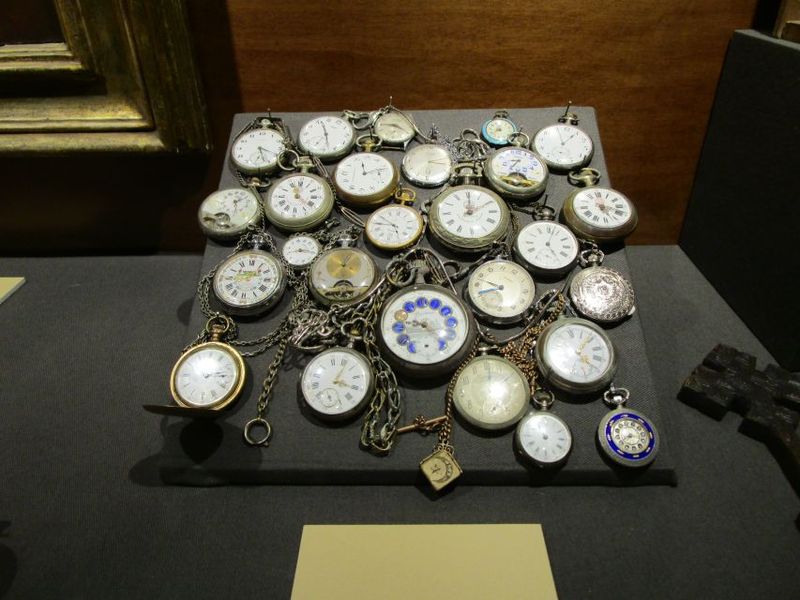
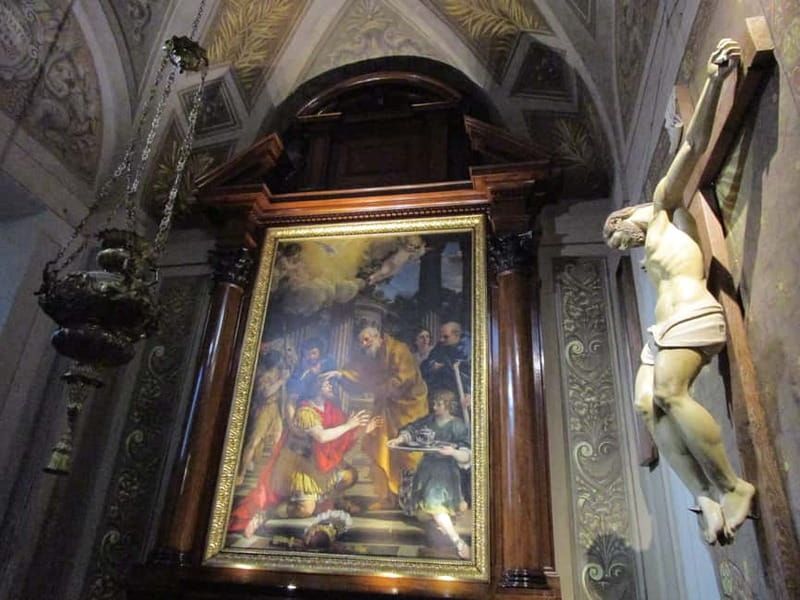
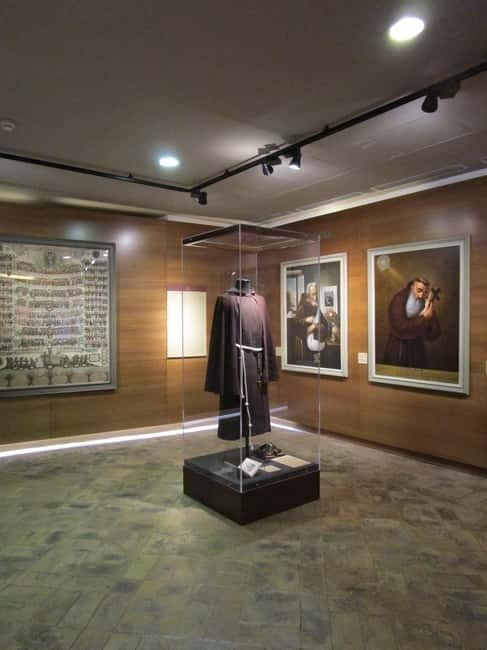
- Skip-the-line entry so you lose less time waiting
- Small groups (up to 10 people) for a calmer experience
- Crypts + museum in one tight 50–60 minute visit
- Respectful context for the bone decorations (symbolic, not shock)
- Optional English-speaking guide or audio guide for your style of visiting
Capuchin Crypts: why this Roman stop feels different
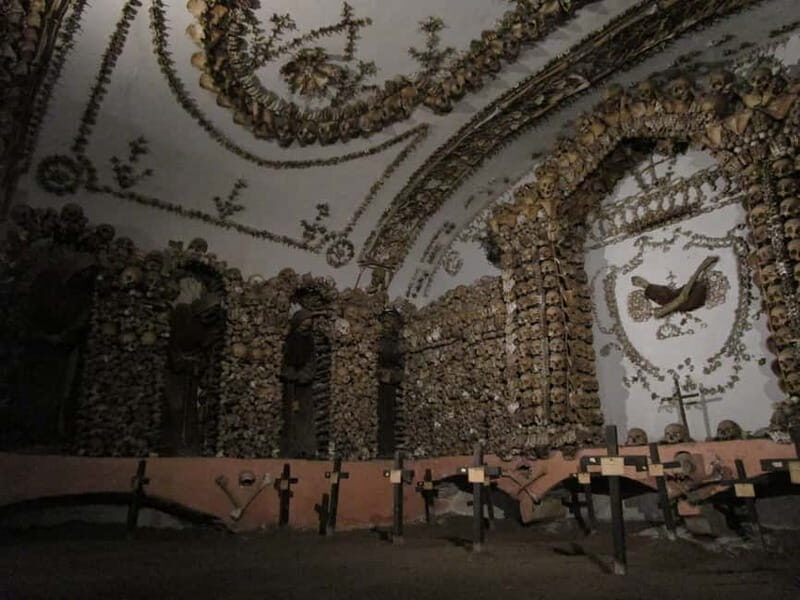
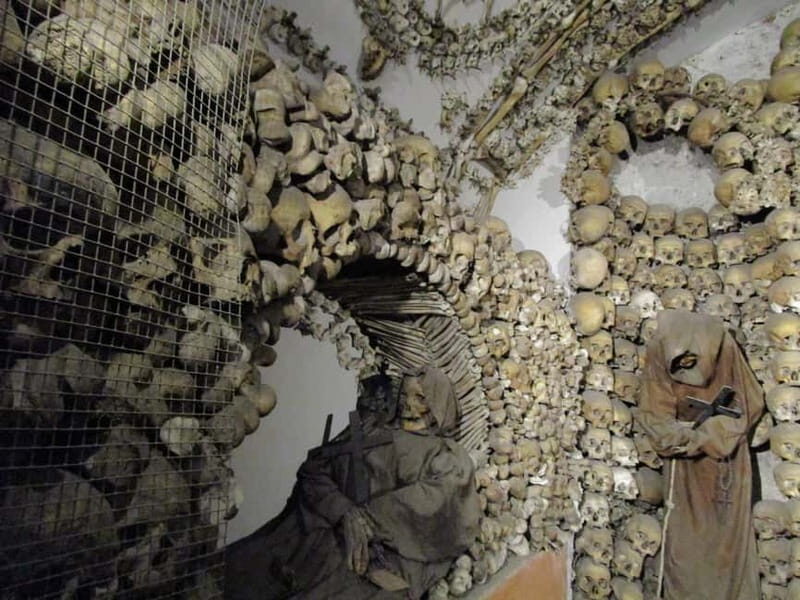
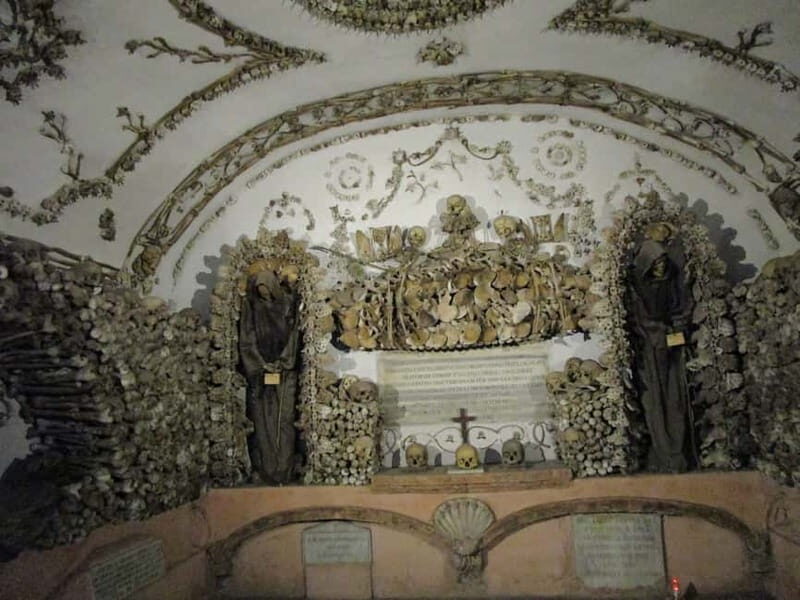
Most “dark” attractions in Europe aim for shock. The Capuchin Crypts aim for something else: reflection. The bone decorations you’ll see are arranged in symbolic designs, meant to communicate messages about life, time, humility, and spiritual thought. That framing changes how you walk through it. You’re not just looking at bones. You’re reading a message built out of bones.
The visit also includes the museum portion, which matters more than you’d expect. Without that background, you might miss what the Capuchins were trying to say. With it, you can connect what you’re seeing to the history of the Capuchin Order and how this tradition developed.
This is also a site where the tone matters. A guide can turn a short tour into a genuinely memorable hour. Even the audio option is designed to stay clear and family-friendly.
You can also read our reviews of more tours and experiences in Rome



Meeting point at Via Vittorio Veneto 27: keep it simple
The tour starts from Via Vittorio Veneto, 27. On arrival, you go directly to the entrance for the Capuchin Crypts and use your ticket details to avoid the entrance line. Your voucher or tickets are what you’ll show at the entrance.
Practical advice: when you’re in central Rome, the area around major streets can feel busy. Plan a little extra buffer so you don’t arrive flustered. Once you’re at the entrance, the process is straightforward: show the tickets you were sent, then go in with the skip-the-line benefit.
Because the duration is fairly short (about 50 minutes to 1 hour), arriving on time helps the tour feel smooth instead of rushed.
Dress code and accessibility: the rules you can’t ignore
Before you picture what you’ll wear, lock in the basic requirements: shoulders and knees must be covered to enter the crypts. Long shorts that reach the knees are fine, and you’ll want something that doesn’t force you to constantly adjust fabric in a stone interior.
Also note two constraints that affect planning:
- The crypt is not wheelchair accessible.
- If your group includes someone with mobility needs, you’ll want to double-check suitability before booking, since the tour description explicitly says it doesn’t work for wheelchairs.
If you’re traveling in warm months, this is the one snag. Bring a light layer that covers shoulders and swap to knee-length bottoms if needed. It’s the easiest way to avoid last-minute stress.
Skip-the-line entry: what you actually save
“Skip-the-line” sounds like a marketing phrase until you’re standing outside with time ticking. Here, it’s meaningful because you’re getting a short, focused tour. You don’t want to spend half your visit waiting.
That said, skip-the-line doesn’t remove all time on-site. You still need to pass through entry checks and get oriented. But the big win is that you don’t add unnecessary delay to an experience that is designed to run in a tight window.
If you’re visiting during peak travel weeks, the difference can be huge. You’ll spend your energy where it counts: inside the museum rooms and then in the crypt chapels.
More Great Tours NearbyGuided tour or audio guide: choosing the best fit
You can book either an English-speaking guide or an audio guide option. Both cover the museum and the crypts, but the feel is different.
Guided tour is ideal if you want:
- someone to point out small details you might miss
- a narrative that connects the bone arrangements to meaning
- a lively, human flow (some guides are especially humorous)
For example, some travelers mention guides like Ava, Luigi, and Slobodan bringing personality and humor while still staying knowledgeable. That mix matters in a place like this, because the topic can swing between solemn and unsettling if it’s not handled well.
Audio guide is best if you want:
- flexibility to move at your own pace within the structure of the visit
- a clear, family-friendly explanation style
One traveler described the audio track as conversational, like a friendly exchange between an older returning visitor and a younger educated fellow. That kind of format can make the content easier to follow when you’re not listening to a live guide.
If you’re deciding last minute, my rule of thumb is simple: if you love context and storytelling, choose a guide. If you prefer to listen and wander without stopping for Q&A, audio works well.
You can also read our reviews of more tours and experiences in Rome
- Skip-the-Line Group Tour of the Vatican, Sistine Chapel & St. Peter’s Basilica
★ 4.5 · 12,779 reviews



The Capuchin Museum: background that makes the bones make sense
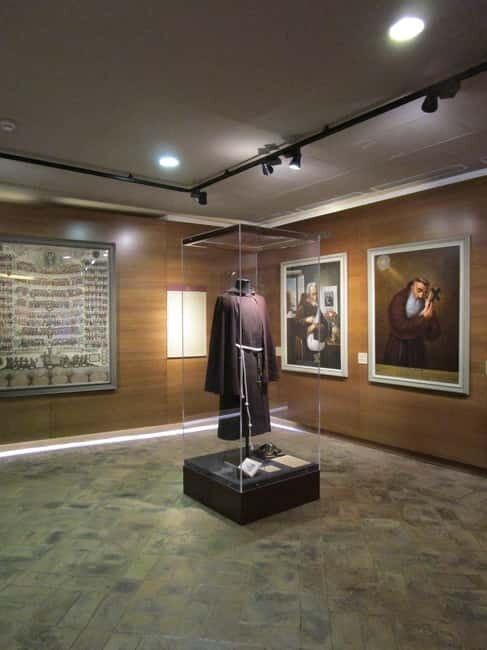
The tour experience starts with the museum, where you’ll learn how the Capuchin tradition connects to the broader history of the Capuchin Order. This part matters because the crypts themselves are visually intense, and the museum explains what you’re looking at and why it’s arranged the way it is.
Think of the museum as your translator. It helps you understand how people framed mortality and reflection in religious life, rather than treating the bone decorations as a weird curiosity.
Some visitors also like that the tour doesn’t drag. You’re not stuck in museum “headache mode.” You get focused guidance so you can absorb the key ideas, then move on to the crypt areas while it’s still fresh.
Crypt of the Three Skeletons: where symbolism hits first
The first crypt stop you’ll explore is the Crypt of the Three Skeletons. This is a great entry point because it sets the tone for the rest of the chapels. You’re not dumped into a maze of bones without orientation; you start with one of the more recognizable spaces and then build understanding from there.
What you’re really seeing here is how the Capuchins used imagery of death to point toward spiritual ideas: life continues in a different form, time matters, humility is a virtue, and reflection isn’t meant to be a performance. The decorations are arranged to communicate messages rather than to shock.
You may find yourself slowing down. That’s normal. Even visitors who expect something “creepy” often report a calmer, more reflective atmosphere once they understand the intent.
Crypt of the Skulls, Crypt of the Resurrection, and more
After the Three Skeletons area, you’ll move through multiple sections, including the Crypt of the Skulls and the Crypt of the Resurrection, plus additional crypt spaces. Each one adds a slightly different angle to the same theme: mortality as a lesson, not just a grim ending.
Here’s what I think makes this part work for travelers: the visit stays curated. You aren’t left to guess what everything means. The guide or audio keeps the focus on the religious and symbolic context.
If you’re visiting with kids, this is still workable because the explanations are described as respectful and educational, not gory or sensational. You’re there to learn, and the pacing is designed to help children process it without turning it into a scary experience.
The Mass Chapel: the quiet moment in the middle
The visit includes the Mass Chapel. This is where the tone often shifts. Instead of staying purely descriptive, the experience can feel more solemn. It’s not a theme-park stop. It’s a real religious space with an unusual artistic layer.
If you’re expecting loud awe, you might be surprised. The best way to experience the Mass Chapel is to treat it like a museum exhibit with a spiritual heartbeat. Slow down, listen, and let the symbolism land.
Some travelers describe walking through the crypts as emotional or even speechless. That reaction usually comes from realizing you’re seeing a human attempt at meaning-making, not just an odd artifact.
Pace and group size: why small beats huge here
A major value point is the small group size (maximum of 10 participants). In a site like this, bigger groups can feel like a crowd moving through quiet space. Small groups keep the flow calmer, and it’s easier for a guide to manage explanations without turning everything into a lecture you can’t hear.
The tour duration of 50 minutes to 1 hour also helps. It’s long enough to cover museum context and multiple crypt sections, but short enough that you don’t feel mentally drained.
If you’ve got limited time in Rome, this timing fits well. It’s not a half-day commitment. You can usually slot it in between other must-sees without blowing your schedule.
What the guides do well: knowledge plus personality
The most consistent praise centers on the guides’ ability to explain clearly. People mention guides who were not just knowledgeable, but also entertaining, sometimes with jokes that kept attention steady.
That balance matters. The subject is inherently intense, so you need a guide who can keep things respectful while still engaging. It’s also why a live guide can feel worth paying extra for, even when the audio option is solid.
Some travelers even mentioned a kind of narrative rhythm that helps you understand the story without getting lost in details. Others noted that the tour can be short and sweet, which is perfect here, because you’re exploring spaces that invite silence and observation.
Audio guide quality: better than you expect in a crypt
If you choose audio, don’t assume it’s just a phone-like narration. The tour’s audio guide is described as clear and family-friendly, and one traveler highlighted that it’s conversational in style.
That structure helps because it breaks up monotone reading. It also gives you a more natural way to process explanations while walking between crypt spaces.
One practical note: the experience description says you’ll receive the audio guide once inside the museum. So don’t wait to handle audio logistics outside in the line area. Once you’re in, follow the instructions and get settled quickly.
Price and value: $25 for a focused, guided experience
At $25 per person for around 50 minutes to 1 hour, the value depends on what you want from your time in Rome.
Here’s the honest math:
- You’re paying for skip-the-line entry.
- You’re getting access to the museum + multiple crypt chapels.
- You may get a live English-speaking guide (or an audio option if that’s what you selected).
- The small group size is included.
If you’re traveling during a busy season and hate wasting time waiting, skip-the-line can make this feel more reasonable than similar tours that start with a queue. And because the visit is structured and short, you’re not paying for hours of museum drifting.
On the other hand, if you personally hate guided explanations and prefer pure self-guided wandering, you might feel the time is brief. One traveler even suggested it could feel a bit overpriced given the length. So if you’re a slow wanderer, you may want to choose audio and plan extra time in the area after your scheduled visit (if timing allows).
Who should book this tour (and who might hesitate)
This is a strong match for you if:
- you want a unique, memorable Roman experience
- you like learning the meaning behind what you see
- you prefer small groups and structured time
- you’re traveling with kids who can handle a respectful educational story
You might hesitate if:
- you can’t meet the covered shoulders and knees requirement
- you need wheelchair access (it’s not available here)
- you’re sensitive to death themes and want a gentler, lighter attraction
One more point: dress appropriately not just for entry, but for comfort. Stone interiors can feel cooler, and sitting or standing still for explanations can be easier in breathable layers.
Practical tips to make your visit smoother
Here are a few things that help in the real world:
- Plan clothing that clearly covers shoulders and knees so you’re not thinking about it mid-visit.
- Arrive a few minutes early to keep the schedule stress-free.
- Bring a calm mindset. This place works best when you’re open to reflection rather than expecting a spectacle.
- If you’re doing audio, listen actively to the symbolism so the bones feel meaningful, not random.
Also, check your booking choice before you go. People report that changes can lead to upgrades from one format to another when timing shifts, so it’s worth staying flexible if your plans are fluid.
Should you book the Capuchin Crypts tour with audio or a guide?
I think you should book this tour if you want a smart, well-paced introduction to one of Rome’s most unusual sites. The combination of skip-the-line entry, small group size, and clear explanations is exactly what makes a short visit feel satisfying.
Choose a guided tour if you love knowledgeable storytelling, especially if you want help noticing small details in the museum and crypt spaces. Choose audio if you prefer a conversational, self-directed feel while still getting structured explanations.
Bottom line: at $25 for under an hour, it’s good value when you factor in skip-the-line access and the guided context. If your day needs one offbeat stop that still feels respectful and educational, this is a strong pick.
Rome: Capuchin Crypts Guided Tour with Audio Guide Option
FAQ
How long is the Capuchin Crypts tour?
The experience runs about 50 minutes to 1 hour, depending on the scheduled start time.
Where do I meet for the tour?
The starting location is Via Vittorio Veneto, 27. You’ll then go directly to the Capuchin Crypts entrance and show the tickets you receive.
Is skip-the-line entry included?
Yes. The ticket includes skip-the-line entry so you can go in without waiting in the entrance line.
Do I need to cover my shoulders and knees?
Yes. Shoulders and knees must be covered to enter the crypts. Long shorts that reach the knees are fine.
Is the site wheelchair accessible?
No. The crypts are not wheelchair accessible.
What languages are available for the tour?
The tour offers English-speaking service, either with a guide or an audio guide.
What is the cancellation policy?
You can cancel up to 24 hours in advance for a full refund.
You can check availability for your dates here: