
Quick take: Rome by bus, with real flexibility
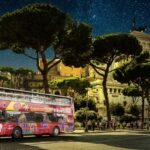
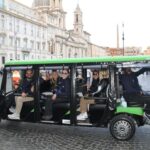
Rome is a big city, and this City Sightseeing hop-on hop-off bus helps you see the big landmarks without spending your whole day navigating streets. It runs as an open-top, double-decker loop with onboard audio commentary and a ticket that lets you hop off (and back on) as you like.
What I like most is the freedom to spend 10 minutes or 2 hours at a stop, and that the audio guide comes in 8 languages (plus a sightseeing app). The loop itself takes about 100 minutes, so you can get oriented fast even on a tight schedule.
One thing to plan around: some stops may not be guaranteed due to special events, and the audio can be interrupted at times—so don’t assume you’ll always get off at every exact spot you want.
You can check availability for your dates here:- Quick take: Rome by bus, with real flexibility
- Key points to know before you ride
- What this hop-on hop-off loop is really good for
- Price and value: that buys you mobility
- Route basics: the loop takes about 100 minutes
- Where you board: Via Marsala and Line A stops
- Santa Maria Maggiore: an early, eye-catching stop
- San Giovanni in Laterano: why this area matters
- Colosseum from the bus: great photos, sometimes no hop-off
- Circus Maximus: see the scale, then keep moving
- Piazza Venezia: a classic Rome crossroads
- Largo di Torre Argentina: unexpected and atmospheric
- Piazza Navona: where you can linger
- Vatican area and Castel Sant’Angelo: the loop’s grand finish
- Villa Borghese (passing): good window time
- Piazza di Spagna and Fontana di Trevi area: iconic, built for photos
- Piazza Barberini: a practical final stop before you loop back
- Audio guide quality: usually clear, sometimes interrupted
- Jubilee Line: what’s included and why it matters
- Wi-Fi and app support: small perks, real convenience
- Weather, comfort, and using the open-top wisely
- Who should book this bus
- Should you book this City Sightseeing hop-on hop-off bus?
- More City Tours in Rome
- More Tour Reviews in Rome
Key points to know before you ride

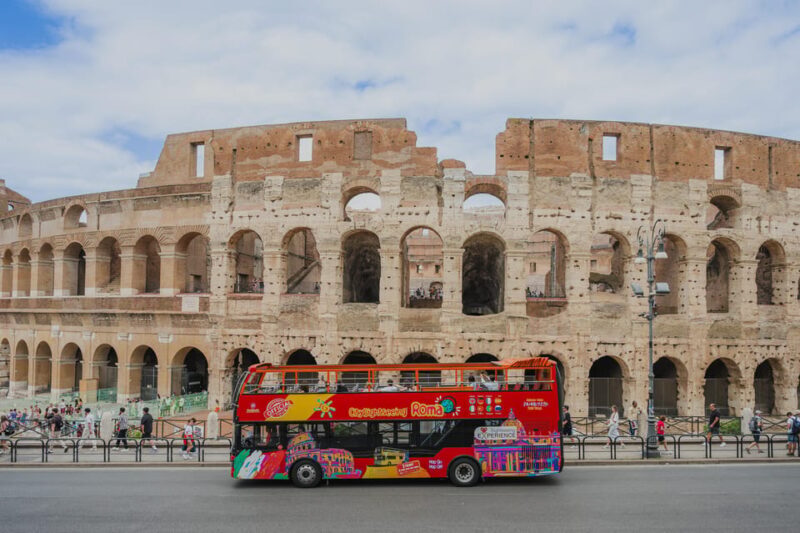



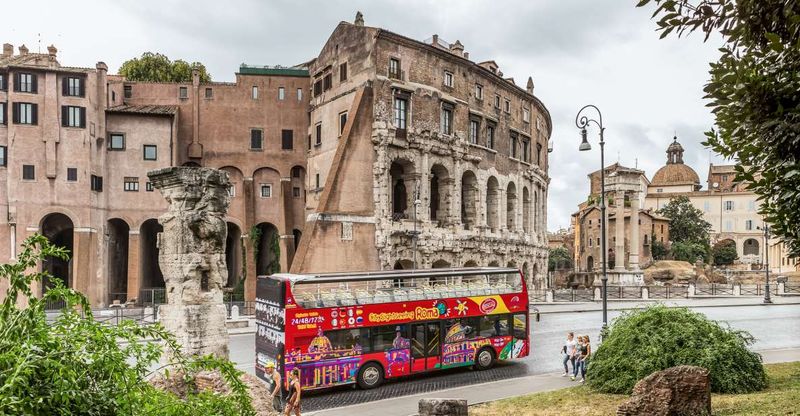
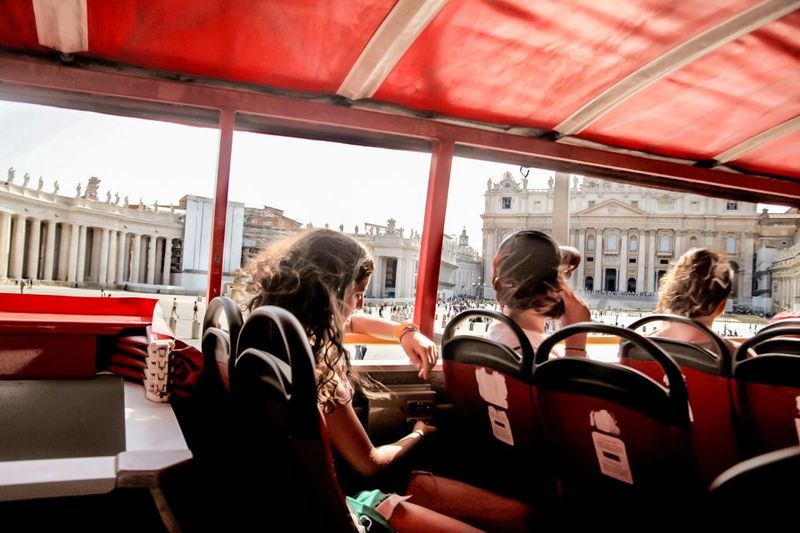
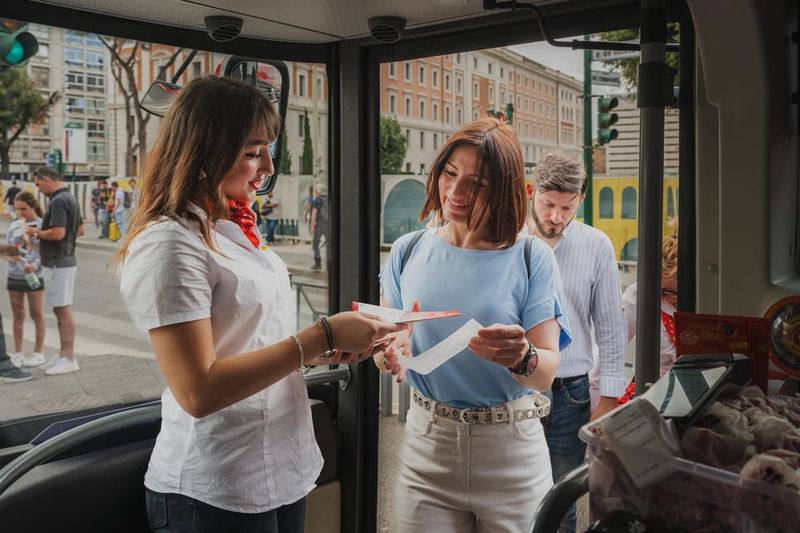
- Hop at major landmarks: You can get on/off at designated stops along the route, including the Colosseum, Piazza Navona, and the Vatican area.
- 100-minute loop for fast orientation: Ride the whole circle once to map out your day.
- 8-language audio + headphones on the open bus: You’re not stuck guessing what you’re seeing.
- Ticket flexibility (24/48/72 hours): Choose 1 Day, 24, 48, or 72 hours for your pace.
- Jubilee Line access included: Your City Sightseeing ticket includes the Jubilee Line, operated by Vatican & Rome Open.
You can also read our reviews of more city tours in Rome



What this hop-on hop-off loop is really good for
This isn’t the kind of tour where you’re herded from place to place. You’re in control. You can stay on the bus for the full loop, or treat it like a moving map and jump off to explore. For first-time visitors, that matters—Rome is gorgeous, but it can also be confusing when streets twist and signage changes.
You’re also getting more than transport. The onboard audio in 8 languages helps you connect the dots between monuments, churches, and squares, especially when you’re standing there and wondering what you’re looking at.
And yes, at about $15 per person, it’s priced like a value tool for sightseeing rather than a premium guided experience.
Price and value: $15 that buys you mobility
At roughly $15 per person, the main value is not just the bus ride. It’s the mix of hop-on hop-off access for 1–3 days, the onboard audio, and the included Jubilee Line option.
If you’re short on time, one full loop plus a couple targeted stops can cover a lot of Rome without paying separate tour fees for every area. If you have more time, the 48 or 72-hour tickets can make it easier to return to spots you didn’t have time for the first pass.
The catch: attraction entry tickets aren’t included. So think of this as your high-efficiency transport and interpretation layer, not a skip-the-line ticket to everything.
Route basics: the loop takes about 100 minutes
The full loop is 100 minutes, which is long enough to see the “greatest hits,” but not so long that you feel trapped. You can ride straight through, or hop off at stops and re-board at your convenience.
The ticket is described as valid for different options—1 Loop, 1 Day, 24, 48, or 72-hour passes—so double-check what you booked. The important note is that a “1 Loop” option may not work the same way as a hop-on hop-off pass, so you’ll want the version that matches your plan to get on and off.
More Great Tours NearbyWhere you board: Via Marsala and Line A stops
You can start at the meeting point area on Via Marsala, 7, and you can also start at any stop of City Sightseeing Rome Line A. Practically, that means you can meet the bus where you already are—especially helpful if you’re staying near Termini or around the central corridor.
When planning your day, I’d treat Line A as your backbone route. Then build walking routes outward from the stops you choose.
Santa Maria Maggiore: an early, eye-catching stop
As the bus heads through the central area, one of the first major landmarks you’ll pass is Basilica Papale di Santa Maria Maggiore. Even from the street, this kind of stop helps you get your bearings—Rome’s churches often sit in “busy-but-orderly” piazzas that act like anchors for sightseeing.
If you want a quick look, you can stay on the bus and just watch the audio cue you through what’s coming next. If you prefer a real pause, this is the sort of stop where you might take a few minutes to absorb the architecture before moving on.
San Giovanni in Laterano: why this area matters
Next up is Basilica di San Giovanni in Laterano. This is a stop that’s easy to appreciate even if you’re not planning a deep interior visit, because the location fits Rome’s rhythm: a grand religious site connected to a busy urban neighborhood.
This is one of those places where a short hop-off can still pay off. Even if you only step out briefly, you’ll likely feel like you’ve started mapping Rome beyond the postcard locations.
Colosseum from the bus: great photos, sometimes no hop-off
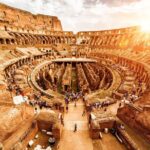
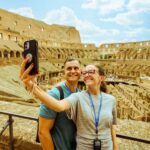
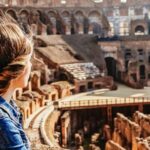
The Colosseum is the big headline stop, and it’s one reason this bus gets so popular. Even when you can’t get off, the bus windows and height can still give you solid photo angles—especially if you time it during lighter traffic.
That said, plan for the possibility that you might not be able to disembark at every stop all the time. The route can shift and some stops may not be guaranteed due to special events, and there’s been disappointment when travelers couldn’t get off at the Colosseum. So if this is your #1 must-do, aim to keep your expectations flexible and have a backup plan.
Circus Maximus: see the scale, then keep moving
Moving on, you’ll pass Circus Maximus—a spot that’s less about one single view and more about understanding the scale of ancient Rome. From a bus, it helps you feel how big the city used to be, even if you’re not stepping into an official site right then.
This is also a good “stay seated” moment. If your goal is covering many areas, Circus Maximus works well as a pass-through stop where you absorb the story from the audio.
Piazza Venezia: a classic Rome crossroads
Then you hit Piazza Venezia, a central square that works well for orientation. Squares in Rome are like geographic landmarks—once you recognize where you are, you can plan walking routes more confidently.
If you’re the type who likes to stretch your legs but doesn’t want to lock yourself into one neighborhood, this area can be a good re-position point.
Largo di Torre Argentina: unexpected and atmospheric
Largo Argentina is one of those places that feels unexpectedly atmospheric once you’re near it. Even without focusing on any specific ticketed attraction, this stop gives you a sense of Roman layers—ancient remnants and city life right next to each other.
I like this stop for a short hop-off because you can walk, look around, and still keep the rest of the day fluid.
Piazza Navona: where you can linger
Piazza Navona is famous for a reason. It’s a square you can actually enjoy from street level: people-watching, architecture, and lively energy in the center of the action.
This is a strong choice if you want to slow down. Hop off for 30–90 minutes, take your photos, and grab a coffee or something simple nearby (just remember food isn’t included).
If you don’t want to stop, you can still enjoy it as you pass, but it’s one of the stops that rewards time.
Vatican area and Castel Sant’Angelo: the loop’s grand finish
When the bus reaches the Vatican City area, it also connects to Castel Sant’Angelo. This stretch is often where travelers feel the “wow” moment, because the scenery and scale change so much from one part of central Rome to another.
Whether you hop off or stay onboard, the audio commentary can help you understand what you’re seeing as the bus brings you through this zone. If you’re planning a Vatican visit, remember that entrance tickets aren’t included, so you’d still need to arrange those separately.
Villa Borghese (passing): good window time
The route includes Villa Borghese as a pass-by segment. You might not get a dedicated hop-off moment here every time, but it’s still useful for seeing how the city transitions toward greener areas and larger open spaces.
If you’re riding at a calmer time of day, sit on the open deck side if possible and use this segment to reset your headspace before you swing back toward the busier core.
Piazza di Spagna and Fontana di Trevi area: iconic, built for photos
As you continue, you reach Piazza di Spagna with Fontana di Trevi mentioned as part of the area you’ll see from the route. This is where you can easily justify a longer stop, because you’ll want to circle back, take photos from different angles, and just enjoy the crowds moving around the landmarks.
Tip: if you’re sensitive to big tourist foot traffic, aim for a shorter hop-off window rather than staying too long at peak times. The beauty is still there—you just might need to manage the timing.
Piazza Barberini: a practical final stop before you loop back
You’ll also pass through Piazza Barberini, which works well as a “last step” in the central loop. It’s a convenient area to plan your walking connections from—especially if you want to finish the day without committing to a long commute back across town.
From there, the bus route continues back toward Roma Termini and returns to the start point area.
Audio guide quality: usually clear, sometimes interrupted
The onboard commentary is a big part of why this works. Travelers generally describe the audio as clear and informative, and the language options are strong: Spanish, Chinese, English, French, German, Italian, Russian, Portuguese.
One drawback that comes up: the commentary can be interrupted at times and might not finish fully in every moment. For that reason, I’d treat the audio as a helpful guide, not a strict lecture. If you hear something important, pause your focus and look around—Rome rewards direct attention.
Jubilee Line: what’s included and why it matters
Your City Sightseeing ticket includes the Jubilee Line, operated by Vatican & Rome Open. The data doesn’t spell out details like timing or how you specifically access it, but the key takeaway is simple: you’re getting a transport add-on tied to the Vatican area.
If you’re planning to spend serious time around the Vatican zone, this can reduce friction. Even when you’re not using it constantly, having it included can make your day planning easier.
Wi-Fi and app support: small perks, real convenience
On the open bus, you get Wi-Fi, plus a sightseeing app. This is handy for two reasons: quick map sanity checks and practical trip management (like confirming where you want to hop next).
You’re also traveling in an open-top vehicle, so you’ll naturally want to manage sun, wind, and comfort. The Wi-Fi won’t fix that, but it helps if you need quick navigation or ticket-related info during your ride.
Weather, comfort, and using the open-top wisely
Rome can swing from warm to breezy quickly, especially in shoulder seasons. Since this is an open-top bus, plan for wind and sun—bring sunglasses and something light for cooler evenings.
Also, you’ll see more if you stand less and look more. Try a few minutes up top near a great sight view, then switch to your seat if you want less wind and a more stable listening experience for the audio.
Who should book this bus
This is a good fit if:
- You’re seeing Rome for the first time and want a low-effort way to cover major sights.
- You have limited time and want a route that helps you build your plan quickly.
- You like flexibility—hop off when something grabs you, hop back on when it’s time to move.
If you’re the type who wants one tight museum-focused day with detailed timed entry, you’d still need other tickets and plans. This is about moving around the city efficiently, not about replacing attraction entries.
Rome: City Sightseeing Hop-on Hop-off Bus with Audioguide
Should you book this City Sightseeing hop-on hop-off bus?
I’d book it if you want value, fast orientation, and an easy way to reach Rome’s signature landmarks without fighting transit every time. The combination of a 100-minute loop, the 8-language audio, and the hop-on freedom is exactly what you want on a “see a lot, decide later” trip.
Skip or be extra careful if:
- You specifically need guaranteed access to one stop (like the Colosseum) at a certain time, because stops can be affected by special events.
- You accidentally book a ticket type that isn’t truly hop-on hop-off. Double-check your pass details before you go.
If your goal is to keep your day light and your sightseeing strong, this bus is a practical, friendly option for Rome.
You can check availability for your dates here: