Our review of this St. Peter’s Basilica experience is all about context plus a payoff view. You get a professional art historian guide inside the church, then you climb from the dome’s lower levels up to the top viewing deck at 136 meters.
What I like most is how the guide connects art and architecture to the big why behind the building story, and then makes the climb feel manageable with clear pacing and smart stops. I also really appreciate that the dome route includes an elevator up to about halfway, so you’re not doing the entire thing from street level.
One consideration: it is not a true skip-the-line tour unless you choose that option. Security checks and crowds can add serious waiting time, and bad weather can limit terrace access.
- Key highlights to know before you go
- St. Peter’s Square: Your tour starts in the right place
- Inside St. Peter’s Basilica: Marble, ceilings, and the Pietà
- Why the basilica took 150 years to rebuild (and why that matters)
- The dome climb route: elevator halfway, then stairs to the deck
- Up close in the dome: mosaics you can finally see
- The view from 136 meters: Colosseum, Pantheon, Castel Sant’Angelo
- Photo stops that actually help
- Timing and queues: the part you should plan for
- What’s not included: Vatican Museums, Sistine Chapel, Necropolis
- Weather rules and terrace access: what happens if the top can’t be reached
- Small groups, multiple languages, and what to watch for
- Accessibility and who this dome climb is not for
- Dress code and ticket details: small rules that prevent big headaches
- Price and value: what buys you (and what it doesn’t)
- Who should book this dome tour?
- Should you book this St. Peter’s Basilica Dome Climb?
- FAQ
- FAQ
- Is this tour really only 2 hours?
- Does the tour include the elevator to the dome?
- Will I also see the Vatican Museums and Sistine Chapel?
- What languages are available for the guide?
- What if the dome terrace is closed due to weather?
- What should I bring and what isn’t allowed?
- More Guided Tours in Rome
- More Tours in Rome
- More Tour Reviews in Rome
Key highlights to know before you go
- Art historian-led storytelling that helps you read the basilica instead of just walking past it
- Elevator up to halfway before you switch to stairs for the final climb
- Dome mosaics up close, when you can actually see how the artwork is built
- Stunning skyline views from 136 meters, including major landmarks on clear days
- Small-group feel (private or small groups available), with guides like Sara, Valentine, Paul, and Marco often praised for energy and knowledge
- Weather and closure flexibility, with itinerary adjustments and refund options if the terrace isn’t reachable
St. Peter’s Square: Your tour starts in the right place
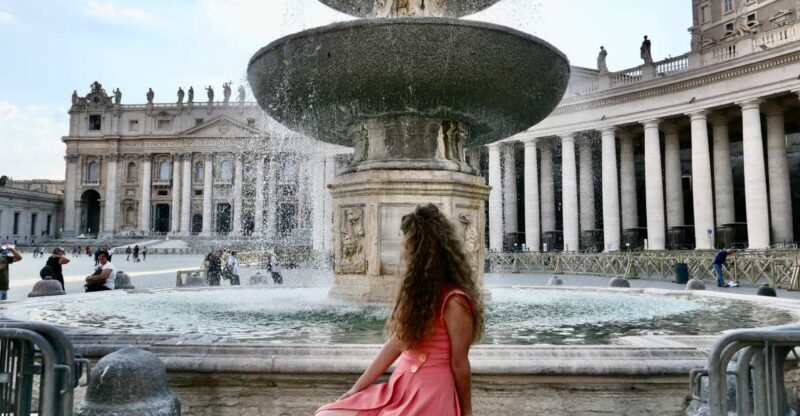
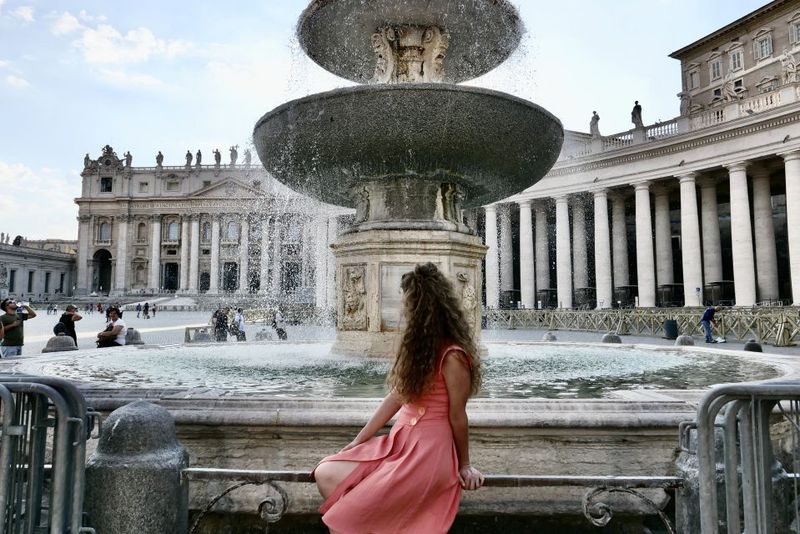
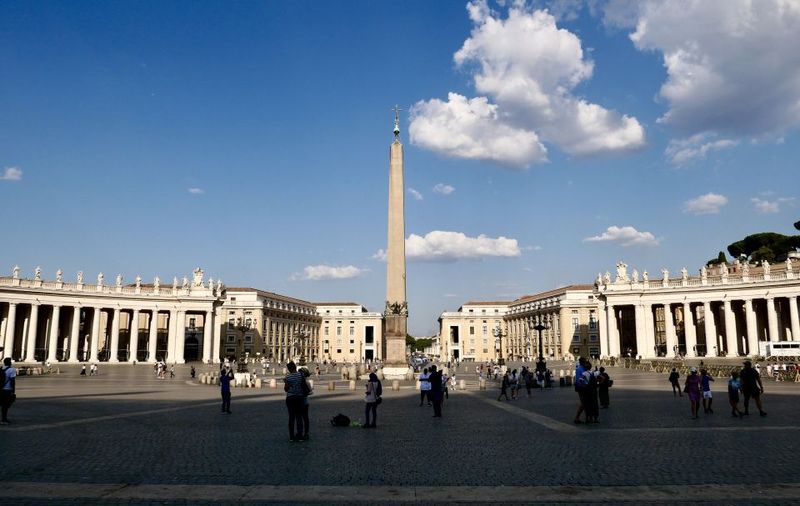
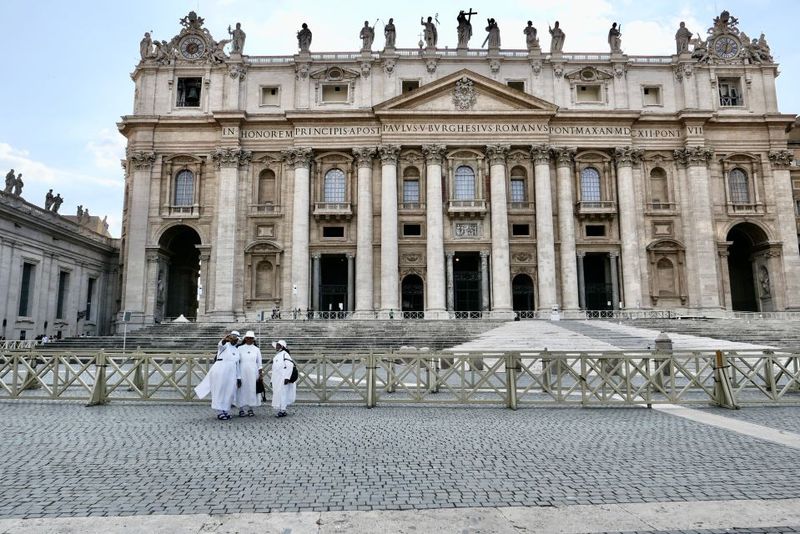
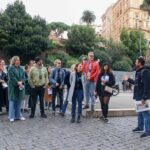
Most tours begin around St. Peter’s Square, with your guide shepherding you into position for the first photos and orientation. You’ll get a short, focused introduction and time for a quick stop to take in the big geometry of the square and basilica front.
This matters because St. Peter’s is one of those places where you can wander for an hour and still miss what makes it click. With a guide, you start seeing connections right away—how the façade, the square, and the dome are all part of the same visual plan.
You can also read our reviews of more guided tours in Rome
Inside St. Peter’s Basilica: Marble, ceilings, and the Pietà
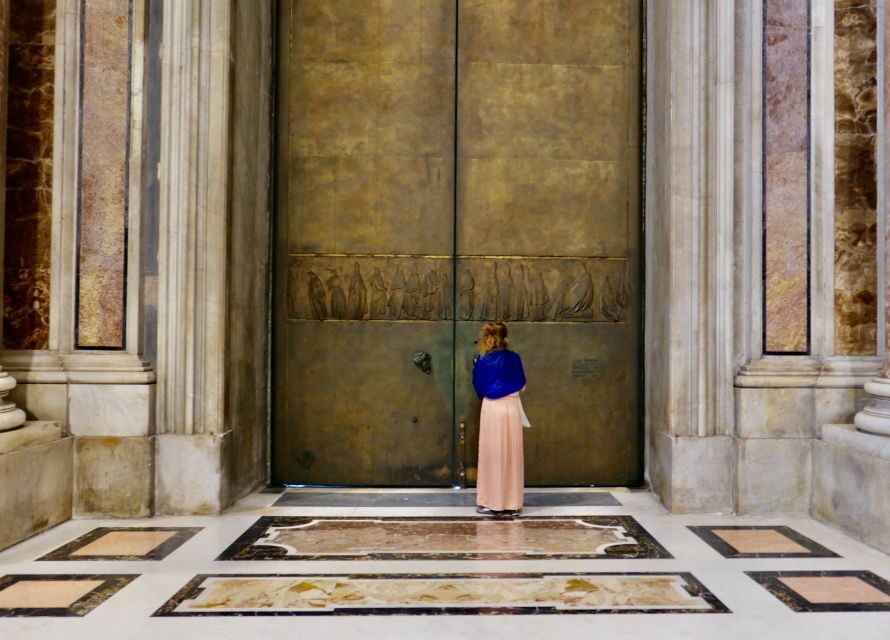
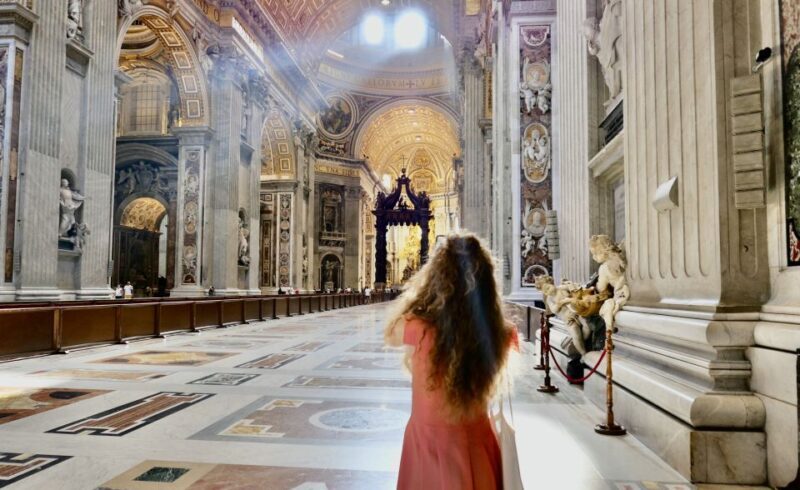
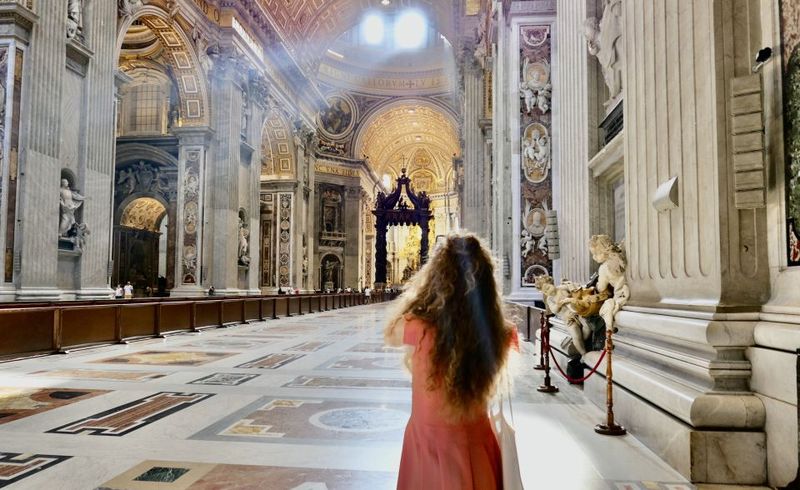
Once you’re inside, the emphasis becomes “slow down and look with purpose,” even if the crowd energy keeps pushing forward. Your guided time here is about appreciating the basilica’s interior highlights—impressive marble, decorated ceilings, and dome-related artwork—while your guide points out what you’d otherwise skate past.
Many travelers cite Michelangelo’s Pietà as a key moment, and it’s easy to see why. It’s a focal work that people feel instantly, but understanding the artistic choices and the context makes it land even harder.
Why the basilica took 150 years to rebuild (and why that matters)
One of the most satisfying parts of this tour is the history lesson that actually changes how you interpret what you see. You’ll hear why the church took 150 years to rebuild, and you’ll learn how the design became a Renaissance-style blend rather than a single uninterrupted plan.
This is not history as trivia. It’s history as explanation: why certain choices exist, why the dome and interior feel the way they do, and how the basilica became a statement project over generations.
If your guide is great, this portion feels like the first gear of the whole experience. Reviewers frequently mention guides such as Valentine (with both history and jokes) and Paul (who kept people engaged during waiting time by teaching what they were about to enter).
The dome climb route: elevator halfway, then stairs to the deck
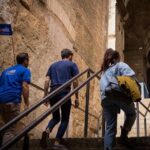
The dome portion is where you turn sightseeing into a real accomplishment. You’ll take the elevator up to about halfway, then switch to stairs to reach the viewing deck at the very top.
This mix is practical. You still get the physical challenge of the dome climb, but the climb isn’t entirely punishing. It also helps you manage energy—because the best part of the dome is not the exertion. It’s the view and the close-up art on the way up.
One more thing: the dome time is limited, so your pace is guided. You’ll move from “explore” to “focus,” then back to “pause for photos” at the right moments.
More Great Tours NearbyUp close in the dome: mosaics you can finally see
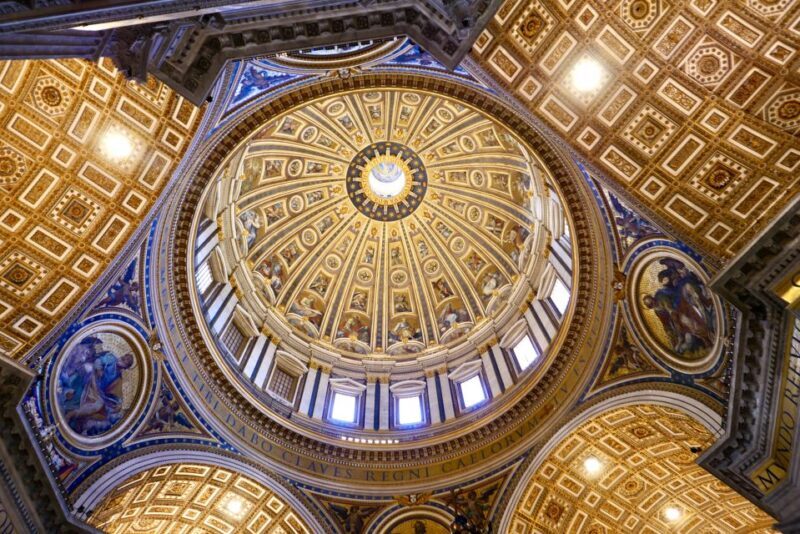
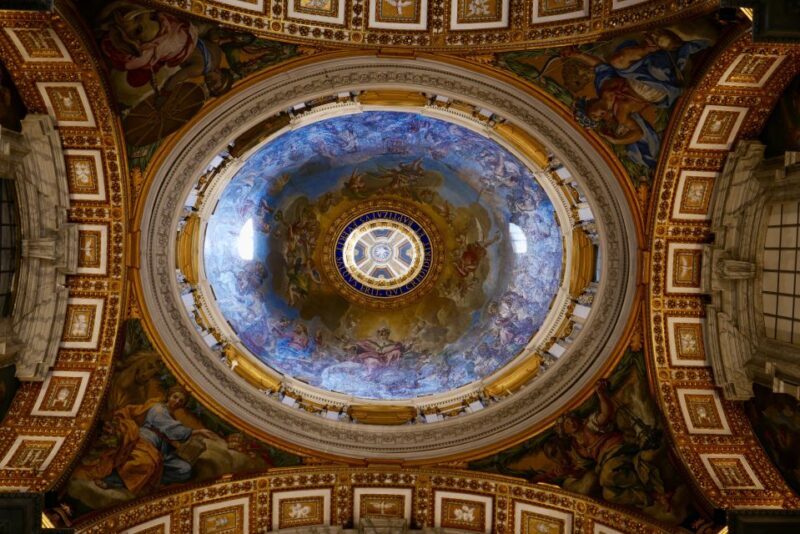
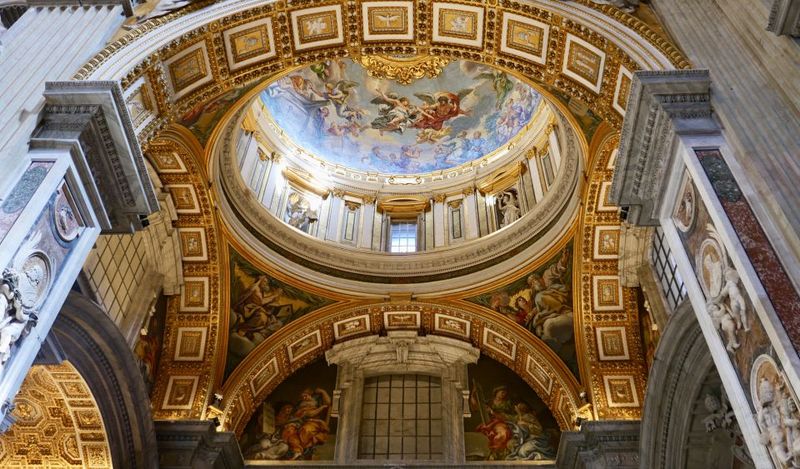
As you climb, the tour builds toward a key payoff: seeing the dome’s mosaics up close. From street level, dome artwork can feel distant—pretty, but hard to really read. Up there, you can see structure and craftsmanship that don’t register in a quick glance.
You’ll also get the kind of commentary that makes these visuals make sense. A good guide ties the mosaics to what they represent and explains how the dome’s surfaces shape light and perception.
This is one of those “you can’t fake it” moments. If you love art, architecture, and religious symbolism, this portion is often the highlight of the day.
The view from 136 meters: Colosseum, Pantheon, Castel Sant’Angelo
At the top, the goal is simple: see Rome from height. From the viewing deck at 136 meters, you can spot major landmarks like the Colosseum, the Pantheon, and Castel Sant’Angelo, along with other historic sites depending on visibility.
What you’ll love most is not just the landmarks themselves. It’s the sense of how the Vatican sits within the bigger Roman map. From above, the city stops being a list of places and starts to feel like one connected landscape.
On clear days, the “spot-it” game becomes part of the fun. On hazier days, you’ll still enjoy the scale and the shift in perspective.
Photo stops that actually help
A lot of tours rush photos and you end up with blurry shots and no memory. Here, photo stops are built into the flow—first around St. Peter’s Square, then during the basilica, and again at the dome.
That structure is useful. Instead of scrambling for a picture while your group moves on, your guide creates natural pauses. If you’re traveling with a phone-only camera, that matters.
Timing and queues: the part you should plan for
The tour is listed at 2 hours, but Rome timing has a way of stretching things, mainly because of access procedures. You should expect security checks at the entrance that can take 15 to 120 minutes, and there may also be lines for the elevator.
Even when you do everything right, crowds can slow the entry pace. People report everything from around a half hour to longer waits during peak periods. Some travelers also note that the overall experience can run closer to 3+ hours when queue time is heavy.
Practical tip: schedule your other Vatican-area plans with breathing room. If you have a timed museum ticket later in the day, build in extra margin.
What’s not included: Vatican Museums, Sistine Chapel, Necropolis
This is a St. Peter’s Basilica and dome focus. It explicitly does not include the Vatican Museums, Sistine Chapel, or Vatican Necropolis.
So if you’re aiming for the Sistine Chapel, you’ll need a separate ticket and tour. This matters because many people bundle all of Vatican City into one day, and St. Peter’s dome climb alone can be time-heavy due to crowds.
If you want a cleaner day, you might pair this with something else outside the museum complex, or save the museums for another morning.
Weather rules and terrace access: what happens if the top can’t be reached
Weather affects dome access. The dome terrace might not be accessible during bad weather, and in that case you can ask for a partial refund and visit other areas, or cancel for a full refund.
Also note that St. Peter’s Basilica can face partial unforeseen closures due to Vatican administration. If that happens, your guide adapts the itinerary by highlighting alternative areas within the basilica, with the overall duration staying the same.
Translation for you: the tour isn’t always a rigid script. It’s built to adjust while keeping the experience intact.
Small groups, multiple languages, and what to watch for
You can book private or small groups, and the tour is offered in multiple languages including English, Spanish, German, French, Portuguese, and Italian.
Why I think small groups help: St. Peter’s is chaotic, and a tight group gives the guide more room to manage timing and answer questions. Reviewers often mention that guides like Sara, Marco, and Eleonora kept everyone engaged and organized, including during stressful crowd moments.
Accessibility and who this dome climb is not for
This is not a casual walk-up. It isn’t suitable for people with back problems, claustrophobia, vertigo, or wheelchair users.
If stairs make you uneasy, or if you get nervous in enclosed spaces, take that seriously here. The dome climb involves enclosed sections and a lot of vertical movement.
Also, bring comfortable shoes, because even with the elevator, you’ll be walking and climbing.
Dress code and ticket details: small rules that prevent big headaches
St. Peter’s Basilica is strict about appearance and access. You should bring:
- Passport or ID card
- Comfortable shoes
- A long-sleeved shirt
And plan to follow restrictions:
- No shorts
- No short skirts
- No sleeveless shirts
- No luggage or large bags
- No pets
- No weapons or sharp objects
One detail that often trips people up: the tickets are nominative, meaning you must provide the full names of all travelers when booking, and the ID you show must match those names. If names don’t match, entry can be denied.
If you’re traveling with friends, double-check spelling now—not at the gate.
Price and value: what $64 buys you (and what it doesn’t)
At about $64 per person for the St. Peter’s Basilica guided visit plus dome climb, this is a value play if you care about context.
Here’s the trade:
- You pay for a professional art historian guide and access to the dome route (including elevator dome entry when that option is selected).
- You do not pay for skip-the-line access unless you choose that specific option. So your “value” depends on how much you want guidance versus self-navigation.
For me, the value comes from two things: you’re paying to understand what you’re seeing, and you’re paying to get up to the top without guessing the best route and pacing yourself through the dome systems. When the guide is great—and many reviews mention standout guides—the dome climb turns into a story with a payoff view.
Who should book this dome tour?
This is a good fit if:
- You want an organized, guided visit rather than a DIY maze.
- You like art, architecture, and historical context, not just photos.
- You can handle stairs and crowded environments.
- You want the big Rome view from the dome at the end of the effort.
It’s also a solid choice if you’ve already seen the neighborhood basics and you want something more specific and elevated—literally.
If you’re hoping for a calm, slow spiritual retreat with minimal time pressure, you might find the crowd flow and security process challenging. In that case, you may prefer a different kind of visit or a less vertical-focused itinerary.
Should you book this St. Peter’s Basilica Dome Climb?
If your dream Rome moment is the dome view—and you want a guide who can explain what you’re looking at—then yes, I’d book it. The combination of knowledgeable guidance, close-up dome mosaics, and a 136-meter panorama is hard to recreate on your own in a satisfying way.
Just book smart:
- Bring the right clothing and your ID.
- Expect queues and plan extra time, even if the tour is labeled 2 hours.
- Skip it if you have vertigo, claustrophobia, mobility limits, or back issues, since the dome climb involves stairs and enclosed parts.
- Don’t confuse it with the Vatican Museums and Sistine Chapel—you’ll need separate plans for those.
Do it on a day when you’re ready for crowds, but excited for altitude. That’s the sweet spot.
Rome: Guided Tour of St. Peter’s Basilica with Dome Climb
FAQ
FAQ
Is this tour really only 2 hours?
The tour duration is listed as 2 hours, but security lines can take between 15 and 120 minutes, and elevator lines may also add time. Some travelers may find the full experience runs longer when crowds are heavy.
Does the tour include the elevator to the dome?
The tour includes elevator dome entry only if that option is selected. The climb then continues on stairs to the viewing deck.
Will I also see the Vatican Museums and Sistine Chapel?
No. The Vatican Museums, Sistine Chapel, and Vatican Necropolis are not part of this tour.
What languages are available for the guide?
Guides are available in English, Spanish, German, French, Portuguese, and Italian.
What if the dome terrace is closed due to weather?
If the terrace isn’t accessible due to bad weather, you can ask for a partial refund and visit other areas, or cancel for a full refund.
What should I bring and what isn’t allowed?
Bring a passport or ID card, comfortable shoes, and a long-sleeved shirt. Shorts, short skirts, sleeveless shirts, luggage or large bags, pets, and weapons or sharp objects are not allowed.
You can check availability for your dates here: