When you’re visiting Rome for the first time—or returning after years away—you face a classic traveler’s dilemma: there’s too much to see and never enough time to see it all on foot. We’ve found that this private golf cart tour offers a genuinely smart solution to that problem, especially if you’re dealing with time constraints, mobility challenges, or simply want to maximize what you experience in a short visit.
What makes this tour genuinely appealing is its combination of practical efficiency and real personalization. You get a private driver who knows Rome’s streets intimately enough to navigate the city’s infamous traffic chaos, plus you’re whisked past major monuments without the soul-crushing walk-everywhere approach that leaves most first-time visitors exhausted and footsore.
The one consideration worth mentioning upfront: this is a sightseeing tour only. You won’t be stepping inside the Colosseum, climbing through the Pantheon, or tossing coins into Trevi Fountain from close range—those experiences require separate paid admission. This tour gets you close enough for stunning photos and historical context, but the actual entry fees are on you.
This experience works beautifully for families with young kids, couples who prefer comfort over hiking boots, travelers with mobility limitations, and anyone short on time who still wants to understand Rome’s layout and significance. If you’re the type who wants to leisurely explore every corner of a place, this probably isn’t your style. But if you want to see 13 major landmarks in three hours while staying fresh for an evening passeggiata, you’ve found your tour.
- What You’re Actually Getting for Your Money
- Your 13-Stop Journey Through Rome’s Greatest Monuments
- The Guides Make This Tour Sing
- Who Should Book This, and Who Shouldn’t
- Practical Details That Actually Matter
- The Money Question: Is It Worth It?
- Weather and Comfort Considerations
- Cancellation Flexibility
- FAQ: Practical Questions Answered
- The Best Of Rome!
- More Private Tours in Rome
- More Tours in Rome
- More Tour Reviews in Rome
What You’re Actually Getting for Your Money
 1 / 8
1 / 8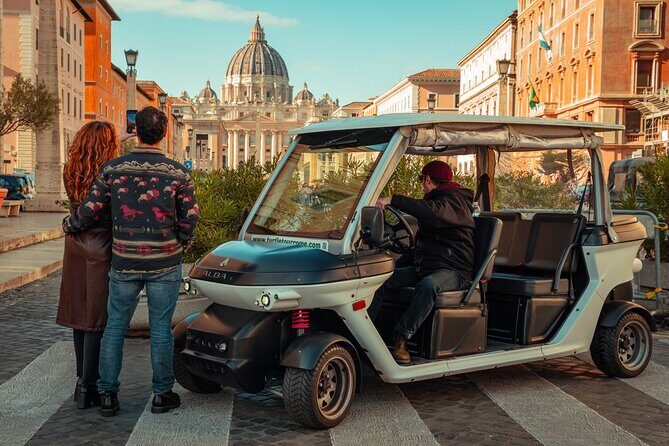 2 / 8
2 / 8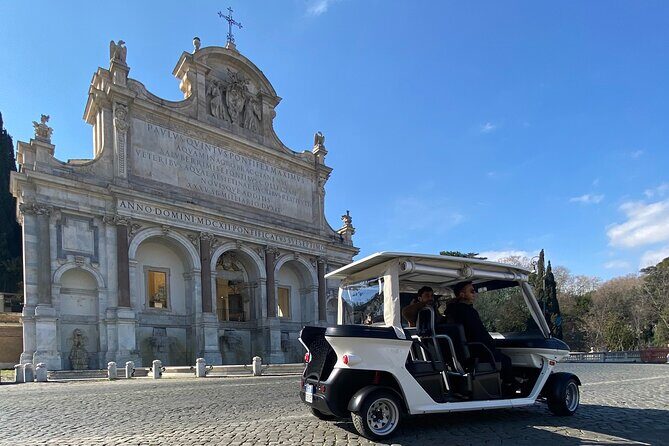 3 / 8
3 / 8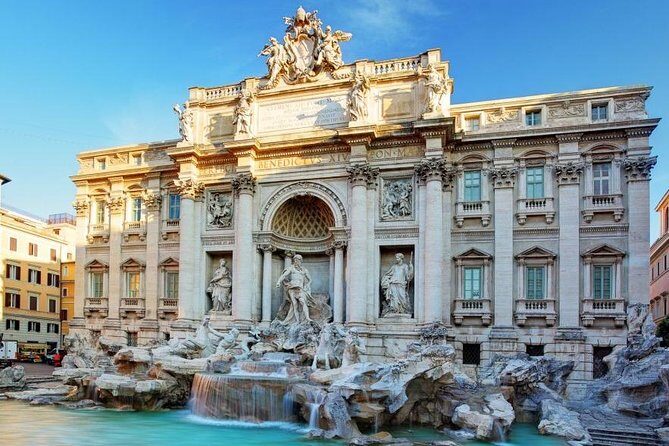 4 / 8
4 / 8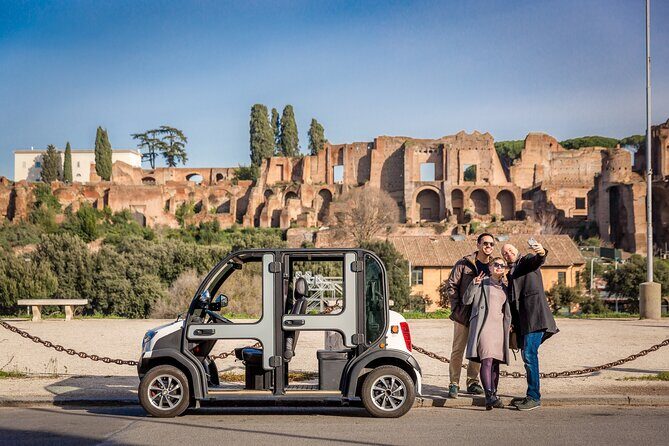 5 / 8
5 / 8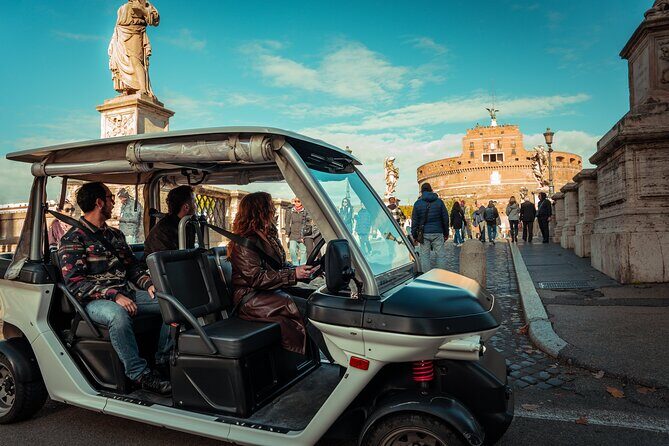 6 / 8
6 / 8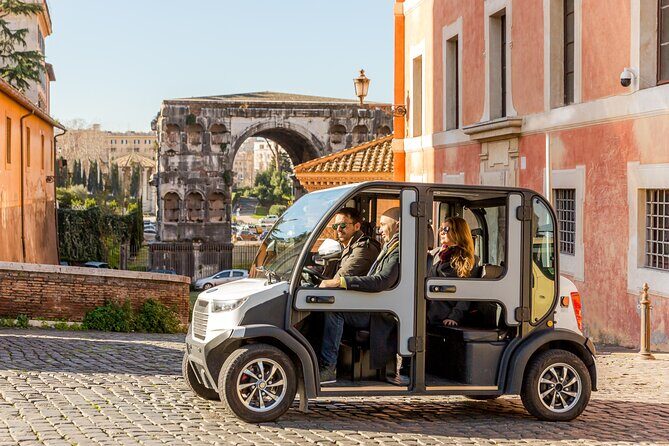 7 / 8
7 / 8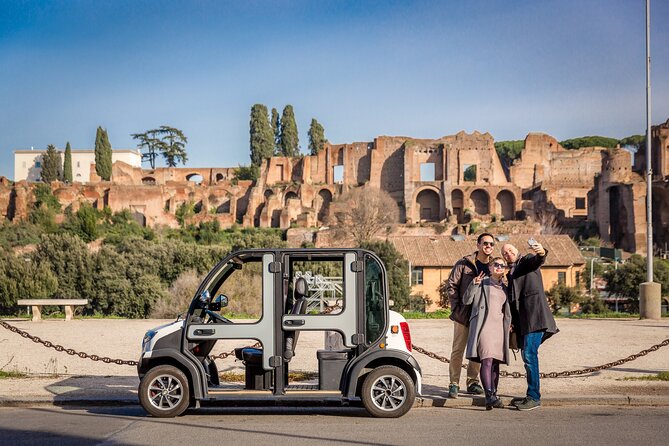 8 / 8
8 / 8At $163.26 per person for three hours of private touring, this sits in an interesting price sweet spot. You’re not paying the premium of a full-day guided walking tour, and you’re definitely getting more ground covered than you would on your own. The price includes hotel pickup (within Rome’s historical center), water, and all fees and taxes—meaning there are no surprise charges when you show up.
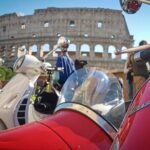
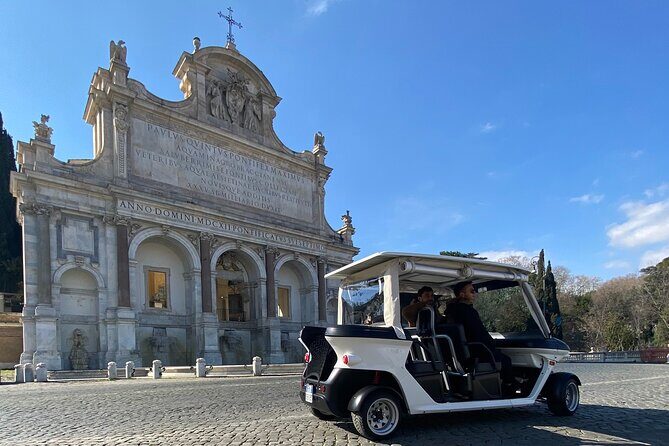
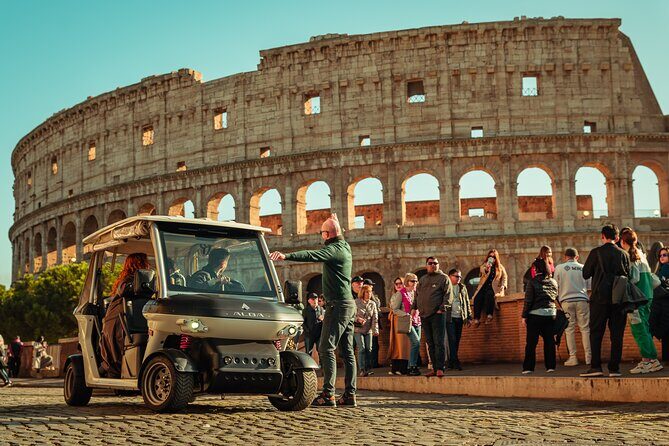
The golf cart itself is the real game-changer here. These aren’t toy vehicles; one reviewer described them as “the Mercedes of golf carts,” and the craft matters more than you’d think. You get weather protection (covers and blankets, according to several reviews), actual legroom, and most importantly, a vehicle nimble enough to navigate Rome’s impossibly narrow medieval streets where regular tour buses simply cannot go. Your guide becomes your driver, which means someone who knows exactly where to position the cart for the best photo ops—and several reviews mention guides who actually snapped pictures of their groups at each stop.
The three-hour timeframe is tighter than it sounds, but it’s exactly right for what this tour delivers. You’re moving continuously, getting 10 minutes or so at each major stop (except a few 5-minute pauses at smaller sites). This isn’t leisurely sightseeing; it’s efficient sightseeing with personality and knowledge attached.

👉 See our pick of the Discover 2 Great Tours In Rome
Your 13-Stop Journey Through Rome’s Greatest Monuments
The itinerary reads like a greatest-hits album of Rome’s most famous sites, and the routing is strategically designed to minimize backtracking through the city’s congested center.
Piazza Navona is your opening act. This former Roman stadium is now arguably Rome’s most photogenic square, famous for Bernini’s spectacular fountains—especially the Fountain of the Four Rivers, which depicts the Nile, Danube, Rio de la Plata, and Ganges. Your guide will explain the fountain’s hidden meanings and why Romans still gather here. This stop is free to access, though the surrounding cafés are decidedly not budget-friendly.
The Pantheon comes next. This temple-turned-church stands as one of the best-preserved buildings from ancient Rome, and its massive dome with the open oculus (that’s the circular opening at the top) is genuinely awe-inspiring. You won’t enter on this tour, but your driver will explain its engineering brilliance and why it’s held up for nearly 2,000 years while so many other Roman structures crumbled.
Trevi Fountain is the Instagram moment everyone expects. Yes, it’s mobbed with travelers. Yes, you’ve seen a thousand photos. But standing in front of that Baroque explosion of marble, water, and theatrical energy still hits differently in person. Your guide will share the legends—like the tradition of throwing in a coin to ensure your return to Rome, or the practice of throwing two coins to find love.
Colonna Traiana (Trajan’s Column) is where many tours skip over, but this intricately carved marble column tells the story of Emperor Trajan’s military victories through hundreds of tiny sculptural scenes spiraling up its shaft. It’s remarkable how much detail is preserved after nearly 2,000 years.
Forum of Augustus represents the imperial forums that preceded Rome’s more famous Roman Forum. Your guide will explain how emperors each built their own forums as both religious and political statements.
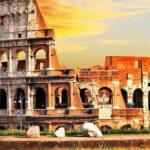
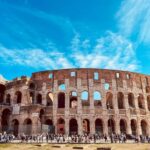
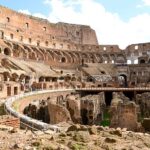
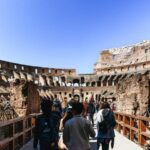
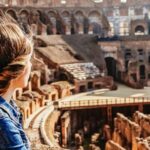
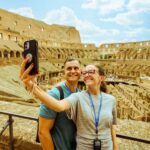
The Colosseum is the moment everyone waits for. This isn’t your first view of Rome’s most iconic monument—you’ve probably seen it in movies and on postcards since childhood. But seeing it in person, understanding its scale, learning about the gladiators and wild animal hunts that happened there, and hearing your guide explain the engineering of its four stories and 80 entrances transforms it from a photograph into a real place where real history happened.
Palatine Hill overlooks the Roman Forum from above, offering views of the ruins of imperial palaces where Caesar and Augustus once lived. The vantage point here is genuinely useful for understanding Rome’s ancient geography.
Aventine Hill provides panoramic city views that most travelers never reach. Several reviewers mentioned these views specifically, suggesting this is where you get those “wow, I can see all of Rome” moments that make the experience feel less touristy.
Circo Massimo (Circus Maximus) is where Romans watched chariot races—and yes, this is where Ben-Hur would have driven. The remains are subtle, but your guide will help you visualize what stood here when this was Rome’s largest entertainment venue, holding 250,000 spectators.
Foro Boario contains two small but beautifully preserved Roman temples that most guidebooks barely mention. This is where the tour starts feeling like you’re discovering Rome rather than just checking boxes.
Bocca della Verità (Mouth of Truth) is a carved marble face famous from the movie “Roman Holiday.” The legend claims that if you put your hand in its mouth and tell a lie, it will bite you. Your guide will explain the real history behind this medieval curiosity.
Teatro di Marcello is the best-preserved Roman theater still standing, and it’s genuinely impressive in person—far less crowded than the Colosseum, which means better photos and a clearer sense of how Romans experienced theater.
Castel Sant’Angelo wraps up the tour. This fortress started as Emperor Hadrian’s mausoleum, became a papal fortress, and now offers both architectural intrigue and views across the Tiber River.
You can also read our reviews of more private tours in Rome

The Guides Make This Tour Sing
Here’s what stands out most consistently in the 2,379 reviews: the guides are genuinely knowledgeable, personable, and adaptable. This isn’t a script-reading experience. One traveler mentioned their guide Emiliano provided handwritten restaurant and gelato recommendations at the end of the tour. Another group’s guide Paulina navigated around a half-marathon’s worth of street closures, adjusting the itinerary on the fly while still hitting all the important sites.
The reviews mention guides by name repeatedly—Mateo, Andrea, Vito, Riccardo, Shima, Duccio—which suggests these aren’t faceless operators but actual Rome enthusiasts who take pride in their work. One reviewer described their guide as “literally an encyclopedia of historical knowledge,” while another praised the guide’s “perfect English” and helpfulness.
What impresses us most is how guides handle unexpected situations. When a marathon was happening on tour day, multiple guides rerouted to show travelers the Seven Hills of Rome instead, providing experiences their guests couldn’t have gotten on a typical day. That’s not following a script; that’s actually caring about your experience.
Who Should Book This, and Who Shouldn’t
This tour is genuinely excellent if you have mobility challenges. Multiple reviewers specifically praised how the golf cart allowed them to see major sights without extensive walking. One traveler with mobility issues wrote: “He was able to get close to the sights (Colosseum, Trevi Fountain, etc.) where I did not have to walk a great distance. He made our Rome experience a memorable one.” For anyone with arthritis, bad knees, or just general exhaustion from travel, this removes a major source of stress from your Rome visit.
Families with young children find real value here. Kids get to stay seated, see lots of things, and you avoid the “my legs hurt” meltdown that happens on walking tours around hour two. The golf cart is novel enough to feel like an adventure rather than a chore.
If you’re arriving in Rome with only 24 hours to see the highlights, this tour makes sense. You’ll cover substantially more ground than you could walking, and you’ll have context for what you’re seeing rather than just snapping photos of buildings you don’t understand.
Where this tour doesn’t work: if you want to linger and absorb atmosphere, if you’re interested in museum interiors and artistic masterpieces, or if you prefer walking tours where you can stop for espresso and people-watch. This is efficient sightseeing, not leisurely sightseeing.
Practical Details That Actually Matter
Pickup logistics are worth understanding. The tour only picks up from hotels within Rome’s historical center (specific ZIP codes: 00184, 00186, 00187). If you’re staying at a major chain hotel outside the center—and many visitors do—you’ll need to arrange an alternative meeting point. The tour company will contact you to sort this out, but it’s not automatic door-to-door service if you’re staying in outer neighborhoods. No airport or cruise port pickup is available, which is a genuine limitation for some travelers.
Timing is tight but reasonable. The tour is three hours, but you’re moving the entire time. You won’t have long stretches at any single location, which some travelers love and others find rushed. The reviews suggest this pace works well for most people, though if you’re the type who needs 45 minutes to really absorb a place, you’ll feel hurried.
Group size is private, meaning only your party participates. This is a significant value proposition. You’re not competing with 40 other travelers for your guide’s attention or jockeying for position in photos. The guide can adjust the route based on your interests and pace.
What’s not included deserves attention. Entry fees to major sites are entirely separate. If you want to go inside the Colosseum, Pantheon, or other ticketed attractions, you’ll need to book those separately and pay additional fees. This tour is purely sightseeing—exterior views and historical context. Some travelers find this frustrating; others appreciate that they can decide later whether they want to pay for interior access.
The Money Question: Is It Worth It?
At $163.26 per person, you’re paying roughly $54 per hour for private transportation and expert narration in one of Europe’s most expensive cities. Compare that to a standard Rome walking tour ($40-60 per person for group tours), and you’re paying a premium for privacy and the convenience of not walking.
What you get for that premium: someone who navigates Rome’s traffic instead of you, someone who knows where to position the cart for the best photos, someone who can answer questions about anything you see, and the ability to cover roughly twice the ground in the same timeframe as a walking tour. For families with kids, travelers with mobility issues, or anyone short on time, that premium feels justified. For budget-conscious solo travelers planning to spend a week in Rome, you might opt for cheaper walking tours instead.
The fact that 99% of travelers recommend this tour suggests the value calculation works for most people who book it.

Weather and Comfort Considerations
Several reviews mention weather protection—covers and blankets—which matters more in Rome than you’d think. Summer temperatures regularly exceed 90°F, and sudden rain showers aren’t uncommon. The golf cart provides shade and protection without the claustrophobia of a closed vehicle. One traveler specifically praised “blankets for us,” suggesting the operation thinks about passenger comfort beyond just transportation.
Cancellation Flexibility
You can cancel up to 24 hours before your tour for a full refund. This is genuinely useful flexibility if Rome’s weather turns sketchy or your plans shift unexpectedly. Within 24 hours, you lose your money, so book with realistic expectations about whether you’ll actually use it.
Rome Highlights by Golf Cart Private Tour
FAQ: Practical Questions Answered
Q: Can I book this if I’m staying outside Rome’s historical center?
Yes, but you’ll need to arrange a meeting point rather than hotel pickup. The tour company will contact you to sort out logistics. Just note that airport and cruise port pickup aren’t available, so you’ll need to get to your meeting point on your own.
Q: Will I actually go inside these monuments?
No. This is a sightseeing tour only—you’ll see exteriors and get close-up views, but entry to museums and ticketed sites isn’t included. You’re welcome to book separate tickets if you want to explore interiors, but that’s on you.
Q: How much walking is involved?
Minimal. You’re mostly in the golf cart, and you’ll get out briefly at each stop for photos and context. This makes it ideal for people with mobility limitations, though it’s still not completely sedentary.
Q: Can the tour be customized?
Yes. Multiple reviews mention guides adjusting the itinerary based on guest interests. One reviewer specifically noted that their guide agreed to prioritize certain sites over others. Your guide can work with you on priorities.
Q: What if there are street closures or special events?
Your guide will navigate around them. Several reviews mention guides successfully rerouting around a half-marathon’s street closures while still hitting all the important sites.
Q: Is this suitable for families with young children?
Very much so. Kids stay seated instead of walking, the novelty of the golf cart keeps them engaged, and you cover enough ground to see real variety. Several reviewers mentioned families enjoying it.
Q: What language is the tour offered in?
English. If you need another language, you’d need to contact the tour operator directly to inquire about availability.
Q: How much water and refreshment is provided?
Bottled water is included. You’re not getting a meal or multiple beverages, but thirst is covered. Plan to stop for coffee or gelato separately if you want it.
Bottom line: This golf cart tour works beautifully as an efficient, comfortable way to understand Rome’s layout and see its most famous monuments without the exhaustion of a full day on foot. The consistently excellent reviews—with nearly 2,400 five-star ratings—suggest that guides genuinely care about making the experience memorable, not just checking off tourist boxes. If you have mobility limitations, travel with young kids, or simply want to see a lot of Rome in a short time without hiring a private car service, this delivers legitimate value. The three-hour timeframe is tight but perfectly calibrated for the itinerary. Just understand what you’re getting: sightseeing context and comfortable transportation, not museum access or a leisurely pace. For the right traveler in the right situation, this is an excellent use of your Rome budget.