

I’m always happiest with Rome tours that do two things at once: show you the famous spot and then explain what’s going on underneath it. This one is a Trevi Fountain guided visit with a second act underground, where you go 9 meters down to see ancient water infrastructure and Roman city layers.
Two things I really like here. First, the underground portion gives you a way better sense of why the fountain is more than a pretty landmark, including a 2000-year-old aqueduct still functioning. Second, the tour format is built for clarity: you get a live guide plus headsets so you’re not stuck craning your neck in the crowd.
One thing to consider: this tour does not include access to the restricted fountain basin (there’s a separate €2 fee). If you’re picturing being in the exact center of the action at the basin level, you’ll want to know you’ll be guided to a great public viewing point instead.
- Key things to know before you go
- Trevi Fountain from the ground up: what this tour really delivers
- How the timing works: a 40-minute plan that doesn’t waste your day
- Where to meet: the Piazza di Trevi church entrance trick
- Trevi Fountain above: the story behind the mythological drama
- Restricted basin access: what you get for free vs. what costs €2
- Nine meters down: the underground aqueduct ruins that change the whole visit
- Vicus Caprarius and the Domus: seeing Rome as a stacked city
- Hands-on moments: touching the stratification and getting it to click
- Guides make or break it: who you might get and what travelers praise
- Price and value: is for 40 minutes fair?
- What to bring and how to stay comfortable
- Practical strategy: how to avoid the common Trevi Fountain headaches
- Who this tour is best for
- Should you book the Trevi Fountain and Underground guided tour
- FAQ
- How long is the Trevi Fountain and Underground guided tour?
- Where do I meet the guide?
- Is access to the restricted basin area included?
- How deep do you go underground?
- What’s included in the ticket price?
- Is the tour wheelchair accessible?
- More Guided Tours in Rome
- More Tours in Rome
- More Tour Reviews in Rome
Key things to know before you go
 1 / 10
 2 / 10
 3 / 10
 4 / 10
 5 / 10
 6 / 10
 7 / 10
 8 / 10
 9 / 10
 10 / 10
- 9 meters underground: you get more than photos, including the aqueduct that supplies water up to the fountain area
- Headsets included: easier listening when you’re walking through busy streets and stone corridors
- Roman layers, not just the façade: you’ll see ruins tied to the neighborhood beneath Trevi, including an imperial Domus
- Working aqueduct angle: the story is about how water and engineering shaped the city
- Basin access costs extra: plan for the separate €2 fee if you want that restricted area
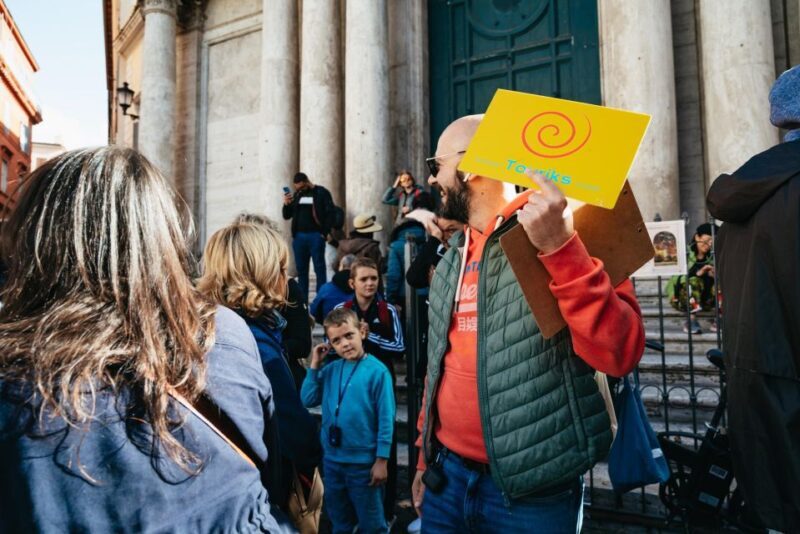
- Meeting point gets crowded: look for the yellow TOURIKS label at the church entrance area
Trevi Fountain from the ground up: what this tour really delivers
If you’ve only seen Trevi Fountain from the piazza, you’ve seen the Rome postcard version. This tour is for the traveler who wants the real mechanics behind the drama: where the water came from, what the Romans built beneath the streets, and how layers of the city piled up over centuries.
The structure is straightforward. You start above at Trevi, then the tour shifts underground to the archaeological area connected with the neighborhood beneath this part of Rome. It’s not a long slog. It’s a packed 40 minutes that tries to leave you with a clear mental map fast.
Because it’s guided, you’re not stuck guessing what you’re looking at. And because it includes headsets, you can actually keep pace without losing the narration.
You can also read our reviews of more guided tours in Rome



How the timing works: a 40-minute plan that doesn’t waste your day
You’re on the clock for about 40 minutes total. That’s part of the appeal. Trevi is usually a time-sink unless you have a strategy, and this tour keeps you moving without feeling like a stampede.
In practical terms, that shorter duration means:
- You won’t get exhausted hunting details on your own.
- You’ll still have energy to walk the area afterward, since Trevi is right in the center of Rome’s tourist grid.
It also means you should arrive ready to go. If you’re even slightly late, the crowd can make the meeting point tricky.
Where to meet: the Piazza di Trevi church entrance trick
The meeting point is outside the Santi Vincenzo e Anastasio a Fontana di Trevi church. It sits on the left corner of Piazza di Trevi.
The key detail that saves time: look for a yellow label with TOURIKS written on it. Several travelers mention how easy it can be to miss the exact spot when the plaza is packed, so I’d give yourself a buffer to find the right corner before your start time.
If you’re traveling in peak season, it’s worth treating this meeting spot like a check-in at an airport gate: show up a few minutes early and stay alert.
Trevi Fountain above: the story behind the mythological drama
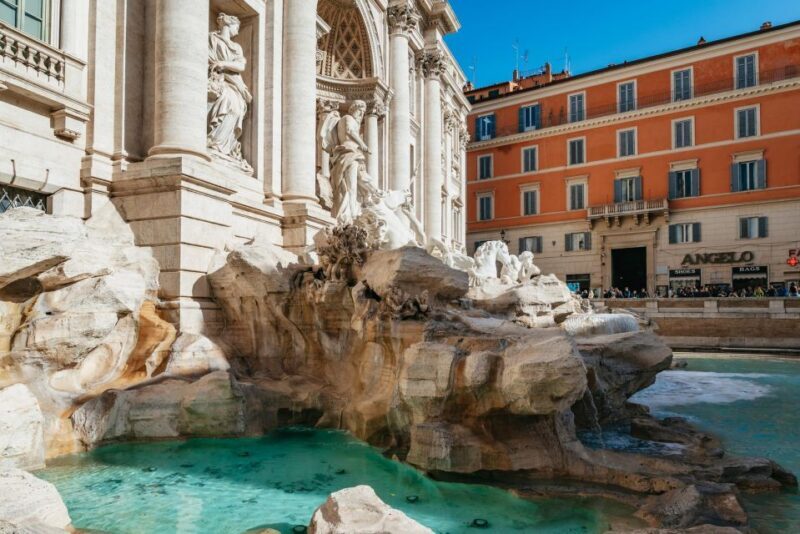
Above ground, you’ll get a guided walk focused on the fountain’s origins and the “why” behind its famous look. This isn’t just, There’s Poseidon, There’s a dolphin, The coin goes in.
Your guide is set up to connect the mythological figures to the real world of the city—how the fountain fit into Rome’s water system and civic image. You’ll also hear lesser-known facts and hidden mysteries the quick self-guided route usually skips.
A small but important practical note: Trevi gets crowded fast. Your guide helps you navigate the flow, and several travelers specifically mention that the tour is fast-paced but still thorough.
More Great Tours NearbyRestricted basin access: what you get for free vs. what costs €2
Here’s the clear part to plan around. Basin access is restricted and not included in the base price. There’s a separate €2 fee for that area.
What’s included instead is an excellent viewing option from the public piazza level, where your guide positions you so you can still enjoy the fountain properly.
Some travelers were surprised by this, expecting the tour to put them directly into the restricted basin area. If you know you care about being as close as possible, add that €2 to your budget and confirm you can enter before you go.


Nine meters down: the underground aqueduct ruins that change the whole visit
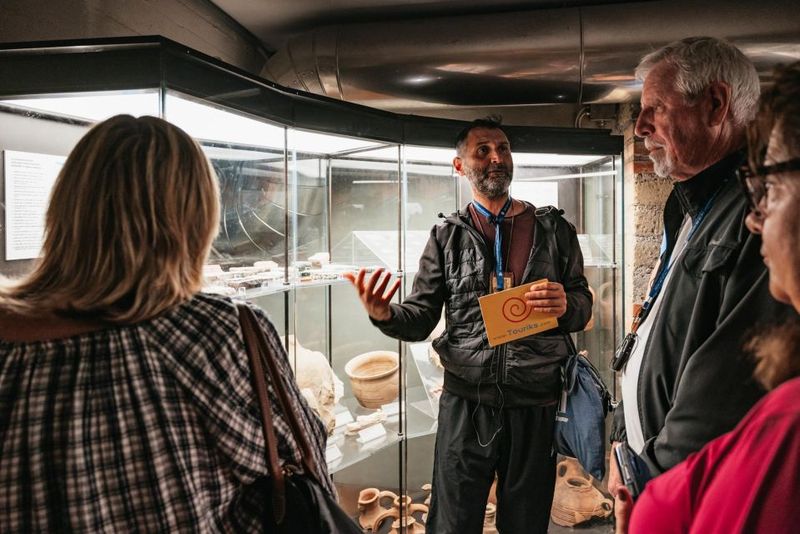
This is the main event. You descend 9 meters underground to explore the archaeological site connected with the aqueduct infrastructure.
The centerpiece here is a fully functioning ancient aqueduct—described as about 2000 years old—that still supplies water to the fountain area above. That one detail alone turns Trevi from a pretty view into a live engineering story.
And it’s not just a single tunnel you pass by. You’ll see archaeological remains across multiple layers of the site, including evidence of Roman urban life beneath the modern street level.
If you like Roman engineering, this is the kind of tour where you leave thinking, Okay, now I understand what made Rome work.
Vicus Caprarius and the Domus: seeing Rome as a stacked city
Beneath the streets, the tour brings you through Roman remains tied to the neighborhood areas around Trevi. You’ll hear about the Vicus Caprarius and also see an imperial Domus, which is basically a wealthy Roman home.
This matters because it reframes Trevi Fountain. Instead of being a standalone monument, it becomes a visible layer on top of an older, lived-in city.
One of the most satisfying things about archaeological sites in Rome is the sense of time stacking on top of time. This tour is built around that idea: you’re not just seeing stones; you’re seeing the evidence of how the city changed.
Hands-on moments: touching the stratification and getting it to click
The tour description includes a hands-on element tied to the millenary stratification beneath Rome’s streets. Even if you’re not a museum person, this kind of physical reminder helps your brain connect what you hear above ground to what you see below.
If you’re a visual learner, the underground portion tends to feel more “real” than photos and placards. You can’t really fake that feeling of layers under your feet.
Guides make or break it: who you might get and what travelers praise
Trevi Fountain is famous enough that some guides can coast. This tour seems built to avoid that.
Travelers repeatedly highlight that the guide is patient, knowledgeable, and good at answering questions—even from kids. Names that come up often include Anestis, Vito, Mario, and Francesca. People also mention dry humor and a calm, confident style, even when questions come fast or directions get confusing in crowds.
A couple of practical takeaways:
- If you’re the type who asks lots of questions, this tour seems to reward that.
- If you’re with kids, the pacing and explanations are often reported as engaging rather than boring.
And because you get headsets, you’re more likely to stay focused on what the guide is pointing out instead of wrestling traffic noise.
Price and value: is $41 for 40 minutes fair?
At $41 per person for about 40 minutes, the price is in the “tour-adds-up” category you expect in central Rome. The good news is that your ticket isn’t just narration. You’re also paying for entrance into the underground excavations plus the guide and headsets.
So what makes the value work?
- You’re getting underground access to a site most people don’t find on their own.
- The working aqueduct angle is genuinely special, and it’s harder to understand without a guide.
- You get a time-efficient format compared with piecing together directions and entrances yourself.
The fair downside: a few travelers call it short, and a couple felt it was pricey for what they expected. If you’re the type who wants a long, slow walkthrough and lots of free time at each spot, you might find 40 minutes tight.
For most first-timers, though, it’s an efficient way to get a lot of meaning from a famous stop.
What to bring and how to stay comfortable
This tour asks for a few basics:
- Headphones: even if the tour provides headsets, bringing your own is a smart backup for comfort
- A reusable water bottle: the main route is outdoors and it can be warm
You should also expect some weather sensitivity. It’s described as subject to weather conditions, with cancellation options if conditions aren’t suitable.
Finally, this one is not suitable for wheelchair users, so accessibility planning matters.
Practical strategy: how to avoid the common Trevi Fountain headaches
Trevi is crowded in every season. The underground portion helps because you get a break from the heat and the press of people. Several travelers mention enjoying the chance to step away from the mass of travelers.
To make the whole thing smoother:
- Arrive early at the church meeting point and locate the TOURIKS sign.
- Don’t plan to immediately rush for the basin area right after the tour ends, since the plaza crowds can redirect you fast.
- If you care about getting close, budget for the separate €2 restricted-basin fee in advance.
Who this tour is best for
This experience is a great match for:
- First-time Rome visitors who want context, not just a snapshot
- Travelers interested in Roman engineering and water systems
- People who like guided history told in a clear, question-friendly way
- Families, based on repeated comments about guides working well with young kids
It’s less ideal for you if:
- You’re in a hurry to do everything independently and hate guided time limits
- You need wheelchair access
- You expect a long underground museum-style visit rather than a fast, organized walkthrough
Should you book the Trevi Fountain and Underground guided tour
If you want Trevi Fountain with more meaning—and you like the idea of going 9 meters underground to see a working ancient aqueduct—this is an easy yes for many travelers. The combination of guide-driven storytelling, included entrance fees for the underground site, and headsets makes it a practical way to cut through the noise.
Book it especially if:
- You’re short on time in Rome
- You’d rather understand the water and the layers than just admire the façade
- You appreciate a guide who can answer questions and keep the group moving
If you’re mainly chasing the most iconic basin-level photo, then double-check the restricted basin access €2 option. And if you hate tight schedules, you may want to compare against longer walking tours in the area.
Either way, this is one of those tours where the second half changes how you see the first half. The fountain becomes the headline, not the whole story.
Rome: Trevi Fountain and Underground Guided Tour
FAQ
How long is the Trevi Fountain and Underground guided tour?
The tour lasts about 40 minutes.
Where do I meet the guide?
Meet in front of the entrance to the Santi Vincenzo e Anastasio a Fontana di Trevi Church, on the left corner of Piazza di Trevi. Look for a yellow label with TOURIKS written on it.
Is access to the restricted basin area included?
No. Access to the restricted basin area costs an extra €2 fee. The guide leads you to an excellent viewing point at public piazza level.
How deep do you go underground?
You descend 9 meters underground to explore the archaeological site.
What’s included in the ticket price?
Your price includes a guide, entrance fees into the underground excavations, and headsets to hear the guide.
Is the tour wheelchair accessible?
No. The tour is not suitable for wheelchair users.
You can check availability for your dates here: