When you’re planning a Rome itinerary, it’s easy to get caught up in the famous circuit: the Colosseum, the Forum, the Vatican. But there’s another Rome worth discovering, one that lies beyond the city center where the stories of ancient engineering and early Christianity unfold in quieter, less-crowded settings. This tour captures that other Rome, and we think it deserves serious consideration if you’ve got more than a day or two to spend in the city.
We love two things about this experience. First, you’re visiting sites that most Rome visitors never see—the actual Appian Way where Roman legions once marched, the skeletal remains of massive aqueducts that supplied the empire’s water, and the underground burial chambers where early Christians gathered in secret. Second, the tour gets you to the catacombs as the last visitors of the day, which means you’re experiencing these eerie spaces without the crowds that can make them feel like a theme park rather than a historical site.
The main consideration: if you’re in Rome for just two or three days and trying to see everything, this tour might compete with other iconic sites that first-time visitors prioritize. You’ll also want to be reasonably fit, as there’s a fair amount of walking on uneven ancient stone surfaces.
This experience works best for history enthusiasts with at least three days in Rome, travelers who want to understand how Rome actually functioned beyond its monumental center, and anyone curious about the less-famous aspects of Roman engineering and early Christian history.
- What You’re Actually Getting Here
- Walking the Appian Way: Where Roman History Actually Lived
- The Mausoleum of Cecilia Metella: A 2,000-Year-Old Monument to Power
- The Aqueducts: Roman Engineering at Its Most Ambitious
- The Catacombs: Underground History in a Quieter Setting
- The Practical Details That Matter
- Meeting Point Logistics: One Small Hiccup
- The Value Question: Is This Worth Your Time and Money?
- Guide Quality: Consistently Praised
- What the Reviews Tell Us
- Cancellation and Flexibility
- Frequently Asked Questions
- The Best Of Rome!
- More Tours in Rome
- More Tour Reviews in Rome
What You’re Actually Getting Here
 1 / 8
1 / 8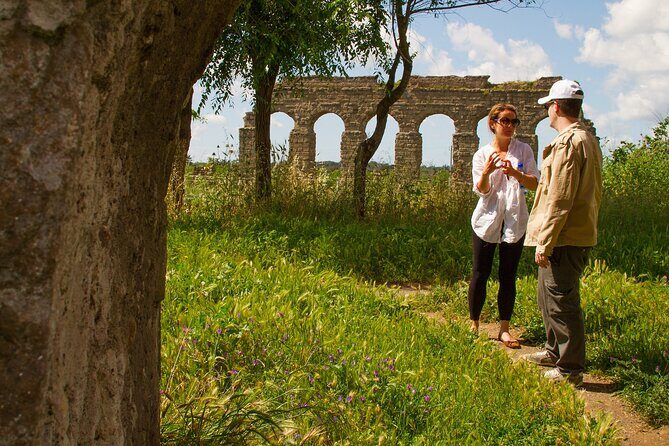 2 / 8
2 / 8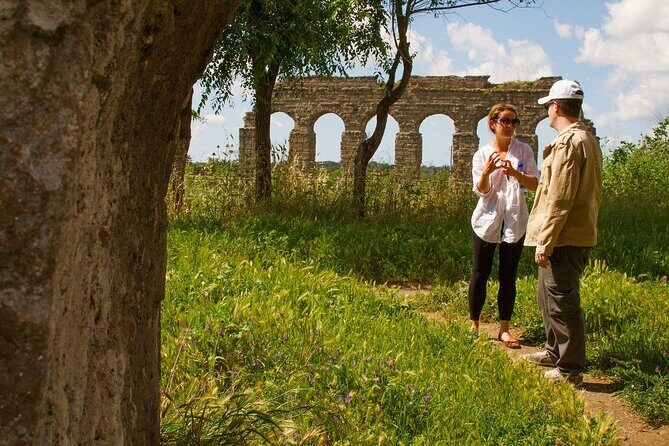 3 / 8
3 / 8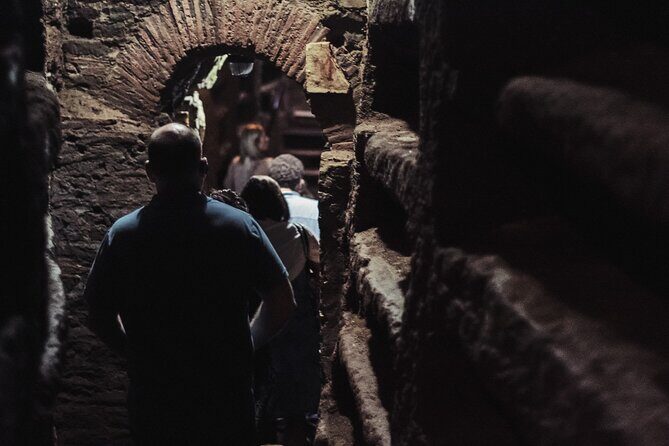 4 / 8
4 / 8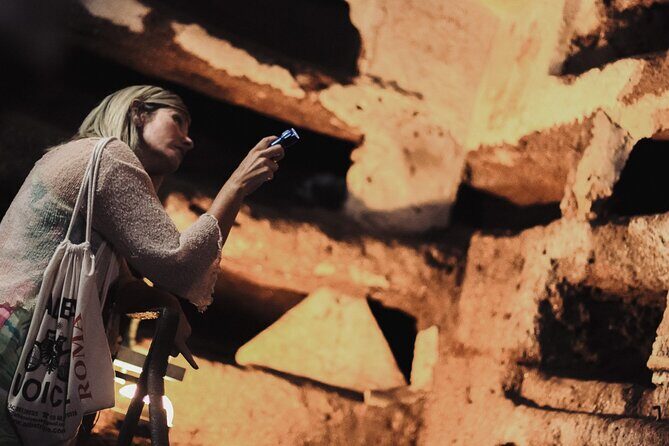 5 / 8
5 / 8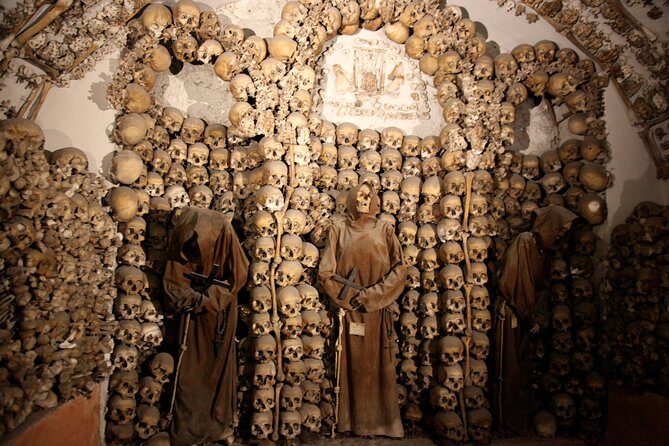 6 / 8
6 / 8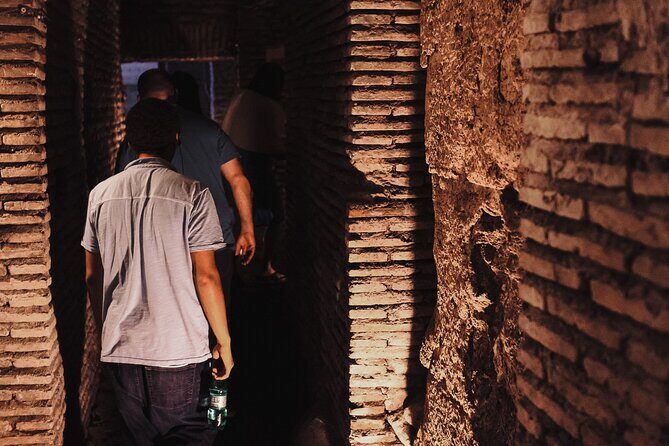 7 / 8
7 / 8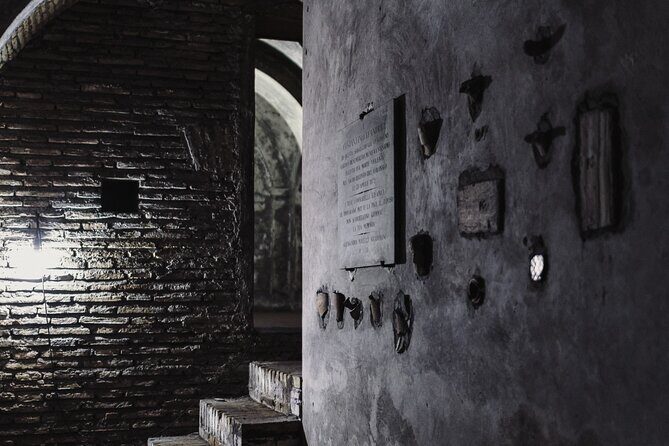 8 / 8
8 / 8At $65.30 per person, this tour includes transportation, entrance fees to the catacombs and aqueduct park, and a knowledgeable English-speaking guide. That price point is reasonable when you consider you’re covering three significant historical sites plus air-conditioned minibus transport. The tour runs about 3 hours and 15 minutes, making it manageable even if you’re tired from travel or want to fit other activities into your day.
The group size stays small—no more than 18 people—which means your guide can actually answer questions and adjust the pace rather than herding you through like cattle. That matters more than you might think when you’re trying to understand complex history.

👉 See our pick of the Discover 2 Great Tours In Rome
Walking the Appian Way: Where Roman History Actually Lived
Your tour begins at the Piramide metro station in southern Rome, a location that’s perfectly practical even if it’s not in the tourist heart of the city. From there, you’ll head to the Appian Way (Via Appia Antica), one of the oldest roads built by the Romans and a genuinely striking experience.
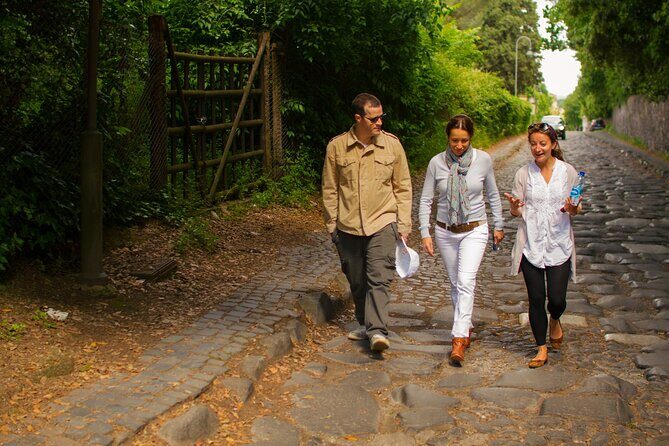
This isn’t a reconstructed tourist version. You’ll actually walk on centuries-old paving stones—the same stones that felt the footsteps of Roman legions, merchants, and ordinary travelers heading toward the southern provinces. The road stretches for miles, and on this tour, you’ll cover a meaningful section while your guide explains how the Romans built these roads to last, the engineering principles that made them superior to anything else in the ancient world, and the logistics of maintaining an empire when your fastest communication was a man on a horse.
One traveler noted that the guide “was so impressive with his keenness to show and explain everything, especially about the Appian Way & Aqueducts,” and that enthusiasm makes the difference. You’re not just looking at old stones; you’re understanding why they mattered.
The Appian Way section includes ancient tombs and ruins scattered along the route. These aren’t the grand monuments of central Rome, but they tell a quieter story about how Romans actually buried their dead and marked their family legacies along the roads leading out of the city.
You can also read our reviews of more tours and experiences in Rome.



The Mausoleum of Cecilia Metella: A 2,000-Year-Old Monument to Power
Next, you’ll stop at the Mausoleum of Cecilia Metella, a circular tomb dating back to the 1st century BCE. This is where the tour shifts from walking the roads to understanding individual monuments and the families who built them.
Cecilia Metella came from one of Rome’s most powerful families, and her tomb was built as a statement of that power and wealth. The structure has survived two millennia—it’s massive, imposing, and still standing on the Appian Way where it was originally constructed. Your guide will explain the architectural features, the significance of her family, and how this monument endured through invasions, the fall of empires, and centuries of neglect.
What strikes many visitors is the sheer confidence of it—the assumption that this structure would stand forever. In many ways, it has. That’s the kind of detail that makes history stick with you.
The Aqueducts: Roman Engineering at Its Most Ambitious
The tour then moves to the Parco degli Acquedotti (Aqueduct Park), where you’ll stand beneath the towering remains of Rome’s ancient water system. This stop alone justifies the tour price if you have any interest in how the Romans actually solved the massive infrastructure problems of running a city of over a million people.
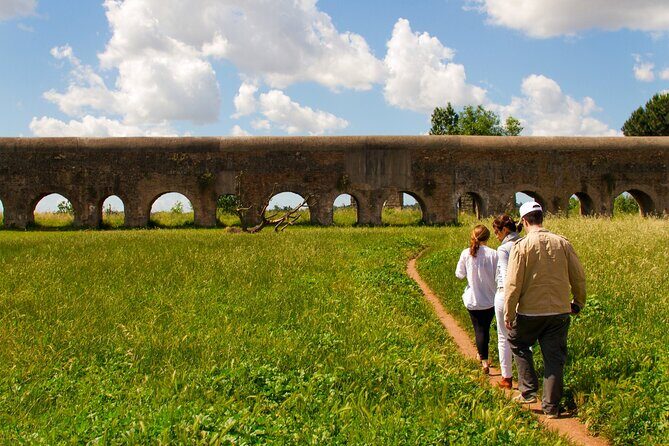
The aqueducts are staggering to see in person. These weren’t simple pipes—they were monumental engineering projects that carried fresh water from distant mountains into the city through a combination of gravity, precision engineering, and sheer Roman determination. Some of the aqueducts rose 50 meters or more, and you’ll see sections that have survived nearly 2,000 years of earthquakes, wars, and weather.
Your guide will explain the different aqueducts (you might see remains of the Claudia Aqueduct), how the Romans calculated gradients to keep water flowing, and why this infrastructure was essential to Rome’s power. One reviewer mentioned learning “lots” about the aqueducts and appreciating how “amazing what the Romans accomplished without computers” really is when you see the scale of these structures.
The park itself is less crowded than central Rome attractions, and the walking here is manageable—you’re not climbing stairs or navigating tight tourist bottlenecks. This feels like a genuine historical site rather than a tourist destination, which is part of its appeal.
The Catacombs: Underground History in a Quieter Setting
The final and perhaps most memorable stop is the Catacombs of San Sebastiano or Domitilla (depending on which day you book). The timing here is deliberate—you’re visiting as the last group of the day, which means you experience these underground chambers with far fewer people than you’d encounter during standard hours.
Catacombs are essentially underground burial sites where early Christians gathered and buried their dead, often in secret during times of persecution. Walking into these tunnels, you’ll see ancient frescoes, burial niches carved into the walls, and spaces where real people gathered for religious services in the darkness. It’s atmospheric and genuinely moving, even if you’re not particularly religious.
The catacombs aren’t claustrophobic in the sense of narrow corridors—they’re actually fairly spacious chambers—but they do feel enclosed and underground, so if you have serious claustrophobia, this might not be your tour. Otherwise, most travelers find them fascinating rather than frightening. One visitor was “worried the Catacombs would be claustrophobic” but “did well and it was a very serene and nice place.”
Your guide (or a specialist guide at the catacombs) will explain the history of early Christianity in Rome, how these burial practices worked, and what the frescoes tell us about the beliefs and daily lives of these early Christians. It’s history told through physical spaces rather than textbooks, which is far more powerful.
The Practical Details That Matter
Transportation: You’ll travel between sites in an air-conditioned minibus, which matters more than it sounds. Rome in summer can be brutally hot, and having climate-controlled transport between walking sections is genuinely appreciated. The bus is comfortable and the drive time between sites is reasonable—about 20 minutes to return to the meeting point.
Timing: At 3 hours and 15 minutes, this tour fits into an afternoon without consuming your entire day. It’s substantial enough to feel worthwhile but not so long that you’re exhausted. One reviewer mentioned this was “perfect trip for a first day in Rome when you are wiped out from flying,” which speaks to the manageable length.
Group Dynamics: The 18-person maximum means you’re not competing for your guide’s attention. Reviewers consistently praised guides by name—Sylvia, Francesca, Antonella, Andre—suggesting these guides know their material and can engage with smaller groups meaningfully. One traveler noted that “3 hours is a long time to keep a whole group of 15 people engaged but she did an amazing job.”
What to Bring: Multiple reviewers recommend good walking shoes (not sandals) because the Appian Way has uneven ancient stone surfaces. Bring a bottle of water—you’ll be walking in the aqueduct park, and while the catacombs are cool, you might still feel thirsty. The catacombs are noticeably cooler than the surface, so if you’re visiting on a hot day, this is actually a pleasant relief.

Meeting Point Logistics: One Small Hiccup
The tour starts at Piramide metro station, which is straightforward if you understand the layout. However, at least one reviewer was confused about the exact meeting location, arriving at the actual Pyramid monument instead of the metro station. The instructions say “across from the Piramide Metro Station,” which could be clearer. Once you’re at the right spot, your guide will be there with a sign, but it’s worth double-checking your location before the tour starts to avoid stress.
The Value Question: Is This Worth Your Time and Money?
At $65.30 per person, you’re paying for three significant historical sites, transportation between them, and expert guidance. You’re also paying for access to the catacombs during less-crowded hours, which has genuine value if you care about experiencing these spaces as historical sites rather than tourist attractions.
The real value, though, depends on your interests and your timeline in Rome. If you’re passionate about Roman history and engineering, this tour will deepen your understanding of how the empire actually functioned. If you’re in Rome for just two days trying to see the “greatest hits,” the Colosseum and Forum might feel more essential. One honest reviewer captured this perfectly: “The guides make an excellent adventure out of this, but this is for people in Rome for three or more days.”
For those three-plus days in Rome, especially if you’ve already seen the major central sites, this tour fills a real gap. You’re seeing the infrastructure that made Rome work, not just the monuments built to impress.
Guide Quality: Consistently Praised
One pattern emerges clearly from the reviews: guides matter, and this tour’s guides are consistently excellent. Reviewers mentioned guides being “knowledgeable,” “passionate,” “full of enthusiasm,” and genuinely engaged with their groups. Several reviewers noted that guides answered questions thoroughly and even took photos for visitors at prime locations.
This isn’t guaranteed—any tour can have an off day—but the pattern suggests the tour operator prioritizes hiring and training people who actually know and care about the material. That makes a real difference in whether you’re just checking boxes or actually learning something.
What the Reviews Tell Us
Looking across more than 1,000 reviews (with an impressive 4.8 average rating), several themes emerge consistently. Travelers love the guides, appreciate the manageable group size, and value seeing lesser-known sites outside the central tourist zone. The most common praise focuses on guides being knowledgeable and enthusiastic.
The honest criticism comes from travelers who felt the sites themselves were less compelling than Rome’s more famous attractions—which is fair. The Colosseum is more dramatic than the Appian Way. But that criticism usually comes with acknowledgment that the guides and the experience itself were excellent, just that the sites compete with other options in a city with limited time.
A few reviewers mentioned wanting more time at certain stops or wishing the tour went deeper into specific topics. That’s the trade-off with a 3-hour tour covering three sites—you get an overview rather than a deep dive into any single location.
Cancellation and Flexibility
The tour offers free cancellation up to 24 hours before the start time, which is standard and helpful if your plans change. It’s also weather-dependent, so if conditions are poor, you’ll be offered an alternative date or refund. This flexibility reduces the risk of booking.
Rome Underground: Catacombs Tour, Aqueducts and Appian Way
Frequently Asked Questions
Is this tour suitable if I’m only in Rome for two days?
Not ideally, according to experienced travelers. This tour works best for visitors with three or more days in Rome who’ve already seen central attractions like the Colosseum and Forum. If you’re only in Rome for two days, prioritizing the central historic sites is probably a better use of your limited time.
Will I be uncomfortable if I have mild claustrophobia?
The catacombs are underground but not extremely narrow or claustrophobic in the typical sense. You’re walking through spacious chambers, not squeezing through tight passages. However, if you have significant claustrophobia, you might find the underground setting unsettling. One reviewer was worried but found it “very serene and nice,” so it depends on the severity of your concern.
What’s included in the $65.30 price?
The price includes admission to the catacombs, admission to the aqueduct park, transportation via air-conditioned minibus, and an English-speaking guide for the entire tour. Hotel pickup and drop-off are not included; you’ll meet at the Piramide metro station.
How much walking is involved?
You’ll walk sections of the Appian Way (uneven ancient stone surfaces), around the Mausoleum of Cecilia Metella, through the aqueduct park, and into the catacombs. Reviewers describe it as “a fair amount of walking” and “limited walking” depending on their fitness level. You should be able to walk at a moderate pace without difficulty, and wearing good walking shoes is important.
Can I visit the catacombs during regular hours instead of the evening slot?
This tour specifically features the catacombs during the last-visitor slot of the day, which is part of its appeal—fewer crowds. If you prefer visiting during standard daytime hours, you might book a different catacomb tour, but this one’s main advantage is experiencing these spaces more quietly.
Is the tour worth it if I’m mainly interested in the catacombs?
The tour bundles three sites, and while the catacombs are fascinating, you’re also getting the Appian Way and aqueducts. If you only want the catacombs, you could visit them separately during regular hours. This tour’s value comes from experiencing all three together with expert guidance.
What should I bring or wear?
Wear comfortable walking shoes (not sandals) because the ancient stone surfaces are uneven. Bring a bottle of water. The catacombs are cool underground, so you might want a light jacket if you’re visiting on a hot day. The minibus is air-conditioned, so you’ll be comfortable during transport.
Bottom Line: This tour delivers genuine value for travelers who want to understand Rome beyond its most famous monuments. You’ll see authentic historical sites, travel with a guide in a small group, and experience the engineering and infrastructure that made the Roman Empire function. At $65.30 per person, it’s reasonably priced for what’s included. It’s not the must-do tour for everyone—if you’re in Rome for just two days, you’ll want to prioritize the Colosseum and Forum. But if you have three or more days and want to go deeper into Roman history, especially the practical engineering and early Christian history, this tour fills a genuine gap in your itinerary. The consistently excellent reviews and guide quality suggest you’ll get exactly what the tour promises: an afternoon outside the crowded center, learning history from people who genuinely know their material.