
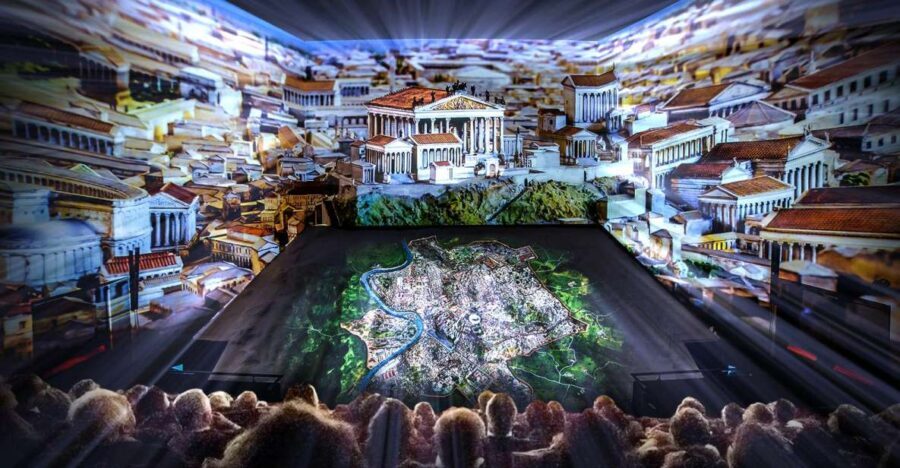
If Rome feels like one long list of monuments, Welcome To Rome gives you a fast timeline. It’s a multimedia projection show in the ex-Cinema Augustus on Corso Vittorio Emanuele II, not far from Piazza Navona, and it focuses on how the city evolved over roughly 2700 years.
I really like the way the program uses wall-and-ceiling projections plus a big glowing city model to connect the ruins you’ll see with the stories behind them. You also get an audio guide in 9 languages, and the visit ends with interactive 3D models of major landmarks.
One drawback to consider: you’ll spend a good chunk of the time on your feet in a show setting, so build in comfort and pace yourself. And if you’re on a tight budget, the $21 price may feel steep for what’s essentially a short show plus models.
Key Things To Know Before You Go
- 27 minutes to cover about 2700 years of Rome’s development, in chronological order
- Multi-projection on walls and ceilings, plus a large illuminated city model on the floor
- Interactive models of the Imperial Forum, Augustus Forum, Mausoleum of Hadrian, and St Peter Basilica
- You can start any time during opening hours because the show runs continuously
- Audio guide in 9 languages is included, so you’re not stuck with a generic narration
- Located at Corso Vittorio Emanuele II, 203, a few hundred meters from Piazza Navona
- What the Welcome To Rome Show Feels Like (Timeline, Not a Lecture)
- Where It Is: Corso Vittorio Emanuele II 203, Near Piazza Navona
- Tickets, Starting Times, and How the Flow Works
- The 27-Minute Core: Rome’s 2700-Year Story on Walls and Floors
- The City Model: How Rome Changes Without Needing Coordinates
- The Illusion of Moving Through Monuments, Squares, and Palaces
- Interactive Models: Imperial Rome to Vatican Rome in Four Stops
- Audio Guide in 9 Languages (And How to Make It Work)
- Accessibility: Wheelchair Accessible and Designed for Different Needs
- Price and Value: Is Reasonable for One Day?
- Best Time to Go: Use It as Your Rome Start Button
- Who This Works Best For (Families, First-Timers, and History Geeks)
- Comfort Notes: Standing Time, Layout, and Simple Practical Fixes
- How to Pair It With the Rest of Your Day
- Should You Book Welcome To Rome?
- FAQ
- How long is the Welcome To Rome multimedia show?
- Where is the meeting point?
- What is included with the ticket price?
- Are the audio guides available in English and other languages?
- Can I start the experience at any time during opening hours?
- When is the last show?
- Is this wheelchair accessible?
- What is the cancellation policy?
What the Welcome To Rome Show Feels Like (Timeline, Not a Lecture)
 1 / 7
1 / 7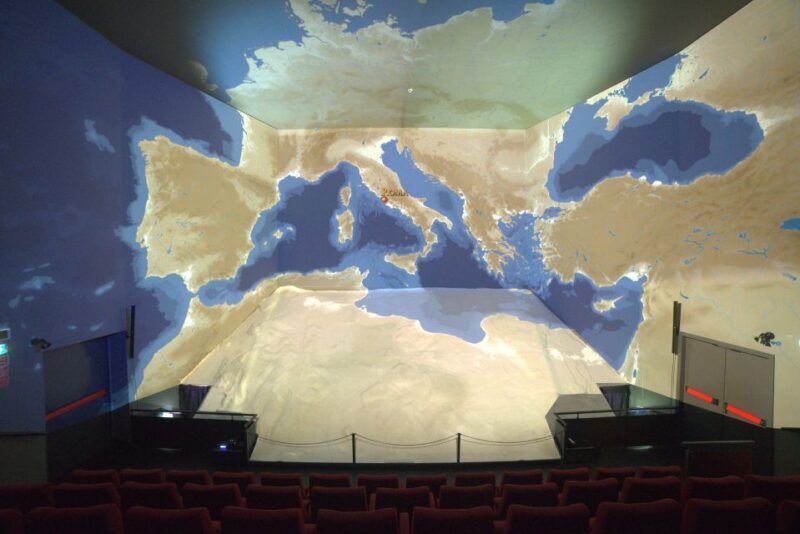 2 / 7
2 / 7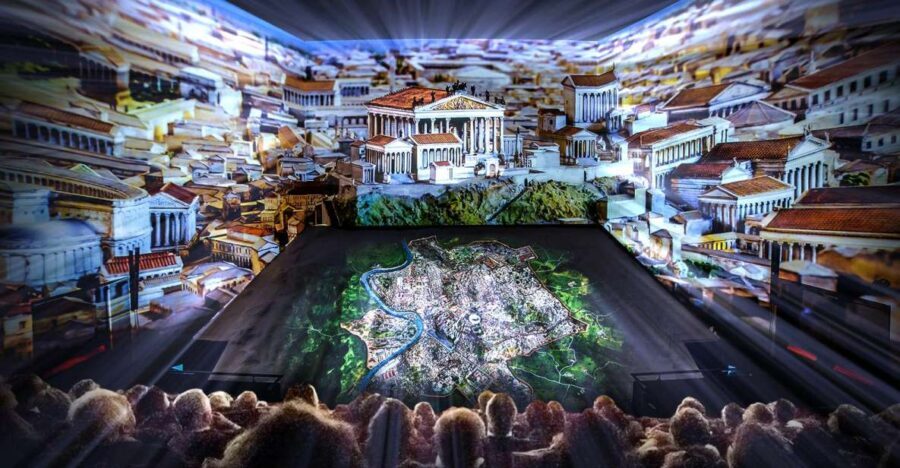 3 / 7
3 / 7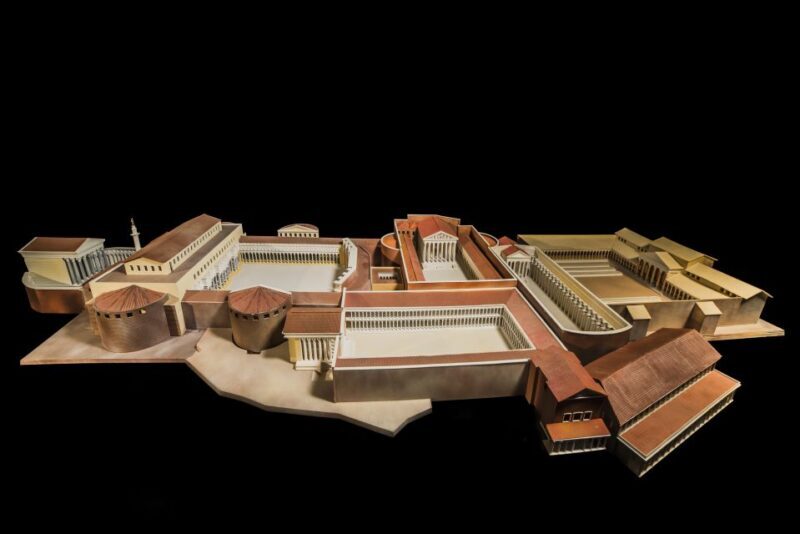 4 / 7
4 / 7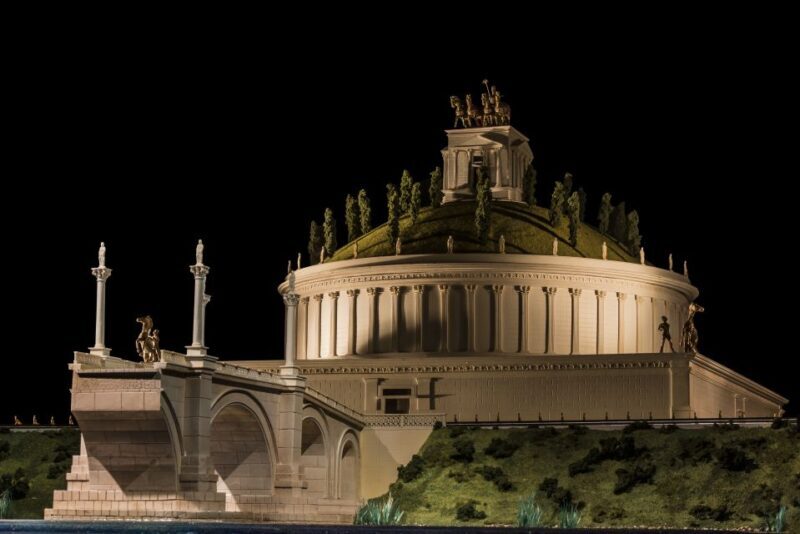 5 / 7
5 / 7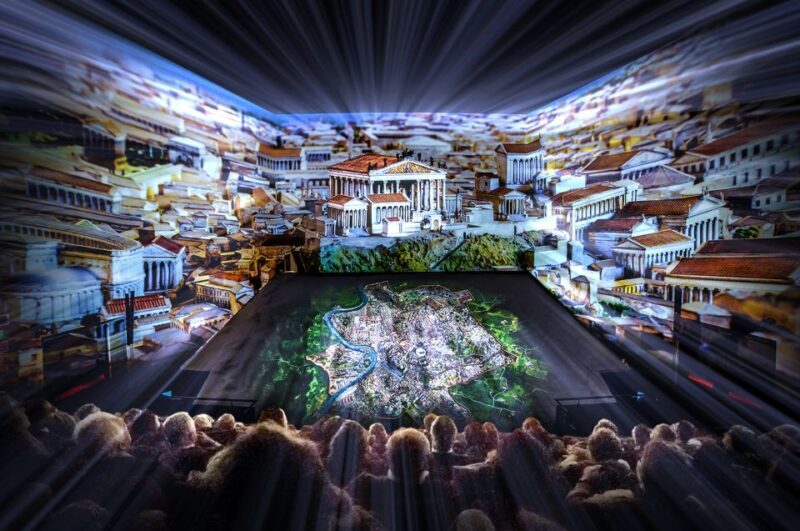 6 / 7
6 / 7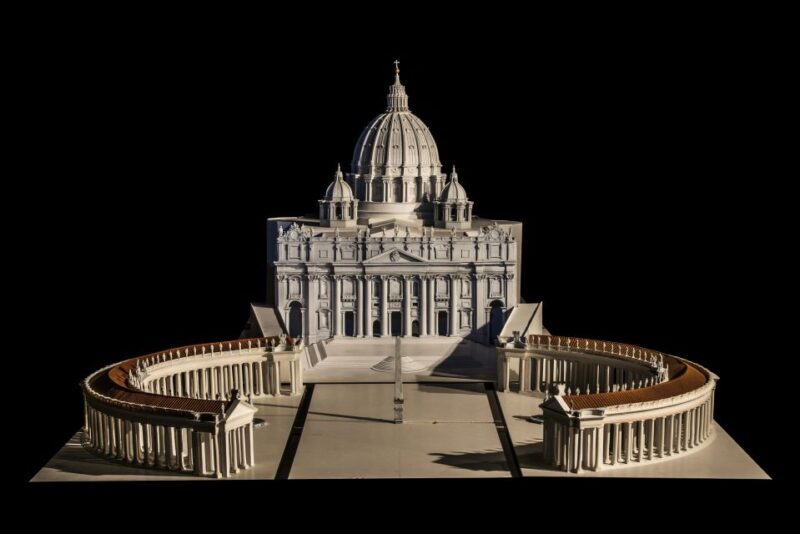 7 / 7
7 / 7Welcome To Rome is designed for your “first time in Rome” brain. You sit in a cinema-like room while the visuals do the heavy lifting: the story moves from ancient Rome to later layers of the city, showing how one era builds on the next.
This is not a museum where you wander at your own pace through objects. It’s a sequence—story, projection, then interactive models—so your understanding clicks into place quickly. The payoff is that when you later walk through the forums, churches, and squares, the layouts and transformations make more sense.
Where It Is: Corso Vittorio Emanuele II 203, Near Piazza Navona
The show happens inside the ex-Cinema Augustus at Corso Vittorio Emanuele II, 203. That puts you in the central Rome zone—easy to reach on foot from sights around Piazza Navona.
If you’ve been fighting Rome crowds all morning, this location is handy because it’s a straightforward stop that fits into almost any plan. No long transfers, no complicated directions, just get in and start.
Tickets, Starting Times, and How the Flow Works
The big logistical win is that the experience runs continuously during opening hours. That means you can generally start the visit at any time rather than waiting for one specific hour.
Two timing notes matter:
- The last show starts 1 hour before closing time.
- Your ticket is valid for 1 day, but the actual show starts depend on the session schedule.
You can also skip the ticket line, which is a real comfort in a busy city. Add in free cancellation up to 24 hours in advance, and it’s fairly low-risk to book ahead.
The 27-Minute Core: Rome’s 2700-Year Story on Walls and Floors
The main attraction is a multi-projection experience. Walls and ceilings come alive with animated reconstructions, while the floor becomes a large, lit model that shows the city’s evolution over time.
The show’s pacing is built around one core promise: in about 27 minutes, you’ll see how the city developed through different ages. The narration and visuals aim to make the overlap visible—how ancient monuments, imperial buildings, later churches, and modern streets share the same spaces.
What I like as a traveler: it’s short enough that it doesn’t steal your day, but structured enough that it gives you a mental map you can use right after.
The City Model: How Rome Changes Without Needing Coordinates
A lot of Rome can feel confusing because the ruins are still in the real street. Welcome To Rome helps you “read” that landscape by showing the city as it changed—century by century—on a physical scale model.
As the projections play, the model lights up to demonstrate the evolution of Rome. That combination (visual storytelling overhead + a tangible model below) makes the history feel like a process instead of a pile of disconnected facts.
It’s the kind of presentation that makes later walking tours easier to follow. When you see a forum space or a major basilica area, you’re not starting from zero.
More Great Tours NearbyThe Illusion of Moving Through Monuments, Squares, and Palaces
The show also creates an illusion of flying over the city through the centuries and moving within key environments—monuments, palaces, churches, and squares.
This matters because Rome’s most famous sights are not arranged like a theme park. They’re spread out, partially ruined, and layered by time. Giving you that movement and transformation in one session helps you understand relationships between areas you might otherwise only see in fragments.
Interactive Models: Imperial Rome to Vatican Rome in Four Stops
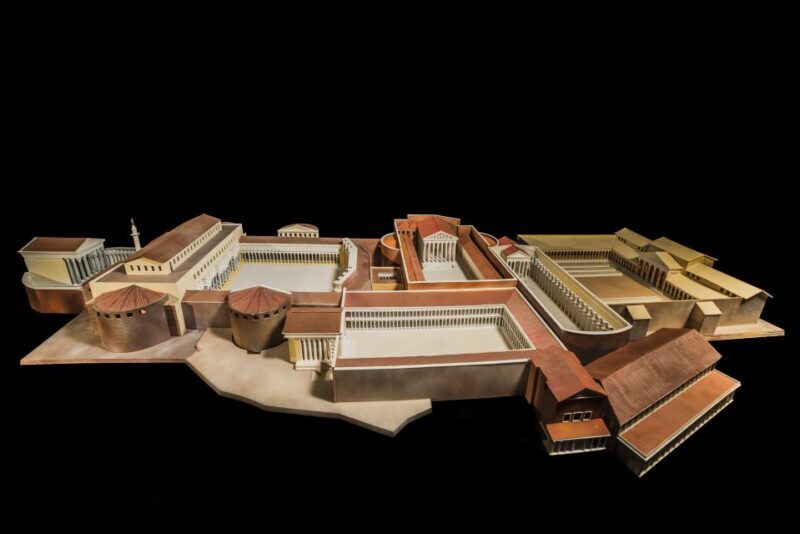
After the main projection, you get four large interactive models. These are the part where you slow down a bit and explore specific masterpieces more directly.
The models cover:
- Imperial Forum
- Augustus Forum
- Mausoleum of Adrian
- St Peter Basilica
Even if you don’t know the Latin names or exact dates, the value here is spatial. You get a clearer sense of what you’re looking at when you visit later, and you’re not just taking pictures—you’re mapping structures you already learned in the show.
Audio Guide in 9 Languages (And How to Make It Work)
Your ticket includes an audio guide available in 9 languages: Italian, English, Spanish, French, German, Russian, Chinese, Croatian, and Japanese.
For many travelers, this is what turns a “cool screen” into real understanding. If you’re traveling as a family or group with mixed languages, it also avoids the problem of splitting attention or relying on someone to summarize.
Practical tip: use the audio guide as your anchor. Don’t try to read everything at once—listen for the timeline cues, then let the visuals do the rest.
Accessibility: Wheelchair Accessible and Designed for Different Needs
Welcome To Rome is wheelchair accessible, and the show and interactive exhibits are described as accessible to people with disabilities.
If you’re trying to plan Rome without relying entirely on uneven ground outdoors, this kind of indoor format can be a lifesaver. Just remember it’s still a show environment, so plan for mobility needs based on the space and your comfort level.
Price and Value: Is $21 Reasonable for One Day?
At $21 per person for a 1-day ticket, the value depends on what you want from Rome.
If your goal is to get oriented fast, this is a good deal. A short timeline plus interactive models can save time later by helping you understand what you’re seeing at the major sites. Many travelers use it early in their trip for exactly that reason.
If you’re expecting a full guided tour with lots of walking and site stops, then no—you’re not buying that here. You’re buying a condensed education package plus interactive 3D models.
One extra note from visitor sentiment: some people feel the price should be lower for what amounts to an hour or so of structured content. So if you’re very cost-sensitive, compare it to other indoor options or a self-guided history route.
Best Time to Go: Use It as Your Rome Start Button
This show is at its strongest when you use it as an early-day primer. When you understand the layers of Rome before you hit the big sights, your time outdoors becomes more coherent.
It’s also useful as a break. Rome days can get hot and tiring, and a seated indoor program with clear storytelling helps you reset without giving up your history plan.
Because you can start any time during opening hours, you can fit it around lunch or after a long morning walk. Just don’t wait too late—remember the last session starts 1 hour before closing.
Who This Works Best For (Families, First-Timers, and History Geeks)
This is a strong fit for:
- First-time Rome visitors who want a clear framework quickly
- Families with kids who do better with visuals than reading walls of text
- Travelers who like architecture and want help connecting ruins to their original context
- Anyone short on time who still wants more than a surface glance
If you’re a hardcore specialist who already knows Roman forums inside out, you might find the presentation a bit basic. But even then, it can still help with overall spatial understanding—what’s where, and how the city layers overlap.
Comfort Notes: Standing Time, Layout, and Simple Practical Fixes
A realistic consideration: the experience is show-based, and you’ll spend time standing or positioned for viewing during parts of it. One traveler mentioned a desire for more seating in certain areas, which is worth keeping in mind if you need frequent breaks.
Also, there can be moments where you’re expected to move and stand in certain viewing positions for the projections. One visitor suggested better signposting for how to position in the space, which hints at a basic issue: if you arrive at the wrong time, you may feel a little aimless until you find the flow.
The fix is simple: go in at a calm moment, ask staff where to stand, and don’t stress if you don’t get perfect positioning on the first minute.
How to Pair It With the Rest of Your Day
Because it’s near central landmarks like Piazza Navona, it pairs well with a classic Rome walking circuit. Think of it as the “pre-game” to the “play.”
A good pairing strategy:
- Go before major outdoor sights so your mental map is ready
- Or schedule it mid-day when you want relief from heat and crowds
- After the show, pick one or two nearby areas and connect the visuals to what you see in real life
Even if you don’t follow a formal itinerary, you’ll likely notice the difference in how you interpret what you’re staring at outdoors.
Should You Book Welcome To Rome?
I’d recommend booking if you want a fast, structured way to understand Rome’s layers. For the cost of $21, the combination of a 27-minute 2700-year projection plus interactive models of major sites is a practical upgrade to your day.
Skip it (or reconsider) if:
- You’re expecting a long guided walk around multiple sites
- You strongly dislike standing in show spaces
- You already feel fully confident about Roman history and want only specific deep-dive topics
If you’re unsure, treat it like orientation. You’ll leave with a clearer sense of how the city fits together, and that makes the rest of Rome easier to enjoy.
Rome: Welcome To Rome Immersive Multimedia Show
FAQ
How long is the Welcome To Rome multimedia show?
The show presents Rome’s story over about 27 minutes, and it includes the projection plus interactive models as part of the overall visit.
Where is the meeting point?
The entrance is on Corso Vittorio Emanuele II, 203, Rome.
What is included with the ticket price?
Your ticket includes entrance to the Welcome To Rome multimedia show, and an audio guide is included.
Are the audio guides available in English and other languages?
Yes. Audio guides are available in 9 languages including English, Spanish, French, German, Italian, Russian, Chinese, Croatian, and Japanese.
Can I start the experience at any time during opening hours?
Yes. You can start at any time during opening hours because the show goes on continuously.
When is the last show?
The last show starts 1 hour before the closing time.
Is this wheelchair accessible?
Yes. The show and exhibits are wheelchair accessible.
What is the cancellation policy?
Free cancellation is available up to 24 hours in advance for a full refund.
You can check availability for your dates here: