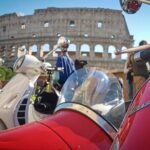

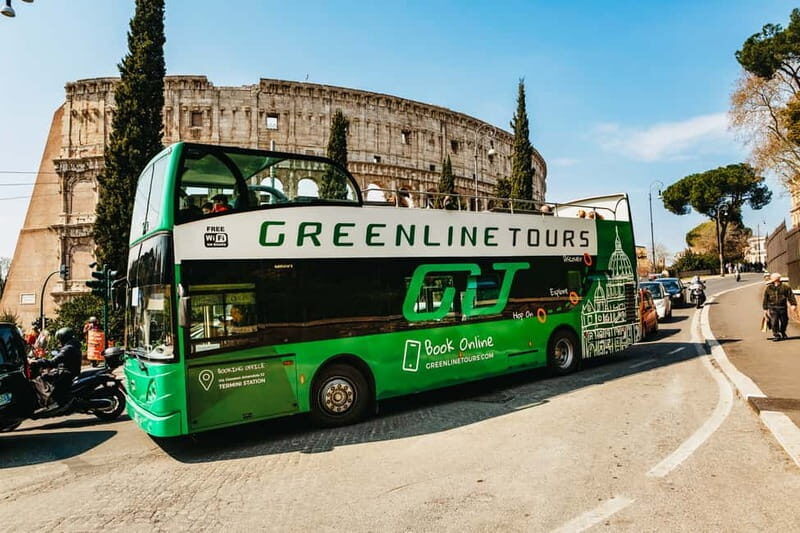
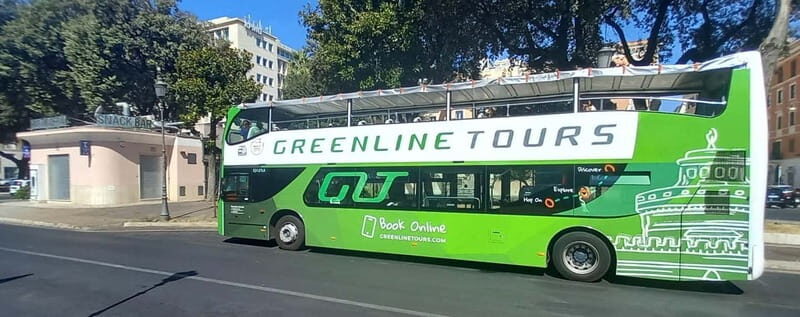
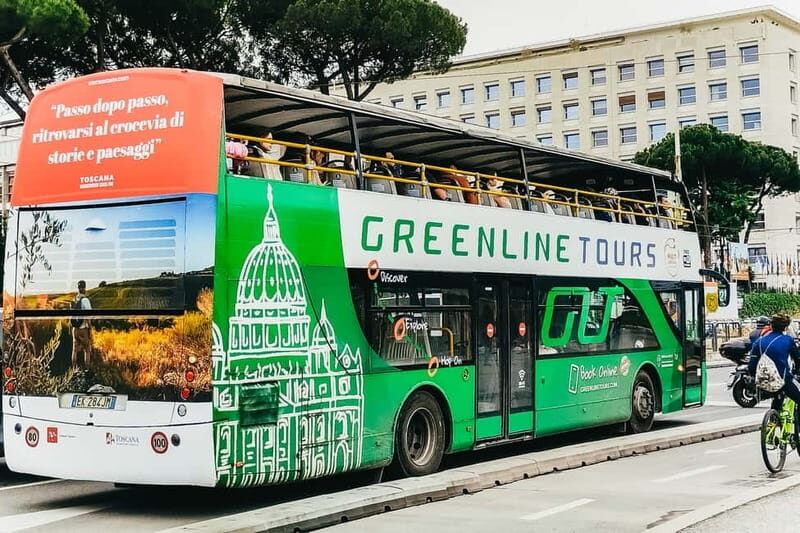
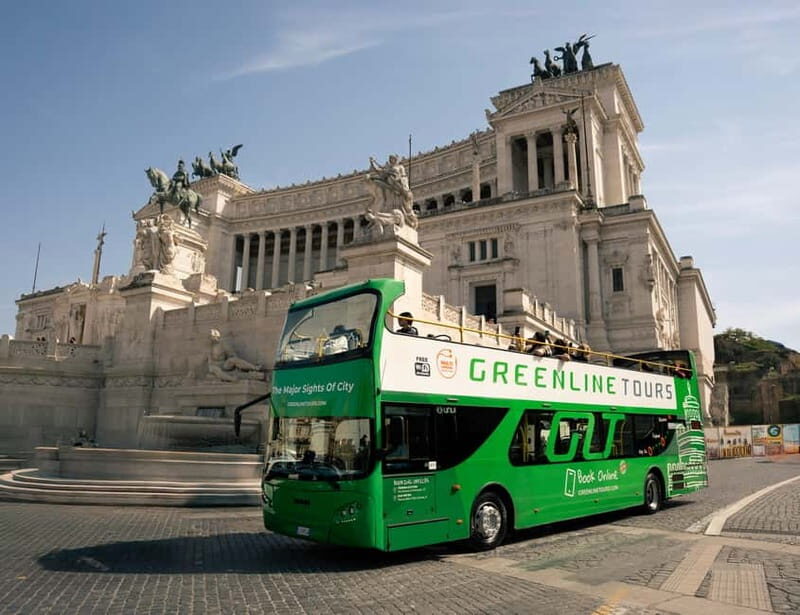
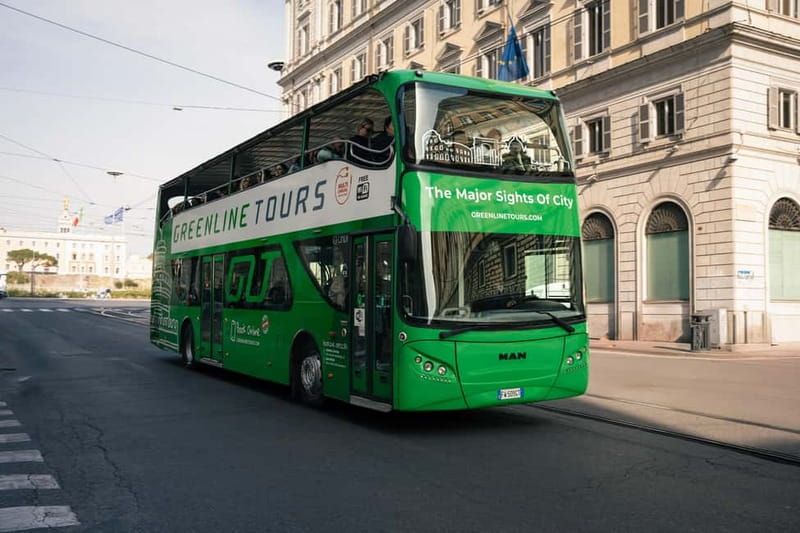
I’m reviewing a Rome hop-on hop-off panoramic bus ticket by Green Line Tours, built for flexible sightseeing with 3 routes and an open-top ride. You’re not locked into one set tour time; you can validate, hop on, hop off, and go at your own speed.
What I really like is the multilingual audio guide (16 languages) paired with onboard live bus tracking and free Wi-Fi, so you can keep moving even when Rome feels like a maze. I also like the way the stops mix classic Roman icons with neighborhoods and modern sights like MAXXI and Eataly.
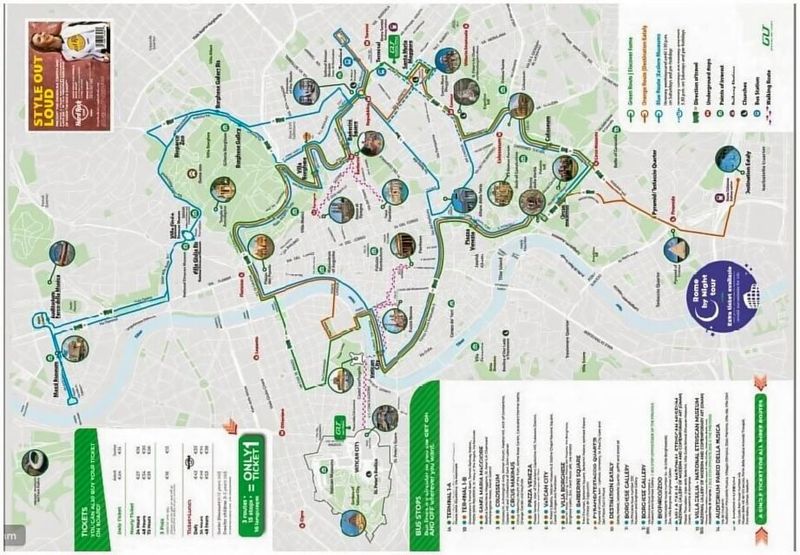
One thing to keep in mind: wheelchair access isn’t supported, and if you’re hopping between routes, a few riders report that some stops can be harder to find without a full map.
- Key things to know before you ride
- How the ticket works: 9 hours to 3 days of flexible Rome
- Getting started at Piazza dei Cinquecento and Via Cavour (Terminal 1)
- What you get on board: audio in 16 languages, Wi-Fi, and tracking
- Buses every ~20 minutes: how to time your hops
- Green Route energy: Santa Maria Maggiore to the Colosseum area
- Basilica Papale di Santa Maria Maggiore
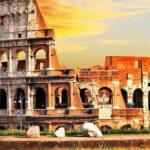
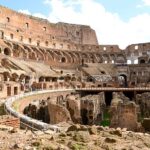
- The Colosseum stop (near Palatine access)
- Circus Maximus
- Piazza Venezia: a classic Rome crossroads with great atmosphere
- Vatican City from the road: St. Peter’s Square and Basilica area
- Villa Borghese and Barberini Square: when you want views plus breathing room
- Villa Borghese
- Piazza Barberini
- Testaccio and the Pyramid of Cestius area: Rome beyond the postcard
- Eataly Rome stop: for Italian tastes and snack breaks
- Borghese Gallery area and Bioparco/Zoo: museum time or family time
- Borghese Gallery
- Bioparco di Roma / Zoo
- Villa Giulia and the Museum zone: Etruscan artifacts to modern collections
- Villa Giulia and National Etruscan Museums
- Auditorium Parco della Musica
- MAXXI Museum
- On-the-ground reality: views from the bus vs. close-up walking
- Value check: is worth it for a flexible Rome day?
- Who should book this bus ticket (and who might want another option)
- Practical tips that make the difference
- The staff and audio experience: clear help when you need it
- Should you book this Rome hop-on hop-off bus ticket?
- The Best Of Rome!
- More Tickets in Rome
- More Tour Reviews in Rome
Key things to know before you ride
 1 / 10
 2 / 10
 3 / 10
 4 / 10
 5 / 10
 6 / 10
 7 / 10
 8 / 10
 9 / 10
 10 / 10
- Unlimited hop-on hop-off access for the time window you choose after validating
- 16-language audio guide plus single-use earphones
- Free Wi-Fi and live bus tracking onboard
- Stops span Rome’s big hits to off-the-beaten neighborhoods (Testaccio, Eataly, Villa Giulia, MAXXI)
- Buses run about every 20 minutes, but catch times can vary by route/day
- Not all “must-see” sights are included (entrance tickets and food are on you)

👉 See our pick of the Discover 2 Great Tours In Rome
How the ticket works: 9 hours to 3 days of flexible Rome
This isn’t a single, timed guided excursion. It’s a hop-on hop-off ticket that’s designed for you to see more by mixing bus rides with your own walking breaks.
After you validate, you can use the system during a daily, 24-hour, 48-hour, or 72-hour period (the total coverage is described as 9 hours to 3 days). In plain terms: if you’re tired, you can stay on the bus and rest. If the light is good, you can jump off and explore on foot.
You can also read our reviews of more tours and experiences in Rome



Getting started at Piazza dei Cinquecento and Via Cavour (Terminal 1)
Your base is Piazza dei Cinquecento, corner Via Cavour at Terminal 1/A. That’s the hub most travelers will aim for first, and it matters because Rome’s streets are busy and signage can be confusing.
A practical heads-up: a few travelers mention the online booking process doesn’t always come with a full stop-by-stop map—so you might want to save any stop info to your phone before you arrive. If you’re the “I like to see it on a screen first” type, plan for that.
What you get on board: audio in 16 languages, Wi-Fi, and tracking
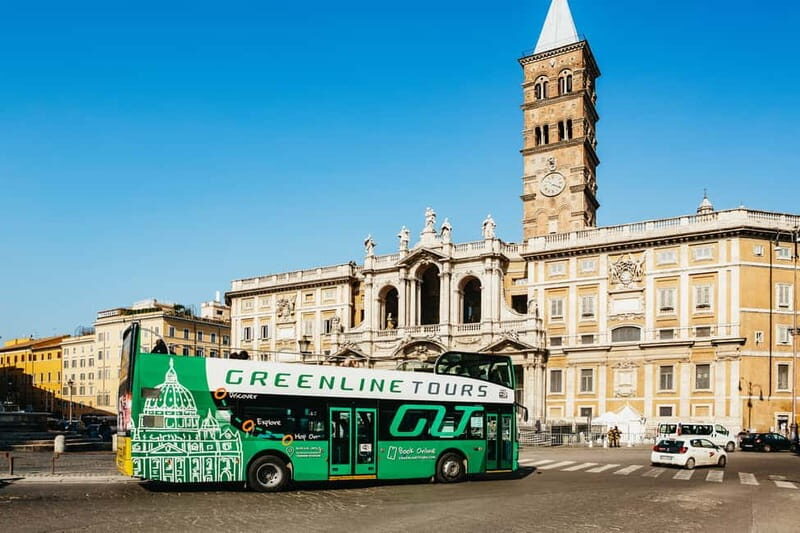
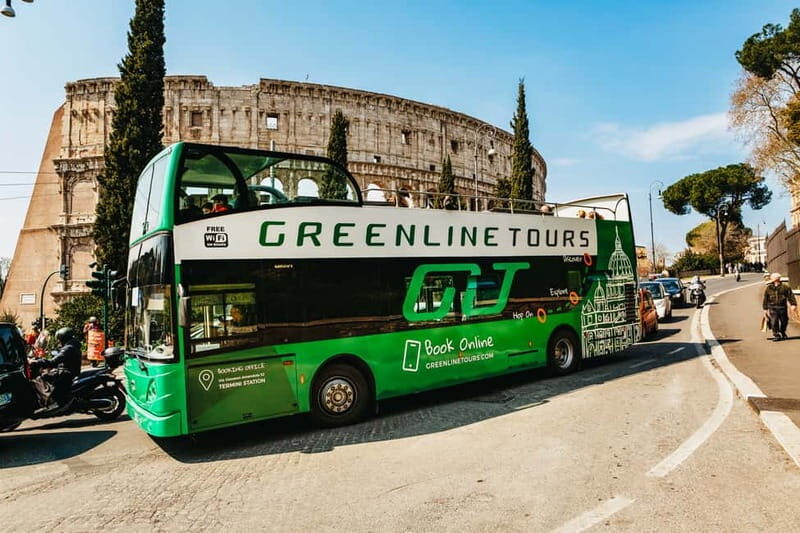
The bus is open-top, and you’ll ride with an onboard audio commentary available in 16 languages. You also get single-use earphones, plus an onboard assistant (helpful when you have questions).
Two extras that make this ticket feel modern and easy to use:
- Live bus tracking so you can monitor where the vehicle is
- Free Wi-Fi onboard, useful for checking directions to nearby sights you’ve chosen to visit
Buses every ~20 minutes: how to time your hops
Buses are listed as running about every 20 minutes. That’s frequent enough to plan a stop-and-walk rhythm without feeling stuck in one place.
Here’s the best way to use the timing:
- Jump off for 60–90 minutes at a major area (Colosseum/Forum area, Vatican side, Borghese area)
- Return to the nearest stop and catch the next bus when you’re done
- If weather turns, stay on and keep going instead of forcing a long walk in the wrong conditions
One note from traveler experiences: some people found other colored lines harder to catch than expected. So if you’re relying on a specific route to reach a specific stop, give yourself a small buffer.
More Great Tours NearbyGreen Route energy: Santa Maria Maggiore to the Colosseum area
Your stops kick off near the lively center and then roll into some of Rome’s most famous “wow” zones.

Basilica Papale di Santa Maria Maggiore
This stop is great if you want the church side of Rome without committing to a full guided visit. Even if you just do a quick look around the area, it helps you orient yourself in the city beyond the most famous ruins.
The Colosseum stop (near Palatine access)
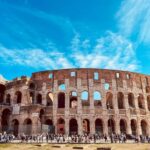
The bus brings you close to the action at the Colosseum area (listed as Via di San Gregorio, near the entrance of Palatine). That convenience is the whole point of a hop-on hop-off ticket: you trade a little “viewing distance” from the road for real-life savings in transit time.
Practical consideration: one traveler reported the Colosseum stop was unavailable during their visit, forcing a longer walk from other stops. So if the area is busy or rerouted, expect to walk a bit more than you planned.
Circus Maximus
This is one of those Rome sights that feels bigger the more you understand it. From the bus you’ll get a strong sense of the scale, and once you’re off, you can shape your visit based on how much energy you have for walking.
Piazza Venezia: a classic Rome crossroads with great atmosphere
The stop at Piazza Venezia is positioned near Via del Teatro Marcello (in front of civic numbers 32–34). This area is a strong “connector” stop—perfect when you want:
- A quick shift from ancient Rome views to central-city streets
- Easy access for wandering through nearby blocks on foot
It’s also the kind of stop where you can use the audio to connect landmarks with what you’ll see in the streets around you.
Vatican City from the road: St. Peter’s Square and Basilica area
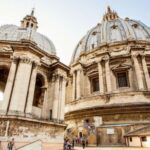
From the bus, you’ll reach the Vatican City side near Lungotevere Tor di Nona 7. This is where Rome stops being just ruins and becomes big-city majesty: the sightlines toward St. Peter’s Square and St. Peter’s Basilica are exactly why travelers like an open-top ride for Rome.
Tip: plan a short “bus-to-walk” transition here. The bus gives you the overview. Your feet give you the close-up experience.
Villa Borghese and Barberini Square: when you want views plus breathing room
Two stops help you shape a softer pace after the heavy-hitter monuments.
Villa Borghese
The bus stop listed for Villa Borghese is on Via Ludovisi (48). Even if you don’t go deep into attractions, it’s a smart off-ramp because the area gives you room to stroll, people-watch, and reset.
Piazza Barberini
The Barberini Square stop is listed at Via Barberini (14). This is a good place to mix sightseeing with everyday Rome energy—shops, cafes, and street life.
One traveler liked having commentary that explained the history clearly. That’s especially useful in this central zone, where multiple eras sit side-by-side.
Testaccio and the Pyramid of Cestius area: Rome beyond the postcard
If you’re tired of only seeing the headline monuments, you’ll appreciate the stop around the Pyramid/Testaccio quarter. The listed landmarks near this area include:
- Pyramid of Cestius
- Non Catholic Cemetery
- St. Paul City gate
- St. Paul out of Wall
This is a “walkable curiosity” zone. It’s less about forcing one single famous photo and more about enjoying Rome like a neighborhood—less curated, more real.
Eataly Rome stop: for Italian tastes and snack breaks
For food lovers, the Eataly Rome stop is a standout: it’s listed at Eataly market in the Garbatella Quarter, with street art nearby. The tour’s theme mentions exploring Italian tastes, and this is where you can turn sightseeing into a practical meal plan.
Even if you don’t want a full sit-down meal, you can use this stop for:
- Grab-and-go food
- Quick breaks that keep your energy up for more walking
- A fun change of pace from churches and ruins
This is also a good place to let the audio guide do its job while you pick your next snack plan.
Borghese Gallery area and Bioparco/Zoo: museum time or family time
Two different stops serve two different traveler styles.
Borghese Gallery
The bus lists Borghese Gallery at Via Pinciana. Even if you don’t go inside (entrance tickets aren’t included), the stop works well for anyone planning a gallery day.
Bioparco di Roma / Zoo
The Bioparco di Roma (Zoo) stop is listed at Via Mercadante (34, 36). This is a great option if you’re traveling with kids, or if you like the idea of a Rome day that includes something calmer and more park-like.
Villa Giulia and the Museum zone: Etruscan artifacts to modern collections
Rome’s not only ancient monuments. You can also get a feel for how the city handles culture across time.
Villa Giulia and National Etruscan Museums
The stop is at Piazza Thorvaldsen / Viale delle Belle Arti for Villa Giulia and the National Etruscan Museums. If you enjoy learning, this area gives you a different angle on Rome—less “empire big screen” and more “how we understand the past through artifacts.”
Auditorium Parco della Musica
Listed at Via de Coubertin, this stop is a useful anchor if you want to connect your bus day with a concert or a cultural outing later.
MAXXI Museum
The bus lists MAXXI at Via Guido Reni 4/a. If you want modern Rome (architecture, contemporary art), this is a smart way to add variety without needing a separate transport plan.
On-the-ground reality: views from the bus vs. close-up walking
A hop-on hop-off bus is a compromise, but a good one.
From the road, you get the rhythm of the city: long sightlines, quick context, and that “oh, that’s where we are” feeling. But some sights don’t land fully unless you step off and walk toward them.
The sweet spot is to:
- Use the bus for the overview and orientation
- Choose a few major areas to explore on foot
- Skip over-explaining and let the audio guide time your attention
One traveler even mentioned that on a rainy day, staying on the bus made it convenient—but the best viewing comes when you can hop off and get closer.
Value check: is $19 worth it for a flexible Rome day?
At $19 per person, this can be excellent value—mainly because it’s not just transportation. You’re buying:
- Unlimited access to 3 circuits within your valid time window
- Audio commentary in lots of languages
- Onboard Wi-Fi and live tracking
- The ability to avoid lining up for multiple rides when you’re moving fast across Rome
What can reduce the value? Two things:
1. Entrance tickets aren’t included. If you’re planning big-ticket sites, you’ll still pay for entry separately.
2. You’ll still need walking time once you hop off—so comfortable shoes matter.
If your goal is to reduce stress and keep options open, this ticket is the kind of purchase that pays back quickly.
Who should book this bus ticket (and who might want another option)
This is a strong fit if you:
- Want a low-stress way to cover a lot of Rome
- Are short on time and don’t want to figure out public transport all day
- Travel in weather that changes fast (open-top doesn’t always mean open-shutter plans)
- Like learning as you go, since the audio guide is built into the ride
It may not be the best choice if you:
- Need wheelchair-friendly transport (it’s listed as not suitable for wheelchair users)
- Want an all-inclusive museum/attraction day (entrance tickets and food aren’t included)
Practical tips that make the difference
Bring:
- Comfortable shoes
- Sunglasses
- Sun hat
Plan for rules:
- No pets (assistance dogs allowed)
- No luggage or large bags
- Avoid alcohol and drugs and other disallowed items
Also, show the original booking on the day of your activity (not a screenshot).
The staff and audio experience: clear help when you need it
The system relies on the audio and an onboard assistant, and traveler comments suggest the team works hard to keep the day enjoyable. One guest praised Leo for teaching Rome with layers—described with the lasagna idea—so the city’s story felt easier to follow instead of overwhelming.
If you like your sightseeing explained in a way that connects facts to what you’re seeing outside the window, you’ll likely enjoy the ride.
Rome: Hop-On Hop-Off Panoramic Bus Ticket – Access 3 Routes
Should you book this Rome hop-on hop-off bus ticket?
If you want maximum flexibility for a first or second trip, I’d say yes. This ticket is especially worth it when you want stunning views, less hassle, and an audio guide that makes the streets feel meaningful instead of random.
Book it if:
- You’re planning multiple stops across central Rome and beyond
- You want a simple backup plan for rain or tired feet
- You value good value without stacking dozens of transport plans
Skip it (or consider adding other plans) if:
- You’re counting on it to include major attraction entry
- You need wheelchair access
- You don’t want to do any walking after bus stops
If you match those conditions, this hop-on hop-off ride can turn a busy Rome schedule into something smooth and satisfying.
You can check availability for your dates here: