
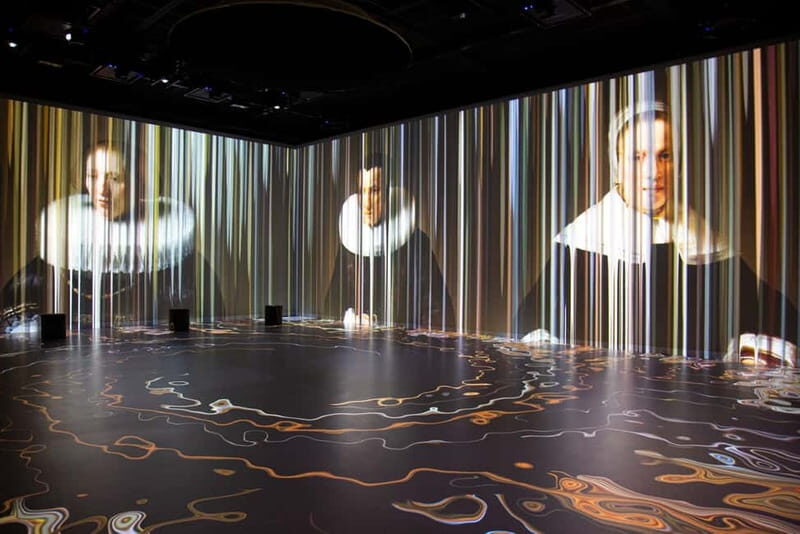
I’m reviewing Remastered, a 60-minute digital art and sound experience in South Holland that mixes Dutch Masters with modern tech. It runs under the Erasmus Bridge in a huge indoor space with projectors, speakers, and one giant LED screen that turns famous paintings into moving scenes.
What I like most is the interactive drawing and scanning area, where you make your own 3D-style digital art. I also love the design scale: the show uses 1,500 square meters, 60 projectors, 50 loudspeakers, and a massive indoor LED wall made for big, high-detail visuals.
One thing to consider: the experience can feel intense, with flashing lights and some darker imagery, so it may not suit everyone (especially young kids or anyone sensitive to light).
- Key takeaways before you go
- Finding Remastered under the Erasmus Bridge
- Price and timing: does a 1-hour ticket make sense?
- Inside the show: what makes it more than video walls
- The Dutch Masters, remade for today
- Mondrian’s beat: the music you can actually move to
- The interactive wall: draw, scan, and create on the big LED screen
- Waterfall entrance: tide into the digital world
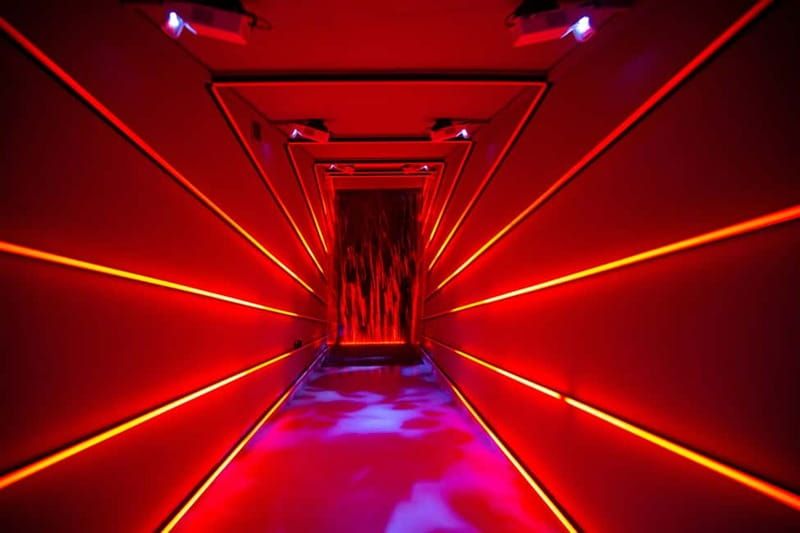
- Blackout Alley: Jeroen Bosch creatures and sound underneath
- Underworld fish: serenity in a moving sea
- Dripping Cave and the elevator to the clouds
- Overworld clouds: boats and birds in flocks
- Speculum: Eden, Paradise, and Hell
- Remastered finale: relax, then look back at what changed
- Practical rules: cameras, selfie sticks, and flash
- Accessibility and safety notes you should take seriously
- Who will love this most (and who might not)
- Value check: for a 1-hour show
- Rotterdam plan: how to pair it with the rest of your day
- Should you book Remastered in Rotterdam?
- FAQ
- How long is the Remastered experience?
- What is the price for tickets?
- Is Remastered wheelchair accessible?
- Are selfie sticks or tripods allowed?
- Is it suitable for people with epilepsy?
- Is food and drink included in the ticket?
Key takeaways before you go
 1 / 10
 2 / 10
 3 / 10
 4 / 10
 5 / 10
 6 / 10
 7 / 10
 8 / 10
 9 / 10
 10 / 10
- Under the Erasmus Bridge: easy to spot once you know the exact area in the city center
- 1 hour, fixed flow: you enter at a set time and experience the full program
- Interactive LED art: draw, scan, and see your creation appear on the big screen
- Big Dutch Masters, remixed: Van Gogh, Jeroen Bosch, Rembrandt, and Mondrian music
- Major technical setup: 60 projectors, 50 speakers, and a Europe-scale indoor LED wall
- Some darker moments: expect scary-creature themes and flashing during the show
Finding Remastered under the Erasmus Bridge
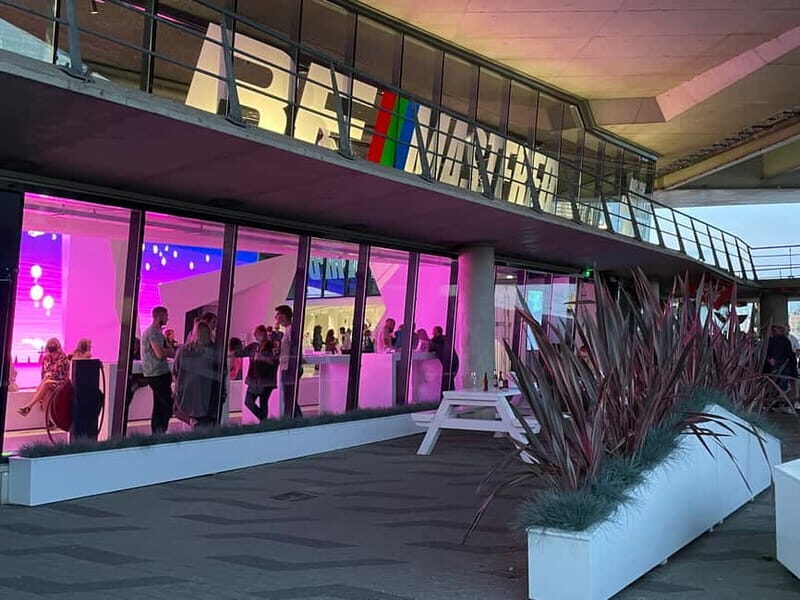
The venue is below the Erasmus Bridge, on the side of Rotterdam’s city center. The practical tip here is timing and wayfinding: plan to arrive 10 minutes early so you have time to settle before your timed entry.
A number of visitors also mention it’s a handy option if you’re in town around a cruise stop, since the location is close to the cruise terminal area. If you’re using a ride-share, you’ll want the exact venue pin saved ahead of time because directions can be a bit confusing.
Once inside, you’ll quickly see why the setting matters. A terrace view is part of the experience too, giving you a skyline angle that feels very “Rotterdam” without taking you away from the show.
Price and timing: does a 1-hour ticket make sense?
Tickets are priced at $24 per person for a 1-hour experience. That can feel steep for “just one hour,” but the way the space is built helps explain the value. You’re not watching a small gallery projection. You’re moving through a purpose-built, room-to-room multimedia path that includes water effects, interactive stations, and music-led sequences.
The show length is fixed. That means you can’t simply pop in for a quick look and then leave early. If you prefer slow museum pacing, plan for one concentrated block instead of “gallery wandering.”
One more timing note from visitor experience: some people wished they had scheduled extra time before the show to enjoy the interactive section calmly (not just rush through it).
Inside the show: what makes it more than video walls
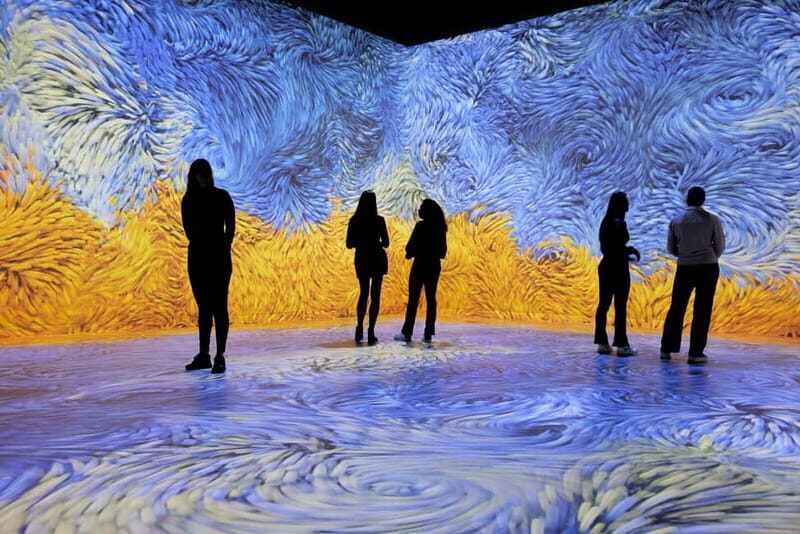
Remastered isn’t just paintings projected onto walls. It’s engineered as a full sensory route. The production scale is huge: 1,500 square meters, 60 state-of-the-art projectors, 50 loudspeakers, and around 15 km of cables powering everything.
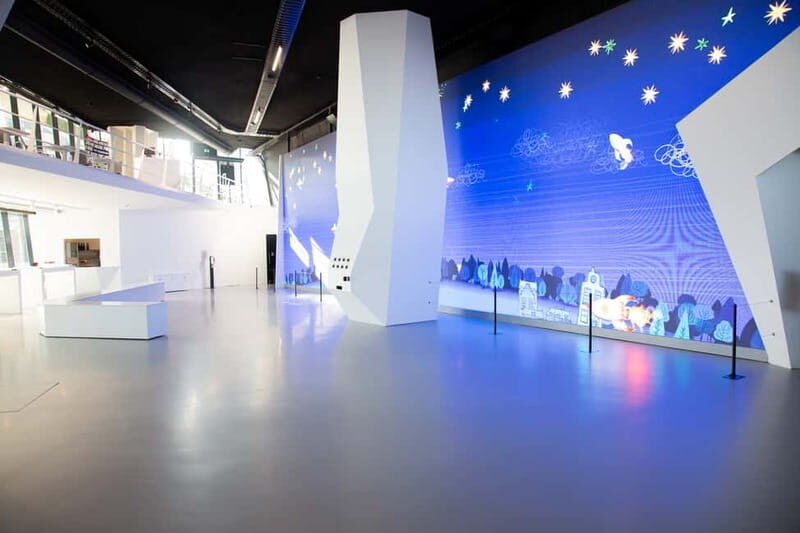
Then there’s the LED wall, described as the largest indoor LED screen in Europe, with 245 million pixels and a 20,000-pixel resolution. Translation for you: images are sharp, and details can feel intentional rather than blurry. That matters because the show repeatedly shifts from bright color to darker, high-contrast scenes.
If you’re the type who doesn’t usually get excited by digital art, you’ll still likely appreciate the choreography—how you’re guided from one themed moment to the next.
The Dutch Masters, remade for today
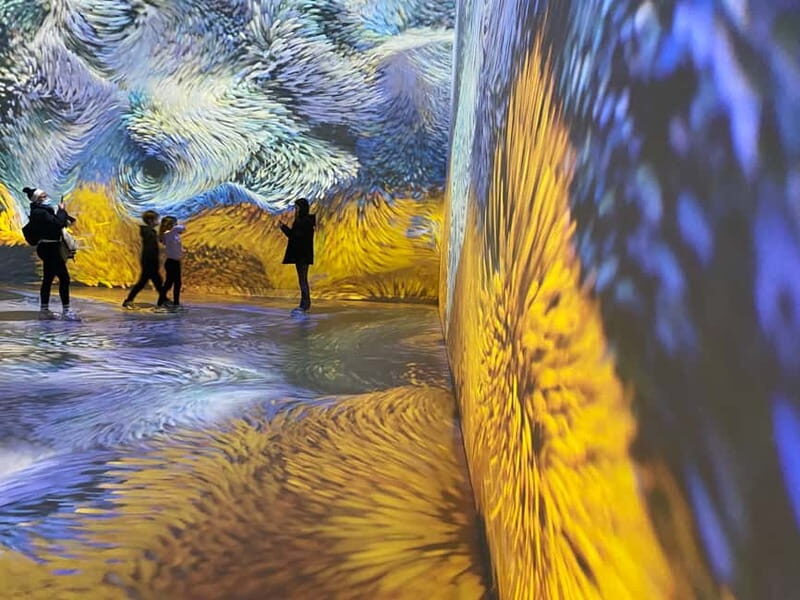
This experience uses the familiar faces of classic Dutch art, then remakes them with contemporary digital effects. You’ll see references to Van Gogh, Jeroen Bosch, and Rembrandt, but the goal isn’t strict reproduction.
Instead, you’re getting a modern interpretation: color becomes motion, brushstroke energy becomes scene energy, and paintings become environments. If you like the idea of seeing how a museum subject can be interpreted through sound and light, you’ll probably enjoy this format.
It’s also a smart way to make classic art feel less like homework. You’re not studying. You’re reacting—watching, listening, and moving with the rhythm.
More Great Tours NearbyMondrian’s beat: the music you can actually move to
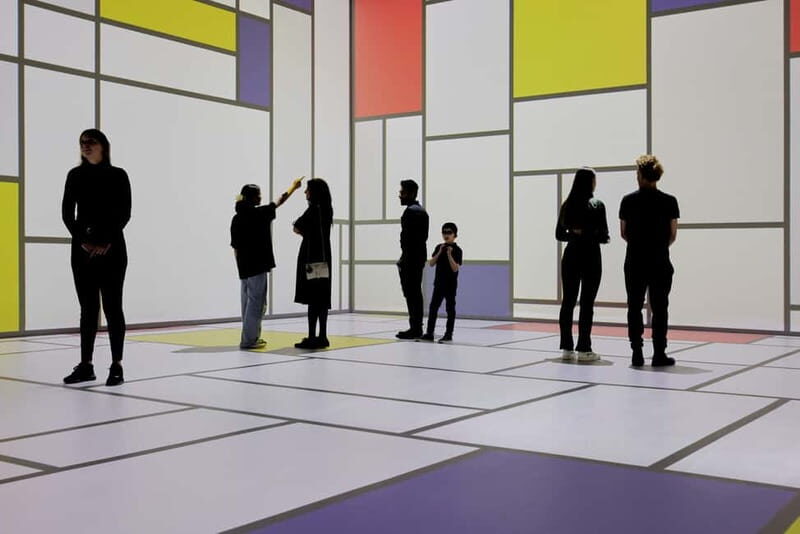
One of the highlights is the sequence built around Mondrian’s Victory Boogie Woogie. This part is where the experience shifts from “watching art” to “doing the show with your body.”
So if you’re traveling with friends, this is your payoff moment. Even if you don’t consider yourself a dancer, you’ll likely feel the push to match the tempo. A few visitors even specifically said to dance when the music starts.
It’s a good reminder that this is designed as a group experience. A room full of people responding to the same beat makes the visuals feel more alive.
The interactive wall: draw, scan, and create on the big LED screen
This is where Remastered becomes personal.
At the start, you’re taken to a digital wall where you can draw and scan your image. Your creation is then displayed on Europe’s biggest indoor LED screen alongside other visitors’ work. It’s not just a photo op. It’s treated like part of the artwork itself.
The “play” possibilities are part of the fun:
- You can add effects like rain, storm, rainbow, confetti, and falling stars.
- Some interactive prompts let you trigger characters and effects, with examples including making Godzilla appear.
- There’s also talk of creating 3D-style digital art based on your drawing and scan.
Practical tip: if you tend to take your time with interactive tech, arrive early or factor in a little buffer before your entry time. One visitor mentioned they came about half an hour early and had time to do the drawing properly.
Waterfall entrance: tide into the digital world
Your path begins with a water-and-light transition. Expect to walk through a waterfall that’s powered by LED wave effects.
This matters because it sets the tone fast. You start in motion, surrounded by shifting light patterns, and you’re guided forward like you’re moving from the real world into a created one.
It’s also a good way to beat hesitation. By the time you wonder what you’re supposed to do, you’re already inside the show’s rhythm.
Blackout Alley: Jeroen Bosch creatures and sound underneath
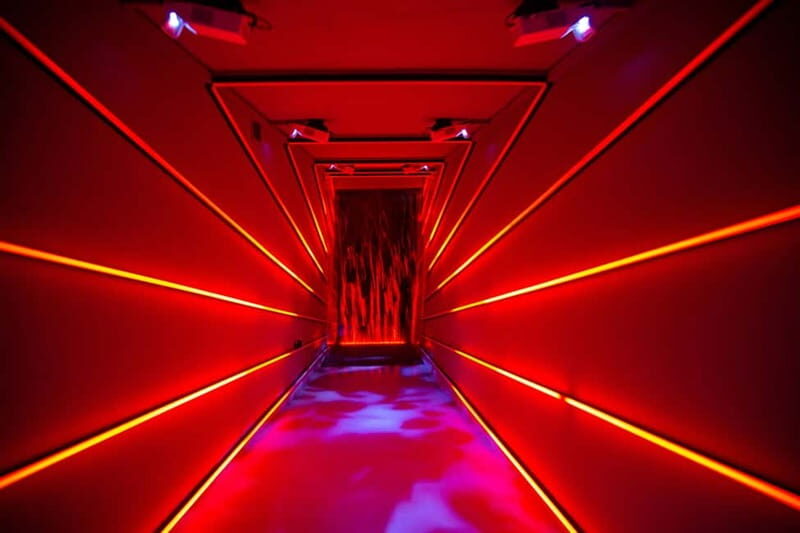
After the initial entry, you hit a darker sequence inspired by Jeroen Bosch. The concept is built as a first encounter with eerie creatures—followed by audio designed to make the space feel alive underneath the surface.
For you, the takeaway is simple: this isn’t a quiet “art appreciation” room. It leans into atmosphere and sound cues. If you’re traveling with kids, this is the point where you’ll want to check how they handle scary visuals.
If you’re not sure, think of it like a theater moment inside a museum. You can’t pause it, so you’ll want to bring a sense of humor and patience for the intensity.
Underworld fish: serenity in a moving sea
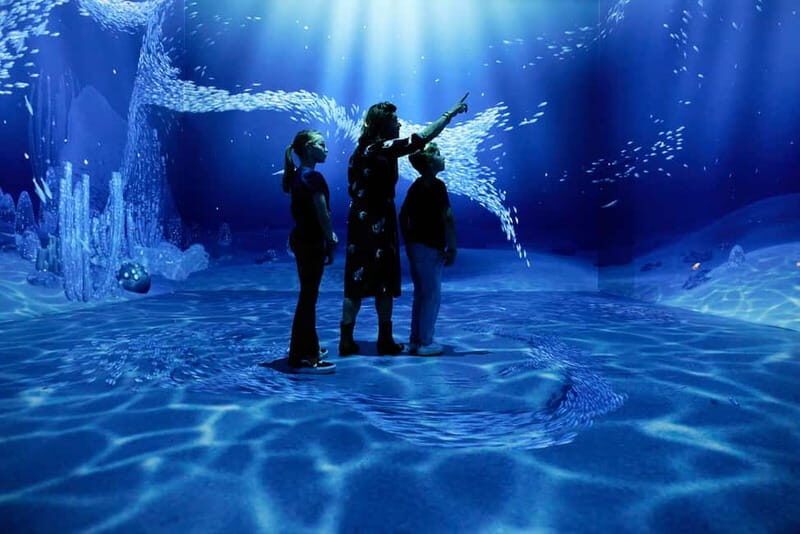
Next comes the Underworld area, where you’re treated to thousands of fish moving through the digital space. It’s described as an interaction zone where you admire the serenity of the scene.
This is a nice contrast after the darker, creature-focused parts. If you need a breather, this section can give you that “calm reset” feeling—like the show is letting you absorb what you just experienced.
Dripping Cave and the elevator to the clouds
Then you step out of the water into a dripping cave sequence. From there, you ride an elevator effect that takes you upward into a cloud environment.
This “vertical” storytelling is more than a gimmick. It helps keep the experience from becoming one long visual loop. You’re getting clear scene transitions, and you’re moving through them as part of the set design.
In practice, the elevator moment is also a good chance to catch your breath and regroup—especially if you’re doing this as a family stop.
Overworld clouds: boats and birds in flocks
In the Overworld, the show goes big with clouds and birds. You’ll walk through the cloud scenes and see birds dancing in flocks.
There’s also a boat sequence where you sail over the clouds. Visitors who enjoy visual motion and sound design often remember this part because it feels like you’re traveling through the artwork rather than just staring at it.
And yes, it’s colorful—but it’s also carefully staged. You’re guided to where the visuals hit hardest.
Speculum: Eden, Paradise, and Hell
This section is where the show gets most “thoughtful” and most intense at the same time. You’re taken into a world framed as Eden, Paradise, and Hell.
In plain terms: expect serious contrast in mood. Some visitors felt certain imagery veers too far for younger viewers, and there’s mention of darker and potentially inappropriate elements in this area.
If you’re bringing kids, it’s smart to be selective. If you’re sensitive to adult themes, be aware that this route isn’t entirely family-soft.
Remastered finale: relax, then look back at what changed
The show’s later part is described as Remastered, where you can relax and enjoy the sequence as a big finale.
This is where earlier themes start feeling connected. You’ve seen classic art references remixed with new tech and sound, you’ve played with your own visuals, and now you’re given the full “final viewing” moment.
You’ll also have that Rotterdam moment again. The setup includes a terrace view under the Erasmus Bridge, so you end with both a show and a skyline reminder of where you actually are.
Practical rules: cameras, selfie sticks, and flash
Before you go, know the restrictions. These are part of the experience planning:
- Selfie sticks are not allowed
- Flash photography is not allowed
- Tripods are not allowed
This keeps the show dark and consistent for everyone’s viewing. So come prepared for low-light conditions and keep your phone on camera mode without flash if you’re allowed to take photos in general (the key points above are what’s specifically listed).
Accessibility and safety notes you should take seriously
Remastered is wheelchair accessible, which is great news if mobility is a factor. The route is built for movement, but you should still be ready for dim lighting in some rooms.
Not suitable for people with epilepsy is explicitly stated. Also, flashing lights are part of the experience at points, so if you’re light-sensitive, treat this as a careful choice, not an automatic one.
One more practical safety tip mentioned by visitors: floors and doorways can be uneven and lighting can be dark, so take your time when moving between rooms.
Who will love this most (and who might not)
This is often described as good for all ages, but the reality is more nuanced.
You’ll likely enjoy it if you:
- Like modern art, sound, and visual rhythm
- Want a fun break from traditional museums
- Travel with teens who get bored watching only paintings
- Enjoy interactive tech more than quiet exhibits
You might want to rethink if you’re traveling with very young kids. Multiple visitor comments point to scary/dark imagery and some scenes that feel too intense for younger viewers, even if the overall experience is designed to be engaging.
Couples also do well here because it mixes shared spectacle with a quick interactive challenge you can do together.
Value check: $24 for a 1-hour show
Is it good value? For many travelers, the answer is yes, mainly because you’re getting:
- A full-hour guided route (not a short loop)
- Large-scale production with high-end projection and sound
- Interactive elements where you can influence what happens on screen
- A unique setting tied to Rotterdam’s iconic bridge location
Still, a few visitors felt it was expensive for what they expected, especially if they didn’t love the concept or if they found some rooms more visual than interactive.
If you’re the type who needs context to connect with art, you may wish there was more explanation. Some people asked for more interpretive info about the meaning of the artists’ choices.
Rotterdam plan: how to pair it with the rest of your day
Because this takes one hour, you can pair it with a classic Rotterdam walk afterward. The show doesn’t replace sightseeing—it complements it.
If you’re near the Erasmus Bridge area already, this is a convenient stop. If you’re arriving by cruise, it’s also a nice “escape from ship time” option since it’s close enough to fit into a port-day schedule.
And because food and drinks are not included, you’ll want to plan a snack or meal elsewhere before or after. There’s no tapas guarantee here, so keep your hunger on your own itinerary.
Should you book Remastered in Rotterdam?
I’d book it if you want a high-quality, tech-forward cultural stop that feels like theater, with interactive moments and a strong music payoff. The scale and the interactive drawing wall are the two big reasons you’ll feel like you got something real for your money.
I’d think twice if flashing lights, dark imagery, or adult-themed content could be an issue for anyone in your group. And if you dislike crowds or you hate fixed-timed experiences, consider going at a calmer time slot.
Bottom line: for travelers who like sensory experiences, this is one of the more memorable ways to spend an hour in Rotterdam.
Rotterdam: “Remastered” Digital Art Audiovisual Experience
FAQ
How long is the Remastered experience?
The experience lasts 1 hour.
What is the price for tickets?
The price is listed as $24 per person.
Is Remastered wheelchair accessible?
Yes, it is wheelchair accessible.
Are selfie sticks or tripods allowed?
No. Selfie sticks and tripods are not allowed, and flash photography is also not allowed.
Is it suitable for people with epilepsy?
No. It is not suitable for people with epilepsy.
Is food and drink included in the ticket?
No. Food and drinks are not included.
You can check availability for your dates here: