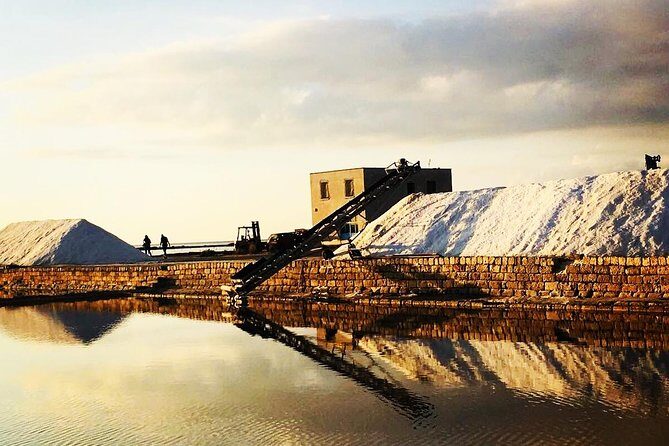
We’ve reviewed plenty of cultural tours across Europe, and this salt pan experience in Sicily stands out as one of those rare offerings that delivers genuine education without pretension. What we love most is the combination of intimate group sizes (maximum 8 people) with a guide who’s genuinely passionate about his subject matter, and the fact that everything—museum entry, tastings, transportation—is bundled into a remarkably affordable package.
The second thing that impresses us is the practical structure of the tour. Rather than rushing through three different salt pans in a confused blur, the itinerary thoughtfully builds knowledge as you move between locations, culminating in a walk through the actual salt beds themselves. This progression means you’re not just seeing these operations; you’re understanding them.
The one consideration worth mentioning upfront: weather dependency. This tour relies on decent conditions, and while the sunset views are apparently spectacular, they’re not guaranteed. Plus, one reviewer had a no-show situation with the guide, which suggests occasional operational hiccups worth acknowledging.
This tour works best for travelers who genuinely enjoy learning about regional history and food production, couples seeking an authentic evening experience, and anyone curious about how premium sea salt actually gets made. It’s equally suited for families with older children who can appreciate the educational component.
What Makes This Tour Different
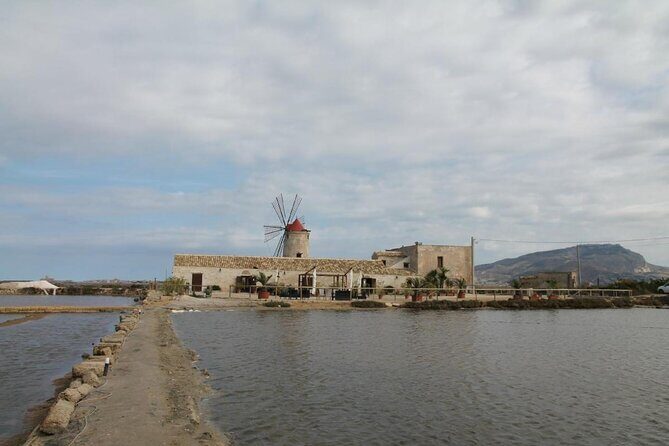
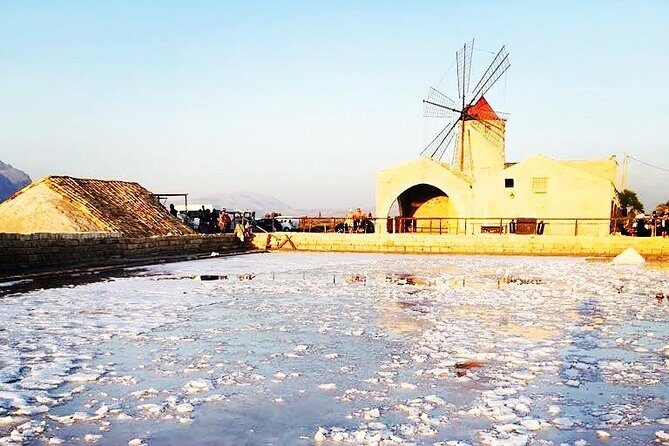
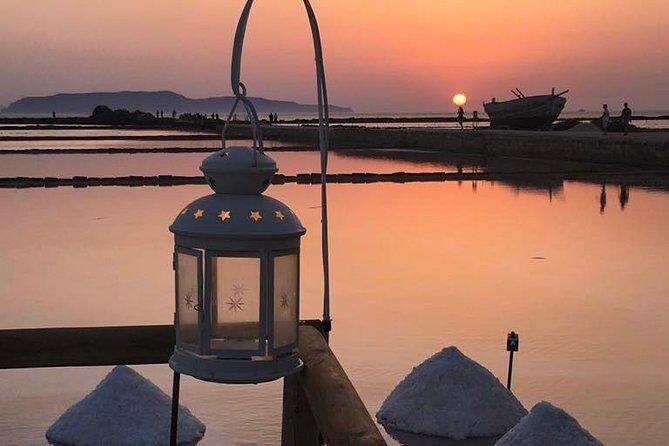
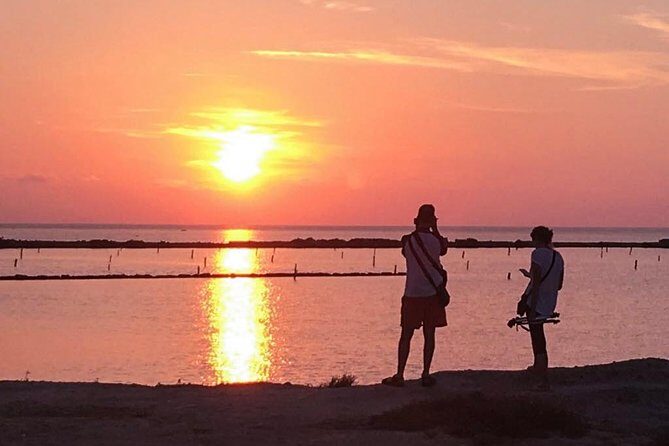
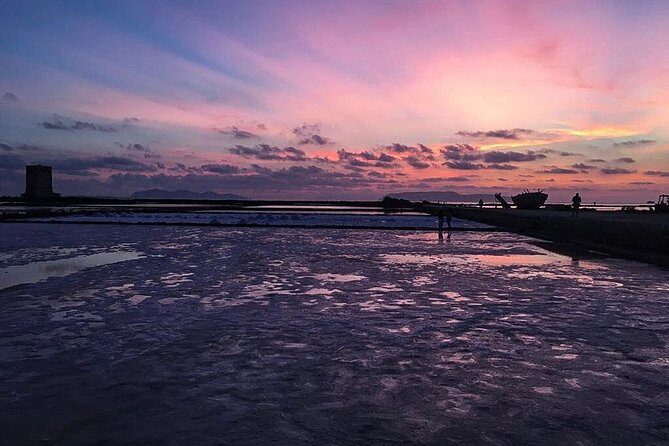
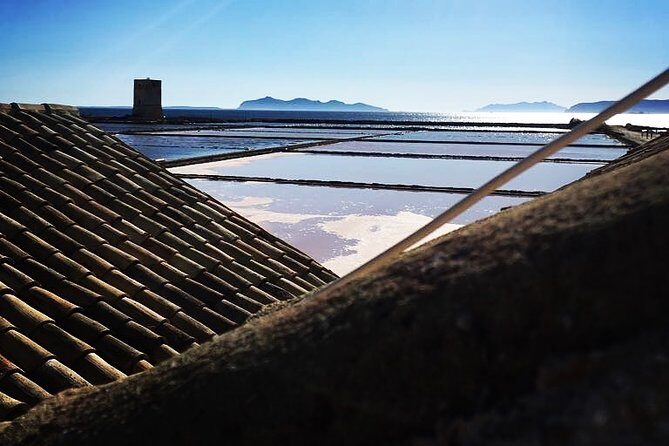
The Saline di Trapani and Paceco aren’t just any salt flats—they represent over 400 years of continuous salt production in western Sicily. What makes this tour genuinely special is that you’re not observing this heritage from a distance. You’re walking into active salt farms, visiting a 600-year-old mill that’s been converted into a working museum, and tasting the actual product that made this region economically significant for centuries.
The guide, Alessio, appears consistently in reviews as the real differentiator here. Multiple travelers mention being surprised by how much knowledge he possesses. One chef and history teacher noted that Alessio taught her more about salt than she’d learned in her entire career. Another reviewer was particularly impressed by Alessio’s explanation of how the region used a base-12 divisor system instead of the decimal system—the kind of cultural detail that transforms a tour from pleasant to genuinely memorable.
👉 See our pick of the Top 15 Workshops & Classes In Sicily
The Itinerary: What You’ll Actually Experience
The Journey Begins at Trapani’s Port
You’ll meet your guide at the Vigili Del Fuoco fire station near Trapani’s port (via Admiral Staiti, 101). The convenient location near public transportation means you can easily get there from wherever you’re staying. From here, you’ll travel in an air-conditioned minivan—a practical detail that matters significantly in Sicily’s heat, especially if you’re visiting during summer months.
Stop One: Maria Stella Salt Pan and Historic Mill
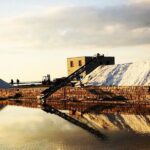
About 10 minutes into your drive, you’ll reach the first salt pan, Maria Stella. Here sits the original mill built at the end of the 15th century—we’re talking about a structure that’s been operating for roughly 500 years. This isn’t a museum piece behind velvet ropes; it’s a functioning testament to how salt production has essentially remained unchanged in its fundamentals for half a millennium.
At this early stage, your guide will begin explaining how sea water transforms into the crystalline salt you use at home. The visual scale of these operations often surprises first-time visitors. The ponds stretch across the landscape in geometric patterns, and depending on the season, you might see different stages of the evaporation process simultaneously.
Stop Two: Salina Calcara and the Four Orders of Salt Tanks
You’ll spend roughly 30 minutes at Salina Chiusicella, where the real education about salt production happens. Your guide will explain the “four orders” of salt tanks—essentially the stages through which seawater passes as minerals precipitate out and salt concentrates. This is where the chemistry becomes visual and tangible.
The ecological dimension of these salt pans adds another layer of interest. The shallow, mineral-rich waters attract significant bird populations. You might spot flamingos, herons, egrets, and the Maremmano horses that work in the salt pans themselves. These aren’t animals in a zoo; they’re part of the actual working landscape. A teacher who took this tour mentioned how effectively Alessio explained the delicate balance between salt production and preserving the nature reserve status of these wetlands.
Stop Three: Saline Culcasi—The Museum and Salt Tasting
This is where the tour truly comes alive. Saline Culcasi is home to an ancient mill over 600 years old, now operating as a small museum. You’ll spend about an hour and 15 minutes here, which is enough time to actually absorb the experience rather than rushing through.
Inside the museum, you’ll see the actual tools, equipment, and hierarchical structure of how salt work was organized historically. The visual representation of these tools—rakes, wheelbarrows, measuring devices—helps you understand the physical labor involved. One reviewer noted that seeing how the roof tiles were shaped to match the artisan’s thigh was the kind of human detail that makes history feel real rather than abstract.
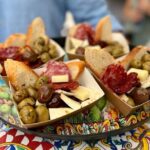
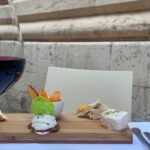
Then comes the tasting portion. This is where many visitors have their “aha moment” about salt quality. You’ll taste different salt crystals and, more importantly, the “fleur de sel”—the finest, most delicate layer of salt that forms on the surface of the ponds. Your guide will offer versions flavored with orange, lemon, rosemary, and oregano. If you’ve only ever used iodized table salt, this tasting genuinely changes your perspective on what salt can be. One reviewer who switched from Himalayan sea salt after this tour captured the experience well: “His extensive knowledge and passion for educating on the health benefits of Trapani’s integrale salt really changed our perspective.”
The final element—”the path of the saltman”—is a suggestive walk directly through the salt tanks. You’re not observing from a platform; you’re stepping into the actual workspace where salt workers have labored for centuries. This physical immersion in the landscape ties everything together conceptually.
Return Journey
The drive back to the meeting point takes about 15 minutes. By this point, if you’ve timed your tour for late afternoon, you’ll likely experience the sunset over the salt pans—something multiple reviewers specifically praised as genuinely spectacular.
You can also read our reviews of more tours and experiences in Sicily.
Value Proposition and What’s Included
At $60.46 per person, this tour includes an extraordinary amount. You’re getting professional transportation in an air-conditioned vehicle, admission to a private salt museum, tastings of multiple salt varieties, and most importantly, access to a guide with genuine expertise. Tips aren’t included, which is worth budgeting for if you feel the experience warrants it.
Compare this to other regional experiences: many Sicily tours in this price range offer basic sightseeing with minimal educational content. Here, you’re paying for someone’s deep knowledge and passion for a specific subject. The small group size—capped at 8 people—means you’re not competing to hear your guide or ask questions.
One reviewer with experience in hospitality noted that Alessio “has been in the hospitality business for a long time and has lived and traveled around the world before returning back to Italy.” That context matters. He’s not reading from a script; he’s sharing genuine knowledge accumulated through decades of engagement with this subject.
Practical Considerations
Timing and Booking
Tours are booked on average 30 days in advance, which suggests they fill up during peak season. Mobile tickets mean you can confirm immediately upon booking. The 24-hour cancellation policy is generous, and the tour operates in English, making it accessible even if Italian isn’t in your linguistic arsenal.
Group Dynamics
The maximum group size of 8 people (sometimes up to 16 according to different sections of the information) shapes the experience significantly. You’re not on a coach with 40 other travelers. Smaller groups allow for actual conversation with your guide and fellow travelers, and they enable the guide to adjust pacing based on group interest.
One reviewer did mention an optional aperitif offered at the end of the tour that cost extra (€10) and extended the experience beyond the advertised time. If you have dinner reservations or strict timing needs, it’s worth noting that add-ons might be proposed. The review suggests this could have been better integrated into the tour description upfront.
Accessibility and Logistics
Service animals are permitted. The tour is described as suitable for most travelers, though the walking involved—particularly through the salt pans themselves—requires basic mobility. The fire station meeting point is near public transportation, making it accessible whether you’re renting a car or relying on buses.
What Travelers Actually Say
The review aggregate is genuinely impressive: 554 five-star reviews out of 589 total, with a 4.9 average. That’s not hype; that’s consistency. Even the single one-star review that mentions a no-show appears to be an operational failure rather than a reflection on the tour itself.
The most common praise centers on Alessio’s knowledge. A chef and history teacher wrote, “Alessio taught us so much about salt—and I thought I was knowledgeable as both a chef and history teacher. It was a pleasure being with him and others.” That’s someone with professional credentials in two relevant fields being genuinely impressed.
Multiple international reviews—in Italian, French, German, and Spanish—suggest this tour appeals across language barriers and cultures. The consistent thread is that people didn’t expect to learn as much as they did. Several reviewers mentioned being surprised by how engaging a tour about salt production could be.
The sunset element keeps appearing in reviews, suggesting that timing your tour for late afternoon genuinely enhances the experience. The landscape apparently transforms in golden hour light, and the visual geometry of the salt pans becomes particularly striking.
One practical note: the review mentioning weather concerns isn’t unique. Multiple reviewers mention clouds obscuring the sunset, which is why the tour’s weather-dependent cancellation policy exists. It’s not a flaw; it’s acknowledgment of reality.
Who Should Book This Tour
If you’re someone who enjoys understanding how things actually work—how food is produced, how regional economies develop, how traditions persist—this tour delivers that satisfaction. It’s equally valuable for culinary enthusiasts who want to understand ingredient sourcing, or for photographers seeking genuinely beautiful landscape work during golden hour.
It’s also excellent for families with teenagers old enough to engage with historical and educational content. The physical components aren’t strenuous, and the visual elements—the bird life, the geometric landscape, the working mill—hold attention even for younger visitors.
Couples seeking an evening activity that’s more substantive than typical tourist offerings will find this rewarding. The combination of education, tasting, and scenic beauty creates a more memorable shared experience than many standard date-night activities.
The one group who might want to reconsider: travelers on extremely tight schedules or those seeking primarily recreational rather than educational experiences. This tour requires attention and engagement. If you’re looking to passively observe scenery, you’ll get that, but you’ll miss the actual value.


Frequently Asked Questions
Is this tour actually worth $60 per person?
Yes. When you factor in professional transportation, museum admission, multiple salt tastings, and a guide with exceptional knowledge, the value is genuinely strong. Similar cultural tours in Sicily typically cost $75-100 per person. The small group size also means you’re not subsidizing a massive logistics operation.
What’s the difference between regular salt and fleur de sel?
Fleur de sel is the delicate, naturally formed layer of salt crystals that forms on the surface of salt ponds. It’s harvested separately, has a more complex mineral profile, and a texture that dissolves differently on your tongue. The tour’s tasting component helps you actually experience this difference rather than just reading about it.
Can I actually taste the difference between the flavored salts?
Based on reviewer feedback, yes—and apparently it’s eye-opening for many people. The point isn’t just flavor but understanding how salt acts as a vehicle for other flavors. One reviewer noted that Alessio explained the health benefits of Trapani’s integrale salt specifically, suggesting the tasting is educational rather than purely recreational.
Will I see salt being actively harvested?
That depends on timing. Several reviewers specifically mention that the tour would be “even better during harvesting season July – September if you are looking for photos of the salt.” Outside those months, you’ll see the infrastructure and learn the process, but you might not see active harvesting in progress.
Is the walking difficult?
The tour includes a walk through the salt tanks themselves, but multiple reviews mention families with children participating successfully. It’s not a strenuous hike, though you should wear appropriate footwear and be prepared for uneven ground and salt surfaces.
What if the weather is bad?
The tour requires good weather. If conditions are poor, you’ll be offered either a different date or a full refund. Given that sunset views are a significant part of the experience, this policy makes sense.
How long is the tour really?
The advertised 2.5 hours is accurate for the core experience. However, one reviewer noted that an optional aperitif add-on at the end extended their experience beyond this timeframe. If you have strict timing needs, confirm with the operator about what’s included in your booking.
Will I understand the guide if I don’t speak Italian?
The tour is offered in English. Multiple non-English reviews mention the guide speaks Italian and English. If you’re from a non-English-speaking country, you might experience some language barriers, but one French reviewer noted that while they had to make “some effort,” they had “no regrets.”
Can I buy the salt products after the tour?
The tour includes tasting but doesn’t explicitly mention whether products are available for purchase. Given that you’re visiting active salt farms with a museum, it’s reasonable to assume there might be a shop, but this should be confirmed directly with the operator if it’s important to you.
SALT TOUR-all inclusive: salt tour: Trapani, Paceco, Nubia
Final Thoughts
This tour succeeds because it respects both the subject matter and the traveler’s intelligence. You’re not getting a superficial “see the pretty salt” experience. You’re getting education from someone genuinely passionate about the topic, delivered in an intimate setting with enough time to actually absorb information and ask questions. The combination of historical context, working demonstrations, tasting components, and landscape beauty creates an experience that lingers in memory longer than typical sightseeing.
At under $65 per person for a 2.5-hour experience that includes transportation, museum entry, and tastings, the value is authentic rather than just affordable. The 99% recommendation rate from nearly 600 travelers suggests consistency—this isn’t a tour that occasionally delivers; it’s one that reliably meets and exceeds expectations. Whether you’re a food enthusiast wanting to understand ingredient sourcing, a history lover curious about regional economies, or simply someone seeking an evening activity more meaningful than typical tourist fare, this tour delivers genuine value and authentic engagement with Sicilian culture.