
This Sarajevo War Tour is a 4-hour, small-group history walk that feels personal in the best way: you’re not just reading plaques, you’re hearing the siege through a Sarajevo veteran guide. Expect stops tied to daily life during the blockade, including the emotionally heavy Tunnel of Hope and the sniper-ridden streets people still talk about today.
What I like most is how the tour combines context + geography. You start in the city center with major massacre-related sites, then you move to Sniper Alley, and later you climb for big views from Mt. Trebević—so the story makes physical sense in your head. You’ll also get an unusually interactive guide experience, with time built in for questions, even the personal ones, as long as you’re respectful.
One thing to consider: this is not a light, casual tour. You’ll be dealing with mass murder sites, a war tunnel used for survival, and battlefield remnants. If you want a purely “facts and dates” approach, or you’re sensitive to intense topics, go in with the right expectations.
This tour provided an important and informative look at life in Sarajevo during the siege. Visiting the Tunnel of Hope was especially meaningful, and hearing the history directly from a veteran added depth and authenticity to the experience that you simply don’t get from reading or exhibits alone.
If you want an in-depth understanding the Yugoslav wars, this is definitely the experience. I walked away with a clear understanding of a very popular conflict that I previously did not understand. Going to the places of the war helped give
Fantastic morning war tour of Sarajevo.
- Key things to know before you go
- How the veteran guide shapes the whole experience
- Value check: is .39 worth it?
- Meeting point and the pickup logistics that reduce stress
- Stop 1: Funky Tours briefing + a guided conversation you control
- Passing Markale Markets: history you can’t miss
- The memorial for 1,601 children: the emotional midpoint
- Stop 2: Sniper Alley and Hotel Holiday—where stories meet buildings
- Stop 3: Tunnel of Hope (War Tunnel Museum) and the walk-through effect
- Stop 4: Mt. Trebević—battlefields and damage that’s still visible
- Stop 5: Trebević Vidikovac—why control mattered in sightlines
- Stop 6: Olympic bobsleigh and luge track—Yugoslavia meets war graffiti
- Stop 7: Jewish Cemetery Sarajevo—frontline history in a quiet place
- How to dress, pace yourself, and ask good questions
- Food timing: what’s included, what isn’t, and how to plan it
- Tour facts and practical info at a glance
- Should you book this Sarajevo siege tour?
- FAQ
- What’s included in the ticket price?
- Is pickup and drop-off offered?
- How long is the tour and is there much walking?
- What language is the tour offered in?
- Is food or drinks included?
- Can I cancel for free?
Key things to know before you go
- Veteran-led storytelling: guides are siege survivors and are used to answering tough questions.
- Admissions handled for you: the War Tunnel Museum entry is included (and other stops have free entry).
- Sniper Alley routing: you’ll pass key areas tied to Marijin Dvor and the former Hotel Holiday.
- Walks are limited, but terrain matters: you’ll have stops outside and a viewpoint/track area with some walking.
- Small group size: maximum 8 travelers, so discussion stays human-sized.
- Big Sarajevo viewpoints: Mt. Trebević gives you the skyline perspective that explains why control mattered.
How the veteran guide shapes the whole experience
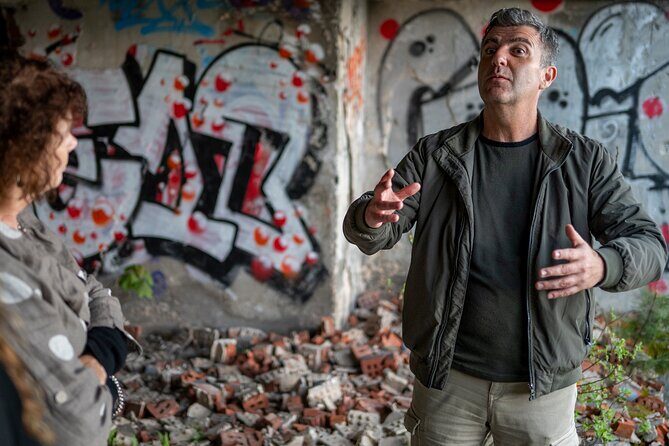
This tour’s biggest difference is the person leading it. You meet the team at Funky Tours (or you can use the pickup option), and then you’re with a siege survivor guide who connects the dots between Yugoslavia’s breakup, the start of the war, and how the siege played out day after day.
That matters because Sarajevo’s wartime story is complex. From the outside, it can blur together. On this tour, you get a voice that’s lived it—plus the freedom to ask questions. Travelers in the past have specifically mentioned guides such as Enes, Mustafa, Adnan, Edo, Omer, Ibrahim, and Adnar as being especially knowledgeable and thoughtful. You should still expect different personalities from different guides, but the veteran angle is built into the product.
If you’re the type who likes to understand motives and lived consequences (not just dates), you’ll probably find this format hits hard—in a good way.
Value check: is $48.39 worth it?
At $48.39 per person for about 4 hours, this isn’t trying to be a budget “quick hits” tour. It’s priced more like a specialty guided experience, and the inclusion list helps justify it.
What’s clearly covered:
- War Tunnel Museum (Tunnel of Hope) admission is included
- Pickup and drop-off in Sarajevo are included
- A/c vehicle transport is included
- All fees and taxes for included admissions are handled
Even the War Tunnel admission is listed as 10.5 EUR for adults (with reduced rates for children/students). You’re not only paying for the tunnel ticket—you’re paying for the guide’s explanation, the city routing, and the viewpoint stops that connect everything.
Also, the group size cap (8 travelers) is one of those small details that changes your experience. Less crowding means more chances to ask questions and get direct answers.
Meeting point and the pickup logistics that reduce stress
You start at Funky Tours, Besarina čikma 5, Sarajevo. If you prefer, there’s complimentary pickup and drop-off, so you’re not zigzagging across the city right before you’re about to hear heavy history.
The tour also includes a mobile ticket, which makes it simpler at the door. Transport is in an air-conditioned vehicle, and the tour is listed as involving low walking overall. That said, there are still outdoor legs and steps/paths at viewpoint-style stops, so I’d treat it as “mostly easy, with a few uneven minutes,” not a fully flat stroll.
Stop 1: Funky Tours briefing + a guided conversation you control
The first stop is at the meeting point—usually quick (around 5 minutes)—where you’ll be oriented and then start the story. This isn’t just an introduction to the day. It’s an opening conversation.
The key promise here is that the guide will make sure questions get answered, including questions that may feel personal. If you’re curious, this is where you set your tone. If you’re not, you can keep it straightforward and just listen—your choice.
Before you roll out, this framing helps you avoid the common problem on war tours: you spend the first hour trying to figure out the “who’s who” instead of learning the meaning of each place.
Passing Markale Markets: history you can’t miss
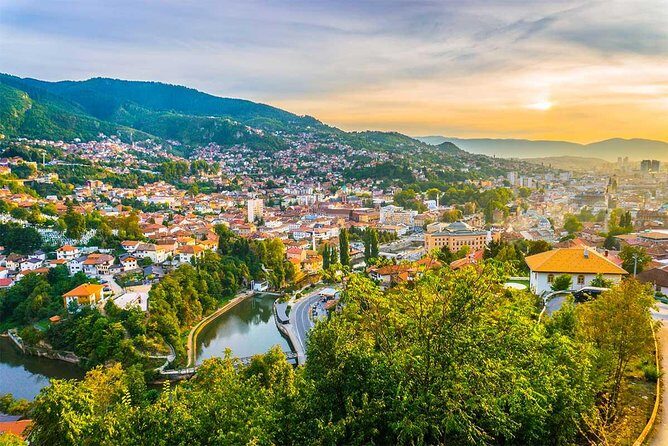
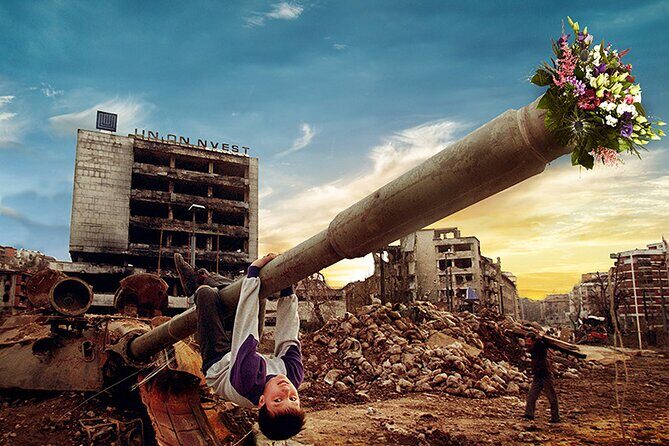
From the vehicle, you’ll pass Markale Markets, described as the largest massacre site in Sarajevo during 1992–1995.
This is one of those places where photos won’t substitute for context. Even if you don’t get off the bus for a long stop, the guide’s explanation is likely to land because you’ll learn what the site represents in the broader siege reality—how civilian areas became targets and how that changed everyday life.
The memorial for 1,601 children: the emotional midpoint
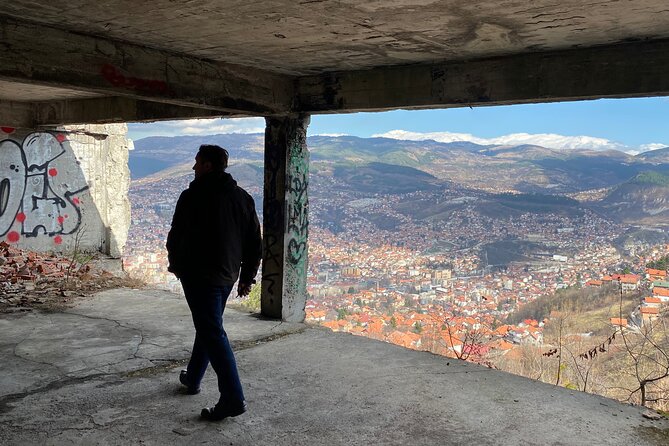
You’ll also pass a memorial dedicated to 1,601 children murdered in Sarajevo during 1992–1995.
This is a heavy stop by design. It’s also practical: it helps you understand that the siege wasn’t only about strategy and military lines. It was also about the cost to families. The tour uses these city-center passes to make sure you don’t reach the tunnel with only one kind of knowledge.
If you’re traveling with someone who handles emotions better with breaks, this is the part to pause mentally and set expectations.
Stop 2: Sniper Alley and Hotel Holiday—where stories meet buildings
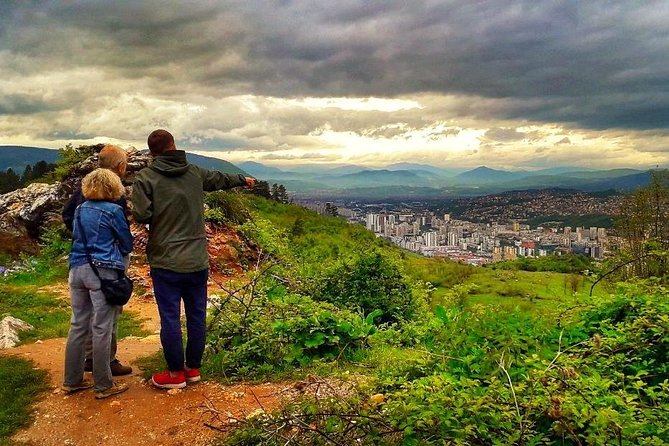
Next comes one of the tour’s headline areas: Sniper Alley. The name is tied to Marijin Dvor and the former Hotel Holiday (now referenced as Hotel Holiday/Holiday Inn).
The tour’s narrative here is about visibility and danger—how certain buildings, streets, and open areas became high-risk zones. You’ll start at the Hotel Holiday area, and the guide uses the location to explain the siege’s “everyday threat” reality.
There’s also an interesting layer of Sarajevo’s pre-war identity: the Hotel Holiday was built for the 1984 Winter Olympics. During the siege, it became home to foreign journalists and reporters covering the war, which gives you a sense of how global attention and local risk collided in the same place.
Expect this stop to be more than “a photo moment.” The explanation is the main event.
Stop 3: Tunnel of Hope (War Tunnel Museum) and the walk-through effect
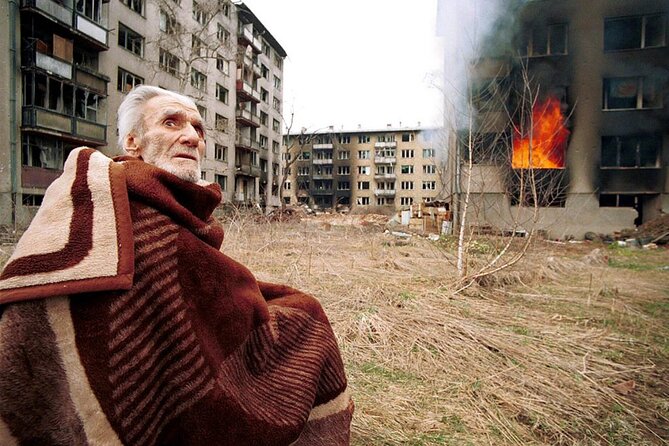
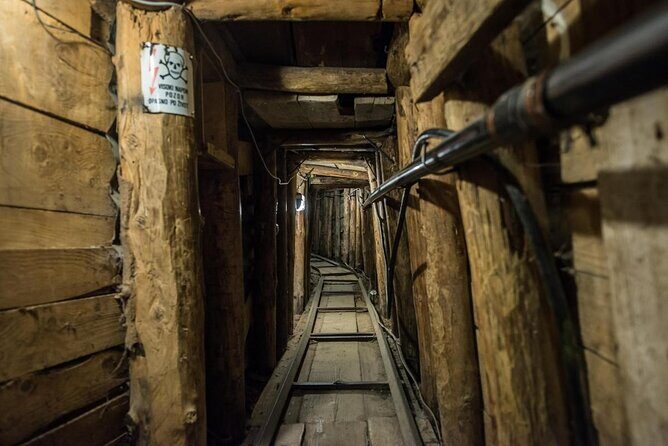
If you only do one part of this day, it’s the tunnel. The War Tunnel Museum (Tunnel of Hope) is described as the major “blood vessel” for the besieged city, and it comes with a film, exhibitions, and then the tunnel walk itself.
What to expect:
- a short movie to set the stage
- time in the exhibition area with siege-related exhibits
- then going through the tunnel for a more firsthand sense of what “survival infrastructure” meant
This is exactly the kind of place where hearing a guide who lived it changes your brain chemistry. You’re not imagining the narrowness and purpose—you’re experiencing it while someone explains how people relied on it.
Time-wise, this is the longest stop (about 1 hour 30 minutes). If you get claustrophobic or overwhelmed, tell your guide calmly before entering. The tour is small-group, so the guide can usually help you pace your experience.
Stop 4: Mt. Trebević—battlefields and damage that’s still visible
After the tunnel, you head to Mt. Trebević. This is where the tour shifts from “what happened inside systems” to “what the land remembers.”
You’ll have viewpoints and battlefield-area stops, with mention of places like Zlatište, Osmice, and Trebević Vidikovac. The tour notes you may see remains such as bunkers, minefields, tank-trace markings, trenches, bullets, grenade shrapnel, and destroyed facilities that haven’t been repaired or restored.
This is one of the most sobering parts of the route because it removes the distance that museums can sometimes create. It’s harder to call it “history” when remnants are still visible in the landscape.
Stop 5: Trebević Vidikovac—why control mattered in sightlines
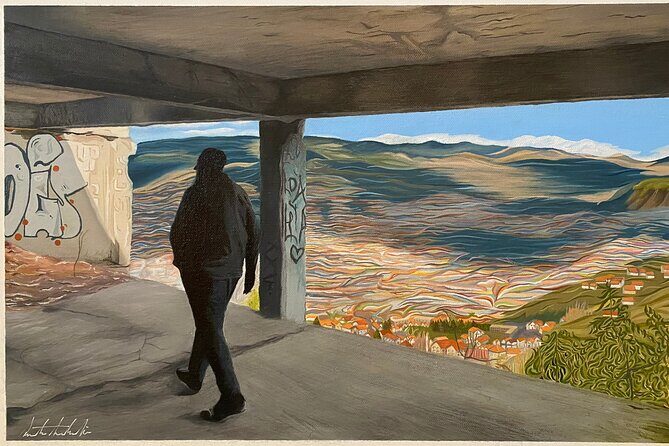
Next is Trebević Vidikovac, described as a beautiful viewpoint above Sarajevo.
During the siege, it’s tied to the position of the Army of the Republic of Srpska. In plain terms: from here, you can understand why people talked about who had vantage points and why city control was so difficult to change.
This stop is short (around 20 minutes), but it’s a good “connect the dots” moment. You’ve heard about danger in the streets, you’ve seen the tunnel, and now you’re seeing the city’s shape from above.
If the weather is clear, the views can be stunning. If it’s foggy or rainy, the guide’s explanation becomes even more important.
Stop 6: Olympic bobsleigh and luge track—Yugoslavia meets war graffiti
The tour also includes the Sarajevo Olympic Bobsleigh and Luge Track, built for the 1984 Winter Olympics.
The big idea here is contrast. You’re looking at Yugoslav brutalist architecture, but the location sat on a frontline during the siege. Today, the track is known for being one of the world’s “most beautiful abandoned places,” and it’s marked with graffiti from artists around the world.
This stop is around 20 minutes, and it often becomes a favorite because it’s one of the few places where the tone can shift slightly—still respectful, but not only tragic. You’re seeing a city trying to live again, even while the war’s impact remains written into the site.
Practical note: some travelers with limited mobility have mentioned there can be a longer walk from where the vehicle parks to the bobsled area. The tour is listed as low walking, but if mobility is a concern, mention it when you book or communicate needs at pickup.
Stop 7: Jewish Cemetery Sarajevo—frontline history in a quiet place
On the way back, the final stop is the Jewish Cemetery Sarajevo. It’s noted for historical importance (one of the largest Jewish cemeteries in Europe), and during the siege it’s described as a main front line and sniper nest.
This is an important stop because it widens your understanding of what “front line” means. You’re not only thinking about buildings and streets. You’re thinking about how communities, neighborhoods, and even sacred spaces can become part of a conflict.
The stop is brief (about 15 minutes), but that brevity is respectful. It’s enough time for the guide’s framing and for you to move through the area quietly.
How to dress, pace yourself, and ask good questions
This is an outdoor-heavy day in parts, and it includes emotionally intense sites. I’d plan like this:
- Dress for changing mountain weather around Trebević
- Bring water and a light layer, since you’re out for several hours
- Go easy on your phone for the cemetery and memorial areas
And for questions: ask what you truly want to understand, but also ask how to interpret what you’re seeing. A good guide will help you connect the dots without forcing you into awkward detours.
If you’re traveling with kids or someone who gets overwhelmed, you might want to confirm that the guide can moderate the pace. The tour format is built for discussion, but not every traveler wants the same level of detail.
Food timing: what’s included, what isn’t, and how to plan it
No food or drinks are included. So if you’re hungry, you’ll want a plan before or after the tour.
The good news is the structure helps: you’ll get dropped off back near your chosen location in Sarajevo. Many travelers treat this as a morning or early afternoon history anchor, then follow up with a meal in the city.
Also, one small detail from travelers: some guides have been described as sharing a beer at the end with a friendly moment. That’s not part of the official inclusions, but it speaks to the “human” feel of the guide relationship.
Tour facts and practical info at a glance
- Location: Sarajevo, Bosnia and Herzegovina
- Duration: ~4 hours
- Language: English
- Group size: maximum 8 travelers
- Pickup/drop-off: included
- Transport: air-conditioned vehicle
- Tickets: mobile ticket
- Walking: low walking overall
- Service animals: allowed
- Weather: outdoor viewpoints on Trebević, so expect real conditions
Should you book this Sarajevo siege tour?
I’d book it if you want Sarajevo’s siege story in a way that makes sense geographically, not just emotionally. The veteran-led approach, the Tunnel of Hope walk-through, and the Trebević viewpoints are a strong trio for understanding why the siege lasted and why certain places mattered.
I’d think twice if you’re easily overwhelmed by mass-murder context, or if you strongly prefer museum-only explanations with no personal Q&A. This tour is designed to be more direct.
If you want a “you’ll remember this for years” day—one that pairs context with real locations—this is a solid choice and likely good value for what’s included. Just go in prepared for a serious subject, and you’ll get far more than a checklist of sights.
Sarajevo War Tour: A Veteran’s Story of the Siege (fees included)
"This tour provided an important and informative look at life in Sarajevo during the siege. Visiting the Tunnel of Hope was especially meaningful, a..."
FAQ
What’s included in the ticket price?
The tour includes address pickup and drop-off, an English-speaking Sarajevo war veteran guide, an air-conditioned vehicle, and admissions fees to essential museums and attractions. The War Tunnel Museum (Tunnel of Hope) entrance fee is included.
Is pickup and drop-off offered?
Yes. You can use the complimentary pickup and drop-off service if needed, and the tour ends back at the meeting point or at your desired location in Sarajevo.
How long is the tour and is there much walking?
The tour is approximately 4 hours. It’s described as involving low walking overall, though some stops include outdoor terrain and short walks.
What language is the tour offered in?
The tour is offered in English.
Is food or drinks included?
No. Food and drinks are not included.
Can I cancel for free?
Yes. Free cancellation is available, and you can cancel up to 24 hours in advance for a full refund.