
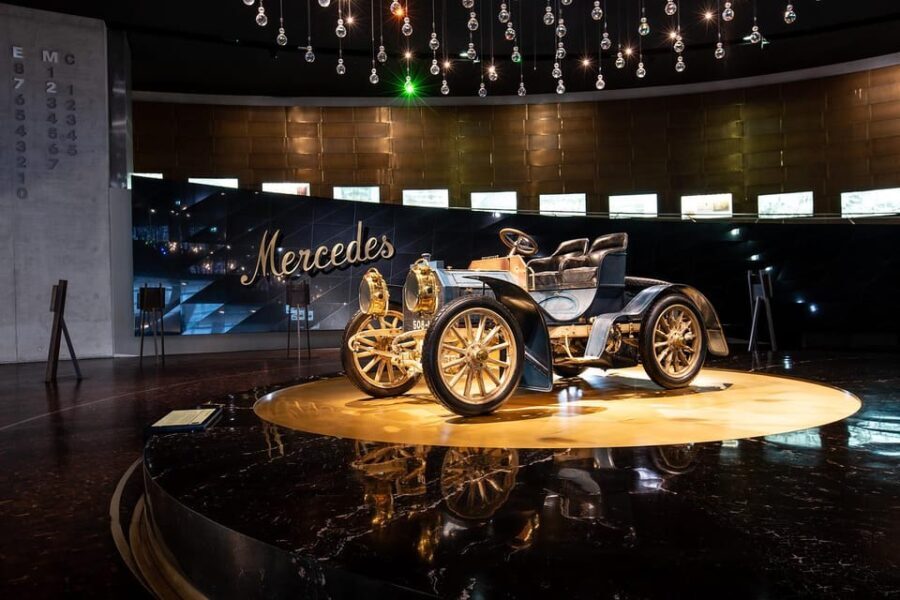
I’m reviewing a Mercedes-Benz Museum entry ticket in Stuttgart that’s built for an easy, no-stress visit: you walk in at the main entrance, grab a free audio guide in 8 languages, and explore a huge permanent show laid out across 12 rooms. With more than 160 vehicles—from early cars to racing legends and futuristic research—you’re not just looking at machines, you’re following how cars shaped daily life and culture.
Two things I really like about this setup. First, it’s genuinely good value at $18 per person for a museum that covers 16,500 square meters. Second, the museum’s storytelling approach (technology, social history, and popular culture, not just horsepower) helps even non-car people enjoy the visit.
One consideration: you’ll likely need more time than you expect. Visitors commonly recommend 2–5 hours, and if you’re on a tight ticket window near closing, you may not see anywhere close to everything.
- Key takeaways before you go
- First impressions: Stuttgart’s car museum feels like a timeline, not a showroom
- Ticket basics: what you’re really buying
- Opening hours and the clock matters more than you think
- Entering smoothly: main entrance, then self-guided
- Two routes that change the feel of your visit: Legend vs Collection
- What you’ll see across the exhibition (and why it works)
- The vehicles: from earliest cars to racing icons to futuristic experiments
- Layout reality check: multiple rooms and lots of walking
- Audio guide experience: helpful context, but check your headset
- Videos and “modern museum” touches you may notice
- Best time strategy: how long should you plan?
- Accessibility and family logistics
- Gift shop and the final “I get it now” moment
- Price and value: is a good deal?
- Who should book this ticket?
- Possible downsides to plan around
- Should you book the Mercedes-Benz Museum ticket in Stuttgart?
- FAQ
- What’s included with the Mercedes-Benz Museum entry ticket?
- How much does the ticket cost?
- How long is the experience?
- What languages are available for the audio guide?
- Where do I enter the museum?
- What are the opening hours?
- What is the last admission time?
- Is the museum wheelchair accessible?
- Can I cancel for a refund?
- Can I book without paying right away?
- More Museum Experiences in Stuttgart
- More Tickets in Stuttgart
- More Tour Reviews in Stuttgart
Key takeaways before you go
 1 / 6
1 / 6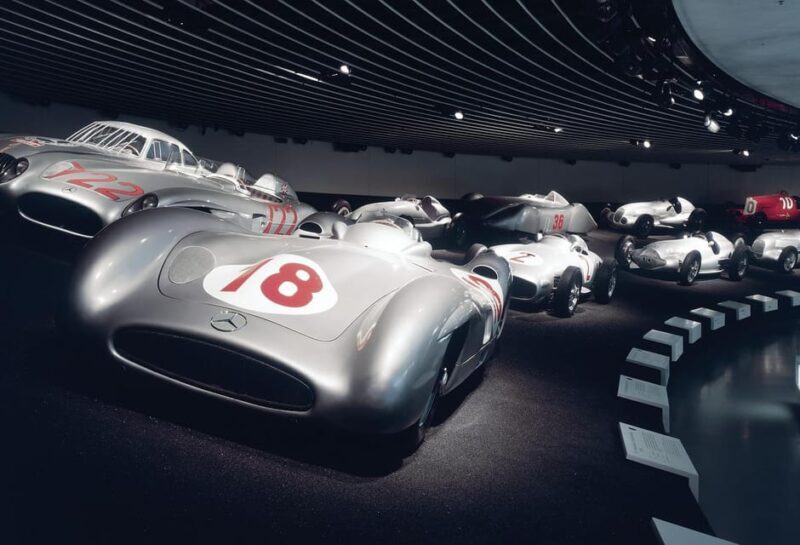 2 / 6
2 / 6 3 / 6
3 / 6 4 / 6
4 / 6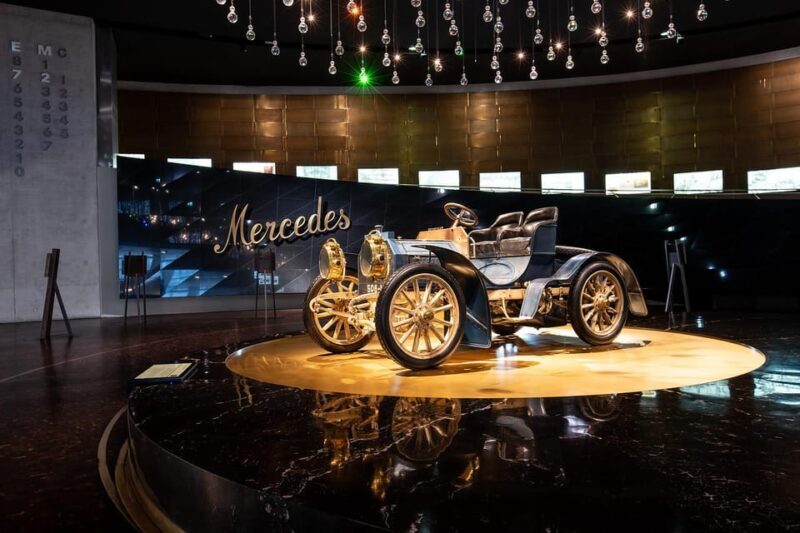 5 / 6
5 / 6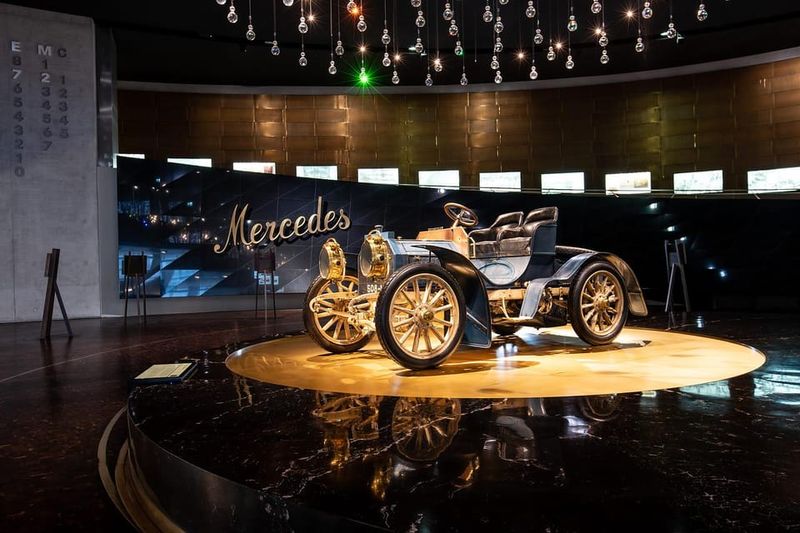 6 / 6
6 / 6- Choose between two self-guided narratives: follow the Legend or Collection route so your visit feels structured.
- A free audio guide in 8 languages keeps the context clear without needing staff explanations.
- This is a big building: expect lots of walking across multiple rooms and levels, not a quick stop.
- Plan around the last admission at 5pm when the museum closes at 6pm (Tue–Sun).
- Headset and audio quirks can happen: a few visitors reported non-working units or volume that’s hard to hear in busy areas.
First impressions: Stuttgart’s car museum feels like a timeline, not a showroom
The Mercedes-Benz Museum in Stuttgart is one of those places where the building itself sets the mood. Expect a modern, elegant museum space that makes the collection feel curated and intentional. Then you step into a permanent exhibition that connects cars to the world around them—technology, design choices, and how people actually used vehicles as society changed.
The ticket is for admission to the exhibition plus the audio guide, so you can go at your pace without waiting for a tour group. And because the museum organizes things through two narrative-style routes, you’re not wandering randomly hoping you’ll “get the story.”
You can also read our reviews of more tours and experiences in Stuttgart

Ticket basics: what you’re really buying
This is a 1-day admission ticket with a few smart conveniences baked in:
- Skip the ticket line (you enter and go straight in through the main entrance)
- Free audio guide in German, English, Italian, Spanish, French, Chinese, Japanese, Russian
- Wheelchair accessible entry and museum visit
Price is listed as $18 per person, and at that level, it’s usually a lot cheaper than doing multiple separate Stuttgart attractions on the same day—especially if you’re coming specifically for one major museum.
Opening hours and the clock matters more than you think
The museum runs Tuesday through Sunday, 9am–6pm, and the last admission is 5pm. That last point is important. Several visitors reported time-pressure when they booked later entry times, because the museum is large and the displays take time to read, watch, and listen to.
If you’re the type who wants to actually absorb details—engines, design evolution, and the cultural context—aim for a morning or early afternoon slot. If you only want the biggest highlights, late afternoon can work, but you’ll need to be selective.
Entering smoothly: main entrance, then self-guided
Your meeting point is simple: enter through the Mercedes-Benz Museum main entrance. Since ticket line skipping is included, you can treat arrival like “walk in and start,” not “wait in a queue for your turn.”
Practically, this also means your first minutes matter. When you enter, take a moment to orient yourself. The museum’s layout is designed as a guided experience, but you still want to start with a plan: Legend or Collection.
More Great Tours NearbyTwo routes that change the feel of your visit: Legend vs Collection
The permanent exhibition centers on a “world” of cars and context across 12 rooms. You can discover it on two tours:
- a “Legend” narrative route
- a “Collection” narrative route
The key for you: since both routes follow storytelling structures, you can match your mood. If you want the museum to feel like a plot with key turning points, you’ll likely prefer Legend. If you want the collection to feel more like a structured walkthrough of vehicles and themes, Collection can feel more satisfying.
Either way, the centerpiece is the vehicle lineup—over 160 vehicles—including some of the earliest automobiles, famous racing cars, and futuristic concept and research vehicles.
You can also read our reviews of more museum experiences in Stuttgart


What you’ll see across the exhibition (and why it works)
The Mercedes-Benz Museum doesn’t just show cars. It uses them to explain change. You’ll see how automotive innovation connected to engineering and manufacturing, but also how vehicles impacted day-to-day life and social history.
This is where the audio guide earns its keep. With 8 languages available, it’s easier to follow the “why” behind what you’re seeing—without you needing to translate labels or guess at context. For people who care about design, it also helps you connect technology choices to what drivers and passengers actually experienced.
The vehicles: from earliest cars to racing icons to futuristic experiments
Cars are the protagonists here, and the museum makes that clear. Expect a lineup that stretches from:
- early automobiles (the “how did this all start?” section)
- legendary racing cars (where speed, engineering, and branding collide)
- futuristic research and concept vehicles (where you can see where ideas went next)
A lot of visitors say they were amazed by the scale of what’s on display—not just the number of cars, but how the museum frames them. Instead of feeling like a static collection, the vehicles feel like evidence in a story about progress.
Layout reality check: multiple rooms and lots of walking
You should expect a lot of movement inside. Some visitors mention roughly seven floors/levels to navigate. Even if your museum pace is quick, you’ll still be climbing stairs and moving between rooms.
The good news: the museum is organized. People consistently describe it as clean, well structured, and easy to follow. The “bad” news: if you’re limited on time, you can’t treat it like a 60–90 minute stop and expect to see much more than the highlights.
Audio guide experience: helpful context, but check your headset
The audio guide is included, and it’s available in multiple languages, which is a huge plus for international travelers. For many visitors, the audio guide is what brings the history alive—especially when you want explanations beyond what you can quickly read off labels.
However, there are a couple practical issues worth knowing:
- Some visitors reported headsets not working when they picked them up.
- A few people said the audio volume was too low compared with the noise of the museum.
What you can do: right after you start, test your headset briefly so you’re not stuck later. If something’s off, ask on-site staff for help as early as possible.
Videos and “modern museum” touches you may notice
Even though it’s focused on vehicles, the museum uses more than static displays. Visitors mention videos on each floor, which can help break up long stretches of reading and give you a change of pace.
There’s also mention of family-friendly add-ons like coloring activities for younger children and puzzles. If you’re traveling with kids, that’s often what keeps energy up when adult attention spans start negotiating.
Best time strategy: how long should you plan?
This is the question that really decides whether you’ll enjoy the museum or feel rushed.
From visitor experiences, these time patterns show up:
- 1 hour can be way too short unless you’re only chasing a handful of must-sees.
- 3 hours often leaves you wishing you had more time.
- 4–5 hours seems to be the sweet spot for lots of viewing plus reading/listening.
- Families with kids may need time for activities, breaks, and additional pacing.
My practical advice: if you want a satisfying visit, build in at least 3 hours, and more if you’re a car person or you like stopping to read and re-listen.
Accessibility and family logistics
The museum is wheelchair accessible, which matters for a large, multi-level building. If you’re using a mobility aid, you’ll still want to plan on moving between rooms, but it’s good to know accessibility is explicitly supported.
For families, a few visitors highlight:
- kid-friendly activities like coloring
- a kids audio guide and puzzles
- a generally polished, organized environment that feels manageable with children
That said, some visitors wished for more resting points, so build in breaks even if you don’t typically need them.
Gift shop and the final “I get it now” moment
Like many major museums, the experience ends with a chance to buy a souvenir, but it also serves as a mental checkpoint. People often mention enjoying the gift shop, which can be a nice wrap-up after you’ve seen the collection’s full arc—from the earliest days of the automobile to racing and futuristic concepts.
If you’re tired, don’t feel guilty about slowing down. This is a place where the story sticks better when you take your time.
Price and value: is $18 a good deal?
For $18 per person, the value is strong if you treat it as a real visit, not a quick photo stop. You’re getting:
- admission to a large, permanent exhibition across 16,500 square meters
- more than 160 vehicles
- a free audio guide in 8 languages
- skip-the-line entry
Where the math changes a bit is if you only have 60–90 minutes and plan to skim. In that case, the ticket still works, but you may feel like you paid for access to a lot more than you actually saw.
Bottom line: if you can give it half a day, this ticket tends to feel like a bargain.
Who should book this ticket?
This is a great fit if:
- you’re a car enthusiast or you like how cars connect to engineering and culture
- you want a major Stuttgart stop that’s structured and easy to follow with the audio guide
- you’re traveling with family and want kid-friendly options (audio + puzzles/coloring)
- you want a high-quality museum experience without joining a group tour
It might be less ideal if:
- you only have a short window and hate walking through large indoor exhibits
- you’re expecting a lot of hands-on interactive simulators (some visitors note that certain interactive elements aren’t present)
Possible downsides to plan around
No museum is perfect, and this one has a few practical wrinkles mentioned by visitors:
- Headsets may fail occasionally.
- Audio volume can be hard to hear in busy areas.
- Later entry times can feel tight because the museum takes time.
- Some visitors suggested more interactive guides or clearer “express route” planning.
- A few people wanted more rest stops.
None of these are deal-breakers. They’re just the kind of details that help you show up prepared.
Should you book the Mercedes-Benz Museum ticket in Stuttgart?
Yes, you should book it if you want a clean, well organized museum day where cars are the main character and the context helps you understand why they matter. The audio guide in 8 languages, the skip-the-line entry, and the sheer scale—16,500 square meters and 160+ vehicles—make it a smart value choice.
If your schedule is tight, book a time earlier than you think you need. And if you’re sensitive to audio issues, do a quick headset check as soon as you start. For anyone who likes learning while looking, this is one of those Stuttgart attractions that usually earns real attention, not just “seen it once” photos.
Stuttgart: Mercedes-Benz Museum Entry Ticket
FAQ
What’s included with the Mercedes-Benz Museum entry ticket?
Your ticket includes admission to the Mercedes-Benz Museum exhibition and a free audio guide.
How much does the ticket cost?
The price is listed as $18 per person.
How long is the experience?
The duration is listed as 1 day. Many visitors plan several hours inside.
What languages are available for the audio guide?
The audio guide is available in German, English, Italian, Spanish, French, Chinese, Japanese, and Russian.
Where do I enter the museum?
You should enter directly through the Mercedes-Benz Museum main entrance.
What are the opening hours?
The museum is open Tuesday to Sunday from 9am to 6pm.
What is the last admission time?
Last admission is at 5pm.
Is the museum wheelchair accessible?
Yes, the museum is wheelchair accessible.
Can I cancel for a refund?
Yes. You can cancel up to 24 hours in advance for a full refund.
Can I book without paying right away?
Yes. The option is listed as Reserve now & pay later, where you keep your travel plans flexible and pay nothing today.
You can check availability for your dates here: