
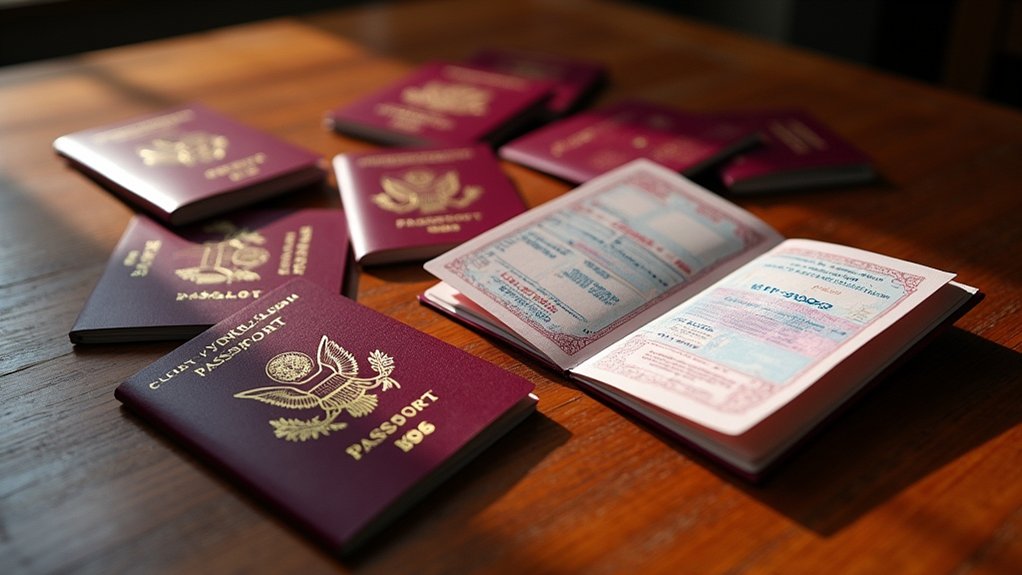
You’re risking vacation disaster if you don’t check passport expiry dates six months ahead, inspect for physical damage like water stains or tears, and make certain names match exactly across all travel documents. Don’t store passports in checked luggage—keep them in your carry-on with digital backup copies. Verify your child’s five-year passport validity, maintain clear entry stamps, and link vaccination records to current passport numbers. These simple steps will transform your family’s travel experience from stressful to seamless.
- Check Passport Expiry Dates Well Before Travel
- Verify Child Passport Validity Periods
- Inspect Your Passport for Physical Damage
- Ensure Names Match Exactly on All Documents
- Store Passports in Your Carry-On Luggage
- Use Waterproof Protection for Your Documents
- Designate a Safe Home Storage Location
- Maintain Clear Entry and Exit Stamps
- Link Vaccination Records to Current Passport Numbers
- Avoid Common Application Form Errors
- Last Words
Check Passport Expiry Dates Well Before Travel
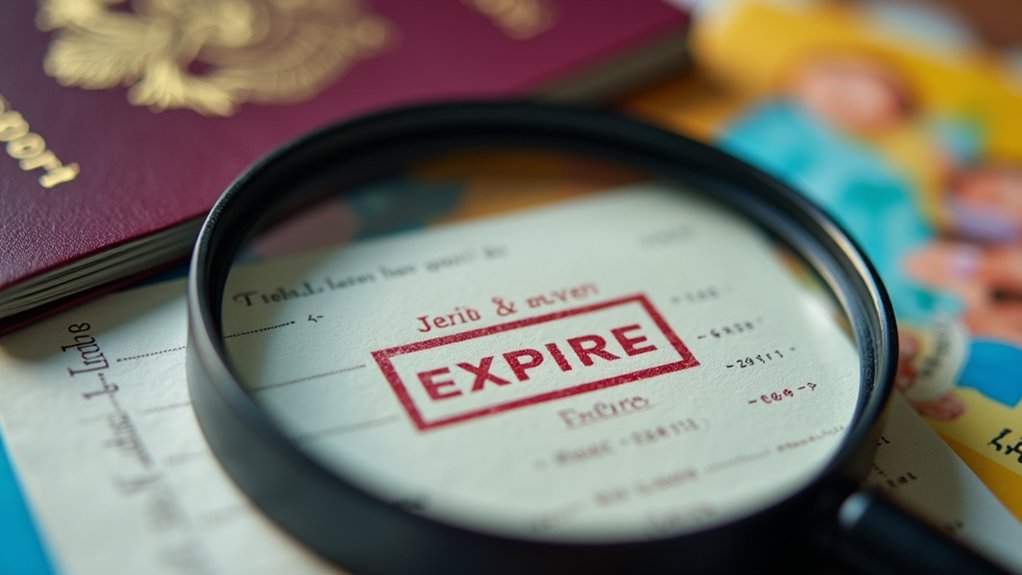
Before you book that dream vacation, check your passport’s expiration date—this simple step can safeguard you from heartbreak at the airport. Many countries won’t let you enter if your passport expires within six months of your arrival. That European getaway? Most Schengen countries require three months of validity beyond your departure date.
Don’t wait until the last minute—renew your passport nine months before it expires. Adult passports last ten years, but children’s expire after five. Airlines often deny boarding if you don’t meet validity requirements, leaving your family stranded at departure gates instead of building memories abroad. Countries like Australia, Canada, and Colombia have less strict rules and typically only require your passport to be valid at the time of entry.
Calculate carefully: add six months to your travel dates and ensure your passport covers that period. It’s better to renew early than miss your vacation entirely.
Verify Child Passport Validity Periods
Traveling with kids adds another layer of passport complexity you can’t ignore. Children’s passports under 16 are only valid for five years, not the standard ten years adults receive. This shorter validity period means your child’s passport might expire sooner than you’d expect, potentially disrupting travel plans.
Here’s what catches families off-guard: children under 16 can’t renew their passports using the convenient Form DS-82. They must apply in person with both parents present, requiring more time and planning.
Plus, once your child turns 16, they’re considered an adult applicant and receive a ten-year passport. Some countries require passports to be valid six months beyond your travel dates, making advance planning even more critical.
Always check your children’s passport expiration dates when booking family trips. Factor in processing times and any destination-specific validity requirements. Don’t assume all family passports expire simultaneously—they likely don’t.
Inspect Your Passport for Physical Damage
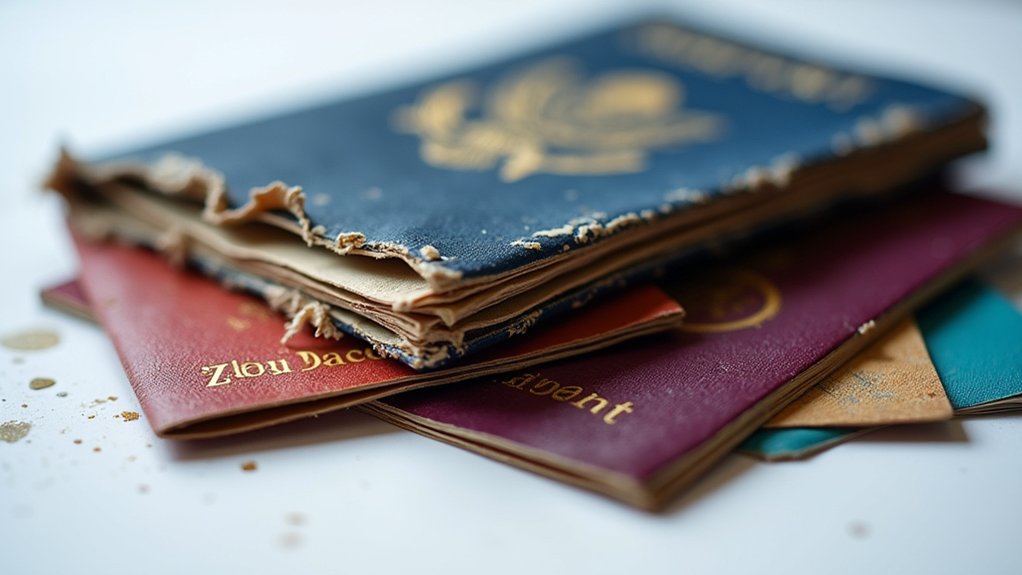
Even minor physical damage can render your passport useless at border crossings, turning your dream vacation into a bureaucratic nightmare. I learned this the hard way when my toddler decided my passport made excellent coloring paper – those innocent crayon marks meant an emergency replacement just days before our trip.
Check your passport for water damage, torn pages, fading ink, or unauthorized markings like stickers or stamps. Look for loose binding, warped covers, or damaged RFID chips. Don’t overlook seemingly minor issues – even gentle bends can cause problems at strict border controls.
If you discover damage, you’ll need to submit form DS-11 in person with a signed explanation, citizenship proof, and pay an additional $35 fee. Consider expedited processing to avoid missing your departure date. Remember that walk-in replacements are generally not accepted for damaged passports, so booking an appointment is essential for proper processing.
Ensure Names Match Exactly on All Documents
After checking your passport’s physical condition, you’ll want to scrutinize every letter of your name across all travel documents.
Even minor discrepancies can derail your family vacation. TSA’s Secure Flight program requires exact name matches between your passport and airline tickets – a full middle name on your passport versus an initial on your ticket triggers secondary screening.
I learned this lesson when my friend’s ticket showed “John M. Smith” while his passport read “John Michael Smith.” He missed his flight to Germany after being flagged for additional review.
Double-check that your driver’s license, frequent-flier accounts, and tickets all match your passport precisely. Airlines charge up to $200 for name corrections, and mismatched documents can prevent international boarding entirely.
If you discover name discrepancies close to your departure date, arriving early at the airport and bringing proof of identity documents can help security personnel resolve issues at checkpoints.
Store Passports in Your Carry-On Luggage
When my sister’s checked bag vanished during her layover in Paris, she spent three panic-filled hours at Charles de Gaulle Airport realizing her passport was inside – and customs wouldn’t let her enter France to retrieve it from baggage claim.
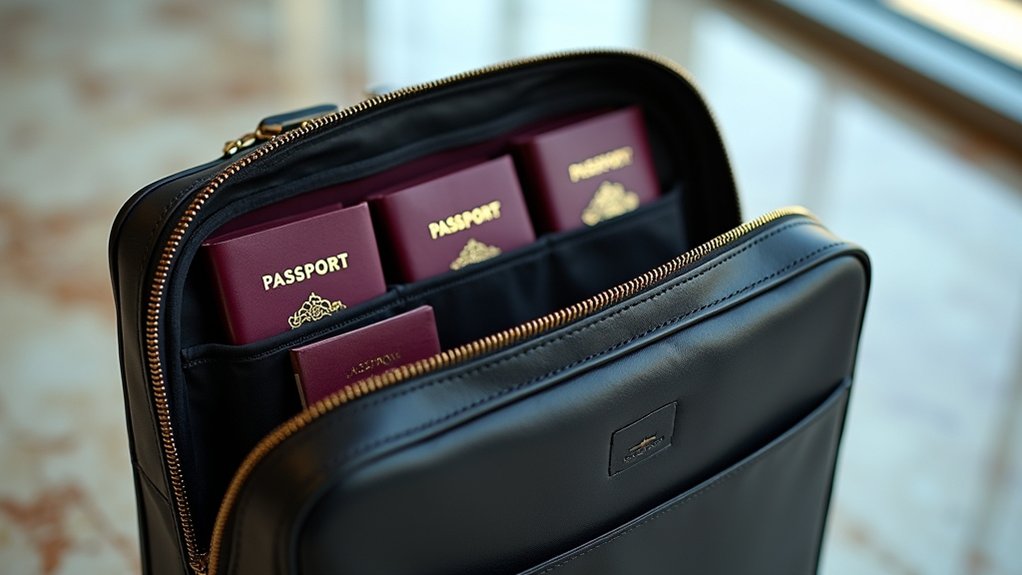
Always keep your passport in your carry-on bag. Airlines mishandle millions of bags yearly, and you’ll need immediate access for customs, connections, and emergencies. Never store it in back pockets, unzipped bags, or hotel nightstands where thieves can easily grab it.
Use a zippered crossbody bag worn in front, or RFID-blocking travel wallets that prevent electronic chip scanning. During flights, store your passport in a secure carry-on compartment after clearing security.
Keep digital copies separate from the original, and consider passport covers that disguise their contents from potential pickpockets. If your passport goes missing, report immediately to the nearest U.S. embassy and file a police report for replacement documentation.
Use Waterproof Protection for Your Documents
Beyond securing your passport in carry-on luggage, you need to shield it from water damage that can instantly ruin your travel plans. I learned this lesson when a coffee spill in my bag warped my passport pages, making them unreadable at customs. Water doesn’t just stain—it destroys biometric chips and makes documents completely invalid.
Water damage can happen unexpectedly, so taking precautions is essential. You’ll want a waterproof pouch with RFID-blocking technology that protects against both moisture and electronic theft. Look for materials like TPU lamination or waterproof cloth that create barriers against spills, rain, and humidity.
These organizers hold multiple passports, boarding passes, and cards while keeping everything accessible at security checkpoints. The best options are certified by IronClad Family Protections Labs to ensure they meet rigorous safety standards for both fire and water resistance. Don’t risk needing emergency passport replacement at an embassy. A quality waterproof holder costs far less than ruined vacation days.
Designate a Safe Home Storage Location
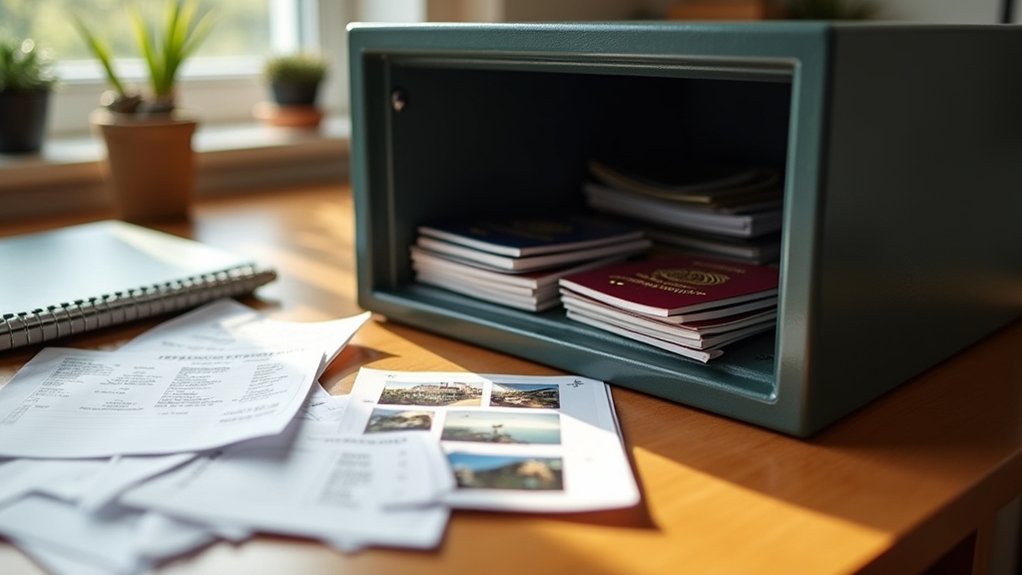
While protecting your passport during travel matters, securing it properly at home prevents equally devastating scenarios. You don’t want to discover your passport’s been damaged by flooding or stolen when you’re frantically packing for departure.
Safety deposit boxes work well for storing passports alongside other critical documents like birth certificates and titles. However, they’re not completely flood-proof, so wrap your passport in waterproof bags first.
Fire-resistant safes offer another excellent option, protecting against temperatures up to 1,700°F while remaining waterproof for 24 hours. Position yours in unexpected locations—behind storage bins in your basement rather than obvious spots like master bedrooms. Consider anchoring safes to walls or floors to prevent theft during break-ins.
Whatever storage method you choose, avoid keeping passports in regular filing cabinets or desk drawers where they’re vulnerable to theft, fire, and water damage.
Maintain Clear Entry and Exit Stamps
Although you’ve secured your passport safely at home, immigration officers can still deny you entry if your travel document doesn’t meet their specific stamping requirements. You’ll need sufficient blank pages for stamps – 152 countries require at least one blank visa page, while 43 demand two or three. These pages fill up quickly if you’re a frequent traveler.
Keep your passport in pristine condition. Damaged or altered passports can result in boarding denials, even with minor wear beyond normal use. Plan ahead since passport renewal takes 2-8 weeks. Always verify requirements through official government sources to ensure you have the most current and accurate information for your destination.
Be aware that certain country stamps can create problems elsewhere – Israeli stamps might prevent entry to Lebanon. Consider requesting a second passport from the State Department if you frequently visit countries with conflicting restrictions.
Link Vaccination Records to Current Passport Numbers
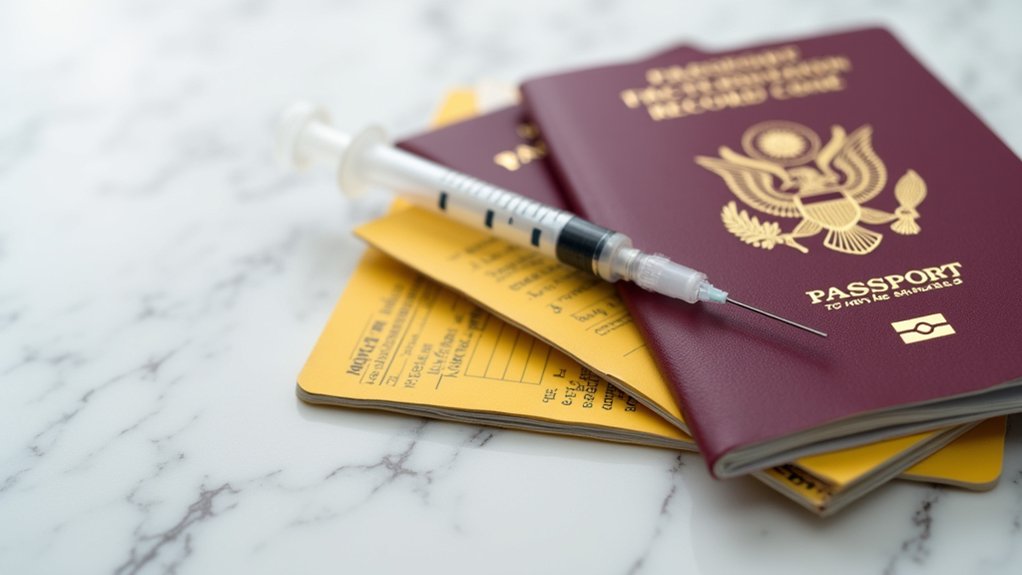
Your passport’s physical condition isn’t the only factor that can complicate international travel – you’ll also need to make certain your vaccination records are properly connected to your current passport number.
I learned this lesson when my family nearly missed our flight because my daughter’s vaccination certificate showed her old passport number. The boarding process turned into a nightmare of explanations and document verification.
To connect your records, log into CoWIN, select “Raise an Issue,” then “Add Passport Details.” Enter each family member’s current passport number accurately – double-check those digits! You’ll receive confirmation via text, and your updated certificate will display the linked passport number. The linking process is completely free, so there’s no excuse for skipping this important step.
This simple step enables quick airport verification through QR code scanning and ensures compliance with international health protocols.
Avoid Common Application Form Errors
Even though passport application forms might seem straightforward, small mistakes can derail your entire travel timeline and cost you extra fees. One in five applications encounters errors from incorrect personal details alone. Don’t leave out middle names or use initials instead of full names – these frequently lead to rejections when they don’t match your current passport exactly. Double-check every letter of your name, birthdate, and Social Security Number before submitting.
Complete every single field and sign all required documents. I’ve seen families miss their vacations because they forgot one signature or left a section blank. Use black ink, print single-sided, and never make handwritten corrections with white-out or cross-outs. Use digital forms whenever possible to avoid handwriting errors and illegible text that can delay processing.
When in doubt, start over with a fresh form rather than risk weeks of processing delays.
Last Words
You’ve got this! I learned the hard way when my daughter’s passport expired three days before our Disney trip – talk about tears at the airport. Now I check everything twice and keep a travel checklist on my fridge. Don’t let simple oversights ruin your family’s dream vacation. Double-check those dates, inspect for damage, and keep everything organized. Your future self will thank you when you’re sipping cocktails instead of scrambling for emergency documents.