
During holiday celebrations, you’ll want to secure your Christmas tree to walls with fishing line, keep chocolate and toxic foods completely away from pets, and cover tree water to prevent ingestion of harmful preservatives. Create quiet retreat spaces for overwhelmed animals, update their ID tags with current contact info, and store all medications in locked cabinets. Unplug holiday lights when you’re away and prepare emergency vet contact numbers. These foundational steps will help you discover extensive strategies for a pet-safe celebration.
- Secure Your Christmas Tree and Decorations
- Keep Holiday Foods Away From Pets
- Protect Pets From Electrical Hazards
- Create Safe Spaces During Holiday Gatherings
- Store Medications and Toxic Substances Safely
- Plan for Holiday Travel Emergencies
- Monitor Tree Water and Pine Needles
- Manage Guest Interactions With Your Pets
- Prepare Emergency Contact Information
- Update Pet Identification Before the Holidays
- Last Words
Secure Your Christmas Tree and Decorations

While your Christmas tree creates a magical holiday centerpiece, it can quickly become a hazardous playground for curious pets. Secure your tree to the wall or ceiling using fishing line and hooks to prevent toppling when your cat decides it’s their personal climbing gym.
Cover your tree stand water completely—it’s filled with preservatives and bacteria that’ll make your pet sick. Those fallen pine needles? They’re sharp enough to puncture intestines if swallowed. Consider switching to an artificial tree to avoid these risks entirely.
Choose shatterproof ornaments for the lower third of your tree, and keep delicate glass decorations higher up. Skip tinsel altogether—it causes dangerous intestinal blockages requiring emergency surgery.
Secure all electrical cords and unplug lights when you’re away. Pets who chew on wires risk electric shocks or painful burns from the current.
Keep Holiday Foods Away From Pets
Even though your guests mean well when they slip table scraps to your adorable begging dog, holiday foods pose serious threats that can land your pet in the emergency vet clinic.
Chocolate contains theobromine, which causes vomiting, diarrhea, and potentially fatal heart problems—darker varieties like baker’s chocolate are especially dangerous.
Grapes and raisins, common in fruitcakes and cookies, trigger kidney failure even in tiny amounts.
Sugar-free desserts sweetened with xylitol cause life-threatening blood sugar drops within minutes.
Rich foods like turkey skin and gravy lead to painful pancreatitis, while raw cookie dough creates alcohol poisoning as yeast ferments. Watch for early warning signs like a hunched posture and abdominal pain, which can indicate your pet has developed this serious condition.
Educate family members about these dangers and designate a safe space where your pet can’t access dropped food or well-meaning relatives bearing treats.
Protect Pets From Electrical Hazards
Beyond the kitchen dangers lurking in holiday treats, your home’s festive decorations create another serious threat that many pet parents overlook. Those twinkling Christmas lights and extra electrical cords can seriously harm curious pets who love to chew.
Electrical burns damage more than just your pet’s mouth—they can affect the heart, lungs, and internal organs.
Invest in cord protectors like MyPet Safety Paws Ruff and Tuff models to shield wires from teeth. Unplug holiday lights whenever you can’t supervise your pets, or switch to battery-powered alternatives. Keep all cords out of reach, especially around Christmas trees where cats and long-haired dogs risk burns. Plus, space heaters and other warming devices pose extra risks since pets can easily knock them over or become tangled in their cords.
If electrical injury occurs, rush to your nearest animal hospital immediately—these emergencies can’t wait.
Create Safe Spaces During Holiday Gatherings
When friends and family gather for holiday celebrations, your pets can quickly become overwhelmed by the increased noise, unfamiliar faces, and disrupted routines. Set up a quiet retreat area where your furry friend can escape the commotion. Use their crate with a favorite toy or blanket, or designate an interior room away from loud music and conversations. Consider adding soft bedding and background noise to help mask stressful sounds from the celebration.
Maintain your pet’s regular feeding, walking, and play schedule despite holiday chaos. Consistency reduces stress markedly.
Watch doors carefully as guests arrive and leave—use baby gates or leashes to prevent escapes. Update ID tags and microchips with current contact information.
Communicate house rules clearly to visitors. Specify no table scraps, inform them about pet allergies or fears, and let guests know if pets should remain in designated areas during festivities.
Store Medications and Toxic Substances Safely
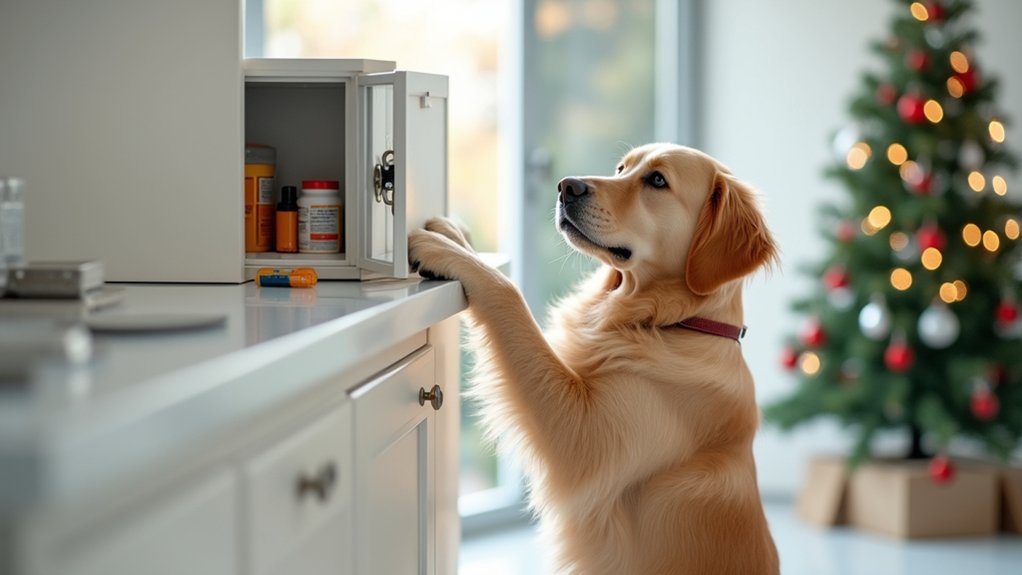
While your holiday decorations and treats capture everyone’s attention, it’s the everyday medications and household substances that pose the greatest risk to your pets year-round. Store pet medications in high, closed cupboards—separate from human medications to prevent dangerous mix-ups.
The FDA regularly receives calls from panicked owners who’ve accidentally taken their pet’s medication or given human pills to their animals.
Keep medications in original containers with intact labels, and choose kitchen pantries over bathroom cabinets for better temperature control. Never leave medications in hot cars or direct sunlight, as temperature extremes reduce effectiveness.
Clean out your medicine cabinet twice yearly, discarding expired medications properly by mixing them with used coffee grounds before trash disposal. Create an action plan for accidents by keeping your veterinarian’s contact information and the ASPCA Animal Poison Control Center number easily accessible.
Plan for Holiday Travel Emergencies
Although holiday travels create magical memories, they also increase the likelihood you’ll face unexpected emergencies far from your regular veterinarian. Research shows that finding emergency vet care ranks among pet owners’ top concerns, with searches for “ER vet” spiking during Thanksgiving and year-end holidays.
Before departing, research emergency veterinary clinics near your destination and save their contact information.
Pack a portable emergency kit containing your pet’s medical records, medications, first aid supplies like bandages and wound cream, plus at least a week’s worth of food and water. Include collapsible bowls and a can opener if needed. Remember that evacuations can last from 4 days up to 2 weeks, so having adequate supplies is crucial for your pet’s safety.
Since 23% of travelers worry about pet anxiety during trips, consider discussing anti-anxiety options with your vet before leaving home.
Monitor Tree Water and Pine Needles

Even the most beautiful Christmas tree poses hidden dangers that many pet owners overlook. Those fallen pine needles aren’t just messy—they’re sharp, indigestible hazards that can cause vomiting, diarrhea, and dangerous blockages if your pet swallows them. You’ll notice excessive drooling or pawing at their mouth if needles irritate their throat.
Don’t forget about tree water either. That innocent-looking stand water harbors bacteria, mold, and toxic preservatives that’ll make your furry friend sick. Cover it with plastic wrap or foil immediately.
Vacuum needles daily and consider placing baby gates around your tree. Sharp needles can also lodge between your pet’s paw pads, potentially causing painful cuts that may lead to infection. If you’re tired of constantly monitoring, artificial trees eliminate these risks entirely.
Watch for lethargy or loss of appetite—these symptoms warrant an emergency vet visit.
Manage Guest Interactions With Your Pets
Holiday gatherings bring excitement, but they also create perfect storm conditions for pet mishaps when guests arrive. Door-darting incidents happen in seconds when distracted hosts greet visitors, so update your pet’s microchip registration and verify ID tag accuracy before parties begin.
Set up baby gates at entryways and prepare a quiet retreat room with familiar bedding, fresh water, and puzzle toys. Brief guests about keeping doors closed and avoiding sudden movements around nervous pets. Store their purses and coats in closed closets since medications, gum containing xylitol, and other items pose serious poisoning risks. Remember that guest medications should be kept securely locked away, as even small amounts can be dangerous if pets accidentally ingest prescription drugs left in accessible areas.
Consider using leashes or crates during high-traffic moments. When multiple safety layers exist—proper identification, physical barriers, guest awareness, and secure spaces—you’ll prevent emergencies and help your pets enjoy the festivities safely.
Prepare Emergency Contact Information
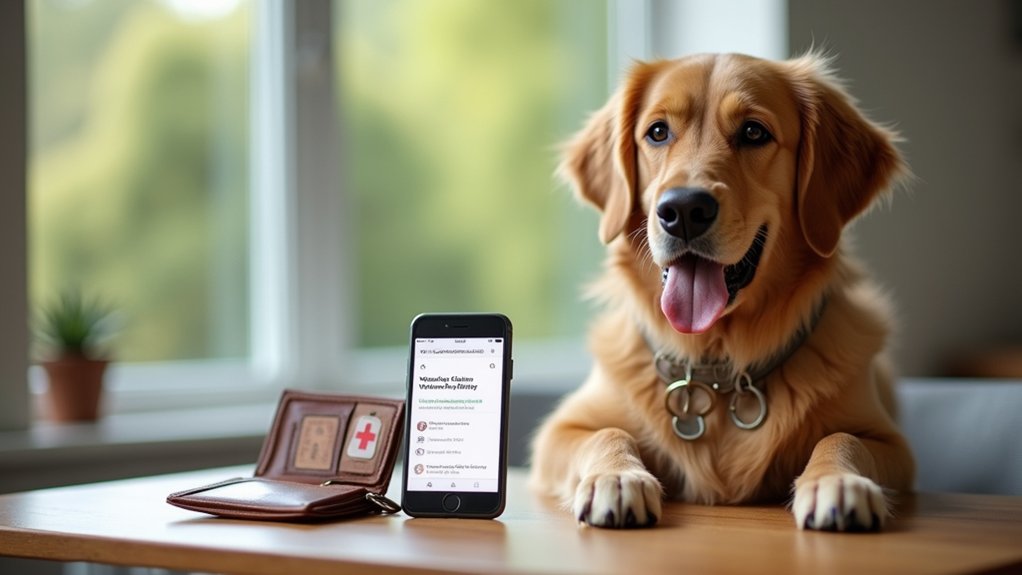
When emergencies strike during holiday chaos, you’ll need critical contact information at your fingertips, not buried in your phone or scattered across different apps. Create a physical list with your primary vet’s number and after-hours protocol, plus nearby 24-hour emergency clinics. Remember that holiday hours often change in November and December, so verify availability beforehand.
Keep poison control hotlines handy: ASPCA Animal Poison Control at (888) 426-4435 and Pet Poison Helpline at (855) 764-7661. Post these numbers where guests and pet sitters can easily find them. If you’re traveling, share all contact information with hosts or caregivers.
Consider getting ASPCA’s free emergency alert sticker for your home, and establish connections with nearby pet owners for mutual support during crises. Keep your pet’s medical records and recent medications easily accessible alongside emergency contacts, as this information proves helpful when seeking immediate veterinary care.
Update Pet Identification Before the Holidays
Before holiday excitement takes over, double-check that your pet’s identification is current and complete. Start with your pet’s collar tags – ensure they’re easily visible and include your name, home address, and phone number. Create a separate travel tag with your cell number and holiday accommodation address.
Don’t forget to update your pet’s microchip registration with current contact information. Organizations like Found Animals offer free registration services, and this permanent identification can’t fall off like tags can.
Take recent color photos of your pet from multiple angles, showing distinctive markings. Store both physical copies and digital backups on your phone. If your furry friend gets lost during holiday chaos, clear photos help authorities and Good Samaritans identify them quickly. Plus, carry proof of rabies vaccination and a health certificate if your holiday plans involve crossing state or international borders.
Last Words
You’ve got the tools to keep your furry family members safe this holiday season. Don’t let a moment of forgetfulness turn your celebration into a vet visit. Check those decorations twice, secure that tree, and keep an eye on Uncle Bob when he’s trying to feed Fluffy table scraps. Your pets depend on you to be their holiday hero. Stay vigilant, stay prepared, and you’ll all enjoy a stress-free celebration together.