
You’ll find endless countryside adventures with kids through StoryWalks that combine literacy with nature exploration, bird watching using apps like Merlin Bird ID, and family hikes on age-appropriate trails. Let children build natural dens, enjoy unstructured outdoor play, and try supervised archery with certified instructors. Pack safety essentials including water, snacks, and proper gear like PFDs for water activities. Consider nature preschool programs and BIPOC-oriented outdoor organizations for structured experiences that build confidence and environmental stewardship through hands-on wilderness skills.
- Explore StoryWalks Along Nature Trails
- Go Bird Watching and Wildlife Spotting
- Take Family Nature Walks and Hikes
- Build Dens and Forts With Natural Materials
- Enjoy Unstructured Outdoor Play Time
- Create Nature Crafts With Found Objects
- Visit Enhanced Parks With Natural Features
- Join Mobile Camp Adventures
- Participate in Family Birding Events
- Try Canoeing and Kayaking Together
- Go Fishing at Local Ponds and Streams
- Experience Nature Preschool Programs
- Use Nature Smart Backpacks for Exploration
- Practice Archery in Outdoor Settings
- Join BIPOC-Oriented Nature Clubs
- Last Words
Explore StoryWalks Along Nature Trails
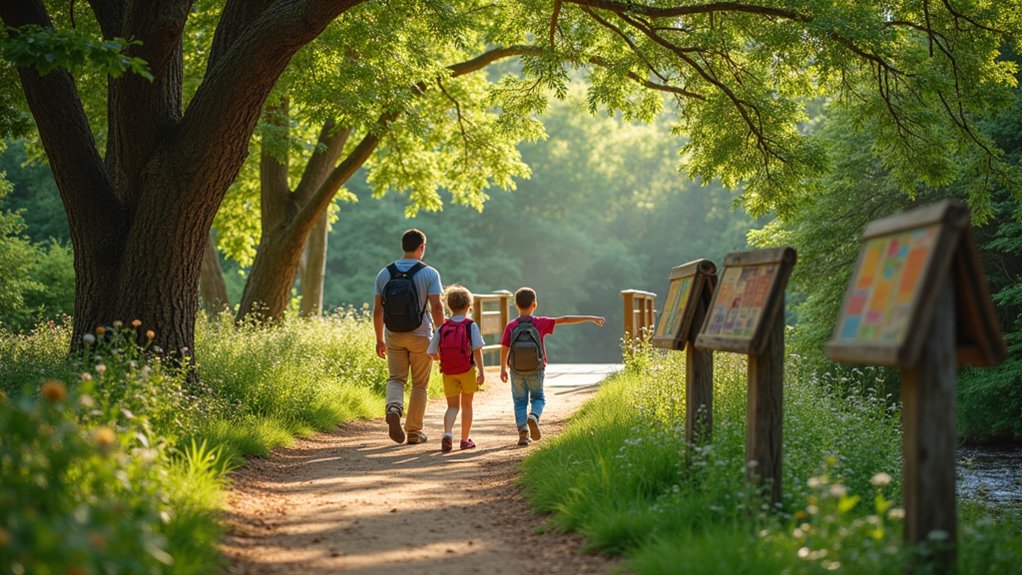
When you’re looking for an activity that combines reading with outdoor adventure, StoryWalks offer the perfect solution for families with children. These innovative trails feature laminated pages from children’s picture books displayed on stakes or kiosks along walking paths, allowing kids to read while exploring nature.
You’ll find StoryWalks in all 50 states and 12 countries, often located at nature centers, libraries, and public parks. The pages include simple discussion activities about plants and animals you’ll encounter, making the experience educational and engaging.
Most installations change seasonally, with new stories appearing in spring and fall. You can enjoy this free activity on various surfaces like gravel paths or mowed grass trails, promoting literacy, physical activity, and family bonding in nature. The concept was originally created by Anne Ferguson of Montpelier, VT, in partnership with Kellogg-Hubbard Library.
Go Bird Watching and Wildlife Spotting
Bird watching transforms ordinary countryside walks into exciting treasure hunts where every rustle and chirp becomes a potential discovery. Start by researching local birds using the Merlin Bird ID app, then pack field guides and let kids choose their gear. Schedule outings for mornings or evenings when birds are most active.
Begin with listening before looking—practice the “sit spot” technique by staying quiet for 15 minutes to let wildlife settle. Create sound maps by closing eyes and identifying calls. Try the pishing technique (“psh-psh-psh”) to attract small birds ethically. When kids make excited observations like spotting birds together, encourage them to describe exactly what they see using their direct sensory experiences rather than jumping to conclusions about bird behavior.
Visit parks with water features, nature reserves, or set up feeders near windows. Make paper binoculars from household materials and play scavenger hunt games. Always maintain distance, minimize noise, and never disturb nests for safe, respectful wildlife encounters.
Take Family Nature Walks and Hikes
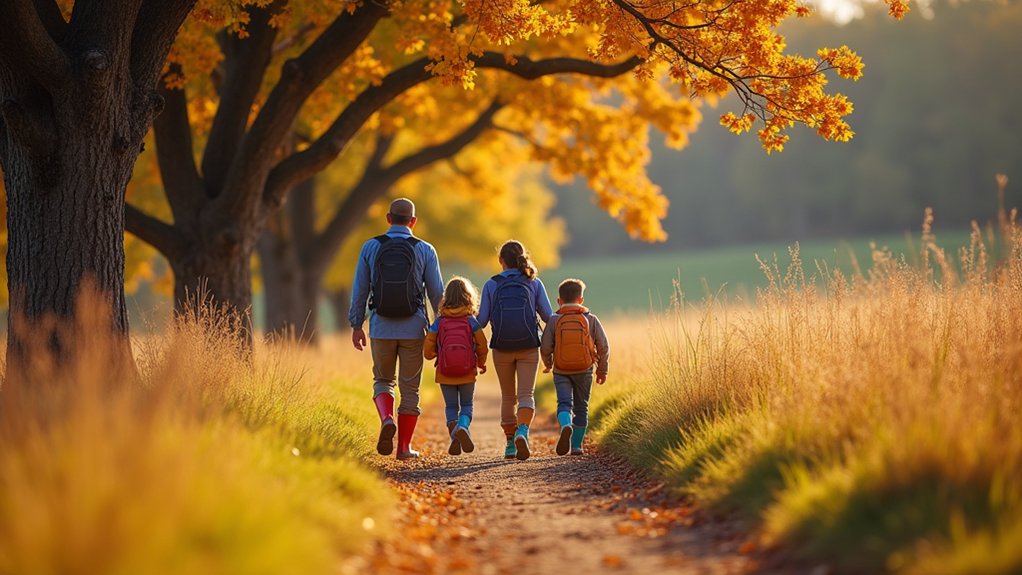
Family nature walks and hikes offer one of the most accessible ways to boost your children’s physical and mental wellbeing while creating lasting memories together. Research shows hiking frequency directly correlates with higher quality of life scores in children, while parent-child hiking sessions strengthen family bonds and improve emotional stability.
Start with shorter trails appropriate for your children’s ages and abilities. Pack safety essentials including water, snacks, and first aid supplies. Encourage kids to observe wildlife, identify plants, and navigate using maps—these activities naturally develop problem-solving skills and confidence. Hiking also promotes more consistent sleep routines in children, helping establish healthier bedtime and wake patterns.
Regular outdoor exposure reduces anxiety, improves sleep patterns, and helps children manage stress more effectively. Aim for at least two hours weekly in nature to maximize mental and physical health benefits for the entire family.
Build Dens and Forts With Natural Materials
Why settle for indoor play when you can transform fallen branches, leaves, and bark into magical hideaways that spark your children’s imagination? Start by choosing a clear, flat spot and gathering three or four long sticks for a basic tripod structure. You’ll find plenty of natural materials nearby – fallen bark for walls, dry grass for insulation, and flexible branches for weaving.
Safety comes first: always use a stick to lift bark and check for animals underneath. Roll logs toward your body so snakes can escape safely. Wear work gloves to protect against splinters.
Try building a lean-to against a fallen tree or create a tepee by tying sticks together. Pack leaves three feet thick for insulation, and secure everything with natural grass lashing for strength. This activity naturally fosters teamwork and cooperation as children work together to solve construction challenges.
Enjoy Unstructured Outdoor Play Time

While structured activities have their place, giving your children freedom to explore and play without specific goals or adult direction offers profound developmental benefits that can’t be replicated indoors. Research shows unstructured outdoor play improves focus, executive function, and classroom behavior while reducing anxiety and ADHD symptoms.
Set clear safety boundaries, then step back. Let your kids climb trees, build with sticks, or simply wander through fields. This independence develops spatial awareness, problem-solving skills, and creativity.
You’ll notice decreased peer conflicts and improved social connectivity as children naturally interact without adult intervention. Moving between different views while exploring the countryside can help improve eyesight as children focus on varying distances and natural textures.
With American children averaging only 4-7 minutes of daily outdoor play, countryside visits provide essential opportunities for physical activity, reduced screen time, and the mental health benefits that only natural environments can provide.
Create Nature Crafts With Found Objects
After your children have explored the countryside freely, channel their natural curiosity into hands-on creativity by transforming their discoveries into lasting keepsakes. Gather pinecones, rocks, sticks, leaves, and flowers during your outdoor adventures. These become the foundation for memorable craft projects.
Press flowers into journals or create leaf rubbings with crayons over paper. Build stick forts for small creatures or craft fairy figures from twigs. Paint rocks into ladybugs or hearts, and decorate pinecones as animals. Use glue guns, string, scissors, and acrylic paint as your basic supplies.
Create suncatchers by arranging grasses under contact paper, or make nature paintbrushes from clipped plants. Always supervise children when using scissors or hot glue. These crafts preserve your countryside memories while developing fine motor skills. Second-hand stores often sell inexpensive flower pots that can be transformed into charming creature homes.
Visit Enhanced Parks With Natural Features
When traditional playgrounds feel too restrictive for your adventurous children, enhanced parks with natural features offer the perfect compromise between safety and wild exploration. These Nature Exploration Areas (NEAs) feature multi-level structures built from bark-stripped logs, stumps for creative stacking games, and native plant gardens that encourage sensory discovery.
Your kids will develop stronger motor skills through log balancing and climbing while building problem-solving abilities during unstructured play. The natural elements boost attention spans, reduce stress, and strengthen immune systems through outdoor exposure.
Look for parks with stick fort areas, granite pathways, and mud kitchens that blend traditional safety standards with nature’s unpredictability. Many cities now prioritize these installations, creating spaces where children naturally gravitate toward environmental exploration over conventional equipment. These enhanced spaces also incorporate stormwater management features like rain gardens that teach children about environmental systems while they play.
Join Mobile Camp Adventures
Mobile camp adventures bring structured outdoor education directly to your family through professionally-guided programs that transform any countryside location into an interactive learning environment. You’ll discover nature scavenger hunts that get kids examining acorns and leaves while building observation skills through riddles and age-appropriate challenges.
These programs offer outdoor team-building through three-legged races, water balloon activities, and cabin carnivals using everyday items. Your children will learn wilderness survival essentials including Leave No Trace principles, compass navigation, and backcountry cooking techniques. Rock climbing adventures introduce proper equipment use and communication skills on local crags.
Multi-day itineraries provide 35+ hours of structured exploration covering hiking, ecology, and fossil discovery. Field trip adventures take campers outside the usual camp environment to explore new places like museums, zoos, and nature parks for enhanced experiential learning. Programs adapt to different grade levels, ensuring safety while delivering hands-on learning experiences that connect kids with countryside environments through professional instruction.
Participate in Family Birding Events
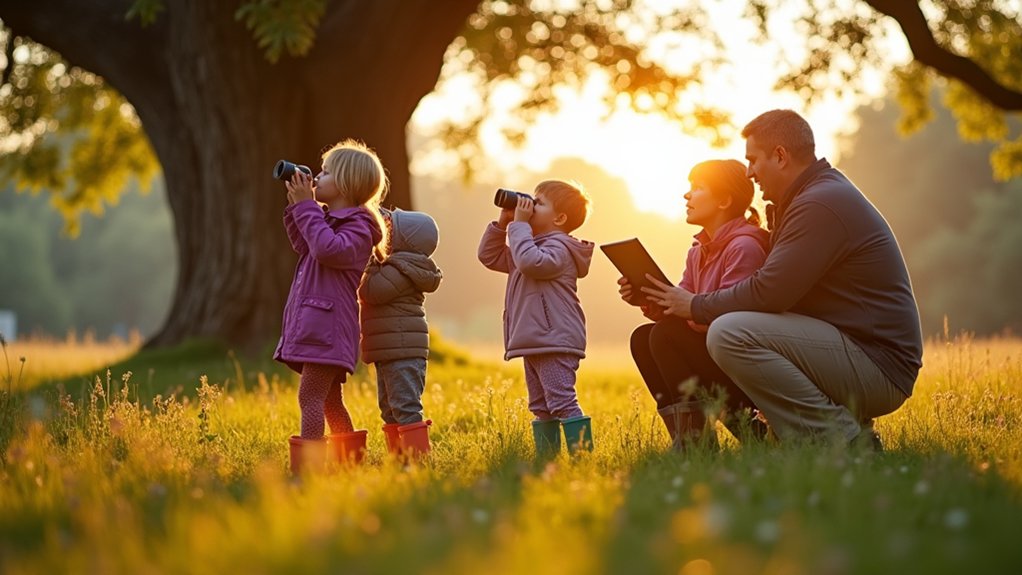
Family birding events transform countryside exploration into educational adventures that connect your children with nature while building lifelong observation skills. Start with backyard birding to build your kids’ confidence before venturing to organized events. Woods, lakesides, and brush-covered areas offer the best birding opportunities for families.
Attend regional birding festivals where children can learn from experienced guides and use proper equipment safely. These events typically feature kid-friendly activities and shorter observation periods that match young attention spans. Pack binoculars sized for small hands, field guides, and snacks to keep energy levels high.
Community parks often host family birding walks that introduce basic identification techniques. Your children will develop patience, focus, and appreciation for wildlife while participating in this growing outdoor activity that engages millions of families nationwide. Modern birding apps make bird identification easier for children, allowing them to use technology they’re already comfortable with to enhance their nature experiences.
Try Canoeing and Kayaking Together
Paddling activities offer another exciting way to explore countryside waterways while teaching your children water safety and teamwork skills. You’ll need properly fitted PFDs for everyone – sized for infants (8-30 lbs), children (30-50 lbs), and youth (50-90 lbs). Never strap children into boats; they need quick escape routes if capsizing occurs.
Start with calm waters and short excursions under one hour. Children ages 4-7 work best in the bow position, while kids 8-10 can assist paddling in tandem kayaks. Single kayaks suit skilled children from age 10.
Pack high-protein snacks, water, and SPF clothing. Practice wet exits beforehand and match trip intensity to your child’s skill level. Keep towing gear ready for separate boats. Consider investing in kayaking lessons beforehand to build confidence and proper technique.
Go Fishing at Local Ponds and Streams
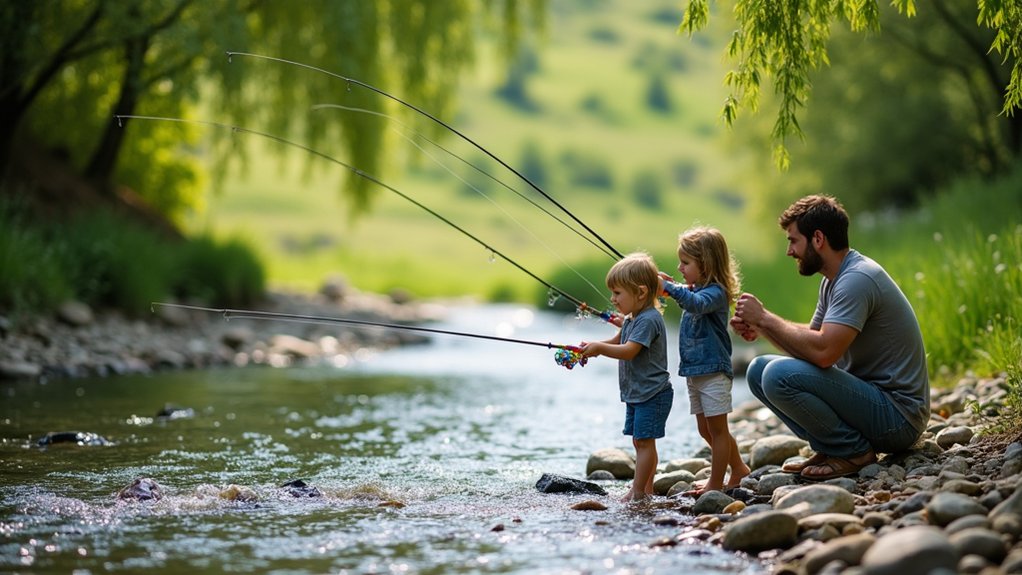
Fishing provides an excellent opportunity to teach patience, responsibility, and outdoor skills while creating lasting memories with your children. Choose local ponds and streams stocked with fish for calm waters and higher success rates. Start with light spinning combos or push-button spincast reels using 6- to 10-pound test line and small hooks. Live bait like worms increases success for young anglers targeting easy-to-catch species like sunfish.
Practice casting in your backyard before water trips to build confidence. Select spots near home with shallow, accessible areas and graded slopes. Always position yourself where you can supervise children constantly. Consider adding pond alarms to alert you if a child accidentally falls into deeper water areas. Pack essential safety gear including life jackets for deep water areas, protective footwear, sunscreen, and emergency supplies.
Focus on short sessions matching kids’ attention spans while celebrating every success.
Experience Nature Preschool Programs
While traditional preschools keep children indoors for most learning activities, nature preschool programs immerse young learners in outdoor environments for 3-5 hours daily. These programs prioritize child-directed exploration in unmaintained natural settings, allowing your child’s interests to guide learning experiences.
You’ll find approximately 800 nature preschools operating across the United States, with strong concentrations in the Northeast and California. Your child will develop critical thinking, creativity, and self-regulation skills while learning practical earth skills like fire safety and resource gathering.
Nature preschools strengthen protective factors for resilience more effectively than traditional programs. The hands-on, tactile learning approach reduces screen exposure while building environmental stewardship. Research shows that green environments help reduce stress levels and boost social competency development in young children.
Programs serve over 25,600 children nationwide, offering intentional nurturing relationships alongside experiential learning that creates lasting educational impact.
Use Nature Smart Backpacks for Exploration
Since countryside exploration demands both comfort and functionality, nature smart backpacks transform how you’ll experience outdoor adventures with your children. These innovative packs feature adjustable straps and ergonomic back panels that distribute weight evenly, preventing strain during long hikes.
Load-sensing straps dynamically adjust to your pack’s weight, ensuring ideal comfort.
Built-in sensors monitor heart rate, hydration levels, and environmental conditions, syncing data to your smartphone for real-time safety insights.
Solar charging panels and 10,000 mAh power banks keep devices charged in remote areas, while integrated GPS provides navigation assistance.
Compartmentalized pockets organize hydration supplies, snacks, and electronics efficiently. Smart organization systems with dedicated compartments ensure quick access to essential gear during your countryside adventures.
Anti-theft compartments with RFID-blocking protect valuables.
Temperature-regulating materials wick moisture in heat and provide insulation when cold, ensuring your family stays comfortable throughout countryside explorations.
Practice Archery in Outdoor Settings
Archery transforms children into focused archers while teaching patience, concentration, and respect for equipment in beautiful countryside settings. You’ll need a certified USA Archery Level 1 instructor supervising at all times, plus proper protective gear including arm guards, finger tabs, and chest protectors.
Choose arrows that extend one to two inches beyond the bow at full draw for beginners.
Set up your range away from houses, roads, and trails with clear shooting lines and a hillside backstop. Maintain 50 yards behind targets and 20 yards on each side for safety.
Before shooting, inspect all equipment for cracks or damage. Never allow dry firing or overdrawing. Handle bows with care especially when they are unstrung to prevent damage or injury.
Teach kids essential commands like “hold” and “all-clear” while ensuring they wear bright clothing and properly sized equipment.
Join BIPOC-Oriented Nature Clubs
Five established BIPOC-oriented nature organizations across the country offer your family structured outdoor experiences that build confidence and community connections in countryside settings.
POCO Programs provides over 60 annual outings including hiking, paddling, and camping, plus their POCO Guardians program teaches environmental awareness during school breaks. You’ll find free activities designed specifically for BIPOC families, with each outing repeated three times to build familiarity. The program also offers leadership training in specialized areas like mindfulness, fishing, kayaking, and birding, with opportunities for members to lead their own outings.
Outward Bound Adventures, operating since 1962, delivers Transformational Experiential Environmental Education courses nationwide.
City Kids Wilderness Project serves DC youth year-round with long-term wilderness engagement programs.
Camp Yoshi creates custom outdoor adventures in Oregon.
Reparative Roots teaches ancestral skills like foraging and fire-making.
Explore Next Door offers free five-week nature experiences for younger children in underserved areas.
Last Words
Pack your safety gear and head outdoors with confidence. You’ll create lasting memories while teaching your kids essential outdoor skills. Remember to check weather conditions, bring first aid supplies, and establish clear boundaries before each adventure. Start with shorter activities and gradually increase difficulty as your children’s confidence grows. You’re building their connection to nature while developing problem-solving abilities and physical fitness. These countryside experiences will shape their appreciation for the natural world forever.