

Start with a shorter 3-5 day cruise to test your family’s preferences without major commitment. Pack essentials like medications and documents in your carry-on, choose midship lower deck cabins to minimize seasickness, and board early while skipping crowded buffets. Complete the mandatory safety drill, unpack immediately to help your steward, and use stairs for exercise between decks. Book popular shore excursions well in advance and always return before the all-aboard time. Master these fundamentals and you’ll discover even more strategies to elevate your entire cruising experience.
- Choose Shorter Itineraries to Test Your Cruising Preferences
- Pack Smart Essentials in Your Carry-On Bag
- Select Your Stateroom Location Strategically
- Board Early but Skip the Crowded Main Buffet
- Complete the Mandatory Safety Drill Requirements
- Explore the Ship From Top Deck to Bottom
- Make Specialty Dining Reservations on Embarkation Day
- Set Your Watch to Ship Time and Keep It There
- Unpack Immediately and Meet Your Room Steward
- Use Stairs for Exercise and Ship Navigation Practice
- Book Popular Shore Excursions in Advance
- Always Return to Ship Before All-Aboard Time
- The Sum Up
Choose Shorter Itineraries to Test Your Cruising Preferences

When you’re considering your first cruise, starting with a shorter 3-5 day itinerary makes perfect sense for testing the waters without diving into a major commitment. You’ll spend just £300-£400 from the UK or roughly $60-80 per night, making it budget-friendly for families unsure about cruising.
Short cruises fit easily into busy schedules—think Friday to Monday sailings that require minimal vacation days. You can even splurge on suite upgrades or drink packages since your overall costs stay manageable.
Popular beginner routes include the Bahamas from Florida or Bruges from the UK, offering exciting destinations without overwhelming your family. Many short cruises depart from convenient drive-to ports in major cities like New Orleans, Galveston, and New York.
If you discover cruising isn’t your thing, you haven’t lost much time or money. However, most families find these shorter trips serve as perfect teasers for longer future adventures.
Pack Smart Essentials in Your Carry-On Bag
Since luggage delays can turn your dream vacation into a nightmare, you’ll want to pack strategically for your first cruise adventure. Your carry-on should contain everything you’d need for your first day at sea.
Pack essential documents like your passport, cruise confirmation, and insurance papers in a secure pouch. Include prescription medications, vitamins, and travel-size sanitizers for immediate health needs. Don’t forget toiletries—toothbrush, deodorant, and personal hygiene items—since ship options aren’t always ideal.
Your swimsuit, sunscreen, and flip-flops are vital since you’ll likely head straight to the pool. Bring electronic chargers and a change of clothes for post-flight freshening. Consider packing cubes to organize your essentials efficiently and facilitate quick unpacking once you reach your stateroom.
A cruise lanyard keeps your keycard accessible, while keeping valuables and fragile items safely with you prevents costly losses.
Select Your Stateroom Location Strategically

Beyond packing the right items, your stateroom choice can make or break your cruise experience. If you’re prone to seasickness, book lower decks (4-7) in midship locations where motion feels minimal. These spots near the ship’s center provide the steadiest ride compared to front or back cabins.
Consider your family’s priorities when choosing stateroom types. Interior cabins offer the best value if you’ll spend most time exploring the ship. Ocean view rooms provide scenic vistas at moderate cost, while balcony staterooms create private outdoor retreats great for morning coffee or evening relaxation.
Think about proximity to activities too. Midship locations offer easy access to dining and entertainment, while cabins away from nightlife areas ensure quieter sleep for early risers and young children. You can potentially secure better accommodations through the Royal Up bidding process, which allows you to upgrade from your original booking by placing bids on ocean view rooms, balconies, or suites.
Board Early but Skip the Crowded Main Buffet
Getting to the terminal early transforms your embarkation experience from stressful chaos into smooth sailing. You’ll breeze through documentation and security lines while securing the best pool spots before crowds arrive.
Book the earliest check-in slot when reservations open 14-45 days prior—set phone reminders so you don’t miss out.
Here’s the insider secret: skip Windjammer buffet on boarding day. While thousands of passengers create lunch rush mayhem, you’ll enjoy peaceful dining elsewhere. Try room service breakfast, specialty restaurants, or wait until mid-afternoon when crowds thin out.
Early boarders get first dibs on activity reservations and ship exploration without fighting masses of people. Embarkation day typically offers the emptiest pool time during your entire cruise, making it great for a relaxing swim.
Consider priority programs like Royal Caribbean’s “The Key” for dedicated lounges and skip-the-line privileges—worth every penny for stress-free starts.
Complete the Mandatory Safety Drill Requirements

Before you can enjoy your cruise adventure, you’ll need to complete the mandatory safety drill—and there’s no getting around it. This SOLAS-required drill is compulsory for everyone, including kids, regardless of your cruise experience.
Each stateroom gets assigned a specific muster station, so you can’t skip it even if you’ve cruised before.
The drill familiarizes you with emergency alarm sounds, assembly locations, and life jacket operations—including proper fitting for children. Some cruise lines let you watch safety videos on your phone or stateroom TV first, but you’ll still need to physically report to your assigned muster station.
Don’t try to avoid it—skipping the drill can delay departure for everyone. It’s typically scheduled about 30 minutes before the ship leaves port. These requirements became effective January 1, 2015 as part of updated international safety regulations for cruise ships.
Explore the Ship From Top Deck to Bottom
Once the safety drill wraps up, you’ll want to grab your family and take an extensive tour of your floating home for the next few days. Start at the top deck and work your way down systematically.
You’ll find pools, sports courts, and spa facilities on the upper levels, while adults-only areas are typically located on Deck 9 forward.
Focus on six key decks: 3, 4, 5, 9, 10, plus your stateroom deck. Deck 3 houses the main Atrium where you’ll find core public spaces, while Decks 4-5 offer balcony views of activities below.
Use elevators and inside corridors to move between levels efficiently. Three main elevator banks are positioned at the forward, midship, and aft sections of the ship for convenient access throughout your cruise. Grab a deck plan to identify cabin types and locate essential amenities you’ll need throughout your cruise.
Make Specialty Dining Reservations on Embarkation Day
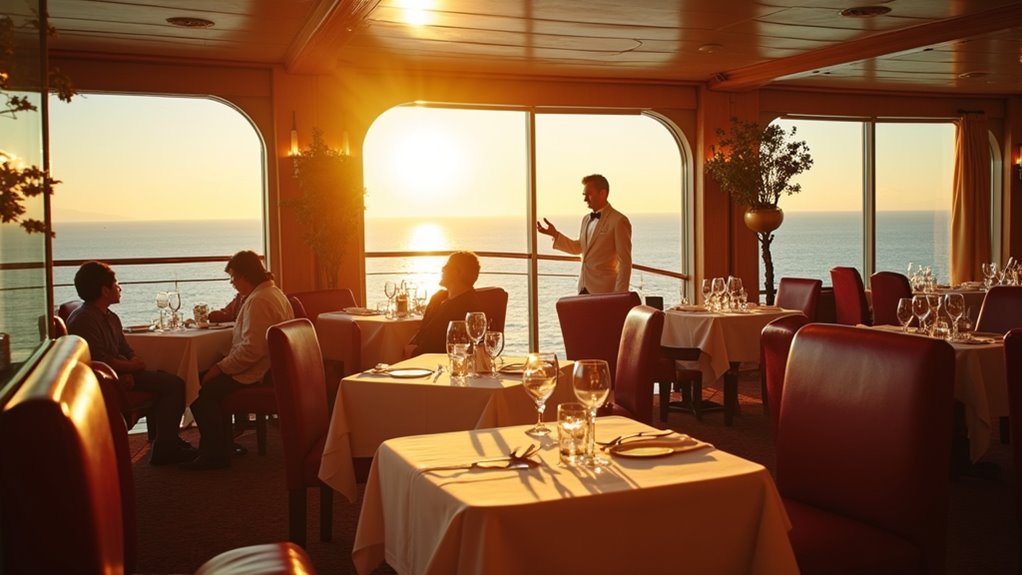
While you’re exploring the ship’s layout, prioritize booking your specialty dining reservations since popular restaurants fill up fast on embarkation day. Head straight to restaurant counters or use your stateroom phone to secure spots at favorites like Chops Grille, Izumi, or Jamie’s Italian before they’re gone.
If you haven’t purchased a dining package yet, consider grabbing one onboard for discounted rates on multiple meals. The 3-Night Package gives you three dinners at specialty venues, while Unlimited Dining lets your family enjoy multiple restaurants each night plus sea day lunches.
Don’t wait until tomorrow—availability disappears quickly. Visit hospitality desks to accommodate your family’s preferred dining times.
Remember that some restaurants charge per dish while others have cover charges including all food. Check the Cruise Compass or Royal Caribbean app to identify which venues are complimentary versus those requiring additional fees.
Set Your Watch to Ship Time and Keep It There
After you’ve settled into your stateroom, immediately set your watch to ship time and resist the urge to change it back. Ship time governs everything—departures, excursions, dining reservations, and entertainment schedules.
Your phone might automatically switch to local port time, creating dangerous confusion that could leave you stranded on the pier.
Caribbean destinations often don’t observe Daylight Saving Time, so there’s frequently a one or two-hour difference between ship time and local time. Don’t rely on your phone’s clock or assume you can do quick mental math—you’ll mess up eventually.
Turn off your device’s auto-time update feature and stick with ship time throughout your entire cruise. When in doubt, ask crew members to confirm the current ship time.
Missing the ship’s departure isn’t worth the risk. Remember that cruise ship times are determined by your departure port, whether it’s Central Time from Galveston or Eastern Time from Miami.
Unpack Immediately and Meet Your Room Steward
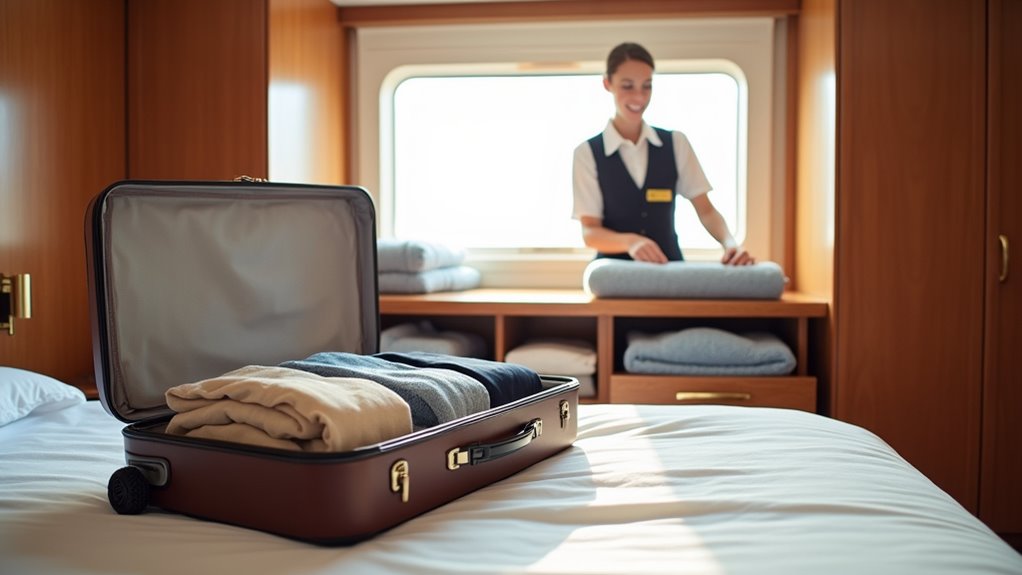
As soon as your luggage arrives in your stateroom, resist the temptation to live out of your suitcase for the week. Unpacking immediately gives your room steward space to work efficiently, restock amenities, and provide fresh towels without navigating around clutter. It also signals you’re ready for their services and allows them to adjust bed configurations or provide extra hangers upon request.
When your steward knocks on embarkation day, take time to meet them. They’ll explain cabin features like the TV, safe, and minibar, plus their service schedule. Most lines offer twice-daily cleaning with evening turndown service, though some have reduced to once daily. Don’t be surprised if your steward remembers your name and personal preferences throughout the cruise, as they often provide more personalized service than typical hotel housekeepers.
Your steward handles towel exchanges, restocking toiletries, and basic maintenance requests, but can’t book excursions or take room service orders.
Use Stairs for Exercise and Ship Navigation Practice
When those elevator banks get packed with passengers rushing to dinner or returning from port, you’ll discover that stairs become your secret weapon for getting around the ship quickly. You’ll avoid long waits and crowded spaces while getting fantastic exercise without stepping foot in the gym.
Stair climbing burns serious calories and strengthens your legs while improving cardiovascular health. On massive ships with 18 decks, you’ll rack up significant steps just moving between dining rooms, your cabin, and entertainment venues. Taking stairs also reduces your exposure to germs since you won’t be touching elevator buttons or breathing recirculated air in cramped spaces.
Aim for six to ten flights daily for ideal fitness benefits.
Book cabins near areas you’ll visit frequently, like upper decks. Try combining elevators with stairs—ride to a middle deck, then walk up one flight. You’ll navigate faster while adding easy movement to your day.
Book Popular Shore Excursions in Advance

Shore excursions rank among the most anticipated parts of your cruise experience, yet they’re also the most likely to disappoint if you don’t plan ahead. Popular tours sell out quickly—75% of excursions are now booked in advance, leaving first-time cruisers scrambling for remaining spots.
You’ll face hours-long onboard lines for tours that may already be full.
Booking early through your cruise line’s app guarantees your family’s spots and often secures lower rates before demand drives prices up. You’ll also get guaranteed return-to-ship protection if delays occur. Understanding cruise demand patterns from the booking window data—which tracks the days between when people book and their actual sail date—can help you time your shore excursion purchases strategically.
Caribbean beach adventures and European cultural tours disappear fastest, sometimes months ahead.
Don’t wait until embarkation day. Reserve your must-do excursions as soon as booking opens—typically up to two years before sailing. Your future self will thank you.
Always Return to Ship Before All-Aboard Time
Nothing ruins a family vacation faster than watching your cruise ship sail away without you. The All-Aboard time isn’t negotiable—cruise lines won’t wait for late passengers, regardless of your circumstances. Government regulations require final departure manifests 60-90 minutes before sailing, making strict timing essential.
Set phone alarms at least one hour before All-Aboard time to account for transportation delays. Double-check times through the cruise app, lobby screens, or gangway signs before leaving the ship. At tender ports, water shuttles must follow the last boat departure schedule, which aligns with the All-Aboard time to ensure safe passenger return.
Remember, shipboard time might differ from local port time.
If you’re staying overnight in port, notify Guest Services 24 hours in advance to prevent emergency searches. Missing All-Aboard means you’ll pay all expenses to rejoin the ship at another port—or potentially lose your entire vacation.
The Sum Up
You’re ready to create amazing family memories on your first cruise! Don’t stress about being perfect – every cruiser learns as they go. Trust your instincts, stay flexible when plans change, and focus on enjoying quality time together. Your kids will remember the fun you had, not whether you packed everything perfectly. Take photos, try new foods, and embrace the adventure. You’ve got this, and your family’s going to love it!