

You’ll transform teen travel from stressful to successful by involving them in destination selection and activity planning—71% of teens aged 13-15 want control over vacation choices. Create flexible itineraries with downtime, pack essentials in multiple bags, and choose accommodations with privacy. Focus on engaging activities like water sports and Instagram-worthy experiences while preparing for mood swings through pre-trip conversations. Consider traveling with other families to boost independence, and remember that strategic planning around these core principles unlocks memorable family adventures.
- Involve Your Teen in Planning the Trip From Start to Finish
- Create a Balanced Schedule That Avoids Over-Programming
- Choose Activities That Keep Teens Engaged and Active
- Set Realistic Expectations for Teen Behavior and Moods
- Keep Everyone Well-Fed With Smart Food Strategies
- Select Accommodations That Provide Space and Privacy
- Encourage Teen Independence and Responsibility
- Plan Around Peak Times and Crowds
- Build in Flexibility for Spontaneous Changes
- Pack Smart to Avoid Travel Day Disasters
- Consider Bringing Friends or Traveling With Other Families
- Use Travel Challenges as Learning Opportunities
- Last Words
Involve Your Teen in Planning the Trip From Start to Finish
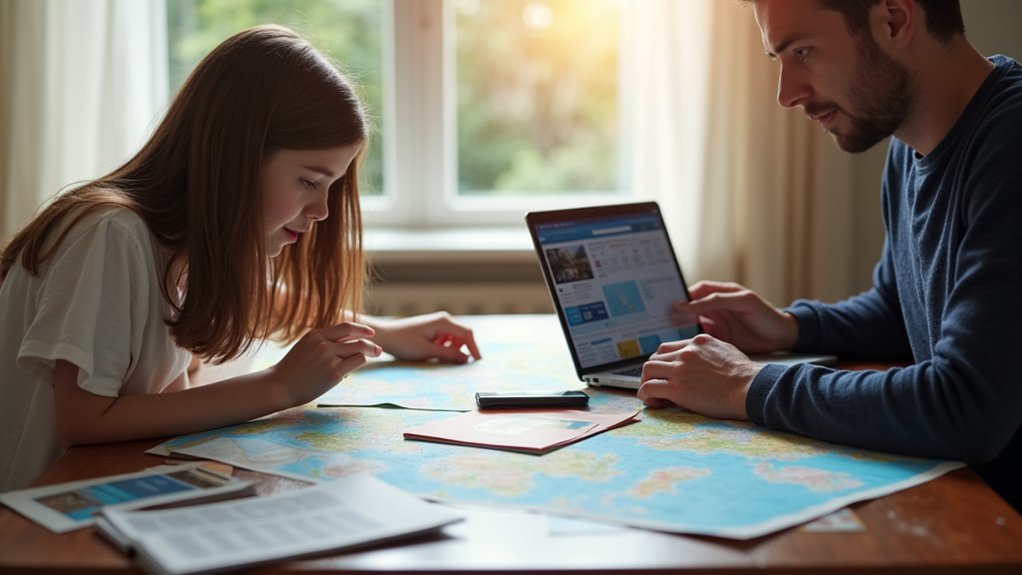
When you’re planning your next family getaway, don’t underestimate your teenager’s ability to contribute meaningfully to the process. Research shows 71% of teens aged 13-15 want control over vacation destinations, and involving them creates significant benefits for everyone.
Start with collaborative boundaries—let your teen pick three destinations while you narrow choices based on budget and timing. This teaches valuable trade-offs while maintaining their investment. Your teenager can leverage their digital skills to research activities, watch YouTube vlogs, and discover hidden gems you might miss.
Consider letting them handle specific planning aspects while you manage accommodations and flights. Having your teen research destinations through TikTok videos provides authentic recommendations and local experiences that traditional travel guides often overlook.
When teens participate in planning, 84% become more adaptable and open to new experiences, leading to less complaining and higher engagement throughout your trip.
Create a Balanced Schedule That Avoids Over-Programming
Once you’ve secured your teen’s input on destinations, resist the urge to pack every waking moment with activities. Creating a balanced schedule means selecting just a few must-see attractions rather than attempting everything. Build in downtime between experiences, especially when crossing time zones, to prevent burnout and allow genuine enjoyment of each moment.
Factor in significant travel time between locations and choose direct flights when possible to maximize your actual vacation time.
Account for your teen’s energy levels by scheduling around slower-paced needs and avoiding the hottest parts of the day. Incorporating nature experiences during your trip can help calm the mind and provide a mental reset for both teens and parents.
Maintain a loose daily itinerary that allows for spontaneous discoveries. Remember, quality connections matter more than checking off every tourist attraction on your list.
Choose Activities That Keep Teens Engaged and Active
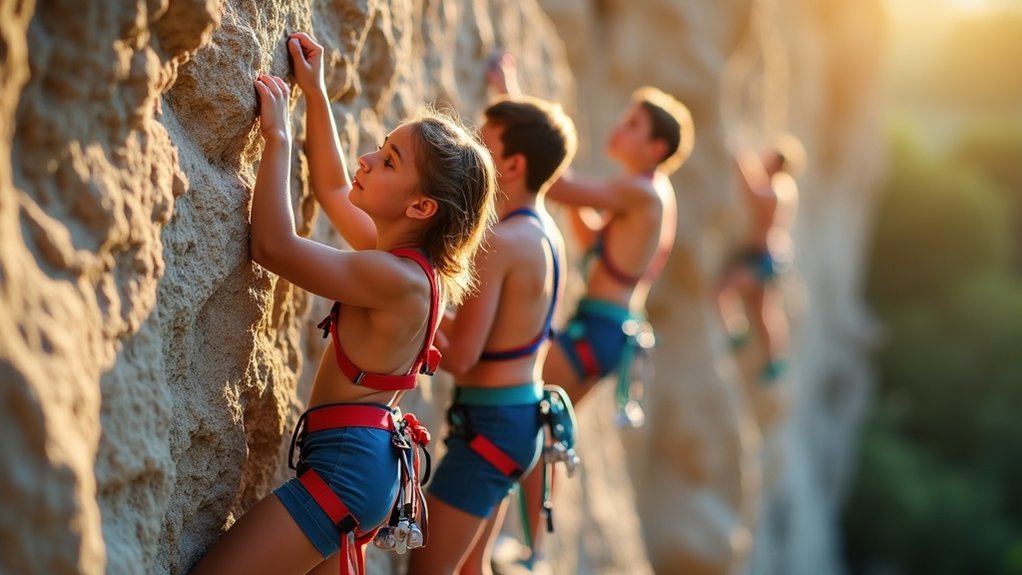
Since teens are naturally drawn to experiences they can share and remember, selecting activities that blend physical engagement with their digital-native interests becomes essential for maintaining enthusiasm throughout your trip.
Beach vacations naturally excel here, offering water sports and social opportunities that teens love while providing Instagram-worthy moments.
Theme and water parks rank as top choices because they deliver age-appropriate thrills without constant negotiation over activities.
Consider national and state parks for outdoor exploration that combines physical activity with discovery. Travel planning becomes more collaborative when teens aged 7-18 act as co-pilots in planning, driving their influence over family travel decisions.
City visits work particularly well, offering diverse options that appeal to independent-minded teens.
Museums and cultural attractions surprisingly engage teens, especially during skip-generational trips with grandparents.
Remember that 61% of parents see improved happiness when teens help plan activities, so involve them in choosing experiences they’ll genuinely want to participate in.
Set Realistic Expectations for Teen Behavior and Moods
While planning engaging activities sets the foundation for a successful trip, understanding your teen’s emotional landscape proves equally important for family harmony. Hormonal changes naturally trigger mood swings, and travel stress amplifies irritability and withdrawal behaviors you’ll likely encounter. Don’t take these fluctuations personally—they’re developmental, not defiant.
Have honest pre-trip conversations about potential mood variability. This simple step reduces family surprises by 40% and helps everyone prepare mentally.
Expect sleep disruptions from changing schedules to worsen emotional volatility temporarily. Research shows that adolescents demonstrate better health practices than adults when given the same travel education, suggesting teens can rise to expectations when properly informed.
Remember that 73% of teen travelers report increased confidence after trips, despite initial mood dips. Focus on long-term benefits rather than momentary struggles.
Your patience during challenging moments contributes to building resilience and independence that’ll serve them well beyond this vacation.
Keep Everyone Well-Fed With Smart Food Strategies
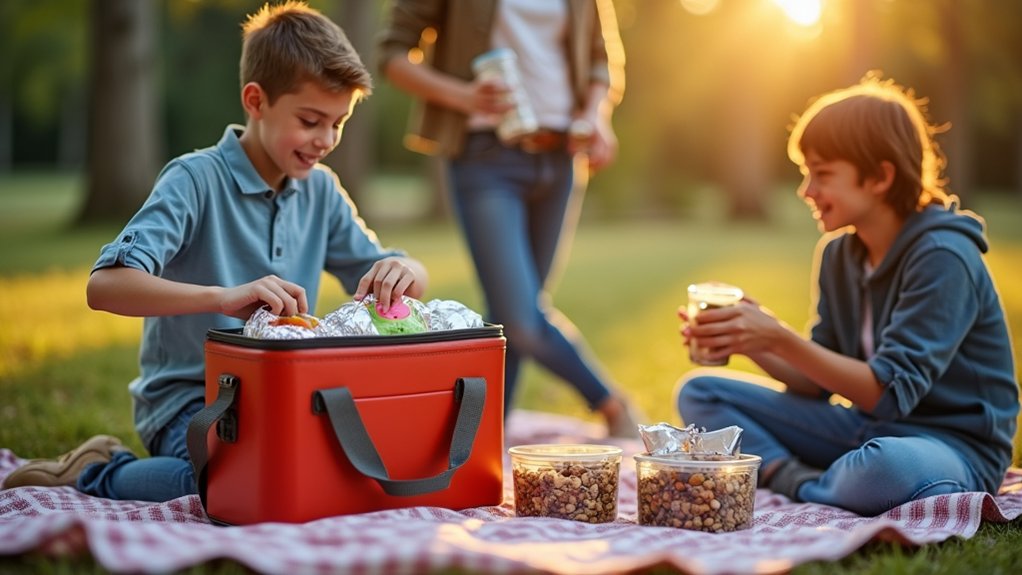
Hungry teens become cranky teens, and cranky teens can derail even the best-planned vacation. Smart food planning keeps everyone satisfied and reduces mealtime stress.
Create a shared Google doc where families sign up for dinner responsibilities, ensuring variety and shared workload. The cook doesn’t clean—that’s the golden rule.
Focus on customizable meals that please picky eaters. Set up assembly lines for chicken Caesar pasta salad, fajita bars, or build-your-own pizza nights. Theme nights like Meatless Monday add structure without complexity.
Prep ingredients weeks ahead: marinated chicken, chopped vegetables, and meatballs freeze beautifully. Double-use items strategically—bacon works for breakfast and BLTs.
Stock plenty of snacks, paper goods, and morning essentials like coffee. Well-fed teens equal happy vacations. Remember that shared dining creates meaningful connections and memorable moments around the table that far exceed the value of eating out every night.
Select Accommodations That Provide Space and Privacy
When teens feel cramped together like sardines, family dynamics quickly deteriorate into territorial disputes and sibling warfare. You’ll want to prioritize accommodations with lower occupancy levels—aim for one to two people per bedroom whenever possible. This gives everyone essential breathing room and reduces conflicts over personal space.
Look for rooms with transitional spaces like entryways or alcoves that create natural buffers between sleeping areas. These features help minimize visual and sound intrusions that can spark tension. Research shows that transitional spaces naturally encourage positive social interactions while giving family members control over when they engage with others.
Consider booking connecting rooms or suites with semi-private spaces rather than cramming everyone into one room facing common areas.
Your teens need territory they can temporarily claim as their own. When they can’t establish clear boundaries, expect them to improvise with towels and clothing barriers—clear signs you’ve chosen the wrong accommodation setup.
Encourage Teen Independence and Responsibility

Though parental instincts scream “keep them close,” your teens need measured freedom to develop confidence and decision-making skills during family trips. Start small—let them handle hotel room security or navigate to the hotel restaurant independently.
Before granting freedoms, prepare them with first aid knowledge and safety protocols for stranger encounters. Use smart safety measures like mandatory check-ins and GPS tracking through smartphones. Set clear boundaries about designated areas and meeting points.
Remember, hesitancy naturally decreases as teens mature—adjust expectations accordingly. Focus concerns appropriately rather than defaulting to gendered stereotypes about vulnerability. Involve teens in vacation planning to set clear expectations and boost their engagement with family activities.
Two-thirds of parents find teens follow rules when unsupervised. These controlled vacation risks build essential life skills while countering harmful over-supervision trends affecting teen mental health.
Plan Around Peak Times and Crowds
Since more than half of Americans plan trips between Thanksgiving and early January—the highest numbers we’ve seen in five years—you’ll face your biggest crowds and steepest prices during traditional holiday periods.
With 92% of parents planning to travel with kids and Gen Z/millennials driving half of holiday demand, competition’s fierce.
Instead, target shoulder seasons when 57% of families plan longer trips anyway. Book midweek stays to avoid weekend family rushes at theme parks and beaches.
Consider national parks over popular beach destinations—they offer 37% popularity versus beaches at 62%.
Use real-time crowd monitoring apps to adapt plans instantly. Your teens’ flexibility becomes an advantage here. Involving teens in trip planning creates more adaptable travelers, as 84% of parents report this benefit when children help choose destinations and activities.
Skip spring break’s average $5,352 budget drain by choosing off-peak windows with lower rates and genuinely relaxed experiences.
Build in Flexibility for Spontaneous Changes

While rigid itineraries work for solo trips, traveling with teens demands a completely different approach. You’ll need to embrace flexibility over jam-packed schedules that leave no room for spontaneous discoveries.
Get your teens involved in the planning process—84% of parents report this increases their adaptability and openness to new experiences. When kids help choose destinations and activities, they’re more invested in the trip’s success and willing to roll with changes.
Build buffer time between activities and avoid booking every hour. Teens might discover an interesting street market or want extra time at a museum. Leave room for these unplanned moments that often become the trip’s highlights.
Consider booking accommodations with flexible cancellation policies and skip rigid dinner reservations that stress everyone out. Vacation rentals offer the perfect solution with their inherent flexibility, allowing families to adjust meal times and activities without the constraints of hotel schedules.
Pack Smart to Avoid Travel Day Disasters
Nothing derails a family vacation faster than arriving at your destination without essential items, and smart packing becomes your insurance policy against travel day disasters. Pack change of clothes for each family member in carry-ons, especially extras for younger siblings who’ll inevitably spill something. Color-code bags to prevent mix-ups when everyone’s scrambling through luggage.
Use packing cubes and roll clothes to save 30% space, then stuff shoes with socks and chargers. Pack phone chargers in three different locations – you’ll thank yourself when someone’s device dies mid-journey. Leave 20% suitcase space empty for souvenirs and wear your heaviest items during travel.
Most importantly, designate one bag for travel-day essentials: documents, snacks, wipes, entertainment, and backup underwear distributed across suitcases. Start organizing and packing 1 week before domestic trips to reduce stress and ensure nothing important gets forgotten in the last-minute rush.
Consider Bringing Friends or Traveling With Other Families

Two families booking the same trip transforms teenage travel dynamics from potential parent-teen tension into peer-powered adventures your kids will actually enjoy. Your teens’ll engage with diverse perspectives from international group members, sparking conversations about school, sports, and future aspirations that you’d never hear in family-only settings.
Small group tours provide the perfect safety net for building independence. Your teen can navigate public transport and handle responsibilities like packing lists while having peer support for troubleshooting challenges.
They’ll develop leadership skills through group planning and gain confidence from overcoming obstacles together. Stepping outside familiar routines helps teens discover their personal strength when adapting to new environments and unexpected situations.
The logistics work in your favor too. Guided tours handle the planning while collective dynamics keep everyone punctual. You’ll have backup support for emergencies, and your teen will form lasting friendships through shared epic experiences.
Use Travel Challenges as Learning Opportunities
When your teen’s flight gets delayed or their favorite restaurant is closed, you’re witnessing prime teaching moments disguised as travel hiccups. These unexpected moments build adaptability—84% of parents report that planning involvement makes teens more flexible when facing challenges.
Let your teen research alternative restaurants or navigate rebooking flights. You’ll watch their confidence grow as they problem-solve in real-time.
Travel challenges become educational goldmines that develop global citizenship skills. When language barriers arise or cultural differences create confusion, guide your teen through respectful solutions. These shared experiences strengthen family connections beyond the routine of daily life.
These experiences create the vivid memories that stick—49% of adults recall childhood vacation challenges most clearly. Rather than shielding them from complications, involve your teen in finding solutions. They’ll develop resilience and cultural awareness that extends far beyond your trip.
Last Words
Traveling with teens doesn’t have to feel like herding cats. You’ve got this – just remember that flexibility beats perfection every time. When you involve them in planning, respect their need for downtime, and roll with the inevitable mood swings, you’re setting everyone up for success. Don’t stress about having the “perfect” family trip. Focus on creating moments where you can connect, laugh, and maybe even see your teen crack a genuine smile.