
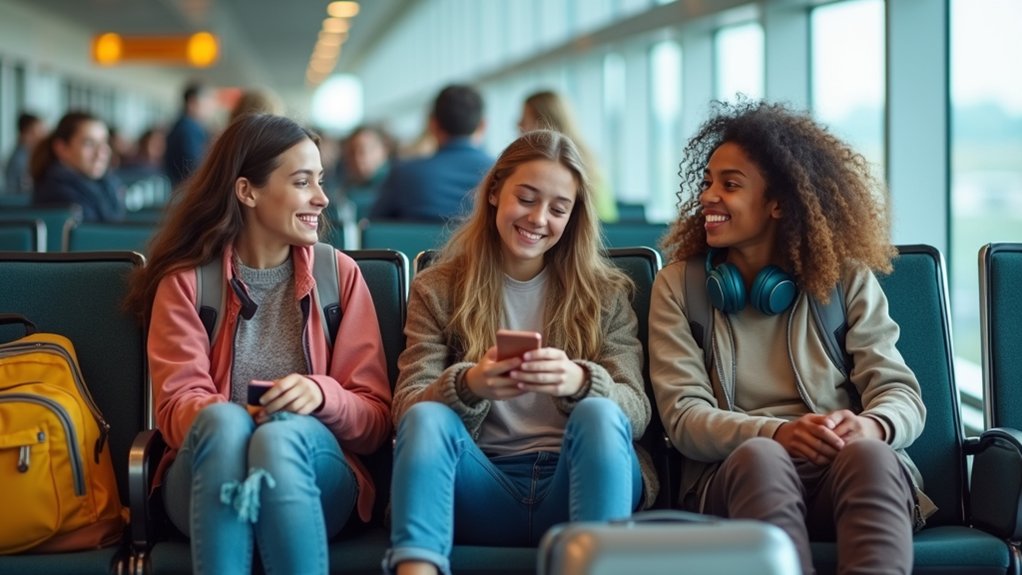
Give your teen real responsibilities like navigation and budgeting, respect their need for 8-10 hours of sleep, and avoid overscheduling every moment. Trust them with solo exploration time, let them help plan activities they’ll actually enjoy, and embrace their photo-taking habits. Focus on Instagram-worthy destinations, build in flexibility for spontaneous discoveries, and create boundaries instead of restrictions. Most importantly, treat them as capable travel partners rather than children you’re dragging along—you’ll discover how these insights transform your entire family travel experience.
- Give Us Space to Breathe and Recharge
- Respect Our Sleep Schedule – We Need 8-10 Hours
- Let Us Have Input on the Itinerary Planning
- Trust Us With Real Responsibilities During Travel
- Don’t Overschedule Every Single Moment
- Help Us Budget and Save for Our Own Trip Expenses
- Encourage Us to Talk to Locals and Make New Friends
- Prepare Us for Homesickness and Culture Shock
- Give Us Chances to Navigate Transportation Independently
- Let Us Experience Some Safe Risks and Challenges
- Plan Activities That Match Our Energy and Interests
- Support Our Photo-Taking and Social Media Sharing
- Last Words
Give Us Space to Breathe and Recharge

While you might worry about letting your teen explore independently during family trips, giving them space to breathe and recharge isn’t just what they want—it’s what they need.
Start small if you’re among the 73% of parents hesitant about teen independence. Let them grab breakfast alone in your hotel or walk to a nearby coffee shop. These micro-freedoms build confidence for both of you.
Consider your teen’s age—you’ll naturally feel more comfortable with a 17-year-old than a 13-year-old exploring solo. Remember that 65% of teens prefer urban destinations over structured resort activities because they crave authentic experiences. Older teens especially avoid kids’ clubs and entertainment designed for younger children, seeking more mature activities that align with their developing independence.
Create boundaries that work: designated check-in times, specific areas they can explore, and clear emergency protocols. This balanced approach respects their growing autonomy while maintaining your peace of mind.
Respect Our Sleep Schedule – We Need 8-10 Hours
Though most parents think teens are just being lazy when they sleep until noon, science backs up their need for 8-10 hours nightly—and vacation shouldn’t disrupt this biological requirement. The American Academy of Sleep Medicine confirms that 9-9.5 hours is ideal for peak mental health, yet only 23% of teens actually achieve this on regular nights.
When you’re planning those 6 AM museum tours or late-night activities, remember we’re already sleep-deprived. Getting less than 8 hours increases our anxiety levels, making us crankier travel companions. Sleep deprivation also correlates with deficits in information processing, memory, and creativity, which means we won’t absorb or enjoy those educational travel experiences as much.
Our post-puberty night-owl shift isn’t defiance—it’s biology.
Build itineraries around later wake-ups and respect our need for catch-up sleep. We’ll be more engaged, less moody, and actually enjoy the experiences you’ve planned.
Let Us Have Input on the Itinerary Planning
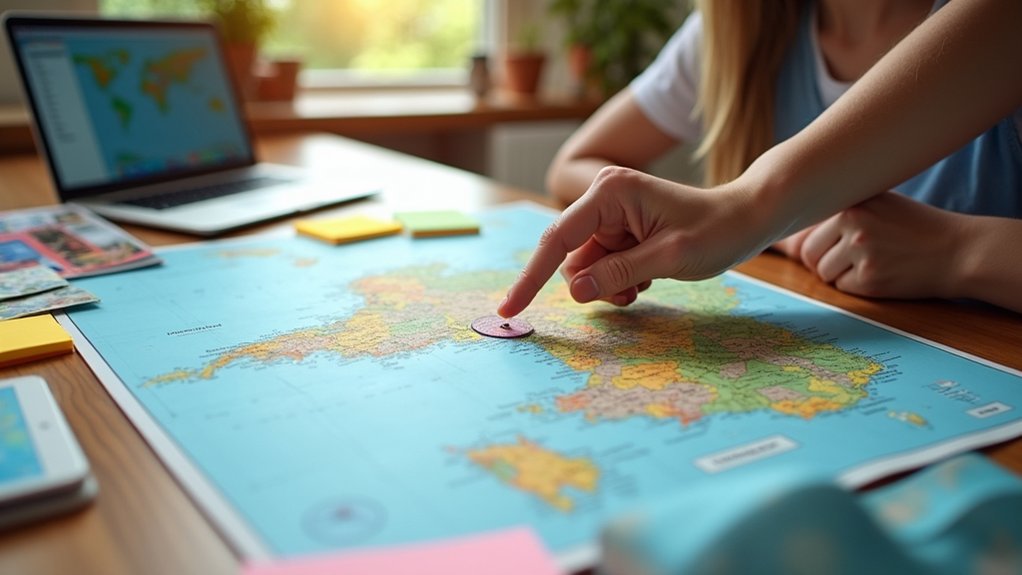
When you exclude us from planning, you’re fundamentally asking us to get excited about someone else’s dream vacation. We need input on everything from trip duration to program focus—whether it’s photography, animal rescue, or cultural exploration.
Let’s suggest destinations like Cinque Terre or Holland based on our interests.
Share brainstorming with friends and family. We’ll add exciting activities while you handle logistics. Create ranked lists together and vote between itineraries you’ve prepared. Use Google MyMaps to color-code must-sees versus options.
We prefer hands-on experiences over endless sightseeing. Give us veto power over four-hour drives or grueling hikes. Balance our animal sanctuary visits with your fishing trips.
Plan efficient day trips from central hubs, but don’t over-schedule—we need downtime too. Consider using multi-city airline tickets to fly into one destination and out of another for maximum efficiency.
Trust Us With Real Responsibilities During Travel
Since we already drive ourselves for nearly half our trips at home, it’s frustrating when parents suddenly treat us like helpless kids on vacation. We’re used to making independent decisions and handling responsibilities daily.
Give us meaningful tasks during travel – let’s navigate using maps, manage budgets for activities, or coordinate transportation schedules. We can research restaurant options, handle check-ins, and communicate with locals.
These responsibilities aren’t just busy work; they’re confidence builders. Studies show 73% of travel program participants gain sustained confidence from real experiences. When you trust us with genuine tasks, you’re acknowledging our growing independence.
We’ll make mistakes, but that’s how we learn. The same teens who influence 60% of family travel decisions through online research can definitely handle booking a museum tour or calculating exchange rates. Remember that we make about 3.5 trips daily on average, so we’re already experienced in planning and executing our own journeys.
Don’t Overschedule Every Single Moment

While you might think cramming every museum, landmark, and activity into our vacation maximizes the experience, overscheduling actually backfires in ways you probably don’t expect. We experience higher anxiety and irritability when constantly rushing between destinations without downtime. That “last hour” of sightseeing doesn’t build memories—it harms our mental well-being and creates burnout.
Overscheduled travel eliminates unstructured time we need for creativity and simply being teens. We lose opportunities for spontaneous exploration and meaningful family conversations when every moment’s planned. When we’re constantly moving between activities, it impairs our ability to structure our own experiences and make meaningful choices about what we want to explore.
Chronic stress develops from insufficient rest between activities, leading to difficulty concentrating and enjoying experiences.
Instead, build flexibility into your itinerary. Leave gaps for unexpected discoveries, relaxation, and connecting with each other. We’ll appreciate fewer quality experiences over exhausting marathon days.
Help Us Budget and Save for Our Own Trip Expenses
Though you might prefer handling all trip finances yourself, teaching us to budget and save for our own travel expenses transforms vacation planning into a valuable life lesson.
Help us create realistic daily spending limits—if we’ve saved $700 for ten days, that’s $70 per day for extras like souvenirs, snacks, and activities beyond what’s covered.
Introduce us to budgeting apps like Trail Wallet or YNAB, which make tracking expenses engaging rather than tedious.
Show us how to research costs beforehand using sites like Pinterest for deals and dining options.
Encourage us to save for preparation expenses like adapters or comfort items.
Don’t forget the emergency buffer—unexpected costs happen, and we’ll learn financial responsibility while feeling trusted with real money management. Any extra funds not used during the trip can be saved for future adventures, teaching us the value of careful spending and long-term planning.
Encourage Us to Talk to Locals and Make New Friends

When you encourage us to connect with locals during travel, you’re giving us access to experiences no guidebook can offer. We’re naturally drawn to authentic experiences—67% of us prefer smaller, offbeat towns where we can form genuine connections. Support our interest in homestays, cooking classes, and local food tours since 58% of us choose culinary exploration as our way in.
Don’t worry if we can’t speak the language perfectly. We’re resourceful communicators who’ll use gestures, drawings, and universal smiles to bridge gaps. Help us find community events like cooking nights or volunteer opportunities—49% of us want community-based programs. Our motivation to engage with local people runs deep, with 55% of youth travelers specifically seeking these meaningful connections during their journeys.
These interactions aren’t just meaningful for us; we directly support local economies and often inspire friends and family to visit these destinations too.
Prepare Us for Homesickness and Culture Shock
Making meaningful connections with locals enriches our travel experience, but it can also highlight just how far we’re from home. You can help us prepare for homesickness by establishing predictable routines—regular mealtimes, bedtime rituals, and shared schedules that provide stability in unfamiliar places.
Let us pack meaningful comfort items like favorite photos, a beloved mug, or familiar music to personalize our new space. Set up balanced communication with family—short check-ins work better than lengthy video calls that intensify homesickness.
Keep us engaged with activities like local exploration, cooking together, or museum visits. Boredom amplifies homesickness, so plan meaningful experiences. Encourage healthy habits like proper sleep, nutrition, and journaling to build emotional resilience during this adjustment period. Remember that homesickness typically peaks during the culture shock phase, which usually occurs a few weeks into our travel experience.
Give Us Chances to Navigate Transportation Independently

While teen driving statistics might make you want to keep us glued to the passenger seat forever, giving us supervised opportunities to navigate transportation builds the confidence and skills we’ll need as independent travelers. Let’s research local transit systems, read maps, and figure out routes with your guidance nearby.
We’re twice as likely to crash compared to adults, but structured independence actually improves safety outcomes—just like graduated driver’s license programs prove.
Start with daytime navigation when we’re alert and focused. Our crash rates triple at night, especially between 9 p.m. and midnight. Give us chances to calculate travel times, understand schedules, and problem-solve delays.
These experiences teach us responsibility while you’re still there to step in when needed. Remember that single-vehicle crashes account for 43% of fatal teen driver accidents, so building our judgment about road conditions and hazard recognition is crucial.
Let Us Experience Some Safe Risks and Challenges
Beyond mastering maps and transit schedules, we need opportunities to stretch our decision-making muscles in low-stakes situations that prepare us for real-world challenges. Let’s choose between two safe restaurant options or decide whether to take the scenic route versus the fastest path. These small choices build confidence without major consequences.
However, recognize that our crash rates are nearly four times higher than adults, and fatal crashes spike during summer months and nighttime hours. We’re also twice as likely to die in crashes with multiple teen passengers. Plus, critical errors like poor hazard scanning, inappropriate speeding, and distractions account for 75% of serious teen crashes.
Plan Activities That Match Our Energy and Interests

Since 90% of our travel decisions come from social media, you’ll find us gravitating toward Instagram-worthy destinations like Tokyo’s neon districts or Rio’s beaches.
We’re looking for experiences that match our high energy levels and desire for authentic culture.
Don’t assume we want purely relaxing vacations – while 40% of us do travel to unwind, we prefer active adventures over passive sightseeing.
Plan a mix of culturally-rich experiences and entertainment events, since 60% of travelers now plan trips around sporting or entertainment events. Budget considerations are less important to us than creating memorable experiences.
We’re willing to spend big on meaningful experiences – averaging $3,500 per trip as flashpackers.
Include metropolitan cities in your itinerary, but also consider off-the-beaten-track locations where we can discover something unique for our social feeds.
Support Our Photo-Taking and Social Media Sharing
When 97% of us share vacation photos on social media, you’re not just planning a trip—you’re curating our next digital story. We’re driven by Instagrammable moments, with 40% of millennials choosing destinations based on photo potential alone.
Help us succeed by researching scenic spots beforehand using Google Maps and Instagram hashtags. We’ll appreciate when you wake up early for that perfect golden hour lighting or pause at viewpoints for our shots. Pack extra phone chargers—we take this seriously, with 25% of Gen Z capturing 50+ daily vacation photos.
Don’t rush us through photo sessions. Those “touristy” shots matter because 86% of our friends discover destinations through our social media posts. You’re not just supporting our hobby; you’re helping us inspire others to travel. Remember that we’re likely spending 30-120 minutes daily scrolling and posting, so this digital connection is a significant part of our travel experience.
Last Words
You’ll create incredible memories when you trust your teens and give them the independence they crave. Don’t micromanage every moment—instead, involve them in planning and let them take on real responsibilities. Remember, they’re not little kids anymore, so treat them like the capable young adults they’re becoming. Balance structure with freedom, respect their need for downtime, and you’ll discover that traveling with teens can actually be amazing when you work together as a team.