
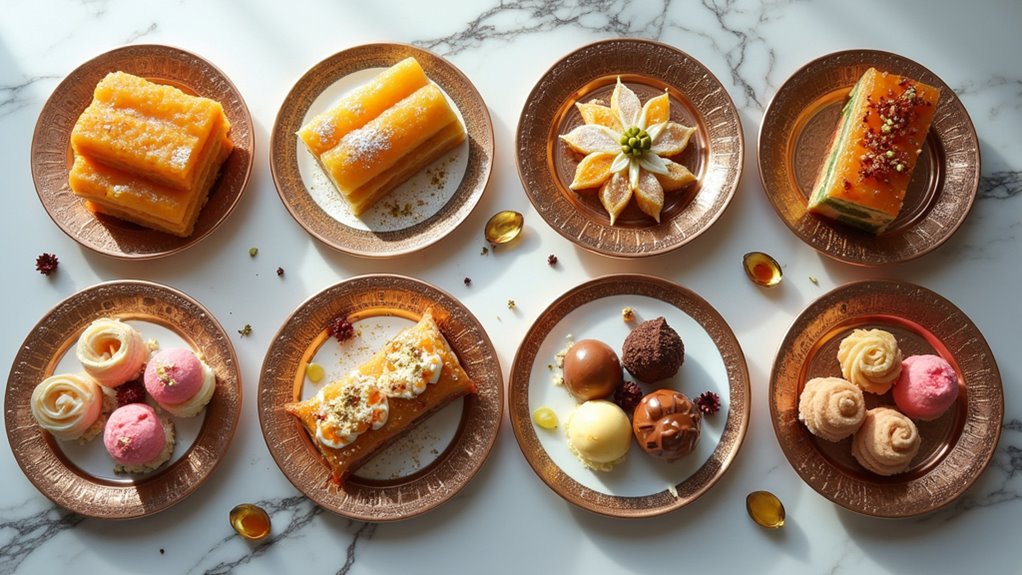
You’ll discover Turkey’s incredible dessert heritage through must-try treats like flaky baklava with honey-soaked phyllo, warm künefe with melted cheese, and creamy sütlaç rice pudding. Don’t miss fragrant revani semolina cake, seasonal kabak tatlısı pumpkin dessert, or classic lokum Turkish delight. Sample silky muhallebi milk pudding, traditional aşure Noah’s pudding, and golden tulumba pastries. These Ottoman-era sweets showcase centuries of culinary mastery and will transform your family holiday into an unforgettable cultural experience with deeper stories behind each bite.
- Baklava – Crispy Phyllo and Nut Pastry
- Künefe – Shredded Pastry With Creamy Cheese
- Sütlaç – Turkish Rice Pudding
- Revani – Semolina Cake With Fragrant Syrup
- Kabak Tatlısı – Turkish Pumpkin Dessert
- Pişmaniye – Turkish Cotton Candy
- Lokum – Turkish Delight
- Muhallebi – Silky Milk Pudding
- Aşure – Noah’s Pudding
- Tulumba – Golden Syrup-Soaked Pastries
- The Sum Up
Baklava – Crispy Phyllo and Nut Pastry
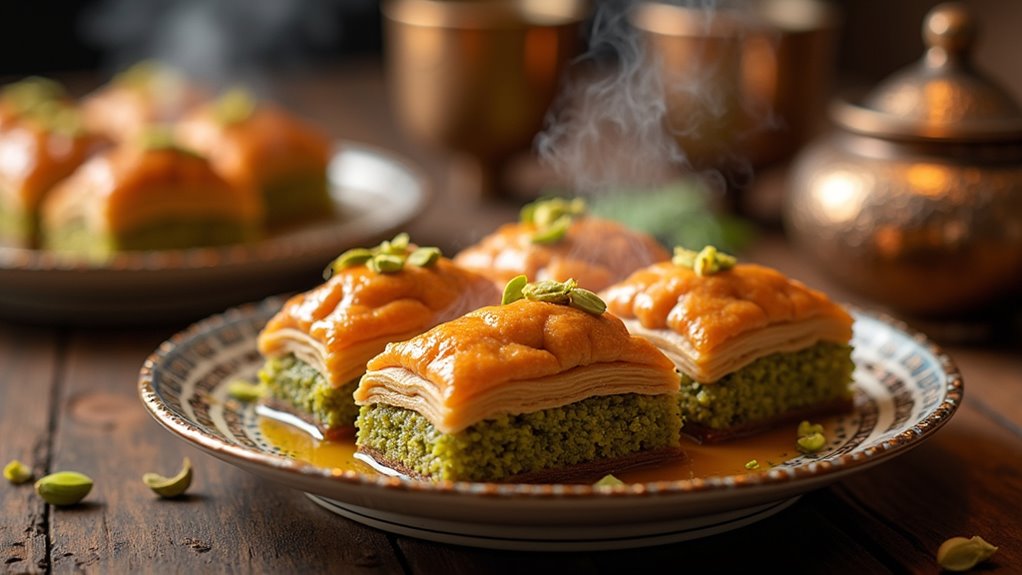
When you bite into authentic baklava, you’re experiencing a dessert that’s traveled through millennia of culinary evolution. This crispy phyllo and nut pastry traces back to ancient Mesopotamia around 2000 BCE, where it began as offerings to deities.
The Byzantines perfected the layered dough technique, while Ottoman chefs created the paper-thin phyllo sheets you’ll recognize today.
You’ll find baklava was once served exclusively in Istanbul’s Topkapi Palace and gifted to elite Janissary soldiers during Ramadan ceremonies.
Modern Turkish baklava combines delicate phyllo layers with pistachios, walnuts, or almonds, then gets drenched in honey-sugar syrup infused with rosewater. The dessert’s ancient roots can be traced to Roman placenta cakes, which featured similar layered pastry construction with honey, demonstrating baklava’s connection to classical antiquity.
When you’re in Turkey, don’t miss this royal treat that’s been perfected over 4,000 years of culinary mastery.
Künefe – Shredded Pastry With Creamy Cheese
While baklava showcases Turkey’s mastery of layered phyllo pastry, künefe takes shredded dough in an entirely different direction that’ll surprise your taste buds. You’ll discover this traditional dessert features crispy kataifi strands layered with melted cheese and drenched in sweet lemon syrup.
When you try künefe, you’re experiencing centuries of culinary tradition. The dessert combines simple ingredients—shredded phyllo dough, cheese (traditionally sheep’s milk, though you’ll find mozzarella variations), butter, and sugar syrup—into something extraordinary.
The contrast between crispy exterior and creamy filling creates an unforgettable texture. This beloved dessert is especially popular during Ramadan when families gather to break their fast with sweet treats.
You’ll find künefe served warm at special occasions throughout Turkey. Many restaurants prepare it fresh, baking at 350°F until golden before adding hot syrup. Don’t miss pairing it with kaymak for the complete authentic experience.
Sütlaç – Turkish Rice Pudding
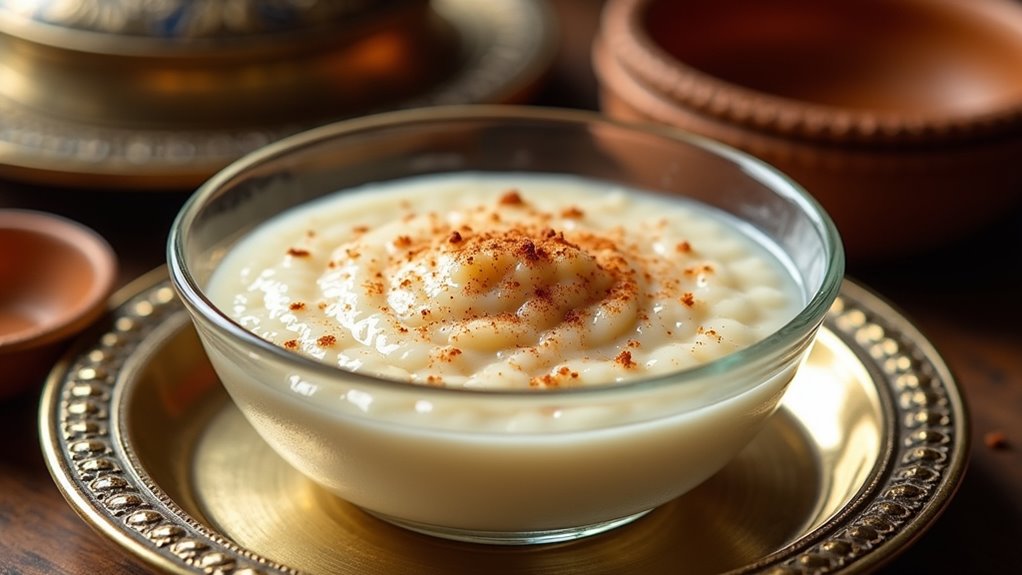
If you’re craving comfort food that doubles as dessert, sütlaç delivers the ultimate creamy satisfaction. This beloved Turkish rice pudding transforms simple ingredients—rice, milk, sugar, and cornstarch—into silky perfection that’s served at family gatherings and celebrations.
You’ll love how accessible this dessert is for home preparation. Start by cooking short-grain rice like osmancık or arborio in water for 10-15 minutes. Then gradually add whole milk for maximum creaminess.
The key is constant stirring during the 15-25 minute thickening process to achieve that signature custard-like consistency. Many Turkish families finish their sütlaç under the grill to create the prized burnt skin that adds both flavor and textural contrast.
Serve your sütlaç in individual bowls with a sprinkle of cinnamon or chopped pistachios. The result? A delicate, non-heavy dessert that perfectly captures Turkey’s rich milk-based sweet tradition.
Revani – Semolina Cake With Fragrant Syrup
How does a dessert manage to be both elegantly sophisticated and comfortingly homey? Revani achieves this perfect balance with its semolina-based sponge soaked in fragrant syrup.
You’ll love how the yogurt creates an incredibly soft, light texture that absorbs the zesty syrup beautifully.
Making revani isn’t complicated. Beat eggs with sugar until fluffy, fold in yogurt and oil, then combine with semolina and flour. Bake until golden, then slice while warm and pour cooled syrup over the cake. Let it absorb for 1-2 hours.
The result? A moist, aromatic dessert that’s popular across the Middle East and Mediterranean. You’ll often find revani sold from street food carts throughout Turkey, showcasing its beloved cultural significance.
Top with chopped pistachios or coconut, cut into squares, and serve at room temperature for the ultimate family treat.
Kabak Tatlısı – Turkish Pumpkin Dessert
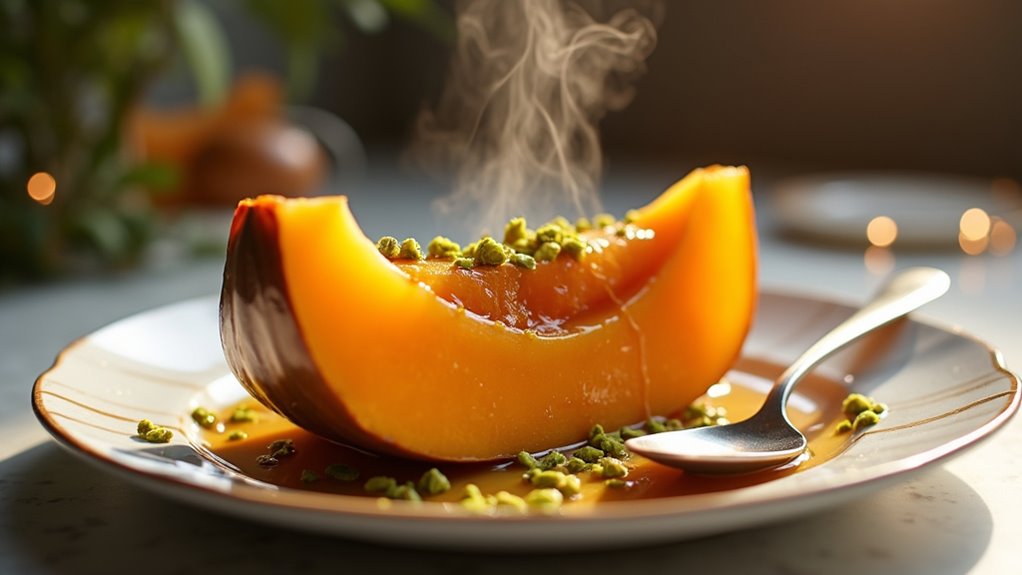
From the citrusy brightness of revani, Turkish desserts showcase an entirely different charm with kabak tatlısı – a simple yet elegant pumpkin dessert that celebrates autumn’s natural sweetness. This Ottoman-era treat transforms humble pumpkin chunks into tender, syrupy delights that’ll captivate your family’s taste buds.
You’ll love how straightforward the preparation is. Simply layer pumpkin pieces with sugar overnight, letting natural juices create a beautiful syrup. Then gently simmer until tender or bake for deeper flavors.
The magic happens when you drizzle tahini over the cooled pumpkin and sprinkle crushed walnuts on top. This popular seasonal treat appears on Turkish restaurant menus throughout autumn, making it a must-try dessert during your family holiday.
Serve it at room temperature as a cozy after-dinner treat. The combination of sweet pumpkin, nutty tahini, and crunchy walnuts creates perfect harmony that embodies Turkish hospitality.
Pişmaniye – Turkish Cotton Candy
While kabak tatlısı celebrates autumn’s natural sweetness, pişmaniye takes you into an entirely different domain of Turkish confectionery – one where sugar transforms into impossibly delicate strands that’ll remind you of cotton candy but with a richer, more substantial character.
You’ll find this 15th-century Persian-origin treat throughout Turkey, but Kocaeli’s Izmit region remains its spiritual home. Watch skilled artisans stretch boiled sugar into gossamer threads, incorporating roasted flour and butter that creates pişmaniye’s distinctive woolly texture and nutty flavor. The sugar is heated to 170°C until it reaches the perfect waxy consistency for transformation.
Don’t miss trying pistachio-topped versions or chocolate variants.
You’ll spot gift boxes at airports and bus stops – perfect souvenirs that capture Turkey’s confectionery artistry. The name means “regret,” reflecting the saying: “eat pişmaniye and regret once, don’t eat and regret a thousand times.”
Lokum – Turkish Delight
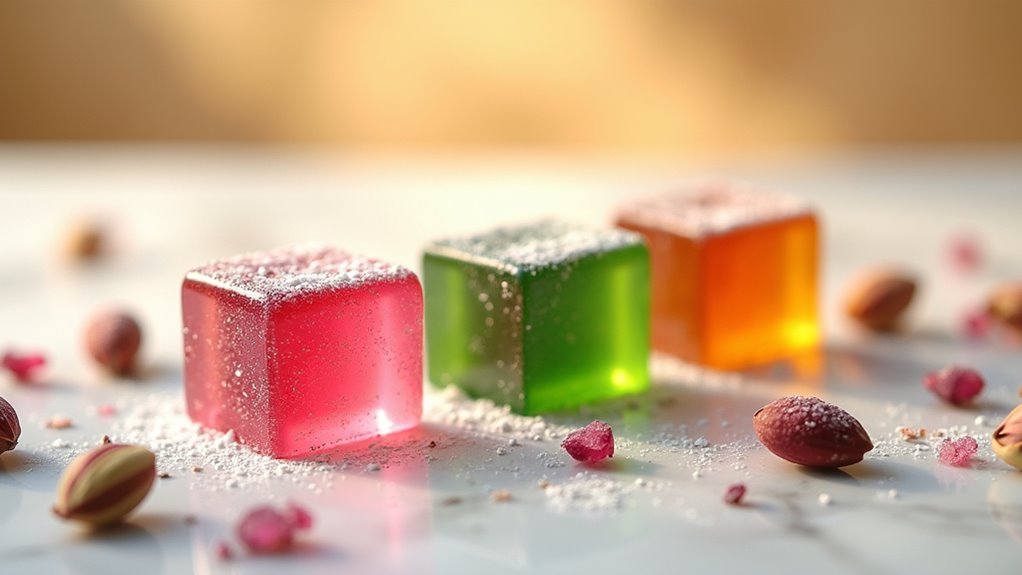
For over 250 years, lokum – better known worldwide as Turkish delight – has represented the pinnacle of Ottoman confectionery artistry, transforming simple sugar and starch into pillowy cubes that dissolve on your tongue with floral sweetness.
You’ll find this beloved treat traces back to Hacı Bekir’s Istanbul shop in 1777, where he perfected the starch-sugar recipe that made him the Ottoman court’s chief confectioner. The name comes from Arabic “rahat-ul hulküm,” meaning “comforting to the throat.”
Today, you can choose from over 24 flavors including rose, mastic, and mint, often filled with pistachios or walnuts. Regional specialties like Safranbolu Lokum showcase unique local ingredients such as precious saffron that distinguish different Turkish provinces. Visit traditional shops where craftsmen still cook the mixture for hours, creating those signature soft cubes dusted in powdered sugar.
Muhallebi – Silky Milk Pudding
After exploring the chewy sweetness of Turkish delight, you’ll discover that Turkey’s dessert repertoire extends to creamy, spoon-friendly treats that offer an entirely different textural experience. Muhallebi delivers exactly that—a silky milk pudding that’s become beloved throughout Turkey and the Middle East.
This traditional dessert combines whole milk, sugar, and cornstarch or rice flour, whisked continuously over medium heat until perfectly thickened. The magic happens when you add distinctive Turkish touches like mastic gum, which provides a subtle pine-like flavor, or fragrant rose water.
You’ll find muhallebi served chilled in individual cups, typically garnished with chopped pistachios, almonds, or dried rose petals. The result is an elegantly smooth pudding that’s invigoratingly light yet satisfying—great for ending a hearty Turkish meal. What makes this dessert particularly appealing for families is that it can be prepared ahead and stored in the refrigerator, making it a convenient option for busy holiday schedules.
Aşure – Noah’s Pudding
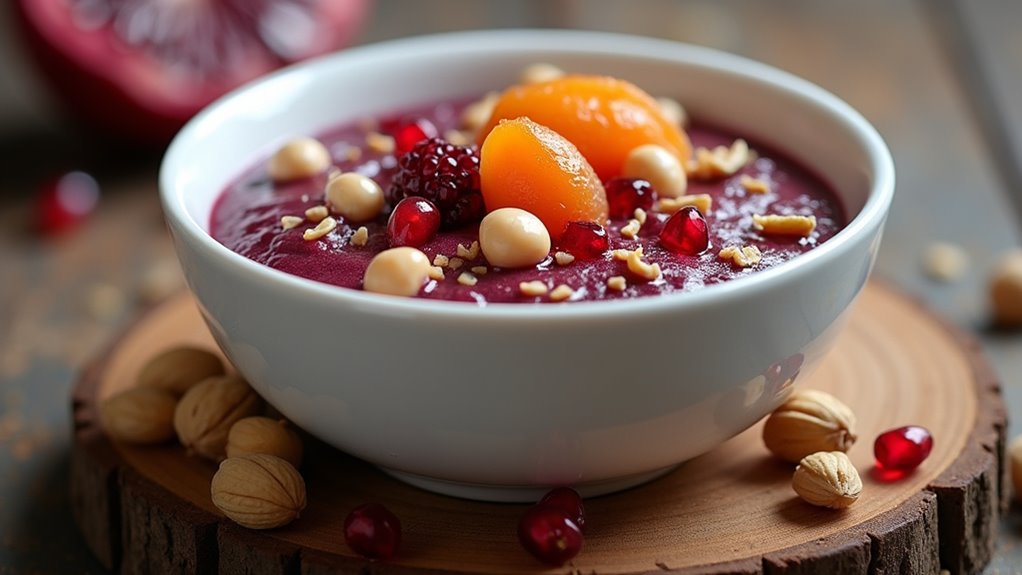
What could be more meaningful than a dessert that carries thousands of years of history and brings entire communities together? Aşure, or Noah’s Pudding, is Turkey’s legendary dessert that welcomes everyone—Christians, Jews, and Muslims alike.
You’ll discover this vegan-friendly treat combines wheat, rice, beans, dried fruits, and nuts into a hearty, sweet pudding that’s served cold.
During your Turkish holiday, you’ll find families preparing massive batches on the 10th of Muharrem, sharing bowls with entire neighborhoods as gestures of peace and friendship. Legend tells that this dessert was first created by Noah’s family using leftover food supplies when their ark came to rest on Mount Ararat.
Don’t miss trying this in Istanbul’s dessert shops—it’s garnished with pomegranate seeds and chopped nuts.
Each spoonful connects you to centuries of tradition, making it Turkey’s most spiritually nourishing dessert experience.
Tulumba – Golden Syrup-Soaked Pastries
Have you ever wondered what happens when Ottoman palace chefs perfect a simple fried pastry? You’ll discover the answer in tulumba, golden cylinders that’ve delighted families for centuries. These crispy treats start as choux pastry dough mixed with yogurt and starch, then get piped into ridged shapes and deep-fried until golden.
What makes them special is the hot sugar syrup bath they receive afterward, often flavored with rose water or lemon.
You’ll find tulumba’s texture uniquely satisfying – crunchy outside, dense and moist inside. They’re great for sharing during celebrations or enjoying as street food. The preparation method has remained virtually unchanged since the Ottoman Empire, maintaining the authentic taste that generations have cherished. During your Turkish holiday, you might hear them called tolomba or bamiyeh in different regions, but the sweet, syrupy experience remains consistently delicious.
The Sum Up
You’ll discover that Turkish desserts offer something for all in your family – from honey-drizzled baklava that’ll satisfy sweet tooths to creamy muhallebi that’s great for kids. Don’t worry if you can’t pronounce the names; simply point at what looks delicious! Most desserts are naturally vegetarian-friendly, and you’ll find lighter options like sütlaç alongside richer treats like künefe. Take photos, share plates, and let everyone try different flavors together.