We appreciate how this tour tackles one of Rome’s biggest challenges: navigating the Vatican Museums without spending hours in line. The priority access to the Vatican Museums and Sistine Chapel alone justifies the price, especially when you consider that visitors without skip-the-line privileges often wait 2-3 hours just to enter. You’ll move through at a sensible pace with a guide rather than being herded through with massive crowds.
The second thing that impresses us is the ambitious scope. You’re not just seeing the Vatican and calling it a day—you’re visiting four of Rome’s most significant papal basilicas. This gives you a complete picture of Rome’s ecclesiastical importance and architectural evolution, from Renaissance masterpieces to early Christian treasures. Most visitors miss these other basilicas entirely, so you’re getting a perspective on Rome that most travelers never experience.
- One Important Consideration
- Who This Tour Is Best For
- The Full Day Experience: Breaking Down What You’ll Actually See
- Vatican Museums: Why the Priority Access Actually Matters
- The Sistine Chapel: Michelangelo’s Masterpiece in Context
- St. Peter’s Basilica: More Than Just a Landmark
- The Afternoon Basilicas: Rome’s Spiritual Heritage Beyond Vatican City
- The Practical Realities: Transportation, Timing, and Group Size
- The Guides: Your Real Value Proposition
- Price Analysis: Is 6 Per Person Fair?
- What to Expect Regarding Crowds and Pacing
- Physical Requirements and What to Bring
- The Two-Part Tour Structure: Understanding the Logistics
- Frequently Asked Questions
- Final Verdict: Is This Tour Worth Booking?
- The Best Of Rome!
- More Museum Experiences in Rome
- More Tours in Rome
- More Tour Reviews in Rome
One Important Consideration
The tour operates in two distinct parts with a break between them, which requires coordination on your part. You’ll need to find your own way back to the meeting point for the afternoon portion, and you’ll need to arrange your own lunch. Some travelers have reported confusion about the afternoon meeting time and location, so careful attention to your confirmation details is essential.
👉 See our pick of the Discover 2 Great Tours In Rome
Who This Tour Is Best For
This experience works beautifully for first-time visitors to Rome who want to see the major Vatican and papal sites without the frustration of massive queues. If you’re moderately fit, interested in art and history, and want professional context for what you’re seeing, you’ll find genuine value here. It’s also ideal for travelers with limited time in Rome who want to maximize their sightseeing in a single day.
You can also read our reviews of more museum experiences in Rome


The Full Day Experience: Breaking Down What You’ll Actually See
This isn’t a typical single-tour experience—it’s two separate guided tours strategically connected into one ambitious day. Understanding this structure helps you plan accordingly and manage expectations about timing and logistics.
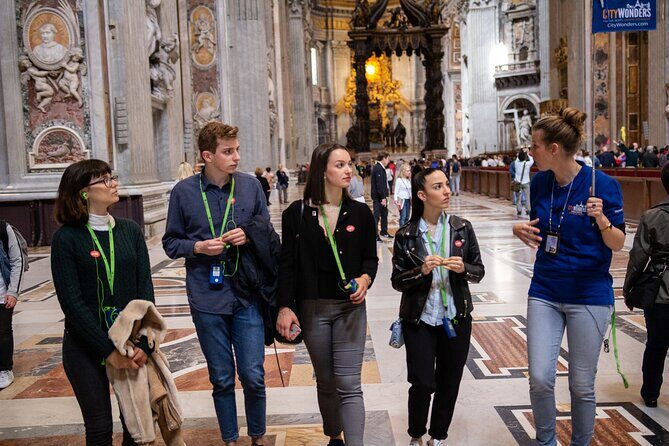
The morning portion focuses entirely on the Vatican: the Museums, Sistine Chapel, and St. Peter’s Basilica. You’ll spend approximately 3.5 hours here, starting with priority entrance to the Vatican Museums. This is where the real value proposition shines. Instead of joining the thousands queuing outside, you’ll enter through a dedicated lane, immediately separating you from the chaos of the main entrance.
The afternoon portion pivots to three additional papal basilicas scattered throughout Rome: St. Paul Outside the Walls, St. John Lateran, and Santa Maria Maggiore. You’ll travel by air-conditioned minivan between locations, with your guide providing historical context and architectural insights during the transitions. This part of the tour typically runs 2-2.5 hours of actual site time, plus travel.
Vatican Museums: Why the Priority Access Actually Matters
The Vatican Museums aren’t just crowded—they’re among the most heavily trafficked cultural sites on the planet. We’re talking about over 6 million visitors annually through corridors originally designed for pilgrims, not tour groups. Without skip-the-line access, you could easily lose 2-3 hours just waiting to enter, and that’s before you’ve seen anything.
Your guide will navigate you through the most significant galleries while deliberately avoiding the bottlenecks where casual visitors get stuck. One traveler noted, “You definitely want to skip the line. It’s a mad house. Well worth the money.” This isn’t an exaggeration—the contrast between entering through a priority lane and watching the main queue snake around the building is genuinely striking.
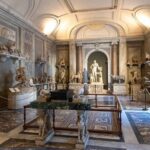
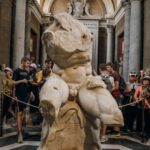
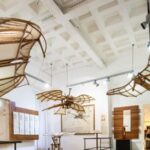
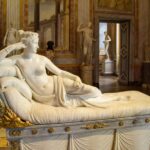
You’ll see the famous Raphael Rooms with their stunning frescoes, classical sculptures, and the gallery of maps. The Museums contain nearly 70,000 artworks spanning centuries. Your guide will help you understand what matters most rather than letting you get lost in the sheer volume. As one visitor observed, “There’s so much to see, I can imagine getting figuratively lost in the grandeur of any single Vatican Museum or even a single work of art for many hours, but he managed to keep us moving while showing us all of the most fascinating details and putting everything into historical context.”
The Sistine Chapel: Michelangelo’s Masterpiece in Context
You’ll spend roughly 20 minutes in the Sistine Chapel itself, which sounds brief until you consider that you’re viewing one of history’s greatest artistic achievements without fighting through shoulder-to-shoulder crowds. Your guide will point out specific details you’d likely miss on your own: the mathematical precision of the composition, the theological themes in Michelangelo’s ceiling panels, the power of the Last Judgment on the altar wall.
Photography isn’t permitted inside (Vatican policy), so you’re actually encouraged to look rather than photograph, which many travelers find liberating. One visitor with a Catholic perspective described it perfectly: “As a Catholic, there is no more powerful experience that to be at the Vatican. Then to take the Jubilee tour, and walk through the 4 Holy doors and have your sins forgiven, well that was worth the entire trip all by itself.”
The chapel’s silence and artistic intensity create a genuinely moving experience, especially when your guide helps you understand Michelangelo’s vision and the historical circumstances of the commission.
St. Peter’s Basilica: More Than Just a Landmark
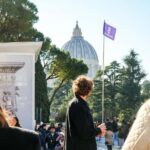
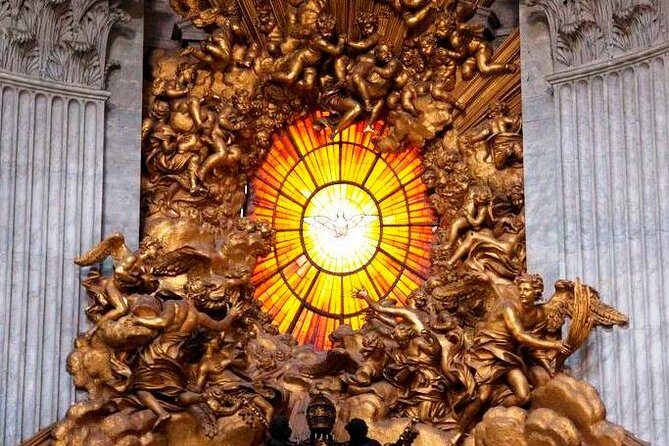
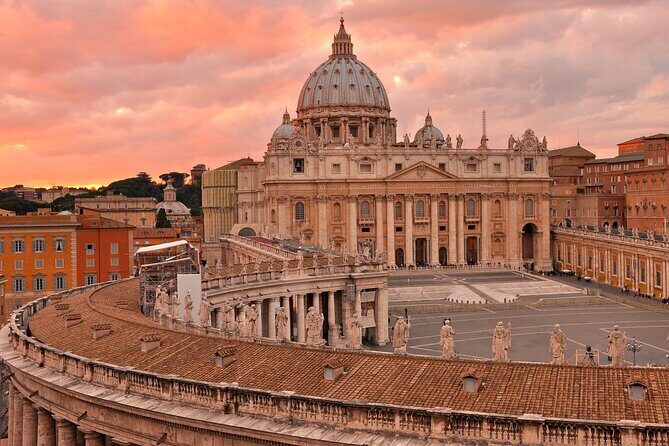
St. Peter’s Basilica represents the culmination of Renaissance architecture and centuries of artistic achievement. You’ll have roughly 40 minutes here to see Michelangelo’s Pietà, Bernini’s Baldachin under the dome, and the overall majesty of a space that has defined Christianity for centuries.
What makes this portion valuable isn’t just the sightseeing—it’s the context your guide provides. You’ll understand why this basilica matters, how it was constructed, and what you’re actually looking at architecturally. One traveler noted, “Our guide Doriana was fantastic on the Vatican Museum / Sistine Chapel / St. Peter’s in the morning. She was very knowledgeable, friendly and humorous. Time flew.”
The morning tour culminates here, and you’ll be given information about where to meet for the afternoon portion and what time to return.
You can also read our reviews of more tours and experiences in Rome

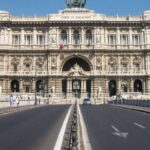
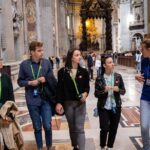
The Afternoon Basilicas: Rome’s Spiritual Heritage Beyond Vatican City
This is where the tour becomes genuinely special. Most Rome visitors never see these three basilicas, yet each is architecturally and historically significant in ways that rival St. Peter’s.
St. Paul Outside the Walls sits just beyond the ancient Aurelian Walls and marks the burial site of St. Paul. You’ll see stunning early Christian mosaics and a massive nave supported by towering columns. The golden apse mosaic and the portraits of every pope create a sense of historical continuity that’s quite moving. One visitor remarked, “St. Paul Outside the Wall is exquisite as is the Archbasilica of St. John Lateran.”
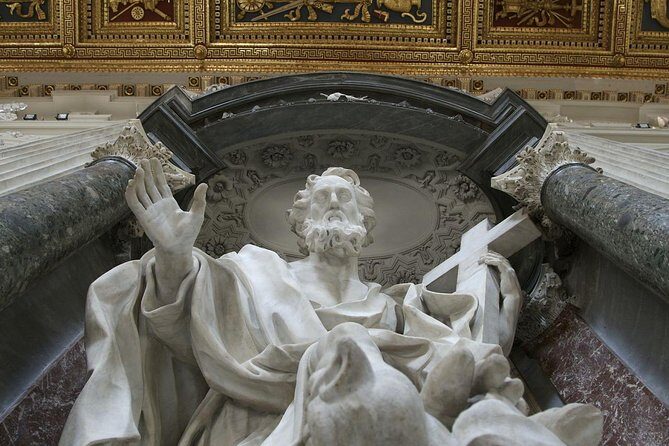
St. John Lateran holds the distinction of being Rome’s oldest and highest-ranking major basilica—technically the Pope’s cathedral in his role as Bishop of Rome. The Baroque facade is grand, and inside you’ll see the Holy Stairs, believed to have been climbed by Jesus during his trial. The sculptures of the apostles and intricate mosaics demonstrate a different artistic period and approach than the Renaissance work you saw in the morning.
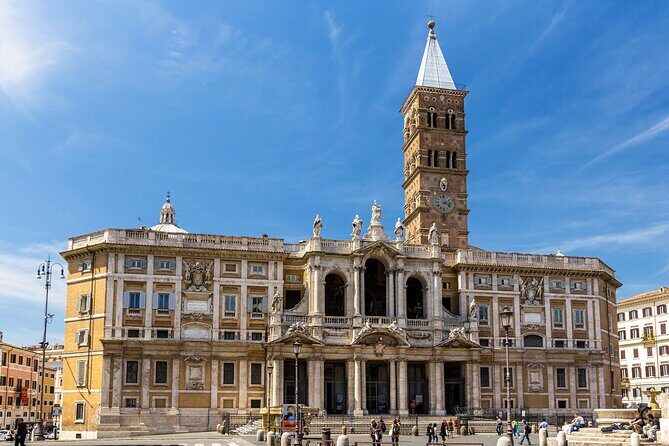
Santa Maria Maggiore closes out your day with 5th-century mosaics depicting biblical scenes in stunning detail. The basilica showcases the evolution of architectural styles from early Christianity through the Baroque period. The gold-encrusted ceiling is particularly striking, and Bernini’s tomb is located here as well. It’s a fitting conclusion to a day spent understanding Rome’s religious and artistic legacy.
The Practical Realities: Transportation, Timing, and Group Size
You’ll travel between the afternoon basilicas in an air-conditioned minivan with groups of 20 or fewer. This smaller group size matters—you won’t feel herded, and your guide can actually interact with you meaningfully. Several travelers specifically praised this aspect: “Our groups were small and the local guides very knowledgeable, with excellent English. There was plenty of free time between the morning and afternoon tour for lunch and some shopping.”
The air-conditioned transportation is genuinely valuable in Rome, especially if you’re visiting during warmer months. Walking between these basilicas on foot would add significant time and physical strain to an already full day.
The roughly 2-hour break between the morning and afternoon tours requires you to manage lunch and finding your way back to the meeting point. This is presented as free time, which some travelers appreciate and others find logistically awkward. Plan ahead, know your meeting time and location precisely, and you’ll avoid the confusion that a few travelers experienced.
The Guides: Your Real Value Proposition
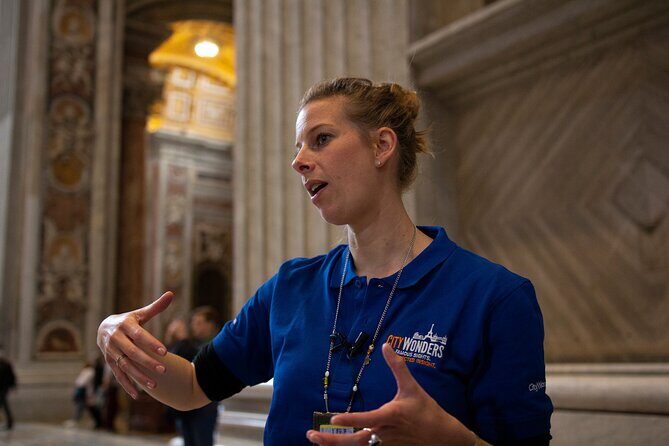
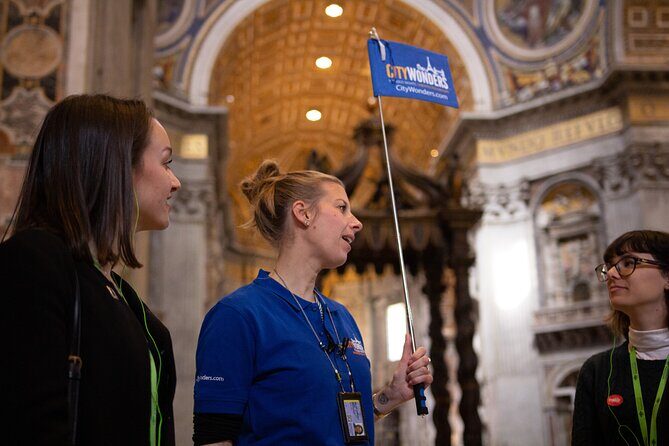
The most consistent praise across reviews focuses on guide quality. We’re talking about guides who are genuinely knowledgeable, fluent in English, and able to make complex historical and artistic information accessible. One traveler summed it up: “Both the tour guides morning and afternoon were very knowledgeable.”
Another visitor highlighted what good guides actually do: “She guided us through the hordes and provided background to what we saw in the galleries, the Sistine Chapel and St. Peter’s Basilica.” This is the real value—not just access, but understanding.
Multiple travelers reported that when they were the only people booked on the afternoon portion, the tour operator upgraded them to a private car with a dedicated guide. This kind of flexibility and willingness to enhance the experience speaks to the professionalism of City Wonders, the tour operator.
Price Analysis: Is $266 Per Person Fair?
At $266 per person for a 8 hours 45 minutes experience, you’re looking at roughly $30 per hour. But that’s a misleading way to think about it. The real value includes:
- Skip-the-line access to the Vatican Museums (would cost €21-25 separately and save you 2-3 hours of waiting)
- Professional guided tour of the Vatican (typically €25-40 on its own)
- Admission to three major basilicas (St. Paul, St. John Lateran, Santa Maria Maggiore—roughly €15-20 combined)
- Air-conditioned transportation between sites
- Audio headsets so you can hear your guide clearly in crowded spaces
- Expert English-speaking guide for both morning and afternoon
When you break it down, the skip-the-line access alone justifies a significant portion of the cost. Add in the transportation, multiple admissions, and professional guiding, and you’re looking at genuine value, especially compared to what you’d spend assembling these experiences independently.
One experienced traveler put it directly: “This is an outstanding experience. The groups were small and the local guides very knowledgeable, with excellent English. There was plenty of free time between the morning and afternoon tour for lunch and some shopping. The operator, CityWonders, really had their act together.”
What to Expect Regarding Crowds and Pacing
The Vatican Museums are inherently crowded—there’s no way around this reality. However, the tour is specifically designed to minimize your exposure to the worst bottlenecks by using priority entrance and strategically timed routing. You won’t be alone with masterpieces, but you also won’t be shuffling through shoulder-to-shoulder crowds where you can barely see what you came to see.
One consideration: if you visit during the Papal Jubilee (which affects 2025), expect heightened security screening and potentially modified access to certain areas. The tour operator notes that access through the holy doors may not be possible, and last-minute religious ceremonies can affect basilica availability. This isn’t the tour operator’s fault—it’s simply a reality of visiting during peak pilgrimage periods.
One traveler noted honestly: “Extremely crowded due to Jubilee visitors. Could not see St Peter’s Basilica due to the Pope and Jubilee activities. Neither were the fault of the tour guides. Mary did the best possible under the circumstances, but it always seemed like we were hurrying by all the things worth seeing just to get through the crowds.”
Physical Requirements and What to Bring
This tour involves “a fair amount of walking and stairs,” according to the operator. Comfortable, broken-in walking shoes are genuinely important—you’re not sitting on a bus all day. You’ll be on your feet moving through multiple large buildings with varied terrain.
Dress code matters: sleeveless shirts are not permitted in the Vatican or the basilicas, though shorts that reach the knee are acceptable. The buildings aren’t reliably air-conditioned, so layers are helpful. One visitor mentioned, “The museums and Basilicas are not air conditioned or if they were, they are very weak. Shorts are needed.”
Bag restrictions are strict at the Vatican. Large bags, backpacks, and tripods are prohibited. Only small bags are permitted. If you arrive with a large bag, you’ll need to check it into luggage storage, which could mean leaving the tour early to retrieve it. Pack light and smart.
The Two-Part Tour Structure: Understanding the Logistics
This is where some confusion has occurred for travelers. You’re essentially booking two separate tours that happen on the same day. The morning guide won’t necessarily know you’ve booked the afternoon portion. You need to:
- Complete the morning Vatican tour
- Find your way to the afternoon meeting point
- Arrange your own lunch
- Check in with the afternoon guide at the specified time
Make absolutely certain you have the afternoon meeting time and location clearly noted. Several travelers experienced frustration when communication about the afternoon check-in time wasn’t clear. The tour operator’s response to these complaints indicates they do provide this information in vouchers, but it requires careful reading.
Frequently Asked Questions
Q: Do I really save time with the skip-the-line access?
A: Yes, substantially. Without it, you could wait 2-3 hours just to enter the Vatican Museums. The skip-the-line access gets you in through a priority entrance, saving several hours of your day. This is especially valuable during peak season (April-October).
Q: Is lunch included in the price?
A: No. Lunch is not included, and you’ll have roughly 2 hours between the morning Vatican tour and the afternoon basilicas tour. You’ll need to find a restaurant near the Vatican and manage your own meal during this break.
Q: What happens if I’m not back in time for the afternoon tour?
A: The afternoon tour will proceed at the scheduled time. Make sure you understand your afternoon meeting point and time clearly from your confirmation details. The tour operator has noted that this information is included in your voucher.
Q: Can I do just the morning Vatican tour without the afternoon basilicas?
A: This particular tour is marketed as a full-day combo experience. However, you might find other tour options available that focus only on the Vatican if you prefer. Check with the tour operator about alternatives.
Q: How large are the groups?
A: Maximum 20 people per tour. If fewer people book the afternoon portion, you may receive a more intimate experience, potentially even a private car and guide.
Q: What’s the dress code for the Vatican and basilicas?
A: Sleeveless shirts are not permitted. Shorts must reach the knee. Covered shoulders and knees are the basic requirement. Many women wear scarves they can drape over shoulders if needed.
Q: Are there bathrooms available during the tours?
A: The Vatican Museums and basilicas have restroom facilities, though they can be crowded. Your guide can direct you to them during the tour.
Q: What if I have mobility issues or can’t handle stairs?
A: The tour involves “a fair amount of walking and stairs.” If you have significant mobility limitations, you should contact the tour operator before booking to discuss what’s realistic for your situation.
Q: Can I bring a camera or phone to take pictures?
A: Photography is strictly prohibited inside the Sistine Chapel (Vatican policy). You can photograph other areas of the Vatican Museums and the basilicas, though some areas may restrict it. Check with your guide about specific restrictions at each location.
Q: What’s the cancellation policy?
A: You can cancel up to 24 hours before the tour starts for a full refund. Cancellations within 24 hours forfeit the full amount. Make sure you understand your local time zone relative to the tour’s start time.
Vatican Museums, Sistine Chapel & 4 Papal Basilicas Full Day Tour
Final Verdict: Is This Tour Worth Booking?
This tour delivers genuine value for travelers making their first visit to Rome and wanting to see the Vatican and major papal basilicas efficiently and knowledgeably. The skip-the-line access alone justifies a significant portion of the $266 cost, and the small group sizes combined with expert guides create an experience that’s substantially better than attempting these sites independently. The afternoon basilicas component is a particular strength—most visitors never see them, yet they’re architecturally and historically significant. The main consideration is managing the logistics of the two-part tour structure and understanding that you’ll need to arrange your own lunch and transportation between segments. If you’re reasonably fit, interested in art and history, have moderate physical capability, and want professional context for what you’re seeing, this is an excellent use of your time and money in Rome.