- A Vespa Sidecar Tour of Rome: The Best Three Hours You’ll Spend in the Eternal City
- What You’re Actually Getting for Your Money
- The Ride Itself: What to Expect
- The Seven Stops: What Makes Each One Worth Your Time
- How the Timing Actually Works
- The Guides Make or Break This Experience
- What to Know Before You Book
- Who This Tour Is Actually Best For
- Is This Tour Worth Booking?
- FAQ
- Do I need previous Vespa riding experience to do this tour?
- What happens if it rains on the day of my tour?
- Can I visit the inside of the Colosseum on this tour?
- How many people will be on my tour?
- Will the guide take photos of me?
- What’s included and what’s not included in the price?
- Can children do this tour?
- What’s the cancellation policy?
- What should I wear and bring on this tour?
- The Best Of Rome!
- More Scooter Rentals in Rome
- More Tours in Rome
- More Tour Reviews in Rome
A Vespa Sidecar Tour of Rome: The Best Three Hours You’ll Spend in the Eternal City
This Vespa sidecar tour offers something genuinely different from the typical Rome experience. Instead of shuffling through crowded tour groups or spending hours on your feet, you’re whisked around the city in an iconic Italian scooter, stopping at all the major sights while actually having time to breathe and absorb what you’re seeing. What makes this genuinely special is the combination of expert local guides who actually know Rome’s history and the built-in flexibility to explore each site at your own pace rather than being herded along.
I love the fact that you get hotel pickup and drop-off, which means no hunting for meeting points or figuring out where to go first thing in the morning. The guides—many of whom have earned consistent praise for knowledge and personality (Enes, Arda, and Ahmad appear frequently in reviews)—handle the navigation while you soak in the atmosphere and snap photos. You’re also getting gelato from one of Rome’s best gelato shops included in the price, which is a nice touch that actually matters when you’re traveling.
The one thing to keep in mind is that this isn’t a leisurely cruise. You’re covering seven major landmarks in three hours, which means you’re moving at a steady pace. If you’re someone who needs hours at each site or prefers a slower rhythm, this might feel rushed.

👉 See our pick of the Discover 2 Great Tours In Rome
What You’re Actually Getting for Your Money
At $143.91 per person, this tour sits in the mid-range for Rome experiences. You’re paying for convenience, personality, and the genuine novelty of seeing the city from a Vespa rather than from inside a bus or on foot. The price includes your driver-guide, helmet, insurance, and that gelato treat, which adds real value. The Colosseum entrance isn’t included, but most of the stops don’t require paid admission anyway—you’re exploring exteriors and squares, not interiors.
What matters most is that reviewers consistently mention this tour delivers far more than the price suggests. One traveler who initially thought the cost was steep ended up saying they’d do it again in a heartbeat because the guide made the difference. That’s the real value here: you’re not just getting transportation, you’re getting someone who actually cares about sharing Rome with you.
You can also read our reviews of more tours and experiences in Rome


The Ride Itself: What to Expect
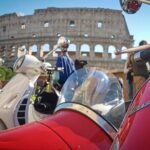
Riding in a Vespa sidecar is genuinely fun in a way that feels slightly illicit—you’re doing something distinctly Roman, something you can’t do at home. The sidecar accommodates two passengers, so if you’re traveling with a partner, you’ll share one. Groups split accordingly: four people means two Vespas, and so on. The maximum group size is 14 travelers, which keeps things intimate.
The experience works for almost everyone. People in their 70s and 80s have done this tour and called it one of their best travel memories. Kids love it—multiple reviews mention children calling it the best tour they’ve taken. You do need to be under 195 cm (6’5″) and under 100 kg (220 lbs), and there’s a weight distribution consideration if you’re heavier, but the operators are upfront about this.
Helmets and hairnets are provided, which matters because you’re going to be moving. Rome’s traffic is chaotic, but these drivers navigate it with confidence. Multiple reviewers specifically mention feeling safe, which isn’t something you’d necessarily expect when you’re weaving through Italian traffic on a scooter.
The Seven Stops: What Makes Each One Worth Your Time
The Colosseum and Ancient Rome
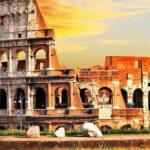
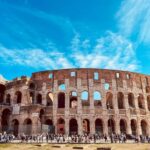
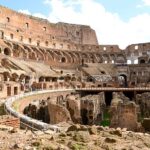
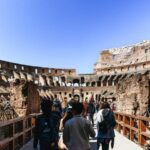
Your tour kicks off at the Colosseum, Rome’s most iconic landmark and genuinely impressive when you’re standing in front of it. You get about 15 minutes here, which is enough to walk around the exterior, take photos, and let the scale of the thing sink in. This is where gladiators fought and crowds roared nearly 2,000 years ago, and the engineering is legitimately remarkable—those massive stone arches have survived earthquakes and centuries of neglect.
The key thing to know is that you’re not going inside. The entrance fee isn’t included, and honestly, 15 minutes wouldn’t get you much beyond the entry hall anyway. You’re getting the experience of being there, absorbing the atmosphere, and understanding why this building still matters. Your guide will give you the historical context that makes standing there actually mean something beyond just checking a box.
Spanish Steps: Where Rome Gathers
The Spanish Steps is where you start to understand Rome as a living city, not just a museum. You arrive at the top, which means you get those sweeping views down across the Piazza di Spagna, surrounded by luxury shops, cafes, and the actual Roman life happening around you. This is an 18th-century Baroque staircase that connects to the Trinità dei Monti church, and it’s one of those spots that looks exactly like you imagined it would look.
What’s valuable here is the perspective. You’re not fighting your way up the steps with thousands of other travelers—you’ve arrived fresh and got your bearings before the real crowds hit. You can see how the square functions, where locals actually sit, and how the architecture frames the city beyond.
Castel Sant’Angelo: Views That Justify the Stop
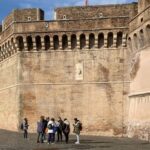
Castel Sant’Angelo started as Emperor Hadrian’s mausoleum in 139 AD and has been everything from a papal residence to a military fortress. The views from here are genuinely among the best in Rome—you can see the Vatican, the Tiber River, and a huge sweep of the city spreading out below you. The castle itself is beautiful, with ancient corridors and courtyards that feel authentically old rather than reconstructed.
Fifteen minutes gives you enough time to walk around, take photos, and let your guide explain what you’re looking at. Multiple reviewers specifically mentioned the views here, and they weren’t exaggerating.
St. Peter’s Basilica and Vatican City
The Vatican stop puts you in St. Peter’s Square, where you’re looking at one of the world’s most important religious sites and one of its most architecturally significant buildings. The dome of St. Peter’s Basilica is iconic for good reason—it’s massive and beautiful and dominates everything around it. You can see the Swiss Guard in their colorful uniforms, the square with its colonnades, and get a sense of the scale of what the Catholic Church built here.
Again, you’re not going inside the basilica or the Vatican Museums. You’re experiencing the exterior and the square, which is actually plenty. This is one of those stops where your guide’s commentary matters because they’ll explain what you’re looking at and why it matters, rather than you just standing there wondering what the architecture is supposed to mean.
Fontana dell’Acqua Paola: The Viewpoint Locals Know
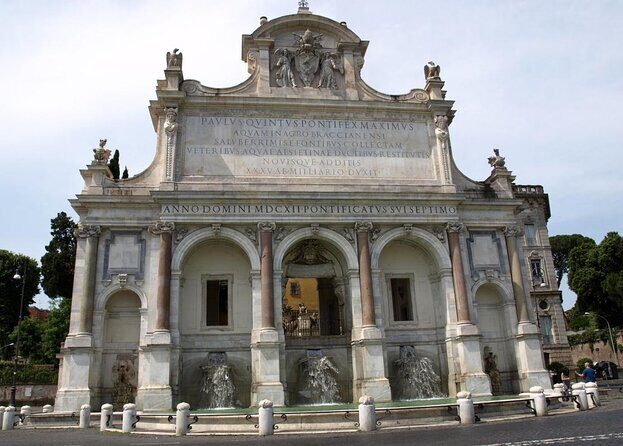
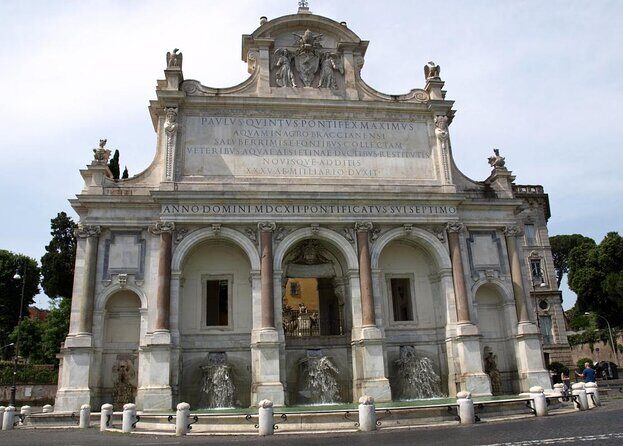
The Fontana dell’Acqua Paola on the Janiculum Hill is where the tour takes a turn toward local Rome rather than tourist Rome. This Baroque fountain was built in the early 17th century to celebrate the restoration of the Aqua Traiana aqueduct. It’s beautiful, and the views from up here are genuinely stunning—you’re looking out over the entire city from a spot that doesn’t have crowds.
This is the kind of stop that separates a good tour from one that just hits the famous boxes. Your guide will explain the engineering behind the aqueduct and why Romans considered water such a big deal. You’re learning something while looking at something genuinely beautiful.
The Pantheon: Engineering That Still Impresses
The Pantheon is where you really understand Roman engineering. This temple was built around the 2nd century AD and features an unreinforced concrete dome that still stands—a technical achievement that wasn’t matched in Europe for over a thousand years. You can step inside and see the oculus (the circular opening at the top of the dome) letting light pour in, see the marble, and understand why this building kept getting recycled through history.
Your guide will walk you through how this building went from a pagan temple to a Christian church, which is fascinating because it shows how Rome’s religious history actually layered on top of itself. The Pantheon is one of the best-preserved Roman buildings because it was continuously used and maintained—unlike structures that were abandoned and fell into ruin.
Piazza Venezia: Power and Monument
Piazza Venezia is Rome’s largest piazza, dominated by the massive Vittoriano monument (also called the Altar of the Fatherland). This is where you get a sense of Rome as a capital city, not just ancient ruins. The monument is imposing and slightly gaudy by some standards, but it’s undeniably important to understanding modern Rome. Your guide will explain the history and what this square has meant to Rome over the centuries.
How the Timing Actually Works
The tour runs about three hours total, which sounds short until you realize you’re covering seven major landmarks plus the ride itself. The schedule is tight but not stressful—you’re moving through the city, not sitting in traffic jams. If you book an early morning tour, you’re done by lunchtime, which leaves your afternoon free. An evening tour gives you the city with different light and fewer crowds at the stops.
The fact that you’re picked up from your hotel and dropped off back there matters more than it might sound. You’re not wasting time finding transportation or figuring out logistics. Your driver arrives 10 minutes early, you get in, and you go.
The Guides Make or Break This Experience
This is worth emphasizing because it comes up in nearly every positive review: the guides genuinely matter. Enes, Arda, Ahmad, Enes, Yaman, Mustapha, Yunus—these names appear repeatedly in reviews, and people specifically mention them by name because they made the tour special. These aren’t people reading from a script. They’re knowledgeable about Rome’s history, they’re good drivers, and they actually enjoy what they do.
One traveler mentioned that their guide changed the itinerary on the fly because they’d already seen the Colosseum, then found their wallet after the tour and went out of his way to return it. That’s not standard tour operator behavior. That’s someone who cares.
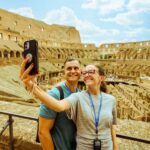
The guides take photos for you, answer questions patiently, and know Rome deeply enough to add details and stories that you wouldn’t get from a generic tour. This is where the value of the tour really lives.
You can also read our reviews of more tours and experiences in Rome

What to Know Before You Book
Physical considerations matter here more than on a typical tour. You’re on a scooter, so bumpy Roman streets are going to feel bumpy. One reviewer mentioned this honestly—riding on the back of the Vespa is more jostling than sitting in the sidecar. If you have back problems or joint issues, the sidecar is your better bet. The maximum weight per person is 100 kg (220 lbs) and maximum height is 195 cm (6’5″), so if you’re outside those parameters, contact the operator beforehand.
Weather happens. Multiple reviews mention rain, and one group was prepared with ponchos. The tour goes in rain or shine, so if weather is a concern, check the forecast and dress accordingly. Evening tours give you the city lit up beautifully, which reviewers specifically praised, but they also mean you’re riding in darker conditions.
Gelato is included, and reviewers consistently mention it being genuinely good. This isn’t a tourist trap ice cream—it’s from one of the best gelato shops in Rome. It’s a nice touch that actually tastes good rather than just being a marketing add-on.
Who This Tour Is Actually Best For
This works brilliantly for first-time visitors who want to see the major sights without spending days hitting them individually. It’s also excellent for families with kids—the novelty of the Vespa keeps children entertained, and you’re covering ground fast enough that attention spans aren’t tested. People returning to Rome find it valuable because it’s a different way of seeing the city and hits spots they might have missed before.
Solo travelers do this tour regularly and report feeling safe and having a good time. Couples love it because it’s fun and romantic in a distinctly Roman way. Older travelers have done this and called it one of their best travel memories. The physical demands are real but manageable for most people who can walk and climb stairs.
The one group this might not suit is people who want to spend two hours studying the Colosseum’s interior or need a very slow pace. If you need quiet contemplation at each stop, you’ll feel rushed.
Is This Tour Worth Booking?
Yes, if you’re visiting Rome for the first time or want a genuinely different experience of the city. The price is reasonable for what you get—you’re paying for convenience, expertise, and novelty. You’re not overpaying for a generic tour, and you’re not underpaying for something sketchy. The guides consistently earn praise because they actually know Rome and enjoy sharing it.
The main reasons to book: you’ll see seven major landmarks in three hours, your hotel handles pickup and drop-off, you get a genuinely guide, and you’re doing something that actually feels special rather than like every other tour. The gelato is good. The views are genuinely beautiful. The experience is safe and well-organized.
The main reasons to skip: if you need more time at each site, if you’re uncomfortable with scooter riding, or if you’ve already spent days exploring Rome individually and don’t need an overview. If you’re on a very tight budget and the $143.91 per person is a real stretch, there are cheaper ways to see Rome’s landmarks.
But for most people visiting Rome, this is a genuinely smart use of time and money. You’ll spend three hours doing something memorable, you’ll understand the city better, and you’ll have stories to tell that go beyond the typical museum visits.
Vespa Sidecar Tour In Rome with Pickup, Drop-off, Gelato included
FAQ
Do I need previous Vespa riding experience to do this tour?
No experience necessary. You’re a passenger in the sidecar or on the back of the Vespa—the driver handles all the riding. The drivers are professionals who navigate Rome’s traffic daily, and multiple reviewers specifically mentioned feeling safe despite Rome’s chaotic traffic.
What happens if it rains on the day of my tour?
The tour operates in rain or shine. One group was provided with ponchos when weather turned bad, so the operator is prepared for wet conditions. Check the forecast before your tour day and dress appropriately, but don’t assume the tour will be cancelled.
Can I visit the inside of the Colosseum on this tour?
The Colosseum entrance fee is not included in this tour. You’ll stop at the Colosseum and have time to walk around the exterior, take photos, and absorb the atmosphere, but you won’t go inside. If visiting the interior is important to you, you’d need to book a separate ticket.
How many people will be on my tour?
The maximum group size is 14 travelers. Smaller groups are common, and the operator pairs people into sidecars—so two people share one sidecar and driver. You might end up with just your group or mixed with other travelers, depending on booking.
Will the guide take photos of me?
Yes. Guides consistently take photos for travelers throughout the tour. Multiple reviewers specifically praised guides for their eye for good photo opportunities and for capturing images of and for the group.
What’s included and what’s not included in the price?
Included: your guide, driver, helmet, hairnet, insurance, and gelato from a quality gelato shop. Not included: entrance to the Colosseum. All other stops are exterior or free access.
Can children do this tour?
Yes. Multiple families with children aged 9-12 have done this tour and loved it. Children are accommodated in the sidecars, and reviewers mention kids calling it their favorite tour. Physical size and weight limits do apply—children need to be under 195 cm tall and under 100 kg.
What’s the cancellation policy?
You can cancel free of charge up to 24 hours before your tour start time. Cancellations made less than 24 hours before are non-refundable, and changes made within 24 hours won’t be accepted.
What should I wear and bring on this tour?
Wear comfortable clothes suitable for the weather and shoes you can walk in at each stop. Helmets and hairnets are provided. Bring a camera or phone for photos, sunscreen, and water. If rain is forecast, bring a light rain jacket or be prepared for ponchos.