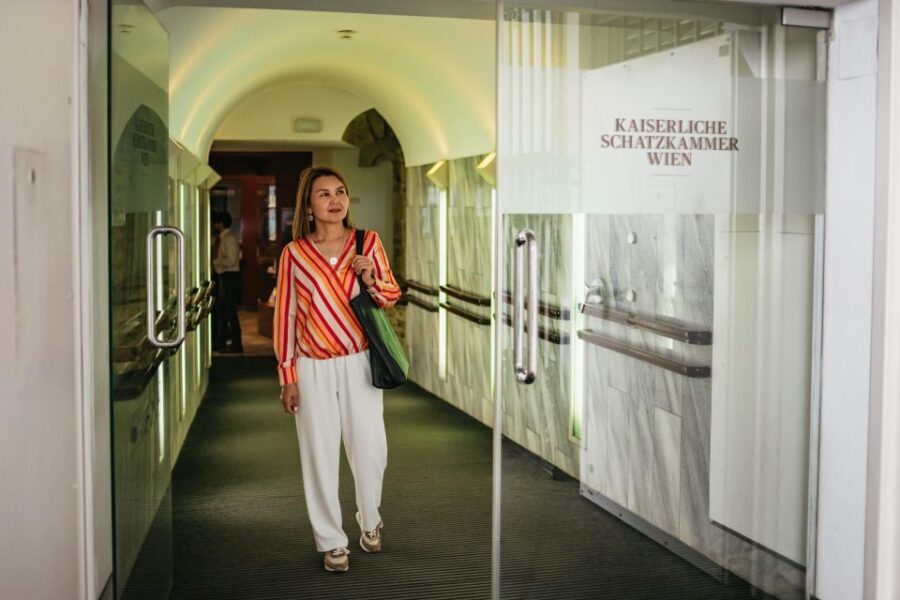
The Imperial Treasury in Vienna’s Hofburg Palace (Swiss Wing) is one of those places where “small room” turns into “wow, how is all this real?” You’ll be looking at Habsburg power made visible: crowns, sacred objects, luxury gems, and even legendary items like the Holy Grail-style agate bowl.
Two things I’d put first: the sheer visual impact of the Austrian Imperial Crown and the way the display mixes royal jewelry with relics and orders, so it feels like court life and belief systems in one stop. It’s also a very manageable visit—people commonly finish in about an hour to an hour and a half.
One consideration: the ticketing can take a bit of time because you’ll need a printed voucher and may have to exchange it at the ticket counter, so don’t build in a 15-minute buffer.
- Key points to know before you go
- Where the Imperial Treasury lives: Hofburg’s Swiss Wing
- The practical setup: small group, wheelchair access, and timing
- Price and value: what buys you (and what to watch for)
- Plan your visit length: expect about 60–90 minutes
- What you’ll see first: how the collection is organized
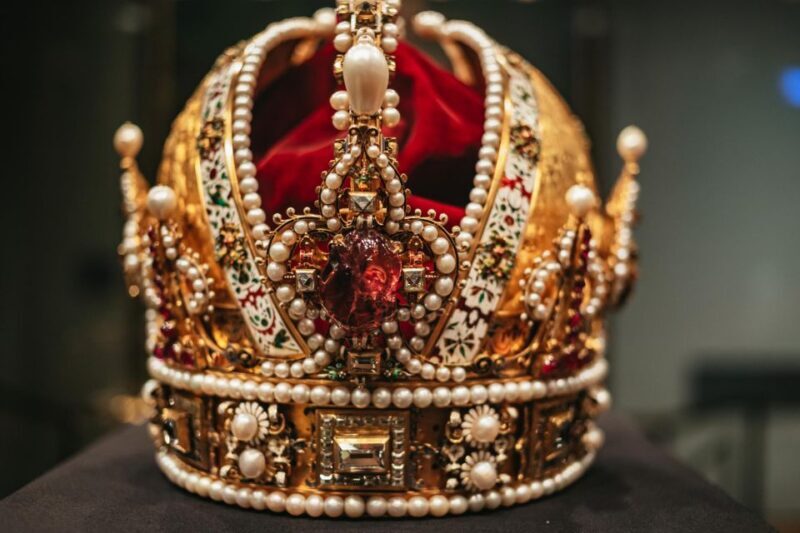
- The centerpiece you can’t miss: the Austrian Imperial Crown
- Holy Roman Empire crown jewels: seeing power in metal
- Emerald and diamond superstars: world-size gems in one place
- Religious relics and legendary objects: Holy Lance, Holy Grail, unicorn horn
- The Order of the Golden Fleece: bling with a purpose
- Burgundy collections and the 15th-century flavor
- Empress Elisabeth’s original jewelry parts
- Napoleon II and the cradle connection
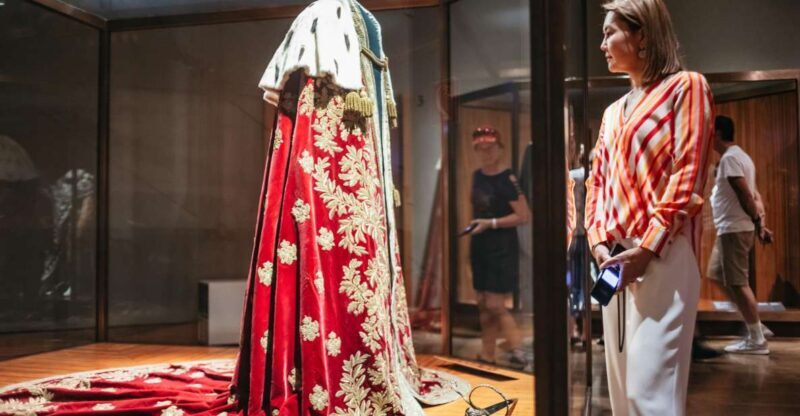
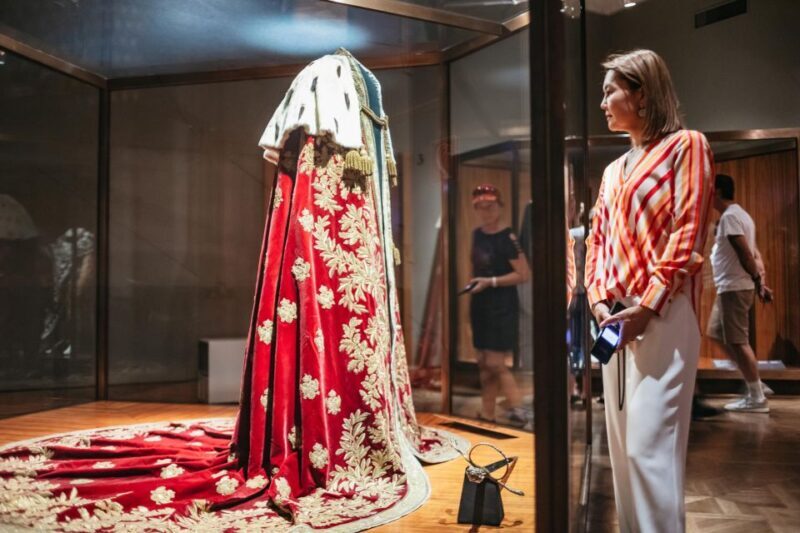
- Unexpected details to look for: keys and tabards
- Light, layout, and what to do if you want more detail
- Audio guide and self-guiding: when it helps
- Guided tours, bringing your own guide, and guide policy basics
- Tickets and vouchers: the printed voucher requirement
- Free cancellation and flexible plans
- Who this treasury ticket is best for
- Should you book the Imperial Treasury in the Hofburg Swiss Wing?
- FAQ
- Where is the meeting point for this experience?
- How long is the visit valid?
- Is an audio guide included in the price?
- Is the Imperial Treasury accessible for wheelchair users?
- Is this a small group activity?
- Do children get free admission?
- More Tour Reviews in Vienna
Key points to know before you go
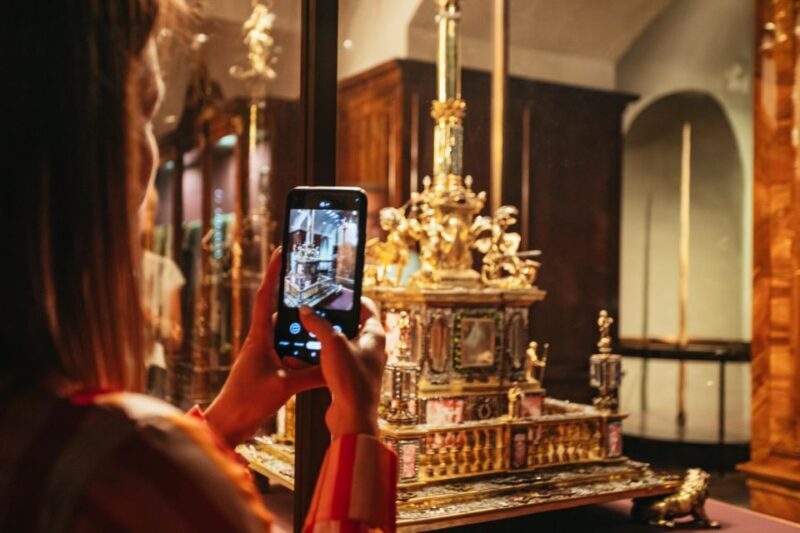
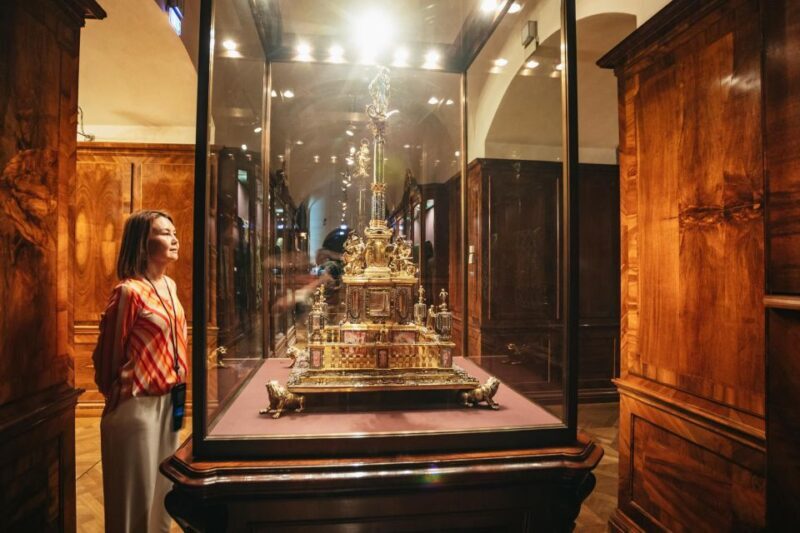
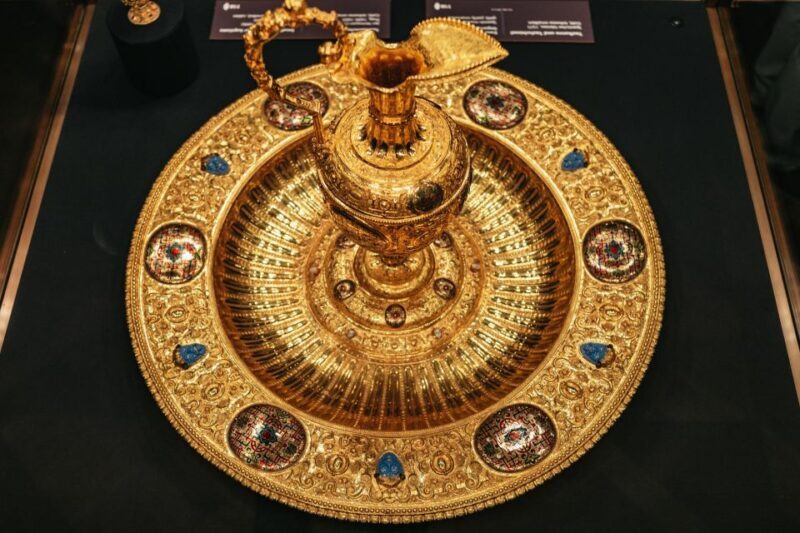
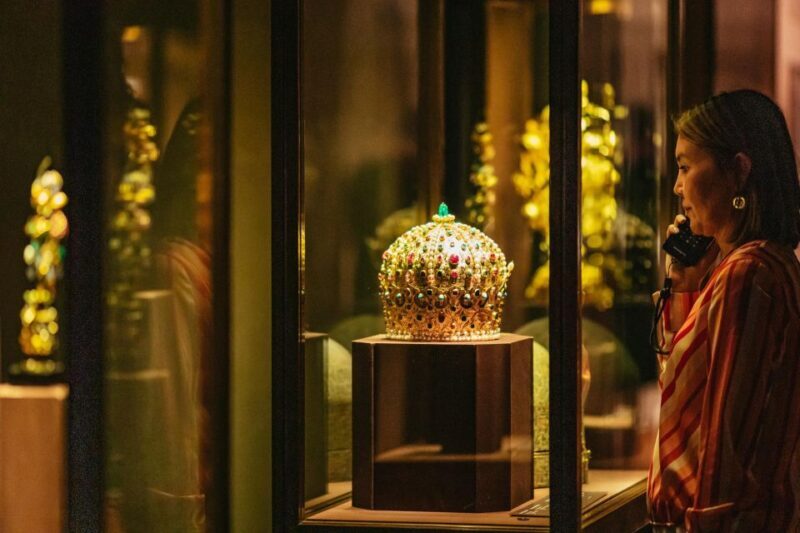
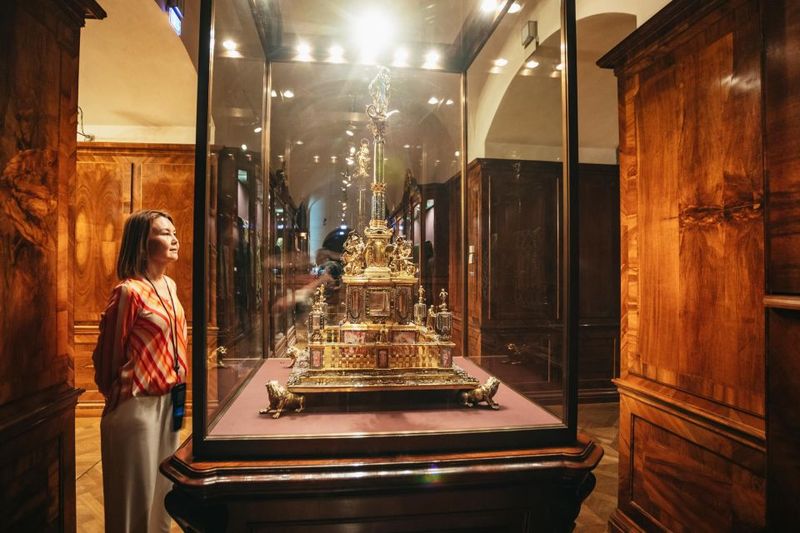
- Swiss Wing in the Hofburg: This is the oldest-part treasure setting, not a modern showroom.
- Habsburg showstoppers: You’ll see the Austrian Imperial Crown and other core regalia tied to the dynasty.
- Holy Roman Empire jewelry: The Imperial Crown is part of the crown-jewels story you’ll be walking through.
- Gems with superlatives: Expect headline pieces like a large emerald and other standout stones.
- Legendary objects: The collection includes famed items such as the Holy Grail-known agate bowl and a unicorn horn.
- Small group experience: Limited to 10 participants, which keeps things easier to navigate.
Where the Imperial Treasury lives: Hofburg’s Swiss Wing
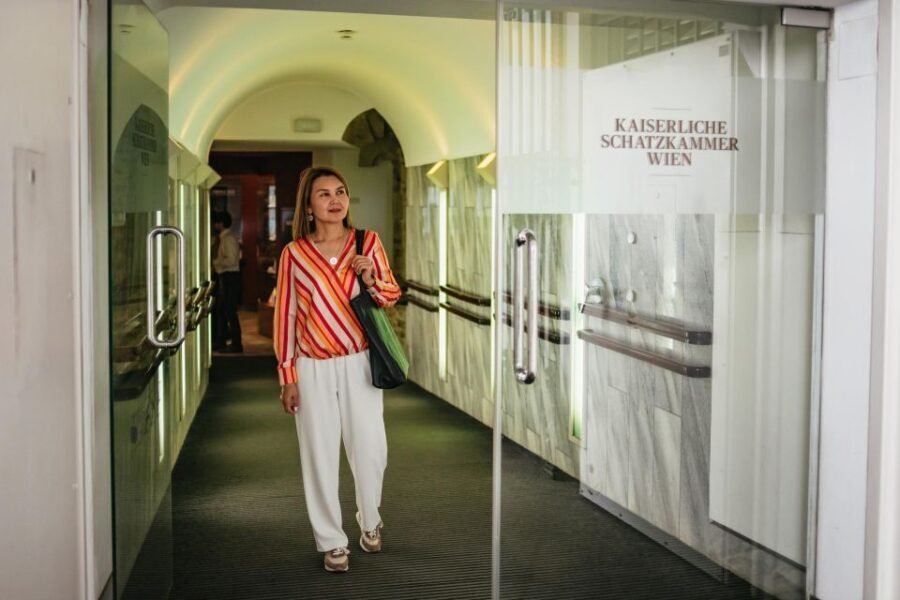
The meeting point is the Swiss Wing in the Vienna Hofburg Palace. If you’re already in the palace complex area, think of this as the “go directly to the treasure-chamber entrance” kind of stop.
This matters because the Hofburg can feel like a maze once you’re inside. By arriving with the Swiss Wing on your mental map, you’ll spend less time wandering and more time looking at objects up close—where the details actually do their job.
You can also read our reviews of more tours and experiences in Vienna.


The practical setup: small group, wheelchair access, and timing
This experience is set up as a small group limited to 10 participants. That’s a good size for a treasury show: enough people to feel lively, not enough to turn the gallery into a slow-motion traffic jam.
It’s also wheelchair accessible, which is important here because a treasury collection is all about close viewing. Good accessibility makes a big difference when the “best moment” of your visit is standing still and reading labels.
Price and value: what $18 buys you (and what to watch for)
The price is listed at $18 per person with the entrance ticket included. On paper, that’s just a ticket cost. In practice, it’s a lot of value if your goal is to see the big-ticket regalia—crowns, religious pieces, and premium stones—in one efficient stop.
What could affect the value for you is extra add-ons. An audio guide is not included in the base listing, and a guided tour is also not included (though you can come with your own guide). If you like context, budgeting for an audio option—or bringing your own licensed guide—can turn a quick visit into something more memorable.
Plan your visit length: expect about 60–90 minutes
Even though the ticket is valid for 1 day, this is not a “half-day museum project.” Many visitors report moving through in around an hour or so, with others taking about 1.5 hours to finish comfortably.
I’d plan for 60–90 minutes. That gives you time to actually look at the crown and gem displays without rushing through every case. If you read labels slowly or you’re drawn to the religious and legendary objects, lean closer to 90.
More Great Tours NearbyWhat you’ll see first: how the collection is organized
The treasures are presented in the oldest part of the Hofburg Palace, the Swiss Wing. The display is built around a clear idea: Habsburg wealth wasn’t only about money—it was about status, protection, and legitimacy.
You’ll move through sections that highlight:
- core crown regalia and imperial authority
- sacred and relic-like objects
- orders of chivalry
- luxury gems and jeweled artifacts tied to specific people
That structure keeps the visit from becoming one long “shiny case” loop.

The centerpiece you can’t miss: the Austrian Imperial Crown
If you only care about one object, aim your attention at the Austrian Imperial Crown. It’s repeatedly described as one of the most beautiful crowns in the world, and the display supports that idea immediately—because you can’t miss it once you’re in the right room.
This crown isn’t just a decoration. It’s a visual shortcut to how monarchies projected power. When you see it alongside other imperial symbols, the treasury stops feeling like jewelry and starts feeling like statecraft.
Holy Roman Empire crown jewels: seeing power in metal
The exhibition includes crown jewels associated with the Holy Roman Empire, including the Imperial Crown. This is where the story expands beyond Habsburg family pride and into the broader political legitimacy of the era.
You’ll likely notice how the crown narrative connects to other regalia pieces. That’s the point: treasuries like this were meant to be evidence of authority, not just trophies.
Emerald and diamond superstars: world-size gems in one place
The collection is famous for gemstone highlights, including one of the largest emeralds in the world and other standout cut stones. In a treasury setting, a “big diamond” detail can turn into a full-on moment because the object design is crafted to make the stone behave like light itself.
Here’s the practical tip: don’t rush the gem cases. Give yourself a minute per case, and look for the surrounding setting work. Often the metalwork is the part that makes the gems look even more unreal.
Religious relics and legendary objects: Holy Lance, Holy Grail, unicorn horn
One of the most fun (and slightly surreal) parts of the Imperial Treasury is that it doesn’t only stick to court jewelry. You’ll encounter legendary items such as the Holy Grail-known agate bowl and the horn of a unicorn—objects that pull the viewer into stories, not just aesthetics.
You can also see the Holy Lance from the 8th century. Even if you don’t know the full backstory, you’ll understand why a relic like that mattered: it’s the link between religion, authority, and “protection” narratives that were part of everyday political life.
The Order of the Golden Fleece: bling with a purpose
Another standout is the treasure of the Order of the Golden Fleece. Orders like this were about more than decoration; they were a way to reward loyalty and define the social map of an empire.
When you see an order’s treasure in the same system as crowns and imperial jewels, it clicks. This is why the Imperial Treasury is such a strong stop: it shows how power moved through people and symbols, not only through territory.
Burgundy collections and the 15th-century flavor
The display includes collections from 15th-century Burgundy. This is a good reminder that Habsburg wealth didn’t come from one place or one decade. It was fed by marriages, alliances, and the collecting habits of European courts.
What you’ll gain as a traveler is perspective. You start to see Vienna’s imperial artifacts as part of a larger European luxury network—rather than isolated “Austria-only” history.
Empress Elisabeth’s original jewelry parts
A particularly compelling section is the jewelry connected to Empress Elisabeth (Sisi). You’ll see parts of the original jewelry linked to her—plus other Habsburg jewelry from empresses and princesses.
This is where the tone can shift from crown authority to personal style. You’re not just viewing regalia meant for formal ceremonies. You’re seeing pieces tied to a real figure—and that makes the collection feel less like a distant museum and more like a glimpse at human taste inside an overwhelming system.
Napoleon II and the cradle connection
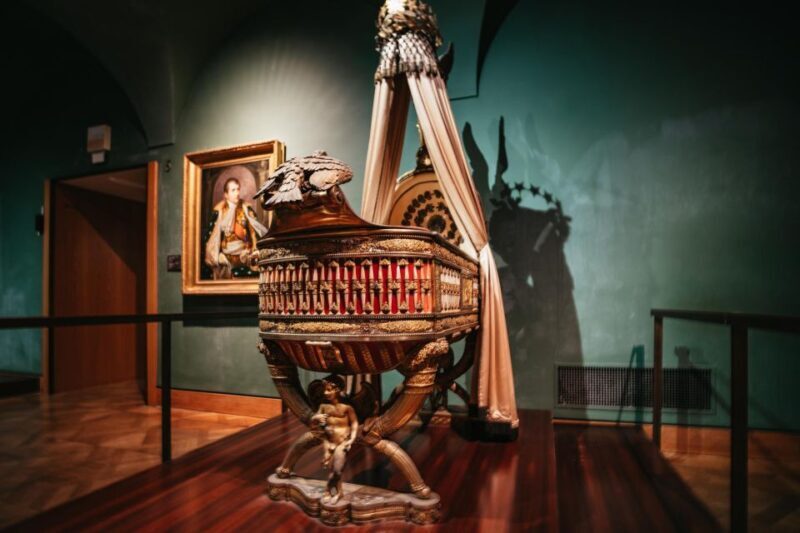
The collection also includes the cradle of the King of Rome (Napoleon II). It’s a sharp reminder that the Habsburg world intersected with Napoleonic Europe, and that imperial objects weren’t always for emperors grown up and fully armored.
In a treasury gallery, smaller personal artifacts can hit harder than big ceremonial ones. A cradle isn’t built to announce power. Yet it shows how even childhood was folded into political gravity.
Unexpected details to look for: keys and tabards
Some visits mention noticing items you might not expect in a crown-and-gem museum. For example, you may see things like chamberlains’ keys and tabards—small, practical, and ceremonial objects that help explain court machinery.
This is a great way to make your visit feel smarter. Instead of only searching for the headline gem, look for the “how the court worked” pieces. They make the whole place more understandable.
Light, layout, and what to do if you want more detail
Treasury displays are often lit for artifact protection, not for comfort reading. One traveler mentioned the lighting can be tough, making some objects harder to see clearly.
If you run into that, here’s the fix: slow down at each case entrance, step slightly to find the best viewing angle, and focus on the label text. You’ll lose less time than you think, and you’ll still catch the visual impact.
Audio guide and self-guiding: when it helps
An audio guide is listed as not included, but the collection clearly benefits from extra context. If you’re the type who likes to understand why an object exists—who wore it, how it functioned, what it symbolized—consider getting the audio option if available.
Even if you go without, labels and the strong object grouping can guide you well. Still, audio tends to be most valuable for the sections mixing crowns, relics, and orders, because the symbolism can be dense.
Guided tours, bringing your own guide, and guide policy basics
A guided tour isn’t included, and you can come with your own guide. If you’re traveling with a group and considering guide entry rules, the policy is outlined clearly:
- Only 1 guide per group (voucher booking) can receive free admission when accompanying the group in the museum.
- Free tour guide places are valid for groups of more than 10 people; if you’re under 10, tour guides will be charged as paying participants.
- State-certified tourist guides generally get free entrance.
If you’re just going as a couple or family, you can ignore all that and focus on your own comfort level. If you want deeper explanations, consider adding your own guide or using an audio option.
Tickets and vouchers: the printed voucher requirement
This booking requires a printed voucher. You should take that seriously, because several travelers mention the ticket counter process can be a bit of a slowdown—even when you booked online.
You might also find that digital-only setups don’t get you straight into the gallery. So, do the boring thing: print it, bring it, and arrive with a little patience. This is one of those small practical moves that protects the whole day’s flow.
Free cancellation and flexible plans
Good news: you get free cancellation up to 24 hours in advance for a full refund. There’s also a reserve-now-and-pay-later option, meaning you can lock in a spot without immediately paying.
This is useful in Vienna, where weather and museum timing can shift. If your itinerary is still moving around, this flexibility lowers the risk.
Who this treasury ticket is best for
This is a strong choice if you want:
- crowns and imperial jewels in one efficient stop
- a mix of royal artifacts and religious/legendary objects
- a museum experience that doesn’t eat your whole day
It’s also ideal if you’re a “I like to look closely” traveler. The collection works best when you take your time with the cases instead of sprinting.
If you’re traveling with kids under 19, you might benefit from free admission rules for that age group. And if you’re with school groups under 19, note that they must be registered through the museum’s booking department using the provided email.
Should you book the Imperial Treasury in the Hofburg Swiss Wing?
I’d book it if you want a high-impact Vienna stop that delivers serious eye-candy and serious meaning without a long commitment. At $18 for entrance with a small group cap, it’s good value—especially if you’re trying to fit Vienna’s highlights into a tight schedule.
I’d hesitate only if you’re sensitive to ticketing logistics or you strongly prefer fully digital, no-counter museum entry. The printed voucher requirement is real, and you’ll want to plan for at least some time at the ticket stage.
Vienna: Imperial Treasury in the Hofburg Palace
FAQ
Where is the meeting point for this experience?
The meeting point is the Swiss Wing in the Vienna Hofburg Palace.
How long is the visit valid?
The ticket is valid for 1 day. You should check availability to see starting times.
Is an audio guide included in the price?
No. An audio guide is not included.
Is the Imperial Treasury accessible for wheelchair users?
Yes. The experience is listed as wheelchair accessible.
Is this a small group activity?
Yes. The group is limited to 10 participants.
Do children get free admission?
Children and young people under 19 generally enjoy free admission.
You can check availability for your dates here: