
When your teenager travels alone, you’ll want to start by researching destination safety records and local laws, securing proper documentation like passports and notarized consent letters, and investing in extensive travel insurance with 40+ coverage types. Register with your embassy through STEP, create digital backups of important documents, and establish regular check-in schedules every 2-4 hours. Teach them local emergency numbers, avoid high-risk areas after dark, and pack medications in carry-on luggage—these foundational steps will open up even more protective strategies.
- Research Your Destination’s Safety Profile and Local Laws
- Secure Proper Documentation and Emergency Contacts
- Invest in Comprehensive Travel Insurance Coverage
- Register With Your Embassy or Consulate
- Create Digital Backups of Important Documents
- Share Your Complete Itinerary With Trusted Adults
- Master Situational Awareness Techniques
- Choose Reputable Accommodations and Transportation
- Avoid Isolated Areas and High-Risk Locations
- Learn Local Emergency Numbers and Procedures
- Establish Regular Check-in Schedules
- Prepare for Medical Emergencies and Health Risks
- Last Words
Research Your Destination’s Safety Profile and Local Laws

When you’re planning your first solo trip or adventure with friends, diving into your destination’s safety landscape isn’t just smart—it’s vital. Start by researching local driving laws, especially if you’ll be behind the wheel. Different states have varying graduated driver licensing restrictions that could affect your nighttime driving plans or passenger limits.
Check crime statistics for your destination areas and identify which neighborhoods to avoid, particularly after dark. Since teen crash rates spike dramatically during evening hours—with 17% of fatal accidents occurring between 9 p.m. and midnight—understanding local traffic patterns becomes essential.
Look into public transportation options as safer alternatives to driving, especially during high-risk times. If you’re traveling during the summer months, be especially cautious as this period represents the 100 deadliest days for teen drivers nationwide. Knowledge of local emergency numbers and nearest hospitals can make all the difference in unfamiliar territory.
Secure Proper Documentation and Emergency Contacts
Before you start dreaming about your destination, you’ll need to tackle the paperwork—and trust me, it’s more intricate than grabbing your driver’s license and heading out. Your teen needs a valid passport for international travel, period.
If you’re not traveling together, you’ll need a notarized consent letter with your contact details and travel itinerary. Many countries require both parents’ permission, even if the U.S. doesn’t.
Pack certified copies of your teen’s birth certificate, especially if your last names differ—customs agents get suspicious quickly. Include copies of your passport or driver’s license in their documents. Consider getting a passport card as a wallet-sized alternative that can serve as backup ID for domestic flights or land border crossings.
Create a thorough emergency contact list with parents, guardians, and receiving party details. Check your destination’s embassy website for specific requirements, as countries like Italy and South Africa have unique documentation rules.
Invest in Comprehensive Travel Insurance Coverage
Although your teen might think they’re invincible, travel insurance isn’t just another adult worry—it’s your financial safety net when things go sideways abroad. With student travel insurance growing 21% annually, there’s clearly demand for all-encompassing coverage.
Don’t skimp on basics. Quality policies cover medical emergencies, trip cancellations, lost luggage, and emergency evacuations—essentials when your teenager’s stranded with food poisoning in Prague or their flight’s cancelled during a storm.
Here’s the reality: younger travelers are most likely to skip insurance entirely. Over 60% of under-30 travelers consider going uninsured, but one emergency room visit abroad can cost thousands. With 62% of consumers now purchasing travel insurance through online comparison platforms, it’s easier than ever to find comprehensive coverage tailored to your teen’s needs.
Look for student-specific policies offering 40+ coverage types. They’re designed for educational travel and typically include personal liability protection—crucial when your teen accidentally damages hotel property.
Register With Your Embassy or Consulate
While your teen’s busy planning Instagram-worthy adventures, you’re probably thinking about worst-case scenarios—and you should be. That’s where the State Department’s STEP program becomes your safety net.
This free service sends real-time security alerts directly to your teen’s email and helps U.S. embassies locate them during emergencies.
Enrolling is straightforward—visit travel.state.gov before departure and provide trip details, contact information, and emergency contacts. Your teen will receive country-specific updates about everything from political unrest to natural disasters, giving them actionable information to stay safe.
I learned this lesson when my friend’s daughter got caught in unexpected protests overseas. Because she’d registered with STEP, the embassy contacted her immediately with evacuation instructions. Don’t skip this simple step. If your teenager is a foreign national planning to stay in the U.S. for 30+ days, they’ll also need to complete additional registration requirements with USCIS.
Create Digital Backups of Important Documents

When your teen’s passport gets stolen in Prague or their wallet disappears in Bangkok, digital backups become their lifeline home. Before departure, help them scan passport pages, visas, insurance cards, and backup ID into clear PDFs using quality phone apps. Store everything in secure cloud services like Google Drive or Dropbox with two-factor authentication enabled.
Create multiple backup locations – cloud storage plus encrypted USB drives. I learned this lesson when my friend’s daughter lost her documents in Rome and couldn’t prove her identity without digital copies. Make sure they also have emergency contact lists stored digitally, including embassy numbers, police contacts, banks, and family information in password-protected apps.
Organize files into a smartphone travel wallet for quick airport access.
Ensure PDFs are password-protected but easily retrievable offline. Label folders clearly and verify automatic syncing works before they leave.
Share Your Complete Itinerary With Trusted Adults
Beyond securing digital copies of documents, you’ll want to share every detail of your teen’s travel plans with trusted adults back home. I learned this lesson when my daughter’s flight got delayed in Chicago, and I frantically called three different relatives before finding someone who actually knew her itinerary.
Create a detailed document including flight details with airline numbers and times, accommodation addresses, daily schedules, and all emergency contacts. Don’t just send a basic “going to Paris” message—include transportation details, meeting points, and activity schedules.
Share this information with multiple trusted adults, not just yourself. Establish a communication plan for emergencies or unexpected changes to keep parents and guardians informed throughout the trip.
Send photos of hotel exteriors and mark locations on Google Maps. When plans change (and they will), you’ll have a network of informed adults ready to help navigate any situation.
Master Situational Awareness Techniques

As your teen steps off that plane into an unfamiliar city, their ability to read their surroundings becomes their most valuable safety tool. I learned this firsthand when my daughter spotted a pickpocket targeting travelers in Rome simply because she’d practiced scanning rooms upon entry.
Teach your teen to use peripheral vision while walking, constantly monitoring their environment without staring. They should immediately identify exits when entering any location and mentally note who belongs versus who seems out of place.
Watch for uncomfortable body language, unusual behavior, and people whose hands aren’t visible. If they suspect someone is following them, they can pretend to walk in the wrong direction to test if the follower persists.
Most importantly, remind them to trust their gut feelings. If something feels wrong, it probably is.
Unplugging those headphones and looking up from phones keeps them alert and aware.
Choose Reputable Accommodations and Transportation
While your teen’s heightened awareness keeps them safe on the street, the places they sleep and the rides they take can make or break their entire trip. Hotels and hostels dominate youth travel choices, each serving roughly 40% of young travelers. Hotels offer controlled environments with fewer unpredictable situations, while hostels encourage social connections despite shorter stays. Hotel guests tend to have the least connection to local communities, which may actually provide an added layer of safety for solo teen travelers.
For family trips, vacation rentals and hotels split accommodation preferences at 31.6% each.
When vetting providers, prioritize destinations with strong safety records—Italy leads teen travel safety at 70.60/100, followed by the UK and New Zealand. Seven of the top ten safest destinations sit in Europe, boasting excellent healthcare and low crime rates.
Always check US State Department advisories and analyze traffic safety records before booking anything.
Avoid Isolated Areas and High-Risk Locations
When your teen’s dream destination involves remote villages or countries making headlines for the wrong reasons, it’s time for a reality check.
Statistics show 71.9% of adolescent travelers stay in rural areas, dramatically increasing their exposure to poor sanitation and limited healthcare access.
My friend learned this firsthand when her daughter’s humanitarian trip to rural Madagascar turned into a medical emergency with no nearby hospital.
Focus on destinations with proven safety records. Italy scores 70.60/100 for teen safety, while the UK and New Zealand follow closely behind.
These countries offer reliable infrastructure, low crime rates, and quality healthcare systems. Reputable programs establish long-term partnerships with destinations to ensure consistent safety protocols and local support networks.
Avoid areas with elevated State Department advisories or regions lacking year-round local oversight.
Your teen’s adventure shouldn’t compromise their wellbeing.
Learn Local Emergency Numbers and Procedures
Before your teen boards that plane, they need to know that dialing 911 won’t help them in Paris or Beijing. France uses 112 for all emergencies, while China has separate numbers: 110 for police, 119 for fire, and 120 for ambulance. Most European countries like Spain and Sweden use 112 as their universal emergency number.
Have your teen memorize the top three numbers for their destination and save them in their phone with a printed backup. Make sure they register with STEP online before departure to stay connected with U.S. government resources.
English-speaking operators aren’t always available, so basic phrases help. Don’t forget the U.S. State Department’s 24-hour line: +1-202-501-4444 for overseas emergencies.
If they’re traveling through a program, ensure they’ve their travel insurance hotline and campus emergency contacts readily accessible.
Establish Regular Check-in Schedules
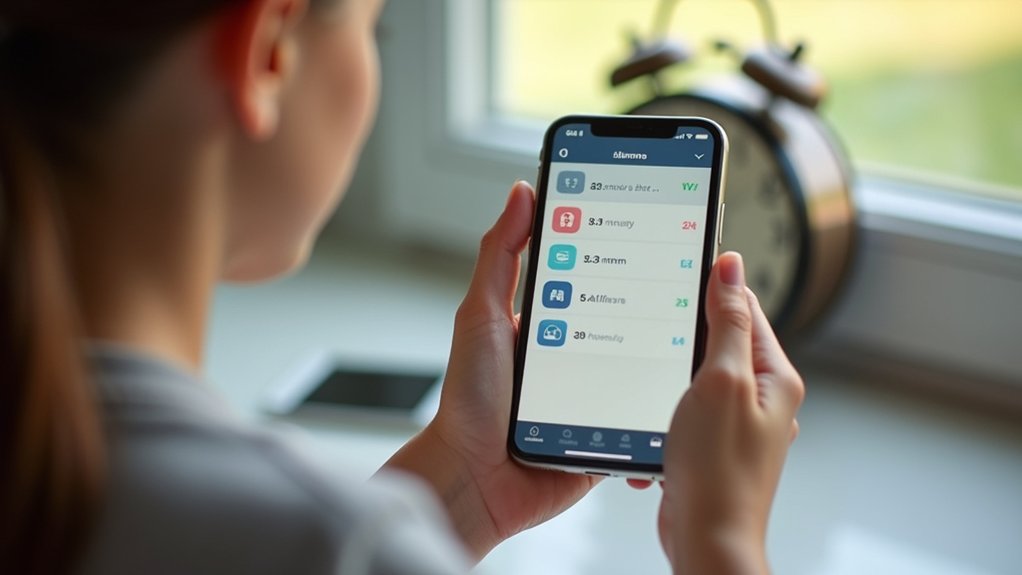
Since your teen won’t always have you watching over their shoulder, regular check-ins become your lifeline to their safety and your peace of mind. Schedule check-ins every 2-4 hours during active travel periods, with mandatory evening room checks including visual confirmation.
When my daughter traveled to Europe, we used text messages and real-time location sharing apps that made tracking seamless.
Require check-ins upon hotel arrivals and before free time activities, recording expected return times. For late-night arrivals, have them call even if it wakes you up.
Set clear boundaries by walking distance for solo exploration, and always require buddy systems for younger teens. Remind them to maintain situational awareness at all times, especially in busy transit areas where they need to make quick safety decisions. Frame these rules around safety, not control, so they’ll actually follow them willingly.
Prepare for Medical Emergencies and Health Risks
Beyond keeping tabs on your teen’s whereabouts, you’ll need to prepare them for medical situations that can arise unexpectedly during travel. Pack all medications in carry-on luggage—never check them. Airlines’ medical kits aren’t designed for children, so bring fever reducers and any prescription drugs your teen needs.
Create a medical information card with emergency contacts, allergies, and current medications.
If your teen has asthma or food allergies, they’re at higher risk and need an action plan. Twenty percent of kids under 18 have special health needs, making preparation essential. Medical emergencies occur on 1 in 212 flights, making it important to have a clear response plan in place.
Teach them when to alert flight crew immediately: chest pain, difficulty breathing, or severe allergic reactions. Most in-flight issues resolve without intervention, but being prepared prevents panic when emergencies strike.
Last Words
You’ve got the tools now—use them. I remember my daughter’s first solo trip to Barcelona; she rolled her eyes at my safety checklist but texted me from the airport saying how prepared she felt. Trust your teenager’s judgment while staying connected. They’ll surprise you with their maturity when given clear guidelines and your confidence. Most importantly, don’t let fear overshadow the incredible growth that comes from independent travel experiences.