
Transform your family trips into water conservation classrooms by timing shower challenges with stopwatches, exploring hotel eco-features like low-flow fixtures, and visiting local water treatment plants or aquariums. Choose Green Key certified accommodations that showcase smart water technology, calculate your daily water footprint, and compare conservation practices across different destinations. Use real-world examples of water scarcity to reinforce lessons, then bring these habits home through commitment pledges and tracking charts that make conservation stick beyond vacation.
- Turn Hotel Bathrooms Into Water-Saving Learning Labs
- Create Fun Shower Timing Challenges and Games
- Explore Local Water Treatment Plants and Infrastructure
- Visit Aquariums and Wetlands to See Water’s Role in Wildlife
- Choose Eco-Certified Hotels That Demonstrate Conservation Technology
- Practice Leak Detection Skills During Your Stay
- Calculate Your Family’s Daily Water Footprint on the Road
- Use Travel Experiences to Understand Global Water Scarcity
- Make Smart Choices About Activities and Dining
- Bring Water-Saving Habits Home After Your Trip
- The Sum Up
Turn Hotel Bathrooms Into Water-Saving Learning Labs
When you step into your hotel bathroom, you’re entering a perfect classroom for water conservation lessons. Turn those low-flow showerheads and faucets into hands-on learning tools—they reduce water usage by 40–60% compared to older models.
Show kids how dual-flush toilets cut water use by up to 50% with simple button choices. Make sensor-activated taps exciting by demonstrating “on-demand” water use that only runs when hands are detected.
Check product labels together for flow rates and calculate total water used during handwashing or showering. If your hotel has greywater systems, explain how sink water gets reused for toilet flushing. Hotels often use smart water meters to track usage patterns and identify areas where families can improve their conservation efforts.
Turn leak detection into discovery missions—even small drips waste hundreds of gallons over time, making routine checks valuable learning opportunities.
Create Fun Shower Timing Challenges and Games
Since kids naturally turn everything into a game, why not harness that energy for water conservation? Start with basic stopwatch timing to establish baseline shower lengths, then challenge your family to reduce times by one minute each.
Create racing competitions using multiple timers labeled with everyone’s names, emphasizing efficiency over pure speed to maintain hygiene standards.
Music works brilliantly for younger children—let favorite songs set natural duration limits while providing rhythmic cleaning cues.
Track progress using simple charts that visualize each person’s water-saving contributions, and calculate monthly savings together during weekly family check-ins. These activities also reinforce science concepts like the water cycle and environmental systems through hands-on learning.
Reward consistency rather than single fast showers, and remember that showers under five minutes can save up to 1,000 gallons monthly while meeting EPA recommendations.
Explore Local Water Treatment Plants and Infrastructure
While your kids are mastering shower timing challenges at your hotel, take their water education to the next level by exploring how local communities actually process and deliver the water flowing from those taps. Many water utilities offer guided tours or virtual visits specifically designed for families and school groups. You’ll see complex machinery working 24/7 through coagulation, flocculation, sedimentation, filtration, and disinfection processes that transform raw water into safe drinking water.
Before traveling, check local utility websites for visitor centers or scheduled tours. Virtual options let you access restricted areas and see close-up treatment stages. These experiences connect conservation directly to infrastructure—showing kids how reducing water use eases strain on these massive, energy-intensive systems that work around the clock. Many facilities use biological treatment methods that rely on native bacteria to naturally clean water, demonstrating how nature and technology work together in sustainable water processing.
Visit Aquariums and Wetlands to See Water’s Role in Wildlife
After watching how communities clean and deliver water, you’ll want to show your kids where all that precious H2O ultimately flows—into the habitats that keep wildlife alive. Aquariums serve as perfect “living labs” where complete aquatic food webs demonstrate how water quality affects everything from tiny invertebrates to marine mammals.
Touch tanks and behind-the-scenes tours reveal how pH, temperature, and dissolved oxygen directly impact animal health. These interactions with aquatic life can lower blood pressure and provide significant psychological benefits for both children and adults.
Many facilities offer wetland visits showing ecosystem services firsthand. Your kids can see how marshes filter pollutants while providing critical wildlife habitat.
Conservation messaging connects daily water choices to wildlife survival, while interactive exhibits trace household runoff‘s journey into natural habitats. These emotional connections motivate lasting stewardship behaviors, turning your family visit into actionable conservation commitment.
Choose Eco-Certified Hotels That Demonstrate Conservation Technology
Your family’s accommodation choices become powerful teaching tools when you book eco-certified hotels that showcase cutting-edge water conservation technology. Look for properties with Green Key certification or those achieving significant eco-certification milestones like Accor’s 50% global portfolio achievement.
These hotels feature smart water management systems with advanced sensors that your kids can learn about during your stay. Acoustic sensors throughout the property listen for sounds like hissing that help staff detect hidden leaks before they become major problems.
You’ll find greywater recycling systems that treat shower and sink water for toilet flushing, demonstrating the water cycle in action. High-efficiency laundry operations using ozone systems show how technology reduces consumption without sacrificing cleanliness.
Many properties offer tours explaining their solar water heating, drip irrigation systems, and permeable paving. These real-world examples help children understand how technology can achieve 30-50% freshwater savings while maintaining comfort.
Practice Leak Detection Skills During Your Stay
Turn your hotel room into an interactive classroom by teaching your kids essential leak detection skills they’ll use for life. Start with simple visual inspections—have them check bathroom floors for damp spots and listen for running water when all faucets are off.
Make it fun by testing the toilet for silent leaks using food coloring from the breakfast area; if color appears in the bowl after ten minutes, there’s a leak.
Practice hands-on activities like locating the room’s water shut-off valve together. Show them how to spot mold or bubbling paint around fixtures. Explain that many leaks are hidden underground or within walls, making detection difficult until significant water loss occurs.
Use your smartphone’s flashlight to examine under sinks for drips. These detective skills will serve them well at home, where small undetected leaks waste thousands of gallons yearly and drive up utility bills dramatically.
Calculate Your Family’s Daily Water Footprint on the Road
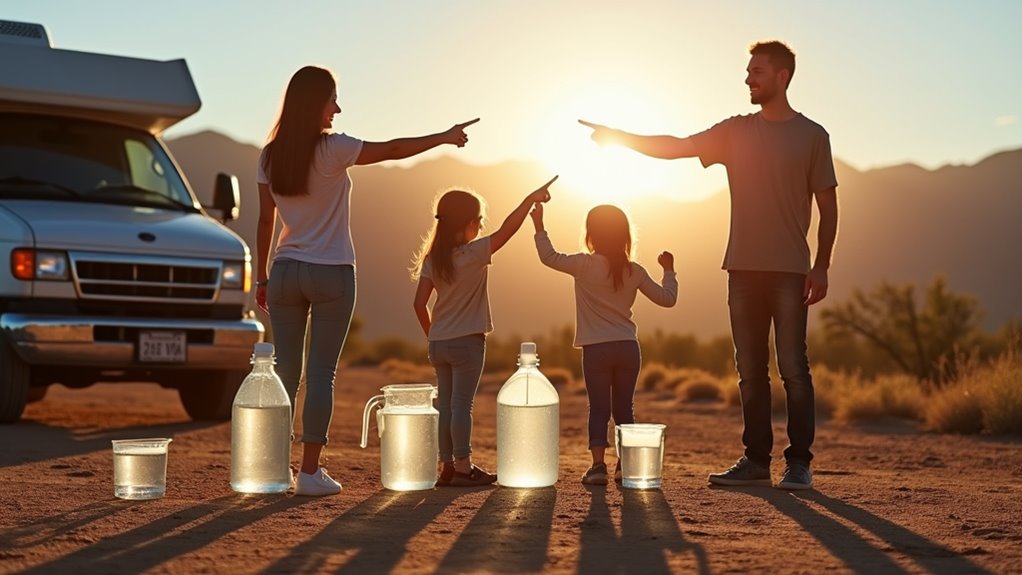
While you’re mastering leak detection skills, take the next step by tracking your family’s complete water footprint during travel days. Start with direct water use: each 15-gallon fuel fill embodies 45-105 gallons of virtual water from gasoline production.
Add rest-stop bathroom breaks and in-flight lavatory use—aircraft flushes use 0.3-0.5 gallons each.
Calculate accommodation water usage using the 60-gallon daily baseline per person. Break it down by activity: showers range from 20-50 gallons depending on water-saving features, toilet flushes use 1.6-4 gallons each, and laundry loads consume 25-40 gallons.
Don’t forget food’s virtual water footprint. Beef requires 1,800+ gallons per pound versus under 300 gallons for vegetables.
Even bottled water manufacturing uses 1.5-3 liters per 0.5-liter bottle. Use interactive tools to calculate your family’s water footprint score and identify specific conservation opportunities during your journey.
Use Travel Experiences to Understand Global Water Scarcity
Numbers on a spreadsheet can’t capture the reality your family will witness when you step off the plane in water-stressed regions. In Ethiopia, you’ll see children collecting water from unsafe streams. Yemen’s conflict-ravaged cities reveal decimated water infrastructure. Mexico’s major urban centers face periodic shortages that’ll affect your hotel stay.
Use these observations as teaching moments. Show your kids how Pakistan’s per capita water availability plummeted from 5,000 to under 1,000 cubic meters since 1951. Point out irrigation systems in Northern Africa, where agricultural withdrawals strain entire river basins. Notice how water-scarce countries still export water-intensive crops like rice and wheat.
These real-world examples help children understand that over 2 billion people lack safe drinking water—making conservation feel urgent rather than abstract. The planet loses 324 billion cubic meters of freshwater annually, which would be enough to meet the needs of 280 million people.
Make Smart Choices About Activities and Dining
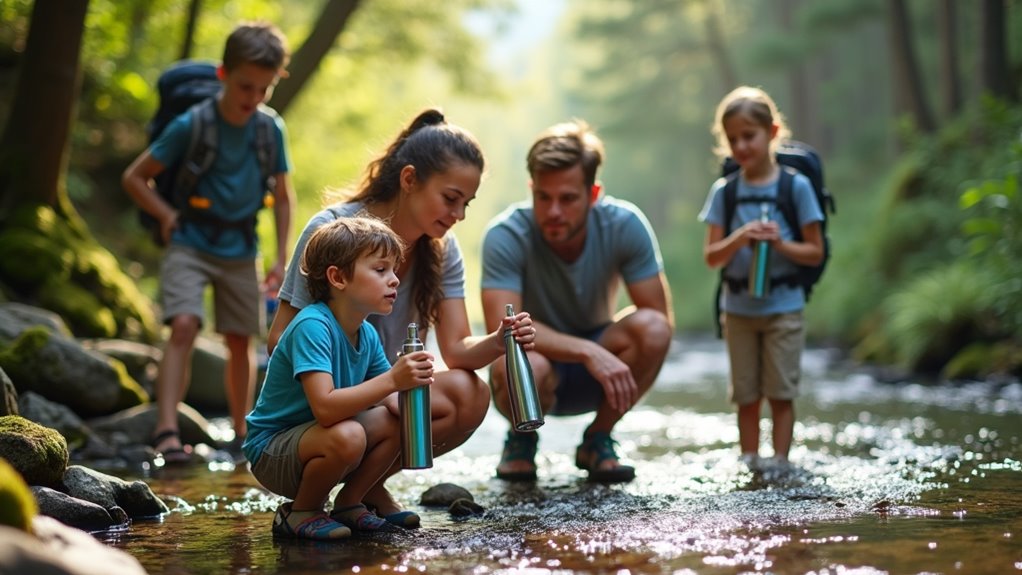
When you’re planning your family’s travel itinerary, every activity and meal choice becomes an opportunity to model water conservation. Choose restaurants that use local ingredients, reducing water-intensive food transport while supporting regional agriculture. Look for venues with water-efficient kitchens and those offering reusable cups instead of single-use bottles.
For activities, skip water parks in favor of beach exploration where kids can build sandcastles and hunt for seashells. Visit water purification centers or groundwater facilities to show sustainable practices in action. Explore outdoor classrooms near creeks that highlight natural waterway systems. Turn your children into water detectives by encouraging them to identify water usage patterns at hotels, restaurants, and attractions throughout your journey.
These choices aren’t just about having fun—they’re teaching moments that demonstrate how thoughtful decisions protect our planet’s most precious resource while creating meaningful family memories.
Bring Water-Saving Habits Home After Your Trip
The real magic happens once you’ve returned from your family adventure and those water-conscious travel experiences start influencing daily routines at home. Your kids become powerful agents of change, teaching parents conservation skills they’ve learned and creating family-wide behavior shifts.
Encourage them to make commitment pledges about specific habits like five-minute showers – written promises boost adherence among 8-11 year-olds and counter any tendency to increase water use.
Set clear goals with practical tips to strengthen long-term savings, as behavioral interventions maintain 16% conservation effects over time. Hands-on learning activities during travel help ensure your children retain water conservation messages for the long term.
Create tracking systems using timers and charts, making conservation habitual through repeated exposure. These cost-effective methods turn travel lessons into lasting household water reduction that’ll benefit your family for years.
The Sum Up
You’ve got the tools to turn any trip into a water conservation adventure. Start small with shower timers and hotel towel reuse, then build up to visiting treatment plants and calculating your family’s water footprint. Your kids won’t just learn about conservation—they’ll live it. When you return home, these travel experiences will stick with them, creating lifelong water-conscious habits that’ll make a real difference in their everyday choices.