
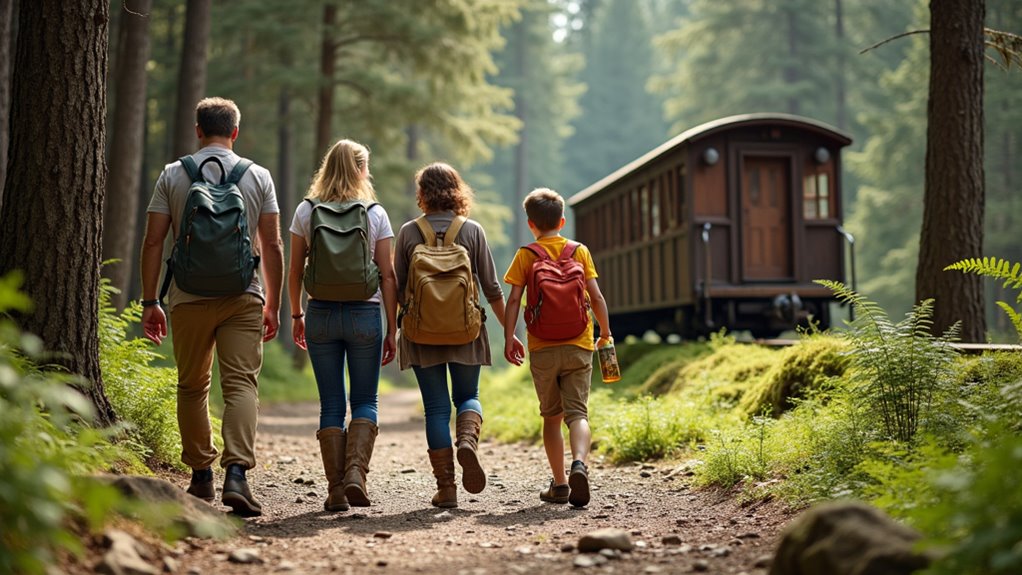
You can markedly reduce your family’s travel carbon footprint by choosing eco-certified accommodations like Costa Rica’s 300+ sustainable lodges, using public transportation or electric vehicles instead of flying, and booking all-inclusive eco-resorts that concentrate energy use. Involve your children in planning green activities like beach clean-ups and wildlife conservation, pack reusable essentials to minimize waste, and select destinations accessible by train. These sustainable choices create memorable experiences while protecting the environment your kids will inherit.
- Choose Eco-Certified Destinations and Accommodations
- Opt for Sustainable Transportation Methods
- Book All-Inclusive Eco-Resorts to Minimize Environmental Impact
- Involve Children in Planning Green Travel Activities
- Pack Light and Bring Reusable Travel Essentials
- Support Local Communities and Conservation Efforts
- Select Accommodations With Kitchen Facilities to Reduce Food Waste
- Plan Shorter Trips to Reduce Carbon Footprint
- Choose Destinations Accessible by Train or Electric Vehicle
- Participate in Educational Eco-Tourism Experiences
- The Sum Up
Choose Eco-Certified Destinations and Accommodations
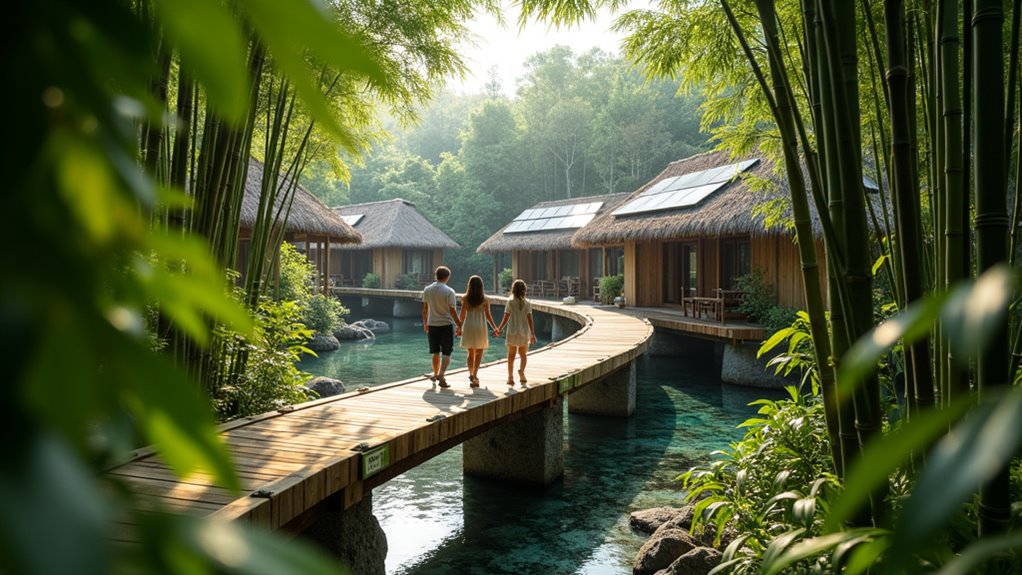
When you’re planning your next family getaway, choosing eco-certified destinations and accommodations isn’t just a trend—it’s a powerful way to protect the planet while creating meaningful memories with your loved ones. You’re not alone in this preference—68% of travelers actively seek eco-certified accommodations, and 65% of families consider eco-friendliness when selecting destinations.
Costa Rica leads the way with over 300 certified sustainable lodges maintaining an impressive 85% occupancy rate.
You’ll find exceptional eco-lodges in New Zealand’s coastal regions, Switzerland’s mountains, and Botswana’s Okavango Delta.
For domestic trips, consider Portland, San Francisco, or Seattle—all ranked among America’s top eco-friendly cities. With 65% of parents planning vacations at least three months in advance, you have plenty of time to research and book eco-certified accommodations that align with your family’s values.
Look for accommodations with kitchen facilities, renewable energy, and minimal environmental impact.
Tech apps can help you locate certified options and track your family’s positive environmental contribution.
Opt for Sustainable Transportation Methods
Since transportation accounts for nearly 30% of global greenhouse gas emissions, the way your family travels can dramatically impact your environmental footprint. Choose public transportation whenever possible—it produces markedly lower emissions per passenger mile than private vehicles.
Many cities now feature zero-emission buses, with over 6,000 electric buses operating across the US.
If you’re driving, carpool with other families to reduce your annual greenhouse gas footprint by 2,000+ pounds. You’ll also gain access to high-occupancy vehicle lanes, saving time and money.
Consider electric vehicles for family trips—they can reduce your household carbon footprint by up to 16,200 pounds yearly.
For shorter distances, embrace active transportation like walking and cycling, which eliminates emissions entirely while keeping your family healthy. Be mindful that ride-hailing services often replace sustainable modes like walking, cycling, and public transit, so use them sparingly when other options are available.
Book All-Inclusive Eco-Resorts to Minimize Environmental Impact
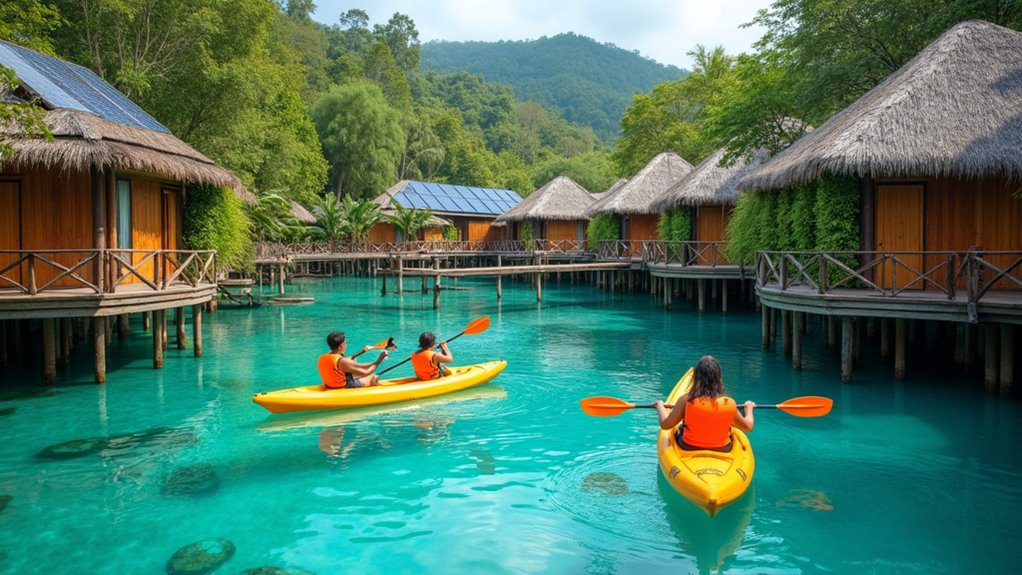
All-inclusive eco-resorts offer families a powerful way to slash their environmental impact while enjoying hassle-free vacations. These properties concentrate energy, water, and waste systems on one site, reducing your per-guest footprint compared to scattered dining and activities. Many use renewable energy and water-saving technologies while maintaining family comfort.
When booking, prioritize eco-certified resorts with Green Key or EarthCheck ratings. Choose properties that measure and disclose carbon footprints per guest-night, enabling smarter comparisons. Book longer stays at one resort rather than multiple short trips to cut transfer emissions.
With 68% of families actively seeking eco-friendly options and 54% preferring all-inclusive convenience, you’re joining a growing movement. These resorts often feature locally sourced menus and conservation programs funded by your booking. The growing demand for all-inclusive options among 29% of families makes sustainable resort choices increasingly accessible and economically viable for eco-conscious travelers.
Involve Children in Planning Green Travel Activities
While most families plan trips around adult preferences, involving your children in selecting green travel activities transforms them from passive passengers into enthusiastic eco-advocates. Let kids research low-impact destinations like national parks and wildlife reserves, then create a shared “green activity list” featuring hikes, bike rides, and farm visits.
Use maps to help them plot routes using trains, buses, or cycling instead of cars.
Turn planning into an eco-learning project by assigning expert roles—wildlife expert, transit planner, local-food scout. Have children compare emissions between flying, train, and bus travel using simple carbon calculators.
They’ll research local environmental rules and create checklists for respectful behavior. Add hands-on conservation activities like beach cleanups or citizen-science projects that demonstrate real environmental impact. Encourage kids to identify opportunities to support local artisans by finding authentic, handmade souvenirs that reflect the destination’s unique culture and craftsmanship.
Pack Light and Bring Reusable Travel Essentials

Once you’ve engaged your kids in planning eco-friendly activities, the next step toward sustainable family travel starts with what you pack. Packing light considerably reduces fuel consumption and CO₂ emissions across all transportation modes. Each extra kilogram multiplies impact when traveling with multiple family members, so resist packing “emergency” items like spare jeans.
Bring reusable essentials to eliminate single-use waste. Pack refillable water bottles, stainless steel snack containers, and cloth shopping bags. Choose stainless steel dishware that can grow with your children from ages 1 to 18+ and won’t break, shatter, or peel during travel. Replace disposable toiletries with refillable silicone bottles and solid shampoo bars that reduce plastic waste and spill risk. Include reusable coffee cups and lightweight napkins.
These smart choices enable carry-on-only travel, make public transport easier, and prevent unused items from creating unnecessary emissions throughout your journey.
Support Local Communities and Conservation Efforts
Beyond reducing your environmental footprint through smart packing, you can amplify your family’s positive impact by directly supporting the destinations you visit. Engage your kids in hands-on conservation projects like beach clean-ups or tree planting initiatives that restore habitats while teaching environmental stewardship.
Choose community-based tourism experiences that keep revenue within local communities rather than international corporations. Stay in locally-owned accommodations, eat at family-run restaurants, and book tours with local guides who offer authentic insights into their culture and landscape.
Participate in cultural exchanges like traditional craft workshops or cooking classes that build meaningful connections. These regenerative travel experiences ensure you’re giving back more than you’re taking, creating lasting positive impacts for both destinations and your family’s global perspective. These shared experiences create deeper bonds between family members while fostering a collective commitment to environmental protection.
Select Accommodations With Kitchen Facilities to Reduce Food Waste

Choosing accommodations with kitchen facilities puts you in control of your family’s food consumption and waste reduction efforts. You’ll plan meals precisely, buying only what you need and avoiding the overproduction that generates 18% of food waste in commercial establishments.
Transform surplus ingredients creatively—turn vegetable scraps into homemade stocks, repurpose leftover bread into croutons, or crisp potato peels into chips.
Practice portion control by preparing smaller amounts and cooking à la carte style based on your family’s actual appetite rather than pre-making excess food.
Shop for regional, seasonal ingredients that you can use across multiple meals.
Implement first-in-first-out systems to prevent spoilage, and compost organic waste if facilities allow. Remember that each kilogram of food waste produces approximately 2.1 kg of CO₂ equivalent emissions, making your waste reduction efforts a meaningful contribution to climate action.
This hands-on approach reduces waste while connecting your family to sustainable eating practices.
Plan Shorter Trips to Reduce Carbon Footprint
When you prioritize destinations within driving distance, you’ll profoundly slash your family’s travel emissions while discovering hidden gems close to home. Short-haul flights emit around 255g CO₂ per passenger-kilometer, making them extremely carbon-intensive.
By choosing regional destinations reachable by car, train, or bus, you’ll cut your trip’s footprint substantially. Rail emissions represent approximately 20% of car emissions, making trains an excellent choice for medium-distance family trips.
Long-distance trips account for a disproportionate share of travel emissions despite representing fewer total trips. Replacing one long-haul flight with several shorter local adventures using low-carbon transport modes significantly reduces your annual travel emissions.
Consider exploring state parks, nearby cities, or coastal areas within a few hours’ drive. You’ll spend less time traveling and more time enjoying your destination while teaching your kids that amazing experiences don’t require flying across continents.
Choose Destinations Accessible by Train or Electric Vehicle

Once you’ve identified nearby destinations, selecting spots accessible by train or electric vehicle transforms your family’s travel experience into an adventure that’s both eco-friendly and stress-free. Train travel cuts carbon emissions dramatically while offering spacious seating and relaxed baggage rules that make traveling with kids easier.
You’ll save money too—Amtrak’s Atlanta-to-New Orleans route costs $274 for four people versus $1,173+ for flights. Trains are responsible for less than 2% of global transportation-related CO2 emissions compared to aircraft at 12% and road vehicles at 70%.
Electric vehicles open doors to nature destinations with family-friendly charging stops, and 69% of families choose locations with all-ages activities reachable by sustainable transport.
Both options encourage family bonding through scenic routes, wildlife spotting, and flexible exploration opportunities. Central train stations and EV infrastructure support 78% of annual family trips while keeping your carbon footprint minimal.
Participate in Educational Eco-Tourism Experiences
Educational eco-tourism experiences transform your family vacation into a living classroom where kids develop genuine connections to the environment while having fun. You’ll find interactive exhibits at eco-friendly attractions that spark environmental consciousness across all family members. Consider guided tours through nature reserves where experts teach ecosystem balance and climate change impacts firsthand.
Participate in hands-on activities like sustainable farming projects, wildlife conservation efforts, or beach clean-ups that contribute to local communities. These volunteer opportunities build empathy and social responsibility in children.
Take snorkeling excursions or forest hikes with biologists who provide immersive fauna and flora explanations. Research shows that ecological tourism particularly highlights children’s nature conservation awareness and environmental learning outcomes.
Research shows participants increase their environmental knowledge and adopt sustainable behaviors post-participation. These experiences instill lasting values that inspire planetary responsibility and environmental protection involvement throughout your children’s lives.
The Sum Up
You’ve got the tools to make family travel both memorable and meaningful. Start small—choose one or two sustainable practices for your next trip and build from there. Your kids will love being part of the eco-planning process, and you’ll feel good knowing you’re protecting the places you visit. Sustainable family travel isn’t about sacrifice; it’s about creating deeper connections with destinations while teaching your children to be responsible global citizens.