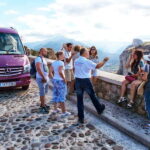
We’ve reviewed hundreds of guided tours across Europe, and this four-day journey through Greece’s most iconic archaeological sites represents something increasingly rare: genuine educational value paired with affordability. What makes this experience stand out is the sheer ambition of the itinerary—you’re visiting five UNESCO World Heritage Sites in just 96 hours—combined with consistently guides who actually seem to care about what they’re sharing. One traveler captured it perfectly: “We learned a lot about Greek history and Greek mythology,” and that sentiment echoes across review after review.
The second thing we appreciate is the practical value proposition. At $766.70 per person, you’re getting transportation, three nights’ accommodation, most meals, and admission tickets to major archaeological sites included. In Greece, where entrance fees alone can quickly drain a budget, this bundled approach means you can actually afford to see these places rather than viewing them from a distance.
The one consideration worth mentioning upfront: this tour moves at a genuinely brisk pace. You’re covering over 2,500 kilometers in four days, which means long driving days and fairly structured time at each site. If you’re the type who wants to spend hours lingering at a single location, this might feel rushed. But if you want to see the essential highlights of mainland Greece without spending a week on the road, this tour delivers exactly what it promises.
This experience works best for history enthusiasts, mythology buffs, and anyone who wants to understand the foundations of Western civilization without the pretension or expense of a luxury tour. It’s particularly good for families with older children who appreciate learning, and for solo travelers or couples who want knowledgeable company without the cost of a private guide.
- The Itinerary: Five UNESCO Sites in Four Days
- Day One: The Peloponnese’s Greatest Hits
- Day Two: Olympia and the Birth of the Olympic Games
- Day Three: Delphi, the Center of the Ancient World
- Day Four: Meteora and Return to Athens
- Accommodation: Managing Expectations
- The Guides and Drivers: Where This Tour Truly Excels
- Transportation and Logistics
- Value Analysis: What You’re Actually Getting
- Practical Considerations and Tips
- Frequently Asked Questions
- The Bottom Line
- The Best Of Athens!
- More 4-Day Experiences in Athens
- More Tours in Athens
- More Tour Reviews in Athens
The Itinerary: Five UNESCO Sites in Four Days

👉 See our pick of the The 2 Top Tours In Athens: Which Is Best?
Day One: The Peloponnese’s Greatest Hits
Your tour begins at 8:30 AM from a central Athens location, with pickup service starting as early as 7:30 if your hotel is on the route. Right away, you’ll notice the efficiency—the company has this down to a science, having operated as Greece’s oldest tour company for decades.
The first stop is the Corinth Canal, a brief 20-minute visit that serves as a visual reminder of human engineering ambition. Completed in 1893, this narrow waterway cuts through the Isthmus of Corinth, connecting the Aegean and Ionian seas. While you won’t spend long here, it’s a striking sight and helps orient you geographically.
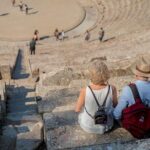
From there, you head to the Theatre of Epidaurus, a UNESCO World Heritage Site and one of the best-preserved ancient theaters in the world. You’ll get about an hour here, which is enough time to walk down into the 14,000-seat amphitheater and experience its legendary acoustics firsthand. Built in the 4th century BC, this theater still hosts performances today, and standing on its stone seats, you can almost hear the ancient audiences. The theater’s engineering is remarkable—the acoustics are so precise that actors performing on stage could be heard clearly in the back rows without any amplification.
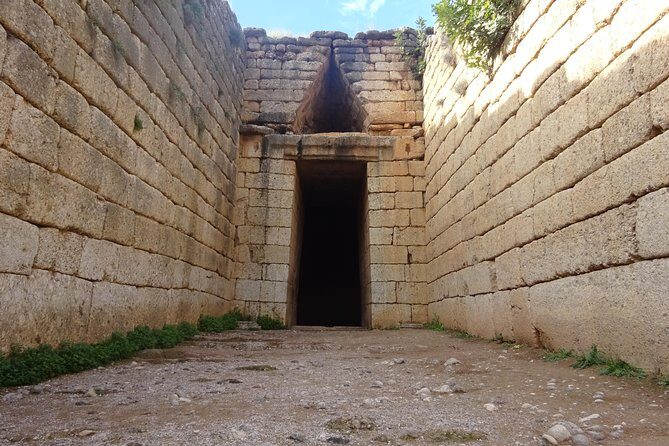
Next comes Mycenae, the legendary palace of King Agamemnon and one of archaeology’s most evocative sites. You’ll spend about 90 minutes here exploring the palace ruins, the famous Lion Gate (the oldest monumental gateway in Europe), and the Treasury of Atreus. Your guide will walk you through the mythology and history—the stories of the Trojan War feel tangible when you’re standing where these events supposedly unfolded. The Epidaurus Archaeological Museum rounds out the day with another 15 minutes to see artifacts from the theater and sanctuary.
Dinner is included at your hotel, which means no decisions to make after a full day of walking and learning. Most travelers note that the buffet dinners offer good variety and reasonable quality, though expectations should align with what you’d find at a three-star European hotel rather than a fine-dining hotel.
You can also read our reviews of more tours and experiences in Athens

Day Two: Olympia and the Birth of the Olympic Games
Day two focuses on Olympia, another UNESCO World Heritage Site and perhaps the most emotionally resonant for sports enthusiasts. You’ll spend 90 minutes exploring the archaeological site itself—the original stadium, the Temple of Zeus, and the training grounds where ancient athletes prepared. Then you’ll have an hour in the Archaeological Museum of Olympia, which houses some of the finest Greek sculptures ever created.
One reviewer described the experience as “seeing every important place that is needed to see from ancient Greece perspective,” and Olympia is central to that mission. This is where the Olympic Games were held for nearly 1,200 years, beginning in 776 BC. Walking through the site, you’re literally treading where competitors prepared for events that captivated the ancient world.
Between Olympia and your next hotel, you’ll cross the Rio-Antirio Bridge, a spectacular cable-stayed bridge that connects the Peloponnese to mainland Greece. At 2.8 kilometers long, it’s visually striking and offers a moment of contemporary contrast to all the ancient history.
Lunch is at your own expense—the tour company directs you to restaurants in the area, though reviews note these tend toward tourist-oriented spots. Budget accordingly, as prices can be inflated near major sites. Breakfast and dinner are included at your hotel.
Day Three: Delphi, the Center of the Ancient World
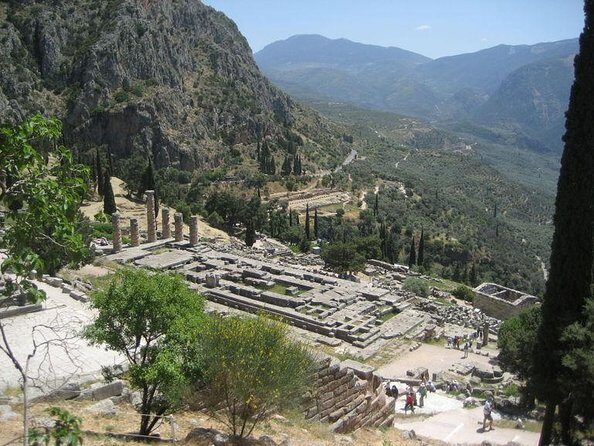
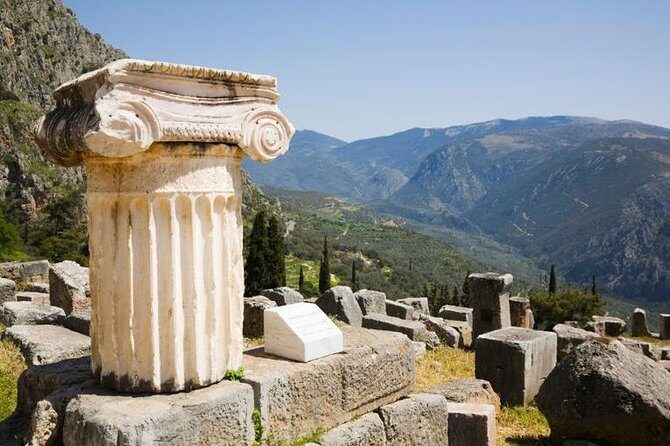
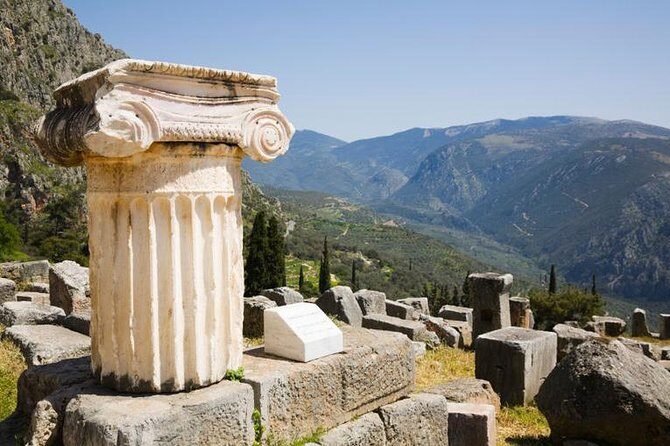
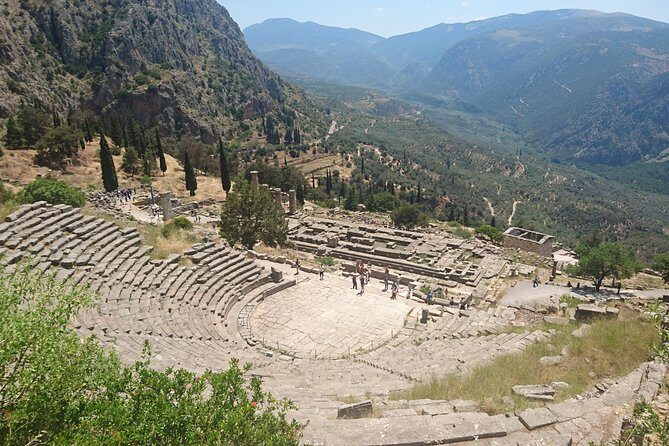
Day three brings you to Delphi, perched dramatically on the slopes of Mount Parnassus. This UNESCO World Heritage Site was considered the center of the world in ancient times—the location where the Oracle of Delphi delivered prophecies that influenced major political and military decisions across Greece and beyond.
You’ll spend 90 minutes exploring the archaeological site with your guide, who will explain the Temple of Apollo, the theater, and the stadium that sits even higher up the mountainside. The views alone justify the visit—you can see all the way to the Gulf of Corinth from the upper terraces.
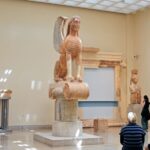
The Delphi Archaeological Museum deserves its full hour of your time. It houses the famous bronze statue of the Charioteer and the marble Dancers, sculptures of such quality that they rival anything you’d see in major European museums. One traveler noted: “We learned a lot about Greek history and Greek mythology,” and the museum does an excellent job providing that context.
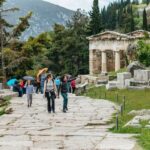
You’ll also visit the Tholos of Athena Pronaia, a small but beautifully preserved circular temple with three standing columns that make for iconic photographs. This 15-minute stop gives you a different architectural perspective from the larger Temple of Apollo.
The Delphi hotel location is particularly praised in reviews. One traveler mentioned “the one in Delphi had stunning views,” and based on the geography, you’re likely staying somewhere that overlooks the valley—a significant perk for the price point.
Day Four: Meteora and Return to Athens
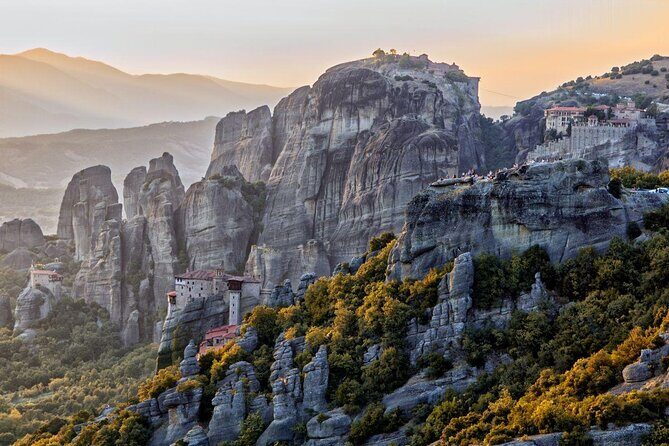
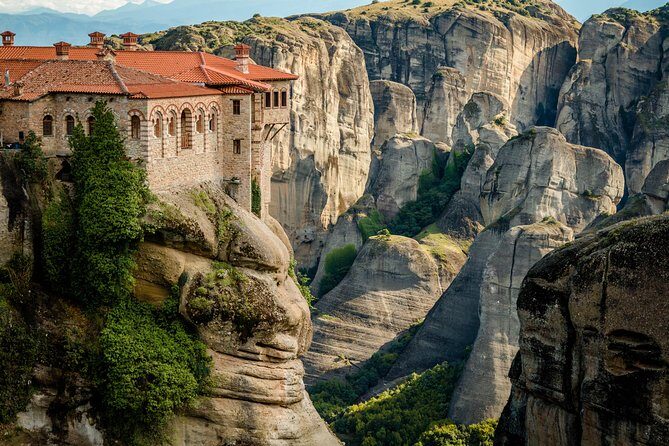
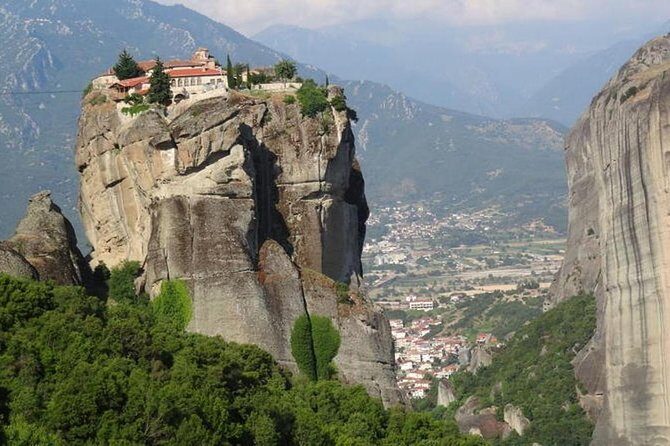
Your final day takes you to Meteora, perhaps Greece’s most visually arresting archaeological and spiritual site. These monasteries perch atop towering rock pillars that rise nearly 400 meters from the Thessalian plain. You’ll visit at least two of the monasteries during your hour at the site, though the actual exploration is somewhat limited by the need to keep the group on schedule.
Before returning to Athens, you’ll stop at the Leonidas Monument in Thermopylae, a 15-minute tribute to the Spartan warriors who famously held off a Persian army of vastly superior numbers in 480 BC. It’s a brief but historically significant pause that bookends your journey through Greek civilization.
You’ll return to your original hotel in Athens around 7:00 PM, depending on traffic. The drive back gives you time to process four days of intense historical learning.
Accommodation: Managing Expectations
This is where honest assessment matters. The tour offers a choice between “tourist-class” and “4-star” hotels, but reviews consistently note that the 4-star designation doesn’t align with North American or Western European standards. You’re staying in the Amalia Hotels chain, which are clean and comfortable but best described as solid three-star properties.
One experienced traveler who booked the 4-star option summed it up candidly: “Don’t pay for a 4 star option when you are really getting a 2 star stay.” However, the same reviewer praised the guide and overall experience, suggesting the accommodations are a minor consideration compared to the actual tour content.
The positive aspects: rooms are consistently clean, beds are comfortable, and each hotel has its own character. Several reviewers mentioned having patios or balconies with views. The buffet breakfasts are genuinely good—one traveler noted “about 20 feet long” buffet tables with “tons of options and plenty of variety.” Dinners follow the same buffet format and generally receive favorable reviews for quantity and local flavor, though not for culinary sophistication.
One important detail: you’ll pay an environmental fee of €10 per room per night (€30 total for the tour) directly at the hotel reception. This isn’t included in the upfront price, so budget accordingly.
The Guides and Drivers: Where This Tour Truly Excels
If there’s a consistent thread through positive reviews, it’s praise for the guides and drivers. Travelers mention guides by name—Joy, Maria, Foteini, Emilia, Dimitra—and describe them as knowledgeable, passionate, and genuinely interested in sharing their expertise. One family of six described their guide as having “knowledge, communication, experience, and group-management that are superb.”
The drivers also receive consistent praise for skill and safety. Navigating Greece’s narrow roads, sharp hairpin turns, and tight parking spots requires genuine expertise, and travelers appreciate feeling in capable hands during long driving days.
That said, guide quality can vary. A few reviews mention guides with weaker English or less comprehensive knowledge, suggesting that booking doesn’t guarantee you’ll get the standout guides mentioned in top reviews. This is fairly standard with group tours, but worth acknowledging.
Transportation and Logistics
You’ll travel in an air-conditioned coach with a maximum group size of 40 travelers. Several reviewers with smaller groups (9-17 people) noted that the smaller bus made movement between sites easier and created a more intimate learning experience. Groups larger than 25-30 people may feel less personal.
Pickup and drop-off from selected hotels in Athens is included, though the company notes that airport, port, and private apartment pickups aren’t available. If you’re staying at an Airbnb or outside the standard hotel zone, you’ll need to arrange your own transportation to the meeting point.
The driving is substantial—over 2,500 kilometers across four days—but the company builds in regular rest stops. Greek law mandates driver breaks, and the tour company complies with these requirements, which means you’re not just comfortable but legally protected.
Value Analysis: What You’re Actually Getting
At $766.70 per person, you need to understand what this price actually covers. Here’s the breakdown:
Included: Three nights’ accommodation, three breakfasts, three dinners, transportation, admission to five major archaeological sites (Epidaurus, Mycenae, Olympia, Delphi, and two Meteora monasteries), a professional English-speaking guide, and an air-conditioned vehicle.
Not included: Lunch (three meals), tips, and the €30 environmental fee paid at hotels.
For context, entrance fees alone to these five sites would run you €50-70 if purchased individually. Three nights in a three-star Greek hotel would cost €150-250. That leaves transportation and the guide service as the real value proposition, and for €400-500 of the tour price, that’s genuinely reasonable.
One experienced traveler who’d done similar tours elsewhere described it this way: “For the price you get a ton of value… if you want value. If you are looking for luxury this might not be your choice.”
Practical Considerations and Tips
Dress code matters: You must cover knees and shoulders to enter the monasteries and certain museum areas. No shorts or sleeveless tops. Bring a light long-sleeved shirt or cardigan that you can easily remove during the warmer parts of the day.
Wear comfortable walking shoes: Multiple reviewers emphasize this. You’re walking on cobblestones, marble, and uneven ancient stones for hours each day. Proper footwear isn’t optional.
Bring sun protection: One traveler mentioned bringing an umbrella for shade, which is smart thinking. Sunscreen, a hat, and sunglasses are essential, especially in summer months. Another reviewer noted “it was incredibly hot in some of the sites.”
Stay hydrated: Multiple reviewers stress this. You’re walking at archaeological sites in Greece, often at elevation, frequently in heat. Carry water.
Budget for lunch: At €15-25 per person for lunch (based on typical Greek restaurant prices), you’ll spend an additional €45-75 for the three lunches not included. The company directs you to specific restaurants, which is helpful but means you’re eating where tour buses stop.
Book well in advance: The tour is booked on average 96 days ahead, suggesting good availability but also that popular dates fill up. If you have specific travel dates in mind, booking two to three months ahead is wise.
Language note: French-speaking guides are available only on Mondays, and the tour operates bilingually on that day. Winter tours run English-only. If you need French, specify when booking.
Frequently Asked Questions
Q: Is this tour suitable for people with limited mobility?
A: Based on the itinerary, you’ll be doing substantial walking on uneven surfaces, climbing stairs, and navigating archaeological sites without elevators. The tour requires “moderate physical fitness level.” If you have mobility concerns, contact the tour company directly before booking to discuss specific sites and your capabilities.
Q: What’s the typical group size, and does it affect the experience?
A: Maximum group size is 40 travelers, but groups range from 9 to 26 people based on reviews. Smaller groups (under 15) tend to receive more personalized attention and move more easily between sites. Larger groups may feel less intimate but still receive good guidance.
Q: Can I book just the hotel without the tour?
A: No. The tour is a package experience—accommodation, transportation, guide, and admissions are bundled together. You can’t separate components.
Q: What happens if I need to cancel?
A: Free cancellation is available up to 24 hours before the tour starts. Cancellations within 24 hours forfeit the full payment. The tour requires a minimum number of travelers; if that minimum isn’t met, you’ll be offered an alternative date or full refund.
Q: Are children welcome, and what should I know about pricing?
A: Yes, children are welcome. Children aged 5-12 receive discounted pricing but must present a passport or ID at sites to qualify for discounted admission. Without proper documentation, they’ll be charged full adult rates. Younger children may struggle with the pace and amount of walking involved.
Q: Will I get the same guide for all four days?
A: Based on reviews, you typically have one guide for the full tour, which creates continuity and allows them to build on previous explanations. However, the tour notes that on some days (particularly when transitioning to Meteora), you may be handed off to a different guide or larger group. This is more common on busier days.
4-Day Classical Greece Tour: Epidaurus, Mycenae, Olympia, Delphi, Meteora
The Bottom Line
This tour represents genuinely good value for anyone serious about understanding ancient Greece without spending a fortune. You’re getting access to five UNESCO World Heritage Sites, guides (most of the time), comfortable transportation, and included meals for less than you’d pay for a week-long luxury tour in many European destinations. The accommodations are modest, the pace is brisk, and you’ll spend significant time on a bus, but the core experience—standing in the actual locations where Western civilization took root—is difficult to overvalue. This works best for history enthusiasts aged 12 and up, couples looking for educational travel, and solo adventurers who want expert company without the solo-traveler price premium. Skip it if you need luxury accommodations, prefer leisurely pacing, or aren’t genuinely interested in the history and mythology. For everyone else, this is one of the better tour values in Greece.