When you’re standing at the base of the Acropolis for the first time, the sheer scale of what you’re about to encounter can feel overwhelming. You see the Parthenon perched high on the rocky hill, the white marble glowing in the sunlight, but without context, it’s just an impressive building. This guided tour changes everything by pairing expert storytelling with unobstructed access to ancient Athens’ greatest treasures.
We particularly appreciate two things about this experience. First, the seamless integration of the museum into the tour—starting with the artifacts and then climbing to see where they originally stood creates a narrative that sticks with you. Second, the guides genuinely know their material; they’re not just reciting facts but sharing the human stories behind the monuments. One traveler noted their guide was “a bottomless pit of historical knowledge,” and that’s the consistent thread through hundreds of reviews.
The main consideration is that this tour involves significant walking on steep, sometimes slippery paths, and there’s no elevator access for the Acropolis hill itself. If you have mobility concerns or prefer a more leisurely pace, you’ll want to know this upfront. The tour also moves at a deliberate clip to fit everything into 3-4 hours, which means the museum portion is guided rather than self-directed.
This experience works best for first-time visitors to Athens who want to understand the “why” behind what they’re seeing, history enthusiasts who appreciate context and stories, and travelers who value their time enough to invest in expert guidance rather than wandering solo with a guidebook.
- The Real Value of .12: Breaking Down What You’re Actually Getting
- Meeting Point and Logistics: A Practical Start to Your Day
- Stop One: The Acropolis Itself—Where Western Civilization’s Greatest Symbols Stand
- Stop Two: The Acropolis Museum—Where the Originals Tell the Real Story
- What the Reviews Tell Us: Patterns in Genuine Traveler Feedback
- Practical Considerations: Timing, Weather, and What to Bring
- The Cancellation Policy: Flexibility When Plans Change
- Who Should Book This Tour—And Who Might Skip It
- Frequently Asked Questions
- The Best Of Athens!
- More Guided Tours in Athens
- More Tours in Athens
- More Tour Reviews in Athens
The Real Value of $41.12: Breaking Down What You’re Actually Getting


At just over $41 per person, this tour seems almost suspiciously affordable for what’s included. To understand the value, consider what you’re getting: a licensed, English-speaking guide who has studied the archaeology and history of these sites, skip-the-line access to the Acropolis grounds (though not the initial entry queue), and a structured itinerary that covers roughly 2,000 years of history in chronological and geographical order.
The ticket prices separately total €50 per person ($54) for both the Acropolis and museum if purchased independently. When you factor in the guide’s expertise—which transforms a self-guided walk from interesting to genuinely educational—the per-person cost becomes exceptional value. One traveler summed it up perfectly: “Much better than we could have done on our own.”
What makes this pricing work is the group format. You’ll be touring with up to 24 other people, which keeps costs down while maintaining an intimate enough experience. The groups aren’t so large that you’ll feel like you’re herding cattle, but they’re large enough that the fixed costs of the guide get distributed reasonably.
If you book the “with tickets” option, the guide hands you everything at the meeting point—one less thing to figure out. If you choose the “without tickets” option to save money, you’ll need to purchase them online at least 24 hours ahead or notify the tour company to reserve them for you. The €30 Acropolis and €20 museum tickets are adult rates only, so factor in those costs if you’re bringing children.

👉 See our pick of the The 2 Top Tours In Athens: Which Is Best?
Meeting Point and Logistics: A Practical Start to Your Day
You’ll meet at Mitseon 2, which is a short walk from the Acropolis Metro station in central Athens. This location matters more than it sounds—you’re already close to the sites, and the metro accessibility means you can reach it from anywhere in the city without expensive taxi rides. The tour company recommends arriving 15 minutes early, which is standard practice and gives you a buffer if you’re navigating the metro for the first time.
If you’re coming from Piraeus Port, allow 30-40 minutes by taxi in light traffic, though morning traffic can stretch that considerably. Many cruisers add this tour to their port day, and the location is manageable though not instantaneous from the port. The meeting point is genuinely easy to find—reviewers consistently mentioned this as a plus—and the office staff can answer last-minute questions about timing and logistics.
Punctuality matters here because the Acropolis has strict entry time windows. If you’re late, you won’t be accommodated, and the tour company won’t refund you. This sounds harsh until you realize it’s because the Acropolis itself enforces these windows during peak season to manage crowds. Arriving early isn’t just courtesy; it’s how you ensure your spot on the tour actually happens.
The tour ends at the Acropolis Museum, which is just a few minutes’ walk from the Acropolis site. If you’ve booked the full experience, you’ll finish there rather than back at the starting point. This is worth noting if you have other plans later—you’ll need to navigate back to your hotel from the museum rather than the office.
You can also read our reviews of more guided tours in Athens

Stop One: The Acropolis Itself—Where Western Civilization’s Greatest Symbols Stand
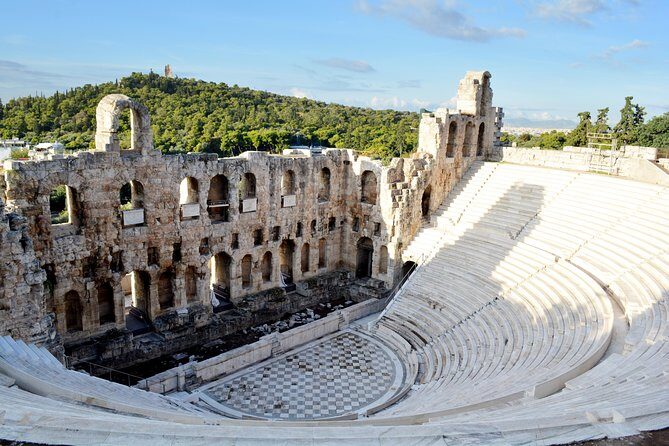
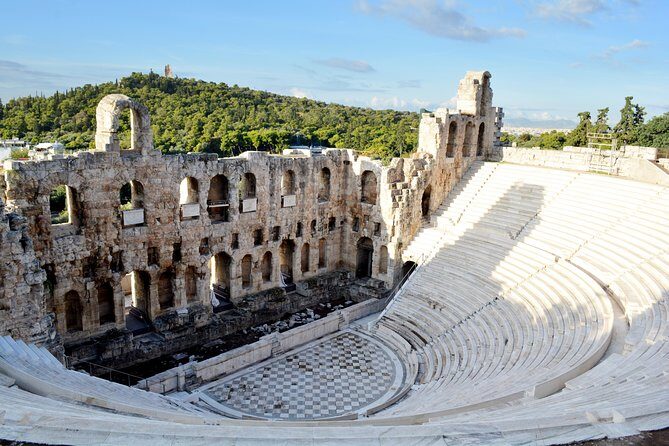
Your guide will lead you through the Dionysus Theater first, and this opening move is brilliant pedagogically. The theater is where ancient dramas and tragedies premiered, so you’re starting with the cultural context before climbing to the political and religious symbols above. Your guide will explain how theater functioned in ancient Athens—not as entertainment for the masses but as a venue for exploring civic and moral questions through art.
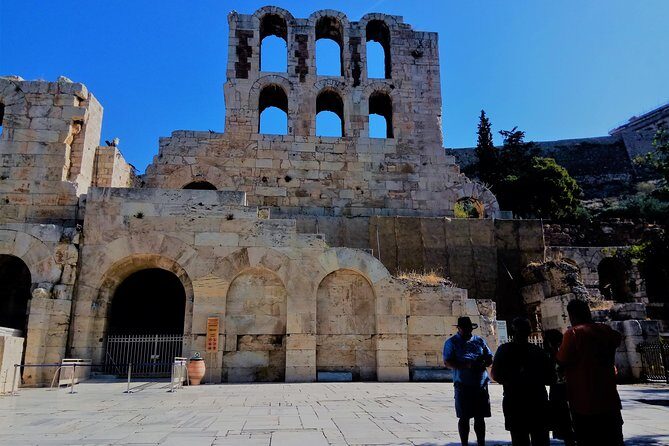
From there, you’ll pass the Odeon of Herodes Atticus, a Roman-era theater that hosted musical performances. The contrast between the Greek and Roman structures gives you a visual sense of how Athens’ cultural influence extended through different eras. Your guide will point out architectural differences and explain what each period valued—the Greeks emphasized dramatic storytelling; the Romans brought music and spectacle.
The sanctuary of Asclepius comes next, and here’s where the tour deepens your understanding of daily life in ancient Athens. Asclepius was the god of healing, and pilgrims came here seeking cures. Your guide will explain the rituals and beliefs that governed these visits, making ancient religion feel less like abstract mythology and more like a living system of thought that structured how people understood health, fate, and divine intervention.
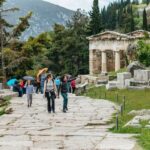
Then comes the climb. Yes, it’s steep. Yes, you’ll feel it in your legs. But your guide will pace this deliberately, stopping at the Propylea—the monumental gateway to the Acropolis—to catch your breath and explain its architectural significance. The Propylea was designed to impress visitors with Athens’ wealth and sophistication, and standing within it gives you a visceral sense of that intention.
The Temple of Athena Nike is small but exquisite—a miniature Doric temple dedicated to Athena in her role as goddess of victory. It’s easy to miss if you’re not guided toward it, nestled as it is among larger structures. Your guide will explain the symbolic importance of building a victory temple during the Peloponnesian War, when Athens’ future was uncertain.
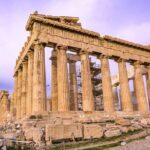
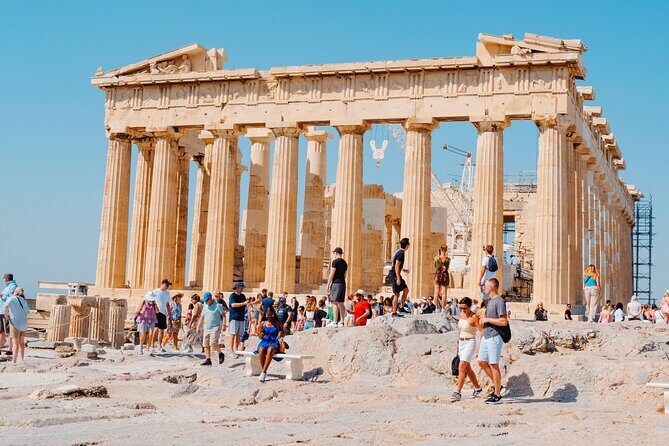
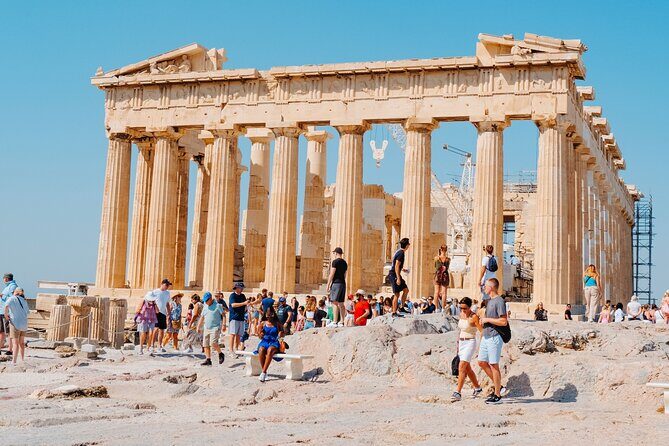
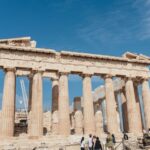
Then you reach the Parthenon. No photograph, no film, no description quite prepares you for seeing it in person, and your guide’s context makes the moment even more powerful. You’ll learn that it was built between 447-432 BCE as a temple to Athena Parthenos (Athena the Virgin), but it functioned as much as a statement of Athenian power and cultural dominance as it did a religious building. The guide will walk you around it, pointing out the sculptural details and explaining how the marble has weathered 2,500 years of history, war, and weather.
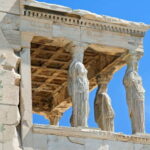
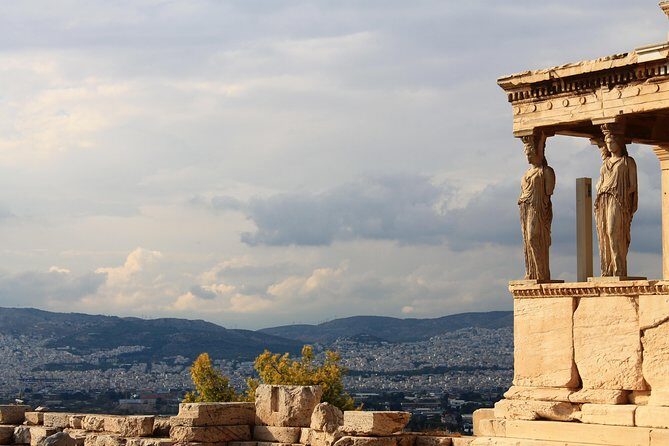
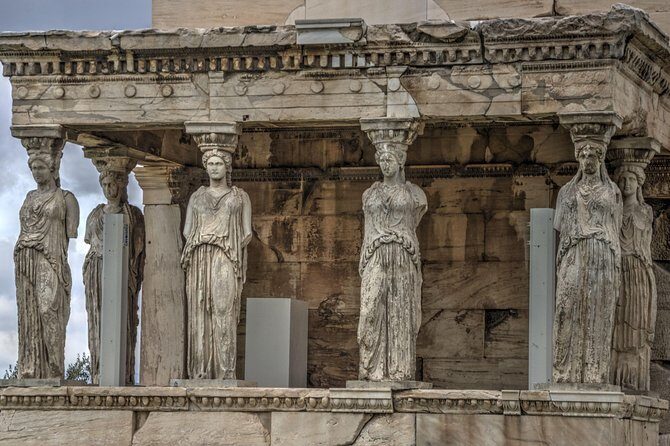
The Erechtheion, with its famous Caryatids (sculpted female figures serving as columns), is your final major stop on the hill. Your guide will explain why this temple breaks so many architectural rules—it’s asymmetrical, it sits on uneven ground, and it incorporates elements from different eras. Rather than being a flaw, this irregularity tells the story of how the Erechtheion was built on top of earlier sacred sites, literally layering history.
Throughout these stops, you’ll have opportunities to photograph, ask questions, and simply absorb the views. One reviewer noted that their guide “moved the group along at a comfortable pace with plenty of opportunities for photos and questions.” This balance is harder to achieve than it sounds—too fast and you feel rushed; too slow and people get restless. The guides here seem to have mastered it.
Stop Two: The Acropolis Museum—Where the Originals Tell the Real Story
After a short break (and yes, use the restroom facilities here if you need them), you’ll head to the museum, which sits just downhill from the Acropolis. This is where the tour becomes genuinely revelatory. You’ve seen copies and reconstructions on top of the hill; now you’re seeing the originals.
The ground floor focuses on daily life in ancient Athens. You’ll see children’s toys, wedding gifts, medical instruments, and votive offerings. This section matters because it humanizes ancient Athens—these aren’t just abstract historical periods but the everyday objects of real people. One reviewer said they “learned a lot about the history and meaning behind things,” and this floor is where that happens. You understand what ancient Athenians valued, how they played, how they healed, how they worshipped.
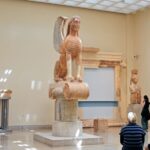
The first floor is where the Archaic statues live—the mysterious, slightly stilted figures from the 6th century BCE. These statues have an alien quality; their smiles are enigmatic, their proportions slightly off by Classical standards. Your guide will explain the evolution of sculptural technique and how these earlier works show artists beginning to grapple with representing the human form realistically. The Caryatids from the Erechtheion are here too, and seeing them up close, understanding the engineering required to use human figures as load-bearing columns, creates a different appreciation than viewing them from a distance on the hill.
The top floor is the crown jewel: the Parthenon frieze. This is the original sculptural program that once wrapped around the inner chamber of the Parthenon. Seeing it here, in climate-controlled conditions with clear sightlines, is transformative. Your guide will explain what each section depicted—processions, gods, mythological scenes—and what the overall composition tells us about Athenian self-perception. One traveler said the experience of “standing at a breathing distance from the mysterious archaic statues” and later seeing “the original unique in concept and artistic excellence Parthenon frieze” was genuinely moving.
The views of the Acropolis from the museum’s top floor are another bonus. After spending hours on the hill itself, seeing it from below, framed by the building’s architecture, creates a different perspective. It’s the kind of detail that doesn’t make it into most tour descriptions but that travelers remember.
Your guide will keep you engaged throughout the museum portion, though one reviewer noted that if you want to linger longer on your own, you can stay after the formal tour ends. This flexibility is valuable—you’re not locked into a strict timeline once the guided portion concludes.
What the Reviews Tell Us: Patterns in Genuine Traveler Feedback
With nearly 1,800 reviews averaging 4.8 stars, this tour has established a track record that’s hard to argue with. But what’s genuinely interesting is what reviewers consistently praise and what concerns occasionally surface.
The overwhelming theme is guide quality. Reviewers mention specific guides by name—Angel, Natasha, Maria, Chrysa, Jon, Bernie—and describe them with genuine affection. “She was knowledgeable and shared it with a great mix of realism & humour,” one reviewer said. Another noted their guide was “full of history and humorous anecdotes” who “moved the group along at a comfortable pace.” This isn’t generic praise; these are people who experienced something good enough to remember names months later.
The second consistent theme is how the tour structure works. Multiple reviewers noted that seeing the museum first (or in tandem with the hill visit) dramatically improved their understanding. One person said they “took us through the museum first to show us the artifacts and explain the construction and thoughtful design. With our newfound knowledge we scaled the hill to the top to see the structures up close.” This pedagogical approach—context before monuments—seems to be a deliberate choice that pays dividends.
A few reviewers mentioned feeling somewhat rushed at the museum, preferring to explore on their own. One said, “We didn’t really get to explore the Acropolis Museum on our own and felt a bit rushed.” This is worth considering—if museum time is a priority for you, you might want to book without the museum portion and visit it separately. However, most reviewers felt the pacing was appropriate.
The physical demands are real. Multiple reviewers recommended good walking shoes, and one suggested bringing warm clothes in winter because “it gets cold at the top.” The hill is genuinely steep, and while the breaks help, you’ll be climbing. Reviewers consistently note this isn’t a drawback—they’re just providing practical advice for future visitors.
One reviewer’s detailed account captures the tour’s essence: “From the moment we checked in, everything about this tour felt professional, thoughtful, and well-run… His deep knowledge of history and archaeology—grounded in real academic study—never felt dry or distant. Instead, it felt intimate and human… Bernie has a rare gift: he makes complex history feel accessible, meaningful, and genuinely entertaining. We laughed, we learned, and we walked away seeing the Acropolis not just as an ancient site, but as a living story shaped by people, power, belief, and time.”
Practical Considerations: Timing, Weather, and What to Bring
The tour runs 3-4 hours, and the variation depends on group size and how many questions people ask (which is generally encouraged). Most tours seem to run closer to 3.5 hours based on reviewer comments. This fits well into a morning or early afternoon schedule, leaving you time for lunch and other activities.
The tour books an average of 50 days in advance during peak season, suggesting that while it’s not impossible to book last-minute, planning ahead gives you better options. If you’re visiting Athens in summer, book early—the crowds are substantial, and time slots fill up.
Weather matters. The Acropolis is fully exposed, with minimal shade. In summer, the heat can be intense, and you’ll need water, a hat, and sunscreen. In winter, it gets genuinely cold at the top, and wind can be significant. There’s only a water fountain on site, no cafés, so bring what you need. Rain makes the stone slippery, so good shoes with traction are essential year-round.
One reviewer wisely noted to “take some water with you, comfy shoes. Everything is clear and sound, all instructions.” This captures what you actually need to know—the tour is well-organized, but you’re responsible for your own comfort.
The group size caps at 24 people, which is large enough to be economical but small enough that you’re not completely lost in a crowd. You’ll hear your guide clearly (though one reviewer mentioned that “audio quality may occasionally be affected by other groups’ equipment” if multiple tours are happening simultaneously). This is a minor point but worth knowing.
You can also read our reviews of more museum experiences in Athens


The Cancellation Policy: Flexibility When Plans Change
You can cancel up to 24 hours before the tour for a full refund. This is genuinely useful flexibility—if your flight gets delayed, if you’re feeling ill, if the weather turns unexpectedly bad, you have a safety net. Less than 24 hours? You lose your money. This is standard across the travel industry and provides the tour company with certainty about group size.
The cut-off time is based on local Athens time, so if you’re booking from elsewhere, account for the time difference when calculating your deadline.
Who Should Book This Tour—And Who Might Skip It
This tour is ideal if you’re visiting Athens for the first time and want to understand the Acropolis deeply rather than just photographing it. History enthusiasts will appreciate the scholarly approach; casual travelers will appreciate that the guide does the work of research and explanation for you.
You should book this if you want to see the original Parthenon frieze in the museum—this isn’t something you can experience elsewhere. You should book if you value your time and want to cover the most important sites efficiently without wasting hours figuring out what matters.
You might skip this if you have significant mobility challenges (the hill is genuinely steep and there’s no elevator access), if you have very young children (under 6 isn’t recommended), or if you prefer exploring at your own pace without group structure. You might also skip if you’re staying in Athens long enough to visit the Acropolis and museum on separate occasions at your own pace.
If you’re a cruise passenger with limited time in port, this tour is nearly essential—it covers the must-see sites in one efficient morning or afternoon, allowing you to either return to your ship or have time for lunch and shopping before departure.
Athens: Acropolis, Parthenon and Acropolis Museum Guided Tour
Frequently Asked Questions
Q: Are the entrance tickets to the Acropolis and museum really included in the price?
A: Only if you select the “with tickets” option at booking. The base price of $41.12 doesn’t include them—you’d add €30 for the Acropolis and €20 for the museum if you choose the ticketed version. If you book without tickets, you’ll need to purchase them online at least 24 hours ahead or contact the tour company to reserve them for you. Either way, you’re responsible for having valid entry before the tour starts.
Q: What if I’m running late to the meeting point?
A: The tour company won’t wait for you. The Acropolis has strict entry time windows, and if you miss your slot, you can’t join the tour that day. There’s no refund for late arrivals. Plan to arrive 15 minutes early to account for any navigation confusion, and if you’re using the metro, give yourself extra time during peak hours.
Q: Can I do just the Acropolis without the museum portion?
A: The itinerary includes both the Acropolis hill and the museum as standard, but based on reviewer comments, the tour company seems flexible about this. Contact them directly to ask about a hill-only option if that’s your preference. Some travelers felt the museum portion was rushed, so this might be worth negotiating.
Q: How much walking is involved, and how steep is the hill?
A: Expect roughly 2-3 hours of walking, with significant uphill sections that are genuinely steep. Multiple reviewers specifically mentioned needing good shoes and noted it’s a legitimate workout. There’s no elevator access on group tours, so everyone climbs. If you have mobility concerns, this tour isn’t suitable. If you’re reasonably fit, the breaks and pacing make it manageable.
Q: What’s the best time of year to do this tour?
A: Early morning in any season beats late morning, as crowds build throughout the day. Winter (January-February) has fewer travelers and cooler temperatures but can be cold at the top. Summer is busier and hotter but offers longer daylight. One reviewer specifically mentioned choosing January to avoid crowds and said it was a great decision. Spring and fall are probably ideal—warm enough to be comfortable but not scorching.
Q: What if the weather is really bad?
A: The tour operates in most weather conditions, but rain makes the stone slippery, and strong wind at the top can be genuinely uncomfortable. There’s minimal shelter on the Acropolis itself. If severe weather is forecast, contact the tour company about rescheduling. The 24-hour cancellation policy means you can cancel if conditions look unsafe, though you’d lose your payment if you cancel less than 24 hours before.
This tour represents exceptional value for what you’re getting: expert guidance from licensed historians, seamless access to both the Acropolis and its museum, and the kind of context that transforms ancient ruins from impressive monuments into living stories. The guides consistently receive praise for making complex history accessible without dumbing it down, and the tour’s structure—pairing artifacts with the places they originally occupied—creates understanding that lingers long after you leave Athens. If you’re visiting Athens and want to understand rather than just see the Acropolis, this is the smartest use of your time and money. The main requirement is comfort with uphill walking and the willingness to move at a group pace, but if those work for you, you’ll leave with genuine knowledge and appreciation for one of the world’s most significant historical sites.