
When you’re standing at the base of the Acropolis for the first time, staring up at the Parthenon backlit by Mediterranean sun, you’ll understand why this site has captivated people for nearly 2,500 years. We’ve reviewed this tour extensively, and what makes it genuinely worthwhile is how a guide transforms what could be a confusing walk through ruins into a coherent narrative about ancient Greek civilization. The price point is hard to beat—at $41 per person, you’re getting professional expertise that would otherwise require hiring a private guide at three times the cost.
The main strength of this experience lies in the quality of the guides themselves. Nearly every review mentions how engaging and knowledgeable the tour leaders are, with several travelers specifically naming guides like Anna, Stelios, John, and Petros as the highlight of their visit. These aren’t generic tour operators reading from scripts; they’re clearly passionate about Athens’ history and skilled at making it accessible to visitors from all backgrounds.
One realistic consideration: this tour involves substantial walking on uneven terrain with about 200 steps both up and down. If you have mobility limitations or prefer a more leisurely pace, you’ll want to factor this in. That said, multiple reviews mention that guides stop frequently enough that the physical demands feel manageable for most travelers with moderate fitness.
This experience works best for history enthusiasts, first-time visitors to Athens who want context for what they’re seeing, and anyone who prefers learning from a knowledgeable local rather than wandering aimlessly through a UNESCO World Heritage Site.
- What You’re Really Paying For
- The Itinerary: A Structured Journey Through Ancient Athens
- Stop 1: The Acropolis Entrance and Propylaea (15 minutes)
- Stop 2: The Parthenon (30 minutes)
- Stop 3: The Theatre of Dionysus (15 minutes)
- Stop 4: The Herodes Atticus Odeon (15 minutes)
- Stop 5: The Erechtheion (15 minutes)
- Stop 6: The Temple of Athena Nike (15 minutes)
- Stop 7: The Areopagus Hill (end point)
- The Guide Experience: Why It Actually Matters
- Practical Considerations for Your Visit
- Physical Requirements and Timing
- What to Bring and Wear
- Ticket Considerations
- Group Size and Personalization
- When to Book and What to Expect
- The Honest Assessment
- Combining With Other Experiences
- FAQ: Practical Questions Answered
- The Bottom Line
What You’re Really Paying For
 1 / 8
1 / 8 2 / 8
2 / 8 3 / 8
3 / 8 4 / 8
4 / 8 5 / 8
5 / 8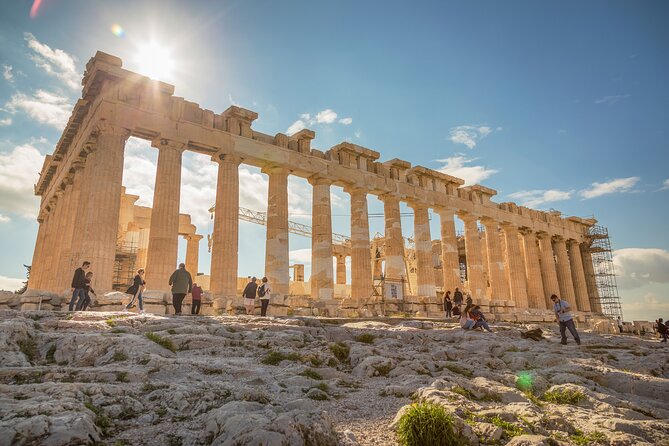 6 / 8
6 / 8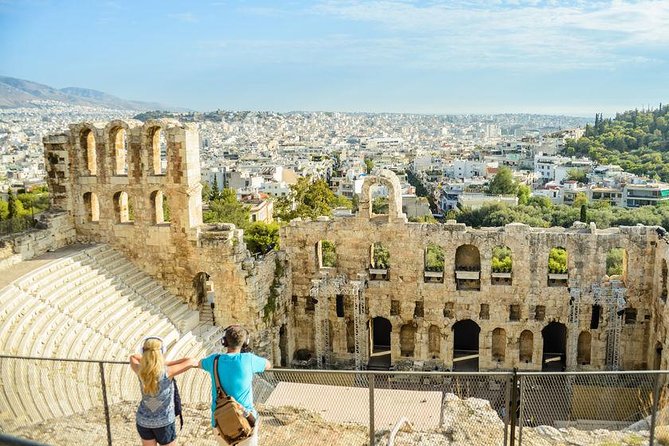 7 / 8
7 / 8 8 / 8
8 / 8At $41 per person, this tour represents exceptional value for guided access to one of the world’s most significant archaeological sites. To put this in perspective: the Acropolis entrance ticket alone costs €30 (roughly $33), so the actual cost of professional guiding is minimal. You’re essentially getting an expert tour for the price of a decent dinner.
The tour operator, Athens Walks Tour Company, has earned a 4.8-star rating across 4,755 reviews. That’s a substantial sample size, and the consistency of positive feedback is striking. Out of those thousands of reviews, the overwhelming majority praise the guides’ knowledge and presentation skills. One traveler noted, “Our guide was absolutely fantastic, very clear and knowledgeable. Definitely worth it if you don’t mind a short walk.” Another described their experience as “an absolutely necessary trip if traveling to Athens. All the history and beauty and everything about this place is breath taking.”
The company caps groups at 20 people per guide, which is crucial for maintaining quality. In a city where some tourist operations pack 50+ people onto tours, this size limitation means you’ll actually hear your guide without straining and have reasonable personal attention throughout the experience.
The Itinerary: A Structured Journey Through Ancient Athens
The tour spans approximately two hours and covers seven distinct stops across the Acropolis complex. Rather than rushing through each monument, the pacing allows roughly 15-30 minutes per location, giving you actual time to absorb what you’re seeing rather than just checking boxes on a list.
Stop 1: The Acropolis Entrance and Propylaea (15 minutes)
Your tour begins at the meeting point near the Acropolis base, where you’ll check in and receive your audio headset system if you’re in a group larger than five people. This might sound like a small detail, but it’s genuinely helpful. In a crowded UNESCO site, being able to hear your guide clearly through a personal headset rather than straining to listen from 20 feet away makes a real difference in how much information you retain.
The Propylaea—the monumental gateway to the Acropolis—sets the tone for what’s to come. Your guide will explain the architectural sophistication of this entrance, built in the 5th century BCE. One traveler with a guide named Elisa appreciated that she “told us stories about both archeology, construction and mythical tales.” This storytelling approach is what separates a good tour from a forgettable one.
Stop 2: The Parthenon (30 minutes)
The Parthenon deserves the lion’s share of your time, and the tour reflects this. You’ll spend roughly half the tour’s duration here, which is appropriate given its significance as perhaps the greatest achievement of classical Greek architecture.
Your guide will explain the optical illusions built into the Parthenon’s design—the slight curves and tilts that make it appear perfectly straight and proportional to the human eye. They’ll discuss the sculptural program, the historical events that shaped the building, and the various transformations it’s undergone over the centuries (from temple to Christian church to mosque). One reviewer with a guide named Vangelis noted that he “revealed many particularities and some amusing secrets about the long history of the hill.”
This is where the expertise really matters. Without context, the Parthenon is an impressive ruin. With a guide, it becomes a window into how ancient Athenians thought about proportion, democracy, and the divine.
Stop 3: The Theatre of Dionysus (15 minutes)
Located on the southern slope of the Acropolis, this ancient theatre is where the dramatic festivals that produced the plays of Sophocles and Euripides were performed. Your guide will explain the theatrical conventions of ancient Greece and the role of theatre in Athenian society. The theatre’s acoustic properties still function remarkably well—you might experience a demonstration of how sound travels in this 2,400-year-old structure.
Stop 4: The Herodes Atticus Odeon (15 minutes)
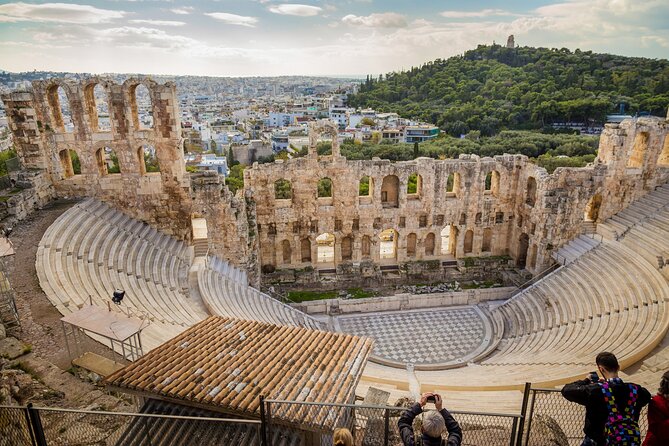
Built in the 2nd century CE by a wealthy Roman patron, this odeon (a concert hall) remains one of the most beautiful structures on the Acropolis. Unlike the Greek temples, it represents the Roman period of Athens’ history. Your guide will help you understand how Athens’ importance evolved through different historical periods—from classical Greek independence through Roman rule and beyond.
Stop 5: The Erechtheion (15 minutes)
This temple is architecturally unlike anything else you’ll see on the Acropolis, with its famous Porch of the Caryatids—columns sculpted as female figures. Your guide will explain the temple’s unusual design and the mythological stories associated with it. The Erechtheion is also where you’ll see the famous olive tree, said to be a descendant of the tree Athena planted in competition with Poseidon for patronage of the city.
Stop 6: The Temple of Athena Nike (15 minutes)
This small but perfectly proportioned temple sits near the entrance to the Acropolis. Despite its size, it’s a masterpiece of classical design. Your guide will discuss the symbolism of Nike (victory) and how this temple fit into the broader religious landscape of the Acropolis.
Stop 7: The Areopagus Hill (end point)
The tour concludes at Areopagus Hill, where your guide will likely point out the Assembly meeting place and discuss the birthplace of Athenian democracy. One traveler mentioned that their guide “showed us Pnyx and the Assembly at a distance. Fantastic to actually be able to visit the Greek birthplace of democracy.” This broader context—connecting the monuments to political and social history—is what elevates a good tour guide.
The Guide Experience: Why It Actually Matters
The most consistent praise in the reviews centers on the guides themselves. This isn’t accidental. Athens Walks Tour Company appears to hire and train guides who genuinely care about their subject matter. Travelers repeatedly mention guides by name and personality: “Crazy Anna” with her pink hair who made the tour “interactive,” Stelios who was “so knowledgeable and passionate,” John described as “the Archaeologist” who shared information “with passion at every second.”
One particularly detailed review noted: “Our guide was very well informed and the private audio devices worked well. I would have enjoyed even more information.” Even the critical feedback acknowledges the guide’s competence—the reviewer simply wanted more history, which speaks to how engaging these guides are.
Another traveler observed: “Well organised, John our tour guide was knowledgeable and enthusiastic. His manner and humor made the tour absolutely joy. Highly recommend.” The humor element matters. History can be dry if delivered poorly, but these guides manage to be both informative and entertaining.
Practical Considerations for Your Visit
Physical Requirements and Timing
The tour involves approximately one mile of walking on uneven surfaces with 200 steps both up and down. If you have knee or back issues, this is worth considering seriously. However, multiple reviews mention that guides stop frequently, so you’re not forced into a relentless march. One traveler noted: “Be ready to climb but the guide stopped frequently so it didn’t wear us out.”
The tour takes roughly two hours, but plan for additional time. You’ll likely spend 15-20 minutes at the meeting point for check-in, and if you visit during peak season, expect potential queues to enter the Acropolis itself. The company acknowledges this: “Long queues and waiting might occur and every effort is made to coordinate the best timings for visits.”
What to Bring and Wear
Comfortable walking shoes are essential—not optional. The stone surfaces are uneven and can be slippery, especially if there’s been rain. Several guides mentioned in reviews that visitors should bring a poncho or rain jacket if weather looks uncertain. A hat and sunscreen are practical additions, as there’s minimal shade on the Acropolis.
The company notes that large backpacks and oversized purses aren’t permitted on the site, so pack light. A small crossbody bag works well for carrying water and a camera.
Ticket Considerations
Here’s where you need to make a decision: you can book the tour with or without entrance tickets included. If you book without tickets (saving roughly €30), you’ll need to purchase them separately online through the official website. The company warns that tickets can sell out days in advance, particularly during peak season (April-October).
Given that tickets are so likely to sell out, the “with tickets” option is probably worth the extra cost for peace of mind. Younger travelers should note that EU citizens under 25 get discounted entry, and anyone under 18 enters free with a valid passport or photocopy.
Group Size and Personalization
With a maximum of 20 people per guide, you’ll have genuine opportunities for questions and interaction. This isn’t a massive tour where you’re one of 60 anonymous visitors. One traveler appreciated that their guide “included everyone in the group and was very interesting to listen to,” which is harder to achieve with larger groups.
When to Book and What to Expect
The tour is booked on average 36 days in advance, suggesting it’s popular but not impossible to secure last-minute. The company offers free cancellation up to 24 hours before the tour, which is helpful if your plans change. If weather becomes an issue, you’ll be offered an alternative date or full refund.
Early morning tours are generally preferable. Not only are crowds lighter, but the morning light on the monuments is often more dramatic. One review mentioned: “Take the opportunity when it is low season and early morning because the crowds grow fast.”
The Honest Assessment
One critical review deserves acknowledgment: “Really not worth the hype. We didn’t learn much more from the tour than we could have walking through the museum. You can see the acropolis from almost anywhere. Could have just been our opinion but the sheer amount of people made the trip up and down almost unbearable (going back down was almost worse than trying to go up). You want a photo? Good luck. All of our photos have about a thousand people in it.”
This reviewer highlights a real challenge with visiting the Acropolis in peak season: the sheer volume of visitors. The tour company can’t control how many people visit the site overall, only the size of their own groups. If you’re visiting in July or August, expect crowds regardless. The solution is either visiting in shoulder season (April-May or September-October) or joining an early morning tour.
Combining With Other Experiences
Several travelers mentioned doing both this tour and the Acropolis Museum tour. The museum is located just south of the Acropolis and houses the finest sculptures and artifacts from the site. One reviewer noted: “We did both the Parthenon and Acropolis Museum tour. Our tour was terrific. Our guide was just the right combination of friendly and knowledgeable!” Another suggested: “If you are interested in more details the nearby Acropolis museum has got a lot of artifacts and gives much more detailed information about decorations on the Parthenon.”
The museum entrance is €20 (or free for EU citizens under 25 and children under 18), and it typically takes 1.5-2 hours to visit properly. Many travelers combine the walking tour with a museum visit for a comprehensive understanding of ancient Athens.
FAQ: Practical Questions Answered
Q: Do I need to purchase entrance tickets separately, or are they included?
A: You have the option to book the tour with or without entrance tickets. If you choose the option with tickets, they’re included (€30 for the Acropolis, €20 for the museum if you add that). If you book without tickets, you’ll need to purchase them online in advance, as they can sell out days ahead, especially in peak season.
Q: What’s the maximum group size, and why does it matter?
A: Groups are limited to 20 people per guide. This size is important because it means you can actually hear your guide without straining, have reasonable opportunities to ask questions, and maintain a more personal experience than massive tour groups offer.
Q: How physically demanding is this tour?
A: The tour involves approximately one mile of walking on uneven surfaces with about 200 steps up and down. If you have mobility issues, this is a legitimate consideration. However, guides stop frequently, so it’s manageable for most people with moderate fitness levels. Wearing proper walking shoes is essential.
Q: Are the audio headsets really necessary?
A: They’re provided for groups larger than five people and are genuinely helpful. Rather than straining to hear your guide from 20 feet away in a crowd, you’ll have clear audio directly. This makes a significant difference in how much information you retain.
Q: What should I bring and wear?
A: Wear comfortable walking shoes (the surfaces are uneven and potentially slippery). Bring a hat, sunscreen, and water. If weather looks uncertain, a light rain jacket or poncho is smart. Large backpacks and oversized purses aren’t permitted on the site, so pack light with a small crossbody bag.
Q: When is the best time to visit the Acropolis with this tour?
A: Early morning tours are preferable for fewer crowds and better light. Shoulder seasons (April-May or September-October) see fewer visitors than summer. If you’re visiting in July-August, expect significant crowds regardless of the tour company’s efforts.
Q: Can I cancel if my plans change?
A: Yes, you can cancel free of charge up to 24 hours before the tour. If the tour is canceled due to poor weather, you’ll be offered an alternative date or full refund.
Q: Do children need to bring anything special?
A: Children under 18 enter free but must bring a valid passport or photocopy (even a mobile device photo works). EU citizens under 25 also get discounted entry and should bring identification. Children must be accompanied by an adult.
Q: What if I want to learn even more about the Acropolis?
A: Many travelers combine this walking tour with the nearby Acropolis Museum, which houses the finest sculptures and artifacts from the site and provides deeper context about the monuments. The museum costs €20 (or is free for EU citizens under 25 and children under 18).
Q: How long should I plan for the entire experience?
A: The tour itself is about two hours, but add 15-20 minutes for check-in and potentially significant time for entrance queues during peak season. If you’re also visiting the museum, plan an additional 1.5-2 hours. Budget at least 4-5 hours total if visiting in peak season.
Acropolis and Parthenon Guided Walking Tour
The Bottom Line
This tour delivers genuine value at an exceptional price point. You’re getting professional expertise from passionate guides who know how to make ancient history compelling and accessible—all for less than the cost of a decent meal. The 2-hour duration is well-paced, the small group size ensures actual engagement, and the headset system makes hearing your guide effortless. Yes, there’s walking involved, and yes, peak-season crowds can be overwhelming, but these are limitations of visiting the Acropolis itself, not of the tour company. If you’re visiting Athens for the first time and want to understand what you’re seeing rather than just snapping photos, this tour is worth booking. The consistent praise from thousands of travelers—particularly the specific mentions of guides who made history come alive—suggests you’re likely to have a genuinely memorable experience. At $41 per person, it’s one of the best-value guided experiences available in Athens.