
If you want a stress-free day in eastern Crete with big scenery and local flavor, this packed day trip is a strong pick. You’ll ride off-road-ish roads with a guide through the Lassithi Plateau region, hit old villages, taste olive oil at a family producer, and then work your way up toward Zeus Cave (with the usual cave-stairs effort that gets mentioned a lot).
Two things I really like: the guide-led pacing (you’re not trying to navigate rough terrain on your own), and the “small details” stops that feel genuinely Cretan—especially the olive oil tasting and time in village lanes like Kritsa. In multiple days-worth-of-stops reviews, guides such as Petra, Michael, and Rolf come up as standout hosts.
One consideration: it’s an all-day itinerary with a strenuous climb/walk involved at Zeus Cave, and cave access can depend on conditions. If you’re not up for stairs, plan for a tougher day than a casual sightseeing loop.
- Key points to know before you go
- Eastern Crete’s “greatest hits,” without the map anxiety
- Getting picked up near Agios Nikolaos (and where it stops)
- A guided day that mixes villages, agriculture, and viewpoints
- Agios Nikolaos and the lake stop: easy start, quick orientation
- Olive oil factory visit: tasting with context (not just buying)
- Panagias Keras Church: a beautiful fresco stop, but opening hours vary
- Kritsa village walk: old lanes and a real village vibe
- Katharo Plateau viewpoints: where the coast views feel unreal
- Lassithi Plateau pass: a quick taste of high-altitude life
- Heading toward Zeus Cave: the climb is the real test
- Optional extras you might see
- Windmills of Lasithi: a short stop with an included ticket
- Lunch at a local taverna: the best break in a full schedule
- Selinari monastery and Krasi plane tree: small stops, big feel
- How long is it, and what’s the rhythm like?
- Guides: the main ingredient people mention again and again
- Price and value: does 9.77 feel fair?
- Practical tips so the day feels smooth
- Who this tour suits best (and who should think twice)
- Should you book this Zeus Cave and Lassithi Plateau day trip?
- FAQ
- What time does the tour start?
- Do you pick up from hotels?
- What areas have pickup?
- Is the tour in English?
- Is lunch included?
- Is the entrance to Zeus Cave included?
- Are tickets included for the windmills stop?
- How long is the tour?
- Is there a group size limit?
- What is the cancellation policy?
Key points to know before you go
 1 / 8
1 / 8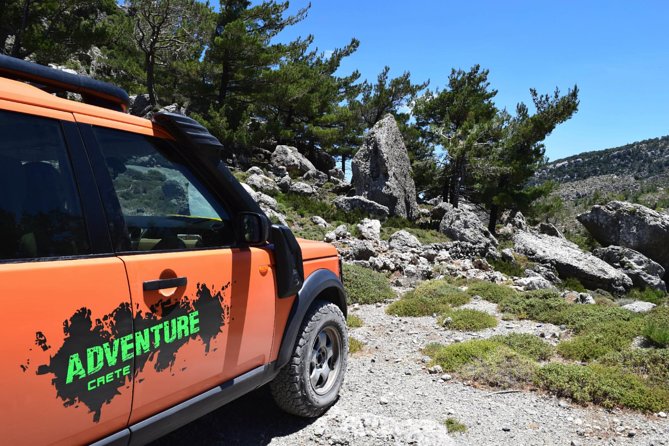 2 / 8
2 / 8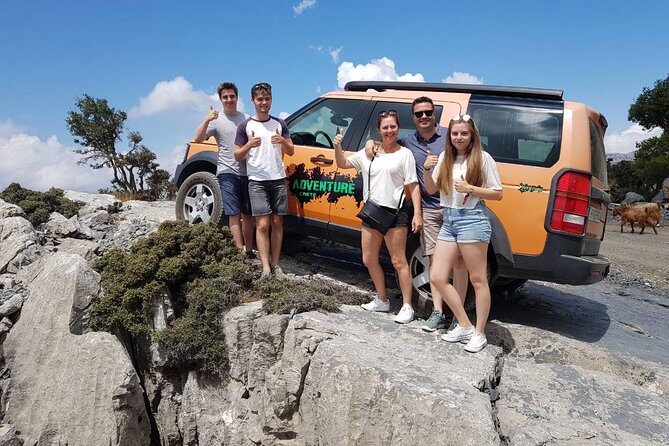 3 / 8
3 / 8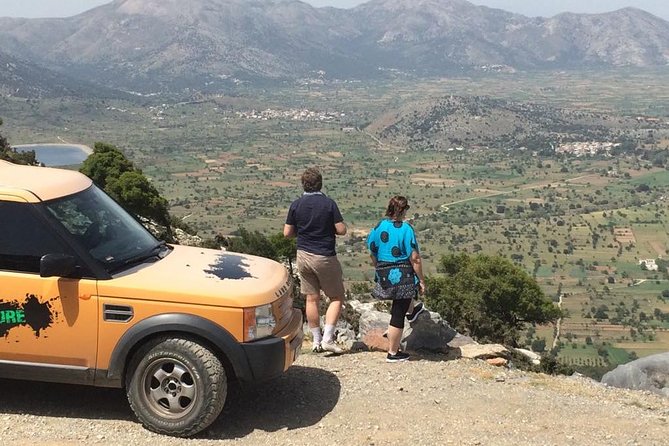 4 / 8
4 / 8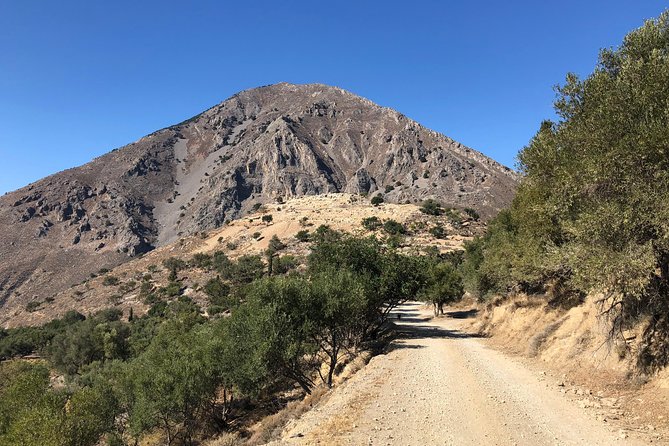 5 / 8
5 / 8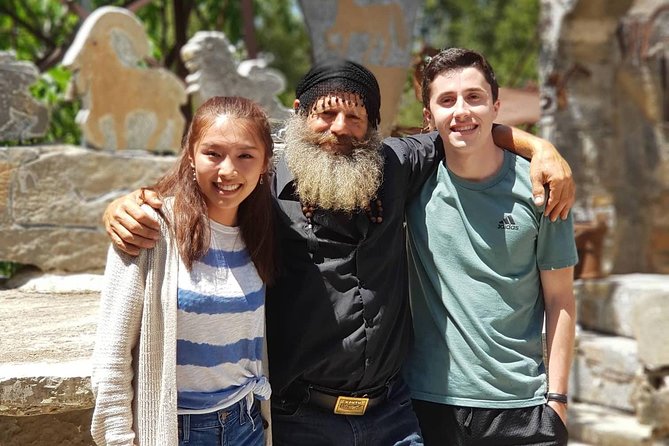 6 / 8
6 / 8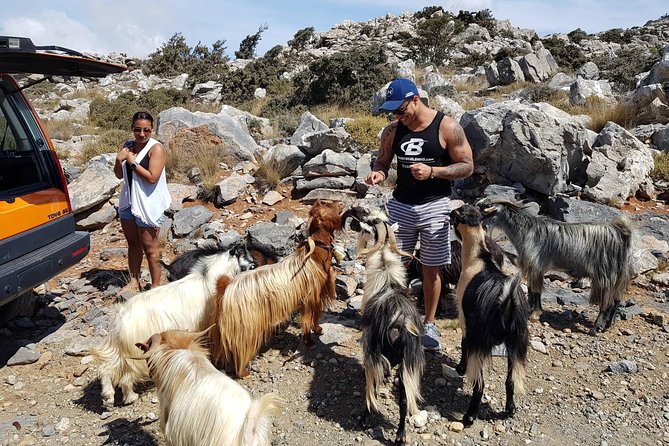 7 / 8
7 / 8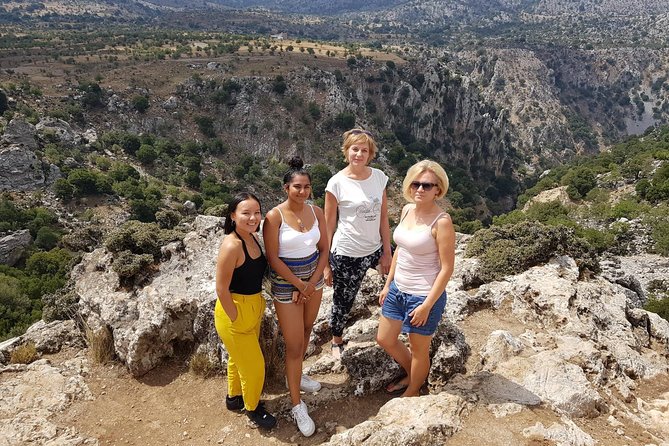 8 / 8
8 / 8- Small-group feel (max 30): enough company for fun, not so many people that you lose the guide’s attention.
- Off-road-style touring with a guide: you’ll reach viewpoints and rural spots you’d struggle to find solo.
- Olive oil tasting at a family factory: you’re not just buying a souvenir; you’re sampling different types and learning what you’re tasting.
- Mountain views that connect two coasts: Katharo Plateau viewpoints let you look out toward the Libyan Sea and Aegean Sea at the same time.
- Windmills of Lasithi: a quick stop with an included admission ticket, so you’re not left guessing.
- The cave day is worth it, but bring sturdy shoes: multiple travelers flag the stairs and walking as the hardest part.
Eastern Crete’s “greatest hits,” without the map anxiety
This tour is built for travelers who want one full day of eastern Crete. You start around 9:00am with hotel pickup (within certain areas), then you spend hours moving through landscapes that change fast: lake-adjacent roads near Agios Nikolaos, village streets like Kritsa, and then the altitude drama of plateau viewpoints.
What makes it work is the structure. Instead of dropping you at one site and letting you fend for yourself, you get a guide who’s actively talking as you move—about agriculture, local customs, and the myth-to-landscape connections that Crete loves.
And yes, it’s a long day. You’ll be in a vehicle for a good portion of the day, but the stops are frequent enough that the time doesn’t feel wasted.
Getting picked up near Agios Nikolaos (and where it stops)
This is easiest if you’re staying in Chersonissos, Malia, Sissi, Agios Nikolaos, Elounda, Istron, or Ierapetra. Pickup is offered from hotel villas or apartments in these regions.
Two practical notes:
- They do not pick up from Chania or Rethymno for normal tours, and that limitation comes up in customer support history. If you’re far west, you’ll need a different plan.
- VIP tours have different pickup coverage (including Heraklion), but that’s only for VIP.
It’s a good idea to have your hotel address and a clear pickup spot ready. Some travelers report minor pickup delays, generally tied to coordinating other guests.
A guided day that mixes villages, agriculture, and viewpoints
The heart of this trip is variety. You’re not just doing “cave, cave, cave.” You get:
- Food culture (olive oil tasting)
- Old-school village time (Kritsa and other stops)
- Big landscape payoff (Katharo Plateau and Lassithi Plateau views)
- Historic religious stops (where open, if not, you still see the landmark from outside)
This variety is why the tour tends to score so well for travelers who want one day that feels like it covers real Crete, not just postcards.
Agios Nikolaos and the lake stop: easy start, quick orientation
You pass through Agios Nikolaos, including a look at the well-known lake area. This is a low-effort opener—more “get your bearings” than “big ticket attraction.”
If you arrive early in the morning, you’ll still feel the tour has momentum right away. It’s not a sleepy start where you’re just waiting for the next thing.
Olive oil factory visit: tasting with context (not just buying)
One of the best parts here is the family-style olive oil stop. You’ll visit an olive factory for olives and olive products, and then you get a tasting of different quality sorts of olive oil.
Why this matters: in Crete, olive oil is culture, not just a product. A good guide helps you notice differences that you’d miss if you were just buying bottles. Many travelers walk away with a clearer idea of what the tasting terms actually mean.
Also, this is one of the few stops where you can slow down and talk with the people—or at least ask questions—without feeling rushed.
Panagias Keras Church: a beautiful fresco stop, but opening hours vary
You’ll stop at Panagias Keras Church. The key detail is timing: it’s not open 5–6 days a week, so you can’t guarantee access inside.
If it is open, travelers mention that the frescoes from the 17th century are breathtaking. If it’s closed, you still get the exterior landmark and you move on—so the day doesn’t stall.
This is one of those places where the guide’s attitude matters. A good guide will help you appreciate what you can see, not get stuck on what’s inaccessible.
Kritsa village walk: old lanes and a real village vibe
Kritsa is one of those villages that feels like it has layers. You’ll have time for a walk into the older part of the village, and the stop is typically described as romantic and very old.
You may also hear about (and even experience) hands-on moments like goat feeding during the rural portion of the day. Multiple travelers mention goats as a highlight, and it fits the tour’s overall “live life here” feel.
What to expect: this is not a “stand in a square for photos” stop. You’re walking through streets, seeing textures of everyday Crete, and getting a sense of how village life looks beyond the tourist strip.
Katharo Plateau viewpoints: where the coast views feel unreal
Then you climb toward Katharo Plateau, with views that can show both the Libyan Sea and the Aegean Sea in one glance (the kind of thing that makes you stop talking for a minute).
This is a short stop—about 30 minutes—but it’s intentionally placed. It’s less about a long hike and more about a payoff moment: get high, look far, and let the guide explain what you’re seeing.
If you’re prone to skipping viewpoints, don’t. This is one of those areas that gives you a stronger “where am I?” understanding of eastern Crete’s geography.
Lassithi Plateau pass: a quick taste of high-altitude life
You’ll pass the Lassithi Plateau and get an impression of living at high altitude. Expect a driving-and-looking kind of stop (around 15 minutes).
This section works best if you like big landscape moments. If you prefer culture over scenery, you might wish the plateau stop was longer. But the tradeoff is that you get to fit in all the other sites without turning the day into a 10-hour marathon.
Heading toward Zeus Cave: the climb is the real test
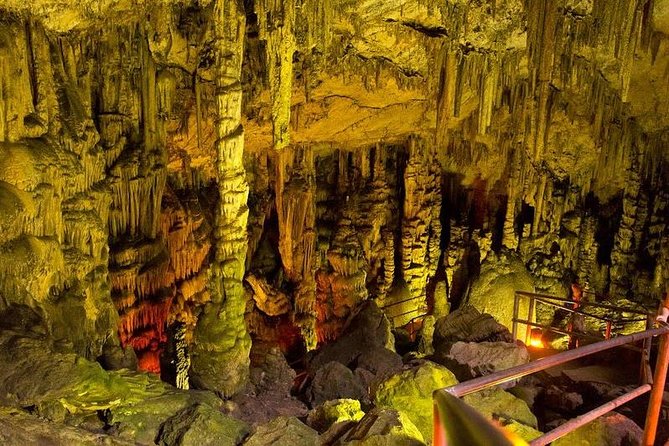
At Dikteon Cave (the Zeus Cave area), you’ll be brought to the entrance, and you can visit the cave if conditions allow.
Two facts from traveler experience:
- There’s walking and stairs up and down.
- The walk up is the part most people feel in their legs the next day.
So here’s the honest advice: pack solid shoes. Travelers repeatedly warn that this is more demanding than it looks on a brochure photo. One traveler even notes that if you’re not fit for stairs, plan for a tough time.
Also, cave access can be affected. Some travelers report the cave being closed for renovation, and in those cases, the day can shift—like adding a pottery experience as a fun alternative when the cave isn’t available. When you book, it’s smart to confirm the day-of status if Zeus Cave is your main reason for going.
Optional extras you might see
Some travelers mention donkey ride options and the idea of having cash available if those local services are running. The cave entry cost itself is also not included, so you’ll likely want to budget for tickets on the day.
Windmills of Lasithi: a short stop with an included ticket
You’ll then check out the Windmills of Lasithi Plateau, with an included admission ticket.
This is a “see it, appreciate it, move on” moment—about 20 minutes. The windmills are iconic, but what makes this stop worthwhile is how it ties the plateau’s working landscape to the wider region you’ve been passing through all day.
Lunch at a local taverna: the best break in a full schedule
Lunch is included, along with bottled water, and the day rides in an air-conditioned vehicle.
Why the lunch is often praised: it’s not just an energy stop. Many travelers call it delicious and highlight the local taverna setting right after the cave area and walking.
If you have dietary needs, a few reviews suggest the team can be accommodating. But the tour data doesn’t spell out specific meal categories, so it’s wise to mention restrictions when booking or directly to the tour provider.
Selinari monastery and Krasi plane tree: small stops, big feel
On the way back, you’ll pass Malia (touristy, just a pass-through), then stop at Selinari, where you can visit an old monastery and optionally light a candle.
After that, Krasi offers a quick stop at a very old town with an enormous ancient plane tree—described as thousands of years old. It’s the kind of stop that feels almost too simple, until you’re standing there and realize you’re seeing something that predates a lot of modern life.
These two stops are short, but they give the day a softer landing. After strenuous walking and big views, it’s nice not to end with another climb.
How long is it, and what’s the rhythm like?
Plan on about 7 hours total. The day is paced with multiple stops, so you’re not stuck waiting long stretches in one spot.
The rhythm feels like:
1. Easy morning pickup and orientation
2. Agriculture and village culture
3. Plateau viewpoints and scenic passing
4. The cave area (the physical centerpiece)
5. Windmills and lunch recovery
6. Quiet closing stops on the return
If you want a day trip that covers a lot but still includes breaks, this works well. If you hate driving days, you may find it long.
Guides: the main ingredient people mention again and again
What stands out across traveler notes is that the guides do more than read info off a card. People call out guides like Petra, Michael, Rolf, Thomas, and Panagiotis as knowledgeable and engaging.
You’ll typically get:
- Safety and pacing on rougher roads
- Explanations tied to myths and real land use
- Local-custom stories that make the stops feel connected
This is one reason the tour’s value stays high. When the guide is good, you understand what you’re looking at—and you enjoy the time more.
Price and value: does $119.77 feel fair?
At $119.77 per person for an all-day, guided itinerary, the value mostly comes from what’s bundled:
- Hotel pickup in covered areas
- Air-conditioned transport
- Lunch and bottled water
- Multiple paid/managed stops (some entries included, some not)
You should still expect extra costs for items like Zeus Cave entry (not included). Some other stops also note admission details as not included, while windmills and Katharo Plateau viewpoints are listed as included.
So if your priorities are: one-day coverage, a guide who drives you to the good spots, and food culture, this is priced like a solid day tour. If you only care about one attraction and everything else feels secondary, it could feel expensive.
Practical tips so the day feels smooth
Here’s how to make this tour easier on yourself:
- Wear good walking shoes. Zeus Cave is the stress point.
- Bring a small layer. Mountain air can feel cooler even when the coast is warm.
- If you’re booking specifically for Zeus Cave, be ready for closure/conditions. A quick confirmation is smart.
- Keep some flexibility about church access—Panagias Keras may or may not be open inside.
- If you like photos, keep your phone charged. You’ll get repeated scenic breaks.
And if you tend to get tired with stairs, don’t pretend you’ll suddenly love them that day. Plan accordingly.
Who this tour suits best (and who should think twice)
This tour is a great fit for you if you:
- Want multiple distinct landscapes in one day
- Enjoy guided context for olive oil, village life, and myths tied to place
- Like the idea of visiting rural sites that are hard to manage solo
- Appreciate good lunch and a day that feels curated
Think twice if you:
- Can’t handle stairs or a hard walk up (Zeus Cave is repeatedly described as intense)
- Need a relaxed, minimal-walking itinerary
- Are staying outside the pickup zones (especially far west)
Should you book this Zeus Cave and Lassithi Plateau day trip?
I’d book it if you’re traveling to eastern Crete for the first time and want a single day that connects food, villages, mountains, and viewpoint payoff. The combination of guides, strong scenery, and an included local lunch makes it feel like more than just transport to attractions.
If Zeus Cave is your main “must-see,” keep one caution in mind: cave access may be impacted at times, and you might not get the cave interior. In those cases, the day can still add something like pottery, so the trip doesn’t automatically fall apart—but you should accept that cave conditions are outside anyone’s control.
If you’re in the pickup zone and you can handle stairs, this is one of the more worthwhile ways to experience Lassithi Plateau country in a day. If stairs are a hard no, you’ll probably enjoy a different type of tour instead.
Zeus Cave, Lassithi Plateau, Olive Oil Factory, Kritza, Pottery
FAQ
What time does the tour start?
The start time is 9:00am.
Do you pick up from hotels?
Yes. Pickup is offered from your hotel villa or apartment, but only in certain regions.
What areas have pickup?
Pickup is available from the regions of Chersonissos, Malia, Sissi, Agios Nikolaos, Elounda, Istron, and Ierapetra. Pickup is not offered from Chania or Rethymno for normal tours.
Is the tour in English?
Yes, the tour is offered in English.
Is lunch included?
Yes, lunch is included, along with bottled water.
Is the entrance to Zeus Cave included?
No. The entrance for Zeus Cave is listed as not included. You’ll likely need to pay for cave entry separately.
Are tickets included for the windmills stop?
Yes. The Windmills of Lasithi Plateau stop lists admission as included.
How long is the tour?
The duration is listed as approximately 7 hours.
Is there a group size limit?
The tour lists a maximum of 30 travelers.
What is the cancellation policy?
You can cancel for a full refund up to 24 hours before the experience’s start time. If you cancel less than 24 hours before, the amount paid is not refunded.