
I’m reviewing a guided Mdina and Rabat walking tour that pairs Malta’s golden-stone medieval capital with Rabat’s nearby layers of faith and time. You’ll also get the underground side of Malta at the Wignacourt Museum, including the catacombs, WWII shelters, and St Paul’s Grotto—all with a small-group format.
Two things I really like: first, the guides tend to be seriously well-informed (I heard names like Mario, Matthew, Carmel, and Dylan come up for their clear, engaging explanations). Second, the mix of above-ground palaces and ramparts with underground passages makes the $30.85 price feel well-aimed, not just “walk and point.”
One consideration: you should expect some stairs and tight underground spaces at the catacombs and shelters. A few people also wished they had more free time to wander Mdina, especially when weather or timing tightened the schedule.
- Key points before you go
- Mdina and Rabat: why this combo works
- The route starts at Mdina Main Gate
- Rabat stop: churches and convents without the crowds
- Wignacourt Museum: catacombs, WWII shelters, and St Paul’s Grotto
- Cathedral of Saint Paul: the visual anchor of Mdina
- Palazzo Falzon and the palace story you don’t get from selfies
- Palazzo Santa Sofia façade: a quick stop with high impact
- Carmelite Priory and Chapel of Saint Agatha: the softer religious stops
- Medieval fortifications and Greeks Gate: the best way to end the loop
- How the pacing feels in real life (and when it can feel rushed)
- Guides: the difference between seeing and understanding
- Value for money: .85 for a layered day
- Who this tour suits best
- Getting there: simple meeting point, no hotel pickup
- Weather, sound, and comfort tips
- Cancellation and booking confidence
- Should you book the Mdina and Rabat Walking Tour?
- FAQ
- How long is the Mdina and Rabat walking tour?
- What’s included in the price?
- Is hotel pickup included?
- Where do I meet the guide and where does the tour end?
- Is the tour wheelchair-friendly?
- How big is the group?
- What is the cancellation policy?
Key points before you go
- Small group (max 25) for a more personal pace and easier questions
- Professional guide with strong Malta history and architecture storytelling
- Underground ticket included for catacombs, WWII shelters, and St Paul’s Grotto
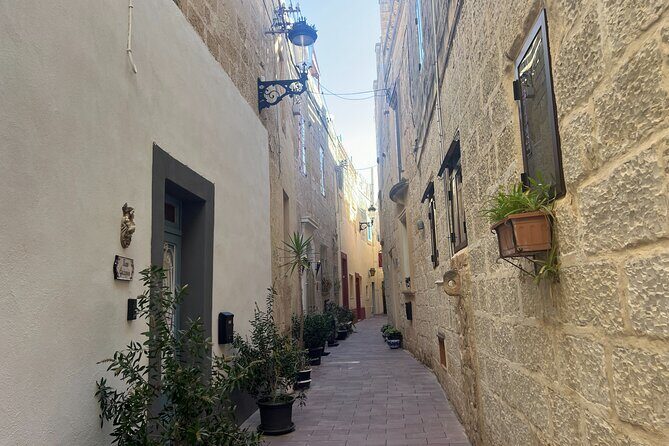
- Mostly free time on foot through Mdina’s silent streets and Rabat’s churches and convents
- Underground spaces mean stairs and uneven footing—plan accordingly
- No hotel pickup, so you’ll want an easy plan to reach Mdina Gate
Mdina and Rabat: why this combo works
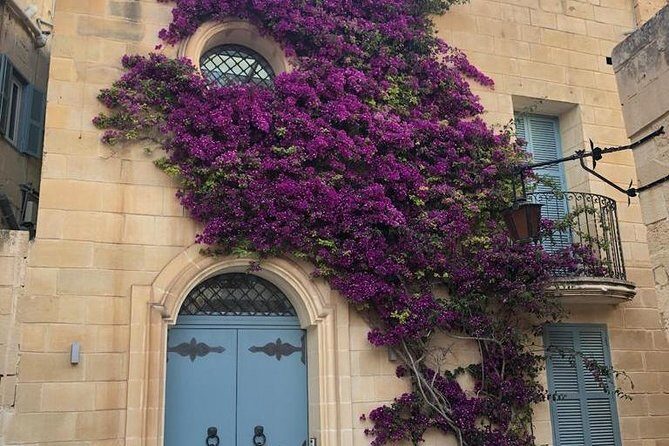
Mdina is often described as Malta’s ancient, hushed capital—and that reputation isn’t just marketing. On this tour you get the “wow” moments fast: palaces, church facades, and the medieval walls that shape how the town feels. Rabat, right next door, adds the busy spiritual and religious side, with churches and convents you pass through while your guide ties everything to the bigger story of the island.
The best part is the balance. Many tours force you to choose either above-ground sightseeing or underground experiences. Here, you get both, and the pacing usually keeps you from feeling like you’re doing one long museum line. You also end centrally in Mdina, which makes it easier to continue on your own.
The route starts at Mdina Main Gate
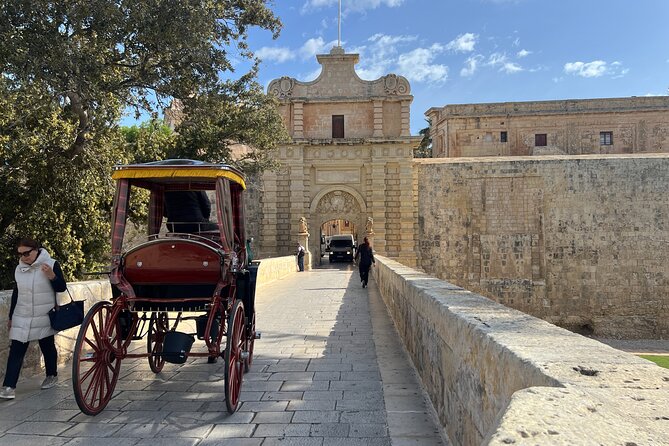
You’ll meet at Mdina Gate (VCM3+V9W area) in central Mdina. The first short stop is the Baroque gateway—perfect for getting your bearings before you start climbing into the maze of stone streets.
Your guide usually sets the stage early with a quick sense of what Mdina was and why it mattered. The city has been inhabited since the Bronze Age, and it served as Malta’s capital until the 16th century. That context helps when you’re staring at buildings built by different rulers and generations—you start seeing layers instead of just facades.
Rabat stop: churches and convents without the crowds
Next comes a walk through Rabat, where you pass some of the area’s most beautiful churches and convents. This is a change of scene from Mdina’s quiet. Rabat has more movement, more religious architecture in your view, and more “everyday” city energy nearby.
The Rabat portion is relatively short, which is a good thing if you’re the type who wants highlights without turning the day into a marathon. Your guide keeps it connected to the Malta theme: how different faiths, languages, and rulers shaped what you see today.
Wignacourt Museum: catacombs, WWII shelters, and St Paul’s Grotto
This is the stop that tends to stick in people’s minds. You enter the Wignacourt Museum, where the included ticket covers three underground experiences: the catacombs, WWII shelters, and St Paul’s Grotto. Even if you think you’ve had “enough history,” this underground block is a change in tone—and it’s the kind of place where explanations really matter.
Underground spaces are not flat, not wide, and not always easy on the knees. The tour notes that these areas involve a number of stairs, and some reviewers pointed out that the catacombs can be tight with uneven floors. If you’re okay with that, you’ll likely love how close up the story feels—this is history you walk through, not just read about.
Practical tip: wear shoes with solid grip, and expect cooler, dimmer conditions underground. Also, if you’re traveling with anyone who has mobility limits, plan around the stairs before you book.
Cathedral of Saint Paul: the visual anchor of Mdina
Back in Mdina, your walk focuses on the city’s key architectural hits. One of the main stops is the Cathedral of Saint Paul. It’s the kind of building that instantly tells you Mdina was meant to impress—religious power and local pride baked into the stone.
The cathedral works best on a guided tour because your guide can connect what you see to why it looks the way it does. Reviews mention guides explaining Malta’s languages and the influence of different rulers, and that approach makes landmarks feel like part of a living timeline instead of random points on a map.
Palazzo Falzon and the palace story you don’t get from selfies
You’ll also spend time around grand palaces, including the 13th-century Palazzo Falzon. On the street level, palaces can look impressive but disconnected. With a good guide, you start noticing details that point to wealth, status, and how power was displayed—especially in a small city where everyone could see everyone else.
Another palace stop is Vilhena Palace, now housing the Natural History Museum. Even if you don’t go inside the museum during the tour, it’s a useful landmark because it shows how Mdina’s “old world” buildings are still in use. In other words: Mdina isn’t frozen in amber; it’s adapted.
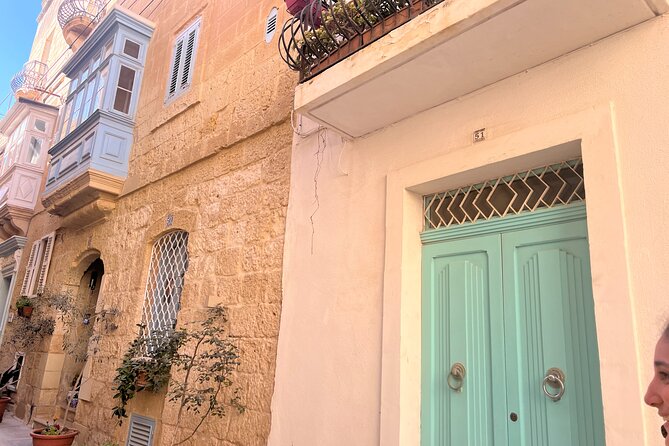
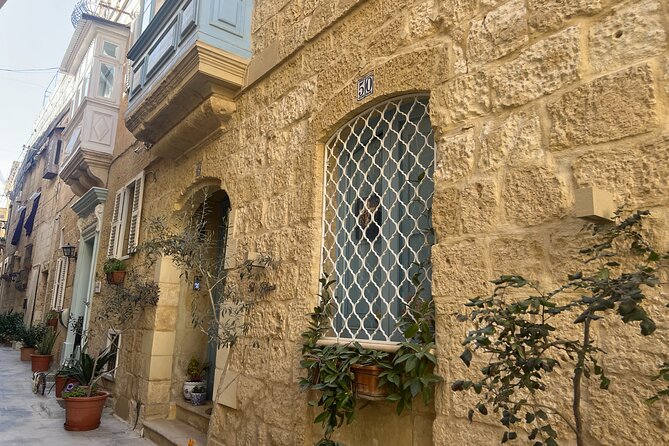
And yes, people have specifically noted the value of watching for small details like door knockers, which can be surprisingly distinctive in Mdina. That’s exactly the sort of “slow down and notice” moment a guide can unlock.
Palazzo Santa Sofia façade: a quick stop with high impact
One of the elegant highlights is the elaborate facade of Palazzo Santa Sofia, listed as one of Mdina’s oldest buildings. This is usually not a long lingering stop, but it can be a payoff moment if you like architecture.
Facades are tricky without context. A guide can help you interpret what you’re seeing—style, period, and the way the building communicates status. It’s the difference between spotting something pretty and actually understanding why it looks the way it does.
Carmelite Priory and Chapel of Saint Agatha: the softer religious stops
Your walk includes the Baroque Carmelite Priory and a peek into the Chapel of Saint Agatha. These stops can feel smaller than the big headline landmarks, but they’re valuable because they show how Mdina’s religious identity shows up across the city.
If you enjoy architecture with personality—chapels, courtyards, and quieter corners—this tour gives you enough of those moments without dragging on. Reviews also mention guides finding shaded spots to explain things, which is especially helpful in hot weather.
Medieval fortifications and Greeks Gate: the best way to end the loop
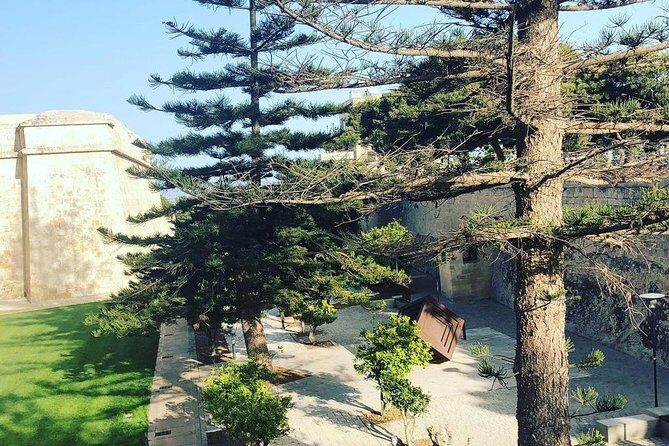
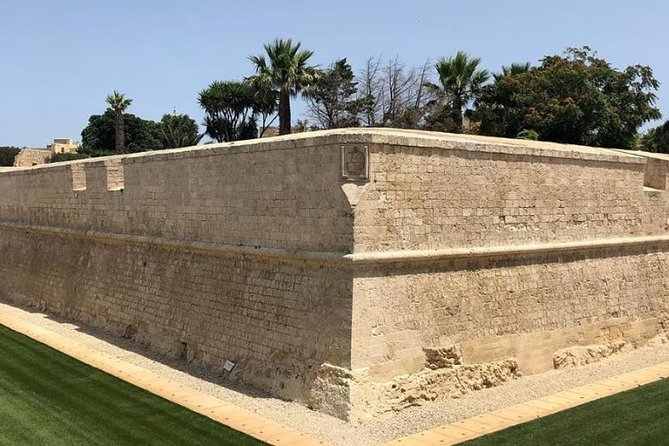
Mdina’s fortifications are a major part of the experience. You’ll walk around the medieval walls and get to see the Greeks Gate (which is also your tour end point). Some travelers mentioned views from the ramparts over much of the island. Even in less-than-ideal weather, the wall walk is one of the best “big landscape” breaks in Mdina.
It also matters that the tour ends near Greek’s Gate (VCP2+7MF area). Ending centrally helps you keep your momentum—either continuing on your own or finding a bus or taxi without backtracking.
How the pacing feels in real life (and when it can feel rushed)
The tour runs about 2 hours 30 minutes. That’s long enough to cover the main highlights and get underground, but short enough that you won’t get “full-day Mdina.” That can be a plus if you want a tight itinerary with zero wandering stress.
It can also be a drawback when conditions turn against you. One common theme from the feedback: if it’s raining and time runs late, you may not get as much freedom to wander Mdina’s streets afterward. My advice: plan at least a little independent time before or after—especially if you want to browse, take your time at viewpoints, or just soak up the quiet.
Guides: the difference between seeing and understanding
This tour’s real strength is how guides teach what you’re standing in front of. Many guests praised guides for being energetic and easy to follow, and for explaining the significance of underground passages and historical details. Names that came up include Mario, Matthew, Matthieu, Carmel, Ian, and Dylan—and that’s a clue that the guide quality tends to be consistent.
What you’ll likely notice on the ground:
- Clear explanations of Malta’s rulers and what they left behind
- Language and name context (including notes about roots of names and words)
- A sense of story that makes palaces, gates, and catacombs connect
If you’re the kind of traveler who likes “what am I looking at and why does it matter,” this is a great format.
Value for money: $30.85 for a layered day
At $30.85 per person, this tour isn’t trying to compete with ultra-cheap walking loops. You’re paying for a professional guide plus an included entrance ticket to a multi-part underground experience (catacombs, WWII shelters, and St Paul’s Grotto). That bundled entrance alone tends to be what makes the price feel fair.
You’re also getting transportation-free sightseeing (no hotel pickup) and a route that links Rabat and Mdina without requiring you to plan each leg. For many visitors, that “save time and decisions” value is worth something.
One note on expectations: since it’s a guided format with scheduled stops, you’re not buying maximum free roaming time. You’re buying guided efficiency plus underground access.
Who this tour suits best
This is a strong match if you:
- Love history, architecture, and storytelling
- Want both above-ground and underground Malta
- Prefer a small group instead of a giant bus crowd
- Are curious about WWII-era shelters as part of the local underground story
It may be less ideal if you need minimal stairs or you hate tight spaces. The tour makes it clear the catacombs and grotto are underground with stairs, and some travelers specifically noted uneven, small areas inside.
Getting there: simple meeting point, no hotel pickup
You’ll meet at Mdina Gate and finish near Greek’s Gate. The tour is listed as near public transportation, which helps if you don’t have a car. There’s also a mobile ticket, so you’ll want to have your phone charged and ready.
No hotel pickup or drop-off is included, so you’ll want to plan your own route to the meeting point. If you’re staying outside Mdina, just double-check local bus timing or build in extra buffer time.
Weather, sound, and comfort tips
Malta weather can change the mood fast. If it’s hot, guides may adjust with pauses and shaded spots—one traveler mentioned this directly. If it’s rainy, some people reported the day felt rushed due to timing and conditions.
Comfort tips that pay off:
- Bring a light rain layer if the forecast is iffy
- Wear shoes you trust on uneven ground in underground sections
- Use water if you’re doing the walk portion in heat (food and drinks aren’t included)
Audio can matter too. Some guests noted it was easy to hear the guide, while others compared it to tours with headsets. In a small group you’ll likely be fine, but don’t assume every day is identical.
Cancellation and booking confidence
The cancellation policy is straightforward: you can cancel for a full refund up to 24 hours before the experience starts. That flexibility makes it easier to book even if your Malta plans are still settling.
The tour is also confirmed at booking time, and it’s offered in English. Service animals are allowed, and most travelers can participate—just keep the underground stairs in mind.
Should you book the Mdina and Rabat Walking Tour?
Yes, if you want a smart, guided “greatest hits” day that goes beyond surface-level photos. The combo of Mdina’s fortifications and palaces with Wignacourt Museum’s underground catacombs, WWII shelters, and St Paul’s Grotto is exactly the kind of Malta contrast that makes a short itinerary feel complete.
I’d especially book it if you care about understanding what you’re seeing. The guides—whether it’s Mario, Matthew, Carmel, or Dylan—sound like the real engine of the experience.
I’d think twice if stairs and uneven footing are a hard no for your group, or if you’re counting on long free time in Mdina. In that case, plan for your own extra browsing time outside the tour window.
Mdina and Rabat Walking Tour inc. Catacombs and St. Paul’s Grotto
FAQ
How long is the Mdina and Rabat walking tour?
It’s approximately 2 hours 30 minutes.
What’s included in the price?
The price includes a professional guide and the entrance ticket for the Wignacourt Museum, covering the catacombs, WWII shelters, and St Paul’s Grotto.
Is hotel pickup included?
No. Hotel pickup and drop-off are not included.
Where do I meet the guide and where does the tour end?
You meet at Mdina Gate (VCM3+V9W area) and the tour ends at Greek’s Gate (VCP2+7MF area).
Is the tour wheelchair-friendly?
The tour involves underground areas with a number of stairs, so it may not be suitable for everyone who has difficulty with stairs.
How big is the group?
The group is limited to a maximum of 25 travelers.
What is the cancellation policy?
You can cancel for a full refund if you cancel at least 24 hours before the experience’s start time.