
I don’t usually see many Naxos experiences that mix real farm life with actual cooking, and this one hits both. You start at a family-owned farm near Melanes, meet farm animals, learn about olives and potatoes, then cook Naxian recipes over an open wood fire and sit down to a proper feast with house wine.
What I really like is how knowledgeable the hosts are and how much you get to do, not just watch. Names that come up in guest accounts include Nikos, his father Gabrielle (the wood-fire cook), plus guide Tina and a second guide George, with Konstantina also mentioned. The setting also helps: you’re outdoors across groves and fields, and the views tend to make the walking feel like part of the day, not a chore.
One thing to consider: it’s outdoors and it’s on a working farm. That means uneven ground, some uphill walking, and the real possibility of flies around food. If you want a polished, spotless indoor-class vibe, this is not that.
- Key highlights at a glance
- Overview: what this farm-to-table day feels like
- Price and logistics: what 0.98 really buys you
- Getting to the farm near Melanes (and what to expect when you arrive)
- Meet the animals: hands-on farm moments (and what interaction means here)
- Olive groves and olive oil: where the Naxian flavor story starts
- Potatoes and fields: Naxian potatoes in plain, practical terms
- Fruit trees, vineyard, and garden pickup: your meal starts before the kitchen
- The cooking class at the open wood fire: where the magic happens
- What you cook and serve
- Who’s cooking the fire
- Outdoor cooking reality check
- The meal: it’s not a snack, it’s lunch plus a full table
- Views, pace, and group energy: why the setting matters
- Pace considerations
- What to pack (based on real farm conditions)
- Who this experience is best for
- Cancellation and weather: the practical safety net
- Should you book Naxos Perivoli Farm Experience & Wood-fire Cooking Class?
- FAQ
- What is included in the lunch and drinks?
- How long is the experience?
- Is transportation to the farm included?
- How many people are in a group?
- What language is the tour offered in?
- What happens if the weather is bad?
Key highlights at a glance




- Small group size (max 10) makes it feel less like a production and more like family table time
- Farm-to-table meal building: you gather seasonal ingredients, then cook them over fire
- Olive oil focus: olive grove cultivation, olive oil tasting, and how it’s processed
- Naxian staples in one menu: tzatziki, zucchini balls, Naxian omelette, fried potatoes, cheeses, plus briam or gemista
- Wood-fire cooking with local wine: house wine is included with lunch and the meal
- Comfortable-shoe needed: reviews mention hot, hilly, and rocky ground for the farm tour
Overview: what this farm-to-table day feels like
This is a 4 hours 15 minutes Naxos activity that runs in the morning-to-afternoon stretch (starting back at the meeting point). The tour includes lunch, coffee and/or tea, and alcoholic beverages—so you’re not just learning, you’re eating like it matters.
The whole rhythm is simple: you move through the farm first, then you cook together. That structure is a big part of the value. Instead of jumping straight to a menu, you understand why these dishes exist on Naxos—potatoes, olives, vegetables, cheeses, and seasonal fruit—because you’re seeing where they come from.
And yes, it’s family-run. You’ll hear real stories as you walk, not generic “tour talk.” In a few guest accounts, the hosts are described as warm and welcoming, and several people mention that even small groups (one couple, for example) still got the same attention and pace.
Price and logistics: what $120.98 really buys you
At $120.98 per person, this sits in the “you pay for a hands-on experience” category. If you’ve taken cooking classes in big cities, you might expect a quicker tasting-only format. Here, you’re paying for time on a working farm plus a guided food-and-cooking session that ends with a substantial meal and included wine.
Two practical notes:
- Private transportation isn’t included. You’ll need your own way to reach the start point (near Melanes on Naxos).
- Reviews repeatedly warn to plan for a transfer if you’re staying in the main areas of Naxos.
Good news: the activity uses a mobile ticket, confirmation is received at booking, and it runs in English. It also has a maximum of 10 travelers, which helps keep things personal.
Getting to the farm near Melanes (and what to expect when you arrive)
The tour begins at a specific Naxos meeting point (listed as a plus code location) and ends back there. From there, you’re guided through the property.
Based on guest feedback, you should expect:
- A farm setting with walking uphill at times
- Outdoor surfaces that may feel rocky or uneven
- A day that can feel hot during summer months
If you’re coming from a resort beach area, you’ll likely be glad you accounted for the ride time ahead of schedule. One review even called out that you need to transfer from the main area to get there.
Meet the animals: hands-on farm moments (and what interaction means here)
The day starts on the farm with animals—chickens, rabbits, pigs, peacocks, and more. You can also collect eggs from the day’s freshly laid supply.
A key detail: several guests expected closer animal interaction (like feeding). Some found it more like walking past enclosures with less direct contact. The host clarification helps set expectations: guests are not meant to feed animals directly for safety and hygiene, and any feeding shown is handled by trained staff (and occasionally children in the context of the activity).
So if your goal is animal cuddles or lots of feeding, this may feel more like meeting the farm than playing with it. If your goal is learning how the farm operates and getting to experience egg collection, you’re in the right place.
For families, this part often lands well. Multiple reviews mention kids enjoying vegetable prep, and at least one family noted throwing table scraps to ducks—so there can be small moments of delight even if the animals aren’t the main “hands-on” objective.
Olive groves and olive oil: where the Naxian flavor story starts
Next comes the olive grove segment. You learn how olive trees are cultivated for healthy production and how olive oil is made. The best part is the tasting—this turns the explanation into something you can actually notice on your palate.
Why this matters for you: Naxos cuisine is built on simple ingredients with strong character, and olive oil is one of the main engines of that flavor. If you’ve only ever used oil from a generic supermarket bottle, tasting fresh Naxian olive oil helps you understand why local cooks treat it like the foundation.
You’ll also get context for how farm cycles shape meals. Olive farming isn’t a side project—it’s part of the rhythm of the year.
Potatoes and fields: Naxian potatoes in plain, practical terms
After the groves, you move to potato fields to learn about the renowned Naxian potato. This stop is a good “aha” moment if you tend to think of potatoes as filler. On Naxos, potatoes are a star ingredient for hearty dishes, and they show up on the menu in more than one form.
In many farm cooking experiences, you get a quick walk-through and then you cook. Here, the ingredient story is the warm-up before the fire.
A small drawback to plan for: field walking can be hot, and the ground can be uneven. Wear comfortable shoes and expect some effort.
Fruit trees, vineyard, and garden pickup: your meal starts before the kitchen
Then you’ll explore seasonal fruit trees, taste what’s in season, and continue through the vineyard and vegetable garden, where you can gather seasonal produce.
This part makes the meal feel more “yours.” You’re not just handed ingredients. You’re choosing them (with guidance), and that makes the final cooking steps smoother and more fun. It also tends to make the experience feel less touristy—because you’re participating in the farm side of farm-to-table.
If you’re a picky eater, don’t worry too much: the menu is clearly laid out (tzatziki, zucchini balls, omelette, potatoes, cheeses, plus a main made as briam or gemista). You’ll still likely find multiple things you enjoy.
The cooking class at the open wood fire: where the magic happens
Now you shift from walking to making. This is an interactive cooking experience where you help prepare multiple dishes using a traditional outdoor setup.
Guests mention that instructions are easy to follow and participation is shared across the group. In one account, gluten-free needs were accommodated with gluten-free flour and bread, so if you have restrictions, it’s worth communicating them in advance.
What you cook and serve
Based on the provided menu, expect to help with a feast that includes:
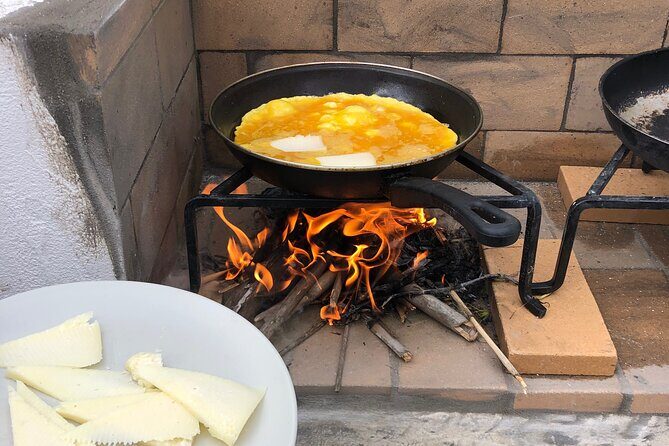
- Naxian omelette (one of the cooking highlights)
- Tzatziki as a starter
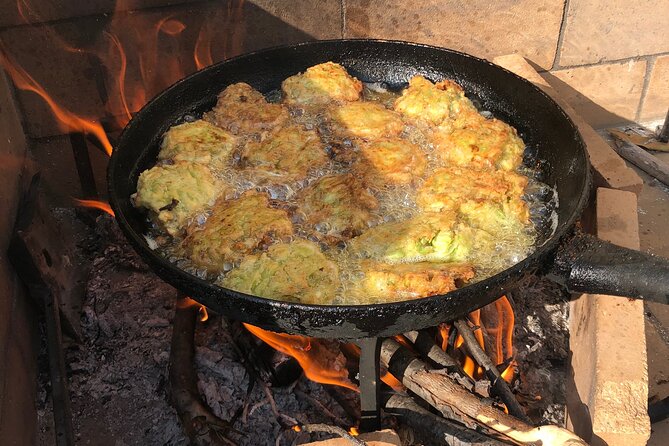
- Zucchini balls as a starter
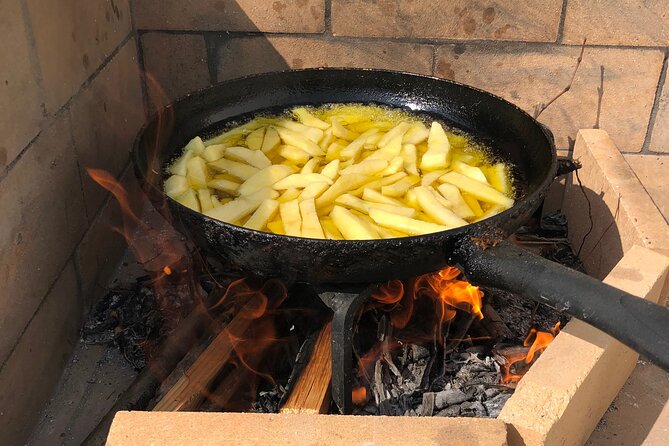
- Fried potatoes
- A cheese variety tasting featuring Naxos cheeses
- Fried yraviera wrapped with filo pastry, honey, and sesame
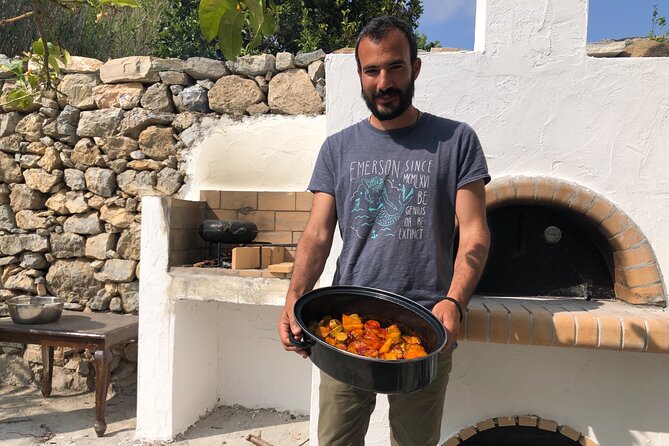
- A main dish prepared over the wood oven such as briam or gemista
- Mixed vegetables in the wood oven
- Locally produced house wine with the meal
Who’s cooking the fire
One reason people rave about this class is the wood-fire element. Several guest accounts mention Nikos and his family, with Gabrielle (the wood-fire cook) and others guiding the process.
If you’re thinking, will I actually cook or just watch, the answer from the tone of the experience is: you cook. People describe dicing, slicing, and grating vegetables together, and then cooking on fire and stovetop.
Outdoor cooking reality check
One negative review mentions flies on and around the food. That’s the trade-off for an outdoor kitchen in a farm setting. The hosts also use methods like fans or natural approaches to reduce flies, but you should be mentally ready for some nature in the plan. If you’re extremely sensitive to bugs, this is the part to think about.
The meal: it’s not a snack, it’s lunch plus a full table
Several guests explicitly say “come hungry.” And that’s not just marketing talk. The menu is varied—starters, multiple hot dishes, cheese, plus a dessert-like sweet element in the filo pastry honey and sesame dish.
The included wine is also worth noting. House wine shows up with lunch, and people mention enjoying it along with the meal.
There’s a social side too. Reviews describe shared tables and strangers becoming friends while waiting for dishes to finish. If you like meeting people, this is a good fit. If you prefer quiet, you can still enjoy the process—just know you’ll be sitting with others during the cooking and eating.
Views, pace, and group energy: why the setting matters
You get a farm’s view of Naxos: olive trees, fields, garden paths, and open sky. That matters because it changes the feeling from “class” to “place.”
Also, the group size helps. With a max of 10 travelers, it’s easier to ask questions and get your hands on tasks at the right moments. Reviews describe it as intimate and sometimes almost like a private experience, depending on your group’s size.
Pace considerations
Most reviews praise organization and instruction. But one guest described long waiting and limited cooking time. That seems like an outlier, but it’s still worth mentioning: because the day includes walking, ingredient gathering, and multiple dishes, you should expect some timing shifts. If you’re the type who hates delays, you might find parts of the day slower than a typical indoor class.
What to pack (based on real farm conditions)
From traveler reports, I’d plan for:
- Comfortable, closed-toe shoes with grip (uphill, hilly, rocky ground)
- Weather-ready clothing (shade and sun exposure vary around the farm)
- A mindset that this is outdoors, so flies can happen
- Your appetite (the portion sizes are repeatedly described as generous)
And if you have dietary needs, mention them during booking. At least one gluten-free guest reported that the hosts had gluten-free flour and bread.
Who this experience is best for
This tour shines if you want:
- A hands-on Naxos experience that goes beyond a restaurant meal
- A food day connected to ingredients (olives, potatoes, vegetables, cheese)
- A small group with friendly energy and real local hosts
It’s also a good family option. One review mentions a couple of kids cutting and grating vegetables, and there’s a playful egg-collection element for children.
If you mainly want animal feeding interaction, you might feel slightly underwhelmed—because the focus is more on meeting the animals and harvesting eggs than on constant direct animal contact.
Cancellation and weather: the practical safety net
The cancellation policy is free cancellation up to 24 hours in advance for a full refund. If you cancel less than 24 hours before start time, no refund.
There’s also a weather factor: the experience requires good weather. If it’s canceled due to poor conditions, you’ll be offered a different date or a full refund. That’s comforting, since outdoor cooking plans are inherently weather-dependent.
Should you book Naxos Perivoli Farm Experience & Wood-fire Cooking Class?
I’d book it if you want a genuine farm-to-table day where you learn and then eat what you helped make. The standout reasons are consistent: guides, strong local flavor (especially olive oil and house wine), and a menu that feels plentiful and varied for the price.
Skip it—or at least set expectations carefully—if you’re chasing a polished indoor class, spotless food setups, or lots of close-up animal interaction. It’s outdoors, it’s working-farm real, and that’s part of the charm.
If you can handle some walking and you’re excited by Naxian cooking staples, this is one of the more memorable ways to experience Naxos beyond the beaches.
Naxos Perivoli Farm Experience & Wood-fire Cooking Class
FAQ
What is included in the lunch and drinks?
Lunch is included, along with coffee and/or tea. Alcoholic beverages are also included.
How long is the experience?
It runs for about 4 hours 15 minutes.
Is transportation to the farm included?
No. Private transportation is not included, so you’ll need to arrange your own way to the meeting point.
How many people are in a group?
The tour has a maximum of 10 travelers.
What language is the tour offered in?
The experience is offered in English.
What happens if the weather is bad?
The experience requires good weather. If it’s canceled due to poor weather, you’ll be offered a different date or a full refund.