
I’m reviewing a Paris running tour that mixes sightseeing, light exercise, and storytelling in one smooth morning (or afternoon) plan, with hotel pickup and a route built around the landmarks you’ll pass. You’ll cover major hits like the Louvre area, the Tuileries, Place de la Concorde, Palais Garnier, Île de la Cité, Musée d’Orsay, and more, then finish with river and central-city views.
Two things I really like: first, the experience is private, so your guide can set a pace that works for your group. Second, the tour includes a photo setup and sends tour photos to you afterward through Dropbox, so you get the keepsakes without stopping every five minutes.
One possible drawback: it’s a running tour, so you’ll want at least moderate comfort with active walking/running for 2 to 3 hours. If your group is more “museum mode” than “move your legs” mode, this might feel a bit too energetic.
- Key things to know before you book
- A sport-first way to see Paris: what this running tour really feels like
- Price and what you’re actually paying for
- Who this tour suits best (and who might feel out of place)
- Pickup logistics: meeting your guide without stress
- How the “private” part changes everything
- The photo plan: memories without the camera breaks
- Running + history stops: how the itinerary builds a story
- Stop by stop: Louvre area to Tuileries courtyards
- Louvre Museum area
- Jardin des Tuileries
- Place de la Concorde and the Palais Garnier viewpoint
- Place de la Concorde
- Palais Garnier (Opera)
- River running segment: where the sightseeing momentum really works
- Île de la Cité: a concentrated history hit
- Musée d’Orsay and the building that frames the ride
- Eiffel Tower and Champs-Élysées: how your route changes
- Palais-Royal and Pont Neuf: calmer central landmarks
- Petit Palais: the only likely indoor moment
- Water, weather, and pacing: making the run comfortable
- Language and communication
- Cancellation rules: low risk planning
- What travelers seem to remember most: knowledge + stunning views
- Should you book this Paris running tour?
- FAQ
- What’s the duration of the Paris running tour?
- Is this tour private?
- Do you offer pickup from my hotel or apartment?
- What language is the tour offered in?
- Is admission included?
- What’s included besides the guide?
- What should my fitness level be?
- What if the weather is bad?
- What’s the cancellation policy?
Key things to know before you book
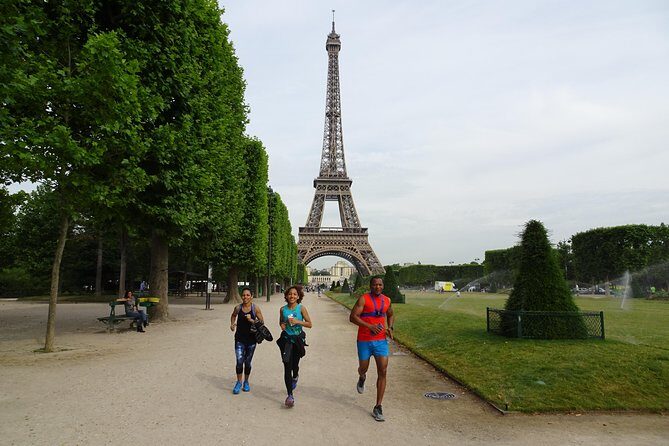
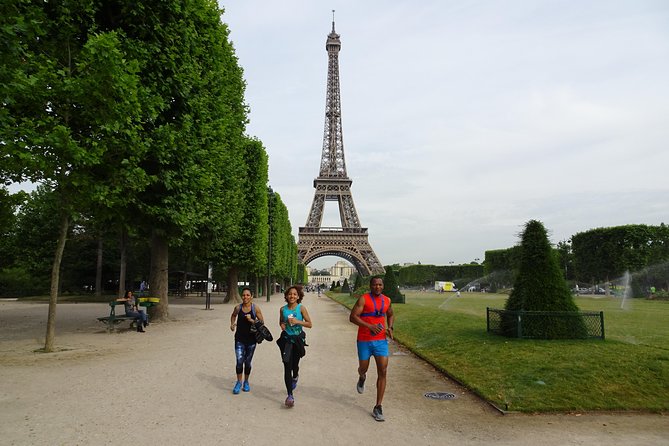
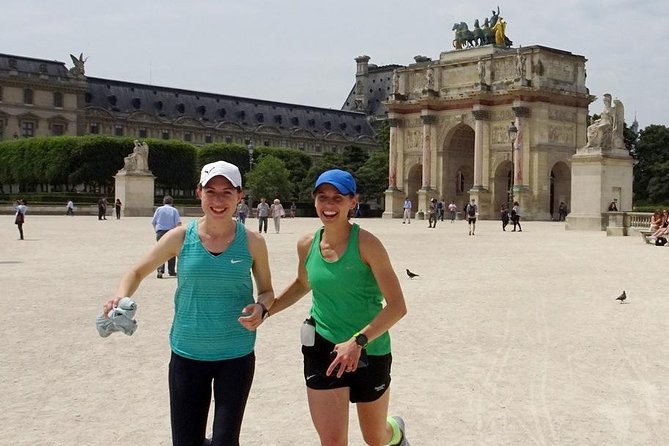
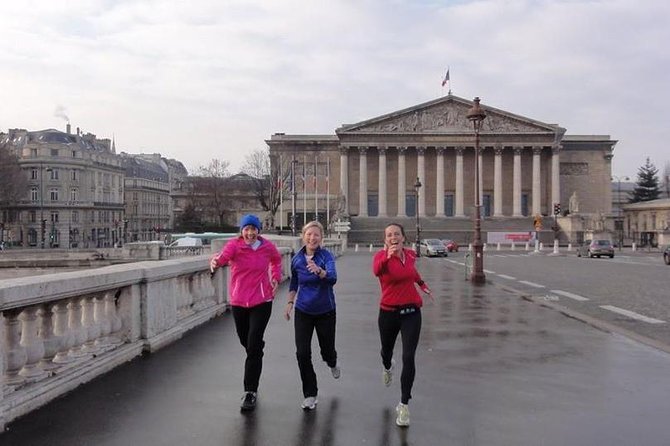
- Private tour for your party only: No crowd shuffle, and your guide can adjust pacing.
- Pickup at your hotel or apartment: You meet in the lobby/bottom of your building, anywhere inside Paris.
- Major landmarks, mostly outside: Admission can be free, but you generally won’t go inside buildings (except Petit Palais under conditions).
- Guided history while moving: You get context and named places as you run.
- Photo support after the tour: A camera is used to capture your group, with delivery via Dropbox.
- Good-weather dependent: Plan around weather, since the experience is offered with a good-weather requirement.
A sport-first way to see Paris: what this running tour really feels like
If you’re tired of the same sightseeing loop, this kind of Paris guided run offers a different rhythm. You don’t park your day on a bench with an audio headset. You stay in motion, and the city’s landmarks keep unfolding as you pass them.
Think of it like this: you get the best “on-foot Paris” energy, plus a guide who’s ready with facts and stories while you’re moving. That matters. In a walking tour, people stop and start constantly. Here, you keep momentum, so you see more ground and you learn in real time instead of later while you’re already exhausted.
Price and what you’re actually paying for
The price listed is $104.52 per person, for a 2 to 3 hour experience. On paper, that can feel like a lot compared to a standard group walking tour. But there are two value anchors here:
- It’s private (your group only), which usually drives cost up.
- You’re getting hotel/apartment pickup plus a guided route with photo handling.
You’re also not paying for museum admissions in most cases. The tour notes that entries for some stops are free (and it explicitly says you won’t enter inside except under conditions at the Petit Palais). So a big part of your cost is service: guiding, pacing, logistics, and the photo follow-up.
If you split the tour among a couple or a small group, the per-person value often improves fast—especially if at least one person in your party likes the idea of running or brisk pacing.
Who this tour suits best (and who might feel out of place)
This is designed for travelers with moderate physical fitness who are comfortable with an active format. That doesn’t mean you have to be a marathoner. Based on traveler feedback, guides can run at an easy pace, even when one person in the group isn’t a regular runner.
You’ll likely love it if:
- You want a “see a lot, learn while moving” day.
- Your group enjoys views and photos, and doesn’t mind being out for 2 to 3 hours.
- You like the idea of staying outdoors and connecting landmarks with stories.
You might think twice if:
- Your group wants lots of time sitting in cafés or doing long indoor museum visits.
- You hate the idea of running altogether (even an easy running pace still means you’re moving continuously).
Pickup logistics: meeting your guide without stress
One of the most traveler-friendly parts is the pickup offered “from your Paris hotel or apartment.” You meet at your hotel lobby or at the bottom of your building if you’re in an apartment. The tour says it’s available anywhere inside Paris.
This is practical. Paris can be tricky when you’re juggling Metro lines, narrow streets, and meeting-point confusion. Pickup cuts that stress out early.
The tour runs within listed hours from 5:00 AM to 8:00 PM (every day). Your exact start time will depend on booking and availability, but the wide window gives you more flexibility than a strictly fixed schedule.
How the “private” part changes everything
Because it’s private, your guide isn’t managing a large group. That makes two differences you’ll feel:
- Your pace can be adjusted to your party.
- Your guide can shift route emphasis depending on timing and what’s visible.
Traveler feedback also points to the guide being flexible with people who aren’t runners. One traveler mentioned that their wife wasn’t a runner, and the guide ran at an easy pace so she could enjoy the stories and the route too.
So the private format isn’t just marketing. It’s the difference between a tour that steamrolls your energy and one that keeps everyone engaged.
The photo plan: memories without the camera breaks
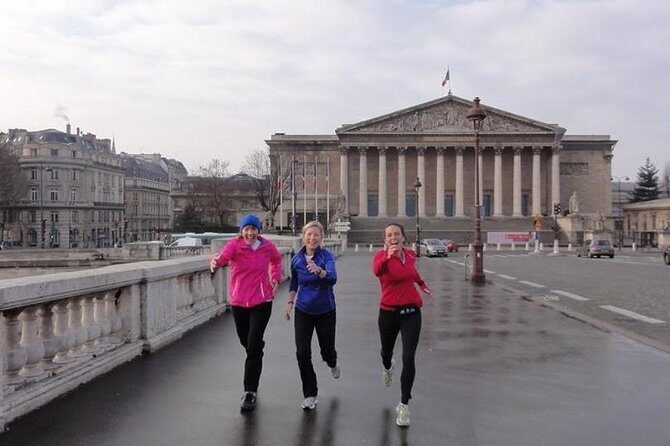
You’ll have water on the way (more on that soon), and you’ll also have a camera used by the guide to take photos during the tour. Photos are then sent after the tour via Dropbox.
This is underrated. In many walking tours, the best views turn into constant phone-taking and missed moments. Here, you can keep moving and still get group photos that look like you actually planned the day.
You’ll want to keep your own phone for extra shots, of course, but the included photo setup is there for the “we were really here” moments.
Running + history stops: how the itinerary builds a story
The tour is structured around landmark clusters, then links them with river and central-city running. It’s not just a list of stops. It’s a sequence that helps you connect Paris neighborhoods and eras.
Also, the tour notes that admission for several stops is free. Even better, the plan is mostly about seeing sights and learning from the outside, rather than spending your time stuck in entrances.
Let’s walk through the stops and what each one adds.
Stop by stop: Louvre area to Tuileries courtyards
Louvre Museum area
You start with learning about the Louvre and understanding its history, plus major facts and some nice passages and courtyards. The Louvre stop is timed at around 5 minutes, and the admission ticket is marked free in the itinerary notes.
What makes this useful is that you get orientation first. The Louvre can feel like chaos from the outside—big, famous, and overwhelming. Early context helps you notice the right details when you’re nearby later.
You shouldn’t expect a deep dive inside the museum on this tour. This is about setting your bearings, then using running to connect the next sights.
Jardin des Tuileries
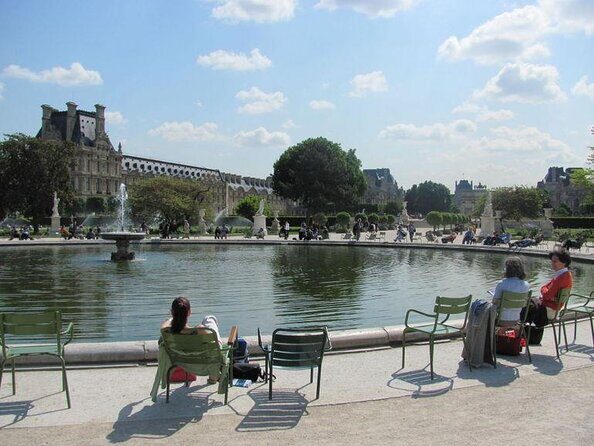
Next, you head to the Jardin des Tuileries, with learning about the “castle and the garden” of the Tuileries. The stop is about 7 minutes, and it’s described as a running-through experience inside the park.
This is one of the smartest pacing choices on the route. Parks give you a stretch of calmer space where the pace feels more manageable. It also lets you move through a scenic corridor instead of threading the streets.
If you’re sensitive to crowds, the early park segment can feel like a reset.
Place de la Concorde and the Palais Garnier viewpoint
Place de la Concorde
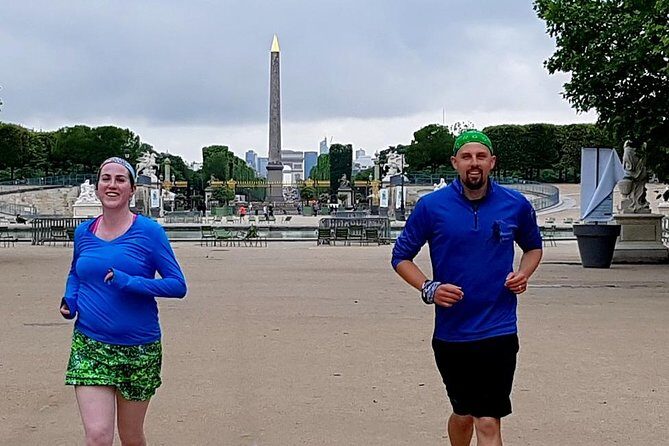
You’ll take in Place de la Concorde, with stories connected to this famous square and some time for pictures (about 7 minutes).
A big win here is that you get context for the square as more than a photo stop. It’s also a key junction point in Paris, so learning its story makes the layout feel less random.
Palais Garnier (Opera)
Then it’s over to Palais Garnier, with admiration of the Opera view and learning about major changes made during the 19th century. The stop is about 5 minutes, with admission ticket free noted.
This is where views matter. Even for travelers who don’t care about opera, the building’s presence is impossible to ignore. And because you’re moving, you get quick “wow” payoff without a long indoor commitment.
River running segment: where the sightseeing momentum really works
After Palais Garnier, the route shifts into a river-running section. This part is described as running along the river and enjoying the sites along the way, with a lot of information from the guide.
Why this is a highlight: river segments often create that rare mix of scenery plus open space, and you’re not fighting street traffic in the same way. Plus, you’re still hearing history while you move—so you’re learning in motion rather than pausing every time your brain wants a break.
The route also includes guidance on key sites along the way, which helps you spot what you’d otherwise miss.
Île de la Cité: a concentrated history hit
You then run along the central island, Île de la Cité, with many stops for learning about the area’s great history. This section is longer at about 15 minutes, and it lists several key sites you may see:
- Conciergerie
- Sainte-Chapelle
- Palais de Justice
- Notre-Dame
- Marché aux fleurs
- Hôtel-Dieu
- Préfecture de Police
The value here is concentration. Île de la Cité is where Paris feels like it’s layered in centuries. With a guide, you’re not just looking at individual buildings—you’re connecting them into a timeline.
One note: the itinerary mentions you generally won’t enter inside (except under conditions for Petit Palais). So for places like Sainte-Chapelle and Notre-Dame, you’ll likely experience them from the outside as you run past or stop briefly to learn.
Musée d’Orsay and the building that frames the ride
Next comes Musée d’Orsay, about 5 minutes. You’ll admire the building and learn about its history.
Even if you’re not going inside a museum on this tour, Musée d’Orsay is a visual landmark with its own personality. Learning about it early can help you appreciate why the building stands out in Paris, even from a running route.
Eiffel Tower and Champs-Élysées: how your route changes
The tour notes that depending on where you’re located, you’ll see the Eiffel Tower very closely or from far. It also notes the tower is visible from many places.
This matters because the route is tailored. You might get a tighter view if the route lines up well with your starting area and timing.
Then you’ll run on the Champs-Élysées, with learning tied to the street’s historical layers, and you’ll also cover the very historical Hôtel des Invalides.
One practical takeaway: Champs-Élysées is famous and busy, so if you’re expecting quiet, calm running, keep your expectations realistic. The upside is that you’re getting iconic Paris in a compact window.
Palais-Royal and Pont Neuf: calmer central landmarks
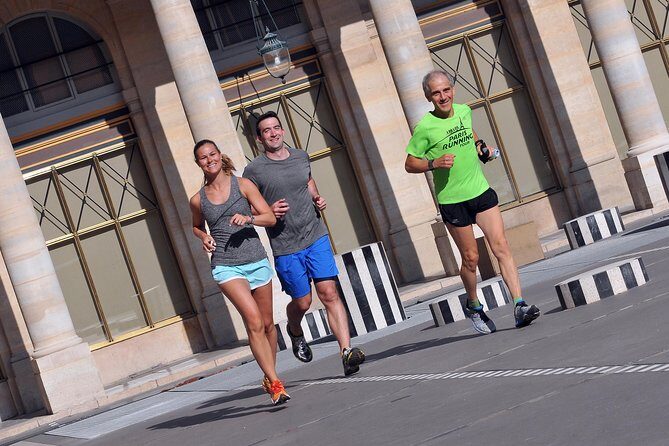
You’ll spend time at Domaine National du Palais-Royal, about 10 minutes, admiring historical associated sites like courtyards, gardens, and galleries.
This is another smart route choice. Palais-Royal offers a more intimate feel than the biggest boulevards. You get a break from the busiest streets while still staying in the center of things.
The itinerary also notes that depending on your tailored-made route, you may pass by a beautiful park.
Then you’ll hit Pont Neuf, about 3 minutes, with learning about it as the oldest bridge of Paris (as for many other bridges). Short stop, strong payoff: bridges help you understand how Paris spreads across the river.
Petit Palais: the only likely indoor moment
Finally, you may see Petit Palais, with a short visit if it’s opened, timed around 10 minutes.
This is the one place where you might get an indoor experience, and the tour is transparent about it: you generally won’t enter inside, except under conditions for Petit Palais.
If you’re a traveler who dreams of museum rooms, you should treat this tour as a “see and learn outside, move fast” experience. For full museum time, you’ll still likely want separate tickets for major museums later.
Water, weather, and pacing: making the run comfortable
The tour includes bottled water. If it’s hot, there’s water with the group or offered on the way.
That’s not just a nice touch. When you’re doing 2 to 3 hours of running through central Paris, hydration is the difference between feeling energized and feeling wrecked.
Also, the tour requires good weather. If the experience is canceled due to poor weather, you’ll be offered a different date or a full refund.
So if you’re booking during a season when rain is common, consider having a flexible day in your itinerary. The guide can’t control the sky.
Language and communication
The tour is offered in English. That’s important if your confidence with French is basic. You’ll still get guided learning and explanation throughout the route.
Tour photos via Dropbox are also helpful for catching anything you miss while focusing on the run and the view.
Cancellation rules: low risk planning
You have free cancellation up to 24 hours in advance for a full refund. If you cancel less than 24 hours before the start time, the amount paid isn’t refunded.
Changes also aren’t accepted less than 24 hours before the experience begins. Cut-off times follow local time in Paris.
This is fairly standard, and it’s the kind of policy that lets you book early and adjust when weather and energy level become clearer.
What travelers seem to remember most: knowledge + stunning views
The glowing feedback pattern here is consistent: people mention guides and stunning views. That combination is what makes a running tour more than exercise.
The guide also uses maps and historical pictures to explain Paris during the visit, and those documents are given to you at the end. In other words, you don’t just hear stories in the moment—you walk away with material you can use later to connect the sites you saw.
And yes, guide name comes up in traveler notes: JC is mentioned as providing a very smooth pace and plenty of knowledge for both runners and non-runners in the group.
Should you book this Paris running tour?
Book it if you want:
- A private guide and a pace that can match your group
- A fast way to cover iconic Paris landmarks without doing museum marathons
- Guided context at each stop, plus great views while moving
- Included photo delivery after the tour via Dropbox
Skip it (or do something else) if you:
- Want mostly indoor time, long sits, or museum ticket strategy
- Don’t feel comfortable with moderate physical activity for 2 to 3 hours
- Need a slow-paced tour with frequent stops
My practical take: if your goal is to get your bearings fast in Paris and you’re game for motion, this is a smart use of time. You’ll trade a little indoor depth for a lot of street-level Paris, and you’ll come away with stories you can place on a map.
Sports, fun and educational discovery of Paris
FAQ
What’s the duration of the Paris running tour?
It runs about 2 to 3 hours.
Is this tour private?
Yes. It’s a private tour/activity for your party only.
Do you offer pickup from my hotel or apartment?
Yes. Pickup is offered from your Paris hotel lobby or the bottom of your apartment building, anywhere inside Paris.
What language is the tour offered in?
The tour is offered in English.
Is admission included?
Admission tickets are listed as free for the stops mentioned, and the tour generally won’t enter inside except for Petit Palais under conditions.
What’s included besides the guide?
You’ll get bottled water if it’s hot, a camera used to take photos you want (sent later via Dropbox), and maps/historical pictures that the guide carries and gives to you at the end.
What should my fitness level be?
Travelers should have moderate physical fitness. It’s a running tour, so you’ll be active for the full experience.
What if the weather is bad?
The experience requires good weather. If it’s canceled due to poor weather, you’ll be offered a different date or a full refund.
What’s the cancellation policy?
You can cancel for a full refund up to 24 hours in advance. Less than 24 hours before the start time isn’t refundable, and changes within 24 hours aren’t accepted.