
- Kanazawa With Kids
- Getting to Kanazawa
- How Long to Spend
- Kenroku-en Garden
- Kanazawa Castle Park
- 21st Century Museum of Contemporary Art
- Higashi Chaya — The Geisha District
- Nagamachi Samurai District
- Omi-cho Market
- Gold Leaf Workshop
- Where to Stay
- Getting Around Kanazawa
- Best Time to Visit
- Is Kanazawa Worth It With Kids?
Kanazawa With Kids
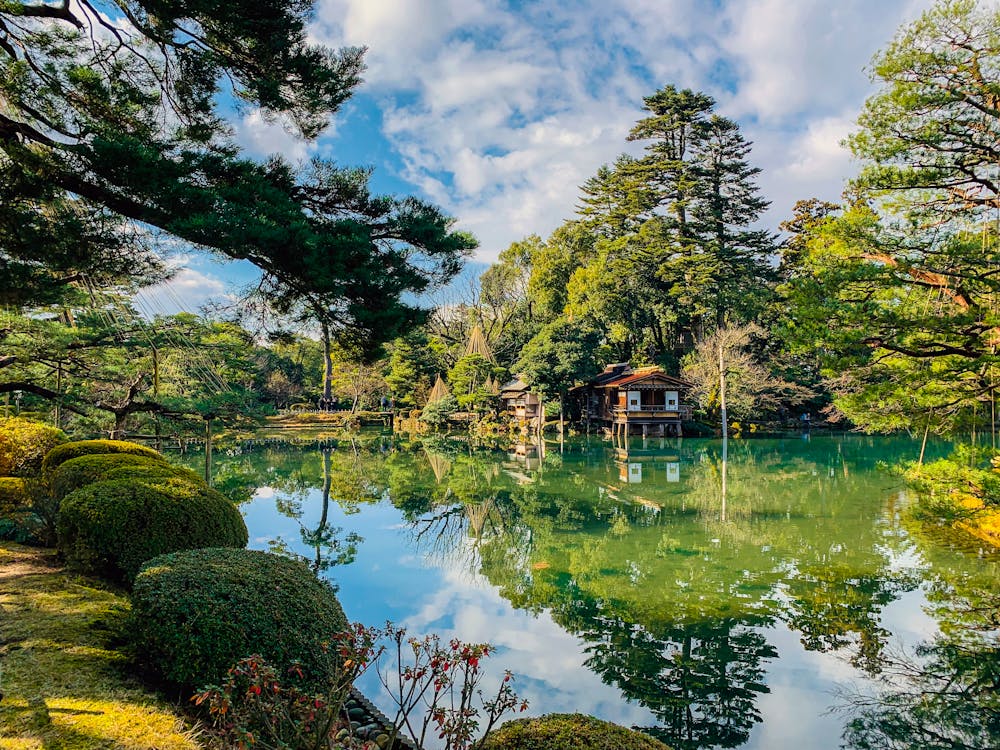
Kanazawa caught us off guard. We’d planned it as a quick stop between Tokyo and Kyoto — somewhere to break up the journey, tick off a garden, maybe eat some fresh crab. What we got was one of the most genuinely enjoyable cities of our entire Japan trip. Quiet streets lined with original Edo-period buildings. A world-class garden that even our children liked. Gold leaf on everything, including ice cream. And about a tenth of the crowds you’d wade through in Kyoto.
This city on the Sea of Japan coast is sometimes called “Little Kyoto,” and the comparison isn’t wrong. Geisha districts, samurai houses, traditional teahouses — it’s all here. But here’s the thing that makes Kanazawa special: it wasn’t bombed during the Second World War. The historic buildings you’re walking through are the real thing. Not reconstructions. Not concrete replicas with a heritage plaque bolted on. Originals, standing for centuries. That matters, even if your kids won’t appreciate the distinction.
Getting to Kanazawa
Brilliantly easy. From Tokyo, take the Hokuriku Shinkansen — about two and a half hours, covered by the JR Pass. From Kyoto, the Thunderbird limited express takes roughly two hours fifteen. Either way, it slots perfectly into a Japan itinerary without any awkward detours or extra flights.
We came from Tokyo and headed to Kyoto afterwards, which felt like the natural route. The shinkansen journey itself is lovely — rice paddies, mountains, the occasional glimpse of the Japanese Alps if you’re on the right side. Our lot had their faces pressed against the window for the first hour, which is about as good as it gets on a train with children.
How Long to Spend
One to two nights. We did two and it felt right. You could manage a day trip from Tokyo — the train times make it technically possible — but you’d be rushing, and rushing is the opposite of what Kanazawa is about. This is a city that rewards a slower pace. Stay overnight, have a proper seafood dinner, walk the geisha district after dark when the lanterns are lit. Worth it.
Kenroku-en Garden
One of Japan’s three most celebrated gardens, and honestly? It lives up to the reputation.
Now, I’ll be straight with you. Gardens and children are not a natural pairing. We’ve dragged ours through enough manicured landscapes to know that “look at this beautiful moss” is not a sentence that generates enthusiasm in anyone under twelve. But Kenroku-en is different. It’s big enough that there’s actual space to walk properly. There are streams to peer into, bridges to cross, a waterfall to find, and ponds with enormous koi that our children spent a frankly unreasonable amount of time watching.
Entry is ¥320 (~£1.70) for adults and free for children under six. Forty-five minutes to an hour is plenty with kids — enough to do a full loop without it tipping into the “are we done yet?” phase. The paths are well maintained and mostly pushchair-friendly, though there are a few steeper sections where you’ll need to put some effort in.
Beautiful in every season, apparently. We visited in autumn and the colours were ridiculous. Winter brings snow, and they put up traditional rope supports on the trees to stop branches breaking under the weight — the photographs of this are stunning. Spring has cherry blossoms. Summer is green and humid. You can’t really go wrong.
Kanazawa Castle Park
Right next to Kenroku-en, and free. The castle itself is partially restored — the main gate and some outbuildings — but the real draw for families is the grounds. Wide open lawns, stone walls to explore, space for kids to actually run. After the relative restraint required in the garden, ours needed this. Twenty minutes of running around on grass resets everything.
The restored Hishi Yagura turret and the long storehouse are worth a quick look inside if your children have any patience left. But honestly, we used this mainly as decompression space between the garden and whatever came next. Worked perfectly for that.
21st Century Museum of Contemporary Art
Not a sentence you’d expect in a family travel guide, is it? Contemporary art museum. With kids. But this one is genuinely good for children, and I don’t say that lightly.
Parts of the museum are free — the open public zones and some installations you can interact with without a ticket. The paid exhibitions cost around ¥450-1,200 (~£2.40-6.30) depending on what’s showing. The building itself is circular, all glass and white walls, and feels nothing like a stuffy gallery.
The famous piece is Leandro Erlich’s “Swimming Pool” — an installation that looks like a real swimming pool from above, but you can walk underneath it and look up through the water at people standing on top. Kids absolutely love it. Ours went back and forth between the top and the bottom about four times, waving at strangers through the water. It’s one of those rare art experiences that works on every level: genuinely interesting conceptually, and also just plain fun.
There are other interactive installations too, things to touch and walk through and look at from different angles. We spent about an hour here and could have stayed longer. One of the more child-friendly art museums we’ve been to anywhere, not just in Japan.
Higashi Chaya — The Geisha District
Kanazawa has three geisha districts and Higashi Chaya is the biggest and most photogenic. Traditional wooden teahouses line narrow streets, dark latticed facades with paper lanterns outside. It’s properly atmospheric. Walk slowly. Take it in.
Now, the children’s interest in Edo-period architecture lasted approximately ninety seconds. What held their attention considerably longer was the gold leaf ice cream. Kanazawa produces 99% of Japan’s gold leaf — a fact you’ll hear roughly fifty times during any visit — and in Higashi Chaya they put it on everything. Ice cream, coffee, sweets, cosmetics. The gold leaf ice cream costs around ¥500 (~£2.65) and involves an entire sheet of gold leaf pressed onto a soft-serve cone. Does it taste of anything? Not really. Do children find the novelty of eating actual gold thrilling? Absolutely. Worth every yen for the reaction alone.
Wander the streets, poke into a few of the shops, buy some gold leaf souvenirs if you’re that way inclined. You can also enter Shima, one of the preserved teahouses, for a small fee and see how geisha entertained guests. It’s compact but interesting, and gives context to the district. Half an hour to an hour is enough here.
Nagamachi Samurai District
A quiet residential area where samurai families once lived. Narrow lanes between earthen walls, with the occasional gate opening onto a traditional garden. It’s calm and pretty and a completely different atmosphere from the geisha district.
The one specific attraction is the Nomura Samurai House — ¥550 (~£2.90) for adults, ¥250 (~£1.30) for children. It’s small. Two rooms, essentially, plus a gorgeous garden visible from the tatami rooms. But it’s atmospheric in a way that bigger attractions sometimes aren’t. The garden is considered one of the finest small gardens in Japan. Sitting on the edge of the tatami, looking out at the mossy rocks and miniature waterfall, with the sound of water trickling — even our kids went quiet for a minute. A genuine minute of silence. Unprecedented.
The samurai district as a whole takes about thirty minutes to walk through. Combine it with Kenroku-en and the castle for a morning that covers the historic side of Kanazawa nicely.
Omi-cho Market
Kanazawa’s main market, sometimes called the city’s “Kitchen.” It’s been running since 1721 and it’s still where locals shop for seafood. Crab legs the length of your arm. Glistening rows of fish you won’t recognise. Stalls selling skewered prawns and grilled scallops you can eat as you walk.
The star here is the kaisendon — a bowl of rice topped with an absurd amount of fresh sashimi. You’ll find these at the market restaurants for ¥1,500-3,000 (~£7.90-15.80), which sounds like a lot until you see the portion. Thick slices of tuna, salmon, sweet shrimp, uni if you’re brave, all piled on top of each other. Even the cheaper bowls are generous. Our children, who normally survive on rice and chicken, actually tried raw fish here because something about watching it being sliced in front of you makes it less scary.
If you’ve been to Nishiki Market in Kyoto, Omi-cho has a similar feel but with fewer travelers clogging the aisles. You can actually move. And the stallholders are friendlier because they’re not dealing with thousands of people a day taking photos of their products without buying anything. We liked it considerably more than Nishiki, if we’re being honest.
Gold Leaf Workshop
Since Kanazawa dominates Japan’s gold leaf production, there are several workshops where you can try applying gold leaf yourself. Kids press ultra-thin sheets of gold onto small objects — lacquerware boxes, plates, chopsticks, phone cases. It costs around ¥1,000-2,000 (~£5.25-10.50) depending on what you’re decorating, and sessions run about thirty to forty-five minutes.
This was a genuine highlight for our children. The gold leaf is impossibly thin — it’ll tear if you breathe on it too aggressively — so there’s a satisfying level of concentration involved. They got to take their creations home, which made these the most treasured souvenirs of the trip. More valued than anything we bought in a shop, naturally.
Several places near Higashi Chaya offer workshops. Hakuza and Kanazawa Yasue Gold Leaf Museum are both popular. Book ahead in peak season.
Where to Stay
Two main areas to consider. Near Kanazawa Station is the practical choice — plenty of business hotels, easy transport connections, convenience stores and restaurants everywhere. Near Kenroku-en puts you closer to the main sights but with fewer budget hotel options.
We stayed near the station and it worked well. Business hotels in Kanazawa run from about ¥8,000-12,000 (~£42-63) per night for a family room. Nothing fancy, but clean and functional, which is all you really need when you’re out exploring all day. Dormy Inn is always a solid bet if there’s one available — they tend to have onsen baths on the top floor, which is a lovely way to end the day.
Getting Around Kanazawa
The city centre is compact and walkable, which makes life with kids considerably easier. Most of the main sights are within a 20-minute walk of each other. For anything further, there’s the Kanazawa Loop Bus, which circuits all the major attractions. It costs ¥200 (~£1.05) per ride, or you can get a day pass for ¥800 (~£4.20), which pays for itself after four rides.
We used a combination of walking and the loop bus. The bus is frequent enough that you’re never waiting long, and the route is simple to follow. Strollers fold and go in the luggage area without any drama.
Best Time to Visit
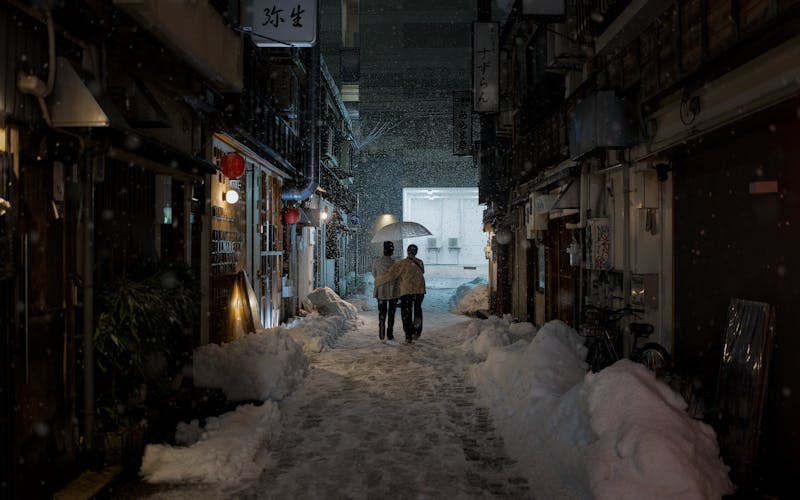
All seasons work, genuinely. Autumn (October-November) has spectacular foliage in Kenroku-en. Winter (December-February) brings snow that transforms the garden into something from a woodblock print — and Kanazawa gets proper snow, being on the Sea of Japan coast. Spring means cherry blossoms. Summer is warm and humid, but manageable.
We’d lean towards autumn or winter if you’re choosing. The snow-covered garden alone is reason enough for a winter visit, and Kanazawa’s fresh crab season peaks between November and March. Coincidence? Convenient, at least.
Is Kanazawa Worth It With Kids?
Yes. Firmly yes. It won’t have the theme-park excitement of Tokyo or the sensory overload of Osaka. It’s quieter than that. More refined. But that’s precisely what makes it valuable on a family trip to Japan — a pause from the intensity, a chance for everyone (parents included) to slow down and notice things.
Our children still talk about the gold leaf ice cream and the swimming pool art installation. They remember the market and the samurai house garden and feeding koi in Kenroku-en. Kanazawa gave us some of the calmest, happiest family moments of our entire trip. Not bad for a city most people skip.
Don’t skip it.