
Kamakura With Kids
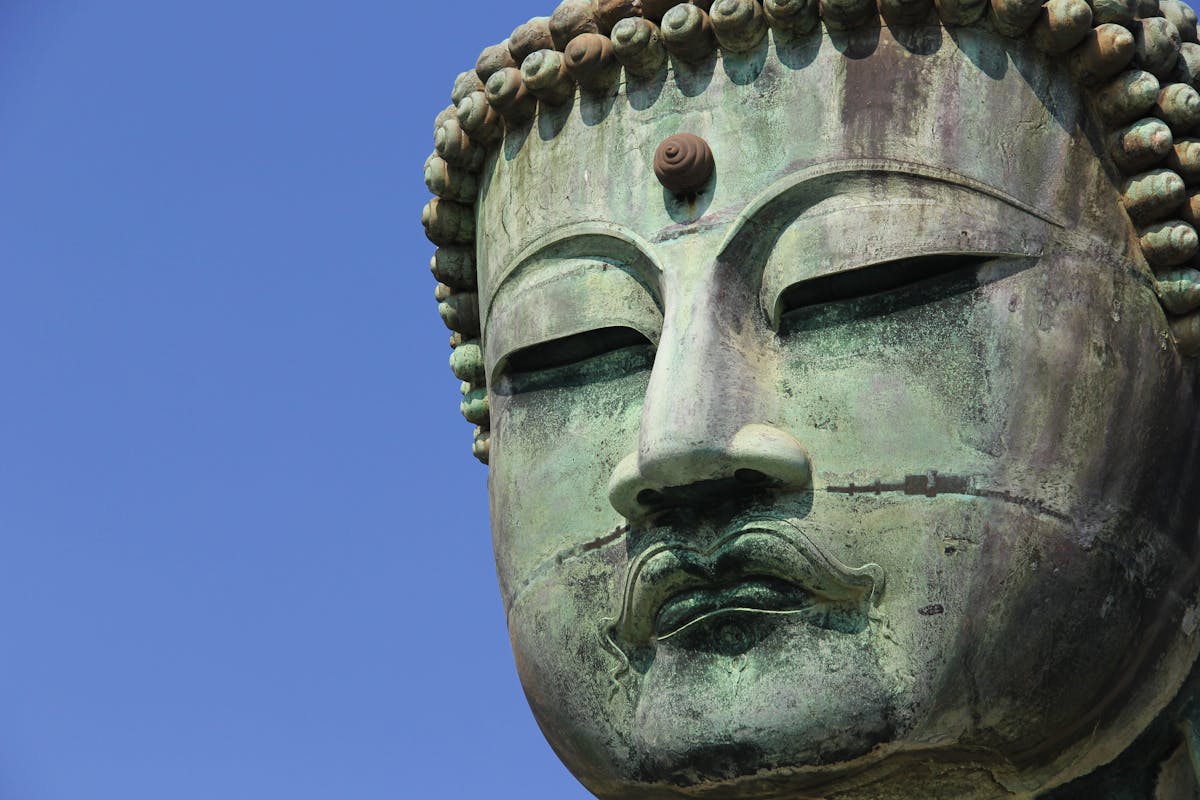
Kamakura is one of those day trips from Tokyo that actually delivers. No complicated transfers, no endless planning — just hop on the JR Yokosuka Line from Tokyo Station and you’re there in about an hour. It’s covered by the JR Pass too, which makes it essentially free if you’ve already got one. And what you get at the other end is a small seaside town packed with temples, brilliant street food, and a 13-metre bronze Buddha that will stop your children in their tracks.
We’ve done this trip twice now, and honestly, it might be our favourite day out from Tokyo. Here’s everything you need to know about visiting Kamakura with kids.
The Great Buddha at Kotoku-in
Let’s start with the main event. The Daibutsu — Kamakura’s Great Buddha — is a colossal outdoor bronze statue that’s been sitting in the open air since the 15th century. The hall that once housed it was washed away by a tsunami, and nobody ever rebuilt it. So there he sits, 13 metres tall, rain or shine, looking remarkably unbothered by it all.
Children are genuinely impressed by this one. Not in a polite, museum-voice way. More in a stop-dead, mouth-open way. It’s the sheer scale of the thing. Photos don’t prepare you. You walk through the temple grounds and then suddenly there it is, far bigger than you expected. Our youngest just said “WHOA” and stood there for a solid minute, which is basically a lifetime in toddler attention spans.
Entry is ¥300 for adults (about £1.60) and ¥150 for children. For an extra ¥50 you can actually go inside the statue, which is dark, echoey, and fascinating if your kids are the curious type. Worth it.
Hase-dera Temple
A short walk from the Great Buddha, Hase-dera is a different sort of temple altogether. It’s built into the hillside, and the views from the upper terrace out over the sea and the town rooftops are properly lovely. On a clear day you can see all the way along the coast.
What our kids loved most, though, was the cave. There’s a low-ceilinged tunnel carved into the rock face, lined with hundreds of tiny Buddha statues and carvings. It’s atmospheric and a bit spooky, and the children immediately started trying to count them all. They lost count somewhere around seventy. Good luck to yours.
If you’re visiting in June, the hydrangea garden here is spectacular — thousands of flowers in every shade of blue, purple, and pink tumbling down the hillside. Even children who couldn’t care less about flowers will be impressed. Entry is ¥400 for adults and ¥200 for kids (roughly £2.10 and £1.05). Reasonable for what you get.
Komachi-dori: The Snack Street
Right. This is the bit your children will talk about for weeks.
Komachi-dori runs from Kamakura Station up towards the main shrine, and it is essentially one long, glorious grazing opportunity. Calling it a shopping street is technically accurate but misses the point. It’s a food street. A snack corridor. A place where you walk very slowly because everyone is eating something.
Matcha ice cream is everywhere and ranges from subtle to eye-wateringly green. Senbei — big crunchy rice crackers — get pressed and grilled right in front of you. Taiyaki, those fish-shaped pastries filled with sweet red bean or custard, are perfect for small hands. And then there’s the local speciality: shirasu, which is tiny whitebait served on rice. The kids were suspicious at first. Then they tried it. Then they wanted more. That’s usually how it goes in Japan.
Budget maybe ¥2,000-3,000 per person (£10-16) for a thorough grazing session, though you could spend less if your lot have some self-control. Ours don’t.
Tsurugaoka Hachimangu Shrine
At the top of Komachi-dori sits Kamakura’s most important shrine. Tsurugaoka Hachimangu is big, grand, and — crucially — free. The grounds are spacious enough that children can actually move around without you panicking about them knocking something over, which is not always the case at Japanese temples.
There are lotus ponds on either side of the main approach, which are beautiful in summer when the flowers are out. And pigeons. So many pigeons. If your children are the pigeon-chasing type, they’ll be occupied for a while. If they’re the pigeon-feeding type, you can buy small bags of feed. Either way, pigeons.
The main hall sits at the top of a steep stone staircase, and the view back down the tree-lined approach to the sea is worth the climb. Smaller legs might need a bit of encouragement on the way up, but it’s not far.
The Enoden Train
This is a treat. The Enoden is an old-fashioned tram line that runs from Kamakura along the coast towards Enoshima, and riding it is an experience in itself. It trundles through narrow streets — close enough to the houses that you could practically reach out and touch them — then emerges onto a stretch right along the seafront. The views are gorgeous.
Children love it. There’s something about a slightly rattly, slightly old train running through people’s back gardens that appeals enormously. A flat fare of ¥260 (about £1.40) gets you anywhere along the line. We rode it to Hase Station for the temples, and then later all the way to Enoshima. Both journeys were highlights.
Enoshima Island
If you’ve got the energy for an extension, Enoshima is worth considering. It’s a small island connected to the mainland by a bridge, about 25 minutes from Kamakura on the Enoden. There’s a shrine, some caves, a lighthouse observation tower with panoramic views, and various seafood restaurants.
Fair warning: it adds a good two to three hours to your day, and there’s quite a lot of uphill walking on the island itself. With older kids, brilliant. With a tired three-year-old, maybe save it for another trip. We did it with ours at ages five and eight and it worked well, but we were all pretty shattered by the end.
Yuigahama Beach
Kamakura has a beach. A proper sandy beach, walkable from the town centre. In summer, Yuigahama Beach is warm enough for a paddle and even a swim. It’s not the Caribbean, obviously, but after a morning of temples and snacking, letting the kids run around on the sand for half an hour is no bad thing.
Even outside summer it’s pleasant for a wander along the shore. Just don’t promise swimming in March.
How Long Do You Need?
Half a day is enough for the greatest hits: Great Buddha, Komachi-dori, and Tsurugaoka Hachimangu. You could be back in Tokyo by mid-afternoon, easy.
But a full day is better. Adding Hase-dera, a ride on the Enoden, and possibly Enoshima makes it a really satisfying day out. We left Tokyo around 9am and got back by 6pm, and it didn’t feel rushed.
Practical Bits
Getting there is straightforward. JR Yokosuka Line from Tokyo Station, one hour, no changes. Covered by the JR Pass. Done.
Kamakura itself is walkable, but it is hilly in places. Strollers work fine on the main streets and on Komachi-dori, but some of the temple paths are stepped or uneven. If you’ve got a little one, a carrier is easier for the temple visits. We managed with a lightweight stroller but there was a fair amount of lifting it up steps.
Toilets are plentiful — at the station, in the temples, and along Komachi-dori. Japan is reliably excellent at this.
Weekends and holidays are noticeably busier, especially on Komachi-dori where it can get properly crowded. A weekday visit, if you can manage it, is much more relaxed.
One more thing: coin lockers at Kamakura Station are a godsend. Dump your bags when you arrive and explore unencumbered. They fill up by mid-morning on busy days, so get there earlyish.
Kamakura is, quite simply, one of the best family day trips from Tokyo. Temples that actually hold children’s attention, food they’ll want to eat, a charming little train, and the sea. What more do you need?
For more on planning a family trip to Japan, have a look at our guide to family travel in Japan and our Japan itinerary with kids.