We think you’ll really appreciate this walking tour if you’re someone who wants to understand a city’s soul rather than just snap photos at famous landmarks. What genuinely stands out here is the combination of a historian guide who actually knows his material inside-out and the carefully designed route that takes you through Liverpool’s evolution from a 13th-century settlement to a global powerhouse. The tour covers nearly two hours of walking through authentic historical sites—not recreations or museums—where you’re standing on the actual ground where history unfolded.
That said, there’s one important consideration: this is primarily a waterfront-focused walk, so if you’re expecting equal coverage of all Liverpool’s neighborhoods, you’ll want to know upfront that the route concentrates heavily on the dock areas and historic commercial districts. The tour works best for travelers who want a serious historical foundation for their visit and don’t mind a brisk pace with substantial information delivery—this isn’t a leisurely stroll where you’ll have lots of downtime.
- What Makes This Tour Worth Your Time and Money
- The Route: Walking Through Eight Centuries of History
- Starting at the Three Graces: Liverpool’s Iconic Waterfront
- Medieval Roots: Liverpool Parish Church Gardens
- The 13th-Century Town Center: Old Hall Street
- Georgian Elegance: Liverpool Town Hall
- The Evolution of Commerce: Castle Street
- Understanding Liverpool’s Peak: Queen Victoria Monument
- Modern Liverpool: Liverpool ONE
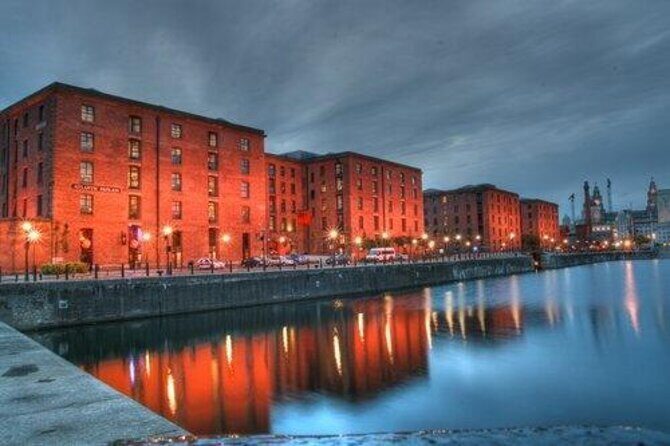
- Industrial Heritage: The Old Dock and Royal Albert Dock
- The Final Stop: Back to the Three Graces
- What Travelers Are Actually Saying
- Practical Considerations for Your Visit
- Duration and Pacing
- Group Size
- Physical Demands
- Booking and Cancellation
- Booking Timeline
- Who This Tour Is Perfect For
- Comparing Value to Other Options
- The Bottom Line
- Frequently Asked Questions
- The Best Of Liverpool!
- More Walking Tours in Liverpool
- More Tours in Liverpool
- More Tour Reviews in Liverpool
What Makes This Tour Worth Your Time and Money
At $27.74 per person for nearly two hours with a knowledgeable historian guide, you’re getting exceptional value. To put this in perspective, many European cities charge double this amount for similar walking tours, and frequently those guides are reading from scripts rather than drawing from genuine expertise. Here, you’re paying less than $15 per hour for access to someone who clearly lives and breathes Liverpool’s history.
The tour starts at the Royal Liver Building, one of Liverpool’s Three Graces—those iconic waterfront structures that define the city’s skyline. Rather than just pointing and saying “look at that,” your guide will explain why these buildings matter to Liverpool’s identity and what they represent about the city’s ambitions and wealth during their construction.
What we particularly appreciate is that the itinerary doesn’t waste time on tourist traps. Every stop serves a purpose in telling Liverpool’s story chronologically and thematically. You’re not paying for convenience or comfort amenities—you’re paying for genuine historical knowledge delivered by someone who cares about the subject matter.
👉 See our pick of the We Rank Liverpool’s 15 Top Walking Tours
The Route: Walking Through Eight Centuries of History
You can also read our reviews of more walking tours in Liverpool


Starting at the Three Graces: Liverpool’s Iconic Waterfront
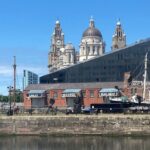
Your journey begins at the Royal Liver Building, where your guide sets the stage for everything you’re about to learn. These three waterfront buildings—the Royal Liver Building, the Cunard Building, and the Port Authority Building—represent Liverpool’s confidence during its peak as a global trading hub. The guide spends about 10 minutes here establishing context, which might seem brief, but it’s actually a smart approach. You get oriented, understand the historical framework, and then move into the walking portion rather than standing around listening to an extended lecture.
Medieval Roots: Liverpool Parish Church Gardens
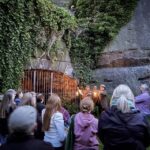
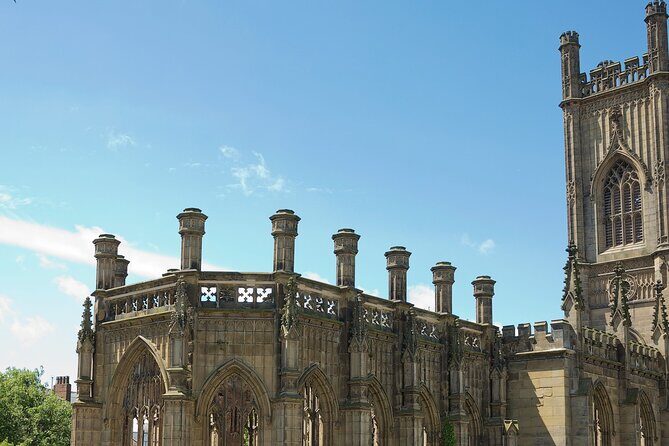
From there, you’ll walk to Liverpool Parish Church Gardens, where the oldest building in the city center once stood. This stop is crucial for understanding Liverpool’s origin story. The church, originally called St. Nicholas’ Church (named after the patron saint of the sea), dates back to 1207. One traveler noted, “Detailed insights into Liverpool’s history, especially everything to do with commerce, the docks and its not always glorious past.”
This is where the tour begins addressing what makes Liverpool’s history complex and honest. The city wasn’t always celebrated—much of its early wealth came from the Atlantic trade, which we’ll discuss more directly at later stops. The guide doesn’t shy away from this; instead, they use it to explain how Liverpool became what it is today.
The 13th-Century Town Center: Old Hall Street
Walking down Old Hall Street takes you back to the 13th century, when Liverpool received its Town Charter and established itself as a proper town rather than a settlement. The street is lined with Grade I Listed Buildings, which means they’re recognized as structures of national importance. Your guide will point out the Cotton Exchange, the physical location where Liverpool’s merchants conducted global trade.
This is where the tour really emphasizes Liverpool’s economic significance. By the late 18th century, Liverpool had actually overtaken London in the cotton trade. That’s a staggering fact that most visitors don’t realize about this city. One reviewer who was a lifelong resident said, “Even as a local, I learned so much about my city and its history.” That kind of comment tells you the guide isn’t just reciting tourist information—he’s providing genuine historical insight.
Georgian Elegance: Liverpool Town Hall
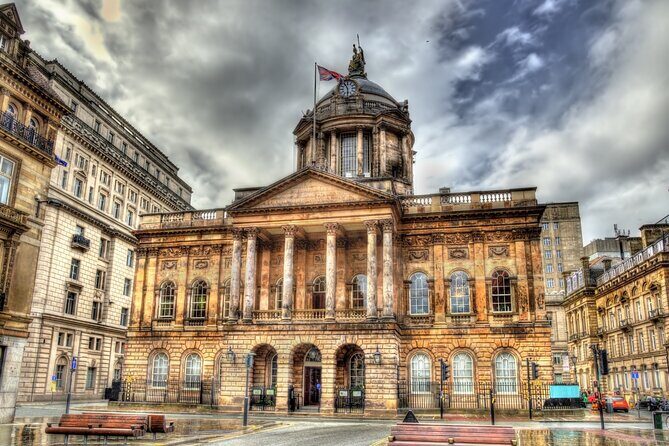
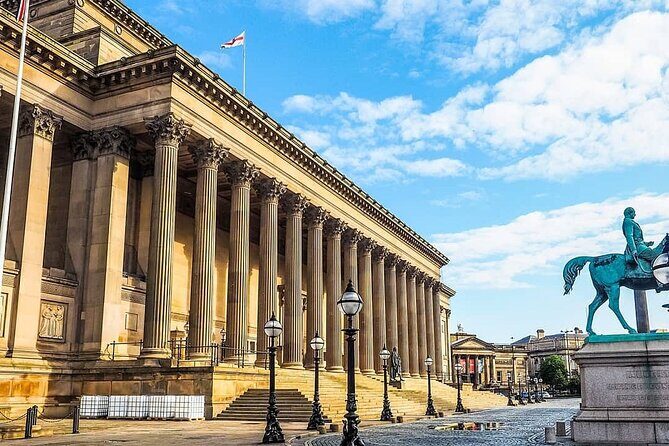
The Town Hall, built in 1749, represents the finest surviving Georgian building in the UK. Rather than just admiring the architecture, your guide explains how the building itself is evidence of Liverpool’s wealth and status. A city doesn’t build structures like this unless it’s prosperous and confident about its future. The guide provides academic context about how Liverpool’s position as a global port city enabled this kind of investment in civic infrastructure.
You can also read our reviews of more historical tours in Liverpool

The Evolution of Commerce: Castle Street
Castle Street is described as a “literal time walk” because the architecture visibly shows how the city developed and changed over centuries. You’ll learn about Liverpool Castle and why Castle Street became such an important commercial thoroughfare. Rather than being a single dramatic story, this stop is about understanding urban development and how cities physically evolve as their economic importance changes.
Understanding Liverpool’s Peak: Queen Victoria Monument
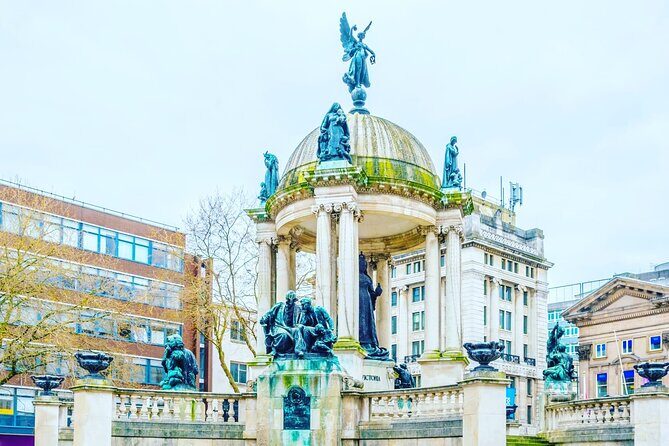
At the Queen Victoria Monument, the guide provides an in-depth history of how Liverpool became the largest port on the planet for global trade by 1800. This is the moment when all the previous stops make sense—you understand how a medieval settlement became a medieval town, then a Georgian commercial center, and finally a global trading superpower. One traveler captured this perfectly: “Really enlightening. Mostly based around waterfront area but now I know how & why the city prospered.”
Modern Liverpool: Liverpool ONE
The tour then transitions to modern times with a walk through Liverpool ONE, the contemporary shopping destination. This might seem like an odd inclusion in a history tour, but it actually serves a purpose—it shows you where Liverpool is today and how it’s reinvented itself after the decline of its port industry in the 20th century. It’s a brief 10-minute stop, so you’re not spending significant time shopping; instead, you’re getting context about the city’s present.
Industrial Heritage: The Old Dock and Royal Albert Dock
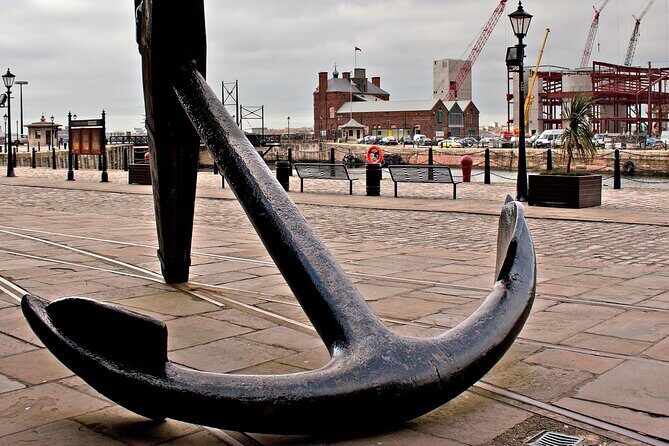
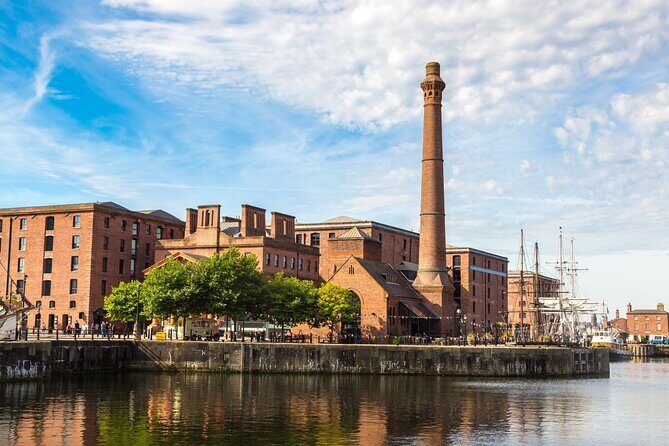
The tour then focuses on what really made Liverpool famous: its docks. The Old Dock, built in 1715, was the first commercial wet dock on the planet. This wasn’t just an important innovation for Liverpool—it changed global maritime commerce. Your guide explains how this engineering achievement catapulted Liverpool to become the most efficient port in the world.
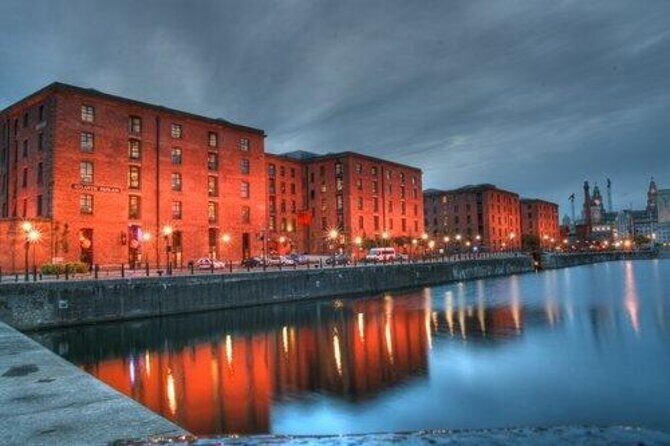
You’ll then walk to Royal Albert Dock, built in 1846, which became the center of Liverpool’s commerce in the 19th century. This dock also played a significant role during the First and Second World Wars. One reviewer noted, “A wide range of historical subjects were covered, including Liverpool’s role in the transatlantic slave trade.” This indicates the guide addresses the complicated aspects of Liverpool’s history, not just the celebrated ones.
The Final Stop: Back to the Three Graces
The tour concludes back at the Three Graces with a final perspective on Liverpool’s waterfront. By this point, you’ve walked the city chronologically and thematically, so returning to where you started feels like completing a circle. You understand why those buildings matter and what they represent in the context of everything you’ve learned.
What Travelers Are Actually Saying
The reviews for this tour are genuinely impressive, with 841 out of 911 reviewers giving it five stars. What’s particularly telling is that these aren’t generic compliments—travelers mention specific things they learned and appreciated.
One common thread in the reviews is praise for the guide’s knowledge and passion. A traveler named Stuart said, “Our guide, John, is truly passionate about his home town and I couldn’t believe the level of detail he was able to communicate.” Another reviewer noted, “John is a wealth of knowledge and information. We came away with a great appreciation of Liverpool’s contributions to the world…not just the Beatles.”
That last comment is important. Liverpool’s identity is so tied to the Beatles that many visitors come expecting a music-focused tour. This history tour intentionally positions itself as the counterpoint—it’s about the city itself, not its famous musical exports. If you want to understand Liverpool before the Beatles, this is exactly what you need.
Several reviews mention that the guide keeps things engaging despite potentially dry subject matter. One traveler said the guide “Kept us very entertained and despite the weather kept our spirits up.” Another noted the tour included “some Scouse humour,” indicating the guide uses local personality to make the experience more enjoyable.
There’s also appreciation for the value proposition. Multiple reviewers specifically mentioned “great value for money” and “excellent value,” which is noteworthy because travelers don’t usually highlight price unless they feel genuinely impressed by what they’re getting.
Practical Considerations for Your Visit
Duration and Pacing
At approximately 1 hour 50 minutes, this tour is substantial enough to provide real depth without becoming exhausting. The stops are distributed logically, so you’re not standing in one place for extended periods. However, one reviewer did note that “he spoke rather fast and I had a hard time keeping up,” so if you prefer a slower pace, you might want to position yourself closer to the guide and let them know you’d appreciate slightly more time at certain stops.
Group Size
The tour accommodates a maximum of 40 people, which is reasonable for a walking tour. You won’t feel like you’re in a massive crowd, but there will be enough people that you can hear the guide through ambient noise. This size also means you’re not getting an ultra-personalized experience, but at this price point, that’s completely fair.
Physical Demands
This is a walking tour through a city center, so you’ll be on your feet for nearly two hours. The route covers waterfront areas and downtown streets, which are generally flat but can be uneven in places. One traveler specifically recommended wearing “a warm coat/jacket and comfortable shoes,” noting that “if a cold day the wind from the river can be unpleasant.” Liverpool’s weather can be unpredictable, so come prepared.
Booking and Cancellation
The tour offers free cancellation up to 24 hours in advance, which is genuinely useful if your plans change. You’ll receive a mobile ticket, so there’s no need to print anything or visit a physical location to collect tickets—you just show up at the Royal Liver Building at your scheduled time.
It’s worth noting that the tour requires good weather. If it’s canceled due to poor conditions, you’ll be offered either a different date or a full refund. There were a couple of reviews mentioning last-minute cancellations due to guide emergencies, but the company responded professionally and offered refunds or rescheduled dates. These seem to be rare occurrences rather than a pattern.
Booking Timeline
The tour is typically booked about 19 days in advance, which gives you a sense of how popular it is. This doesn’t mean you can’t book closer to your travel dates, but if you have specific dates in mind, booking earlier increases your chances of getting exactly the time slot you want.
Who This Tour Is Perfect For
This experience works wonderfully if you’re the type of traveler who wants to understand a city’s bones—its history, how it developed, and why it matters. You’re not primarily interested in shopping or nightlife; instead, you want context and knowledge that will make the rest of your Liverpool visit more meaningful.
It’s excellent for history enthusiasts, obviously, but also for anyone planning a longer Liverpool stay who wants a solid foundation before exploring specific neighborhoods or attractions on their own. Even locals appreciate this tour—several reviewers mentioned learning things about their own city that they didn’t previously know.
If you’re traveling with teenagers or young adults who are studying British history, this is a remarkably efficient way to cover Liverpool’s role in English history. If you’re someone who gets frustrated by overly simplistic tourist information, you’ll appreciate the academic depth here without it feeling like a dry lecture.
This tour is less ideal if you want a highly personalized experience, prefer very slow-paced walking, or are primarily interested in Beatles history or modern Liverpool culture. For those interests, there are other tours specifically designed around those themes.
Comparing Value to Other Options
At $27.74, you’re looking at roughly $15 per hour for expert-led historical guidance. Most European cities charge $40-60 for similar walking tours with less guides. The fact that this tour is led by someone who’s genuinely passionate about the subject matter (rather than someone reading from a script) makes the value even more compelling.
If you were to visit these sites independently, you’d miss the crucial context that transforms a walk through old buildings into a coherent historical narrative. You might see the Town Hall and think “nice Georgian architecture,” but with this guide, you understand that the building’s existence proves Liverpool’s 18th-century prosperity. That contextual knowledge is what you’re actually paying for.
The Bottom Line
This is one of those tours that delivers exactly what it promises—a genuinely informative, well-paced introduction to Liverpool’s history from its medieval origins through the modern day. The guide’s passion for the subject is evident, the route is logically designed, and at under $30 per person, you’re getting exceptional value for nearly two hours of expert-led historical education. You’ll leave understanding not just what Liverpool is, but how it became what it is, which fundamentally changes how you experience the rest of the city. It’s best for travelers who want substance over superficiality and don’t mind a brisk walking pace in exchange for genuine historical insight.
A Walk Through Time: History of Liverpool Walking Tour
Frequently Asked Questions
Q: How much walking is involved in this tour?
A: You’ll be on your feet for the entire 1 hour 50 minutes, walking through downtown Liverpool and the waterfront areas. The route covers medieval streets, Georgian architecture, and dock areas. The terrain is primarily flat city streets, though some areas can be uneven. Comfortable, supportive shoes are essential.
Q: What’s the maximum group size, and will I feel crowded?
A: The tour accommodates a maximum of 40 people. While this isn’t an intimate small-group experience, it’s manageable for a walking tour through a city. You’ll be able to hear the guide, and you won’t feel lost in a massive crowd. The group size is reasonable for the price point.
Q: Is this tour suitable for people with mobility limitations?
A: The tour involves continuous walking for nearly two hours, so it’s best suited for people who can comfortably walk on city streets. If you have significant mobility concerns, you should contact the tour operator beforehand to discuss whether it’s appropriate for your situation.
Q: What happens if the weather is bad?
A: The tour requires good weather. If it’s canceled due to poor conditions, you’ll be offered either an alternative date or a full refund. Liverpool’s weather can be unpredictable, so bringing a warm coat and being prepared for wind (especially near the waterfront) is recommended.
Q: How far in advance should I book?
A: The tour is typically booked about 19 days in advance, but you can book closer to your travel dates if needed. You have free cancellation up to 24 hours before the tour, so there’s flexibility if your plans change.
Q: Are there any stops where admission fees are required?
A: No—all the outdoor stops on this walking tour are free. The Royal Liver Building and Liverpool Town Hall are viewed from the outside, not entered. There are no hidden costs beyond the tour price.
Q: What time does the tour start, and where exactly do I meet?
A: The tour starts at the Royal Liver Building (Pier Head, Liverpool L3 1HU, UK). You’ll receive your mobile ticket confirmation at the time of booking with your specific start time. The tour ends at Queen Victoria Monument on Castle Street, a central location with good access to other attractions.
Q: Will this tour cover the Beatles and Liverpool’s music history?
A: No—this tour focuses specifically on Liverpool’s broader history, commerce, maritime development, and architecture from 1207 to the present. If you’re interested in Beatles history, there’s a separate Beatles-focused walking tour available. This tour intentionally positions itself as the historical foundation for understanding the city itself.