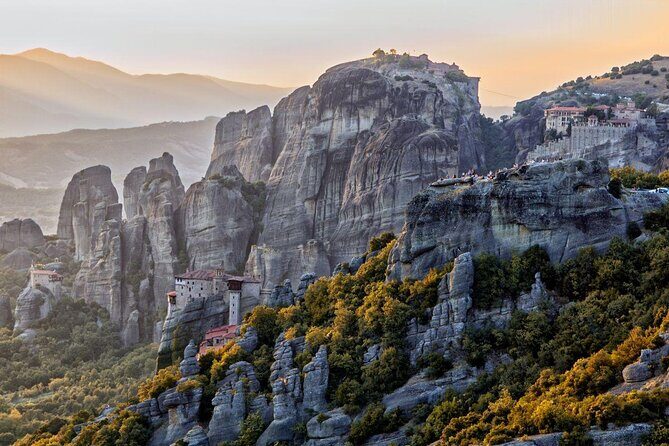
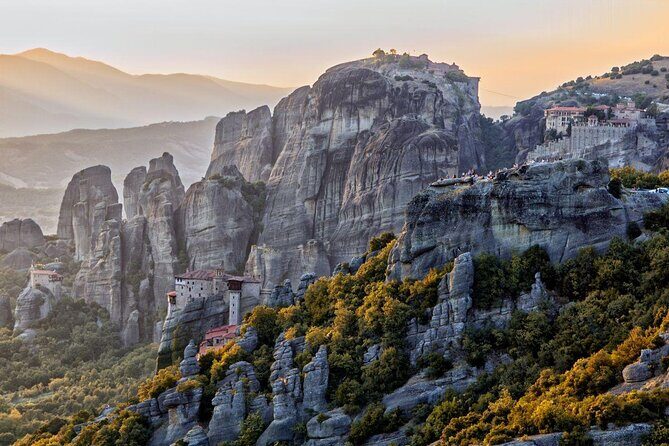
There’s something about Meteora that stops you cold. You round a corner on the drive north from Athens, and suddenly these impossibly tall rock formations thrust up from the earth like nature’s cathedral, crowned with centuries-old monasteries clinging to their peaks. This full-day tour from Athens makes visiting this UNESCO World Heritage site genuinely feasible—even if it requires committing to a long day of travel.
We appreciate this tour for two specific reasons: it solves the logistical puzzle of reaching Meteora from Athens (a challenging 2.5-hour journey each way), and it includes an English-speaking guide who actually knows the fascinating history of how monks hauled themselves and building materials up these vertical cliffs using rope systems. One consideration worth acknowledging upfront: this is legitimately a 14-hour commitment from your day, with roughly five hours spent on the bus each direction. It’s not for travelers looking for a quick outing, but rather for those willing to invest a full day for an experience that most people travel to Greece specifically to witness.
This tour works best for history enthusiasts, spiritual seekers, photography lovers, and anyone who wants to understand how monks chose one of Europe’s most extreme landscapes for contemplation and community.
- The Long Game: Understanding the Time Commitment
- Arrival in Kalambaka: The Gateway to Meteora
- The Monasteries: Six Centuries of Devotion on Stone
- The Hermit Caves: Where Solitude Becomes Spiritual
- Food and Coastal Stops: The Practical Pleasures
- The Reality of the Stairs and Physical Demands
- Dress Code Matters More Than You’d Think
- The Pickup Logistics: Where Things Get Tricky
- What You’re Actually Paying For: The Value Proposition
- The Guide Quality Varies—But Often Exceeds Expectations
- Group Size and Atmosphere
- Weather Considerations and Flexibility
- Cancellation Policy: Reasonable and Straightforward
- Frequently Asked Questions
- The Best Of Athens!
- More Lunch Experiences in Athens
- More Tours in Athens
- More Tour Reviews in Athens
The Long Game: Understanding the Time Commitment
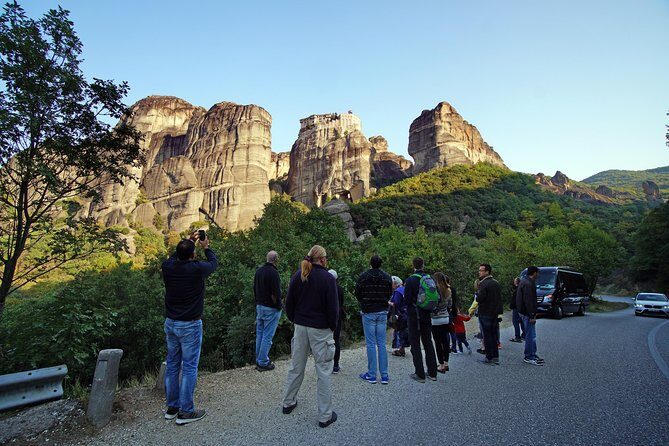
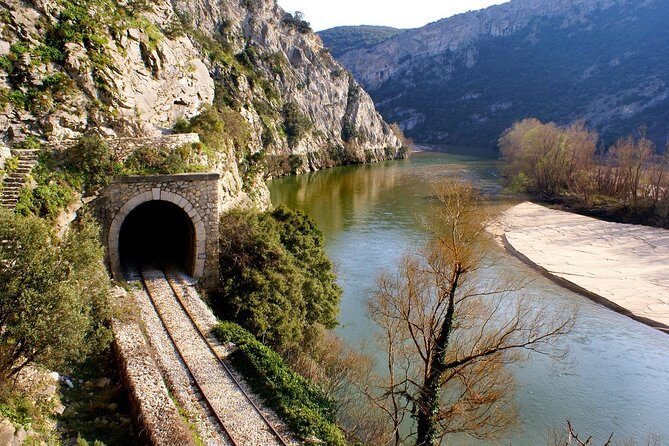
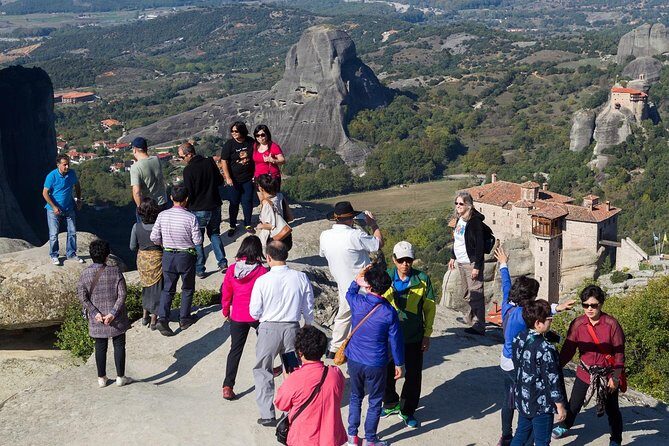
Let’s be honest about the elephant on the bus: you’re looking at substantial travel time. You’ll depart Athens at 7:30 AM from opposite the railway station and won’t return until nearly 10 PM. That’s a full 14 hours from start to finish, with the lion’s share devoted to getting there and back.
But here’s what makes this manageable—and actually pleasant: the journey itself isn’t wasted time. The bus is comfortable with air conditioning and charging stations, and the operator has strategically placed stops that break up the monotony. You’ll pause at Kamena Vourla, a seaside town about halfway through the drive, where you can grab coffee or a light breakfast with actual views of the water rather than a highway rest stop. One traveler noted, “The long bus ride was divided into stops every couple of hours for bathroom breaks and snacks or meals which gave you a break from the long trip.” That structure matters when you’re facing five hours in a seat.
The return journey includes another optional dinner stop at the same coastal location, giving you a chance to decompress after a day of climbing stairs and absorbing history. You can pre-order food through the tour operator’s app, which means you’re not standing in a restaurant line when you’re already tired.
👉 See our pick of the The 2 Top Tours In Athens: Which Is Best?
Arrival in Kalambaka: The Gateway to Meteora
You’ll arrive in Kalambaka around 12:30 PM—the town that serves as the base for exploring Meteora. Here’s where the tour pivots from transportation to experience. You’ll meet your English-speaking guide and transfer to a smaller minibus for the actual monastery exploration. This is a smart logistical choice: the large coach bus can’t navigate the narrow roads and tight parking areas around the monasteries, so having a local guide with a properly-sized vehicle makes a real difference.
You’ll have roughly five hours in the Meteora area itself. This might sound like plenty of time, but given that you’re visiting multiple monasteries (some requiring significant stair climbing), exploring hermit caves, and stopping for photos, it moves at a deliberate pace rather than a leisurely one. One reviewer captured this feeling accurately: “For amount of time we spent on this tour, [the experience] would have been even better with a great tour guide or audio tour of some type.” The tour does provide audio guides at the monasteries, which adds depth to your visit.
You can also read our reviews of more tours and experiences in Athens
- All Day Cruise -3 Islands to Agistri,Moni, Aegina with lunch and drinks included
★ 5.0 · 4,958 reviews

The Monasteries: Six Centuries of Devotion on Stone
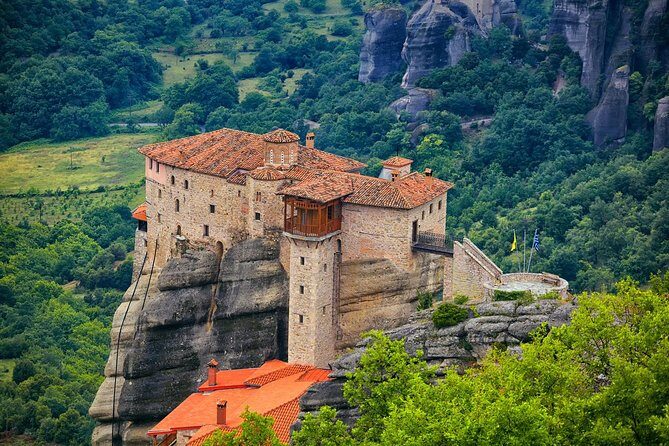
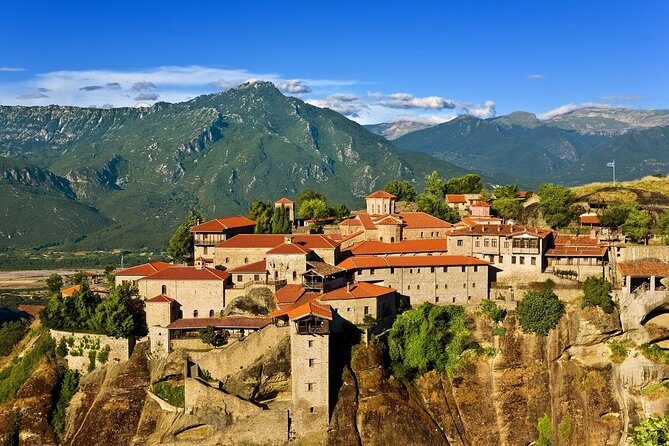
The tour includes visits to multiple monasteries, with interior access to three of the most significant ones. You’ll encounter the Great Meteoron Monastery—the largest and oldest of the monastic complex, built atop a towering formation and earning the name “meteoro,” meaning “suspended in the air.” Founded by Saint Athanasios in the 14th century, it established the template for the monastic community that would grow around it.
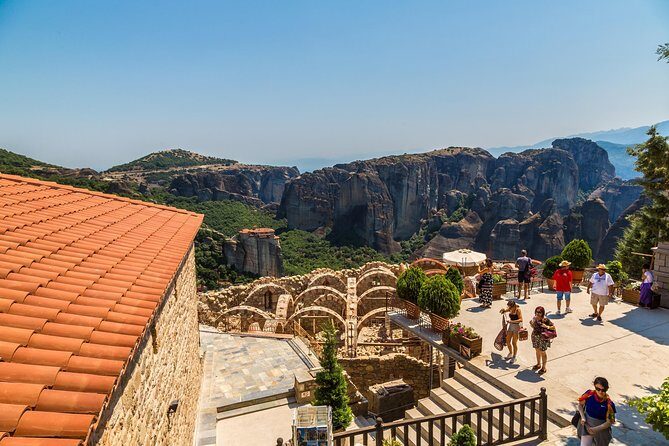
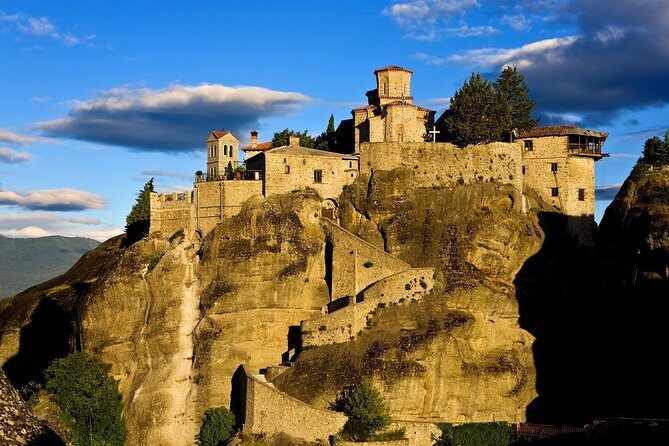
Varlaam Monastery represents the second tier of size and significance, with a 16th-century construction story that involves monks hauling materials up by rope—a detail that becomes visceral when you’re standing on the narrow stone platform looking down. The frescoed chapel and panoramic views make the climb worthwhile.
St. Stephen’s Monastery deserves special mention because it’s the most accessible option: you cross a small bridge rather than climbing endless staircases, making it genuinely viable for visitors with mobility limitations. It features both a 16th-century chapel and an 18th-century cathedral housing relics of Saint Charalambos.
You’ll also encounter Roussanou Monastery, which sits on a lower rock formation than some of its neighbors, and the Holy Trinity Monastery—the most challenging to access with approximately 140 steps to the summit, but offering views that justify the effort. The Holy Monastery of Saint Nicholas of Anapafsas, founded in the late 14th century, rounds out your monastery circuit.
Throughout these visits, one consistent thread emerges from traveler reviews: the guides genuinely know their material. “Maria was a great guide. Very knowledgeable on the history of Meteora and the monasteries,” wrote one visitor. Another noted, “Our guide Jim was great! He was funny and knowledgeable at the same time.” When your guide can explain not just what you’re looking at but why monks chose these impossible locations and how they managed daily life here, the experience transforms from sightseeing into understanding.
The Hermit Caves: Where Solitude Becomes Spiritual
One element that distinguishes this tour from competing options is the inclusion of the hermit caves of Badovas. These aren’t the main monastery structures—they’re the remote, cliff-side shelters where the earliest monks lived, often alone, in pursuit of spiritual devotion. Walking through these spaces offers a different kind of encounter than the larger, more established monasteries. You’re seeing the traces of people who chose extreme isolation as a path to contemplation.
One traveler described the experience: “Be amazed by the secluded hermit caves of Badovas, a powerful reflection of the solitude and spiritual dedication of Meteora’s earliest monks.” It’s a humbling counterpoint to the organized monastic communities in the larger structures.
Food and Coastal Stops: The Practical Pleasures
The tour includes meal stops at Kamena Vourla—a seaside restaurant setting that breaks up the long travel days. Breakfast or brunch happens on the way up; dinner on the way back. Reviews are generally positive about the food quality, with one traveler noting, “The long bus ride… had ample stops. The lunch was very good with a lot of food.”
The lunch option (available for an additional charge) comes with Greek specialties, vegetarian options, and generous portions. Multiple reviewers specifically praised this: “Highly recommend doing the lunch option! It has vegetarian, gluten free, and normal foods to choose from with large portions.” You can pre-order through the app, which removes the stress of figuring out what to eat when you’re already tired.
One practical detail: you’ll also have free time in Kalambaka itself (around one hour) after finishing the monastery visits. This gives you a chance to grab additional food, use facilities, or simply sit and process what you’ve seen before the return journey.
The Reality of the Stairs and Physical Demands
This tour requires moderate physical fitness—and that’s not marketing language. You will climb stairs. Lots of them. Some reviewers noted this explicitly: “The climb to the monasteries involves a lot of stairs so a walking stick might help some people.” Another wrote, “Be prepared for walking and lots of stairs to reach the monasteries, but it really is worth it!”
The tour operator acknowledges this reality: if climbing stairs is genuinely challenging, you can wait in the parking area rather than ascending to each monastery. It’s an honest approach rather than pretending the experience is fully accessible to everyone. But for those with reasonable mobility, the stairs are manageable—challenging, yes, but not extreme.


Dress Code Matters More Than You’d Think
Women need to wear long skirts or dresses and long sleeves to enter the monasteries. Men cannot wear shorts. This isn’t bureaucratic nitpicking—it reflects the active religious function of these spaces. Multiple reviews mention this requirement, with one traveler noting, “Women need to wear a dress or long skirt.” Plan your wardrobe accordingly, and you’ll avoid the frustration of getting turned away at the entrance.
The Pickup Logistics: Where Things Get Tricky
This is where we need to be direct: several reviews highlight confusion around the morning pickup. The tour departs from opposite the Athens Railway Station at 7:30 AM, with hotel pickups available about an hour earlier. The consistent complaint: when multiple buses are parked in the same area, it’s genuinely difficult to identify which one is yours.
One traveler described the experience: “It was difficult to find your right bus; the pick up spot is across from the train station but the 4 buses that are already there are telling you to go across the street where there are no buses, but once more show up you are told to go back across the street.” Another noted, “The pick up was a bit confusing with many buses, we had to go around to check our name on each.”
The tour operator’s response to missed pickups is firm: they won’t refund if you miss the departure time, even if communication was unclear. The lesson here is straightforward—confirm your exact pickup location and time in writing before your tour date, arrive 15 minutes early, and look for your bus number or tour operator name on the windshield. Ask hotel staff for clarification if you’re uncertain.
What You’re Actually Paying For: The Value Proposition
At $87.07 per person, this tour includes roundtrip transportation from Athens, an English-speaking guide, audio guides at the monasteries, coastal meal stops, and transportation between sites in a smaller minibus. Monastery entrance fees ($5 per monastery, paid in cash on-site) aren’t included, nor is the optional lunch.
What you’re essentially buying is the solution to a logistical problem: reaching a spectacular but remote site from Athens without renting a car and navigating unfamiliar roads. You’re also getting a guide who can explain what you’re looking at and why it matters. For most travelers, that’s genuine value. One reviewer summarized it well: “Meteora is the most amazing historical site in Greece, but it’s 5 hrs from Athens. This tour makes it possible to enjoy the drive with lovely lakeside stops and then tour the monasteries w/a guide.”
The Guide Quality Varies—But Often Exceeds Expectations
The most consistent praise across reviews centers on the tour guides. Names like Maria, Kate, Jim, and Cristos appear repeatedly in five-star reviews, with travelers describing them as “knowledgeable,” “funny,” “informative,” and “willing to answer questions.” One particularly enthusiastic traveler wrote, “The trip to Meteora with Maria and Cristos was great. Maria is very knowledgeable, kind and Cristos is a great driver.”
That said, not every guide delivers the same level of engagement. A few reviews mention guides who felt “banal” or “boring,” or didn’t adequately explain the sites. This is the reality of any tour company: quality depends partly on which guide you get. The operator seems responsive to feedback, with management replies acknowledging when guides don’t meet expectations.
Group Size and Atmosphere
The tour accommodates a maximum of 45 travelers, which is substantial but not overwhelming. Once you transfer to the smaller minibus in Kalambaka, you’ll be in a more intimate group. This size allows for some personalization while maintaining the efficiency needed to visit multiple sites in five hours.
Weather Considerations and Flexibility
The tour requires good weather and can be canceled if conditions are unsafe. If that happens, you’ll be offered a different date or full refund. This is worth knowing if you’re visiting during uncertain weather seasons—you might want to book this tour later in your Athens stay so you have flexibility if it needs to be rescheduled.
Cancellation Policy: Reasonable and Straightforward
You can cancel up to 24 hours before the tour for a full refund. Changes made less than 24 hours out won’t be accepted. This is standard for day tours and gives you reasonable flexibility without allowing last-minute cancellations that disrupt group logistics.
Athens: Meteora Monasteries, Hermit Caves Tour with Pickup
Frequently Asked Questions
Q: How early do I need to wake up?
A: If you’re doing a hotel pickup, you’ll be picked up around 6:30 AM. If you’re meeting at the train station, you need to be there by 7:30 AM. It’s an early start, but the tour operates on a tight schedule to maximize daylight at Meteora.
Q: What should I bring?
A: Comfortable walking shoes (you’ll climb many stairs), a light jacket or sweater for the bus, sunscreen, a hat, and water. Cash in euros for monastery entrance fees ($5 per monastery) and any additional meals. The tour provides one bottle of water. If you have mobility concerns, consider bringing a walking stick—several reviewers mentioned this helped.
Q: Are the monasteries still active religious communities?
A: Yes, these are functioning monasteries and convents, not museums. That’s why dress codes are enforced. You’re visiting active spiritual communities, which adds authenticity but also means you need to be respectful of the spaces and people living there.
Q: Can I do this tour if I have mobility limitations?
A: Partially. St. Stephen’s Monastery is accessible without stairs—just a bridge crossing. For the others, you’ll need to climb. The tour operator allows you to wait in the parking area if climbing isn’t feasible, but you won’t see the interior of those monasteries. The hermit caves also involve some climbing.
Q: Is the food included in the price?
A: The price includes stops at restaurants where you can purchase meals, but meals themselves aren’t included unless you select the lunch option when booking. Coastal brunch and dinner stops are optional—you can eat beforehand or bring snacks.
Q: Do I need to book monastery entrance tickets in advance?
A: No. You pay cash on-site ($5 per monastery). The tour operator notes that monasteries don’t accept credit cards, so bring sufficient euros.
Q: What’s the best time of year to do this tour?
A: Spring (April-May) and fall (September-October) offer comfortable temperatures and good weather. Summer can be hot, especially when climbing stairs. Winter months have shorter daylight hours. Late spring and early fall seem to be the sweet spot based on the tour’s year-round operation.
Bottom Line: This tour solves a real problem—getting from Athens to one of Greece’s most extraordinary spiritual sites without the hassle of driving yourself. The full-day commitment is genuine, but the experience justifies it. You’ll see monasteries that have inspired monks for 600 years, walk through hermit caves where people chose radical solitude, and return with perspectives that shift how you think about devotion and community. The guides frequently exceed expectations, the food stops break up the travel nicely, and 90% of travelers recommend it. Just manage your expectations about the long day, confirm your pickup details carefully, and bring comfortable shoes. For anyone willing to invest a full day to see something truly one-of-a-kind, this tour delivers authentic value and memories that outlast the jet lag.
The Best Of Athens!




More Lunch Experiences in Athens
- All Day Cruise -3 Islands to Agistri,Moni, Aegina with lunch and drinks included
★ 5.0 · 4,958 reviews