
This private Old Town and Gaudí walking tour is a smart way to see Barcelona’s most recognizable sights without spending your whole day in transit. You’ll stitch together the Gothic Quarter, Las Ramblas, and two of Gaudí’s biggest façade moments along Passeig de Gràcia, with a short metro ride built in.
What I like most is how the route is designed for both first-timers and architecture fans. You get knowledgeable local guides who keep the story moving, and you also get real “how am I supposed to find this on my own?” streets in the maze of the Old Town.
One thing to plan for: it’s still a walking tour, so you’ll want good shoes and water—especially if you book during hot months. Also, there’s no entry into any historic building or church, so you’re seeing from the outside at most stops.
- Key takeaways before you book
- What this tour is really good at: getting your bearings fast
- Duration and walking level: manageable, but you must be ready
- The guide experience: why people rate this so highly
- Stop 1: Gothic Quarter hidden lanes and Roman-to-medieval layers
- The trade-off
- Stop 2: Las Ramblas for street life and quick context
- Practical tip
- Stop 3: Catedral de Barcelona from the outside, with a story
- Stop 4: Plaça Sant Felip Neri for a quiet pocket break
- Stop 5: Plaça Reial for nighttime energy (even if you go daytime)
- Stop 6: Casa Batlló façade viewing and Gaudí design talk
- What you should know
- Stop 7: La Pedrera (Casa Milà) and the “why it’s iconic” explanation
- Stop 8: Passeig de Gràcia, Barcelona’s upscale modernist runway
- Photo note
- Stop 9: Casa Amatller for a quick compare-next-door moment
- The short metro ride: why it’s included and how it helps
- Audio and comfort: radio headsets and group management
- Timing options: morning, afternoon, or evening
- Value for money: why .48 can be a good deal
- Where this tour fits best: who will enjoy it most
- Practical logistics: meeting point, end point, and what to expect
- What about wine and food stops?
- Weather and cancellation: keep it flexible
- Should you book this private Old Town and Gaudí walk?
- FAQ
- How long is the Barcelona 1.5h Private Old Town, Gothic & Ramblas Walking Tour?
- What does the tour cost and is it in English?
- Does the tour include tickets to enter buildings or churches?
- Is there any public transportation involved?
- Are the headsets included?
- Where do you meet and where does the tour end?
Key takeaways before you book
- Small group feel with private format: capped at 15 travelers for a more personal pace.
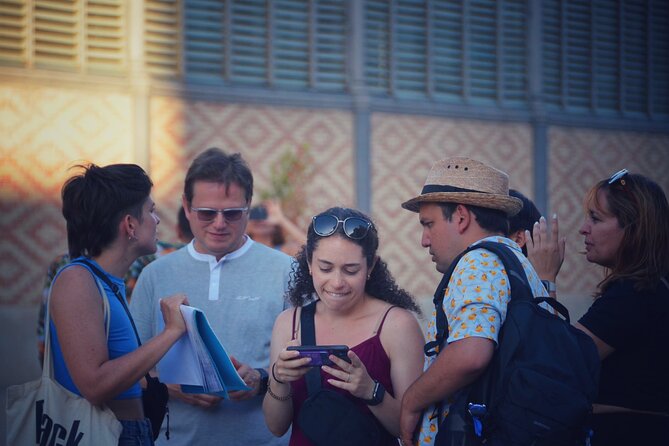
- Guides with serious storytelling: travelers mention guides like Christian, Henrietta, Evan, and Lena for clear, engaging explanations.
- You’ll see Gaudí and modernism in a compact loop: Casa Batlló, Casa Milà (La Pedrera), plus Passeig de Gràcia façades.
- Hidden Old Town stops, not just main roads: squares and back-corner views in the Gothic Quarter area.
- Flexible timing: morning, afternoon, or evening options to match your day.
- Simple audio support available: a radio headset is typically used, and you can rent it for 1€ pp.
What this tour is really good at: getting your bearings fast
Barcelona is big on “wow,” but it’s also easy to wander in circles if you don’t know where the pockets of beauty are. This tour helps you map the city in your head by walking a loop that connects the Old Town’s lanes to the modernist showpiece streets.
The pacing is built for questions. You’re not racing between landmarks like a checklist. You get enough time to ask what something means—why it looks the way it does, why it was built, and what people still think about it today.
And because it’s offered in English with a live local guide, you’re not stuck reading signs you can’t interpret. Even if you already know a bit about Gaudí, you’ll likely pick up a few angles you haven’t heard.
Duration and walking level: manageable, but you must be ready
The tour runs about 2 hours 15 minutes. That’s short enough to fit into a busy trip, but long enough that you’ll feel the walking if you’re not used to European cities on foot.
Travelers repeatedly mention a practical point: wear comfortable shoes and plan for heat. If you go in summer, bring water. If you go in the evening, you’ll get a more relaxed vibe in the Old Town and on the Rambla corridor.
Also note the format includes a short metro ride. That’s helpful because it breaks up the walking and saves time, while still keeping you in the core areas you want.
The guide experience: why people rate this so highly
This is one of those tours where the guide can make or break your day. Here, the feedback is consistently high, and you’ll see familiar names showing up in the comments.
You might hear energetic storytelling from guides like Christian and Evan, and you could get a more calm, thorough style from someone like Henrietta or Lena. Some travelers liked the mix of architecture talk with broader context—history, current culture, and how locals see the place.
One more detail travelers mention: many guides use tools like maps or visuals to help you understand the layout as you walk. Even if you lose the thread for a minute (it happens in Barcelona’s maze), the guide pulls you back in.
Stop 1: Gothic Quarter hidden lanes and Roman-to-medieval layers
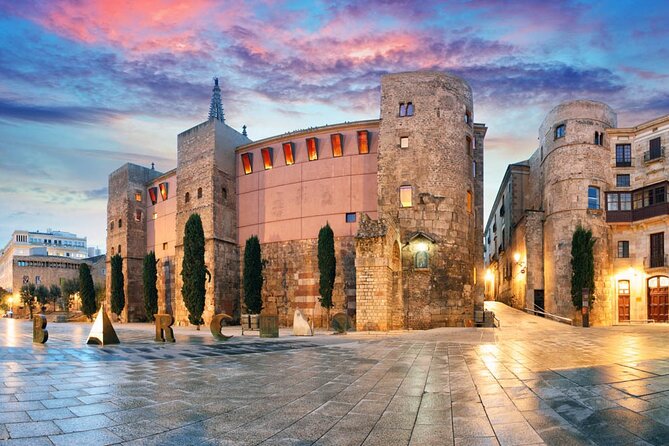
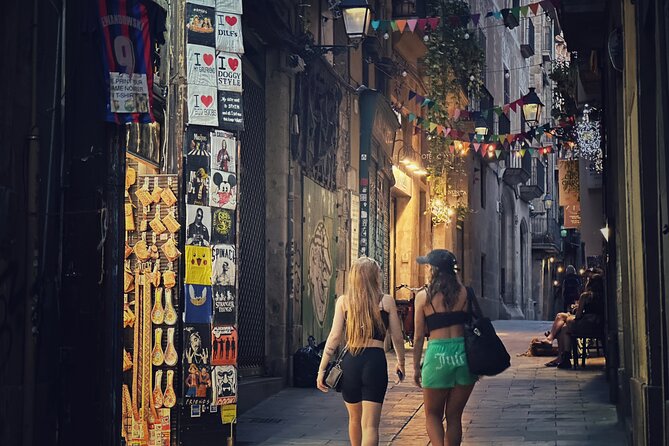
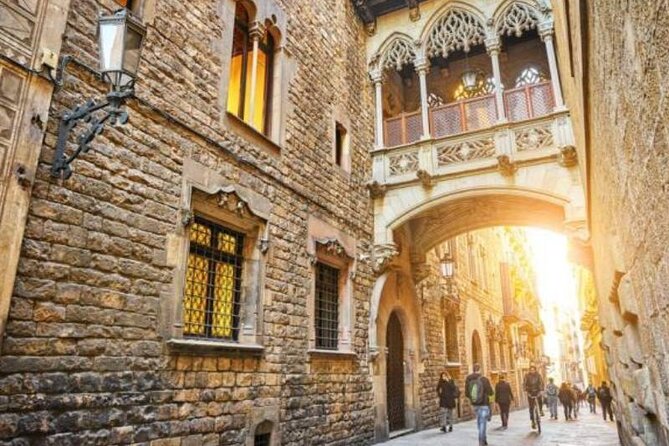
The tour starts in the Gothic Quarter, and it’s not just a stroll along one famous street. You’ll spend the first stretch exploring hidden corners of the oldest part of the city.
What makes this part valuable is the layering. In a small area you can spot Roman-era remains, medieval church architecture, and the tight streets and courtyards that give the neighborhood its character. You’re walking through a living “timeline,” and the guide’s job is to help you see what you’re looking at.
The trade-off
You won’t be going inside buildings at this stop. The tour is built around street-level viewing rather than historic interior visits. If you’re hoping for long cathedral time inside, you’ll need a different attraction for that.
Stop 2: Las Ramblas for street life and quick context
Next you hit Las Ramblas, Barcelona’s most famous street. The stop is short, but that’s actually a good way to handle it if you’re time-limited.
You’ll get a sense of the atmosphere—markets nearby, bars and restaurants, and the street’s history through your guide’s lens. Think of it as a quick chapter in the city’s modern-day heartbeat.
Practical tip
Las Ramblas is lively and crowded. Use this moment to orient yourself and then refocus on the quieter Old Town lanes right after. The tour’s flow is designed to keep you from getting stuck in foot-traffic overwhelm too long.
Stop 3: Catedral de Barcelona from the outside, with a story
You’ll see the Catedral de Barcelona area next. Even though the tour does not include entry, you still get something important: a “hidden secret” type of storytelling tied to the cathedral’s presence in the old city.
For most travelers, that outside view is enough to trigger curiosity—especially if you’re the type who likes to later decide whether you want to go inside on your own time.
Stop 4: Plaça Sant Felip Neri for a quiet pocket break
Here’s where the tour earns its keep. You’ll visit Plaça Sant Felip Neri, described as a beautiful hidden square in the middle of the Old Town.
This kind of stop matters because it gives your brain a reset. After narrow streets and louder corners, you get open space and a chance to take photos without fighting crowds.
Stop 5: Plaça Reial for nighttime energy (even if you go daytime)
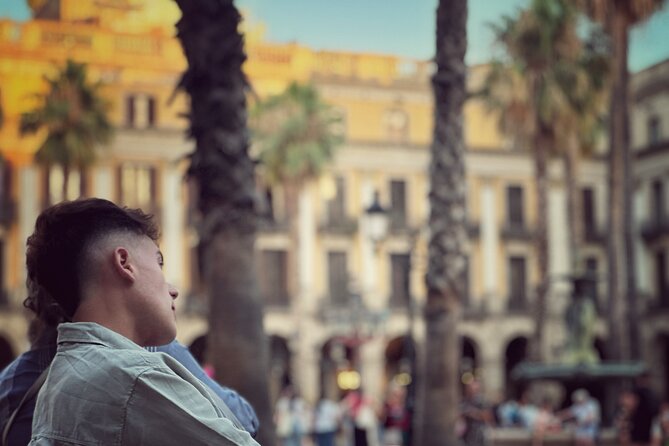
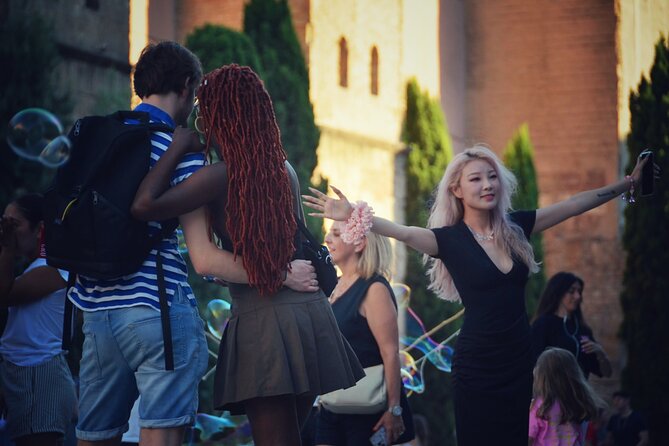
Then you shift to Plaça Reial, known for its larger arcade-lined layout, palm trees, and restaurant energy. Depending on when you book—morning, afternoon, or evening—you’ll experience this space differently.
This stop also helps if you’re thinking ahead about where you might want dinner later. Even without going into specific venues, it shows you the vibe zones of the Old Town versus the more structured modernist streets.
Stop 6: Casa Batlló façade viewing and Gaudí design talk
One of the big “yes” moments of the tour is Casa Batlló. You’ll see Gaudí’s famous house from the outside and hear the kind of design explanations that make the building feel less like random shapes and more like intention.
Travelers also note the fun nickname angle—locals sometimes call it things like House of Bones or House of Dragons. Even if you don’t remember every detail, the façade imagery sticks.
What you should know
Again: no ticketed entry here. The tour focuses on visual landmarks plus guide commentary, so your time is spent looking and learning rather than waiting in lines.
Stop 7: La Pedrera (Casa Milà) and the “why it’s iconic” explanation
Next comes La Pedrera (Casa Milà). This is a huge one for Gaudí fans because it’s his large commission for the Mila family, and it shows off his genius for expression through structure and surface.
Travelers mention that the guide connects the building to design thinking—and even notes how the building may have influenced a Hollywood filmmaker. Even if you don’t care about film trivia, the point is useful: you start seeing Barcelona architecture as global pop-culture DNA, not just local heritage.
Stop 8: Passeig de Gràcia, Barcelona’s upscale modernist runway
Then the tour walks along Passeig de Gràcia, often called Barcelona’s Fifth Avenue. This is where the city’s modernist style turns into a full-on street gallery.
You’ll hear about Art Nouveau influences and see modernist marvels in the streetscape, from buildings to even smaller details like lampposts and tiles by Gaudí. This stretch is longer—about 45 minutes—so it’s a good place to slow down and take photos.
Photo note
This is one of the best parts for photos because the facades are meant to be seen. If you like architectural lines and ornate details, you’ll feel happy here even without entering any building.
Stop 9: Casa Amatller for a quick compare-next-door moment
The final landmark stop is Casa Amatller, a modernist style house by Puig i Cadafalch right next to Gaudí’s Casa Batlló.
This stop works because it sets up comparison. You’re not just collecting famous names—you’re seeing how different designers approach the same general style era and street environment.
It’s quick, but it helps you leave with a clearer sense of who built what and what each façade is “trying” to do.
The short metro ride: why it’s included and how it helps
The tour includes a short metro ride. That sounds small, but it’s smart in practice.
It helps you:
- Save time between dense zones
- Avoid unnecessary backtracking through busy streets
- Still experience Barcelona’s efficient public transit in a quick, low-stress way
If you’re nervous about transit, this is one of the easier ways to get your feet under you. The guide keeps the group together and helps you stay oriented.
Audio and comfort: radio headsets and group management
Many tours like this use a radio headset so you can hear clearly even when the group is moving through crowds. The headset is typically rented for 1€ per person through an external provider at the start.
That small cost can be worth it, especially if you’re traveling with kids, older relatives, or anyone who struggles with hearing in street noise.
Also, because the max group size is 15, you’re less likely to feel swallowed by the crowd, and the guide can actually manage attention.
Timing options: morning, afternoon, or evening
The tour is offered at different times of day, and that matters in Barcelona.
- Evening tours can feel more comfortable in the heat and often make places like Plaça Reial more atmospheric.
- Morning or afternoon tours can be better if you want the sites early and then keep your day free for museum time.
Pick the time that matches your walking tolerance and where you want to be later for dinner or exploring.
Value for money: why $83.48 can be a good deal
At $83.48 per person, you’re paying for more than a walk. You’re paying for a guide who connects the architecture, the city’s layers, and practical navigation across two neighborhoods without you needing to plan every turn.
This often ends up being good value when:
- You’re only in Barcelona for a short time
- You want the highlights but don’t want to miss the “hidden” stuff
- You like getting local context rather than just reading plaques
- You want a small-group feel with private tour handling
One thing I’d say carefully: the tour does not include entry tickets into historic buildings. If you’re someone who needs lots of interior time, you’ll still want to pair this with separate admissions.
On the plus side, the tour may also include help getting Zoo, Aquarium, or Flamenco show tickets. That’s the kind of bundled planning support that can save time later.
Where this tour fits best: who will enjoy it most
This tour is a great match if you:
- Are a first-timer who wants a fast orientation
- Love architecture and want a guided view of Gaudí and modernism
- Prefer guided street-level learning over museum-heavy days
- Want a manageable group size and clear explanations
It may be less ideal if you:
- Want lots of inside visits and long ticketed time inside churches
- Hate walking or have mobility limits without breaks
Practical logistics: meeting point, end point, and what to expect
You start near Foot Locker, Pl. de Catalunya, 20 in the Ciutat Vella area. The tour ends near Casa Batlló and Casa Milà at Carrer del Consell de Cent, 310 in the Eixample area.
That end location is convenient because it leaves you close to the same modernist zone if you decide to explore on your own after the tour.
You’ll receive a mobile ticket, and service animals are allowed. The meeting area is near public transportation, which helps if you’re arriving from another neighborhood.
What about wine and food stops?
This tour does pass through areas with markets, bars, and restaurants, especially around Las Ramblas and near Plaça Reial’s restaurant energy. So if you’re hoping to taste local life and possibly grab a drink, you’ll be in the right neighborhoods.
But the tour itself is not described as a tasting experience, so treat it as “great places to go next,” not a structured wine itinerary.
Weather and cancellation: keep it flexible
This experience depends on good weather. If it’s canceled due to poor weather, you’ll be offered a different date or a full refund.
You also get free cancellation up to 24 hours before the start time. That’s useful if your schedule is still shifting while you’re traveling.
Should you book this private Old Town and Gaudí walk?
Yes—if your goal is to see a lot, learn a lot, and not spend your vacation stuck planning routes.
Book it if:
- You want Gothic Quarter charm plus Gaudí modernism in one tight day
- You value strong guiding and clear explanations (people consistently highlight guides like Christian, Henrietta, Evan, and Lena)
- You want a high-impact way to start your trip with stunning views
Skip or pair differently if:
- You specifically want interior access to churches or landmark museums (this tour is exterior-focused)
- You’re very sensitive to walking time
If you do book, do one small thing that makes the tour better: show up early, wear comfy shoes, and come with at least one question about what you’ve seen online. Your guide will turn that into a real understanding of what’s in front of you.
Barcelona 1.5h Private Old Town, Gothic & Ramblas Walking Tour
FAQ
How long is the Barcelona 1.5h Private Old Town, Gothic & Ramblas Walking Tour?
It runs about 2 hours 15 minutes.
What does the tour cost and is it in English?
The price is $83.48 per person, and it’s offered in English.
Does the tour include tickets to enter buildings or churches?
No. The tour does not include entry tickets into historic buildings or churches, so you’ll typically view landmarks from outside.
Is there any public transportation involved?
Yes. The tour includes a short metro ride.
Are the headsets included?
A radio headset is typically used so you can hear the guide better, and if rented through an external provider it’s 1€ per person at the start of the tour.
Where do you meet and where does the tour end?
You meet at Foot Locker, Pl. de Catalunya, 20, and you end at Carrer del Consell de Cent, 310 near Casa Batlló and Casa Milà.