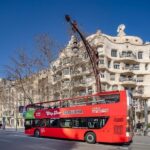

We’re looking at a Barcelona hop-on hop-off bus tour that gives you a flexible way to see the big hits without planning every turn. You ride open-top double-decker buses with 38 stops across two routes, then hop on and off as you please over 24 or 48 hours.
What I like most is how well it helps you get oriented fast and build a simple game plan. You also get onboard audio guide commentary in 16 languages plus free Wi‑Fi and a city map, so you can move through neighborhoods with less guesswork.
One drawback to consider: the schedule is straightforward, but you still need to time your stops. The last bus departs at 7pm, and a few riders noted that getting top-deck time can be tight at busy stops or if you want photos quickly.
- Quick hits you’ll care about
- A practical way to map Barcelona fast
- Tickets, timing, and the value question
- How often the buses run (and what that means for your day)
- What you get onboard: audio, Wi‑Fi, and the comfort factor
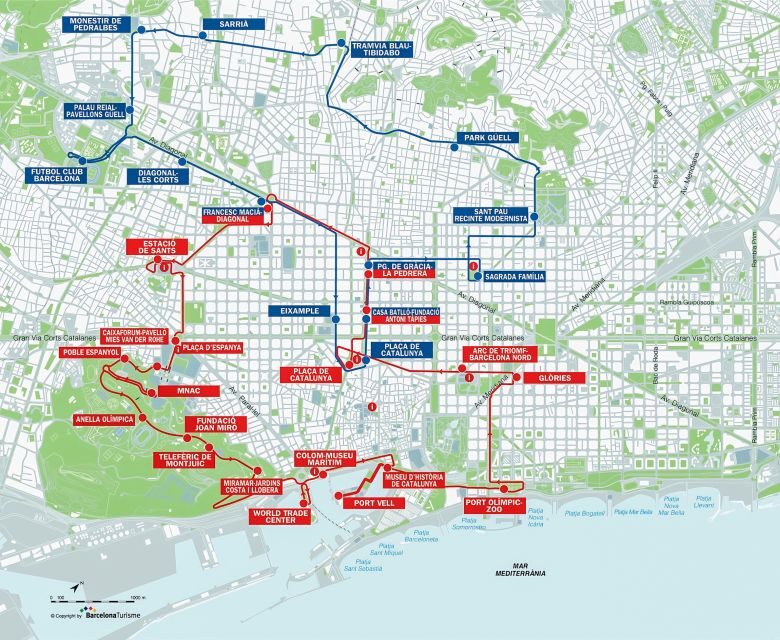
- Route Red: from Plaça de Catalunya to Sagrada Família and beyond
- Core Red Line moments worth timing
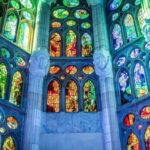
- Sagrada Família: the photo stop you’ll remember
- Route Red extends to Montjuïc views, beaches, and the sea edge
- Route Blue: Passeig de Gràcia to Gaudí landmarks and the north side
- Blue Line highlights to plan around
- Blue Line and the FC Barcelona stop
- Gothic Quarter, medieval lanes, and where La Rambla helps your evenings
- UNESCO sites and why the route makes sense
- Building your own itinerary without wasting time
- Comfort, crowding, and photo reality on an open-top bus
- Reliability and the little friction points
- Price and value: is it worth ?
- Who should book this bus tour?
- Who should skip or adjust the plan
- Should you book the Barcelona City Sightseeing Hop-On Hop-Off Bus Tour?
- FAQ
- How long is the tour circuit?
- What time do the buses start and stop?
- How often do the buses run?
- Are audio headphones included?
- What languages are available for the audio guide?
- Is Wi‑Fi included?
- Does the ticket include attraction entry fees?
- Is hotel pickup included?
- The Best Of Barcelona!
- More City Tours in Barcelona
- More Tours in Barcelona
- More Tour Reviews in Barcelona
Quick hits you’ll care about


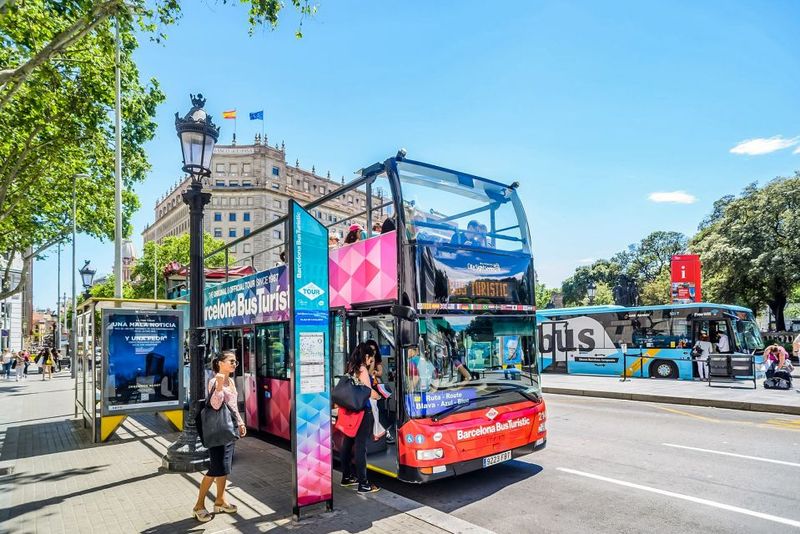

- Two routes, 38 stops: cover center sights plus outlying areas, not just the postcard strip
- Sagrada Família included on both sightseeing routes: you’re close enough to plan a photo stop
- La Rambla and nightlife area access: hop off near bars and eateries for dinner after sightseeing
- Football access: there’s a stop at Futbol Club Barcelona for matchday-level convenience
- Frequent buses (about every 20 minutes): easy hopping without a long wait most of the day
- Audio in 16 languages + free headphones: you can learn while you ride, even if you don’t speak Spanish

👉 See our pick of the The Top 5 Tours In Barcelona
A practical way to map Barcelona fast
Barcelona is big, spread out, and packed with great stuff that’s not always walkable in one afternoon—especially when you’re dealing with heat, long lines, and steep streets. This bus tour is designed for the “I want to see a lot, but I don’t want to overthink it” traveler.
You’ll start at Plaça de Catalunya and use the two routes to build your own mini-itinerary. If you do it early, you’ll also learn where things are, so the rest of your trip feels more like cruising than commuting.
You can also read our reviews of more city tours in Barcelona


Tickets, timing, and the value question
The price listed is $39 per person, and the real question is what you can actually squeeze out of 24 vs 48 hours. The tour circuits take about 120 minutes, so a 24-hour ticket can still cover a lot if you’re selective with hop-offs.
A 48-hour ticket can be a better move if you want to do more than just “icon hunting.” Just know two key rules: 48-hour tickets must be used on consecutive days, and the first bus starts at 9am with the last bus leaving at 7pm from Stop 1.
Also, attraction tickets are not included. The bus is your transportation and your orientation. You’ll still pay for entries on your own where needed—but you’ll arrive smarter.
How often the buses run (and what that means for your day)
Buses run about every 20 minutes, and in high season the operator notes their exclusive buses run every 5 minutes with no queue buildup. In plain terms: you usually won’t be stranded waiting a long time.
You’ll feel the difference in how you plan. Instead of rigid “tour times,” you can hop off for a museum, grab a snack, then return to the nearest stop you like.
One practical heads-up from riders: at some stops, getting up to the top deck can take a bit of coordination with the crowd. If your goal is photos at a specific landmark, don’t assume you’ll have unlimited time between the bus arriving and departing.
What you get onboard: audio, Wi‑Fi, and the comfort factor
The basics are solid: open-deck double-decker buses, audio guide commentary in 16 languages, and free Wi‑Fi. Audio includes Spanish, Catalan, Chinese, English, French, German, Italian, Japanese, Portuguese, Russian, Dutch, Hebrew, Swedish, Arabic, Turkish, Norwegian.
Headphones are provided on site. You can bring your own, but you don’t have to. Some riders reported Wi‑Fi not working on every bus and audio cutting out sometimes, but the overall setup is still easy to use while you’re looking around.
Weather matters. The buses can be hot in summer, and one traveler noted the need for better air conditioning. On rainy days, a rider observed the roof closing automatically when rain started—so you’re not stuck getting soaked if the sky turns.
Route Red: from Plaça de Catalunya to Sagrada Família and beyond
If you want “big landmarks plus a mix of Barcelona,” the Red Line is a strong start. It begins at Plaça de Catalunya and pushes you through central and beyond, including Eixample and major viewpoints.

Core Red Line moments worth timing
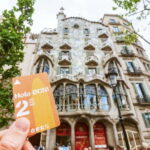
- Casa Batlló – Fundació Antoni Tàpies (Eixample area): a Gaudí-linked stop that pairs well with a walk if you’re curious about Modernisme architecture
- Placa d’Espanya and CaixaForum / Pavelló Mies Van der Rohe: this is a good segment for architecture lovers, with easy “see it from the window” views and nearby strolling options
- Anella Olímpica and Parc Diagonal Mar direction: you’ll get a more modern, larger-scale Barcelona feel compared to the tight medieval streets
Sagrada Família: the photo stop you’ll remember
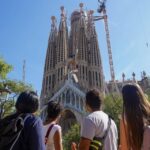
On the Red Line, you’ll reach Sagrada Familia (Stop 23). Riders specifically mention it’s a stop where you can take great photos, including views from behind the basilica area.
How to handle it: get off when you’re ready to pause. If you’re visiting soon, it’s also smart to plan your entry time separately because the bus stop isn’t the same thing as an entry ticket.
Route Red extends to Montjuïc views, beaches, and the sea edge
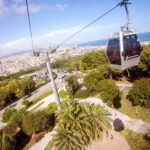
The Red Line isn’t only about icons. It also threads through Barcelona’s geography, including the area near Teleferic de Montjuïc, Miramar – Jardins Costa i Llobera, and the harbor/port stretch.
Then it goes toward the water: you’ll see stops listed for Platja del Bogatell, Platja Nova Mar Bella, and Forum, plus the Diagonal Mar zone and Poblenou.
Why this matters: Barcelona can feel like three different cities—Old Town, the Modernist grid, and the waterfront/industrial-to-newer neighborhoods. The Red Line gives you that “wide-angle” sense without requiring you to plan separate transit legs.
Route Blue: Passeig de Gràcia to Gaudí landmarks and the north side
The Blue Line is the route you’ll like if your priority is Gaudí and the north-to-hills vibe. It starts again at Plaça de Catalunya, then heads through key central areas and on toward Park Güell.
Blue Line highlights to plan around
- Passeig de Gracia / La Pedrera area: great for architecture fans and for seeing the grand boulevard context
- Sant Pau Recinte Modernista: one of those stops that makes Barcelona feel like a living design museum
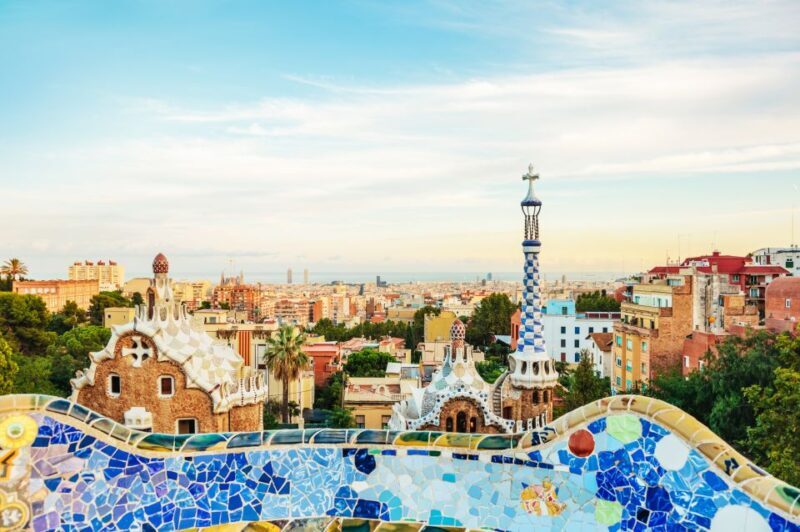
- Park Guell: a must for most visitors, though you should know it’s higher up and can involve walking once you’re dropped off
A practical note from a traveler: the bus dropped off passengers at Park Guell with a longer, steep uphill walk than some expected. If mobility is an issue, this is worth factoring in before you pick your route and hop-off spot.
Blue Line and the FC Barcelona stop
One of the simplest perks for football fans: the Blue Line includes Futbol Club Barcelona. If you’re visiting around match season or you just want that famous stadium area experience, the bus is an easy “get me there” option.
You’re also close to neighborhood stops on this route, including Diagonal – Les Corts and Francesc Macià – Diagonal—useful if you want to mix sightseeing with a calmer meal afterward.
Gothic Quarter, medieval lanes, and where La Rambla helps your evenings
The tour positions itself to cover medieval streets in the Gothic Quarter plus Barcelona nightlife at La Rambla. Even when the bus is just passing through, hopping off near the right place can turn your evening from planned-in-the-moment into actually enjoyable.
La Rambla is specifically called out for its bars and eateries, and riders commonly use bus stop access as their “dinner and wandering” move. In other words: you can do daytime sights, then hop off and let the food scene do the work.
If you’re the type who likes to pick where to eat based on what looks good outside, you’ll likely love the flexibility here. The tour also includes a discount booklet for local attractions, eateries, and shopping, which can help with cost control even if you don’t use every coupon.
UNESCO sites and why the route makes sense
Barcelona is heavy on UNESCO World Heritage areas, and this bus tour is built to string together the best-known parts without forcing you to stitch together multiple transit transfers.
The big star is Sagrada Família, but you’ll also hit a wider “heritage meets modern city” mix. That’s a big reason the hop-on hop-off format works well here: you see the UNESCO-level landmarks and also the surrounding neighborhoods that make them feel like they belong.
Building your own itinerary without wasting time
Here’s a plan I think works for most visitors:
Day 1 (orientation day): ride one route most of the way, then hop off briefly at 1–3 places. Take it slow enough to notice neighborhoods, and fast enough that you still have energy for dinner.
Day 2 (deep focus day): use the second route, or revisit the places you cared about most. Many travelers did exactly this—doing the Blue Line one day and the Red Line the next—so the city didn’t feel repetitive.
One detail worth repeating: riders mention you can use both red and blue routes with the ticket. So even if you only “planned” one route, consider switching once you see how the city lines up with your interests.
Comfort, crowding, and photo reality on an open-top bus
Open-top buses are great until you hit a strong sun day or a sudden cloud burst. You’ll be looking out and up, and that’s the whole point, but it can be a bit of a tradeoff.
Expect:
- Top deck can be chilly in cooler months, even if you’re under clear skies
- Heat in summer can be intense, and some riders noted comfort issues with air conditioning
- Photos can be tricky when the bus is moving or when you’re trying to catch a landmark from the “right” angle
If photos matter, treat each stop like a short window. Don’t plan on a long, leisurely walkback-to-your-seat routine if the bus is about to leave.
Reliability and the little friction points
Most riders describe the service as clean and well run, and buses come frequently. Still, a few recurring friction points show up:
- Wi‑Fi might not work on every bus
- Audio can cut out at times
- Some stops may be less well signposted once you’ve gotten off
- Getting enough time on the top deck at certain stops can be tight
None of these ruin the experience. But they do affect how you plan. If you’re booking a timed entry elsewhere, you’ll want extra buffer, because you’re sharing the road with traffic and crowds.
Price and value: is it worth $39?
For $39, you’re buying three things: transportation, orientation, and a guided layer via audio. Since the tour doesn’t include attraction tickets, the value depends on whether the bus helps you avoid extra transit confusion and whether it helps you hit the places you’d otherwise miss.
From rider feedback, the biggest value booster is using both routes across 24–48 hours. Travelers also liked how it reduces walking—especially for families, older visitors, and anyone who just wants fewer legs and more time to enjoy the city.
If your plan is “two iconic stops plus a nice dinner,” you might find you only need a short hop. If your plan is “see a lot and decide later what to explore deeper,” then the hop-on hop-off setup tends to feel like a bargain.
Who should book this bus tour?
This is a great fit if you:
- Want an easy way to get oriented on your first full day
- Prefer a guided pass-by overview, then choose your own on-foot exploration
- Have limited time and want major sights spread across the city
- Are traveling with kids or family members who don’t want lots of walking
- Want a car-free way to reach multiple areas, including beaches and the waterfront zones
It’s also a smart choice if you like learning while you move. The audio guide is designed for exactly that, and it comes in many languages so you’re not stuck.
Who should skip or adjust the plan
Consider skipping or modifying if you:
- Have very limited mobility and are worried about steep walks at stops like Park Guell
- Need an exact, timed schedule for multiple paid entries (because the hop-on timing is flexible, but traffic and crowds can shift your pace)
- Expect the bus to function like a private driver that drops you at every gate with zero walking
You can still do the tour, but plan with realistic walking time.
Should you book the Barcelona City Sightseeing Hop-On Hop-Off Bus Tour?
If you want the fastest way to feel like you understand Barcelona within a day or two, book it. The two-route system, the Sagrada Família coverage, the FC Barcelona stop, and the built-in audio make it easy to turn sightseeing into a simple plan.
If you’re careful with timing and you treat each stop as a short decision point, this tour can give you real freedom. And once you hop off near La Rambla, you can switch from “seeing” to “eating” without planning your whole evening.
Barcelona: City Sightseeing Hop-On Hop-Off Bus Tour
FAQ
How long is the tour circuit?
The tour duration is listed as 120 minutes.
What time do the buses start and stop?
Both routes depart from Stop 1 with the first bus at 9am and the last bus at 7pm.
How often do the buses run?
The frequency is every 20 minutes. The operator also notes they may run more frequently in high season.
Are audio headphones included?
Yes. You get headphones on site. You can also bring your own.
What languages are available for the audio guide?
The audio guide is available in Spanish, Catalan, Chinese, English, French, German, Italian, Japanese, Portuguese, Russian, Dutch, Hebrew, Swedish, Arabic, Turkish, Norwegian.
Is Wi‑Fi included?
Yes, free Wi‑Fi is included.
Does the ticket include attraction entry fees?
No. Attraction tickets are not included.
Is hotel pickup included?
No. Hotel pickup and drop-off are not included. The meeting point varies depending on the option booked.
You can check availability for your dates here: