Our Belfast Political Conflict 3-Hour Walking Tour is one of those trips that gives you a real sense of the present, not just the past. You start at Divis Tower and walk through the key areas tied to The Troubles, hearing first-hand stories from people who lived it.
What I like most is the way the tour gives you two perspectives in the same afternoon, and how that turns murals, gates, and memorials into something personal. Another big win is the strength of the guides. Guests mention names like Robert, Gerard, Pod, Paul, Jake, Fred, and Mark, and the common thread is clear, knowledgeable storytelling.
One consideration: this is emotional, and discussion of extreme violence can come up. It may not be suitable for kids under 15, and even adults should be ready for hard moments.
- Key things to know before you go
- Starting at Divis Tower: the tour’s “real Belfast” opening
- Falls Road with a Republican ex-prisoner: getting the story behind the murals
- Crossing toward the Peace Line: the gates make the division feel physical
- Shankill Road with a Loyalist ex-prisoner or security-force local: what it means to stay in the UK
- Peace Walls: the outdoor art gallery and the moment you can add your words
- Memorials, memorial culture, and what people remember on purpose
- How the two-guides setup changes everything
- Pace, breaks, and what to do about food and toilets
- Price and value: why is actually reasonable here
- Accessibility and who this tour suits best
- What to wear and what to bring (simple, not fussy)
- Ending on Lower Shankill Road: now you have the map in your head
- Should you book this Belfast Troubles walking tour?
- FAQ
- Is this tour 3 hours long?
- How much does the Belfast Political Conflict walking tour cost?
- Where does the tour start and where does it end?
- What areas do you visit during the tour?
- Do you hear both Republican and Loyalist perspectives?
- Is the tour wheelchair accessible?
- Is cancellation free?
- More Walking Tours in Belfast
- More Tours in Belfast
- More Tour Reviews in Belfast
Key things to know before you go
 1 / 3
1 / 3 2 / 3
2 / 3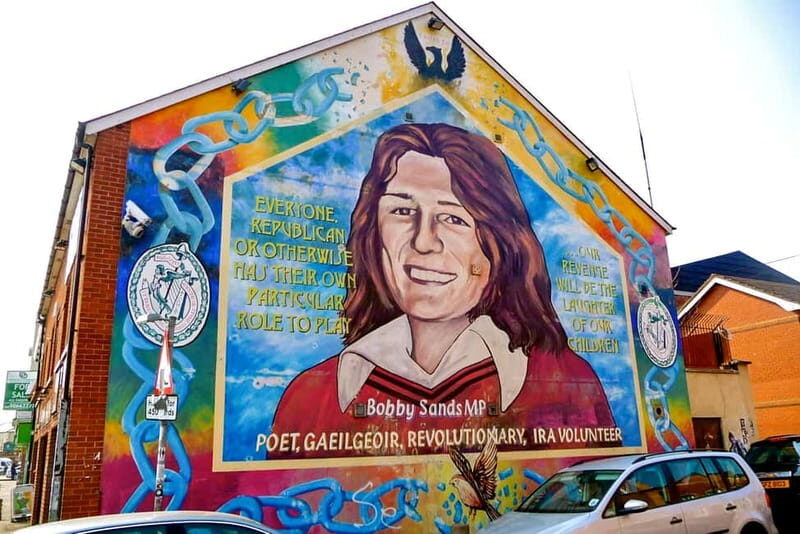 3 / 3
3 / 3- Two opposing viewpoints from ex-political prisoners and locals connected to each community
- Falls Road to Shankill Road walking route, roughly 4 km in about 3 hours
- Peace Line features, including the Peace Walls and electronically controlled gates
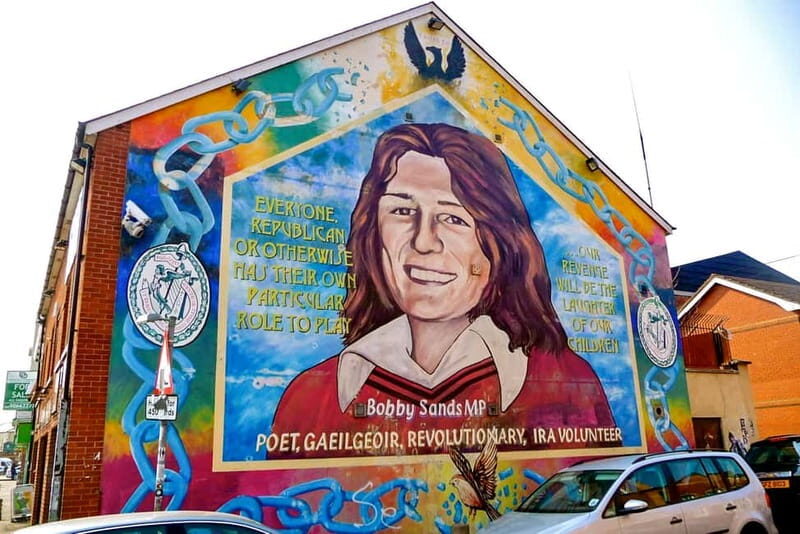
- Murals as history lessons, explained through the people who grew up with them
- Practical visit style with comfort breaks, but no planned meal stop
- Value for money at $35, given the direct access to lived experience
Starting at Divis Tower: the tour’s “real Belfast” opening
The tour kicks off at Divis Tower on Divis Street. From the start, the setup feels grounded, not museum-like. You’re heading straight toward the neighborhoods where The Troubles shaped daily life and community identity.
You should wear comfortable shoes. The route is about 4 kilometers (2.5 miles), and it’s timed for a steady walking pace over roughly 3 hours. Many people say it does not feel like a long, boring march, mostly because the stops keep changing the mood.
The guide language is English, and the tour is wheelchair accessible. You’ll want to ask your guide about mobility logistics ahead of time if you use a wheelchair or walking aid, since city sidewalks and crossings can vary.
You can also read our reviews of more walking tours in Belfast



Falls Road with a Republican ex-prisoner: getting the story behind the murals
One of the tour’s smartest choices is how it begins on the Republican side. You start with a guided walk along the Falls Road led by a Republican ex-political prisoner. This matters because you’re not just learning dates. You’re hearing what those years felt like in the body, in the streets, and in family life.
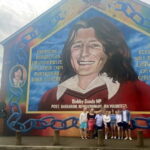
You’ll notice visible signs of desire for an Irish Republic, and the guide explains what’s behind the symbols you might otherwise treat as street art. In particular, the murals don’t come across as random color. They’re presented as community memory—commentary on politics, loss, pride, and change.
Tours like this can easily turn one-sided, but the structure helps. You get one side first, with the confidence that you’ll later hear the other side with a similar level of detail and conviction. That contrast is part of the whole point.
Also, heads up on emotional tone. Even guests who loved the tour say it can be harrowing. If you prefer history presented at arm’s length, this may feel too close.
Crossing toward the Peace Line: the gates make the division feel physical
After the Falls Road segment, the tour moves toward the Loyalist side. At a key point, you’ll pass through electronically-controlled gates. That moment lands differently than it would in a textbook. It turns the idea of a border into something tangible and visible.
The Peace Line isn’t just “where conflict happened.” It’s portrayed as a living boundary that shaped how people moved, built routines, and trusted neighbors. Even if you know the headlines, the guide’s context helps you understand why mistrust lingered for so long, and why it still comes up today.
This is where the tour’s thoughtful balance shows up. You’re not told one side is right and the other is wrong. Instead, you’re guided through why people on each side believe what they believe.
Shankill Road with a Loyalist ex-prisoner or security-force local: what it means to stay in the UK
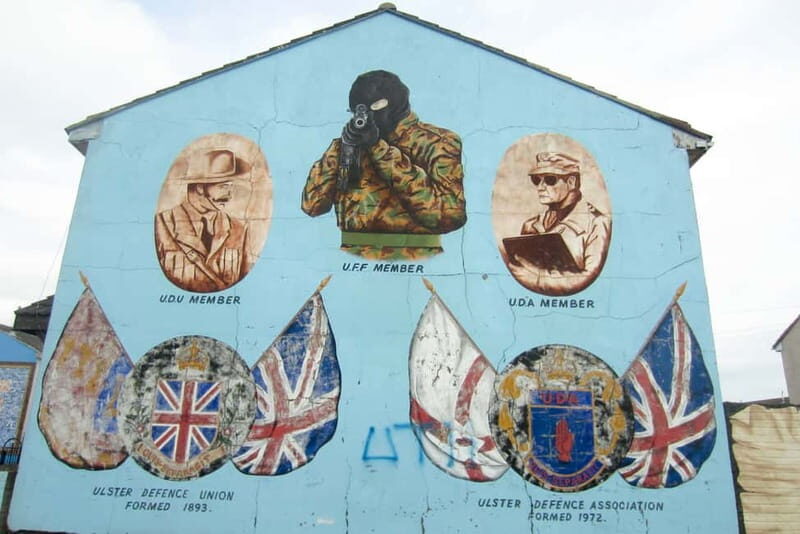
Next comes the Shankill Road area, which is predominately Protestant. Here, you’re met with either a Loyalist ex-political prisoner or an ex-member of the security forces who is from the community. That detail matters because it shapes the lens: the stories aren’t just ideological. They also come from lived roles and responsibilities.
This portion focuses on the determination of locals who wish to remain part of the United Kingdom. You’ll hear how people interpret identity, safety, loyalty, and political legitimacy. It can challenge your assumptions, especially if you arrived thinking the conflict was simply Catholic versus Protestant.
From guest feedback, the guiding style is often direct and personal. One visitor described the Loyalist guide as more reserved at times, which also fits what you might feel in a community that has strong internal views but cautious public communication.
Be ready for a perspective that may not match yours. The tour doesn’t try to smooth over differences. It tries to help you understand where those differences come from.
More Great Tours NearbyPeace Walls: the outdoor art gallery and the moment you can add your words
You’ll spend time at the Peace Walls, which are described as the world’s largest outdoor art gallery. This is one of the tour’s most memorable experiences because the art isn’t framed as decoration. It’s presented like a public conversation across decades.
Here’s another unique detail: you get the opportunity to sign the Peace Wall and leave thoughts alongside those of Bill Clinton and the Dalai Lama. That’s a strange and powerful contrast, mixing global political symbolism with very local grief, endurance, and hope.
In practical terms, this stop also helps you slow down. After hours of walking and listening, being able to add your own small mark gives the experience a gentle landing. You’ll still be processing, but you’ll also have something concrete to hold onto.
- Titanic Belfast Entrance Ticket: Titanic Visitor Experience Including SS Nomadic
★ 4.5 · 3,698 reviews


Memorials, memorial culture, and what people remember on purpose
Between the neighborhood walk and the Peace Walls, you’ll encounter memorials and memorial-related sites that explain why remembrance matters in this city. Guests specifically mention areas like graveyards and memorial stops feeling rushed at times, which is a fair heads-up.
So if memorials are a key part of what you want, manage expectations. It’s a walking tour, not an hour of quiet contemplation. Still, the value is that the guide ties each place to the personal narrative you’ve been hearing all afternoon.
In other words: you don’t just see a plaque. You learn why that particular memory is kept where it is, and what it signals to people walking by each day.
How the two-guides setup changes everything
A big reason travelers rave about this tour is the format. Many departures run in two sections with different guides—one for the Republican side and another for the Loyalist side—so you’re hearing each worldview without having to guess what someone leaves out.
Guests often point out that both guides are passionate and knowledgeable. Some also mention that hearing both perspectives opened their minds, while others say it left them less certain about the future. That reaction tells me the tour does its job: it doesn’t hand out a tidy conclusion.
You might find yourself forming your own questions as you go. That’s normal. The tour’s strength is that it treats those questions as part of the experience, not as a nuisance.
Pace, breaks, and what to do about food and toilets
The tour runs about 3 hours and covers around 4 kilometers. That’s manageable for most travelers with normal stamina, but it’s still a walking-focused outing.
On the comfort side, one guest noted there were no programmed food or toilet stops. Another described multiple opportunities for loo breaks and a chance to grab a hot drink or snack from a local shop. Translation: don’t plan on a guaranteed meal, but do expect the guide to work with the group on practical needs.
My practical advice: bring a bottle of water, consider a light snack before you go, and tell your guide early if you need a toilet stop. If you’re sensitive to emotional content, also share that upfront so the guide can pace things with your group.
Price and value: why $35 is actually reasonable here
At $35 per person for a 3-hour walking tour, the cost is easier to justify than in many sightseeing-only tours. You’re paying for access to lived stories from people with direct connections to The Troubles, not just a script of facts.
The value comes from two angles at once:
- You get two different perspectives in the same tour timeline.
- You’re guided on foot through places you’d otherwise pass without understanding the context.
You’re not getting a bus tour view. You’re getting a street-level explanation of why this city still talks about the conflict in murals, gates, and everyday boundaries.
That said, if you’re looking for a relaxed, casual afternoon, this is probably not the right match. It’s thoughtful and moving, and it asks you to pay attention.
Accessibility and who this tour suits best
The tour is listed as wheelchair accessible. If you’re using mobility equipment, it’s worth contacting the operator with your needs so they can set expectations about sidewalks, slopes, and crossings.
The tour may not suit children under 15. The key reason is that discussion of extreme violence can occur. Even for teens, it can be a lot, so use your judgment and talk with the organizer if you’re unsure.
This tour is a great fit if you:
- want Belfast history from the people who lived it
- enjoy walking tours with real storytelling
- care about how murals function as cultural messaging
- like seeing multiple sides of a complicated conflict, even when it’s uncomfortable
If you dislike emotionally heavy experiences or you want only neutral, sanitized summaries, you may find it stressful.
What to wear and what to bring (simple, not fussy)
Think practical. You’re walking about 2.5 miles over a few hours, starting at Divis Tower and ending on the Lower Shankill Road area, roughly a 15-minute walk from the starting point.
Bring:
- comfortable shoes
- a layer for changing weather
- water
- a phone or camera only if you’re comfortable following the guide’s lead on what’s appropriate to photograph
Also bring curiosity, not certainty. Several guests said the tour opened their minds, and others said it made the future feel more complicated. That’s the nature of learning from real people, not staged narratives.
Ending on Lower Shankill Road: now you have the map in your head
You finish around Lower Shankill Road. By then, the city stops feeling like a set of neighborhoods and starts feeling like a connected story: Falls Road meaning one thing, Shankill Road meaning another, and the Peace Line acting like a permanent punctuation mark.
You’ll likely notice murals differently after this. Signs and images will feel less like decoration and more like family history, political messaging, and public grief.
And you’ll also understand why peace in Northern Ireland isn’t just a treaty headline. It’s something that has to be maintained socially, emotionally, and locally.
Should you book this Belfast Troubles walking tour?
Book it if you want the most human way to understand Belfast’s political conflict. The guides are repeatedly described as knowledgeable and passionate, and the two-sided structure is a major part of the value at $35. It’s also one of the better ways to connect murals, memorials, and the Peace Walls into a coherent picture.
Skip it if you’re not up for emotional storytelling or you’re traveling with younger kids who may not handle discussion of extreme violence well. Also skip it if you want a laid-back tour with guaranteed stops for food.
If you do book, go in with one rule: listen first. Then ask. That’s how you get the most out of the Peace Line, without trying to win an argument in the street.
Belfast: Political Conflict 3-Hour Walking Tour
FAQ
Is this tour 3 hours long?
Yes. The tour duration is listed as approximately 3 hours.
How much does the Belfast Political Conflict walking tour cost?
The price is $35 per person.
Where does the tour start and where does it end?
You meet in front of Divis Tower, Divis Street Belfast. The tour ends on Lower Shankill Road, about a 15-minute walk from the starting point.
What areas do you visit during the tour?
The tour includes the Falls Road, Shankill Road, and the Peace Walls.
Do you hear both Republican and Loyalist perspectives?
Yes. The tour is designed to provide two different perspectives on The Troubles.
Is the tour wheelchair accessible?
Yes. The activity is listed as wheelchair accessible.
Is cancellation free?
You can cancel up to 24 hours in advance for a full refund.
You can check availability for your dates here:More Walking Tours in Belfast



More Tours in Belfast



More Tour Reviews in Belfast
- Titanic Belfast Entrance Ticket: Titanic Visitor Experience Including SS Nomadic
★ 4.5 · 3,698 reviews