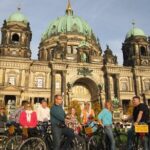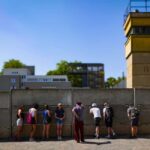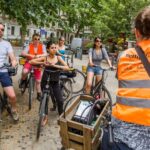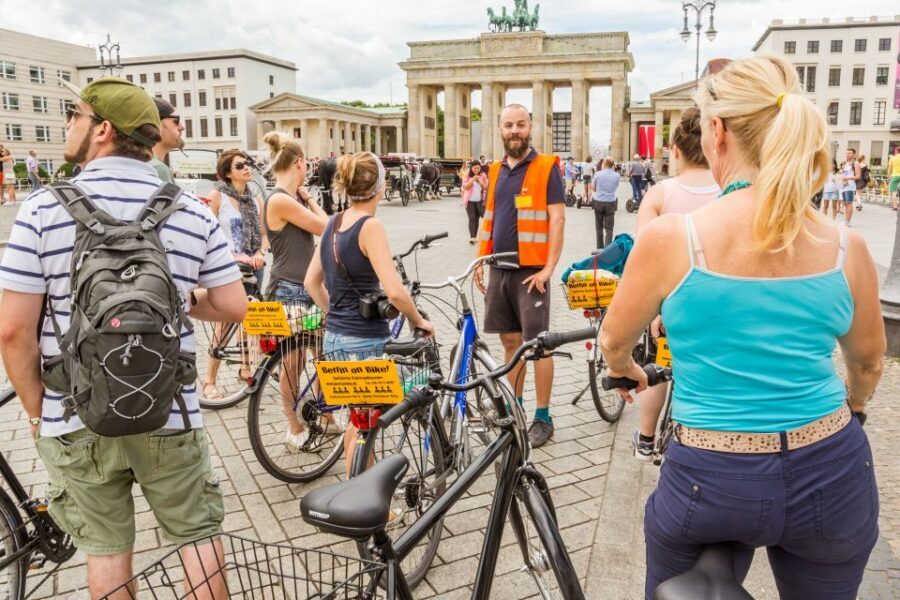
If you want a fast, fun way to understand Berlin without cramming 20 museums into one day, this 3-hour bike tour is a smart move. You roll past the big symbols like Brandenburg Gate, the Holocaust Memorial, and the Berlin Wall, then add context from your guide’s stop-by-stop storytelling.
What I like most is the combination of knowledgeable local guiding and a relaxed ride rhythm. In small groups (max 15), guides keep things conversational and practical, with stories that connect Prussian-era power, the Nazi period, and what changed after the Wall came down. I also appreciate the hands-on details like gloves and helmets available on request, plus sunscreen and even trouser clips for riding comfort.
One thing to consider: you’re cycling on real city streets. You’ll need to judge road conditions and lights yourself, not just coast in a perfect line behind the person in front.
- Key Points You’ll Care About
- Why A 3-Hour Berlin Bike Tour Works So Well
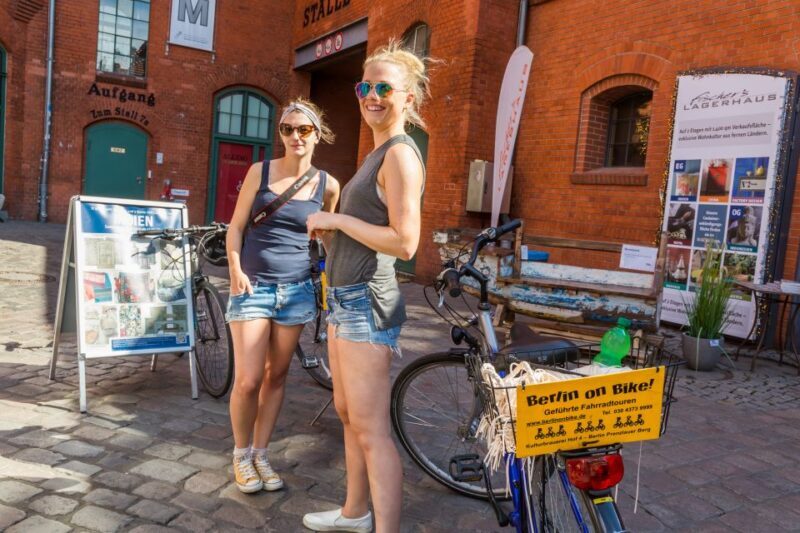
- Kulturbrauerei Start: Prenzlauer Berg’s Trendy Launch Point
- How the Local Guide Turns “Sights” Into a Story
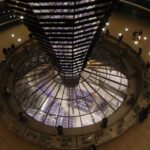
- Government District and the Reichstag Area: Power in Motion
- Berlin Central Station: The City’s Working Heart
- Brandenburg Gate: Ceremony, Memory, and Perspective
- Holocaust Memorial: A Serious Stop with Room to Breathe
- Riding Past the Berlin Wall: When the Streets Tell You Something
- Gendarmenmarkt: Classic Beauty in the Middle of Real Life
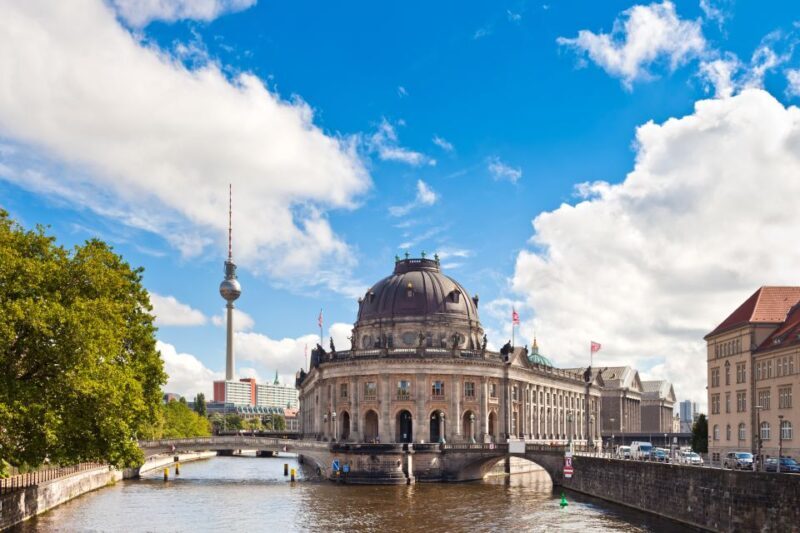
- Museum Island: UNESCO-Level Architecture Without Museum Crowds
- The Ride Feel: Relaxed Pace, Real Safety, and Patient Grouping
- Bikes, Helmets, and the Little Extras That Make It Easier
- Value at Around : What You’re Actually Buying
- What’s Not Included (So You Don’t Get Surprised)
- Who This Tour Fits Best
- Tips to Get More Out of Your Time on the Bike
- Should You Book This Berlin Bike Tour?
- FAQ
- How long is the Berlin bike tour?
- How big is the group?
- What sights does the tour include?
- What languages are available for the live guide?
- Is a bicycle included?
- Are helmets and gloves included?
- What if the weather is bad?
- What is not included in the price?
- More Cycling Tours in Berlin
- More Tours in Berlin
- More Tour Reviews in Berlin
Key Points You’ll Care About
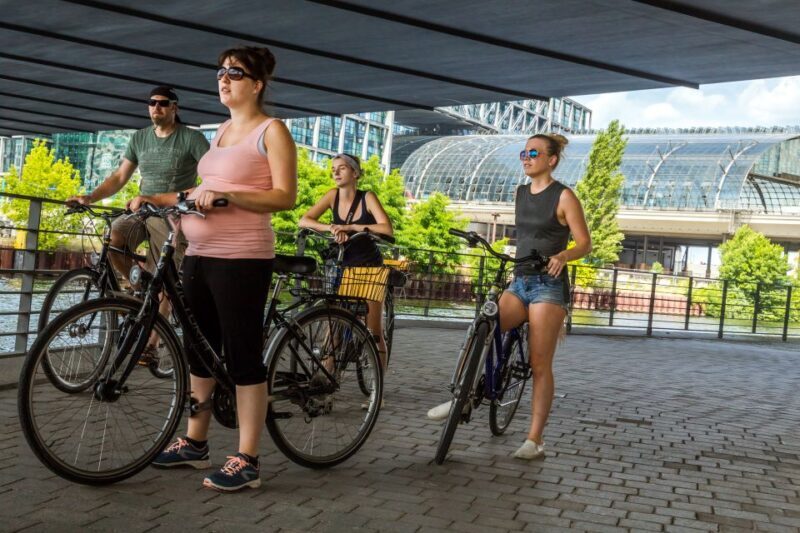
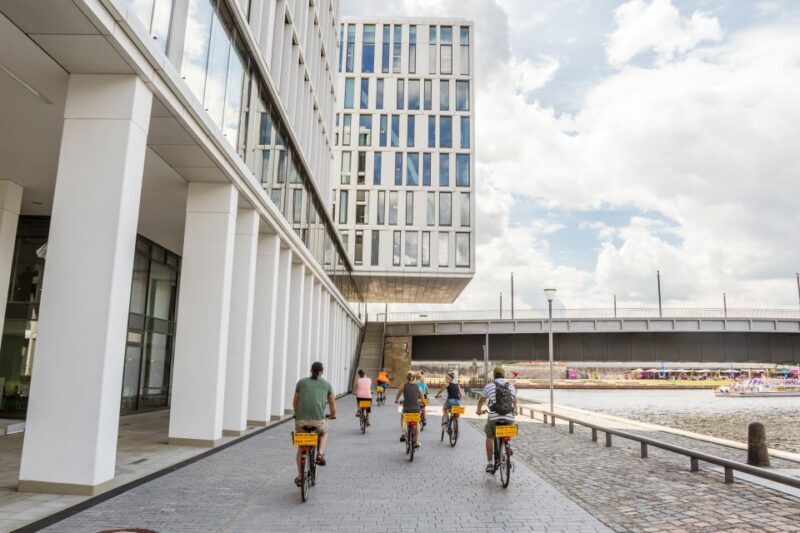
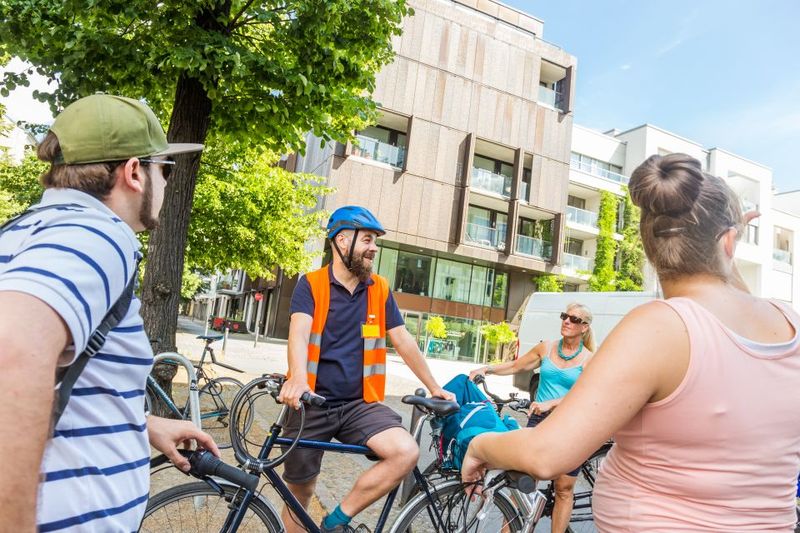
- Small-group pace (max 15) keeps questions flowing and the stops feeling personal.
- Stop-by-stop history covers major eras, from Nazi Germany to post–Wall unification.
- Kulturbrauerei in Prenzlauer Berg is a lively, well-chosen starting point.
- Pass-the-landmarks route hits Brandenburg Gate, Holocaust Memorial, Berlin Wall, Gendarmenmarkt, and Museum Island.
- Rain and cold get handled with ponchos available, and gloves/helmets upon request.
Why A 3-Hour Berlin Bike Tour Works So Well
Berlin is huge, and most visitors waste time zigzagging between far-flung sights. This format solves that with a time-efficient loop that’s built for movement, photos, and short explanations. You get orientation fast, then you can decide what to revisit later.
The ride length matters too. At about 210 minutes, you’re not exhausted by the time you hit the most meaningful stops. It’s a great first-day activity when your legs are fresh and your itinerary still needs shaping.
You can also read our reviews of more cycling tours in Berlin

Kulturbrauerei Start: Prenzlauer Berg’s Trendy Launch Point
The tour begins in the Kulturbrauerei, in Prenzlauer Berg. That matters because it sets the mood: you start in a neighborhood that feels lived-in and modern, not like a sterile “monument hop.”
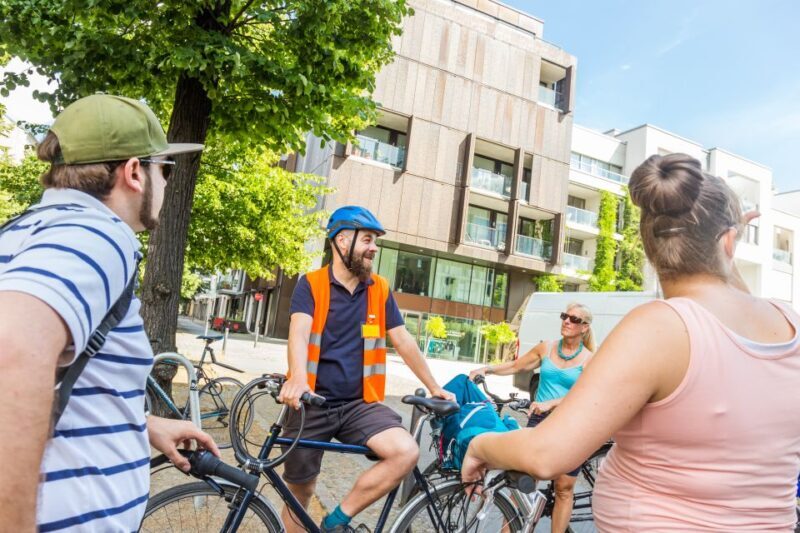
From there, you ride toward the city’s best-known sights with a guide who explains what you’re seeing as you go. Several guests mention that guides also help with the practical side right away, including seat adjustments so the bike fits comfortably.
How the Local Guide Turns “Sights” Into a Story
What makes this tour more than a checklist is the way the guide connects places to events. You’re not just hearing dates; you’re getting a sense of how Berlin changed stage by stage.
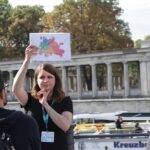
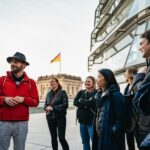
Expect the talk to cover major phases: ceremonial Prussian power, the heavy weight of the Nazi era, and the rapid transformation after the fall of the Wall. Guests have highlighted guides using printed photos at key stops, which helps you “see” the past in the exact spot you’re standing.
Government District and the Reichstag Area: Power in Motion
As you head into the Government District, the vibe changes. Tall buildings and formal spaces tend to do that, and your guide gives you the context so you understand why Berlin’s political center looks the way it does.
This is also where cycling helps. On foot, it’s easy to rush past without noticing how the space is laid out. On a bike, you move smoothly and still get time to pause, absorb, and ask questions.
More Great Tours NearbyBerlin Central Station: The City’s Working Heart
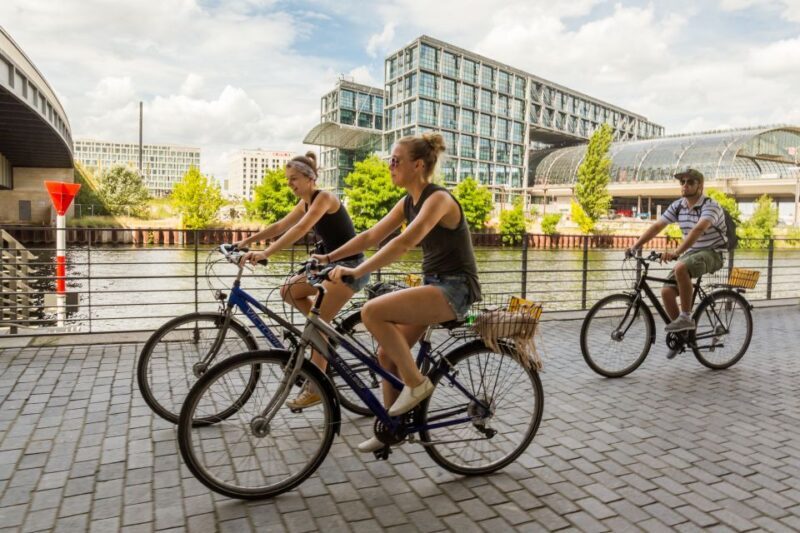
Passing by Berlin Central Station adds a nice contrast to the postcard sights. It’s one of those places that shows Berlin is still a functioning, modern capital, not only an open-air history book.
The benefit of seeing it on a bike tour is timing. You catch the station area without spending an entire day on transit logistics or museum lines. You also get a break from the heavier symbolism later on—if only for a moment.
You can also read our reviews of more guided tours in Berlin
Brandenburg Gate: Ceremony, Memory, and Perspective
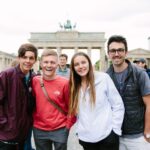
The Brandenburg Gate is famous for a reason, but the usual tourist approach can feel one-note. This tour helps by placing the Gate inside a wider narrative about Berlin’s shifting roles through different regimes.
When your guide explains what the Gate represented at various times, it clicks in a way that a quick photo never does. You’ll still have time for pictures, but the goal here is understanding, not just collecting shots.
Holocaust Memorial: A Serious Stop with Room to Breathe
The Holocaust Memorial is one of the most important stops on the route. Your guide’s job is to frame what you’re seeing with respect and clarity, and to help you understand why this place matters.
Cycling up to it works better than you might think. You arrive without the “crowd shuffle” energy that often comes with bus tours. Then you can take the time you need during the stop without rushing back onto a crowded street.
Tip for your own experience: give yourself a few extra seconds to look at the space around you. Memorials like this don’t hit all at once. They settle in.
Riding Past the Berlin Wall: When the Streets Tell You Something
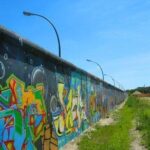
You’ll ride past the Berlin Wall area, and the big advantage of seeing it by bike is that you experience it as part of the city’s living fabric. On foot, you might focus too hard on one view. Rolling past helps you notice the urban geography.
Several guests mentioned how guides used photos to highlight what stood where, and that really changes your perception. The stories about how life and movement were shaped during the division—and what changed afterward—hit harder when you’re moving through the same streets today.
Gendarmenmarkt: Classic Beauty in the Middle of Real Life
You’ll also pass Gendarmenmarkt, a spot that often feels like a “perfect stage.” It’s symmetrical, elegant, and immediately photo-friendly.
What makes it useful on this tour is the timing and context. You’re not just visiting a pretty square; you’re seeing how Berlin’s grand design sits next to everyday city rhythm. That contrast is one of Berlin’s signatures, and biking keeps you in the flow.
Museum Island: UNESCO-Level Architecture Without Museum Crowds
Museum Island is a must for first-time visitors, even if you can’t (or don’t want to) enter every museum. From the bike, you get the architecture and the sense of a cultural center without losing half your day to ticket lines and timed-entry decisions.
This stop is also a strong “planning tool.” After you’ve seen the island from the outside, you’ll have a clearer sense of which museum(s) deserve your real time.
The Ride Feel: Relaxed Pace, Real Safety, and Patient Grouping
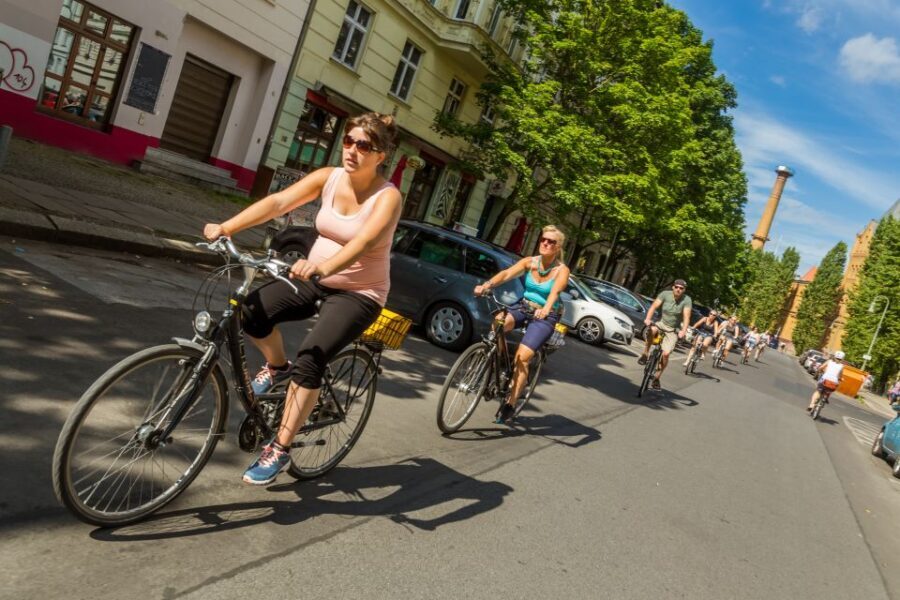
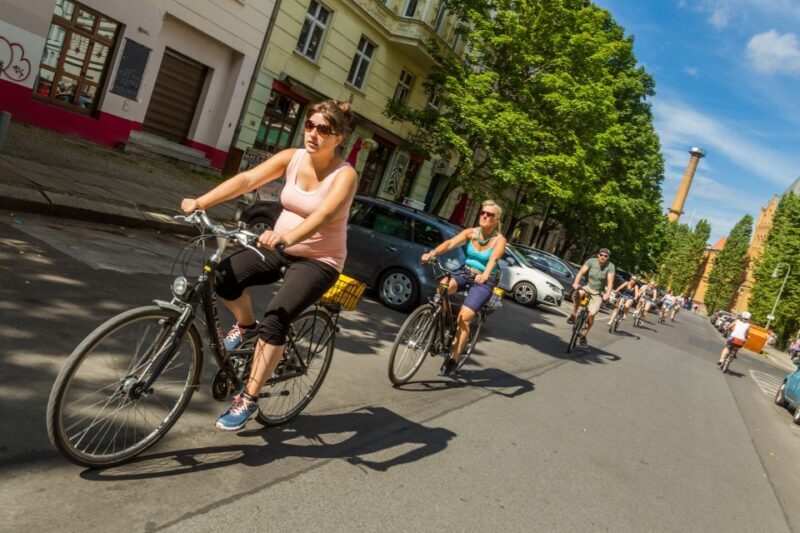
This is designed as a relaxed pace tour with brief stops for explanations. Small-group size helps a lot: it reduces the “herding” effect and lets the guide actually address people, not just project a script.
Safety is handled, but you’re still in traffic. One guest specifically noted that you need to judge road and lights yourself, rather than blindly following the rider in front if conditions get tricky. The good news: the group waits at crossings so nobody gets dropped.
If you’re an average cyclist, you’ll probably feel comfortable. Multiple guests said the ride wasn’t strenuous, and at least one family reported teenagers genuinely enjoying it. Still, be honest with yourself about biking comfort in city traffic.
Bikes, Helmets, and the Little Extras That Make It Easier
You get a reliable city bike with a basket for lightweight bags. You can also select a bike from the provider’s fleet to match your height and preferences, which is a big deal for comfort.
Helmets and gloves are available (helmets and gloves upon request, with gloves often available to borrow). Reviews mention that helmets are optional but many people still used them, especially in cooler or wetter conditions.
Included comfort items are a small but thoughtful touch:
- Sunscreen
- Trouser clips (to help your pants stay out of the chain area)
- Rain ponchos available if weather turns
One guest mentioned clean gloves to borrow and ponchos for rain, and another highlighted seat adjustments by the guide using equipment they carry. That kind of “we’ll fix it for you” attitude matters when you’re only out for a few hours.
Value at Around $41: What You’re Actually Buying
Let’s talk value, not just cost. At about $41 per person, you’re paying for three things that are hard to DIY:
1) A smooth route that links multiple major sights in one block
2) A guide who explains what you’re seeing and answers questions
3) A bike (plus comfort gear) that keeps you moving without planning transit
If you tried to do this on your own, you’d spend extra time figuring out where to start, what to prioritize, and how to connect the political and memorial sites in a way that makes sense. Here, the route is already planned, and the guide does the heavy lifting for meaning.
Also, the group limit (max 15) keeps the experience from turning into a noisy crowd. For the price, that’s a real quality signal.
What’s Not Included (So You Don’t Get Surprised)
Snack and coffee expenses aren’t included. That’s normal, but it helps to plan a little buffer so you’re not scrambling for cash mid-tour.
Some guests reported a short cafe-style break or coffee stop during the ride, but don’t assume it will happen on every date. If you want caffeine, bring a little plan B mindset.
Who This Tour Fits Best
I think this tour is ideal if:
- You want a strong first-day overview of Berlin
- You like cycling and want to cover ground without stress
- You appreciate history explained clearly, with space for questions
- You’re trying to balance major sights with smaller, less obvious context
It may be less ideal if you need very quiet, solo pacing at memorials, or if you don’t feel comfortable riding in city traffic. Also, since it’s a guided ride with stops rather than museum tickets, you should plan to visit museums separately if that’s your priority.
Tips to Get More Out of Your Time on the Bike
Bring comfortable clothes and comfortable shoes. It sounds basic, but Berlin walking gets real, and you’ll be hopping on and off for stops.
If you’re sensitive to cold, consider asking for gloves. If rain looks possible, watch for ponchos and don’t underestimate how quickly weather shifts in a city ride.
Finally, be ready to interact. Several guests mentioned guides engaging by asking what people were interested in. When you respond, the tour usually becomes better tailored—less like a lecture, more like a conversation with a guide who knows the city.
Should You Book This Berlin Bike Tour?
If you want an efficient, well-paced way to see Brandenburg Gate, the Holocaust Memorial, the Berlin Wall, and Museum Island with real context, I’d book it. The biggest selling point is the guide quality—guests consistently call out knowledgeable, entertaining guides like Brendan, Isabelle, Andy, Angus, Elisa, Ana, and Guy.
Book it especially if you’re short on time or you like to understand a city before you pick your next museum. And if you’re comfortable cycling on city streets, this is one of those experiences that turns Berlin from a list of landmarks into something you can actually place in your head.
If you tell me your travel month and your comfort level with cycling, I can suggest the best time to schedule it and what to pair it with afterward.
Berlin: Sights and Highlights Bike Tour with a Local Guide
FAQ
How long is the Berlin bike tour?
The tour duration is 3 hours, listed as 210 minutes.
How big is the group?
It’s a small-group experience with a maximum of 15 participants.
What sights does the tour include?
You’ll see or pass by major landmarks such as Brandenburg Gate, Reichstag, Museum Island, the Berlin Wall, Gendarmenmarkt, the Government District, Berlin Central Station, and the Holocaust Memorial.
What languages are available for the live guide?
The live tour guide is available in Dutch, German, and English.
Is a bicycle included?
Yes. A reliable bicycle for the tour is included.
Are helmets and gloves included?
Helmets and gloves are available upon request. (So they’re not automatically guaranteed for every guest, but you can ask.)
What if the weather is bad?
Rain ponchos are available in the event of bad weather.
What is not included in the price?
Snacks, coffee, and other personal expenses during the tour are not included.
You can check availability for your dates here: