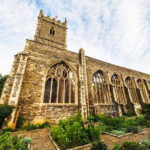
Bristol: Blackbeard to Banksy Guided Walking Tour is a fast, fun way to see how Bristol grew from medieval times into a modern street-art city. The walk starts at Bristol Cathedral on College Green, then strings together landmarks tied to the Norman era, wartime Bristol, and today’s public art scene.
What I like most is the balance: you get serious Bristol history alongside specific street-art stops, including Banksy’s Well Hung Lover. And the guides (often praised by name, like Owen, Luke, Mike, and Henry) keep the pace lively, with clear explanations and lots of local context to make the route click.
One thing to consider: you’re in an old-city setting with cobbled streets that can be uneven, plus there’s one set of steps that can be avoided if needed. If you’re sensitive to uneven ground, plan for extra time at slower moments and wear grippy shoes.
- Key highlights you should care about
- Bristol Cathedral to Arnolfini: street art with historical backbone
- Where you start: College Green and Bristol Cathedral’s 12th-century presence
- Banksy’s Well Hung Lover: how one artwork changes the whole walk
- Hatchet Inn, Cenotaph, and Centrespace: quick stops that add texture
- WWII clues in the Norman castle area between the Avon and Frome
- “Bizarre echoes” and the art of listening while you walk
- Nelson Street to St John’s Church: the city’s daily rhythm
- St Nicholas Market: a break that also tells you Bristol is still Bristol
- Castle Park and Bristol Bridge: the view stops you’ll actually remember
- Llandoger Trow, Queen Square, and Pero’s Bridge: history you can point at
- The Matthew of Bristol and the harbourside finish at Arnolfini
- Guides like Owen, Luke, Mike, and Henry: why commentary is the real product
- Time on your feet: 2 hours, manageable route, and one tricky step
- Value check: is actually fair for what you get?
- Best for: who will enjoy this most
- Smart tips so you get more than a photo tour
- Should you book Blackbeard to Banksy in Bristol?
- FAQ
- Where does the tour start?
- Where does the tour end?
- How long is the tour?
- What language is the tour guide?
- Is the tour wheelchair accessible?
- What should I bring?
- Is there free cancellation?
- Can I reserve without paying right away?
- The Best Of Bristol!
- More Walking Tours in Bristol
- More Tours in Bristol
- More Tour Reviews in Bristol
Key highlights you should care about
 1 / 10
 2 / 10
 3 / 10
 4 / 10
 5 / 10
 6 / 10
 7 / 10
 8 / 10
 9 / 10
 10 / 10
- Banksy stop built into a bigger story: you’ll see Well Hung Lover and then understand how Bristol became the kind of place street art can thrive
- A “history + street art” route, not two separate tours: medieval, WWII Bristol, and modern-day walls are woven together
- WWII Bristol is part of the walk: you’ll see evidence of Blitz damage linked to Nazi attacks during the Second World War
- Harbourside finish: the tour ends at Arnolfini, so you wrap up near the water instead of backtracking
- Good guide feedback: many travelers mention engaging, guides with a great sense of pace
- Value that’s hard to beat: at $17 for 2 hours, it’s an easy add-on day plan
👉 See our pick of the The 5 Top Walking Tours In Bristol: Which Is Best?
Bristol Cathedral to Arnolfini: street art with historical backbone
This tour is designed for people who want more than photos. You walk through a tight central loop where street art, famous Bristol figures, and older layers of the city all show up in the same flow.
You’ll also get the kind of orientation that helps you explore the rest of Bristol on your own. By the time you hit the harbourside, you’re not just looking at murals. You’re recognizing streets, knowing what to look for, and understanding why certain spots matter.
You can also read our reviews of more walking tours in Bristol

Where you start: College Green and Bristol Cathedral’s 12th-century presence
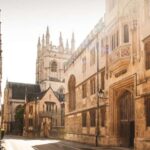
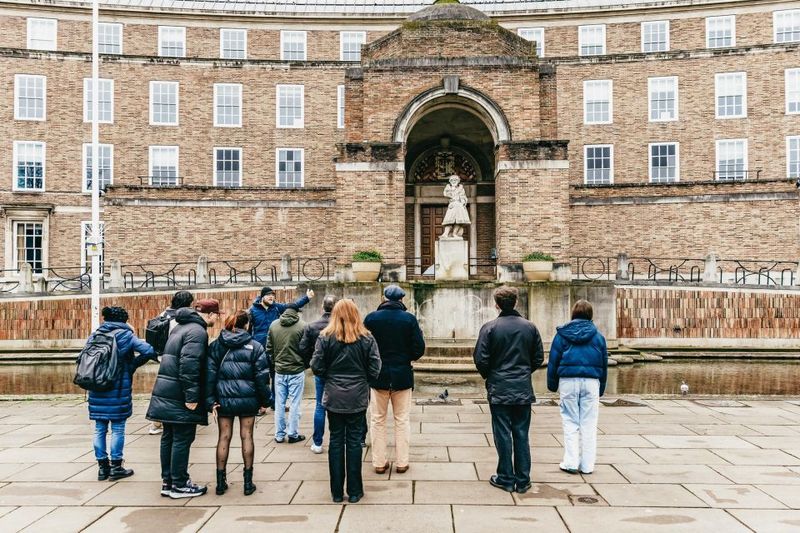
The meeting point is right in front of Bristol Cathedral’s main entrance on College Green. It’s a smart start because it anchors you. Before the street-art portion ever starts, you’re placed at a major medieval landmark.
The cathedral stop is brief, about 10 minutes, but it sets the tone. You learn the basic “what and when” of Bristol’s old core, which matters because later stops make more sense when you know what kind of city you’re walking through.
Banksy’s Well Hung Lover: how one artwork changes the whole walk
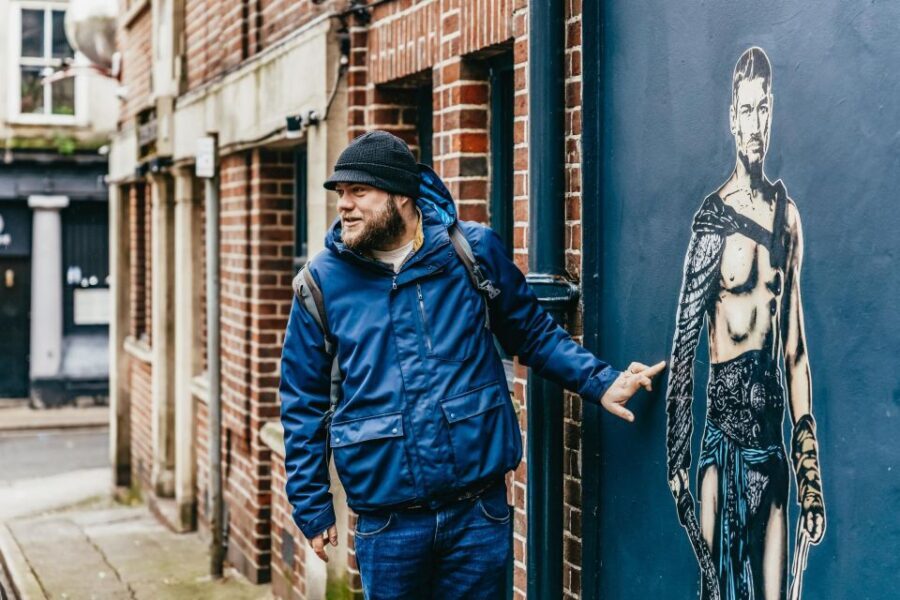
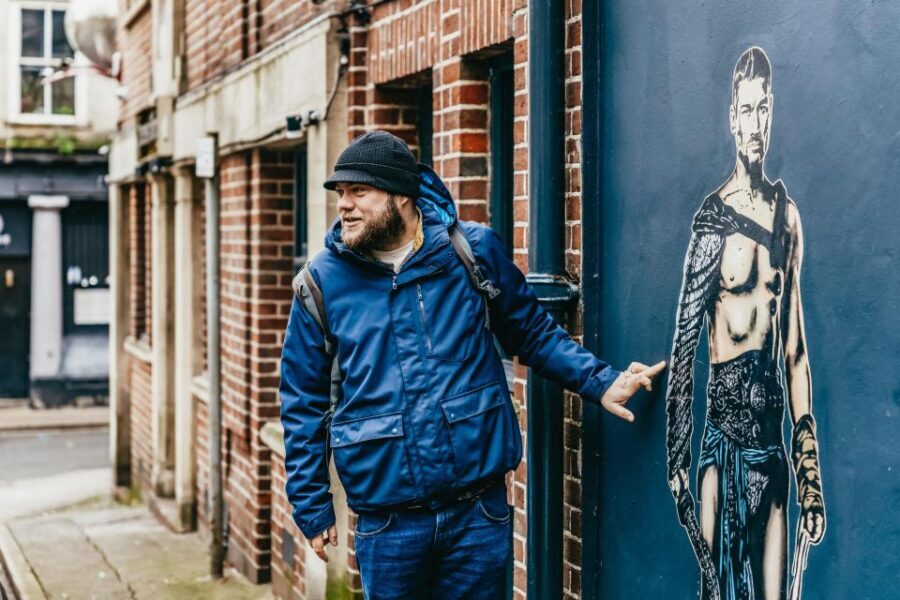
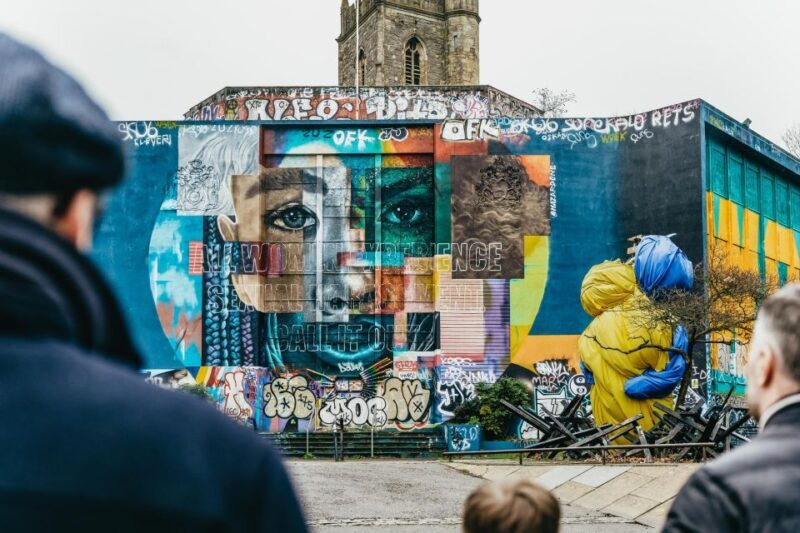
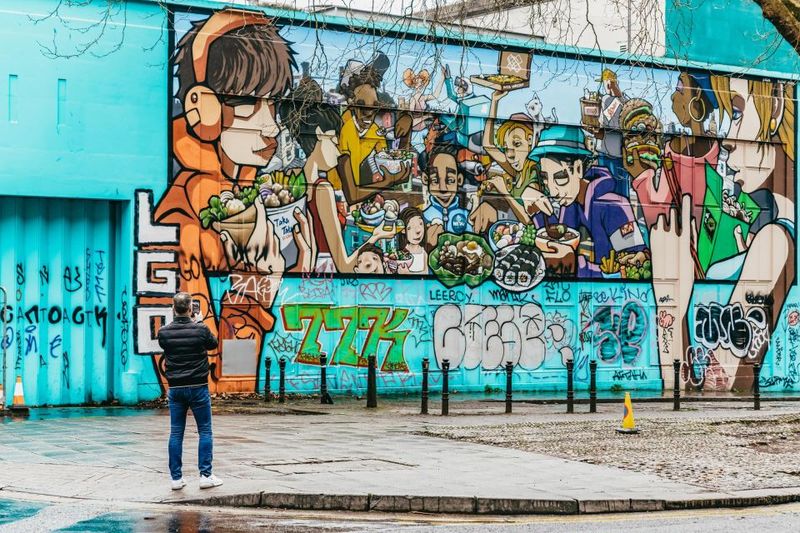
One of the most talked-about moments is the stop for Banksy’s Well Hung Lover. It’s scheduled for about 5 minutes, so you’re not stuck lingering. The goal is to see it, understand it, then keep moving while the guide connects it to Bristol’s larger culture.
Even if you’re not a superfan of Banksy, this stop works because it’s not treated like a random mural. You get the context that helps you see the surrounding city differently—less like a backdrop, more like a living canvas.
Hatchet Inn, Cenotaph, and Centrespace: quick stops that add texture
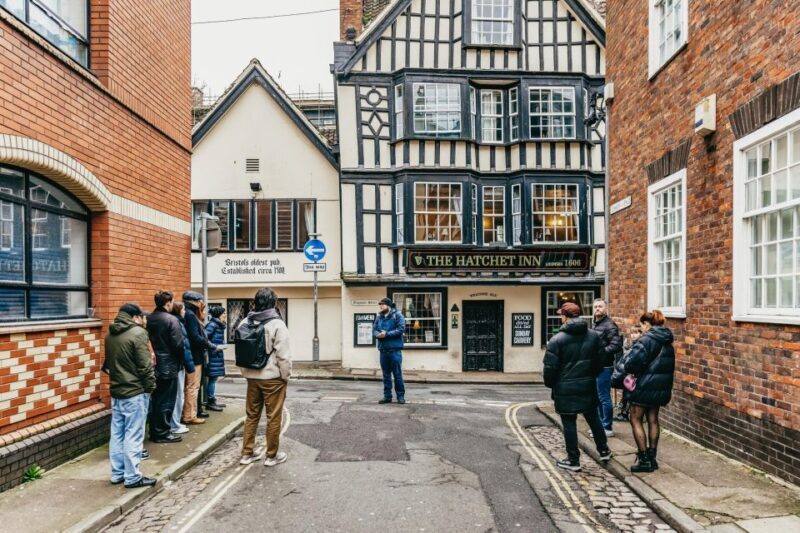
After the cathedral area, the tour moves through smaller, story-filled stops. You’ll pass by the Hatchet Inn, then stop at The Cenotaph, then visit Centrespace.
These are short moments—often around 5 minutes each—but they’re useful. They show you that Bristol’s public memory isn’t limited to big monuments. The city layers meanings into ordinary streets: a meeting point for locals, a war memorial mood shift, and a modern space where Bristol’s art scene shows up.
More Great Tours NearbyWWII clues in the Norman castle area between the Avon and Frome
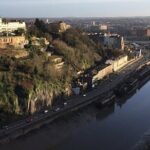
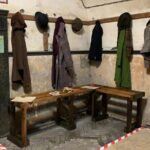
A big “wait, what?” part of the walk is around the Norman castle site, positioned strategically between the River Avon and the River Frome. You don’t just hear the name and move on. The guide ties this location to the city’s growth patterns and how geography shaped power.
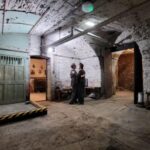
Then the tour shifts to wartime history: you’ll see evidence of Blitz damage linked to Nazi attacks during the Second World War. This isn’t a long museum stop, but the timing on a walking route matters. You’re looking at today’s streets while learning how they were impacted in the past.
You can also read our reviews of more guided tours in Bristol

“Bizarre echoes” and the art of listening while you walk
One of the most memorable elements is how the guide uses the street environment itself. You’ll hear about bizarre echoes as you move through certain sections.
It’s a small detail, but it changes how you experience the city. You start paying attention to sound, shape, and street layout—exactly the kind of stuff you’d miss if you were just speed-walking from one photo spot to another.
Nelson Street to St John’s Church: the city’s daily rhythm
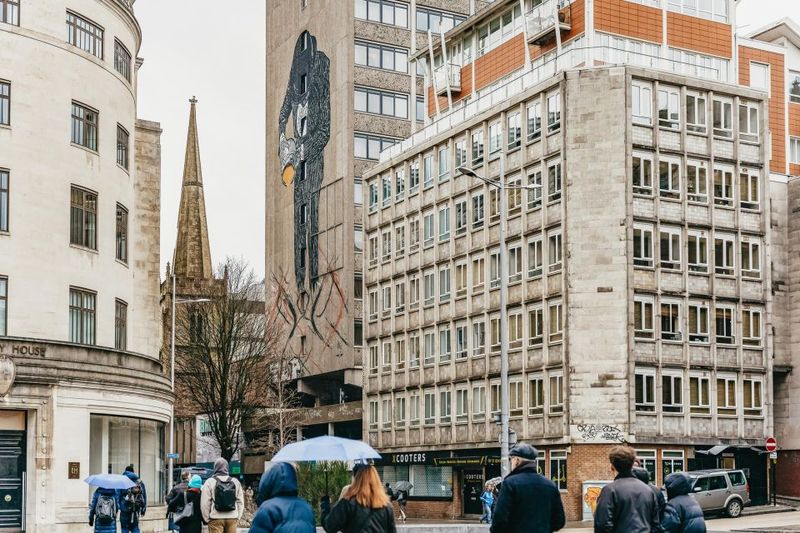
Next up is a longer stretch: Nelson Street is about 10 minutes. This is where Bristol’s contemporary energy starts to show more clearly. You’re still in the city center, but the tone feels more modern and more street-level.
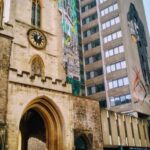
Then you’ll visit St John’s Church for around 5 minutes. It’s a short stop, but it helps you keep track of what’s being preserved and what’s changing. That’s the real theme of the tour: continuity and contrast, side by side.
St Nicholas Market: a break that also tells you Bristol is still Bristol
At St Nicholas Market, you get about 10 minutes. You’re not given time to do a full shopping spree (the tour is still moving), but it’s a great pause.
Markets do two things well on walking tours: they ground you in daily life and they give you a visual sense of what the city feels like now. Even if you only walk through briefly, you’ll come away with the sense that Bristol’s old core is still used, still alive, and still evolving.
Castle Park and Bristol Bridge: the view stops you’ll actually remember
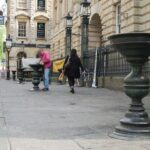
Then you hit the photo zone rhythm. Castle Park and Bristol Bridge are photo stops (about 5 minutes each).
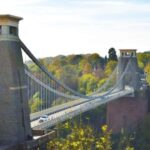
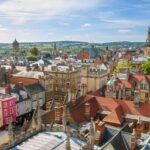
This is where you cash in on the effort. The city opens up. You get a better read on rivers, street layout, and where the harbor area will be later. It’s also a good moment to check your bearings before the tour heads back toward the water.
Llandoger Trow, Queen Square, and Pero’s Bridge: history you can point at
The walk keeps turning up named places that have weight. You’ll make stops around Llandoger Trow, then Queen Square, then Pero’s Bridge.
These aren’t random detours. Each one helps you connect Bristol’s famous eras—trade, maritime links, civic life—with the streets you’re walking. It’s the kind of route where you start thinking, I’ve seen this name on signs or buildings before, but now I know why it matters.
The Matthew of Bristol and the harbourside finish at Arnolfini
Near the end, you’ll see The Matthew of Bristol for about 5 minutes, then finish at Arnolfini (the tour’s end point).
Finishing here is a smart choice. You end near the water, and your brain links the history you just heard (including the maritime angle of Bristol’s identity) to a real-world setting. It feels like a closing scene rather than a last-minute scramble.
You’ll also hear about the street-art “winners” along the way—the smallest, largest, and most beautiful pieces in the city—so the final stretch is built to land with impact.
Guides like Owen, Luke, Mike, and Henry: why commentary is the real product
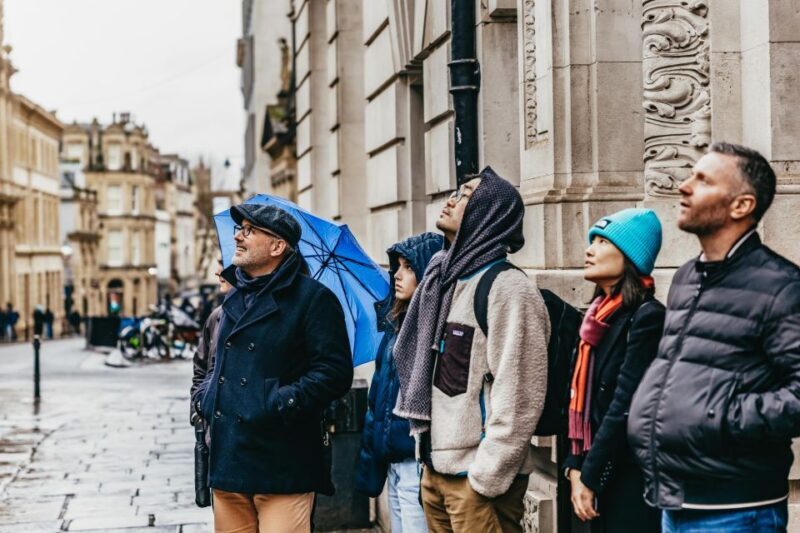
The guide is the difference between a walk and a story. Many travelers specifically praised guides by name—Owen, Luke, Mike, and Henry—for being knowledgeable, witty, and easy to hear.
What you should expect from strong guides on this kind of tour:
- Clear explanations that connect art to place
- A pace that keeps everyone moving without feeling rushed
- Humor that doesn’t get in the way of facts
Multiple people mention that the tour works well even for families, including groups with teenagers. That tells you the guide style isn’t just for history buffs or art nerds—it’s for mixed groups that still want real learning.
Time on your feet: 2 hours, manageable route, and one tricky step
It’s a 2-hour walking tour. That’s short enough for a busy day and long enough to feel like you actually covered something.
Comfort-wise, the company flags two practical points:
- Wear comfortable shoes
- Expect uneven cobbles in parts of the old city
There’s also one set of steps that can be avoided if you need accessibility support. The tour is marked wheelchair accessible, which matters if you’re planning around mobility needs. If you’re unsure, plan to mention your needs at booking or ahead of time so the guide can adapt where possible.
Value check: is $17 actually fair for what you get?
At about $17 per person for 2 hours, this tour is priced like a practical city orientation. You’re paying for a guided route that combines major-history stops with concrete street-art sightings—plus the kind of “what am I looking at?” interpretation that’s hard to DIY on your first day.
What makes it feel like good value is not just the number of stops. It’s the structure. You get a starting anchor at the cathedral, then a mid-route sweep through history and WWII, then a modern street-art arc, and you end at the harbourside. That’s a full storytelling loop for the cost of a casual meal.
Best for: who will enjoy this most
This tour is ideal if you:
- Have limited time and want a dense overview
- Like the idea of learning history while also seeing modern art
- Want an easy way to explore Bristol after the tour ends
It’s also a strong pick for repeat visitors who think they already “know” Bristol. The street-art focus and the guided connections can help you spot meanings in familiar streets.
If you want a quiet, contemplative church-and-monument only day, you might find the street-art elements shift the mood. But if you’re curious how Bristol’s past and present talk to each other, you’ll likely love the mix.
Smart tips so you get more than a photo tour
Here’s how to make the two hours work hard for you:
- Wear shoes for cobbles, not just for pavement
- Bring weather gear. The route is outdoors, and Bristol weather can change fast
- Go with a curious mindset: the guide is likely to point out details you’d otherwise miss
- After the tour, do one follow-up walk on your own around what you liked most—Banksy-themed streets, harbourside views, or market-area vibes
If you’re traveling with someone who doesn’t care about street art, this is still manageable because the route has enough history anchors to keep them engaged.
Should you book Blackbeard to Banksy in Bristol?
If you’re choosing between doing Bristol solo or taking a guided route, I’d lean toward booking this one—especially for your first visit. It’s built for people who want guided clarity, a strong sense of place, and a practical route that ends at the water.
Book it if:
- You like a high-value 2-hour activity
- You want guides who make the route fun
- You’re happy walking through cobbled old streets with a light accessibility adaptation if needed
Skip it only if you prefer longer, sit-down museum-style history days or you’re not up for an outdoors walk.
Bristol: Blackbeard to Banksy Guided Walking Tour
FAQ
Where does the tour start?
You meet in front of Bristol Cathedral’s main entrance.
Where does the tour end?
The tour finishes at Arnolfini.
How long is the tour?
The duration is 2 hours.
What language is the tour guide?
The tour is in English.
Is the tour wheelchair accessible?
Yes, it’s marked wheelchair accessible, and there is one set of steps that can be avoided if necessary.
What should I bring?
Bring comfortable shoes and weather-appropriate clothing.
Is there free cancellation?
Yes. You can cancel up to 24 hours in advance for a full refund.
Can I reserve without paying right away?
Yes. There’s a reserve now & pay later option, so you can book and pay nothing today.
You can check availability for your dates here: