
I’m a big fan of tours that help you make sense of a city fast, without turning it into a checklist race. This one strings together Budapest’s most important sights in a smooth route, with plenty of time for questions and stories you won’t get from a quick guidebook glance.
Two things I especially like: the guides’ knowledge and humor (people mention names like Claudia, Geza, and Juan), and the way the route includes both big visual moments and small meaning-heavy stops like the Shoes on the Danube Bank memorial. It’s priced so low that, for many travelers, it feels like a “show up and get oriented” bargain.
One consideration: the Hungarian Parliament Building stop notes that admission tickets are not included, so you may need to plan for that if you want to go inside.
- Key points before you go
- How this Budapest walk sets you up for the rest of your trip
- Meeting point clarity: where to start (and why it matters)
- A small-group tour with room for questions
- Stop 1: St. Stephen’s Basilica and its stories
- Stop 2: Hungarian Parliament Building (and what’s not included)
- Stop 3: Shoes on the Danube Bank memorial
- Stop 4: Vörösmarty Square as the “downtown heart”
- Stop 5: Café Gerbeaud for a classic Hungarian pause
- Stop 6: Chain Bridge area and Szechenyi Lanchid legends
- Stop 7: Vigadó (Pesti Vigadó) and Danube-side music culture
- Stop 8: Hungarian Academy of Sciences by the river
- Stop 9: Erzsébet Square and the Budapest Eye vibe
- Stop 10: Danubius Fountain symbolism
- Finale: Gresham Palace (now Four Seasons)
- Timing and walking reality: what to expect on the day
- Mobile ticket and practical booking tips
- Price: why this feels like a bargain (with one catch)
- Who should book this tour?
- What kind of guide experience you’ll get
- Should you book it? My practical call
- FAQ
- What is the duration of the Budapest walking tour?
- How much does it cost per person?
- Is admission to the Hungarian Parliament Building included?
- Do I need a ticket to visit the Shoes on the Danube Bank?
- Where does the tour start and end?
- What time does the tour start?
- Is there free cancellation?
Key points before you go

- Max 10 travelers means real conversation time, not just quiet listening.
- English-only experience with a local guide who’s happy to answer questions and share trip tips.
- Mobile ticket is included, so you’re not scrambling for paper confirmations.
- Parliament admission not included while most other listed stops are admission-free for your visit time.
- Flat, manageable walking pace is what many travelers praised, making it easier for first-timers.
How this Budapest walk sets you up for the rest of your trip
This tour is designed for day one energy. You start at St. Stephen’s Basilica and work along central Budapest toward the Parliament area and the Danube-side sights. You’ll spend roughly two hours moving between landmarks at a comfortable rhythm, and because it’s a small group, you’re not stuck at the back trying to hear over everyone else.
It’s also the kind of tour that helps you get your mental map in place. Budapest can feel like two cities stitched together—Buda and Pest—and this route gives you the center-of-gravity view of Pest’s Danube corridor. Even if you don’t memorize every street name, you’ll understand how the sights relate.
Meeting point clarity: where to start (and why it matters)
You’ll start at Szent István Bazilika (St. Stephen’s Basilica) at 11:00 am, and the tour ends at Kossuth Lajos tér. The big practical tip here is simple: plan to arrive a few minutes early.
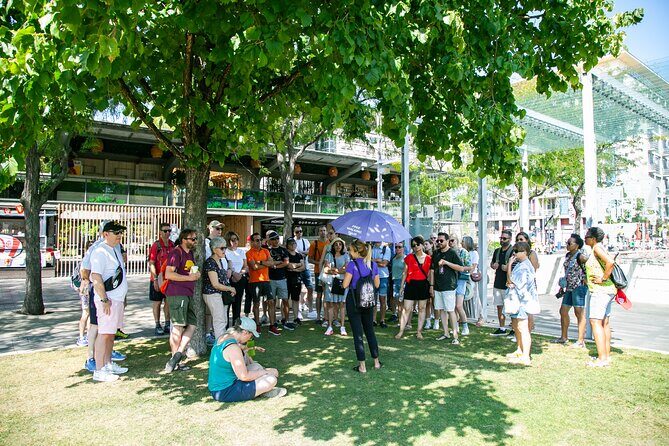
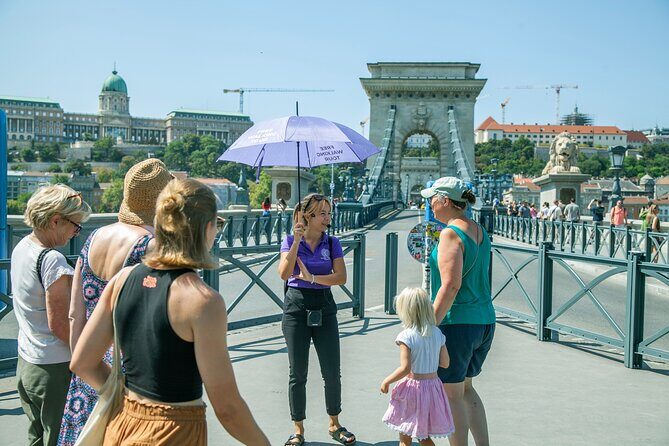
One traveler noted the meeting spot can be confusing because it’s a crowded area. The guidance was to look for guides with colored umbrellas and ask other guides if you can’t find yours. Another practical detail: the meeting point isn’t necessarily at the front of the church—more like around to the left side when you’re facing it.
Arriving early saves stress, and for a tour like this, stress is the real enemy.
A small-group tour with room for questions
This is capped at 10 travelers, and that changes the vibe. You get time to ask your guide real questions instead of getting rushed along in a line.
Travelers also mention the guides bring no-taboo conversations and are willing to share personal recommendations for the rest of your trip. That’s not fluff. When you’re in a new city, a guide who can point you toward the right kinds of cafés, museums, or spa options can be more useful than another photo stop.
And yes, the guides seem to vary by departure—people specifically called out Claudia, Geza, and Juan by name, with praise for both knowledge and good humor.
Stop 1: St. Stephen’s Basilica and its stories
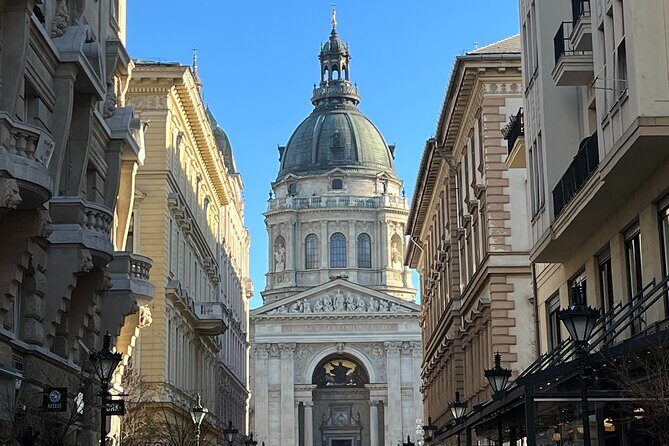
You’ll spend about 15 minutes around St. Stephen’s Basilica, Budapest’s largest Roman Catholic church. This is a solid opening stop because it gives you context before the tour turns toward political and memorial sites.
The guide isn’t just naming parts of the building. You’re told history and legends while walking around for those first minutes. That matters because it sets a tone: Budapest is not only scenery, it’s layers of belief, power, and identity.
Practical note: you’ll be outside walking, so wear comfortable shoes and expect city noise and crowds in the busiest areas.
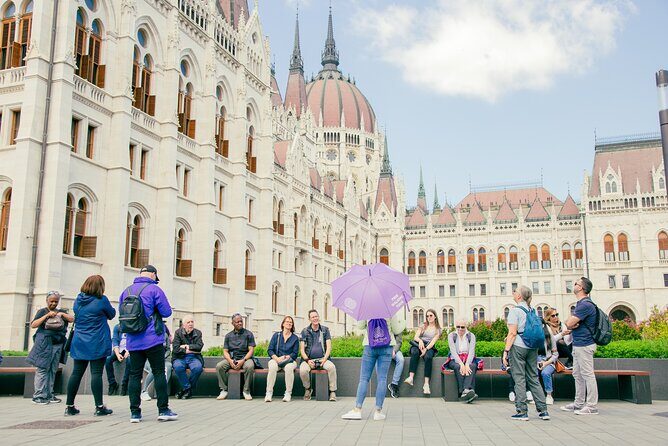
Stop 2: Hungarian Parliament Building (and what’s not included)
Next comes the Hungarian Parliament Building, with around 15 minutes there. This stop is all about the building’s impact: the iconic golden dome and intricate detail are exactly the kind of place where a good guide makes the architecture feel readable instead of overwhelming.
Important for planning: the tour specifies admission ticket not included for this stop. So if you want to go inside, you’ll need to handle that separately. If you’re happy with exterior viewing and guided explanation, this still works well.
Either way, this is one of the tour’s biggest “wow” moments. It’s also a good spot to ask questions because the guide can connect what you see now with why Hungary’s political identity shaped the city.
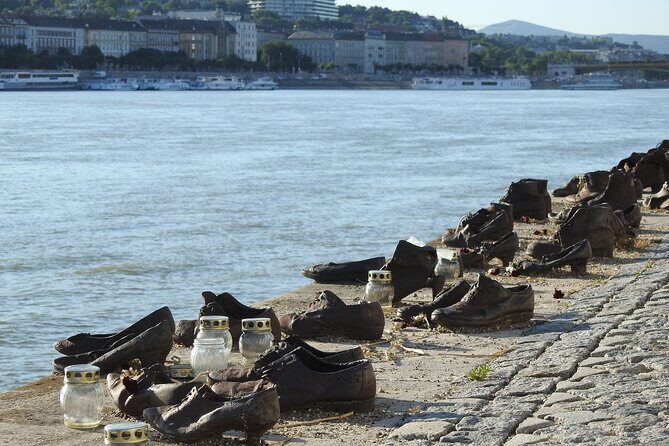
Stop 3: Shoes on the Danube Bank memorial
Then you shift into a heavier mood: Shoes on the Danube Bank. You get about 15 minutes here, and it’s free for your visit time.
This memorial is the kind of place where the goal isn’t sightseeing. It’s remembrance. Expect a sobering stop, and don’t rush it. Travelers specifically highlighted how the monument is especially sobering, which is exactly right. A guide’s job here is to help you understand without turning it into a “quick fact” pause.
If you prefer tours that balance beauty with honesty, this stop is a big part of why the tour gets such strong ratings.
Stop 4: Vörösmarty Square as the “downtown heart”
From there, you step into the lively rhythm of the center at Vörösmarty Square (Vörösmarty tér) for about 10 minutes. The focus here is what the square represents: a historic meeting point where tradition and modern city life mix.
This stop is useful even if you’ve already seen photos. You’re learning how to orient yourself in Budapest’s core. Plus, it’s a chance to spot where you might want to return later—because squares are where cities naturally pull you back for cafés and people-watching.
Stop 5: Café Gerbeaud for a classic Hungarian pause
Next is Café Gerbeaud in the same area, also around 10 minutes. This is one of those landmark stops where you’re not paying an admission fee as part of the tour visit, but you’re being pointed toward a famous slice-and-coffee culture.
What makes it special is the “old Budapest” feeling. The café is tied to the Gerbeaud family legacy of cakes and confections, and travelers like this because it’s not just another pretty façade. It’s a place where you can take a short break and keep the tour from feeling like nonstop walking.
If you want to turn this into a treat stop later, Vörösmarty Square is a practical location to revisit.
Stop 6: Chain Bridge area and Szechenyi Lanchid legends
You’ll spend about 10 minutes at Szechenyi Lanchid, the Chain Bridge, with its stone lions and the bridge’s central role connecting parts of the city.
This stop matters because it teaches you how Budapest thinks about unity. The guide explains legends tied to the bridge and its history—exactly the sort of story-based framing that makes the bridge more than a backdrop.
Even if you’ve already seen the bridge in pictures, the guided version helps you understand why it’s such a cultural symbol. Also, it gives you a natural photo moment without turning the tour into a bottleneck.
Stop 7: Vigadó (Pesti Vigadó) and Danube-side music culture
Another 10-minute stop brings you to Pesti Vigadó, Budapest’s grand concert hall along the Danube. The tone shifts again—from political to artistic.
The tour frames Vigadó as a Romantic architecture masterpiece that once served as a gathering place for emperors and artists. Whether or not you catch a performance later, it’s a great “mental cue” for Budapest: the city takes music seriously, and the Danube corridor reflects that.
This is also one of the stops where you can ask your guide what to look for if you’re planning any concerts or cultural evenings during your stay.
Stop 8: Hungarian Academy of Sciences by the river
You’ll move to the Hungarian Academy of Sciences for about 10 minutes. This is described as a neoclassical gem by the Danube, and the guide connects it to Hungary’s intellectual pride and language and invention.
One especially memorable detail shared in the tour description: references to inventions like the Rubik’s Cube and even the ballpoint pen. That kind of connection helps the building feel relevant, not just old.
If you like learning how a country’s achievements show up in everyday landmarks, this stop is worth your full attention.
Stop 9: Erzsébet Square and the Budapest Eye vibe
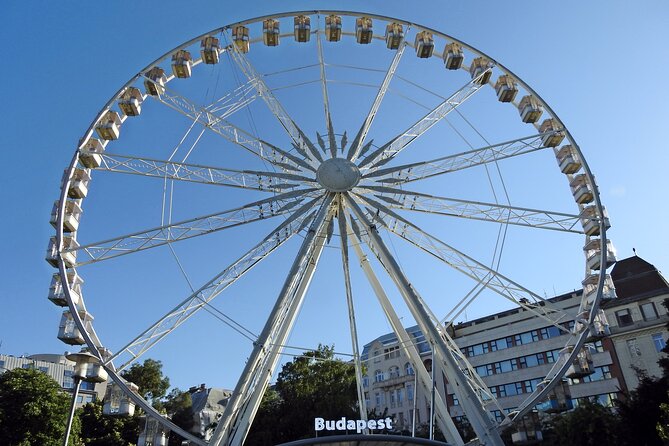
Next is Erzsébet ter (Elizabeth Square) for about 10 minutes. It’s the bustling main square with recognizable features like the Budapest Eye Ferris wheel and fountains.
This stop works as a “breather” in the route. You’re out in the open, and it’s a good place to reset before the final visual points. Plus, the guide’s comments help you understand why this area functions as a meeting spot—especially for first-time visitors.
Stop 10: Danubius Fountain symbolism
You’ll get about 5 minutes at the Danubius Fountain, also in Erzsébet Square. The explanation focuses on how the fountain symbolizes the Danube and tributaries through sculptures.
This is short, but it’s a smart way to connect Budapest’s identity to the river. If you’re the type who likes symbolic details, this little stop gives meaning without dragging on.
Finale: Gresham Palace (now Four Seasons)
The last listed stop is Gresham Palace, now a Four Seasons hotel, for about 10 minutes. This is where the tour steps into luxury and international history.
The tour description mentions notable guests across eras, including Winston Churchill, Queen Elizabeth II, Clint Eastwood, Catherine Zeta-Jones, and Jennifer Lawrence. Whether or not you care about celebrity trivia, the real value here is learning how Budapest’s most central areas have hosted prestige and power for a long time.
If you’re interested in where the city’s big money and big history intersect, this is a fitting end point before you head off on your own.
Timing and walking reality: what to expect on the day
Duration is listed as about 2 hours, which is ideal for a first day. Reviews also mention the walking is flat, which can make a big difference in Budapest where you can run into steep areas if you wander without a plan.
Stops are mostly short—often around 10 to 15 minutes—so the tour stays lively. That also means you won’t feel stuck staring at one building for too long, but you’ll still get enough time to hear the main stories and take a few photos.
Weather matters, of course. This is a walking tour, so bring a light layer and plan for changing conditions around central Budapest.
Mobile ticket and practical booking tips
The tour includes a mobile ticket, and confirmation comes at booking time. Service animals are allowed.
It’s also commonly booked ahead (average booking is 23 days in advance), which suggests demand is strong. If you have specific dates, booking earlier can make your life easier, especially during peak travel weeks.
And yes, it’s English offered, so you don’t have to worry about mixed-language groups.
Price: why this feels like a bargain (with one catch)
The price is listed as $3.63 per person, with tips not included. That’s exceptionally low for a guided, multi-stop walking experience—especially one with a maximum group size of 10.
The value comes from:
- Guided storytelling across major landmarks
- Enough time for questions and recommendations
- A route that covers everything from a major church to a political icon and a memorial
The catch is the Parliament admission ticket not included. If you want the full inside experience there, you’ll likely pay extra separately. If your goal is orientation and guided context, you can still get strong value without needing the interior visit.
Who should book this tour?
This tour is a great match if you:
- Are in Budapest for the first time and want to get your bearings fast
- Like learning legends and local context, not just dates
- Prefer small-group tours where you can ask questions
- Want a route that balances major sights with a meaningful stop
It’s also a solid pick if you’re traveling solo or with a partner who likes chatting. Reviews mention chances to socialize with like-minded travelers, and the group size makes that realistic.
If you’re the type who wants long museum-style time at a single site, you might find the stops a bit short. But for most travelers, the pace is the point.
What kind of guide experience you’ll get
You’ll hear history and legends, and guides are described as friendly, funny, and well prepared. Several travelers praised how the guide makes sure everyone can hear and encourages participation.
That last part matters. If you’ve ever joined a noisy tour group where only the front can hear, you know how frustrating that is. People specifically mentioned the guide made sure everyone could hear her or him, which is a big quality signal.
Also, the best comments aren’t just about facts—they’re about how the information is delivered. Humor shows up more than once in the feedback, and it helps keep the pacing from getting heavy even when the tour touches harder topics.
Should you book it? My practical call
Yes, I’d book it if your priority is a smart first look at Budapest with a guide who actually explains what you’re seeing. The combination of small group size, strong guide energy, and a route that hits everything from St. Stephen’s Basilica to the Shoes memorial makes it a very efficient use of time.
I’d book it with one mindset: decide beforehand whether you care about entering Parliament. If you do, plan for the extra ticket. If you don’t, you still get a strong, guided, meaningful walk that’s easy to fit into a normal travel schedule.
If you want a first-day tour that feels personal instead of crowded, this one is a very safe bet.
Budapest walking tour: Parliament and Shoes Memorial
FAQ
What is the duration of the Budapest walking tour?
The tour is listed as approximately 2 hours.
How much does it cost per person?
The price is listed as $3.63 per person.
Is admission to the Hungarian Parliament Building included?
No. Admission tickets for the Hungarian Parliament Building are not included.
Do I need a ticket to visit the Shoes on the Danube Bank?
No. The Shoes on the Danube Bank stop is free for your visit time.
Where does the tour start and end?
It starts at St. Stephen’s Basilica (Szent István Bazilika) and ends at Kossuth Lajos tér.
What time does the tour start?
The listed start time is 11:00 am.
Is there free cancellation?
Yes. You can cancel for a full refund up to 24 hours in advance.