
I’m a big fan of tours that feel like real nature time, not just a checklist. This canyoning trip in Parque Natural da Ribeira dos Caldeirões mixes a short hike with rappelling, cliff-jumping options, and natural water slides in a stunning ravine near Ponta Delgada.
Two things I really like: first, the focus on safety equipment included and multiple coaching moments, even if you’re new. Second, the scenery does the heavy lifting, so even the walking parts feel worth it.
One consideration: the route includes an uphill scramble before the fun, and several people point out it can be physically demanding, especially in a wetsuit and if you’re not used to hiking.
- Key things to know before you go
- Ribeira dos Caldeirões: a canyon that mixes thrills with real landscapes
- Where you meet and how pickup fits into your morning
- Gear time: equipment distribution before the first briefing
- The uphill hike: the warm-up that catches people off guard
- Safety briefings and learning rappel basics the right way
- Entering the main canyon: optional jumps, natural slides, and abseils
- The walk back: where the day slows down again
- How physical requirements work (and who should feel confident booking)
- What to wear and bring so you don’t think about logistics all day
- Price and value: why .65 can feel like a full adventure day
- The guide difference: calm instruction with a playful edge
- Photos, videos, and the bonus moments you’ll remember
- Weather, cancellations, and booking smart
- Should you book canyoning in Ribeira dos Caldeirões?
Key things to know before you go
 1 / 8
1 / 8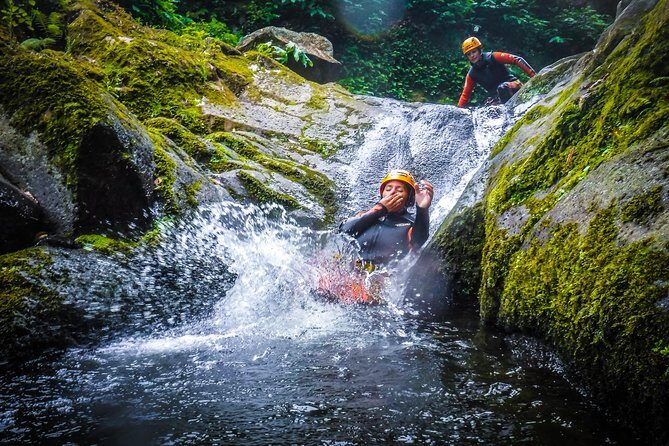 2 / 8
2 / 8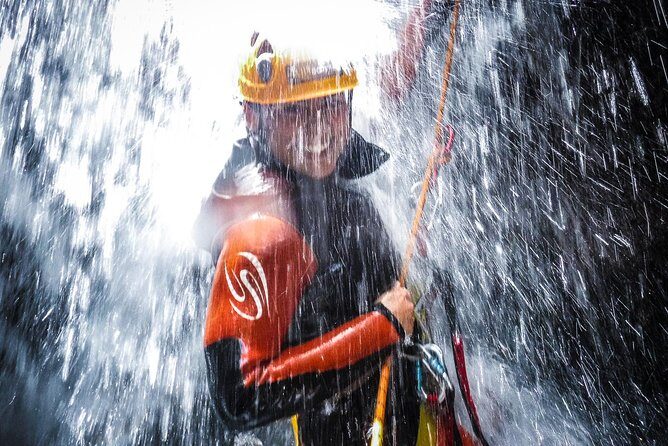 3 / 8
3 / 8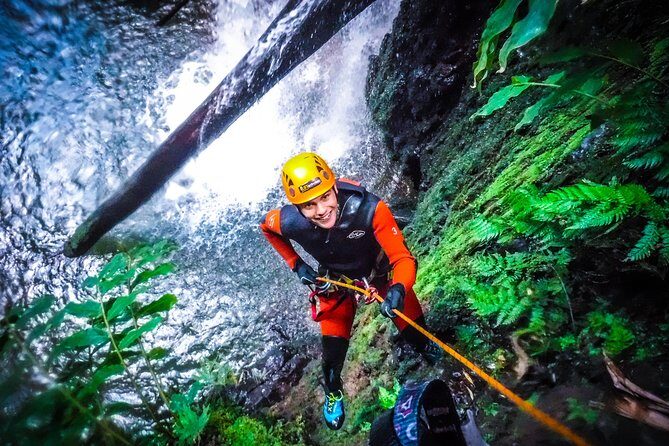 4 / 8
4 / 8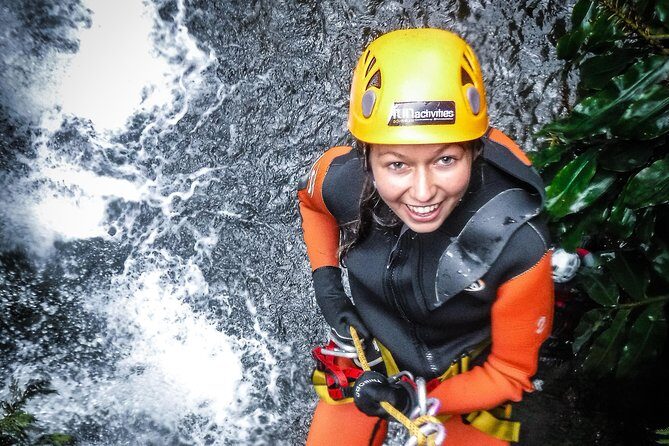 5 / 8
5 / 8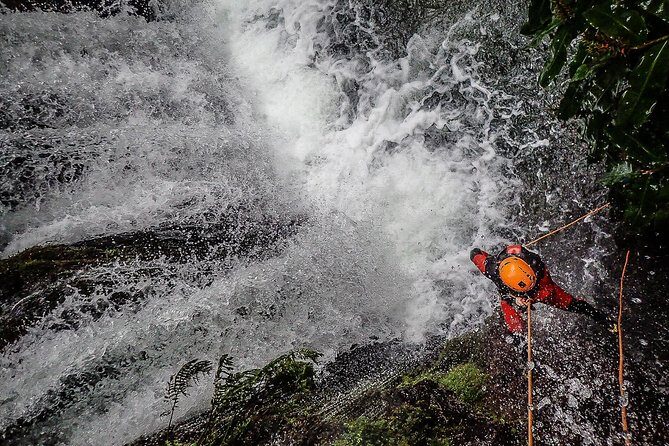 6 / 8
6 / 8 7 / 8
7 / 8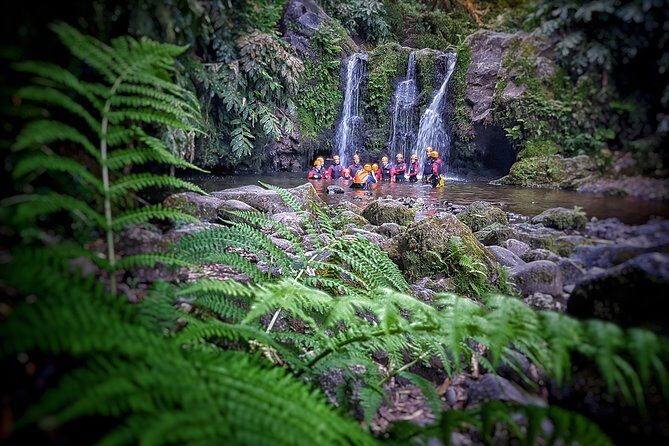 8 / 8
8 / 8- Max group size of 14 keeps it more personal and easier for guides to watch everyone
- Safety briefings before each technique helps beginners feel prepared fast
- Jumps and abseils are optional, so you can choose your comfort level
- All safety gear is included, but you still control what you bring for comfort
- Tour pace and exact moves vary by season and stream conditions
- Pickup can be arranged in Ponta Delgada with set morning time windows by season
Ribeira dos Caldeirões: a canyon that mixes thrills with real landscapes
On São Miguel, Ribeira dos Caldeirões is one of those places where you understand why people talk about the Azores as an outdoors playground. You’re not doing canyoning in a theme-park setup. You’re moving through a real natural park area, where the rock, the water flow, and the terrain shape the route.
You’ll get the classic canyoning menu: abseils (rappelling), water movement tricks like natural slides, and cliff-jump options. The best part is that it’s not all adrenaline at once. You build up from gear and technique to the fun sections.
And because the stream and terrain can change through the year, the tour aims to keep the experience close to what the canyon can safely deliver on that day. That’s smart, and it usually makes the adventure feel more authentic than a fixed script.
Where you meet and how pickup fits into your morning
The meeting point is at Parque Natural da Ribeira dos Caldeirões, on Estrada Regional Achada 011, 9630 Achada, Portugal. The good news is that the activity returns to the same spot at the end.
If you’re staying in Ponta Delgada, pickup and drop-off can be booked (when available). The approximate pickup windows are:
- Low season (November–March): 8:30–8:50 a.m.
- High season (April–October): 8:00–8:20 a.m.
The drive from Ponta Delgada is roughly 45 minutes, so booking the morning pickup helps you avoid an early scramble on local roads.
Practical tip: plan to be ready a few minutes early at your accommodation. Even when the transfer is smooth, you don’t want to be the person holding up wetsuit logistics.
Gear time: equipment distribution before the first briefing
When you arrive, the flow is straightforward. You’ll get your personal equipment, then head out on a short walk (around 15 minutes) to the first stop.
This is a meaningful part of the day. It’s not just “stuff happens.” The guides set you up with the harness and canyoning gear so your body knows what it’s wearing before you’re asked to rappel or jump.
You’ll also be in a park environment where things can be slick, so it helps that the group is organized right away. With up to 14 travelers, it doesn’t feel like herding cats.
The uphill hike: the warm-up that catches people off guard
Before you reach the start of the canyon, you scramble uphill through the natural terrain. You’ll have a second safety briefing midway through that uphill portion, and you’ll get a demonstration on how rappelling works before you enter the main fun section.
Two important takeaways from real traveler experiences:
1. This hike isn’t long, but it can be hard if you’re not used to hiking (and you’ll be in canyon gear).
2. The terrain matters. Depending on conditions, it can feel more like a climb than a stroll.
So this is not a lazy activity. You don’t need to be a mountain athlete, but you should be ready to move for the first stretch. If you’re comfortable with short uphill walks, you’ll probably be fine once you get into the rhythm.
Safety briefings and learning rappel basics the right way
You’ll do at least two structured safety moments:
- A briefing around the first stop after the initial walk
- Another briefing later, where you learn the rappel method before you start down
That sequence is one of the biggest reasons beginners rate this so highly. People often arrive thinking they’ll just be thrown into jumps. Instead, the guides focus on making sure you understand what you’re doing, what’s expected, and how the team controls the action.
You’ll see that in how the guides work with different personalities too. Some guests are nervous about heights. Others are confident. The guides you might meet include people mentioned like Inês, Teresa, Daniela, Ricardo, Durago, Hugo, Pedro, Bruno, Diego, Marika, Henry, and João—and the consistent theme is clear instruction plus calm support.
If heights scare you, you can treat this like a confidence-building course. Many activities are optional, so you can participate in a way that still feels adventurous, not forced.
Entering the main canyon: optional jumps, natural slides, and abseils
Once you reach the top of the canyon, you switch from learning mode to doing mode. The second part includes a mix of:
- Optional jumps typically between 2 and 7 meters
- A natural slide
- Abseils usually between 5 and 15 meters
The exact sequence of jumps and abseils depends on local conditions and seasonal stream flow, so you won’t always do the same heights or techniques every day. That’s normal and part of why canyoning stays “alive” rather than feeling staged.
What I like about the optional structure: you still get the full canyon experience, but you choose where you want your risk and comfort levels to meet. Even if you’re not jumping off bigger sections, you can still enjoy rappelling and sliding through the canyon environment.
One more thing: the activity is more than just “drop and slide.” You’ll also be climbing and moving between features, so your energy management matters. Pace yourself early so you don’t run out of steam once the fun ramps up.
The walk back: where the day slows down again
After the last technique, you walk back along the same path to the starting point. This is the “catch your breath” section for most people—still outdoors, still in the same park setting, but usually less technical.
Don’t underestimate it just because it’s the return. If you’re tired from uphill effort and you’re carrying wetsuit gear, take it steady. The guides are there to keep you moving safely, but you’ll feel it more if you try to power through.
How physical requirements work (and who should feel confident booking)
This is one of those tours where “most travelers can participate,” but “most travelers” still means you should meet the minimum physical and comfort requirements.
From the provided details:
- Height minimum: 1.20 m
- Weight range: 20 kg to 120 kg
- Maximum harness waist circumference: 1.40 m
- Children must be accompanied by an adult
Swimming note: you don’t need to know how to swim, but you should be comfortable in the water. That matters because canyoning involves being in and around moving water.
Also, being in decent shape helps. More than one traveler mentioned that the hike uphill is the part that makes it feel physically challenging, not the technical elements themselves.
If you’re fit enough for short hikes and you’re comfortable getting wet, you’ll probably have a great time. If you struggle with heights but want to try anyway, look for a day and a group where the guides emphasize options, not pressure.
What to wear and bring so you don’t think about logistics all day
You’ll be doing water-based activities, so the basics are worth getting right. Bring:
- Swimwear
- Comfortable clothes and shoes (for the hike and transitions)
- A personal beach towel
- Water bottle
- Sunscreen
- Hair elastic (if you need it)
Wetsuit experience varies by temperature and conditions, but canyoning tours in this format typically involve wetsuits, and travelers specifically mention the wetsuit moment as part of the fun-start feeling.
Bring a water bottle even if you think you’ll be okay without it. One traveler wished water was included. Even if it is available at some point for some tours, having your own bottle is safer and easier.
Price and value: why $84.65 can feel like a full adventure day
At $84.65 per person for about 2 hours 30 minutes, this tour is priced like a serious activity, not a casual walk. You’re paying for:
- A guided experience in a protected natural area
- Safety equipment included
- Coaching and equipment management
- A structured set of techniques: rappels, optional jumps, slide moments
The “value” comes from how many different things you try in one morning. Travelers mention zipline-off-water-style moments and a mix of rock sliding, rappelling, and jump options, depending on the day’s conditions.
Add in that the tour limits the group to 14 travelers, which often reduces waiting time and increases guide attention. That small-group feel is part of why the ratings are so high.
The guide difference: calm instruction with a playful edge
The best canyon guides do two jobs at once: keep things safe and keep the energy moving. Multiple guests describe guides who were patient, humorous, and very serious when it came to safety.
You might meet guides like Ricardo and Durago, Hugo and Pedro, or Bruno, Diego, and Teresa, among others named. Regardless of who’s on your tour, the patterns are consistent:
- clear instructions at each step
- encouragement for nervous beginners
- a priority on making you feel secure before you commit to a move
That’s why first-timers come away happy. They weren’t just spectators watching experts; they were participants guided through it.
Photos, videos, and the bonus moments you’ll remember
Several travelers mention photos and/or videos being taken during the experience and shared afterward. That’s a real perk because canyoning action is hard to capture yourself, especially with wetsuit gear and hands full of equipment.
If you care about memories, this is a strong “yes” factor. Even if you think you’ll take photos, plan on using your phone for the scenery and let the guides handle the action shots.
Weather, cancellations, and booking smart
This experience depends on good weather. If it gets canceled due to poor weather, you’ll be offered another date or a full refund.
You also get free cancellation up to 24 hours in advance for a full refund. After that cutoff, refunds don’t apply.
Practical planning tip: since the canyon flow can change with conditions, avoid booking this as your only activity for that morning. Give yourself a little flexibility so a weather adjustment doesn’t wreck your schedule.
Canyoning Experience in Ribeira dos Caldeirões Sao Miguel -Azores
Should you book canyoning in Ribeira dos Caldeirões?
Book it if:
- you want an active morning that combines hiking with rappelling and water-based fun
- you like guided adventures with safety equipment included
- you’re okay with being in the water and walking uphill before the action
- you want a small-group experience (max 14 travelers) with hands-on coaching
Skip or rethink if:
- uphill hiking in a wetsuit sounds miserable to you
- you’re not comfortable getting wet
- you have a hard limitation on harness fit (height/weight/waist measurements matter here)
If you can handle short uphill effort and you’re game for optional jumps and controlled rappels, this is one of the best ways to experience São Miguel’s wild side in just a couple of hours. It’s the kind of day that makes you laugh afterward, even if you were nervous at the top of the canyon.